Year: 2013

  • Guardian editor to face MPs over Snowden intelligence leaks

    Spread the love

    http://www.bbc.co.uk/news/uk-24876725

    Guardian editor Alan Rusbridger is to be questioned by MPs over the newspaper’s publication of leaks by ex-US security contractor Edward Snowden.

    Mr Rusbridger will give evidence to the Home Affairs Select Committee next month, a Guardian spokesman confirmed.

    The Guardian has published information about how British and US spy agencies monitor communications.

    The decision to publish the leaks was criticised by the leaders of UK security services on Thursday.

    Documents leaked to the Guardian newspaper by Mr Snowden – who is currently in Moscow where he has sought asylum – revealed that agencies are able to tap into the internet communications of millions of ordinary citizens through GCHQ’s Tempora programme.

  • New Asbo plans are assault on basic freedom, says former DPP Lord Macdonald

    Spread the love

    http://www.telegraph.co.uk/news/uknews/law-and-order/10437127/New-Asbo-plans-are-assault-on-basic-freedom-says-former-DPP-Lord-Macdonald.html

    Plans to replace Asbos with wide ranging new orders clamping down on anything likely to cause “annoyance” amount to “gross state interference” with basic freedoms, Lord Macdonald warns

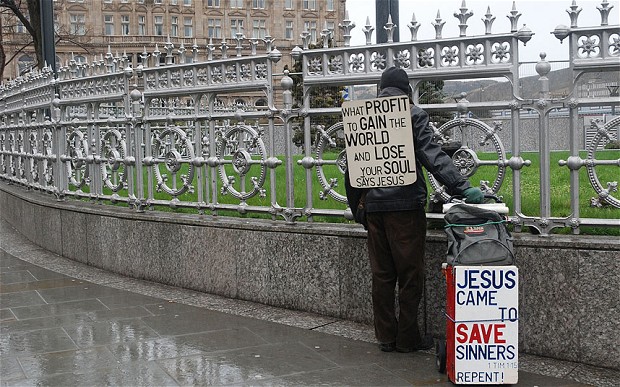
    Image of a preacherman

    Christian preachers, buskers and peaceful protesters could effectively be driven off the streets under draconian new powers designed to clamp on anyone deemed “annoying”, according to a former Director of Public Prosecutions.

    Lord Macdonald QC said Theresa May, the Home Secretary’s plans for a new civil injunctions to replace Anti-Social Behaviour Orders (Asbos) amount to “gross state interference” with people’s private lives and basic freedoms.

    In a formal legal opinion being circulated to peers, he savages the proposals as opening the way for the outright “suppression” of anything deemed “potentially annoying” with only “vague” justification.

    The proposed safeguards to prevent abuse of the new system are “shockingly” weak, he writes.

    Under proposals currently before Parliament, Asbos are to be scrapped and replaced with wide-ranging new orders known as Ipnas (Injunctions to Prevent Nuisance and Annoyance).

    They are designed to be easier to obtain, require a lower evidential threshod and yet cover a wider range of behaviour.

  • Revealed: How Big Six energy firms conceal their profits

    Spread the love

    http://www.independent.co.uk/news/uk/home-news/revealed-how-big-six-energy-firms-conceal-their-profits-8930039.html

    Market experts express concern that giants are not being fully candid about profit margins they require to fund investments in bid to deflect growing public anger

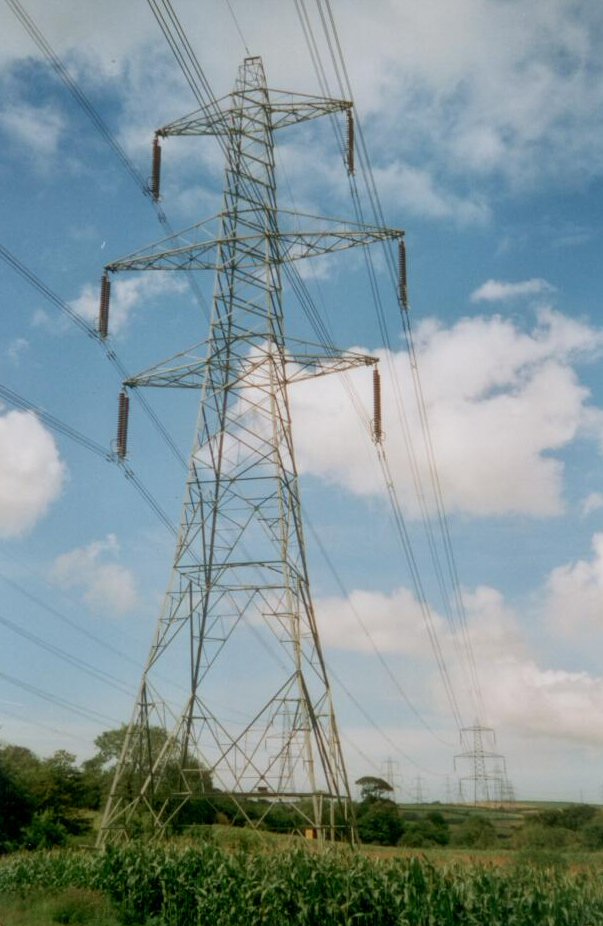
    Image of an electricity pylon tree

    The Big Six energy firms have been accused of misleading consumers about the reasons for their sky-high bills by glossing over the large mark-ups they charge for the electricity they generate.

    In interviews with The Independent, several market experts expressed concern that the energy giants are not being fully candid about the profit margins they require to fund investments, in a bid to deflect growing public anger.

    Defending the latest round of price hikes last week, the industry’s figurehead, Angela Knight, said suppliers worked on margins of just 5 per cent which were justified to pay for “extremely large” investments necessary in their businesses.

    But Caroline Flint, Labour’s shadow Energy Secretary, has accused the companies of a lack of transparency, and of diverting attention from the much higher margins they make from their electricity generation arms. “It’s misleading for energy companies to pretend their profit margins are only 5 per cent when that only refers to their profits on supplying energy,” she said.

    “Their profits on generating energy are much more substantial and are often close to 20 per cent. If energy companies want to rebuild trust in this market, as a first step they have to start being straight with people about exactly how much money they’re making.”

    27/11/13 Having received a takedown notice from the Independent newspaper for a different posting, I have reviewed this article which links to an article at the Independent’s website in order to attempt to ensure conformance with copyright laws.

    I consider this posting to comply with copyright laws since
    a. Only a small portion of the original article has been quoted satisfying the fair use criteria, and / or
    b. This posting satisfies the requirements of a derivative work.

    Please be assured that this blog is a non-commercial blog (weblog) which does not feature advertising and has not ever produced any income.

    dizzy

  • 75 years after Kristallnacht: minorities in danger

    Spread the love

    http://www.opendemocracy.net/ourkingdom/david-rosenberg-and-212-others/75-years-after-kristallnacht-minorities-in-danger

    Jews in Britain sound the alarm about rising hostility towards migrants, asylum seekers, Gypsies and travellers.

    Image of hisrorical Daily Mail article about Jewish immigration

    On 9th/10th November 1938, Nazi stormtroopers led a wave of violent attacks on Jewish people and property throughout Germany and Austria, which the Nazis had annexed. During these pogroms, 91 Jews were killed, thousands were taken from their homes and incarcerated in concentration camps, 267 synagogues were destroyed, and some 7,500 Jewish-owned shops were smashed and looted. The Kristallnacht pogroms presaged attempts to remove Jews from German life completely.

    Many Jews left hurriedly to seek refuge in friendly countries, including Britain, but Britain was already in the grip of an “aliens scare”. Newspaper headlines declared: “Alien Jews Pouring In”, and claimed that “Refugees Get Jobs, Britons Get Dole”. The media accused Jewish asylum seekers of “over-running the country”. Despite wide public revulsion at the violence of Kristallnacht, powerful elements in British politics and business continued to admire Hitler and the Nazi regime.

    75 years after Kristallnacht, racists and fascists inspired by the Nazis continue to attack minorities in Europe. In Hungary neo-fascists target Gypsies and Jews. In Greece Golden Dawn members and supporters brutally attack migrants and political opponents. Here in Britain, minority communities, especially Muslims, have been targeted in an atmosphere that is increasingly hostile towards migrants and refugees.

    As Jewish people mindful of this history, we are equally alarmed at continuing fascist violence and the toxic sentiments expressed by many politicians and much of the media against migrants, asylum seekers, Gypsies and travellers.
    We stand shoulder to shoulder with migrants, refugees and asylum seekers in their efforts to live here in freedom and safety, to contribute to society, and be treated as equals. As Jews we stand together with all communities seeking to combat racism and fascism here and elsewhere.

    David Rosenberg, Jewish Socialist magazine
    Prof Frank Land, 1939 refugee and Kristallnacht witness
    Ralph Land CBE, 1939 refugee and Kristallnacht witness
    Sheila Melzak, Clinical Director, Baobab Centre for Young Survivors in Exile
    Dr Jennifer Langer, Director, Exiled Writers Ink
    John Speyer, Director, Music In Detention
    Margaret Hodge MP
    David Winnick MP
    Lord (Alf) Dubs
    Edie Friedman, Executive Director, Jewish Council for Racial Equality
    Gerry Gable, Editor, Searchlight Magazine
    Prof Nira Yuval-Davis, Director, Centre for Research on Migration, Refugees and Belonging, UEL
    Prof Jacqueline Rose
    Prof Francesca Klug OBE, Director of the Human Rights Futures Project
    Rabbi Elizabeth Tikvah Sarah
    Rabbi Barbara Borts
    Rabbi Howard Cooper
    Judge Laurence Brass, Treasurer, Board of Deputies of British Jews
    Miriam Margolyes OBE
    Moris Farhi MBE
    Anne Karpf, journalist
    Bernard Kops, playwright and poet
    Michael Rosen, broadcaster and poet
    Michele Hanson, writer
    Dr Ros Merkin, Writer & Director of Suitcase 1938
    Benjamin Abeles, rescued by the Kindertransport in 1939
    John Abraham
    Ruth Abraham
    Karen Adler
    Rochelle Allebes
    Ruth Appleton, Santé Project
    Martha Jean Baker
    Julia Bard
    Zelda Bard
    Jacob Bard-Rosenberg
    Reuben Bard-Rosenberg
    Mark Barnes
    Ruth Barnett
    George Barratt, Councillor, Barking & Dagenham
    Larry Beckreck
    N G Benjamin
    Sarah Benton
    Mike Berlin
    Shelley Berlowitz
    Jo Bird
    Rica Bird
    Prof Haim Bresheeth
    Lorna Brunstein
    Barry Buitekant
    Lionel Burman
    Mandy Carr
    Prof Andrew Coleman
    Paul Collins
    Ilana Cravitz
    Judith Cravitz
    Ivor Dembina
    Prof Elizabeth Dore
    Jack Dove
    Norma Dove
    Ora Dresner
    Kjersti Dybvig
    Prof Barbara Einhorn
    Maggie Eisner
    Antony Ellman
    Michael Ellman
    Judith Emanuel
    Naomi Feldman
    Rayah Feldman
    Prof Robert Fine
    Neil Finer
    Sylvia Finzi
    Frank Fisher
    Nick Foster
    Ann Frankel
    Raymond Freeman
    Melissa Friedberg
    Carolyn Gelenter
    Mike Gerber
    Dr Ben Gidley
    Stuart Goodman
    Carry Gorney
    Dr Claudia Gould Hertzmann
    Jeremy Green
    Prof Colin Green
    Grahame Gross
    Sue Gutteridge
    Belle Harris
    Lisa Hatton
    Rosamine Hayeem
    Mike Heiser
    Ruth Hendrick
    Alain Hertzmann
    Prof Susan Himmelweit
    Dr Deborah Hirshfield
    David Hoffman
    Justin Hoffman
    Claire Jackson
    Riva Joffe
    Dr Hannah Jones
    Dan Judelson
    Ann Jungman
    Thena Kendall
    David King
    Susan King
    Dr Brian Klug
    Tony Klug
    Erica Kops
    Sarah Kosminsky
    Marion Kozak
    Stevie Krayer
    Caroline Kubilius
    Richard Kuper
    Vivi Lachs
    Jude Lancet
    David Landau
    Jon Lansman
    Sheila Lassman
    Antony Lerman
    Karl Lewcowicz
    Vivien Lichtenstein
    Hope Liebersohn
    Marian Liebmann
    Prof Yosefa Loshitzky
    Sue Lukes
    Ruth Lukom
    Simon Lynn
    Ilana Machover
    Moshé Machover
    Diana Maiden
    Paul Mayersberg
    Karen Merkel
    Jane Merkin, Executive Producer, Suitcase 1938
    Paul Morrison
    Miriam Moss
    Annie Nehmad
    Diana Neslen
    Esther Neslen
    Michael Newman
    Paul Oestreicher
    Margaret Owen OBE
    Dr Daniel Ozarow
    Gail Pearce
    Helen Pearson
    Mike Peters
    Rob Porteous
    Charlie Pottins
    Dr Claudia Prestel
    Marsha Ragsdell
    Ros Raizada
    Roland Rance
    Daniel Randall
    Norman Randall
    Ronne Randall
    Jerome Ravetz
    Dr Esti Rimmer
    Brian Robinson
    Ben Rogaly
    Prof Jonathan Rosenhead
    Leon Rosselson
    Michael Sackin
    Jenny Salaman Manson
    Raf Salkie
    Prof Andrew Samuels
    Ian Saville
    Prof Joy Schaverien
    Karel Schling, child of holocaust survivors
    Monika Schwartz
    Mike Scott, Trustee, Nottingham and Notts Refugee Forum
    Amanda Sebestyen
    Lynne Segal
    Prof Victor Jeleniewski Seidler
    Sam Semoff
    Barry Semp
    Linda Shampan
    Myrna Shaw
    Polina Shepherd
    Nicole Sherrick
    Dr Jackie Shimshon
    Shireen Wooldridge
    Prof Avi Shlaim
    Alan Silver
    Evelyn Silver
    Liz Silver, Notts Disabled People’s Movement
    Clifford Singer
    Juliet Singer
    Laurence Singer
    Ray Sirotkin
    Barry Smerin
    Sue Smith
    Ben Soffa
    Catharine Claire Stewart
    Jennie Stoller
    Monica Stoppleman
    Judith Suissa
    Vivien Sunlight
    Inbar Tamari
    Ruth Tenne
    Gil Toffell
    Niki Tragen
    Eva Turner, child of holocaust survivors
    Lesley Urbach
    Dan Usiskin
    Dr Nadia Valman
    Ida Waksberg
    Rafael Waksberg
    Adrienne Wallman
    Miri Weingarten
    Pnina Werbner
    Barbara White
    Myra Woolfson
    Dr Karen Worth
    Binnie Yeates
  • Tony Blair’s Kazakhstan role has failed to improve human rights, activists say

    Spread the love

    http://www.theguardian.com/politics/2013/nov/08/tony-blair-kazakhstan-human-rights-role

    Situation has deteriorated since former prime minister began advising on good governance, according to Kazakh opposition leader

    Tony Blair’s multimillion-pound deal to advise Kazakhstan’s leadership on good governance has produced no change for the better or advance of democratic rights in the authoritarian nation, freedom campaigners say.

    At the end of Blair’s two-year contract, which lapsed at the end of October and may yet be renewed, activists said the country had actually experienced heavy reversals in civil liberties and freedom of the press during the time the former prime minister was advising the Kazakh president, Nursultan Nazarbayev.

    “Unfortunately, over the two years that Tony Blair’s been a consultant for Astana, we haven’t seen any changes for the better, or signals of movement towards democratisation,” said embattled opposition leader Amirzhan Kosanov, pointing instead to “a deterioration in the human rights and political freedoms situation, a further tightening of the screws”.

    Oksana Makushina, a former deputy editor of one closed-down newspaper, said wryly: “If Mr Blair was advising Nazarbayev on something, it definitely wasn’t freedom of speech. Over the last two years the screws have only been tightened on the media.”

    Blair’s office maintains his work is a force for good in a country moving in the right direction. Tony Blair Associates said his work “focuses on social and economic reform and is entirely in line with that of the international community”.

    A spokesperson said: “Of course the country faces challenges but that is precisely why we should engage and support its efforts to reform. It remains strategically and globally important and it was right that David Cameron chose to visit there earlier this year.”

    Blair’s team has also raised human rights, his spokesperson said, adding that speaking publicly last year Blair “was explicit that the status quo was not an option”. Yet his office rejects the notion of a crackdown in Kazakhstan. “We simply do not agree that the situation in this regard has deteriorated.”

    Since Tony Blair Associates set up in the glitzy capital, Astana, in October 2011, Kazakhstan has launched a massive crackdown on civil liberties. It began after unrest in the energy-rich west of this sprawling country in December 2011, which left 15 civilians dead when police fired on protesters.

    The government blamed the opposition, jailing alleged ringleader Vladimir Kozlov amid an international outcry, closing down his party and shutting dozens of independent media outlets.