Students stand with Palestine, Palestine stands with students

Spread the love

Original article by Natalia Marques republished from peoples dispatch under a Creative Commons Attribution-ShareAlike 4.0 (CC BY-SA) license.
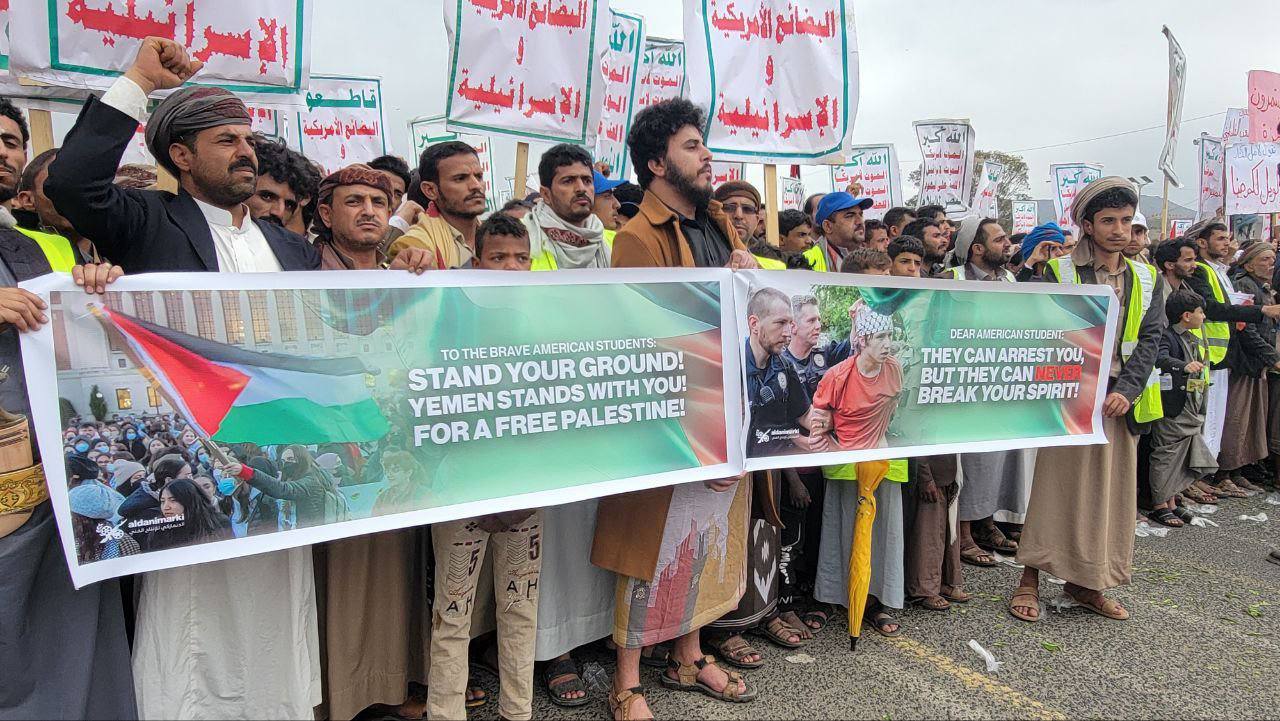
People in Yemen express their support for US students protesting genocide (Photo via @Aldanmarki/X)

Fighting people across the world show support with the student movement in the US facing repression

“We, the students of Gaza, salute the students of Columbia University, Yale University, New York University, Rutgers University, the University of Michigan, and dozens of universities across the United States who are rising up in solidarity with Gaza and to put an end to the Zionist-US genocide against our people in Gaza,” wrote the Student Frameworks Secretariat, composed of a variety of student organizations part of larger resistance groups and left parties—including but not limited to the Islamic Resistance Movement, the Democratic Front for the Liberation of Palestine, the Islamic Jihad Movement in Palestine, Fatah, the Popular Front for the Liberation of Palestine, and the Palestinian People’s Party. The Gazan students are expressing their support for the dozens of student encampments that have emerged in the United States, in which students occupy public spaces in their universities to demand that their institutions divest from Israel.

“We welcome the examples of solidarity offered by students facing arrest, police violence, suspension, eviction, and expulsion in order to demand that their universities end their complicity in the Zionist-US genocide and renounce their support for the occupation and the war profiteers that arm it,” the students stated, referring to the central demand of divestment that has been leveraged by students in the encampments. 

Palestinians sheltering in the without tears humanitarian camp in Rafah have created banners in support of US students, which they have hung on their tents. The banners read “From Rafah we send you strength,” “the children [of] Gaza are proud of you,” and “thank you students for Columbia uni.”

On April 26, millions gathered on Sana’a Square in Yemen, some holding banners with images from the US student encampments. Their banners showed images from Columbia and other encampments across the country, and featured slogans such as: “To the brave American students, stand your ground! Yemen stands with you! For a free Palestine!” “Dear American Student: They can arrest you, but they can never break your spirit!” and “The Columbia encampment was just the spark! Long live the great student revolution!”

Bisan Owda, a Gazan journalist whose on-the-ground broadcasts of the Israeli genocide have reached millions if not billions across the world, released a video applauding the student protesters. “I’ve lived my whole life in Gaza Strip and I’ve never felt hope like now,” she said. “For the first time in our lives a Palestinians, we hear a voice louder than their voices and the sound of their bombs…It’s children and youth who are leading the movement now for a free Palestine, putting everything they have on the line to demand justice, an end to the genocide, and a new era of the world.”

Students staging peaceful encampments have been met with brutal force by their administrations, who have launched police attacks.

Police deployed snipers near the Gaza Solidarity Encampment at Ohio State University, and beat, tased, and arrested protesters. 

Students were also brutalized while staging an encampment at Emory University in Atlanta, Georgia. Students at the Emory Gaza Solidarity Encampment had drawn powerful links between the struggle for Palestine and the struggle against Cop City, a multi-million dollar urban warfare training ground for US police. Students demanded not only divestment of the university from Israel, but also to divest from the construction of Cop City. 

Emory students were brutalized by Atlanta police within hours of setting up their encampment. Police fired rubber bullets and teargas at protesters, tased a student, and detained both students and faculty.

On the night of April 24, Emerson College students in Boston, staging an encampment in solidarity with Gaza, were brutally evicted by Boston police. So brutally, in fact, that video from the next day showed city workers hosing off what appeared to be blood from the streets of the former encampment.

Students across the country staging encampments in solidarity with Palestine, in opposition to the genocide and in favor of liberation, have been subject to all manner of state repression. Faculty have watched in horror as their administrations call the police to brutally arrest students, many of whom are undergraduates. 

In response to the University of Texas – Austin calling in state troopers to arrest students staging a Gaza Solidarity Encampment, faculty at the university expressed deep concern “for our students’ well-being and safety.” 

“We have witnessed police punching a female student, knocking over a legal observer, dragging a student over a chain link fence, and violently arresting students simply for standing at the front of the crowd,” the faculty stated. “There can be no business as usual when our campus is occupied by city police and state troopers who are preventing our students from engaging in a peaceful demonstration of their first amendment rights.” The faculty are calling for what is effectively a strike, declaring, “No business as usual tomorrow. No classes. No grading. No work. No assignments.”

Ansar Allah in Yemen, which has been boldly resisting Israeli genocide through its blockage of ships with ties to Isreal in the Red Sea, released a statement condemning the police crackdown on student protesters. “This unjustified repression exposes the falsity of the US government’s claims to defend freedom, protect human rights, and spread democracy,”  the organization declared. “We affirm the right of American citizens to demonstrate peacefully, and we value the moral stance of the demonstrators, which expresses an increased state of societal awareness in the face of the official US policy supporting Israeli crimes in Gaza.”

Original article by Natalia Marques republished from peoples dispatch under a Creative Commons Attribution-ShareAlike 4.0 (CC BY-SA) license.


Continue ReadingStudents stand with Palestine, Palestine stands with students

Stop the genocide

Spread the love

https://morningstaronline.co.uk/article/stop-the-genocide

Thousands to rally once again for Gaza ceasefire

HUNDREDS of thousands of protesters will rally in central London tomorrow [today] as calls for an end to Britain’s export of arms to Israel and a ceasefire in Gaza persist.

Protesters, including those travelling from across the country, will assemble at Parliament Square for noon and march to Hyde Park, where a rally will be held.

Weekly demonstrations have been taking place across Britain since Israel’s bombardment of Gaza began following October 7, with activists demanding action from ministers and MPs from both main parties, as well as local government authorities involved in dealings with Israel.

Action groups have also targeted weapons manufacturing companies to stop the supply of arms to Israel as well as firms with financial links to the illegal occupation, including banking giant Barclays.

Organisers of the weekly protests have said they are redoubling their efforts to mobilise following attempts by government ministers and pro-Israel lobbyists to defame the movement.

More than 34,000 people — 14,000 of them children — have been killed in Gaza and thousands more remain missing while famine is imminent for half of the strip’s 2.2 million people facing food insecurity.

https://morningstaronline.co.uk/article/stop-the-genocide

Continue ReadingStop the genocide

Elites in the global North are scared to talk about Palestine

Spread the love

https://morningstaronline.co.uk/article/elites-global-north-are-scared-talk-about-palestine

FREE SPEECH NATION? Arrests are made as pro-Palestinian students and protesters are pushed off campus at the University of Texas, Wednesday April 24

While people across the world have been taking bold action in support of Palestine, the global North ruling class has used all tools at its disposal to support Israel’s genocide and criminalise solidarity writes VIJAY PRASHAD

ISRAELI BOMBS continue to fall on Gaza, killing Palestinian civilians with abandon. Al-Jazeera published a story about the destruction of 24 hospitals in Gaza, each of them bombed mercilessly by the Israeli military. Half of the 35,000 Palestinians killed by Israel were children, their bodies littering the overwhelmed morgues and mosques of Gaza.

The former UN assistant secretary-general for human rights, Andrew Gilmour, told BBC Newsnight that the Palestinians are experiencing “collective punishment” and that what we are seeing in Gaza is “probably the highest kill rate of any military, killing anybody, since the Rwandan genocide of 1994.”

Meanwhile, in the West Bank section of Palestine, Human Rights Watch shows that the Israeli military has participated in the displacement of Palestinians from 20 communities and has uprooted at least seven communities since October 2023. These are established facts.

Yet, these facts — according to a leaked memorandum — cannot be spoken about in the “newspaper of record” in the US, the New York Times. Journalists at the paper were asked to avoid the terms “genocide,” “ethnic cleansing” and “occupied territory.”

Indeed, over the past six months, newspapers and television shows in the US have generally written about the genocidal violence using passive voice: bombs fell, people died.

Even on social media, where the terrain is often less controlled, the axe fell on key phrases; for instance, despite his professions of commitment to free speech, Elon Musk said that terms such as “decolonisation” and phrases such as “From the river to the sea” would be banned on X.

https://morningstaronline.co.uk/article/elites-global-north-are-scared-talk-about-palestine

Continue ReadingElites in the global North are scared to talk about Palestine

Air pollution surging across poultry ‘megafarming’ hotspots

Spread the love

Original article by Andrew Wasley Lucie Heath republished from the Bureau of Investigative Journalism under a Creative Commons Attribution-NonCommercial-NoDerivs 3.0 Unported License.

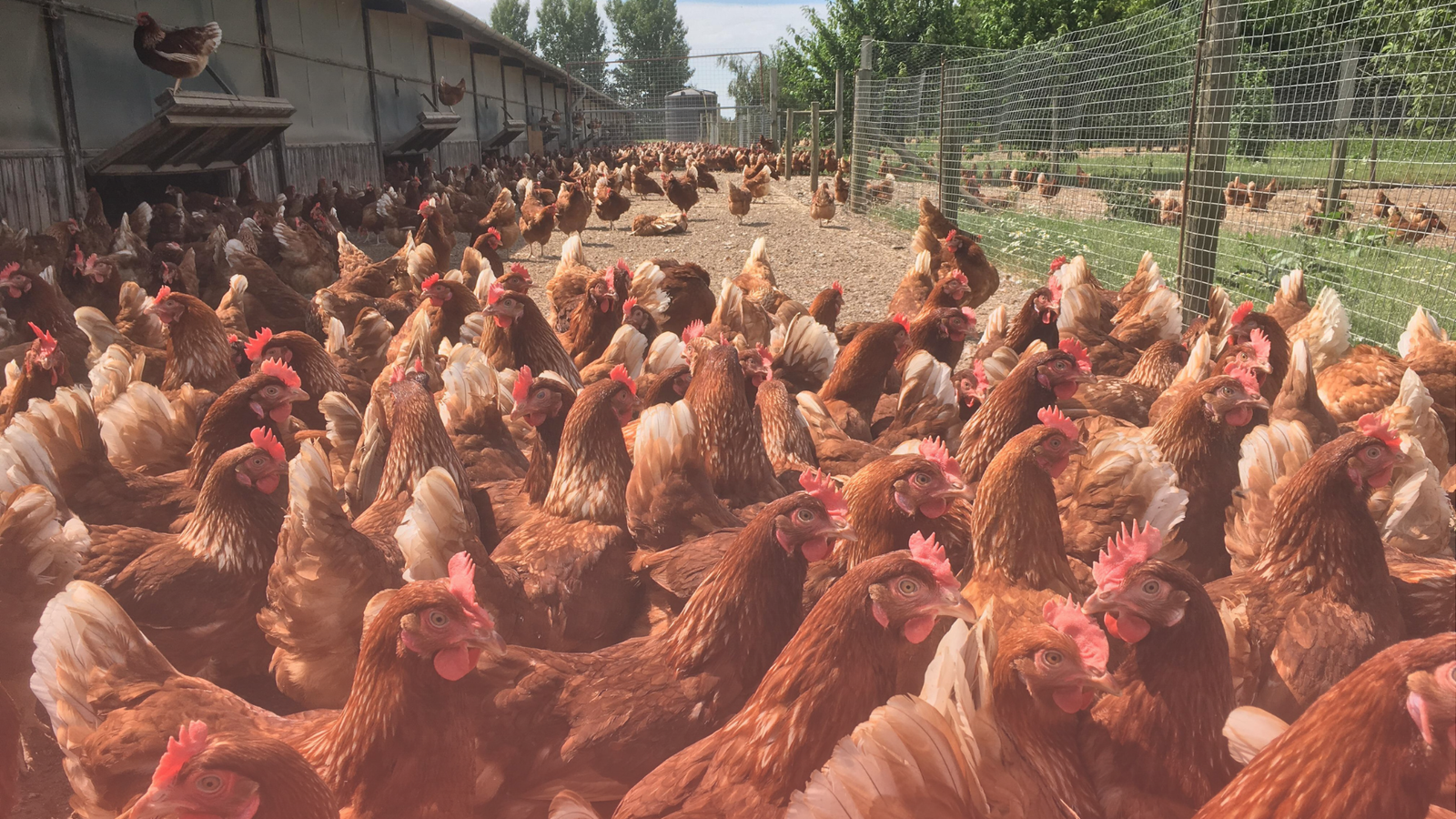
Emissions of ammonia from industrial-scale poultry production are surging across the UK’s “megafarming” hotspots, TBIJ and the i can reveal.

The gas, which is emitted by livestock and farm waste, can mix with other pollutants to create particles linked to increased death rates, respiratory problems and cardiovascular diseases. Ammonia can also harm biodiversity and ecosystems.

The government has committed to reduce ammonia emissions by 2030 and although pollution linked to chicken farms has fallen across England as a whole since 2017, it has increased sharply in certain regions. Across the UK there has been a rise in vast factory-style farms, some of which supply major supermarkets and fast-food chains.

In Wales, ammonia emissions from poultry production have surged by nearly 40%, according to an analysis of public and industry records, while high increases have also been recorded in Lincolnshire, Norfolk and counties near the River Wye.

Norfolk, which recorded one of the biggest ammonia increases in England, is home to farms run by a company supplying 2 Sisters Food Group that are among the most polluting poultry facilities in the country according to government data.

Across the Wye region, chicken production is dominated by Avara Foods, which has a processing plant in Hereford and is part-owned by US-based food giant Cargill. The industry in the region has been widely blamed for polluting the River Wye, prompting a public outcry.

‘When I walk past a large concentration of ammonia … a pile of chicken faeces or a chicken shed, I can feel my lungs tightening up’

Records seen by TBIJ show Avara-supplying farms accounted for much of Herefordshire’s ammonia emissions linked to poultry production in 2021. At least seven have reported increases in pollution since 2017, data show, both in Herefordshire and elsewhere in the UK.

Analysis has also revealed that one Avara “megafarm” is now among the most polluting poultry units in the country. The firm supplies chicken to retailers and fast-food chains including Tesco and McDonald’s.

“People come to places like Herefordshire expecting to have nice clean air. But they might not,” said Colin Lawrence, a retired engineer. Lawrence, who successfully campaigned against a new 80,000-bird farm a few miles from his home in the county, said another farm is situated less than a mile from a school and its effects on the children have not been studied.

Explainer What is ammonia and how is it used?

Christine Hugh-Jones lives over the border in Powys, Wales. She has asthma, which she says is fairly mild. “When I walk past a large concentration of ammonia… a pile of chicken faeces or a chicken shed, I can actually feel my lungs tightening up,” she told TBIJ and the i. “What the impact for people with serious respiratory diseases must be and what the impact is on people who work in the sheds or live really near to one, I don’t know.”

Reporting loophole

TBIJ and the i have also uncovered regulatory loopholes that mean significant amounts of emissions are currently going unreported.

‘The findings provide yet another reason for applications for new US-style megafarms to be rejected’

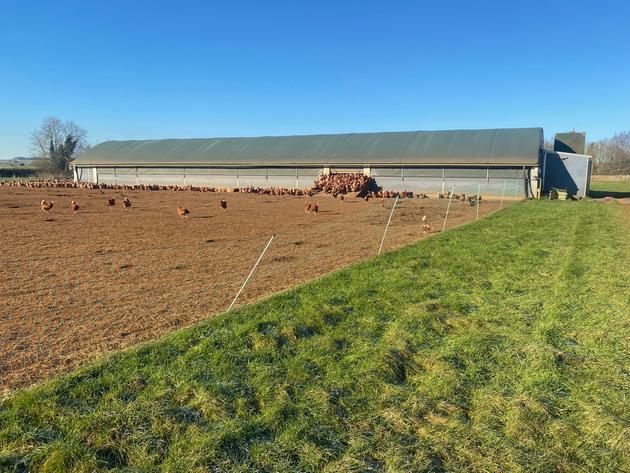
According to current rules, any farm housing fewer than 40,000 birds is not required to report its ammonia emissions. Figures show almost 20 million birds are currently reared on farms that fall below this threshold.

Emissions from farms’ waste consignments, meanwhile, can go unreported altogether because there is no requirement for a farm to monitor waste that leaves its site. The amount of waste produced by a poultry farm can be vast – in some cases hundreds of tonnes a year – and can be used as fertiliser on farmland, often at third-party locations.

Air tests detected ammonia pollution in eight of 18 litter sites and poultry units across the south of England. Although the levels detected were, in isolation, below what is considered to pose a human health hazard, ongoing low-level emissions can affect the environment, particularly in areas with multiple farms. They can also combine with other particles in the air to create “particulate matter” harmful to humans.

The number of US-style megafarms in the UK has been rising since 2017 TBIJ

Former environment minister Zac Goldsmith said the findings “raised serious concerns” about the expansion of intensive farming and called for an immediate moratorium on permits for new farms in regions with increasing air pollution.

“Industrial-scale chicken farms come with such a heavy price – on the environment, animal welfare and, in numerous ways, human health as well,” he said. “These new findings relating to ammonia pollution provide yet another reason for applications for new US-style megafarms to be rejected.”

Anthony Field, head of animal welfare charity Compassion In World Farming UK, said: “Airborne pollutants – such as ammonia – mix with water in the atmosphere and fall on woodland, rivers, and other sensitive habitats, causing terrible pollution, damaging ecosystems, impacting human health and killing aquatic life.”

He said TBIJ’s investigation “highlights the need for appropriate scrutiny of planning applications for new or expanding farms that must take account the impact of cumulative ammonia emissions, which can often be overlooked, despite the widely acknowledged scientific research. We must stop building factory farms that drive pollution.”

2 Sisters Food Group told TBIJ: “All our operations are strictly controlled throughout the UK by country-specific regulators, and all farms audited to ensure compliance.” It stressed that ammonia pollution at a national level is declining.

Avara said: “Official data suggests poultry’s contribution to ammonia emissions is a small minority, limited in comparison to other sources, and has reduced since 1980. Moreover, poultry manure is not waste, it is a sought-after product that offers many advantages over its fossil fuel-based alternatives.” It added that emissions are an estimation based on the maximum capacity of birds at a site, rather than a specific measurement, and that the “vast majority” of farms in its supply chain fall under the reporting requirements.

The British Retail Consortium, on behalf of UK supermarkets, told TBIJ: “Retailers continue to work closely with their suppliers and farmers to drive best practice and reduce the environmental impact of chicken production. This includes work to reduce emissions of both greenhouse gases and other air pollutants, like ammonia.”

A single poultry farm can produce hundreds of tonnes of waste a year TBIJ

Amassing of megafarms

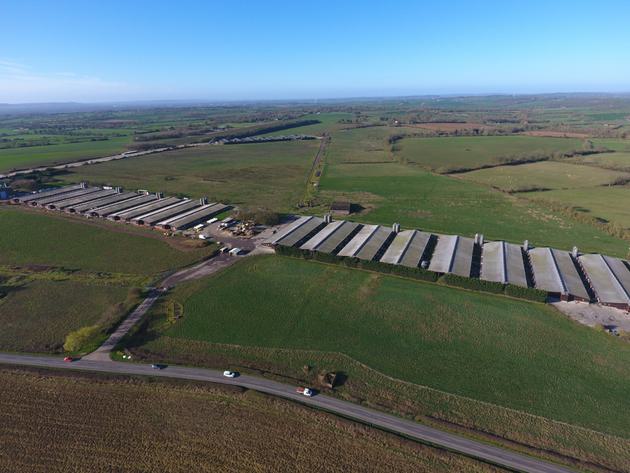
The scale of intensification within the UK’s poultry industry was first documented by a TBIJ investigation in 2017 that found Britain was home to nearly 600 US-style “megafarms”.

‘The more farms you add in an area the more total ammonia is released’

The 2017 findings prompted Michael Gove, then the environment minister, to tell parliament: “I do not want to see, and we will not have, US-style farming in this country.”

However, the number of poultry “megafarms” has nonetheless continued to rise and had reached almost 1,000 last year.

Unpublished records seen by TBIJ and the i show that regulators have waved through the vast majority of applications for new intensive farms of 40,000 or more birds. In Wales, authorities have rejected just one of 33 applications since 2017; in Northern Ireland and Scotland, no applications of the 32 submitted were turned down in the same period; while in England, the vast majority of more than 2,000 applications for permit variations and new permits were approved, with just 57 blocked by the Environment Agency.

Some of this expansion has occurred in a handful of poultry hubs near major abattoirs and processing plants.

Lincolnshire has seen the biggest increase in bird numbers, rising from 12 million in 2017 to more than 35 million in 2023. In Norfolk the figure has jumped from 12 million to 21 million.

And counties within the catchment of the Wye – Herefordshire, Gloucestershire, Powys and Monmouthshire – now have 32 million birds combined, up from 23 million in 2017.

‘Clustering of multiple small units increases the risk of locally acute ammonia pollution levels with particular threat to sensitive biodiversity’

An employee at one environmental regulator said: “The more farms you add in an area the more total ammonia is released. This is a real weakness as you do not have a single ammonia emission limit set as a collective [for the region]. In the River Wye if you double the number of poultry farms, as has happened over the past 15 years, you increase the total ammonia emitted.”

Professor Mark Sutton from the UK Centre for Ecology and Hydrology said these findings raised “valid concerns”. He added: “Although farms lower than the threshold size may not require reporting of emissions, such new developments ought to be assessed in relation to local planning requirements.” “Clustering of multiple small units increases the risk of locally acute ammonia pollution levels with particular threat to sensitive biodiversity.”

Natural Resources Wales said: “NRW undertake regular compliance inspections and any necessary enforcement on permitted poultry units (over 40,000 birds).” It added that permits for farms of this size set out the requirements for minimising risks to the environment, and smaller farms are subject to other pollution regulations.

A spokesperson for the Northern Ireland Environment Agency told TBIJ: “All permitted farms must meet a range of environmental criteria and requirements include implementing measures to reduce and prevent odour, noise and protect air.”

A spokesperson for the Scottish Environment Protection Agency (SEPA) said: “We provide clear guidance for farmers on best available techniques for preventing or, where that is not practicable, reducing emissions from livestock housing and manure management and storage within the permitted installation.”

A Department for Environment, Food & Rural Affairs spokesperson said: “This government has delivered significant reductions in emissions since 2010 – with emissions of fine particulate matter falling by 24%, nitrogen oxides down by 48% and since 2005, ammonia emissions have decreased by 12%.

Main image: Poultry at a UK farm. Credit: Andrew Linscott / Stockimo / Alamy

Reporters: Andrew Wasley and Lucie Heath
Environment editor: Robert Soutar
Deputy editors: Chrissie Giles and Katie Mark
Editor: Franz Wild
Production editors: Alex Hess
Fact checker: Paul Eccles
Impact producer: Grace Murray

Our Food and Farming project is partly funded by Quadrature Climate Foundation and partly by the Hollick Family Foundation.

Original article by Andrew Wasley Lucie Heath republished from the Bureau of Investigative Journalism under a Creative Commons Attribution-NonCommercial-NoDerivs 3.0 Unported License.

Continue ReadingAir pollution surging across poultry ‘megafarming’ hotspots

Conservation slowing biodiversity loss, scientists say

Spread the love

https://www.bbc.co.uk/news/science-environment-68897433

Cuban crocodiles at a breeding sanctuary – one of a number of conservation actions studied

Conservation actions are effective at reducing global biodiversity loss, according to a major study.

International researchers spent 10 years looking at measures, from hatching Chinook salmon to eradication of invasive algae.

The authors said their findings offered a “ray of light” for those working to protect threatened animals and plants.

One out of every three species monitored is currently endangered because of human activities.

In the first study of its kind, published in the journal Science, scientists from dozens of research institutes reviewed 665 trials of conservation measures, some from as far back as 1890, in different countries and oceans and across species types, and found they had had a positive effect in two out of every three cases.

https://www.bbc.co.uk/news/science-environment-68897433

Continue ReadingConservation slowing biodiversity loss, scientists say