Nine countries including South Africa, Namibia, and Chile formed the Hague Group to hold Israel accountable for its crimes
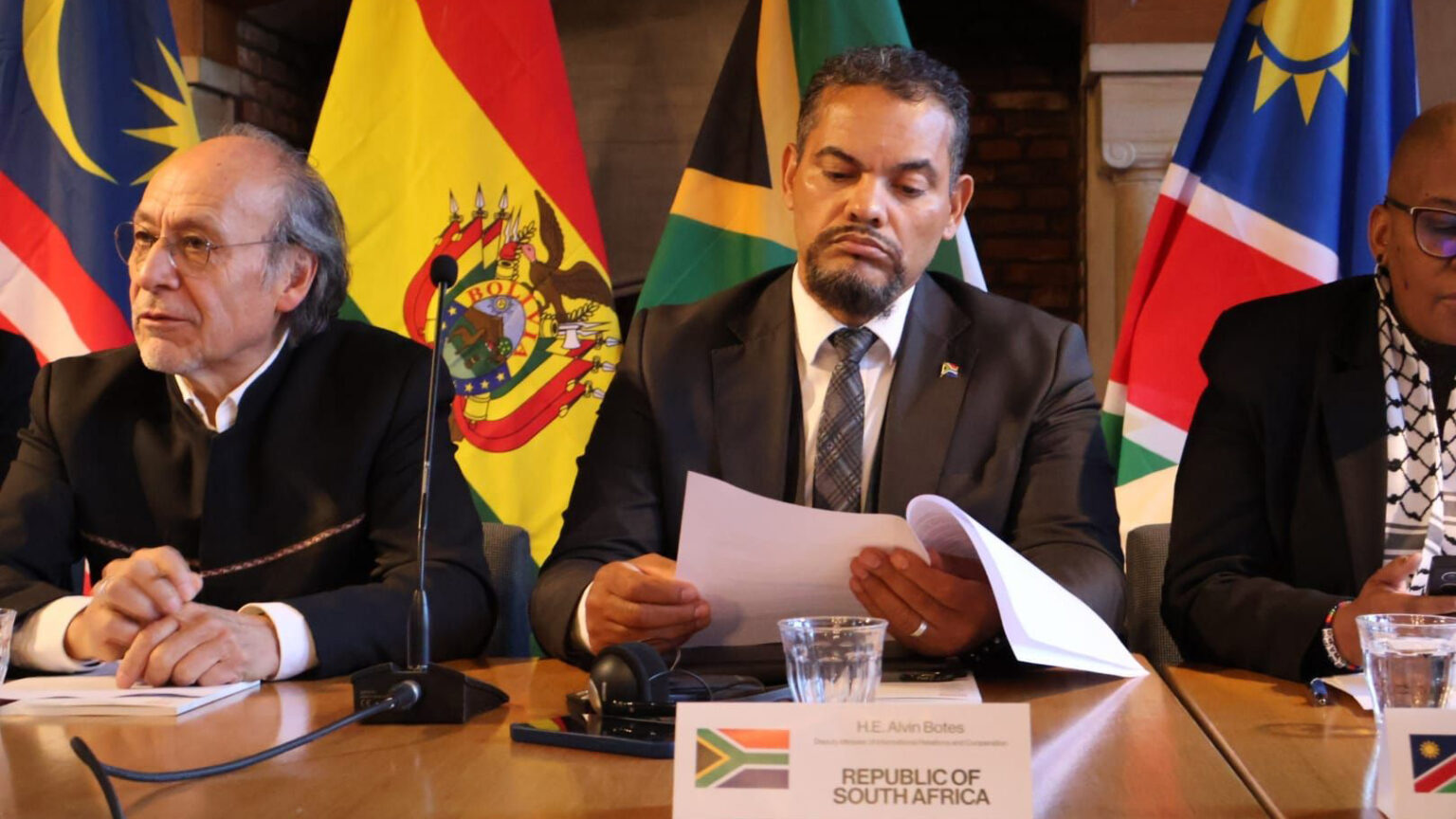
On Friday, January 31, nine nations took coordinated action to form the Hague Group to hold Israel accountable for its violations of international law in Palestine. Representatives from the governments of Belize, Bolivia, South Africa, Namibia, Colombia, Cuba, Honduras, Malaysia, and Senegal gathered in The Hague, in the Netherlands, to inaugurate the collective action.
Today, nine nations — collectively known as The Hague Group — gathered in The Hague to coordinate legal, diplomatic and economic measures against Israel’s violations of international law. pic.twitter.com/uP1UCMAr4x
Jeremy Corbyn, former leader of the United Kingdom’s Labour Party, also joined the representatives at the Hague. “One year after the [International Court of Justice] heard the South African application on the issue of genocide by Israel against the people of Palestine, [nine nations] have declared their support for the outcomes of that legal process,” Corbyn said. These nine nations “are determined to hold Israel to account, and all those nations that are continuing to supply weapons to Israel that are being used in the genocide of the Palestinian people in Gaza.”
Together, the nine nations intend to uphold international law in the face of Israel’s crimes. This is in relation to the International Criminal Court’s arrest warrants against both Israeli Prime Minister Benjamin Netanyahu and former Defense Minister Yoav Gallant, and the the provisional measures of the International Court of Justice, issued on January 26, March 28, and May 24 of last year. The Hague Group also declared its intention to prevent the transfer of arms to the Zionist state “in all cases where there is a clear risk that such arms and related items might be used to commit or facilitate violations of humanitarian law” and also prevent the docking of vessels “in all cases where there is a clear risk of the vessel being used to carry military fuel and weaponry to Israel, which might be used to commit or facilitate violations of humanitarian law, of international human rights law, and of the prohibition on genocide in Palestine.” The nations referenced international action to implement an arms embargo against apartheid South Africa.
Former Labour leader Jeremy Corbyn explains why he’s at The Hague today as nine nations take co-ordinated action against Israel. pic.twitter.com/8lnOcRTXTw
“We will take further effective measures to end Israeli occupation of the State of Palestine and remove obstacles to the realisation of the right of the Palestinian people to self-determination, including the right to their independent State of Palestine,” read a joint statement issued by the representatives inaugurating the Hague Group. The representatives issued a call for other nations to join the Group “in the solemn commitment to an international order based on the rule of law and international law, which, together with the principles of justice, is essential for peaceful coexistence and cooperation among States.”
Donald Trump signs executive orders at the White House on Thursday. Photograph: Evan Vucci/AP
Justin Trudeau, Canada’s prime minister, announces tit-for-tat 25% tariffs and warns of impeded access to ‘vital goods critical to US security’
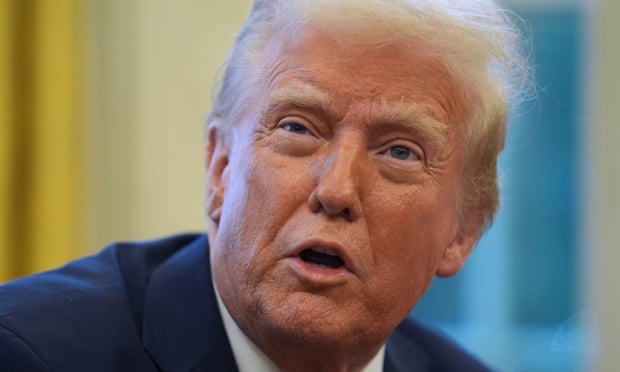
The leaders of Canada and Mexico have hit back after Donald Trump signed an order authorizing drastic tariffs of up to 25% on their exports to the US, while China said it would complain to the World Trade Organization after it was also targeted by the president.
Canada’s prime minister, Justin Trudeau, on Saturday night made a televised address announcing concrete measures including a tit-for-tat 25% tariff phased in across C$155bn ($107bn) worth of American products. Trudeau said Trump had put at risk US consumers’ and industries’ access to much-needed Canadian critical minerals and resources including oil, energy and timber. The prime minister promised to work with Canada’s provinces to review dealings with the United States.
Addressing Americans, Trudeau said: “Tariffs against Canada will put your jobs at risk, potentially shutting down American auto assembly plants and other manufacturing facilities. They will raise costs for you including food at the grocery store and gas at the pump. They will impede your access to an affordable supply of vital goods crucial for US security such as nickel, potash, uranium, steel and aluminum.”
Trudeau added: “They will violate the free trade agreement that the president and I along with our Mexican partner negotiated and signed a few years ago” – referring to the United States Mexico Canada agreement (USMCA) that was drawn up largely at Trump’s behest after he tore up the previous North America free trade agreement (Nafta) during his first term as US president.
…
Elon Musk urges you to be a Fascist like him, says that you can ignore facts and reality then.Climate Science Denier Donald Trump says Burn, Baby, Burn.
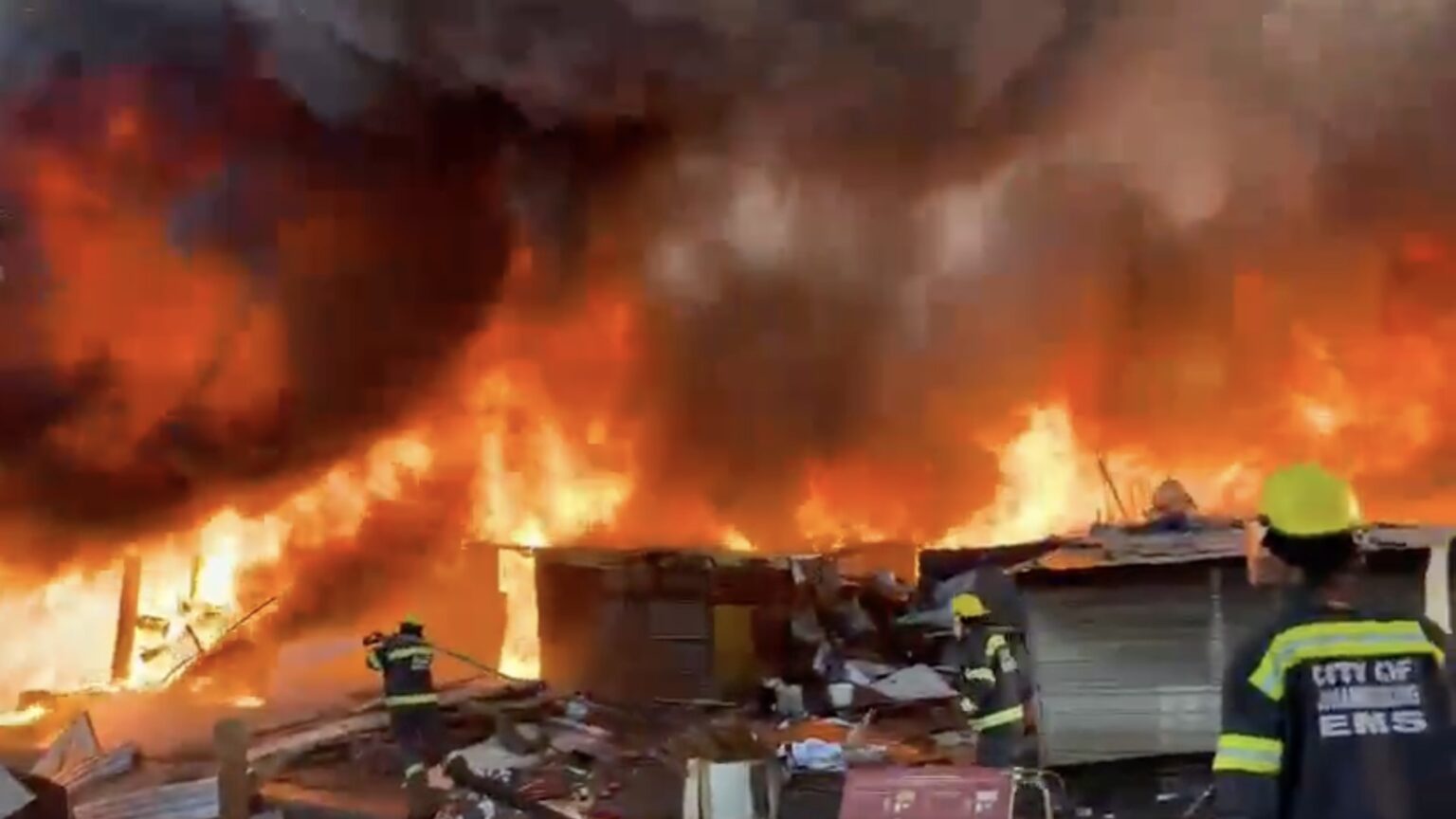
Johannesburg Emergency Management Services responding to the fire at the Selby settlement in Johannesburg. Photo: Screenshot
200 working-class families in South Africa have been left homeless after their shacks were claimed by a fire that swept the Selby informal settlement in the Booysens suburb of Johannesburg on the night of January 26.
Another fire on January 21 in the Diepsloot slum in the northern part of Johannesburg killed a young woman and a toddler. A day prior, 11 shacks in an informal settlement in the Honeydew suburb were burnt down.
Reports on all these incidents state that the cause of the fire was undetermined. However, the General Industries Workers Union of South Africa (GIWUSA) maintains that the cause is clear: the housing crisis caused by neoliberal policies of the state.
“The root cause of these fires is not accidental, but rather a result of the deliberate neglect and abandonment of our working-class communities” by a State implementing neoliberal policies, said its statement on January 29.
“For the working class, these policies have made ownership of housing” next to impossible “as every cruel cycle of interest rate hikes brutally strips them of houses, cars and other assets they are forced to sell.” In the absence of an emergency public housing program, masses of the working class are crammed into slums, sheltering in shacks built of easily inflammable materials. Lacking electricity supply, candle lamps are often used for lighting in these settlements.
Slums have become “deadly traps”
Almost a quarter of the country’s population relies on wood, coal, and charcoal for cooking on open flames, according to the Statistics Department’s 2023 Household Survey. The vulnerability to fire outbreaks due to these flames is further enhanced in the slums by the tangle of wires tapping electricity in the absence of government supply.
With the worsening economic crisis, increasing sections of South Africa’s working class are being forced into such slums, which GIWUSA describes as “deadly traps”.
Fires burning down the shacks in the slums “are one of the leading causes of unnatural death in South Africa… Shack fires occur every day, killing and injuring hundreds of people each year, destroying livelihoods and deepening poverty,” states a research paper for the UN Office for Disaster Risk Reduction (UNDRR) published late last year.
“The consequences of fires can be profound…They also destroy livelihoods. Already poor
households often lose everything they own. This includes important documents such as identity… cards and birth certificates, which are needed to access state-support grants and other safety nets.”
True to this UN warning about victims losing their IDs in such fires, the government has complained about the Selby fire-affected “households’ lack of willingness to participate in the verification process.”
For many of them, who are poor migrants from neighboring countries without adequate papers, despite having made a major labor contribution to South Africa’s industries, coming forward for verification would mean deportation, explained GIWUSA’s president Mametlwe Sebei.
“About 200 households have submitted their names for verification thus far, and in some instances, the information is incomplete,” said the Department of Human Resources in a statement on January 30. Operating with “limited resources”, the South African government insists that the “victims need to have proper identification documents that can be verified” in order to receive State assistance.
“It is important that those who lost documents due to the fire approach the nearest Home Affairs for a replacement document or provide sworn affidavits to help fast-track assistance,” adds its statement.
“They are talking nonsense,” maintains Sebei. “My experience is that often they require the impossible. I mean they require IDs and other papers which people naturally keep in their homes” that were burnt down, he told Peoples Dispatch.
Along with the electrification of slums and compensation for affected families, GIWUSA also demands public housing, which, Sebei adds, is entirely feasible. With more than 40% unemployment, amounting to well over 12 million people, and most of the construction industry’s capacity un-utilized, it is possible to construct the 3.7 million public housing units needed to abolish slums in the country if the profit motive is overcome, he argues.
“We should absolutely refuse to normalize the squalor and horrific living conditions in the informal settlements,” GIWUSA insists.
Original article by Andrew Wasley republished from TBIJ under a Creative Commons Attribution-NonCommercial-NoDerivs 3.0 Unported License.
British consumers were exposed to drug-resistant salmonella because border checks took years to come into force
UK health chiefs privately admitted that a lack of border inspections in the wake of Brexit left British consumers exposed to diseased meat, the Bureau of Investigative Journalism (TBIJ) can reveal.
Delays in implementing checks on imported food meant hundreds of people, including children, were poisoned by imported meat during a series of major salmonella outbreaks.
Previous TBIJ investigations uncovered a host of failings in the government’s handling of outbreaks of drug-resistant salmonella spread by supermarket chicken from Poland. Illnesses connected to the outbreaks – which also affected eggs – peaked at different points between 2020 and 2024, and Poland has since continued to export contaminated meat to the UK.
Documents now reveal that in a series of high-level meetings in late 2023, food safety and health bosses admitted that the UK’s borders could have been allowing infected meat to enter the country unchecked.
Minutes from the meetings attended by the UK Health Security Agency (UKHSA), the Food Standards Agency (FSA) and its devolved partners acknowledge there were “no current border controls in place”, and that paperwork and physical checks on imported goods were not due to start until the following year.
“This could change,” officials noted. “However, [the] FSA have decided that they can’t wait for border controls to come in as a control measure.”
Following the UK’s departure from the EU, Boris Johnson’s government announced that hygiene inspections on meat imports from Europe would begin in 2021. However the checks were repeatedly delayed and weren’t implemented until 2024.
“We didn’t do any checks on EU imports at our border control posts for three years,” said Helen Buckingham, a trade policy expert. She pointed to a recent report published by the National Audit Office that was highly critical of the UK’s post-Brexit border controls. She added: “Delays on introducing a new regime of incoming checks for EU goods [were seen as being] risky for the UK in public and animal health terms, because our borders were weak.”
Although checks on some UK meat and poultry imports – typically between 1% and 30% – are now being carried out, concerns have been raised that funding cuts to inspection staff at some ports could see large volumes of substandard meat coming into the UK, as reported in the Grocer.
Tim Lang, professor emeritus of food policy at City St George’s, University of London, said: “Food flows depend on trust. And that depends on believing that systems are in place to protect us from known harm. Five years from Brexit, we see not fewer, but persistence of problems. We’ve put up borders but haven’t invested in the inspection.”
Following the publication of details of the government’s planned border controls in 2023, the FSA chair Susan Jebb said that border controls were “critical to maintaining the UK’s high food and feed safety standards” and that they “must be a priority”. The FSA had previously raised concerns that food products imported from the EU were not being subjected to inspections.
According to Buckingham, the post-Brexit inspections phased in last year do represent a more stringent system than was previously in place. “Pre-Brexit, we didn’t check EU products of animal origin because […] the principle of ‘free circulation of goods’ applied between member states.”
TBIJ’s revelations come as Parliament’s environment, food and rural affairs select committee prepares to launch an inquiry into animal and plant health next Tuesday. Imported animal products will be a central focus of an initial evidence gathering session that will assess the effectiveness of import controls on biosecurity, food hygiene and public health.
The internal UKHSA records obtained by TBIJ also reveal that while a ban on Polish poultry products was among the measures being considered by the FSA, concerns remained about its potential effects on the meat industry. They included the possibility that the UK could import chicken from other countries with food safety “hazards”. No ban was subsequently implemented.
Although earlier FSA interventions brought about a reduction in reported cases, rates were still “outside of the tolerance that the FSA Board can accept of salmonella entering the UK from the EU”.
Officials were also worried that the salmonella contamination had become more widespread, involving multiple producers from Poland and a greater number of food products, the documents show. While attention had initially focussed on breaded chicken and other highly processed products, testing had revealed that fresh chicken and raw pet food was also implicated.
Richard Griffiths, chief executive of the British Poultry Council, said: “We expect our trading partners to meet their responsibilities with regard to safe food. If they cannot, and their own authorities cannot enforce the appropriate controls, then we want our own regulators to have the powers and resources to stop unsafe meat entering the country.”
The BPC previously called for every consignment of Polish poultry to be checked at UK borders.
Tests revealed that in 2024, at least 138 consignments of exported poultry from Poland contained salmonella, including variants that can be highly harmful to human health, according to EU data. The UK was among the affected countries. The figures were only slightly down from 2023, when there had been 149 recorded cases of contaminated products.
In June 2023, TBIJ reported that some of the salmonella linked to Polish poultry that poisoned UK consumers was resistant to multiple antibiotics, limiting treatment options for those falling seriously ill. The UK government was found to have allowed food companies linked to the outbreak to continue supplying supermarkets even after contaminated meat had been linked to the deaths of four people, and the poisoning of hundreds more.
Investigations also found that even though some of the salmonella was known to be antibiotic resistant, food safety and health officials did not disclose this to frontline health workers, including those treating victims. Nor did they inform the Polish authorities, impeding possible investigations into practices on the farms involved.
Bacteria such as salmonella can easily spread on poultry farms, particularly where there are unhygienic or overcrowded conditions, and go on to infect the wider supply chain.
The use of antibiotics on farms can enable potentially lethal bacteria to develop resistance, meaning the drugs will no longer work to treat infections. Antibiotic use in Polish livestock production has been a cause for concern in recent years, with increases in usage of some types of drugs important for humans.
Anjali Juneja, director of UK and international affairs at the FSA, said it has been working with the Polish authorities on measures to enhance the safety and compliance of imported poultry meat and eggs. These include increased testing and other interventions at the farm and manufacturer level.
“We continue to actively monitor the situation, including through in-country audits of Polish food safety controls and of poultry producers exporting to the UK. If we see any information of concern, we will take the necessary action,” Juneja said.
She added that the FSA welcomed the enhanced border checks implemented last year, which have become “a crucial part of our food safety system” that she said helps uphold the UK’s high standards.
A Defra spokesperson said: “This government will never waver in its duty to support the UK’s biosecurity and preserve our food supply.”
The Polish Veterinary Inspectorate told TBIJ that food safety alerts relating to poultry from Poland decreased from 2020-2024, demonstrating that it had been taking appropriate and effective action.
It said that a thorough investigation is undertaken whenever a salmonella case is detected and, in the event, will withdraw the food in question, as well as taking measures to minimise recurrence. And it said antibiotics are only used on farm animals when prescribed by a vet.
Kath Dalmeny, chief executive of the Sustain food and farming alliance said the latest findings expose “just how vital it is for the government to uphold high food standards in international trade deals, especially for high-risk foods such as Polish chicken”.
“They must also ensure there are enough vets and food hygiene inspectors to check that British and imported meat is fit to eat – health protection roles that have been in worrying decline for several years,” she added.
Ron Spellman, a veteran meat inspector, said the issue ultimately needed to be tackled at source. “The European Commission, as well as the Polish authorities and poultry industry, carry responsibility to protect all consumers who buy Polish poultry products, they must resolve this problem.”
The chancellor is under fire after a study cited as evidence for expanding the terminal to boost the UK’s economic growth was ordered by Heathrow itself
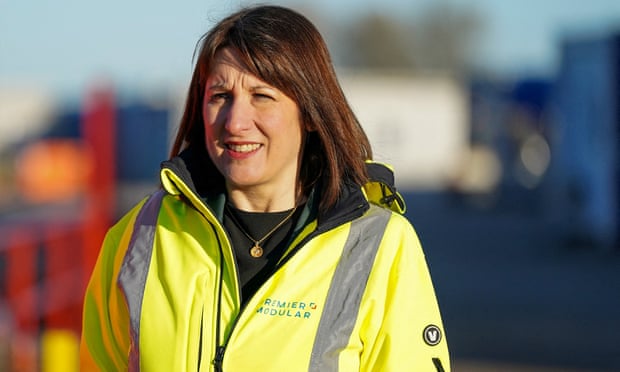
Rachel Reeves was facing criticism on Saturday night as it was confirmed that a report she cited as evidence that a third runway at Heathrow would boost the UK economy was commissioned by the airport itself.
Experts and green groups also challenged Reeves’s view that advances in the production of sustainable aviation fuel (SAF) had been a “gamechanger” that would substantially limit the environmental damage of flying, saying the claims were overblown and did not stand up to scrutiny.
…
Alex Chapman, senior economist at the NEF, said: “It is very concerning that the chancellor appears to be basing her support for Heathrow expansion on a figure from a report commissioned by Heathrow airport.
“Even more worrying is the fact that the methodology they have applied is one that the Department for Transport has previously decided is not fit for purpose, and that the report uses forecast data supplied by the airport itself.
“Heathrow expansion represents a major threat to the UK’s climate goals and flies in the face of scientific advice. To ensure that the claimed economic benefits are concrete, assessments should be carried out by independent government economists following best-practice methodology.
“NEF’s analysis has identified a wide range of weaknesses in the economic case, which have emerged since it was last fully appraised in 2015. Not least, the decline of business air travel, the surge in outbound leisure travel and the negative impacts on wider regions of the UK – all of which erode the potential growth benefit.”
Analysis by climate crisis website Carbon Brief suggests that, using the government’s own figures, SAF will barely cut emissions by 2040, and any reduction will be wiped out by rising flight numbers.