Month: April 2026
Israel escalates attacks on medics in Lebanon with deadly ‘quadruple tap’

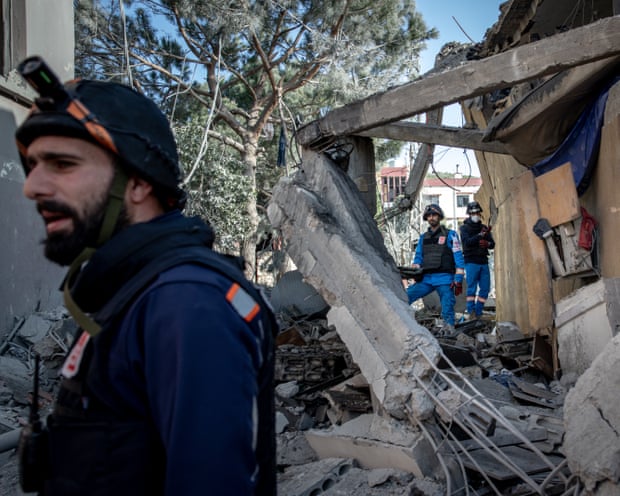
Paramedics search a building for survivors in Nabatieh on Monday, shortly after an Israeli airstrike. Photograph: Chris McGrath/Getty Images Lebanese health ministry says killing of 91 healthcare workers shows ‘total disregard’ for international law
When they received the call to respond to an Israeli airstrike in the city of Mayfadoun, in southern Lebanon, most of the paramedics held back, having previously seen colleagues killed by double-tap attacks targeting rescuers. But the medics from the Islamic Health Association (IHA) rushed to the scene.
By the time the other emergency workers arrived at the site, they found the IHA medics had indeed been caught in a second strike. They started evacuating their wounded colleagues, only for their ambulances to be hit in two further attacks.
One of the paramedics covered his ears and screamed, convulsing in pain as shrapnel shattered the back window of the ambulance.
The rescue mission on Wednesday afternoon had turned into a nightmare as Israel carried out three consecutive strikes on three sets of ambulances and medical workers.
In total, the attacks killed four medics and wounded six more, from three different ambulance corps, according to medical sources. Three of the medics were from the Hezbollah-affiliated IHA and Amal-affiliated medical corps, while one was from the Nabatieh emergency services organisation. Under international law, all medics are protected and are considered non-combatants, regardless of political affiliation.
…
Article continues at https://www.theguardian.com/world/2026/apr/16/israel-escalates-attacks-on-medics-in-lebanon-with-deadly-quadruple-tap

Keir Starmer explains that UK is actively supporting Israel’s genocidal expansion and repeats his previous quotation that he supports Zionism “without qualification”. Keir Starmer said “I said it loud and clear – and meant it – that I support Zionism without qualification.” here: https://www.jewishnews.co.uk/keir-starmer-interview-i-will-work-to-eradicate-antisemitism-from-day-one/ Will voters turn against Donald Trump in the US midterms? What we know so far
Richard Hargy, Queen’s University Belfast
The US is bracing for another cycle of elections, with November’s midterms determining the scope of Donald Trump’s power in the final two years of his presidency. All seats in the House of Representatives will be contested, as will one-third of the Senate.
Trump’s Republican party currently controls both branches of Congress. However, polls are indicating a swing to the Democrats that would see them retake the House. A current RealClear generic congressional vote poll, in which people are asked whether they will vote for Democrats or Republicans for Congress, gives the Democrats a five percentage point lead over the Republicans at 47.4% to 42%.
One major variable that is likely to affect the outcome of November’s elections is the war in Iran. Some Republican political operatives believe the conflict and its repercussions, namely the increased cost of living, could prove fatal to their party’s hopes of securing a slim retention of the House.
A March poll by the Pew Research Center revealed 61% of Americans disapproved of Trump’s handling of the conflict. One voting demographic of particular concern for Republicans is people aged 18 to 29. An Economist/YouGov poll also from March showed that 63% of these people opposed the war.
Men within this age bracket were an important factor in Trump’s 2024 election victory. Philip Wang, political reporter for Time magazine, argued in an article on April 8 that this “same voting bloc … is showing far less interest in voting in the midterms”.
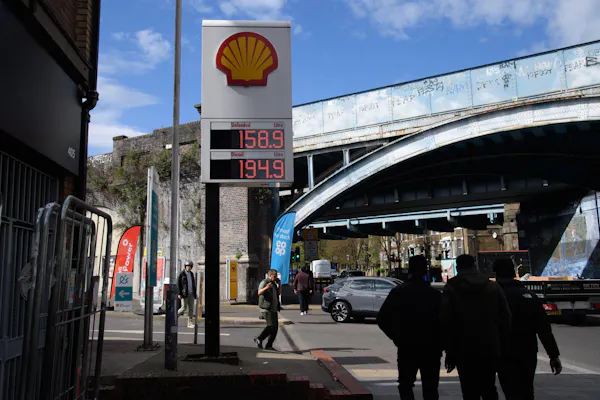
William A. Galston, a senior fellow at the Brookings Institution, has asserted that the affordability issue is affecting Trump’s standing. He has also stated that, for a majority of Americans, the president’s “priorities do not align with theirs”. A recent survey conducted by American non-profit Consumer Action for a Strong Economy revealed that voters’ most pressing concern was the price of groceries, with the cost of healthcare coming second.
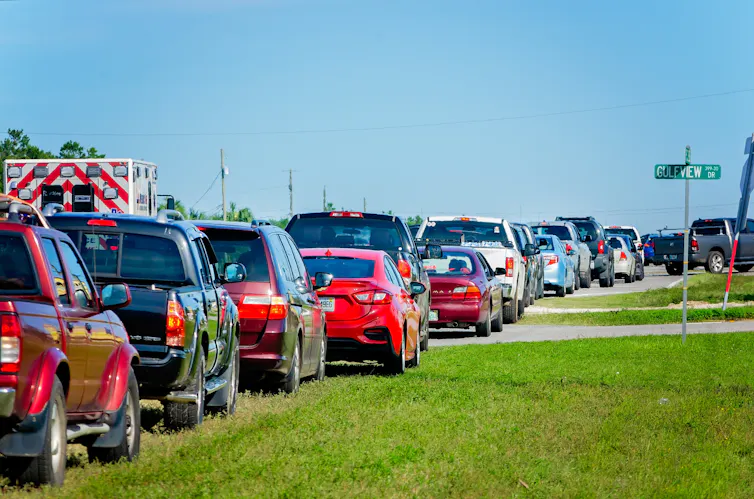
Three weeks into the Iran war, petrol prices had surged to an average of US$4 a gallon. Carmen K. Sisson / Shutterstock Over the past year, both parties have also engaged in redistricting efforts designed to increase their respective chances of controlling the House. In a number of mainly – though not exclusively – Republican controlled states, legislators have redrawn congressional maps in an attempt to secure more seats.
The redistricting war has come down to two final states: Democratic-led Virginia and Republican-dominated Florida. On April 21, voters in Virginia will decide the fate of proposed new congressional boundaries heavily favouring Democrats. Florida’s legislature will vote days later on a revised Republican-leaning electoral map.
However, there are growing concerns in both political camps about these votes and their impact on the result of the midterms. Florida Republicans fear Trump’s low approval ratings could cost them redrawn districts, while Democrats are encountering tepid backing from their supporters for their aggressive redistricting in Virginia.
Growing Democrat momentum
There have already been significant election results in recent weeks that have shed light on the trajectory of the upcoming midterms. In Republican-led Texas, a fascinating race is shaping up between both parties for a Senate seat. The last time a Democrat won here was in 1988.
In primary elections in March, Democratic voters chose state representative James Talarico as their candidate for November’s election. Republicans are yet to confirm theirs, with incumbent Senator John Cornyn facing Texas attorney-general Ken Paxton in a run-off election in May.
Primary voting numbers in Texas are encouraging for Democrats. For the first time in six years, more of its supporters cast early vote ballots in a March primary than Republicans. Democrats also saw a major shift in Latino voters to their side, a voting bloc that had swung to Trump in record numbers in 2024.
According to analysis by American broadcaster NPR: “In the ten most populous counties in Texas that are also at least 50% Latino, votes in the Democratic primary increased by an average of 128%.” The same analysis concluded that, in those same counties, the Republican primary saw an average drop in votes of 4.8%.
Then, in early April, liberal judge Chris Taylor won a seat on the state of Wisconsin’s supreme court. She secured 60.1% of the vote to her conservative opponent’s 39.8%. Taylor’s statewide vote is an impressive 21 percentage points higher than Democratic presidential candidate Kamala Harris’s vote share was in the state in 2024.
Also in early April, an election took place in Georgia to fill the congressional seat vacated by former Trump ally Marjorie Taylor Greene. Greene, who has publicly broken with Trump over his handling of the Epstein files, won in 2024 by almost 29 percentage points. Her replacement, Clay Fuller, held the seat for the Republican party by a much narrower margin of just 12 percentage points.
The forecasts for November’s midterm elections are moving in the Democrats direction, especially for taking control of the House. But there is some reason for hope among Republicans.
Figures from CBS News and CNN/SSRS show that at the same point in 2006 and 2018 – also midterm election years where a Republican president was in office – Democrats were ahead on party favourability by 18 points and 12 points respectively. At this stage in 2026, the data reveals Republicans are actually sitting with a five-point favourability lead.
Seven months out from November’s midterms, Democrats have momentum on their side as well as a Republican president whose poll ratings are plummeting. The most likely outcome is that the Democrats will emerge with control of at least one branch of Congress.
Richard Hargy, Visiting Research Fellow in International Studies, Queen’s University Belfast
This article is republished from The Conversation under a Creative Commons license. Read the original article.
US naval blockade of Strait of Hormuz: what it involves and the risks attached
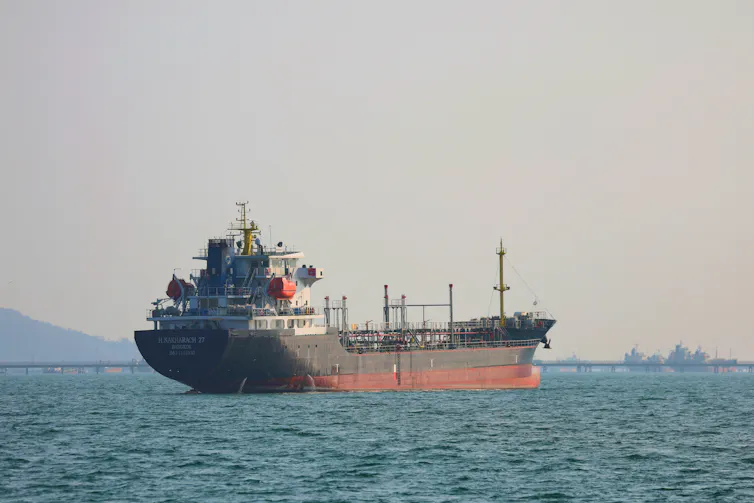
The US blockade of the Strait of Hormuz aims to cut off Iran’s oil exports and punish any ship that pays a toll for transiting the waterway. somkanae sawatdinak/Shutterstock Basil Germond, Lancaster University
A US-sanctioned tanker with links to China, the Rich Starry, has transited the Strait of Hormuz, despite the US blockade of the waterway. According to the respected maritime news and intelligence agency Lloydslist, the Rich Starry is falsely registered in Malawi, but is Chinese owned and carrying a Chinese crew. It is subject to US sanctions for carrying Iranian goods. It is not known what the vessel is currently transporting.
Having been anchored off the UAE, the Rich Starry is not technically in breach of the blockade, but the incident has raised fears of a potential confrontation between the US and China in the region. Other vessels are reported to be waiting to transit the Strait, despite the US blockade.
The decision to impose a blockade on Iranian ports in the vicinity of the Strait was announced by the US president, Donald Trump, following the breakdown of US-Iran peace talks in Islamabad on April 11. Trump’s announcement was clarified by a statement on April 12 from US Central Command, which stipulated that the operation would prevent ships entering and exiting Iranian ports and coastal areas while not impeding vessels transiting the Strait to and from non‑Iranian ports.
Trump also announced that: “I have also instructed our Navy to seek and interdict every vessel in International Waters that has paid a toll to Iran. No one who pays an illegal toll will have safe passage on the high seas.” It remains unclear as to whether this will be implemented.
The Strait of Hormuz has been as good as closed since shortly after the US and Israel launched their attacks on Iran at the end of February. Most ship owners, charterers and insurers are unwilling to accept the financial risk – and risk to human life – that transiting the Strait under threat of Iranian attack would entail.
Blockades are used to convert naval dominance into advantage on land by preventing imports and exports of goods, in Iran’s case oil, to put pressure on an adversary’s population and government by hurting their economy. Likewise, Iran’s strategy of closing down the Strait after it was attacked intended to disrupt the global economy in order to put international pressure on the Trump administration.
Iran has long threatened to use its geographical proximity to the Strait of Hormuz to close it down. Having demonstrated how effective this can be in disrupting oil and liquid natural gas prices, Tehran has been flexing its muscles by demanding that ships wanting to transit the waterway pay a tariff of up to US$2 million (£1.5 million). Lloydslist reported on March 25 that “a total of 26 vessel transits through the strait have followed a route pre-approved under an IRGC [Islamic Republican Guard Corps] ‘toll booth’ system that requires the ship operators to submit to a vetting scheme”.
This was reportedly a sticking point in negotiations between the US and Iran in Pakistan on April 11. Tehran wants to retain control of the Strait and the ability to levy tolls from transiting ships. The US is demanding that the maritime right of free passage must be enforced. It was when the first round of talks ended in deadlock that the US president decided to impose the naval blockade.
Former US diplomat to the Middle East, David Satterfield, told the BBC on April 13 that it was now about which country could absorb more pain, adding: “The Iranians believe … that they can absorb more pain for a longer period than their opponents can.”
Expensive – and risky – gambit
The cost calculus is asymmetric. It will be more expensive for the US to maintain its blockade than it was for Iran to close the Strait. The question will be whether Washington can sustain interdiction long enough to effectively undermine the regime – always remembering that the Islamic Republic has potentially had decades to prepare for this sort of scenario.
A prolonged crisis in the Gulf will inevitably affect prices and disrupt the global economy. Justin Ng/Alamy Live News If the blockade can be implemented effectively, it could – in time – have an effect on an economy wrecked by years of sanctions and further weakened by the recent war and nationwide protests in January. The question is how long that might take.
To be effective, the blockade will require considerable naval resources. The US is reported to have as many as 21 warships in the Middle East, including the aircraft carrier USS Abraham Lincoln and the USS Tripoli, an amphibious assault ship with a complement of marines who are trained to board ships using helicopters and small boarding craft.
This introduces another layer of risk as assets operating near to the Iranian coasts will need to be protected against Iranian missiles, drones and fast attack craft. So, this would be resource‑intensive, operationally demanding and thus politically exposed for the US.
How the US will go about enforcement remains to be seen. In December and January, US naval and coastguard ships boarded and seized several vessels linked to Venezuela’s shadow fleet that had broken America’s blockade. Whether it would pursue the same action with a vessel linked to China is another matter though. And while another option would be to fire warning shots, these can be dangerous around tankers because of the risk of oil spillage, as well as the obvious political risk attached to Chinese-linked vessels.
It’s not clear at present that imposing a blockade on the Strait of Hormuz will restore free navigation of the waterway any time soon. But it now appears that, in the absence of free navigation, some countries have decided to call America’s bluff and attempt to transit the waterway in defiance of the US blockade. And the big concern must be the serious risk of escalation if the US attempts to enforce the blockade on a Chinese-owned vessel.
None of this will be welcomed by the US president and his national security team.
Basil Germond, Professor of International Security, School of Global Affairs, Lancaster University
This article is republished from The Conversation under a Creative Commons license. Read the original article.

Climate science denier Donald Trump confirms that he knows nothing about democracy and that more liquid gold is being secured according to his policy of global privateering. Keir Starmer explains that UK is actively supporting Israel’s genocidal expansion and repeats his previous quotation that he supports Zionism “without qualification”. Keir Starmer said “I said it loud and clear – and meant it – that I support Zionism without qualification.” here: https://www.jewishnews.co.uk/keir-starmer-interview-i-will-work-to-eradicate-antisemitism-from-day-one/ US blockade of Strait of Hormuz ratchets up tensions with China ahead of Trump visit to Beijing
Tom Harper, University of East London
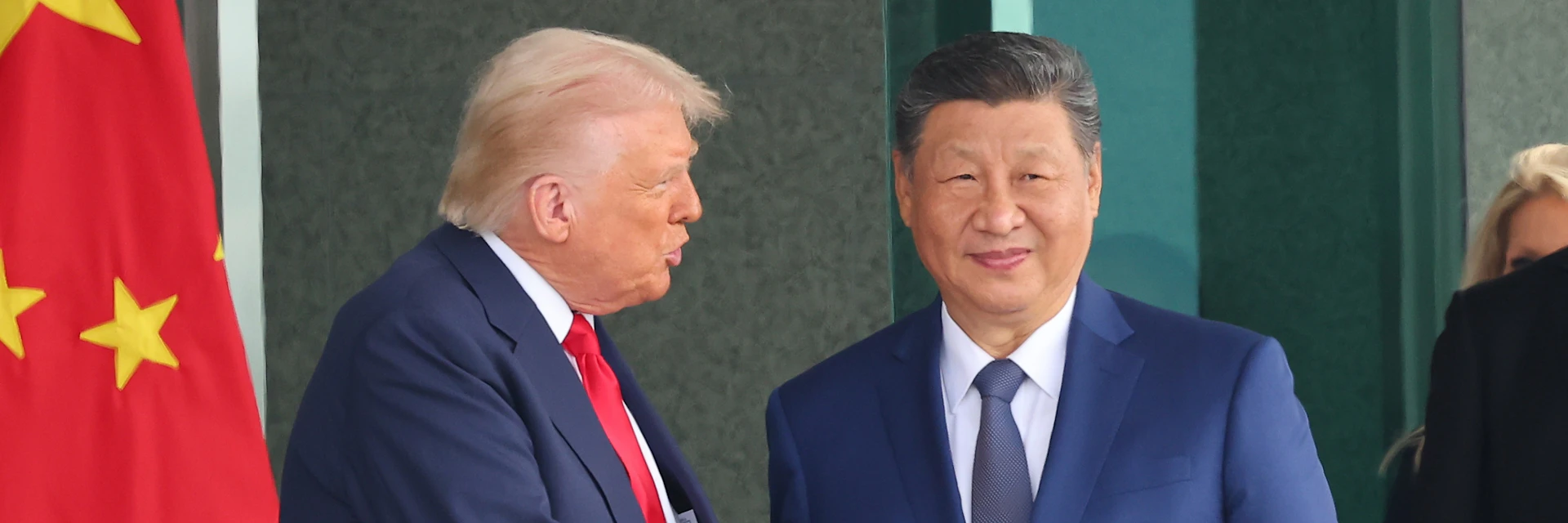
The US president is set to visit Beijing in mid-May. EPA/Yonhap The Trump administration’s decision to carry out a naval blockade of the Strait of Hormuz has raised tensions in the Persian Gulf to new and more perilous levels. The move was announced by the US president, Donald Trump, after negotiations over a ceasefire with Iran broke down on April 11, partly due to Iran wanting to retain control of the vital Strait of Hormuz, through which one-fifth of the world’s oil transits.
The blockade is designed to neutralise Iran’s efforts to close the strait to shipping it deems unfriendly to Tehran and implement a toll system for other vessels transiting the strait.
The US blockade can be seen as the latest attempt by the Trump administration to project strength. But it also throws down a challenge to Beijing. China has been the main purchaser of Iranian oil in recent years and is one of the few nations whose shipping can enter the strait unchallenged.
It appeared very likely that this status would be tested on April 14 when the Rich Starry, a Chinese owned and operated tanker under US sanction for transporting Iranian oil, transited the strait unchallenged by the US warships in the region.
But it has since been reported that the vessel turned back in the Gulf of Oman and headed back to the Strait of Hormuz. The US now claims that six vessels that attempted to transit the strait were turned around.
The Rich Starry’s willingness to avert a potential Sino-American clash, suggests that Beijing is still unwilling to challenge Washington’s red lines, particularly so close to a state visit by the US president next month, a trip postponed from March 31 as a result of the conflict in Iran. China has called the US blockade a “dangerous and irresponsible act”.
But what appears to be a deliberate decision not to challenge the blockade may be interpreted as another instance of Chinese weakness, which will probably embolden Washington to take more active measures against China’s tanker fleets.
However, the US seizure of any Chinese shipping could certainly provoke a more dangerous outcome, with the prospect of increased tensions or even conflict with Beijing. Should the US seize a Chinese vessel, Beijing could see this as an act of war on Washington’s part, if it chooses to interpret such an incident as an American effort to strangle the Chinese economy.
While an armed clash between the US and China in the Persian Gulf is unlikely, it is possible that Beijing may deploy its fleet stationed in Djibouti to the region. China’s base in Djibouti is home to its 48th escort group which has previously performed anti-piracy operations in the region as well as escort duties for Chinese-owned ships in the region. This which raises the question over whether Washington would be willing to fire on Chinese warships to enforce its blockade.
China’s challenge to the US
China’s response to an American blockade may be more indirect in nature. One form this could take is the provision of Chinese weapons systems to Iran.
China’s Beidou satellite navigation system has already played a significant role in guiding Iran’s existing stockpile of missiles against American and Israeli targets. Further Chinese military assistance, especially in the form of missiles and drones, can help Beijing retaliate indirectly through Iran.
The New York Times recently reported intelligence sources alleging that China may have shipped shoulder-launched missiles to Iran – but this was strenuously denied by Beijing.
On the other hand, a potential Chinese retaliation may not even take place in the Middle East. Instead, it is possible that Beijing may target American assets and interests in the Asia Pacific.
This comes at a time where several American allies in the region have become increasingly vulnerable, with some missiles system being deployed to the Middle East from South Korea. Coupled with fuel shortages as a result of the closure of the Strait of Hormuz, the region is potentially even more exposed to China’s moves should Beijing choose to act.
The US is reportedly turning vessels around in the Golf Oman, where they emerge from the Strait of Hormuz. Wikimedia Commons While Beijing prefers a more stable Middle East and global economy, having been one of the key beneficiaries of globalisation, there are several opportunities for China’s wider goals. One of the biggest is the status of the Renminbi. It has become prominent in the oil trade in the Persian Gulf, with Iran primarily dealing with transactions in the currency. This is in line with the emergence of the petroyuan in the 21 century to challenge the dominance of the petrodollar.
Alongside China’s position as a supplier of aviation fuel in the Asia Pacific, the conflict has entrenched and strengthened China’s role in the global economy.
In addition, the potential shortage of petroleum can open the door for wide-scale adoption of electric vehicles (EVs), with Chinese firms such as BYD being potential beneficiaries of a future EV boom. This echoes the popularity of Japanese cars during the Opec crisis of the 1970s, due to their comparatively high fuel efficiency in contrast to American and European models.
As a result, a prolonged Middle East oil crisis may see firms such as BYD become household names, furthering the influence of “Brand China”.
Alongside these, the crisis may further China’s push to present itself as a more stable partner in contrast to Washington’s more chaotic approach. This has gained traction due to the perceived unpredictability of the Trump administration over the past 15 months.
China already has a comparatively favourable global image when compared to the US. A wider conflict with Iran will probably take this further. As a result, the path of the Rich Starry may chart the course of the Sino-American competition and the world that this competition will shape.
Tom Harper, Lecturer in International Relations, University of East London
This article is republished from The Conversation under a Creative Commons license. Read the original article.
Climate science denier Donald Trump confirms that he knows nothing about democracy and that more liquid gold is being secured according to his policy of global privateering. 
Orcas discuss how Trump was re-elected and him being an obviously insane, xenophobic Fascist.