


Article by Julia Conley republished from Common Dreams under Creative Commons (CC BY-NC-ND 3.0).

After President Donald Trump echoed climate campaigners’ longtime condemnation of fossil fuel giants’ massive profits—uttering “the only thing” the climate-denying president “has said about energy policy since taking office that makes any sense,” according to one advocate, organizers on Tuesday urged him to put his money where his mouth is by backing a windfall profits tax for companies like Chevron and Exxon Mobil.
In the Oval Office on Monday, Trump called on those corporations and others to slash prices and give some of their record-breaking profits—specifically those made since the president joined Israel in waging an unprovoked war against Iran on Feb. 28—“back to the public.”
RECOMMENDED…
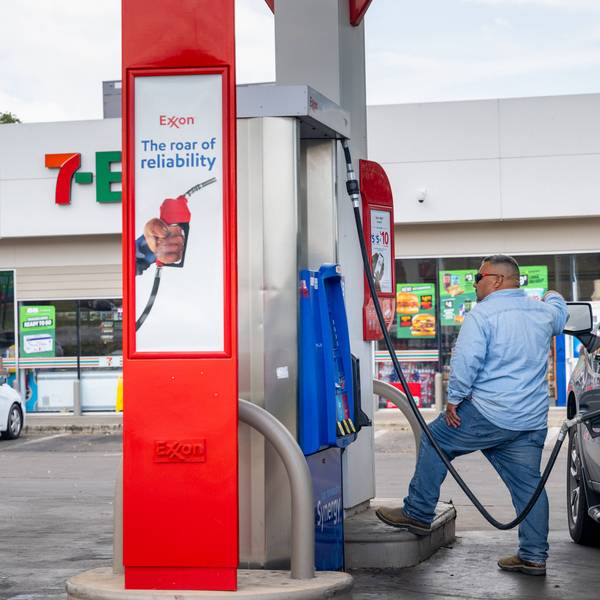
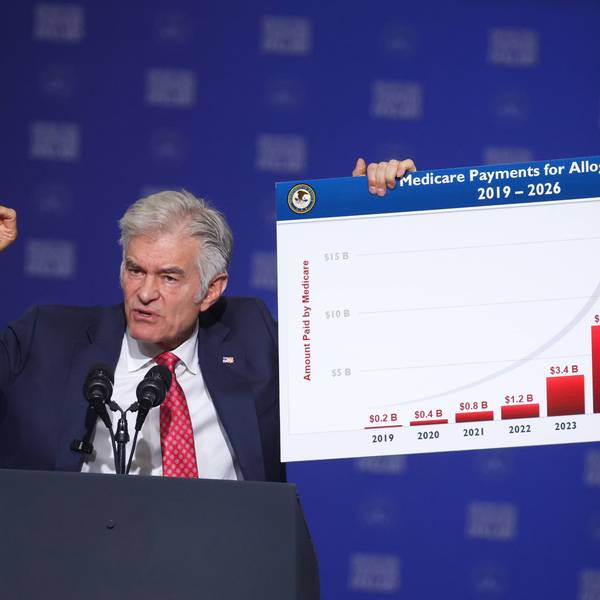
“They’re making too much money, based on a shortage,” said Trump, while noting that he is a “big free enterprise guy.”
“I don’t like it… Chevron, too much money. Exxon Mobil, too much money,” he said. “When you look at one company, they made 12 times what they made the year before? Give some of that back to the public, and they’d better cut the retail price.”
With oil and consumer gas prices skyrocketing since Trump and Israel started the war, resulting in Iran’s retaliatory measure of effectively closing the Strait of Hormuz, which a fifth of the world’s oil supply ordinarily travels through, Exxon reported that its second-quarter profits more than doubled compared with last year. The company took in $14.5 billion, while Chevron reported profits of $12 billion compared with $2.5 billion in 2025—nearly a 400% increase.
BP also reported profits that were $2.35 billion higher than last year.
An analysis by the Guardian published Tuesday showed that eight of the world’s largest oil companies made nearly $93 billion in profits in the three months following the invasion.
The climate action group 350.org noted that the record profits of oil and gas giants come as “communities across the world endure record-breaking heatwaves, wildfires, and rising living costs”—and as governments from around the world prepare to resume negotiations on a United Nations Framework Convention on International Tax Cooperation, where a “mandatory surtax on highly polluting industries is gaining support as part of that process.”
Two Democratic lawmakers in the US, Rep. Ro Khanna of California and Sen. Sheldon Whitehouse of Rhode Island, introduced the Big Oil Windfall Profits Tax Act in March.
“From Bordeaux to Phoenix to Mumbai, families are living through the cost of climate delay, while the companies most responsible bank blockbuster bonanzas,” said Anna Jellema, executive director of 350.org. “That is not a coincidence; it is a business model. Governments meeting in New York this month have a genuine opportunity to change it. Calls are growing across the political spectrum for a proper global profits tax, so the industry that helped cause these disasters pays towards the recovery, the solutions and the protection people need. It’s simple fairness: Those who caused the damage and profited from it should pay to fix it.”
Candice Fortin, US campaign manager for 350.org, emphasized that the latest comments from Trump, whose Interior Department just moved to weaken restrictions on Arctic drilling, must be taken with a grain of salt.
In the same Oval Office statement on Monday, said Fortin, “Trump criticized countries championing wind energy and supported more oil extraction in the North Sea.”
“We don’t just need to tax fossil fuels’ windfall profits now, to be then forget about later,” said Fortin. “We need to end our dependence on oil, gas, and coal—and we need a permanent mechanism to make the fossil fuel industry pay its fair share and redirect those revenues towards protecting people and communities from the climate and cost-of-living crises.”
“If this is a genuine change of heart from a president whose budget bill included $18 billion in taxpayer handouts to Big Oil, we welcome it,” added Fortin. “But talk is cheap, here’s the real test: Will Trump throw his weight behind the Big Oil Windfall Profits Tax bill, which his party has been stonewalling in Congress since March?”
Article by Julia Conley republished from Common Dreams under Creative Commons (CC BY-NC-ND 3.0).
Nigel Farage urges you to ignore facts and reality and be a climate science denier like him and his Deputy Richard Tice. He says that Reform UK has received £Millions and £Millions from the fossil fuel industry to promote climate denial and destroy the planet.Donald Trump urges you to be a Climate Science denier like him. He says that he makes millions and millions for destroying the planet, Burn, Baby, Burn and Flood, Baby, Flood. Power-mad orange gasbag Donald Trump says Burn, Baby, Burn.
Article by Jake Johnson republished from Common Dreams under Creative Commons (CC BY-NC-ND 3.0).
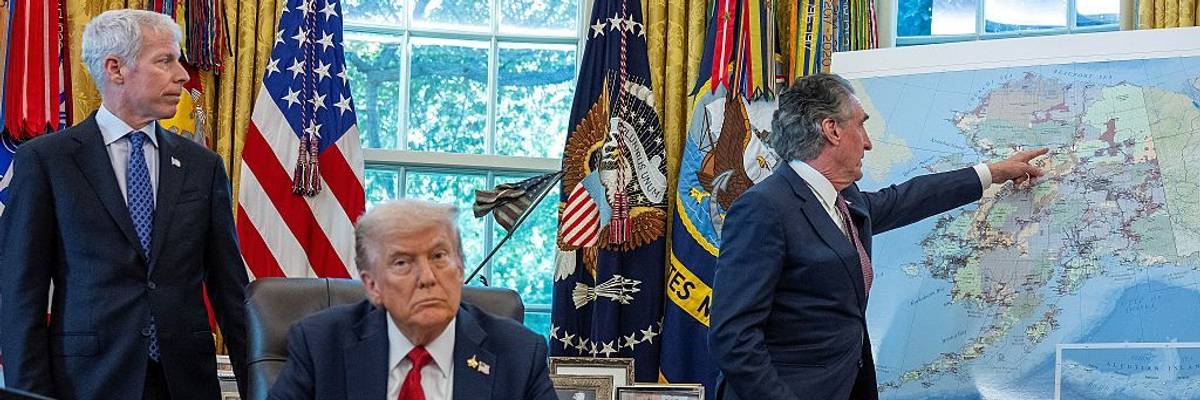
The Trump administration on Monday proposed weakening Obama-era safeguards for fossil fuel drilling in the Arctic Outer Continental Shelf, a move condemned by environmental groups as another industry handout that would make disastrous oil spills more likely.
The US Interior Department characterized the proposed changes, which will face a 90-day public comment period, as “targeted revisions” aimed at reducing “unnecessary regulatory burdens” that are limiting resource extraction off Alaska’s coast. The new proposal, according to the agency, “would update requirements related to blowout preventer real-time monitoring, Arctic source control and containment equipment, relief rig capability, subsea isolation devices, mudline cellars, oil spill response plan-holder reviews, crane operations on artificial islands, and suspensions of operations and production.”
RECOMMENDED…
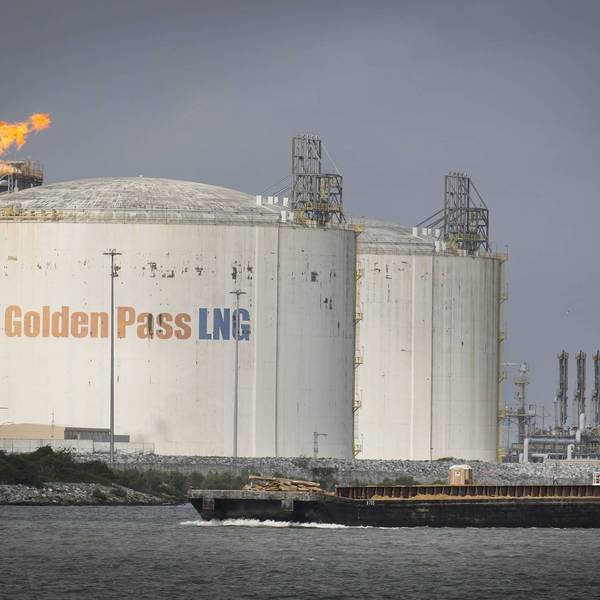
The Trump administration unveiled the proposal as it pushed for a massive expansion of offshore drilling, even as the climate impacts of fossil fuel extraction continued to intensify across the US and worldwide. Joseph Gordon, campaign manager at Oceana, called the combination of expanded drilling and weakened safety standards “a recipe for catastrophe.”
“This attempted rollback would make it even harder to prevent oil spills or tackle the horrors that inevitably follow in the remote and fragile Arctic,” said Gordon. “Giving oil companies a pass on safety measures like blowout preventers would set a dangerous precedent that will put Alaska’s waters, wildlife, and people at risk.”
Cooper Freeman, Alaska director at the Center for Biological Diversity, said that “weakening rules for Arctic Ocean drilling is a truly terrible idea that threatens coastal communities and wildlife like bowhead whales and polar bears.”
“Arctic oil drilling is one of the most dangerous extractive activities out there, and cleaning up a spill would be nearly impossible,” Freeman added. “Stronger safeguards for Arctic offshore drilling came on the heels of the Deepwater Horizon blowout, where we learned that just one mishap can cause a catastrophe.”
President Donald Trump, whose 2024 campaign was boosted by fossil fuel industry donations, began targeting Alaska drilling regulations on the first day of his second White House term, signing an executive order attacking “punitive restrictions implemented by the previous administration that specifically target resource development on both state and federal lands in Alaska.”
In November, the Interior Department—led by Big Oil ally Doug Burgum—released a drilling plan targeting “every available offshore area in Alaska, including the High Arctic, which stretches 200 miles into the Arctic Ocean, with over 20 lease sales through 2031.”
“We should be banning drilling in the Arctic Ocean, not making it easier for industry to exploit and pollute,” Freeman said Monday.
Article by Jake Johnson republished from Common Dreams under Creative Commons (CC BY-NC-ND 3.0).
Nigel Farage urges you to ignore facts and reality and be a climate science denier like him and his Deputy Richard Tice. He says that Reform UK has received £Millions and £Millions from the fossil fuel industry to promote climate denial and destroy the planet.Donald Trump urges you to be a Climate Science denier like him. He says that he makes millions and millions for destroying the planet, Burn, Baby, Burn and Flood, Baby, Flood.Power-mad orange gasbag Donald Trump says Burn, Baby, Burn.
Human-Caused Climate Emergency Made Canada’s Summer Wildfires Twice as Likely: Study
Nearly 50 Million More People to Face ‘Massive Threat’ of Acute Hunger Due to El Niño, UN Warns
‘Relentless in Its War on Offshore Wind,’ Trump Admin Kills More Project
War! What is it good for? Absolutely humongous oil company profits
Zack Polanski calls for Prime Minister to force fossil fuel firms to cover costs of tackling wildfires
Polanski ‘reality checks’ Burnham over ‘biggest crisis since WWII’ amid ext
Article by Brad Reed republished from Common Dreams under Creative Commons (CC BY-NC-ND 3.0).
Consumer and environmental advocates on Monday called for the Securities and Exchange Commission to end its push to rescind rules requiring companies to disclose risks related to climate change.
The SEC first adopted the climate disclosure rules in 2024, with the commission describing them as a response to “investors’ demand for more consistent, comparable, and reliable information about the financial effects of climate-related risks on a registrant’s operations.”
RECOMMENDED…
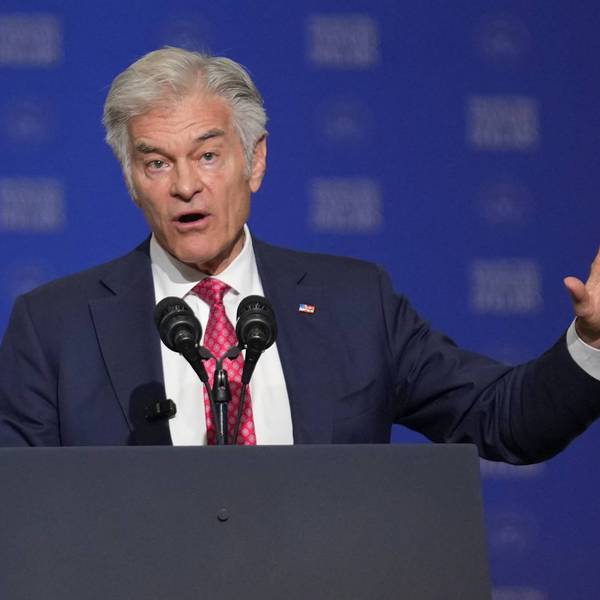
But in June, the SEC—now under the leadership of President Donald Trump-appointed chair Paul Atkins—proposed scrapping the rules, which the commission described as “an overreach of statutory authority and unsound policy.”
Elyse Schupak, climate policy advocate for Public Citizen, said that ending the disclosure rules would reflect “the desire of Paul Atkins’ SEC to ignore growing financial risks from climate change and to deprive investors of essential information.”
“For polluting industries that seek to downplay their role driving the climate crisis and their exposure to related risks, finalizing the proposed rule would be a victory,” said Schupak. “The SEC should withdraw this proposal as it contradicts the commission’s responsibility to facilitate transparency for investors and promote well functioning capital markets.”
Alex Martin, climate finance policy director at Americans for Financial Reform, noted that many investors spoke up in favor of the disclosure rules when they were first proposed because they saw climate risk assessment as a valuable information to have before making major financial decisions.
If the new proposal is finalized, Martin added, it “will hurt workers saving for retirement by depriving people of information needed to assess companies’ financial risks due to climate change—and by endangering other critical disclosures as well.”
Benjamin Schiffrin, director of securities policy for Better Markets, similarly argued that scrapping the SEC rules “will deprive investors of material information essential to making informed investment decisions.”
“There can no longer be any serious dispute that the climate-related risk companies face matters greatly to their future prospects,” Schiffrin emphasized. “An SEC that was serious about protecting investors would be facilitating investors’ access to this information, not preventing them from understanding how climate-related risks are impacting the companies in which they invest their hard-earned money.”
Janet Ranganathan, managing director at the World Resources Institute, said repealing the rule was particularly nonsensical at a time when the country is dealing with multiple climate-related disasters, including wildfires in the Pacific Northwest.
“Rescinding the rule would not eliminate climate risk from the market—it simply blindfolds investors to it, at their own expense,” said Ranganathan. “Climate risk should not become the exception to smart financial management simply because it has become politically contentious.”
Article by Brad Reed republished from Common Dreams under Creative Commons (CC BY-NC-ND 3.0).
Nigel Farage urges you to ignore facts and reality and be a climate science denier like him and his Deputy Richard Tice. He says that Reform UK has received £Millions and £Millions from the fossil fuel industry to promote climate denial and destroy the planet.Donald Trump urges you to be a Climate Science denier like him. He says that he makes millions and millions for destroying the planet, Burn, Baby, Burn and Flood, Baby, Flood.Power-mad orange gasbag Donald Trump says Burn, Baby, Burn.
Human-Caused Climate Emergency Made Canada’s Summer Wildfires Twice as Likely: Study
Nearly 50 Million More People to Face ‘Massive Threat’ of Acute Hunger Due to El Niño, UN Warns
‘Relentless in Its War on Offshore Wind,’ Trump Admin Kills More Project
War! What is it good for? Absolutely humongous oil company profits
Zack Polanski calls for Prime Minister to force fossil fuel firms to cover costs of tackling wildfires
Polanski ‘reality checks’ Burnham over ‘biggest crisis since WWII’ amid ext
Article by republished from Common Dreams under Creative Commons (CC BY-NC-ND 3.0).
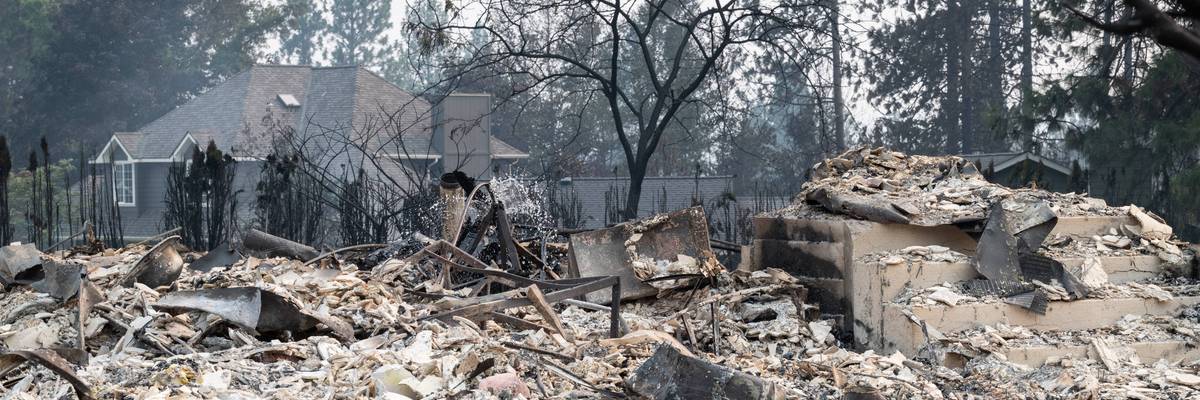
Over 60,000 people were ordered to evacuate the Spokane area over the weekend as it was devastated by what Democratic Washington Sen. Maria Cantwell called the “top fire” in a nation currently being scorched by climate-fueled blazes.
Illustrating how the climate crisis is already impacting lives and communities across the country and the globe, three raging fires reportedly consumed over 600 structures as of Sunday, including homes and businesses, and reduced entire streets to their foundations.
RECOMMENDED…
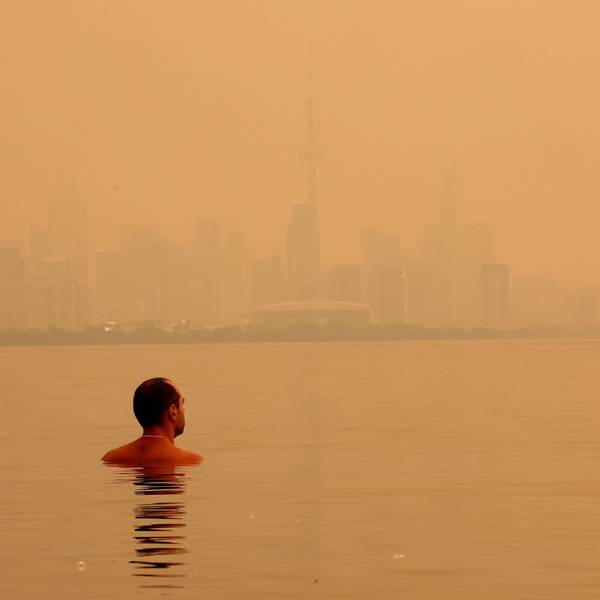
At a briefing on Sunday afternoon, officials said more than 250,000 acres were burning across Washington, but reported no deaths or injuries.
Spokane Mayor Lisa Brown called it “the worst natural disaster our region has faced.”
Democratic Gov. Bob Ferguson has requested assistance from the Federal Emergency Management Agency (FEMA), which is under the Trump administration’s Department of Homeland Security (DHS).
Sen. Patty Murray (D-Wash.) wrote on social media that she had spoken with Homeland Security Secretary Markwayne Mullin and that he “made clear the federal government will do everything it can to support response and recovery,” though President Donald Trump has previously intervened to block disaster aid to Democrat-led states.
While the fires moderated over the weekend, on Monday they remained largely uncontained and continued to spread due to dry conditions from recent severe droughts in the region, exacerbated by rising global temperatures.
“This is climate change playing out live in real time,” said meteorologist and Climate Central journalist Shel Winkley in a video about the Spokane fires.
Warmer temperatures, he explained, have caused a vicious cycle of “weather whiplash” in which greater winter rainfall facilitates plant growth before harsher summer heat domes suck moisture from these plants, turning them into a tinderbox.
“Northeastern Washington and central Oregon now see at least three more weeks of fire weather days each year than they did just back in the 1970s,” Winkley said. “More fire weather days means more chances for a spark, any spark, to turn into this.”
The blazes are part of a nationwide trend, with wildfires this year more severe on average than in previous years. Over the past decade, the average annual acreage burned in the US was more than double the average of the late 1980s and early 1990s, according to data from the National Interagency Fire Center.
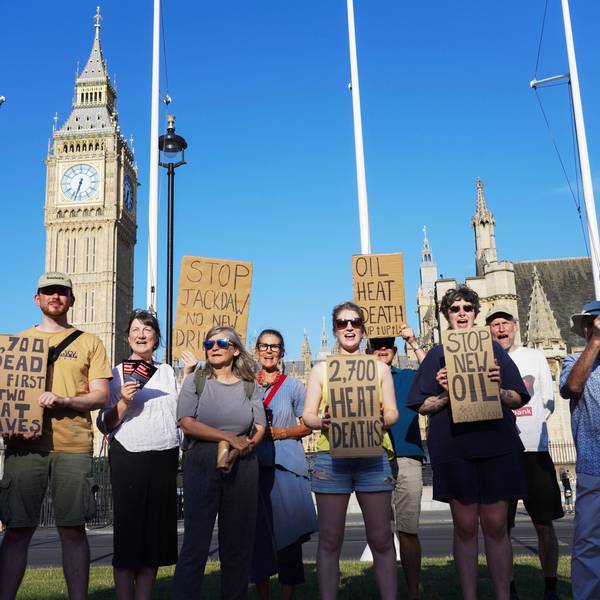
Last week, an Oxfam analysis of data published in the journal Nature found that emissions from just five oil companies—BP, Chevron, ExxonMobil, Shell, and TotalEnergies—were sufficient to cause around 1 in 4 heatwaves reported globally between 2000 and 2023—“heatwaves that would have been virtually impossible without human-made climate change.”
Using S&P Capital Trucost data, the group estimated that Big Oil was responsible for more than $60 billion in environmental damage last year.
But as costs fall on the public, oil companies like Chevron and ExxonMobil have reported record profits of $12.1 billion and $14.5 billion over the past quarter, in part due to global oil price spikes driven by Trump’s war with Iran.
“The fossil fuel industry may not have struck the match, but the climate crisis they drove has loaded our landscapes with tinder,” said Clémence Dubois, the campaigns director for the environmental group 350.org. “Chevron and Exxon are profiteering from a model of distraction, leaving ordinary people to pay the price with higher bills and devastating impacts such as these fires. These profits feel almost criminal.”
Jay Inslee, Washington’s former Democratic governor and a longtime advocate for policies to combat the climate crisis, said on Sunday that his friend, a legislator from Spokane, had been forced to flee his home due to the fires.
“Climate change isn’t some faraway threat,” Inslee said. “It’s happening right now, to our neighbors and friends. We have to fight for them.”