An American B-1 bomber at RAF Fairfield in Gloucestershire, south-west England. The UK Ministry of Defence has not commented on whether the US used the base for operations against Iran this week. Photograph: Andrew Fox/The Guardian
IRGC claims base in south-west England was used by US to launch bombing missions, making it ‘legitimate target’
…
Iran’s Islamic Revolutionary Guard Corps said on Thursday that “any base used for aggression against Iranian territory constitutes a legitimate target for our forces”.
In a statement published on the IRGC-linked Tasnim news agency, the group said American bombing missions had been launched from RAF Fairford in Gloucestershire two days earlier.
The statement came after the US carried out a 12th consecutive night of strikes against targets in Iran. The Ministry of Defence has not commented on whether Fairford was used by the US for operations against Iran this week.
The IRGC also accused the “British monarchy regime” of causing being the “primary cause of hardships in our region with a black record of partitioning Islamic nations, widespread massacres, imposing despotic regimes, and organising the occupation of Palestine”.
It warned the government “not to weigh down its record any further”.
dizzy: It is widely known that B2 Stealth bombers and B52s use RAF Fairford since it has a very long runway. The article starts with some “defensive” bombing nonsense that I didn’t bother with and should be recognised as the BS it is. We are allowing the US to ‘defencively’ bomb the sh*t out of you???
Keir Starmer objects to criticism of the IDF. He asks how could anyone object to them starving people to death, forced marches like the Nazis did, bombing Gaza’s hospitals and universities, mass-murdering journalists, healthworkers and starving people queuing for food, killing and raping prisoners and murdering children. He calls for people to stop obstructing his genocide for Israel.
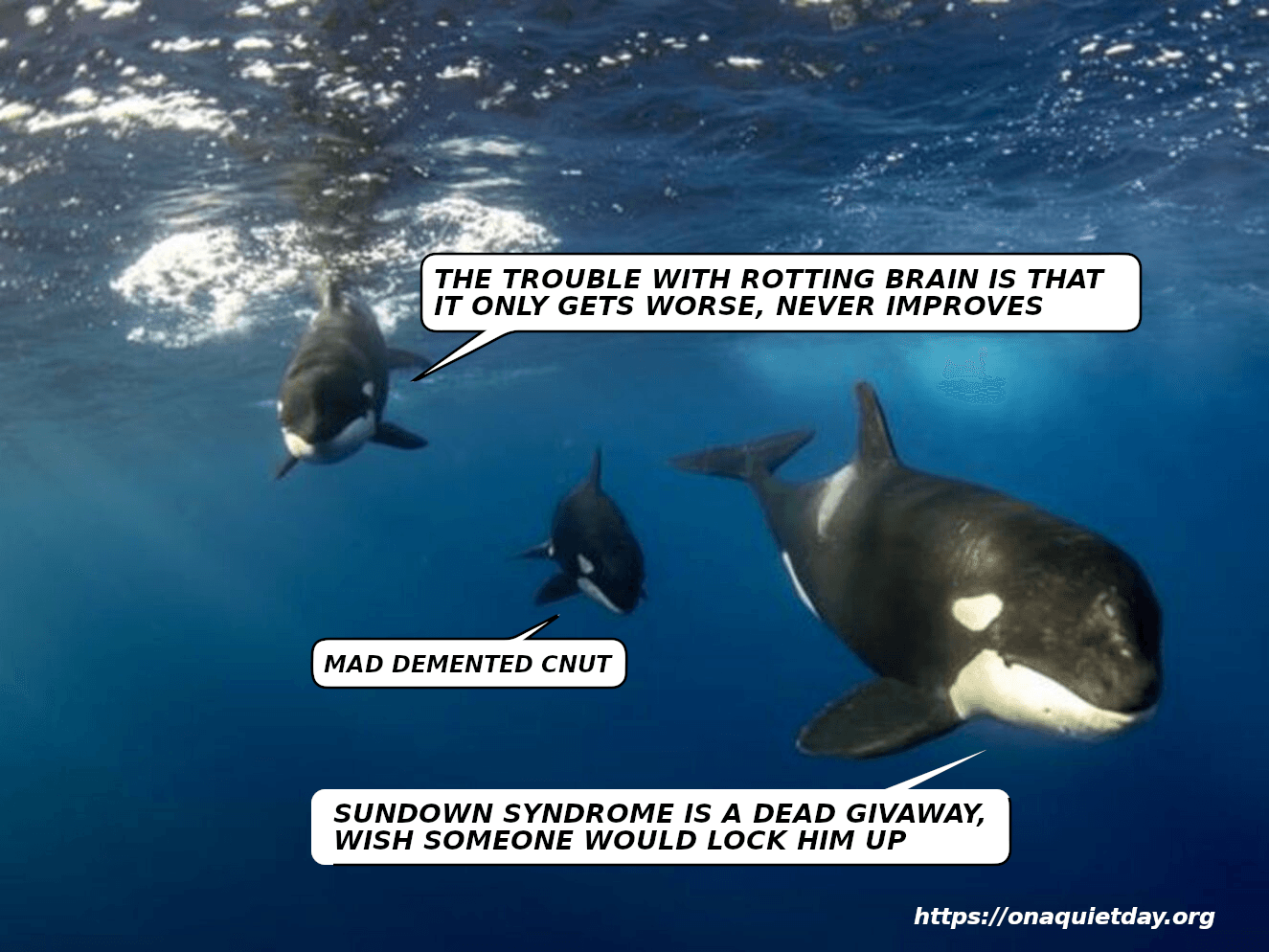
Donald Trump calls for help from NATO allies in securing the Strait of Hormuz despite saying on 7 March 2026 that they don’t need people to join wars after they’ve already won. He’s challenged with the claim that he lies as much as the IDF.Orcas discuss rotting brain, front Orca says Sundown Syndrome is a dead givaway and he wishes someone would Lock Him Up
New PM slashes fuel bills and culls Starmer deadwood, but peace activists warn that placing John Healey as new Chancellor shows ‘beyond doubt that the military industrial complex is in charge of Burnham’s economic policy’
Prime Minister Andy Burnham hosts his first Cabinet meeting at 10 Downing Street, London, July 21, 2026
WE ARE a cost-of-living government, Prime Minister Andy Burnham told his new Cabinet today after slashing energy bills for millions.
Mr Burnham acted to cut VAT on energy bills at a cost of £850 million as his first major move in Downing Street after naming a new team purged of deadwood from Sir Keir Starmer’s government.
However, anti-war campaigners warned that his choice of inveterate warmonger John Healey as new Chancellor presaged a further attack on welfare, health and education.
In a joint statement, Stop the War Coalition and the Campaign for Nuclear Disarmament said: “To hand the Treasury purse strings to a man who demanded a £197 billion increase in arms and nuclear weapons spending demonstrates beyond doubt that the military industrial complex is in charge of Burnham’s economic policy.
“The arms dealers and generals are undoubtedly now in the cabinet. John Healey’s appointment as chancellor will inevitably mean huge fights over welfare, health and housing to come.
“None of the social and economic ambitions — tackling the cost-of-living crisis in particular — that Burnham claims to aspire to will be possible if an ever-growing portion of the economy is devoted to war and destruction,” the two campaigns stated.
This work by Middle East Monitor is licensed under a Creative Commons Attribution-NonCommercial-ShareAlike 4.0 International License.
People stage a pro-Palestinian demonstration and call on Labour Party leader Andy Burnham, who is preparing to take office as prime minister, to impose comprehensive sanctions on Israel, in London, United Kingdom on July 18, 2026. [Raşid Necati Aslım – Anadolu Agency]
Britain has a new Prime Minister at a moment when history is demanding more than carefully worded statements.
As Andy Burnham enters Downing Street, he inherits a foreign policy crisis that has exposed deep divisions over Britain’s commitment to human rights, international law and the protection of civilian life: Israel’s devastating assault on Gaza.
For Palestinians, this is not an abstract diplomatic dispute. It is a humanitarian catastrophe that has claimed tens of thousands of lives, displaced entire communities and reduced much of Gaza’s civilian infrastructure to ruins.
Many human rights experts, legal scholars and international organisations have warned that Israel’s actions may amount to genocide, with the International Court of Justice currently examining allegations brought by South Africa under the Genocide Convention. The debate over the legal determination continues, but the scale of suffering is undeniable.
The question now facing Britain’s new Prime Minister is whether the UK will continue responding with statements of concern or whether it will finally use its influence to demand meaningful action.
Thousands of people recently marched through London calling on Britain’s new leadership to take stronger action for Gaza, demanding an end to civilian suffering and greater accountability for those responsible. Their message was clear: Palestinians cannot survive on expressions of sympathy alone.
For decades, Britain has presented itself as a defender of international law and human rights.
British governments have condemned abuses committed by states around the world and called for accountability when civilian populations are harmed.
But principles lose their meaning when they are applied selectively.
The suffering of Palestinian civilians should not be treated as a diplomatic inconvenience or reduced to carefully balanced language. International law exists precisely to protect vulnerable populations, especially during moments of war and political pressure.
If Britain genuinely believes in a rules-based international order, then Gaza is a defining test.
The UK cannot demand accountability from some governments while shielding allies from meaningful scrutiny. Human rights cannot depend on political relationships.
Palestinians Need More Than Words
Humanitarian organisations have repeatedly warned of the devastating conditions facing civilians in Gaza.
Aid agencies have highlighted widespread hunger, displacement, the destruction of medical facilities and the collapse of essential services. ActionAid has called on Britain’s new Prime Minister to take urgent action to protect Palestinians, ensure humanitarian access and uphold international humanitarian law.
Medical Aid for Palestinians (MAP), which provides healthcare support to Palestinians living under occupation and conflict, has called on Britain’s new government to move beyond rhetoric and take concrete steps to protect Palestinian lives.
But humanitarian aid alone cannot address the root causes of this crisis.
The UK must use its diplomatic influence to demand an immediate end to actions that continue to devastate Palestinian civilian life.
This means supporting accountability mechanisms, ensuring British foreign policy does not contribute to violations of international law, and recognising that Palestinians have the same fundamental rights to freedom, safety and dignity as any other people.
Britain’s historical role in the Middle East gives it a particular responsibility.
The consequences of Britain’s decisions in the region continue to shape realities today, including the legacy of the British Mandate for Palestine and the events surrounding the creation of Israel in 1948.
That history does not mean Britain alone can solve the conflict. But it does mean Britain cannot claim neutrality while Palestinians continue to endure immense suffering.
A meaningful foreign policy requires more than managing diplomatic relationships. It requires moral courage.
The UK has significant influence through its diplomatic relationships, its position at the United Nations and its international standing.
That influence should be used to protect civilian lives—not simply preserve political alliances.
For many Palestinians, Muslims and human rights advocates in Britain, trust in Westminster has been severely damaged.
Many feel that Palestinian lives have been treated as less valuable and that the language of human rights has been applied inconsistently.
This is the challenge facing Andy Burnham’s government.
The new Prime Minister has an opportunity to demonstrate that Britain’s commitment to human rights is not selective, and that Palestinian suffering will not be ignored because confronting it is politically difficult.
History often judges governments not only by the crises they inherit, but by how they respond when confronted with injustice.
Gaza represents such a moment.
The question is whether Britain’s new leadership will look away, offer cautious statements, or take the steps necessary to protect Palestinian lives and uphold international law.
Palestinians do not need another government expressing concern while the destruction continues.
They need action.
Britain has a new Prime Minister. Now it must act on Palestine.
The views expressed in this article belong to the author and do not necessarily reflect the editorial policy of Middle East Monitor.
Donald Trump calls for help from NATO allies in securing the Strait of Hormuz despite saying on 7 March 2026 that they don’t need people to join wars after they’ve already won. He’s challenged with the claim that he lies as much as the IDF.Orcas discuss rotting brain, front Orca says Sundown Syndrome is a dead givaway and he wishes someone would Lock Him Up



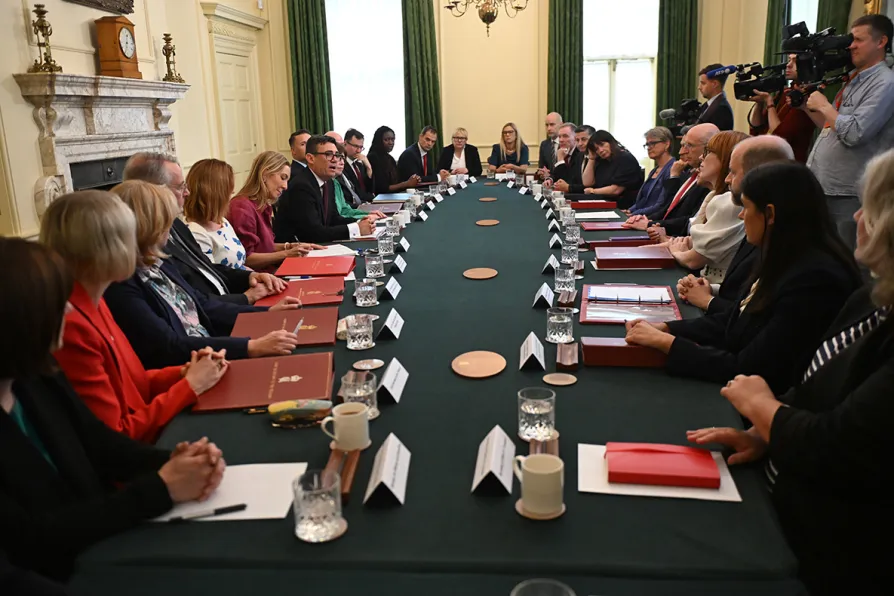
 Prime Minister Andy Burnham hosts his first Cabinet meeting at 10 Downing Street, London, July 21, 2026
