WORKING-AGE households are set to be an average of £400 worse off in the year ahead amid income squeezes and bill hikes, the Resolution Foundation has warned.
A new report by the think tank estimates that the disposable income of a typical household will fall by 1 per cent, while those across the poorest half of Britain are set for a sharper 2 per cent fall, losing the equivalent of £300.
One contributing factor is council tax rises, with households facing an £80-per-year average increase as rates rise by 5 per cent across most of England, 7 per cent in Wales and 9 per cent in Scotland.
Above-inflation increases in water charges will hit even harder, pushing bills up by an extra £120 on average.
Ofgem’s 6.4 per cent increase in the energy price cap adds another £111 a year on average from this month, although the Resolution Foundation believes that the impact of the change will be limited, with prices expected to fall in July.
Working-age benefits will not keep pace with inflation this year, the think tank warned, with April’s 1.7 per cent boost falling short of the 3.2 per cent consumer prices index rate projected for this year.
Meanwhile, private rents have risen by 9 per cent since the local housing allowance was last set.
Keir Starmer, Angela Rayner and Rachel Reeves wear the uniform of the rich and powerful. They have all had clothes bought for them by multi-millionaire Labour donor Lord Alli. CORRECTION: It appears that Rachel Reeves clothing was provided by Juliet Rosenfeld.
“It’s one thing to say the economy is not doing well and we’ve got a fiscal challenge … but cutting the benefits of the most vulnerable in our society who can’t work, to pay for that, is not going to work. And it’s not a Labour thing to do.”
So says former Labour big beast turned centrist-dad podcaster Ed Balls about the government’s welfare reform proposals. Cue furious nods from all those who were hoping and expecting better – or at least not this – from Keir Starmer and Rachel Reeves.
Reactions like these are wholly understandable. After all, the Labour party has long viewed support for the welfare state as both a flag around which the party can rally, and a stick with which to beat the Conservatives.
But while that may have been the case in opposition, in office things have been a little more complicated.
Going all the way back to the MacDonald and Attlee governments, through the Wilson era, and into the Blair and Brown years, Labour governments have often seen fit to talk and act tough to prove to voters, the media and the markets that they have a head as well as a heart. And if that means upsetting some of their MPs, their grassroots members and their core supporters in the electorate, then so be it.
Want more politics coverage from academic experts? Every week, we bring you informed analysis of developments in government and fact check the claims being made.
Welfare encompasses a raft of policies that are as much symbolic as they are substantive. Choosing between them has tangible implications for those directly affected. But those choices also say something – and are intended to say something – about those politicians and parties making that choice.
For Labour governments – and in particular Labour chancellors – cuts in provision, even (indeed perhaps especially) if they involve backtracking on previous commitments, have always been a means of communicating their determination to deal with the world as it supposedly is, not as some of their more radical colleagues would like it to be.
On every occasion, those decisions have provoked outrage: a full-scale split in the 1930s, the resignation of three ministers (including Harold Wilson and leftwing titan Nye Bevan) in the 50s, parliamentary rebellions and membership resignations in the 60s, more generalised despair in Labour and trade union ranks the 70s, and yet another Commons rebellion in the 90s.
But what we need to appreciate is that the fallout is never merely accidental. Rather, it is a vital part of the drama. For the measures to have any chance of convincing sceptical markets and media outlets (as well as, perhaps, ordinary voters) their authors have to be seen to be committing symbolic violence against their party’s own cherished principles.
The proof that sacred cows really are being sacrificed is the anger (ideally impotent anger) of those who cherish them most – Labour’s left wingers. Their reaction is not merely predictable (and expect, by the way, to see Labour’s right wingers employ that term pejoratively in the coming days), it is also functional.
The cruelty is the point
Away from the Labour party itself, both those directly affected by the changes to sickness and disability benefits and those who campaign on their behalf, are – rightly or wrongly – already labelling those changes as cruel. But, likewise (and to put it at its most extreme) the cruelty, to coin a phrase, is the point.
The government will naturally be hoping that, in reality, as few people as possible will be significantly hurt by what it is doing. But the impression that it is prepared to run that risk in pursuit of its wider aim is, in many ways, vital to its success.
As to what that wider aim is? Labour’s essential problem is that, for all its social democratic values, it understandably aspires to become the natural party of government in what is an overwhelmingly liberal capitalist political economy.
It has all too often sought to achieve that, not so much by creating expectations among certain key groups and then rewarding them, as it has by aiming to demonstrate a world-as-it-is governing competence.
That, in the view of its leaders (if not necessarily its followers), is the master key to the prolonged success experienced by the Conservative party – a party which has traditionally enjoyed the additional advantage of being culturally attuned to the market and media environment in which governing in the UK has to be done.
So, no, Ed Balls, you’re wrong: for good or ill, this week’s announcement is very much “a Labour thing to do”.
Keir Starmer commits to play the caretaker role for Capitalism through the “hard times”.Keir Starmer confirms that he’s proud to be a red Tory continuing austerity and targeting poor and disabled scum.
[21/3/25 dizzy: I had better say that I disagree with “… what is an overwhelmingly liberal capitalist political economy”. It’s only that way because the left is denied opportunity. Consider Corbyn’s popularity for example and the many forces that attacked him.]
Keir Starmer’s government is expected to announce a host of cuts to sickness and disability support in the coming days. The UK’s ageing and increasingly unwell population has led to what has been described as “unsustainable” and “indefensible” spending on benefits.
As researchers of poverty and welfare reform, we find it both shocking and sadly unsurprising that, after more than a decade of cuts to social security, the government seems to have once again decided that austerity is the answer to the economic pressures they are facing.
We have spent many years documenting the real harms created by reforms to social security. It was disappointing to hear Starmer describe Britain’s social security system as an expensive way to “trap” people on welfare, rather than helping them find work.
The expected proposals are intended to incentivise people into work, by reducing the generosity of support offered to people claiming disability-related benefits. But in reality, many of the measures already implemented to reduce spending by cutting or capping benefits have pushed people further away from the labour market.
The relationship between welfare and work is more complex than it first appears. Around 37% of people on universal credit are currently in work.
Approximately 23% of those out of work are engaging with advisers whose job is to support them back into the labour market. The majority of the rest of universal credit claimants are people who are not expected to be in work – often people who have health challenges that make it difficult for them to work most jobs.
The UK’s social security payments cover a much smaller proportion of the average wage than most other countries in Europe.
A single person’s allowance on universal credit is £393.45 per month if they are 25 or over, while under-25s receive £311.68. This averages out at less than £100 a week to meet all essential living costs, bar support with housing.
Disabled people received additional support in the form of personal independence payments (Pip) or disability living allowance if you live in England, Wales or Northern Ireland, and adult or child disability payments in Scotland.
This support is designed to help people meet the additional costs that come with disabilities and long-term health conditions. It is not means-tested, and is available to people in employment as well as those not currently working.
Ministers are expected to make it more difficult to access Pip, freezing its value so this does not rise with inflation, and to reduce the amount of universal credit received by those judged unable to work. These proposals are likely to face strong opposition from many Labour MPs.
Want more politics coverage from academic experts? Every week, we bring you informed analysis of developments in government and fact check the claims being made.
Currently, if people are not able to engage in paid work for long periods, they are entitled to an additional payment through universal credit. This amount – equivalent to approximately £400 a month – could go down. The problem is that this is already not enough to live on, and often necessitates going without essentials, such as food or electricity.
Families with dependent children receive additional support through child elements of universal credit, and through child benefit. But this support is subject to caps – the controversial and poverty-producing two-child limit, and the benefit cap, which restricts the support any household can receive where no one is working or claiming disability benefits.
The government is trying to solve the wrong problem. They are focusing on those who are out of work, when it is increasingly clear that one big reason people with disabilities are not in employment is because work environments have fewer roles they can fill.
While spending on disability-related support has gone up in recent years, the overall welfare bill has not. On top of that, the proportion of people who are not in work and who are claiming disability-related social security is actually about the same as it has been for the last 40 years. Indeed, the fact it is so low, given population ageing, could be read as good news.
Research shows cutting access to benefits does not necessarily get people into work. Shutterstock
There have also been wider changes in the labour market. There has been a rapid decline in “light work”, like lift attendants, cinema ushers, or low-physical exertion roles in factories. As work environments have become more intense, people with disabilities have found it increasingly difficult to stay in work.
So, what would work to entice more people into work? The truth is we know far more about what does not work than what does.
The best evidence we have right now suggests that making it more difficult to claim social security and placing more strenuous work-search requirements on claimants will simply push people with poor health (particularly mental ill-health) further away from the labour market.
The welfare narrative
Behind the cuts currently being trailed is a popular but ill-founded logic which views social security as the cause of the country’s economic woes. Welfare itself is seen as the problem, with whole generations supposedly left parked on what is depicted as too-easy-to-claim and too-generous support.
But this narrative grossly misrepresents what it’s actually like to try and claim social security. It is, in fact, notoriously complex. Often, this complexity is intentional.
Making accessing social security difficult is not necessarily (or always) about meanness, but this “nasty strategy” is a product of a system that assumes that many people are not eligible for the support they claim.
The system has always assessed eligibility for benefits, but the way these assessments have been done in recent years has often been experienced as degrading and dehumanising. On the flip side, some have claimed that people are not being assessed regularly enough, and suggest that some people who have claimed benefits in the past may now be fit to work.
Where this is true is unclear, but the failure to reassess is also a product of cuts to this system – so taking more money out will not address this problem either.
Britain’s social security system has been stripped to the bones: it provides neither security nor enough support to those who receive it, and is ripe for reform. But the reform required is not of the type Labour is proposing, which will succeed only in further decimating what little remains of our social security safety net.
This article was co-published with LSE Blogs at the London School of Economics.
Keir Starmer, Angela Rayner and Rachel Reeves wear the uniform of the rich and powerful. They have all had clothes bought for them by multi-millionaire Labour donor Lord Alli. CORRECTION: It appears that Rachel Reeves clothing was provided by Juliet Rosenfeld.Keir Starmer says pensioners can freeze to death and poor children can starve and be condemned to failure and misery all their lives.
Majority describe UK’s Labour government as sleazy. Source: YouGov.Keir Starmer justifies why he has to travel abroad so muchKeir Starmer, Angela Rayner and Rachel Reeves wear the uniform of the rich and powerful. They have all had clothes bought for them by multi-millionaire Labour donor Lord Alli. CORRECTION: It appears that Rachel Reeves clothing was provided by Juliet Rosenfeld.Keir Starmer explains that he feels no shame or guilt benefiting personally from gifts from the rich and powerful while insisting on policies of severe austerity.Deputy Labour Party Leader Angela Rayner calls for police to kill and harass innocent people.
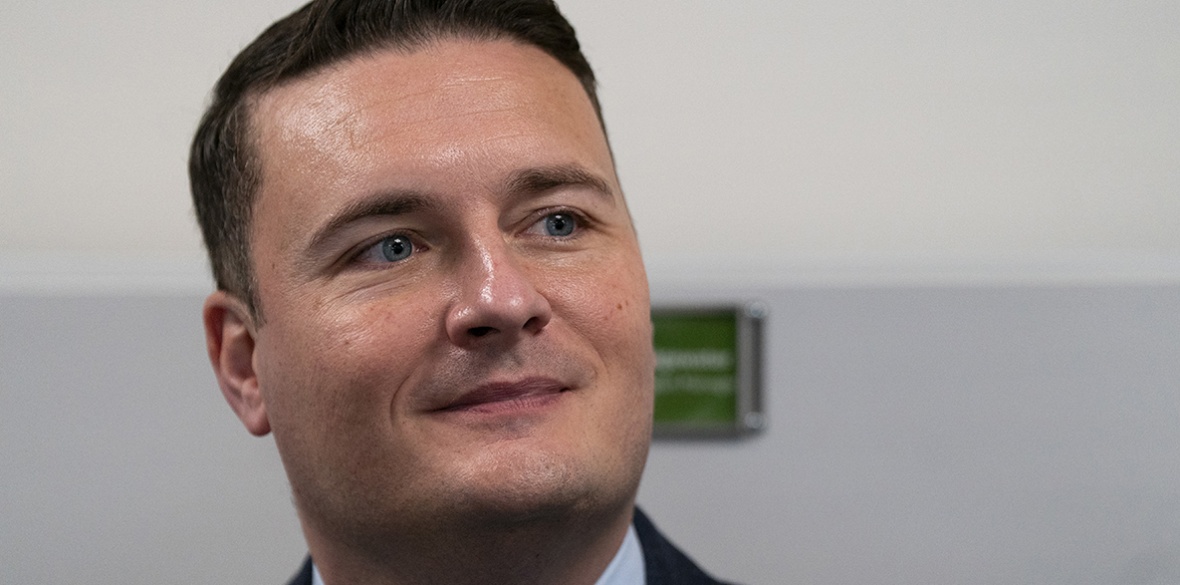
Health Secretary Wes Streeting meeting staff during a visit to London Ambulance Service headquarters in south London, December 9, 2024
Campaigners warn Labour’s ‘pro-business approach to data’ has ‘potential for further loss of public trust’ in the NHS
HEALTH Secretary Wes Streeting’s plans to sell GP data to the private sector “make no sense,” warned experts raising fresh privacy concerns yesterday.
Campaigners also warned Labour’s “pro-business approach to data” had the potential for further loss of public trust in the health service.
…
Mr Streeting in October said that data “is the future of the NHS” and Britain “could lead the world in medical research.”
He plans to create a “single access system” for information from GP surgeries, hospitals and other care settings after NHS England awarded a controversial £330 million contract to US spy tech giant Palantir in 2023 to develop a new platform.
Today Keep Our NHS Public co-chair Dr John Puntis said: “The Data Use and Access Bill currently going through Parliament illustrates Labour’s pro-business approach to data as a valuable resource, and highlights the potential for further loss of public trust.
“It aims to make data, including our personal heath data, widely available to public authorities and the private sector.
“The Secretary of State will be given power to erode safeguards over use of personal data for research.
“Labour intends to reduce the regulatory burden on businesses at the expense of safeguards for citizens.
“An alternative vision would include investment in a publicly owned national digital infrastructure aimed at storing and managing NHS data currently being processed through cloud computing services that are owned by large technology companies.
“There must be safeguards against the private sector gaining access to data for profit, and the public should be fully informed about the use of people’s health data and the right to protection and privacy.”
A spokesman for Momentum said: “Selling off patients’ data is no way to fix the NHS.
“We must fully renationalise our healthcare system and defend it from corporate interests, not welcome them.”
Keir Starmer, Angela Rayner and Rachel Reeves wear the uniform of the rich and powerful. They have all had clothes bought for them by multi-millionaire Labour donor Lord Alli. CORRECTION: It appears that Rachel Reeves clothing was provided by Juliet Rosenfeld.