Category: Austerity 2

  • Labour’s public-private plans are just a return to the dreaded PFI era

    Spread the love

    https://morningstaronline.co.uk/article/labours-public-private-plans-are-just-return-dreaded-pfi-era

    Shadow Chancellor Rachel Reeves in the shadow of Tony Bliar.

    SOLOMON HUGHES warns Reeves’s proposed national wealth fund hands City financiers control over billions in public money for big business — and we get… to pay!

    HOW will Keir Starmer’s Labour try to “grow the economy?” The short answer is it is going to try to use public money to persuade international investors to put cash into “growth” industries.

    It’s the return of the public-private partnership. The big danger is that, like Labour’s last public-private partnership, the private corporations will get all the growth, while the public sector gets ripped off.

    The main economy-grower Starmer is promoting is Rachel Reeves’s proposed national wealth fund. It will invest in key industries like “green energy” and other modern manufacturing sectors.

    There is a strong Labour case to run a national bank investing in key industries: the 1945 Labour government set up two such banks, the Industrial and Commercial Finance Corporation and the Finance Corporation for Industry, which lent growth capital to small- and medium-sized industries or larger manufacturing firms respectively.

    Labour argued that the City avoided investing in these crucial sectors, exacerbating the 1930s Depression. Both government-founded investment funds were very successful. Jeremy Corbyn’s Labour proposed similar publicly owned national investment banks.

    But Reeves’s plan makes public money subordinate to private investment. She told the last Labour conference: “For every pound of investment we put in, we will leverage in three times as much private investment.”

    Labour plans to invest £7.3 billion in the fund, and so attract around £22bn private “co-investment.” Reeves says private money will be attracted because the government cash will be “encouraging and derisking investment” from international finance: investors will assume that if the government has a stake in, say, a car battery factory, that it is a “sure thing” and won’t be allowed to go bust or lose money for shareholders.

    But what happens if the publicly backed investments hit trouble? Say the car batteries come out too expensive, reducing profits, or need extra investment to fix production problems — will the private investors insist that the public investor take the losses? And if the profits are bigger than expected, will both parties benefit equally?

    There are some major signs Reeves’s deals will favour the big private investors. First, because it is putting in more of the money, they can call more of the shots. This is not really a national wealth fund because most of the money will not be national.

    …

    https://morningstaronline.co.uk/article/labours-public-private-plans-are-just-return-dreaded-pfi-era
  • Green groups create mock cemetery to highlight thousands of cold-related deaths

    Spread the love

    https://morningstaronline.co.uk/article/green-groups-create-mock-cemetery-highlight-thousands-cold-related-deaths

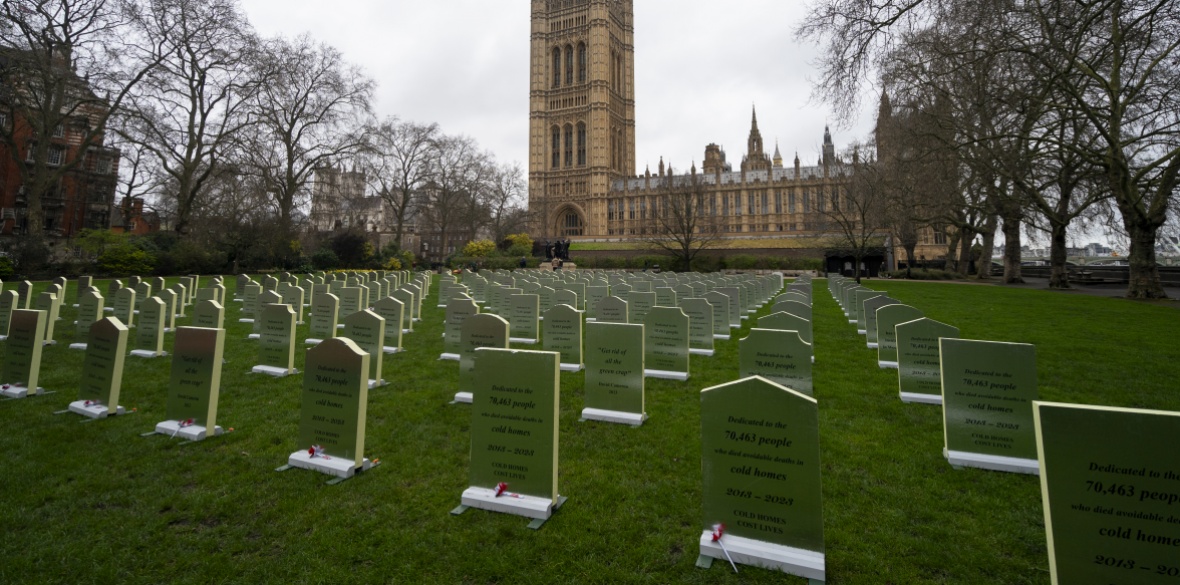
    Gravestones in Victoria Tower Gardens, London, during a Greenpeace demonstration, March 13, 2024

    FUEL poverty campaigners created a mock cemetery outside Parliament today to mark the deaths of tens of thousands of people who have died from cold-related illnesses since the government cut grants to help insulate homes.

    Hundreds of headstones, made with insulation panels used to help people keep their homes warm, were erected in a royal park by Greenpeace and the Fuel Poverty Action campaign.

    Greenpeace said that 70,000 people — on average 58 a day — have died from cold-related illnesses since the government slashed subsidies for loft and wall insulation in 2013.

    Greenpeace UK fuel poverty campaigner Paul Morozzo said: “Thousands of people are literally freezing to death in their own homes during winter.

    “And not only have successive governments failed to prevent this needless and shocking loss of life but they have fuelled this silent public health crisis by slashing insulation funding and failing to deliver a proper scheme to upgrade our cold, damp, draughty homes.”

    …

    https://morningstaronline.co.uk/article/green-groups-create-mock-cemetery-highlight-thousands-cold-related-deaths

  • Keir Starmer will continue austerity. That means keeping vulnerable people in ‘brutalising poverty’

    Spread the love

    https://www.bigissue.com/opinion/keir-starmer-austerity-u-turn-labour-poverty-suffering/

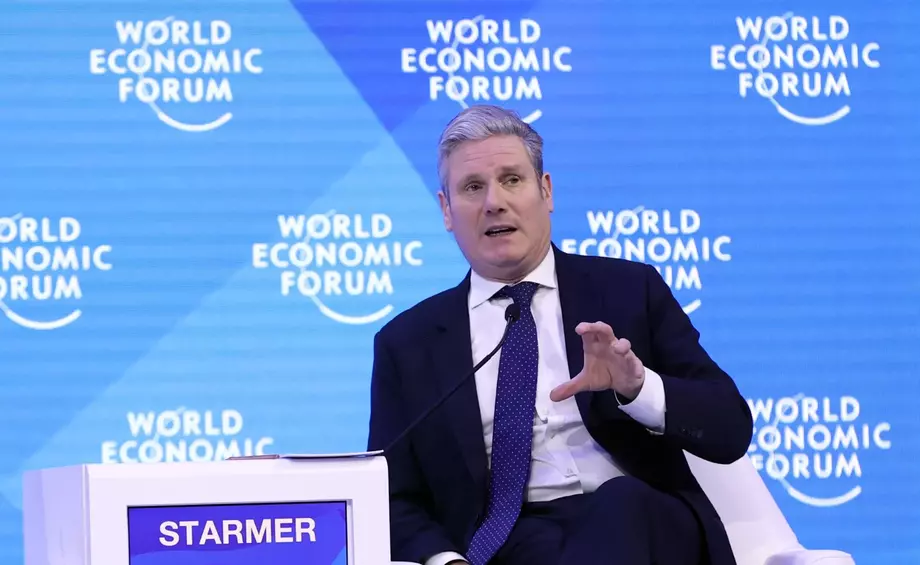
    Keir Starmer sucking up to the rich and powerful at World Economic Forum, Davos.
    Keir Starmer sucking up to the rich and powerful at World Economic Forum, Davos.

    Beyond each Labour U-turn is a well of suffering and poverty that has no justifiable reason to exist, says trade union case worker Kasmira Kincaid

    …

    Our politicians invariably speak of “fiscal responsibility”; of “balancing the budget” and “living within our means”. The Keir Starmer of today – as opposed to the Keir Starmer who was elected to lead the Labour Party in 2020 – is no different. But these words just serve to obscure the obscenity of what is actually being said: that we can’t afford to feed the poor, to house the homeless, and to allow people to live in dignity and comfort.

    But the thing is we can. We know we can. We know it when we see government funds used to drop bombs on foreign countries. We know it when we see sweeping tax cuts to the wealthy, and tax evaders let off the hook. And we know it when we walk past empty tower blocks, full of investment properties, while homeless people die on the streets.

    It’s a supreme form of gaslighting to suggest otherwise, asking us to deny the evidence of our senses and experiences. Making sure everyone gets what they need is a logistical challenge, for sure. But there is enough to make sure everyone gets what they need.

    …

    As a new Labour government comes to feel inevitable, many of us are taking stock of what such a government would mean. Over the last four years, Keir Starmer has U-turned on practically every anti-austerity policy in his 2020 leadership bid: from abolishing universal credit and what he once called “the Tories’ cruel sanctions regime”; to scrapping work capability assessments and the two-child limit on benefits; to re-nationalising key public services.

    Today I live a life where few of these policies would directly affect me. Yet I haven’t forgotten what it felt like to be in the firing line for government decisions. The material conditions of people’s lives should be the beginning and end of politics. As we voice our opposition to continued austerity we’d do well to remember that. To remember that beyond each of these U-turns is a well of human suffering that has no justifiable reason to exist.

    Kasmira Kincaid is a trade union case worker and former benefits claimant.

    https://www.bigissue.com/opinion/keir-starmer-austerity-u-turn-labour-poverty-suffering/

    Image of cash and pre-payment meter key
    Image of cash and pre-payment meter key
  • “Austerity is a political choice, not an economic necessity” – Jeremy Corbyn on #Budget24

    Spread the love

    https://labouroutlook.org/2024/03/06/austerity-is-a-political-choice-not-an-economic-necessity-jeremy-corbyn-exclusive-on-budget24/

    Image of Jeremy Corbyn MP, former leader of the Labour Party
    Jeremy Corbyn MP, former leader of the Labour Party

    “Today’s budget exposes a government that is blind to the scale of the crises we face. While private companies are taking home more profit than ever before, more than 4 million children live in poverty.”

    Jeremy Corbyn MP

    “Austerity is a political choice, not an economic necessity” – Jeremy Corbyn exclusive on #Budget24

    Jeremy Corbyn MP writes for Labour Outlook on #Budget24.

    This is what we said back in 2015, five years into a devastating programme of cuts and privatisation. We knew that austerity would decimate our public services, plunge millions into poverty and send our country into economic decline. It was true then – and it is true now.

    Today’s budget exposes a government that is blind to the scale of the crises we face. While private companies are taking home more profit than ever before, more than 4 million children live in poverty. A quarter of a million people are homeless, while millions more languish on social housing waiting lists. Our NHS is on its knees after decades of austerity and privatisation.

    Perhaps most alarmingly, we are sleepwalking toward a climate emergency. Make no mistake, the climate crisis is here, and we are running out of time to avoid total catastrophe. People in the Global South are already suffering the worst consequences – more and more people in this country will experience the devastating effects of air pollution, heatwaves and flooding.

    The Tories’ economic experiment has failed – and they should not get off lightly. Parroting the language of austerity is a grave mistake, and represents a missed opportunity to bring about the transformative change this country needs. When there are more billionaires in this country than ever before, the idea that we cannot afford to build a fairer and greener society is absurd. We have the means to end poverty, pay our workers properly and save the planet. We just need the political will.

    Millions of us still believe in a real alternative.

    One that funds a fully-public NHS; austerity and privatisation are the causes of – not the solutions to – the healthcare crisis.

    One that introduced rent controls and builds social housing; we will never tackle the housing emergency until we treat housing as a human right, and embark upon a huge council house-building programme.

    One that invests in a Green New Deal to transform the economy and create thousands of green, unionised jobs.

    One that scraps the 2-child benefits cap; this cruel and callous policy is a moral disgrace, and we could pay for the abolition of this policy seventeen times over with a 1-2% wealth tax on people with assets over £10 million.

    One that brings energy, water, rail and mail into public ownership; privatisation has been a total disaster, and it’s time we stood up to the companies holding our country to ransom.

    Our economy is not just broken. It is rigged in the interests of the few – and unless we fundamentally rewrite the rules of our economy, nothing will change. There’s nothing fiscally responsible about plunging millions of people into poverty or destroying our natural world. Why can’t we have the courage to campaign for a more joyful, equal and sustainable future?

    As the MP for Islington North, I will continue to campaign alongside my community for a redistribution of wealth and power. For an economy that puts human need before corporate greed. For a society that cares for each other and cares for all.


    https://labouroutlook.org/2024/03/06/austerity-is-a-political-choice-not-an-economic-necessity-jeremy-corbyn-exclusive-on-budget24/

  • Morning Star: We need an emergency Budget – but there’s no relief in sight

    Spread the love
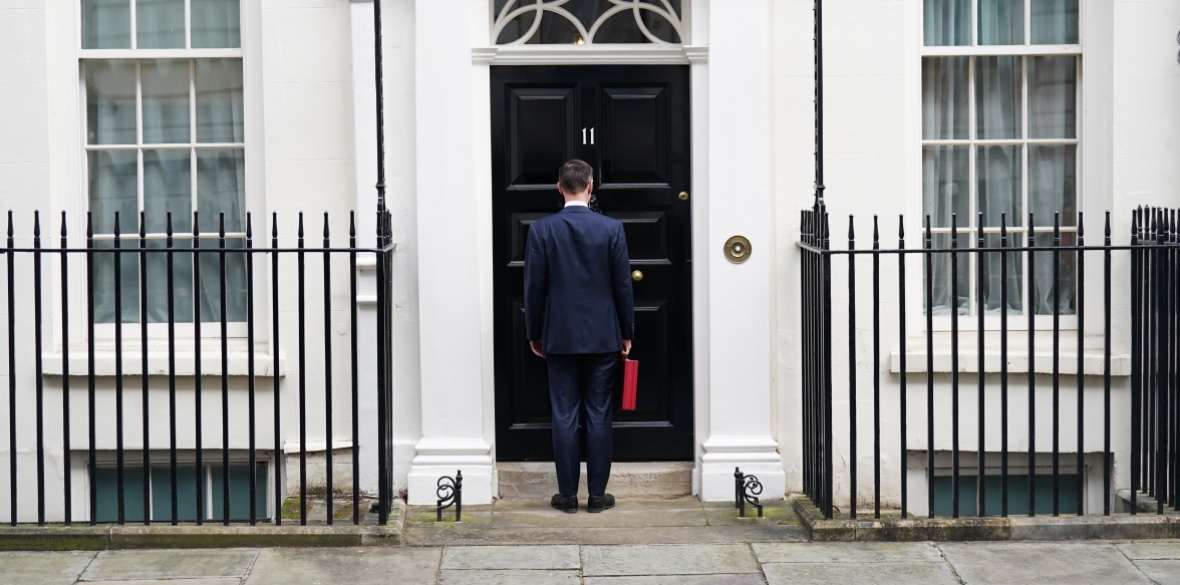
    Chancellor of the Exchequer Jeremy Hunt leaves 11 Downing Street, London, with his ministerial box before delivering his Budget in the Houses of Parliament, March 6, 2024

    BRITAIN needed an emergency Budget today, one that addressed the profound crises facing local authorities, healthcare, education, you name it.

    It got nothing of the sort. A scattering of headline investments like the “NHS productivity plan,” focused on IT systems and ignoring the staff shortages that have led to waiting lists seven million long.

    A 2p cut to National Insurance that benefits higher earners more and, by reducing the tax take, tightens the funding squeeze on essential services. Bigger cuts to capital gains tax, incentivising the property speculation that has helped drive the housing crisis.

    It was a complacent Budget, Chancellor Jeremy Hunt spending longer trying to explain away Britain’s “technical” recession as some kind of economic success (the same Chancellor said last year he was “comfortable” with Bank of England policy causing a recession to reduce wages) than he did outlining new measures that might make a difference.

    Britain has “turned the corner” on inflation, he claims, though prices rising more slowly doesn’t mean prices falling and millions of us know what we pay for food, energy and a roof over our heads has soared in recent years.

    …

    There is plenty of money. Last month Britain’s Big Four banks announced their highest annual profits ever.

    We see record-breaking profits in the energy cartels, big agribusiness, soaring profit margins in the FTSE 350 table of big companies. These aren’t “difficult economic circumstances.” It is class war.

    And if Labour won’t strike a blow for workers in that war, unions will need to find another way to change our country’s direction.