Hundreds of thousands of seriously ill and disabled people will become “invisible” and cut adrift from local support services as a result of the government’s £5bn programme of disability benefit cuts, experts have warned.
Claimants who do not qualify for personal independence payment (Pip) or incapacity benefits would lose a “marker of need” with local councils and NHS bodies, making it “nearly impossible” for them to access help, said the consultancy Policy in Practice.
This would “effectively erase some of the most vulnerable people” from the system – including those with life-limiting illnesses including cancer, multiple sclerosis and lung conditions – while making it harder for care services to deliver preventive support
More than 230,000 disabled people will lose access to Pip and the incapacity element of universal credit as a result of the changes, losing at least £8,100 a year, Policy in Practice estimates in a briefing. Nearly 600,000 more who do not claim universal credit will lose or not qualify in future for Pip.
On top of the direct financial hit, disabled people will struggle for visibility in local care systems that use disability benefit awards to deploy support and protection, from housing and council tax relief to debt enforcement safeguards.
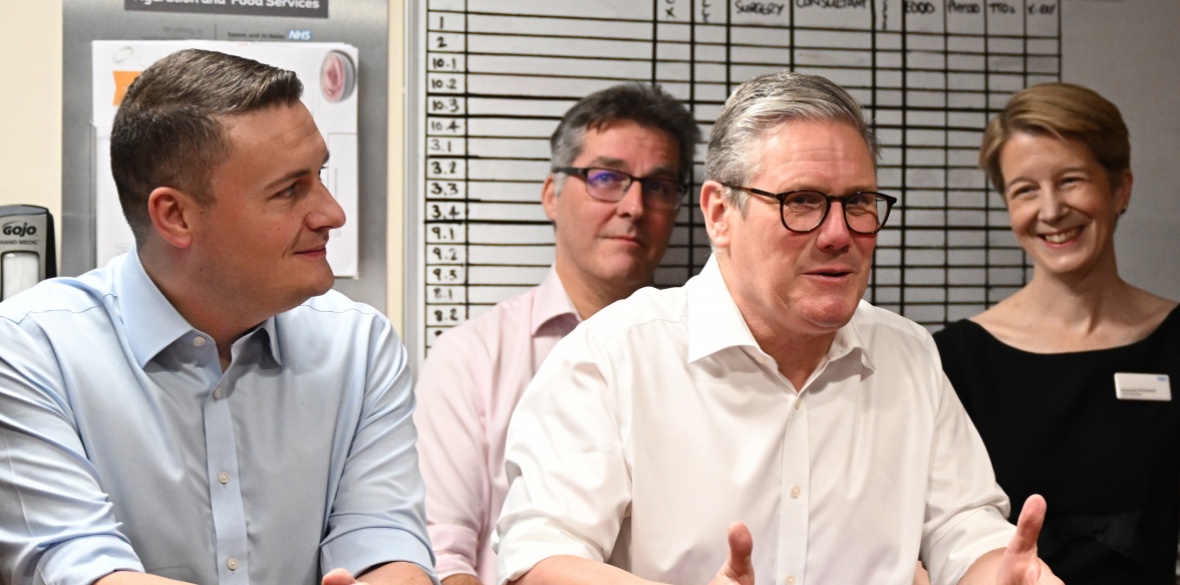
(left to right) Health Secretary Wes Streeting, Dr James Marsh, Group Deputy CEO for Epsom and St Helier Hospitals, Prime Minister Keir Starmer, and NHS CEO Amanda Pritchard during a visit to Elective Orthopaedic Centre in Epsom, Surrey, January 6, 2025
Labour warned that workers expect better as anger mounts over welfare cuts and public-sector pay
WORKERS expect better, Labour has been warned by the country’s biggest trade union as anger mounts over cruel welfare cuts and public-sector pay.
Protests met Health Secretary Wes Streeting’s address to Unison health conference in Liverpool yesterday, following a sharp rebuke to the government from its general secretary Christina McAnea on Tuesday.
Ms McAnea had thanked the government for taking steps to improve workers’ conditions through the upcoming Employment Rights Bill.
But she said that some of Labour’s decisions, such as stopping winter fuel payments and inflicting “heartless” cuts to welfare, had left her “baffled and speechless.”
“These cuts will place yet more strain on an NHS already creaking at the seams,” she warned.
“They’re counter-productive, will cost more in the long run and are morally wrong.
“The best way to turn the NHS around is by focusing on the workforce.
“There’s simply no route to fixing the NHS that doesn’t first involve sorting health workers’ pay,” which declined in real terms for over a decade under the Tories.
She called Labour’s 2.8 per cent pay rise for workers “ludicrous,” adding that it “won’t encourage experienced staff to stay in the NHS, nor will it be enough to persuade new recruits to join.”
Government cuts to disability benefits will disproportionately inflict suffering on women | Hollie Adams/WPA Pool/Getty Images
Cuts will push hundreds of thousands of women into poverty or force them out of workforce
While the staggering £5bn of planned cuts to disability benefits announced by chancellor Rachel Reeves at last week’s Spring Statement have rightly been the subject of much scrutiny, the disproportionate suffering they will inflict on women has been under-discussed both by politicians and the media.
The government’s own risk assessment found the cuts will push 250,000 adults and 50,000 children in the UK below the poverty line. Women, who are both more likely to be Disabled and more likely to be a carer for a loved one, will be worst affected.
Indeed, single Disabled women make up 44% of those due to lose out from the cuts, and face an average loss of £1,610 per year, the government’s Equality Impact Assessment found.
This demographic has already been significantly affected by austerity cuts to social security and public services since 2010. Such measures, taken together with tax changes, will cost Disabled women an average of £4,000 a year by 2028, according to an analysis that we at The Women’s Budget Group (WGB) published in September last year.
That means, for many Disabled women in the UK, Reeves’ latest cuts follow what has already been an 11% drop in their living standards over the past 15 years. Cutting their living standards further is unthinkable.
Women also make up the majority of the UK’s unpaid carers, who provide care and support to family members, friends, or neighbours. They, too, will be hit hard by the changes.
When a person receives the Personal Independence Payment (PIP) – a benefit to help with the extra costs incurred by long-term ill health or disability – their unpaid carer may be entitled to the Carer’s Allowance benefit. The government plans to reduce the number of people eligible for PIP, which in turn will reduce the number of people eligible for Carer’s Allowance.
A couple where one person loses PIP and the other therefore loses Carer’s Allowance could be over £12,000 worse off annually, according to calculations by anti-poverty charity The Joseph Rowntree Foundation.
Reeves failed to acknowledge this knock-on impact in her speech. Worse still, the Equality Impact Assessment of these changes that was published as the chancellor was still speaking, also made no reference to it (although these impacts were included in the distributional assessment published at the same time).
What’s more, restricting the eligibility for PIP may increase the number of unpaid carers if a Disabled or chronically ill person is no longer able to rely on the benefit to pay somebody to provide their care. This may force women who are currently just about managing to stay in work to reduce their hours or quit their jobs altogether to take on additional care duties for loved ones.
Forcing women out of the workforce in this manner is not only detrimental to their health and wellbeing, it directly undermines the government’s claim that the measures are necessary to reduce economic inactivity.
At the same time, cutting PIP may push some disabled people out of the labour market if they can no longer afford the adaptations and services that enable them to work.
Years of austerity have already weakened our economy and eroded our living standards, leaving us ill-prepared for economic shocks. Cutting vital social security and public services is not the path to improving living standards.
Ahead of the Spring Statement, the WBG, along with more than 40 women’s organisations across the UK, wrote an open letter to the chancellor highlighting the gendered nature of these cuts – and urging her to consider more equitable ways to raise revenue.
Rather than targeting some of the most vulnerable members of our society, the government should be looking into taxing those with the broadest shoulders in our society.
A 2% wealth tax on assets over £10m could raise up to £24bn a year – far exceeding the savings from the proposed disability benefit cuts. This measure has already been called for by Tax Justice UK, which campaigns for a fairer tax system, and Patriotic Millionaires UK, which describes itself as a nonpartisan network of British millionaires.
A wealth tax of this kind could be used for much-needed investment in the foundations of our economy, including our social infrastructure – from childcare and education to social care and local government services.
Moreover, it’s what the public wants. Some 77% would rather the government increase taxes on the very richest than cut public spending, according to recent polling by YouGov for Oxfam.
Investing in social security and public services is not just a cost, but an investment in our society and economy. By choosing to cut benefits instead of implementing a wealth tax, the Government is not just balancing numbers on a spreadsheet. It is making a political choice – one that will deepen inequality and harm those who are already struggling.
Keir Starmer, Angela Rayner and Rachel Reeves wear the uniform of the rich and powerful. They have all had clothes bought for them by multi-millionaire Labour donor Lord Alli. CORRECTION: It appears that Rachel Reeves clothing was provided by Juliet Rosenfeld.Keir Starmer says that his Labour Party is intensely relaxed about assaulting the very poorest and most vulnerable.
WORKING-AGE households are set to be an average of £400 worse off in the year ahead amid income squeezes and bill hikes, the Resolution Foundation has warned.
A new report by the think tank estimates that the disposable income of a typical household will fall by 1 per cent, while those across the poorest half of Britain are set for a sharper 2 per cent fall, losing the equivalent of £300.
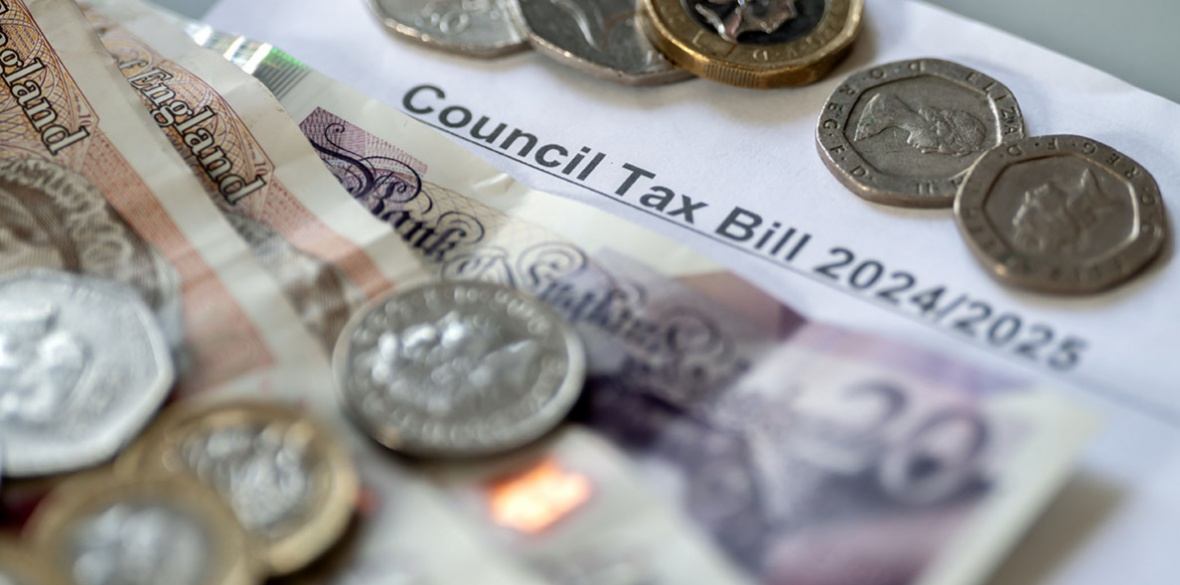
One contributing factor is council tax rises, with households facing an £80-per-year average increase as rates rise by 5 per cent across most of England, 7 per cent in Wales and 9 per cent in Scotland.
Above-inflation increases in water charges will hit even harder, pushing bills up by an extra £120 on average.
Ofgem’s 6.4 per cent increase in the energy price cap adds another £111 a year on average from this month, although the Resolution Foundation believes that the impact of the change will be limited, with prices expected to fall in July.
Working-age benefits will not keep pace with inflation this year, the think tank warned, with April’s 1.7 per cent boost falling short of the 3.2 per cent consumer prices index rate projected for this year.
Meanwhile, private rents have risen by 9 per cent since the local housing allowance was last set.
Keir Starmer, Angela Rayner and Rachel Reeves wear the uniform of the rich and powerful. They have all had clothes bought for them by multi-millionaire Labour donor Lord Alli. CORRECTION: It appears that Rachel Reeves clothing was provided by Juliet Rosenfeld.
Protesters on Whitehall in London, as Chancellor of the Exchequer Rachel Reeves delivers her spring statement to MPs in the House of Commons, March 26, 2025
Government must take action, union warns: ‘We can’t go on with billionaires getting ever richer whilst working people suffer’
CASH-STRAPPED Britons will be squeezed for an extra £66 every month from April as a barrage of bill hikes sees the cost-of-living crisis bite.
Millions of hard-up households, already paying what MPs said were “world-beatingly” high bills, will be forced to shell out even more for essentials from Tuesday.
GMB union urged ministers to take bold steps to help working people facing across-the-board price rises for energy, water, council tax, internet, road tax and the TV licence.
“Households have been struggling with the cost-of-living crisis for several years now,” said the union’s national secretary Andy Prendergast. “This latest set of increases shows there still isn’t any light at the end of the tunnel.
“The government must take bold steps to put money in people’s pockets,” he thundered. “We can’t go on with billionaires getting ever richer whilst working people suffer.”
…
Cat Hobbs, founder and director of public service campaign group We Own It, said: “With bill hikes across many essential services this spring, it looks like the cost-of-living crisis is sadly here to stay.
“The word ‘essential’ is important here. Heat, shelter, water — these are all things that we need to survive and none of them are getting cheaper.
“Water is the poster-child for the failed privatisation experiment, with companies on the brink of collapse scrambling for more of our money.
“Companies that have racked up huge debts to pay dividends are now running out of other people’s cash.
“Decades of underinvestment has killed our rivers and put the whole water network at risk.
“Modern, publicly owned services must be the goal for any progressive government.”
Keir Starmer, Angela Rayner and Rachel Reeves wear the uniform of the rich and powerful. They have all had clothes bought for them by multi-millionaire Labour donor Lord Alli. CORRECTION: It appears that Rachel Reeves clothing was provided by Juliet Rosenfeld.