Dr Sarah Brown is fighting to keep her medical practice licence after she was jailed for 31 days. Picture: Just Stop Oil/Alamy
A GP who was jailed for taking part in a Just Stop Oil protest has defended her actions by claiming they were part of a doctor’s ‘fundamental duty is to protect health and life’.
Dr Sarah Brown is now fighting to keep her medical practice licence after she was jailed for 31 days for contempt of court and breaching an injunction to not demonstrate outside Kingsbury oil terminal, Warwickshire, in 2022.
The doctor from Birmingham could now be struck off from the medical register following a tribunal today.
Dr Brown defended her actions in a statement published by Just Stop Oil: “As a doctor, my fundamental duty is to protect health and life.
“This includes proactive efforts to prevent disease and death. The climate crisis is the most significant existential threat to global health we have ever faced.”
🚨 BREAKING: Former GP Faces Losing Medical Licence for Taking Action to Protect Patients' Lives
🩺 This week, the Medical Practitioners Tribunal Service is reviewing the case of Dr Sarah Benn, 57, who has been arrested multiple times taking action to stop oil.
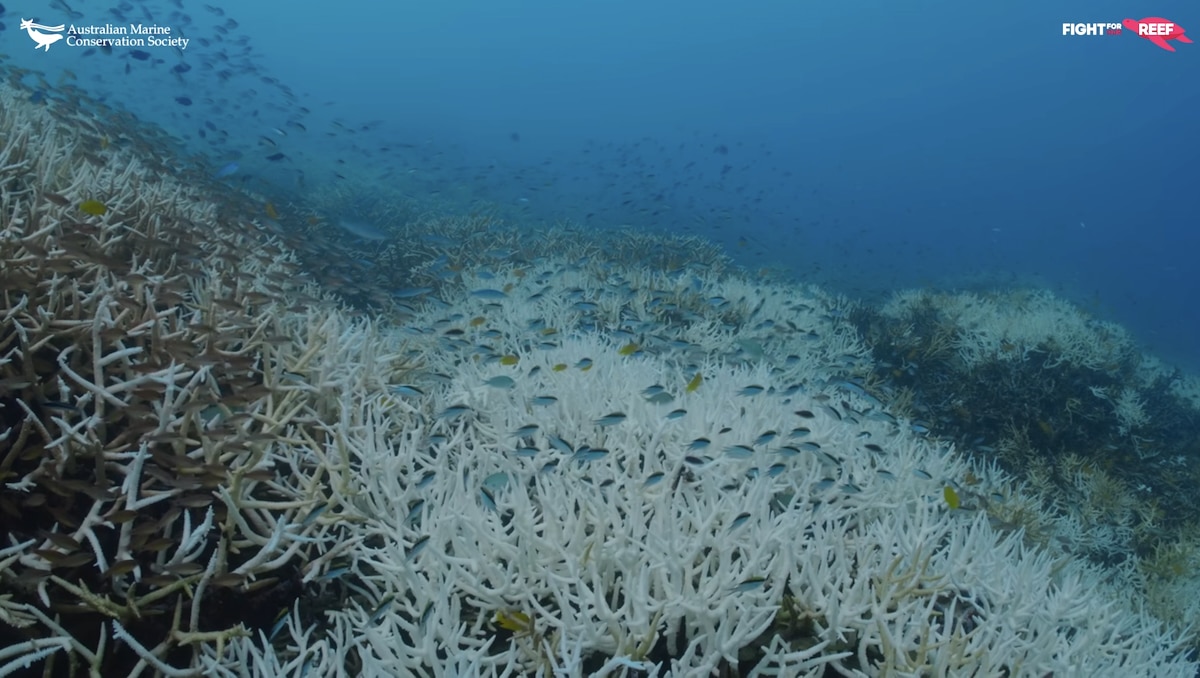
New video footage released on April 11, 2024 shows that bleached corals on the southern part of the Great Barrier Reef extend to greater depths than has been reported during the current mass bleaching event. Australian Marine Conservation Society / Facebook screenshot
The Australian Marine Conservation Society (AMCS) has released video footage showing that the southern portion of the Great Barrier Reef is suffering from deep-sea coral bleaching, reported The Guardian.
The footage shows that the bleaching extends at least as far down as 59.1 feet — the deepest reported during this mass bleaching event, a press release from AMCS said. Some of the corals have begun to die in the face of record marine heat waves.
“I feel devastated. This bleaching event is the worst I have seen. It’s a severe bleaching event,” said Dr. Selina Ward, University of Queensland’s former academic director of the Heron Island Research Station, in the press release.
Ward reported extensive coral bleaching at all 16 southern Great Barrier Reef sites she had visited, saying it was the worst she had seen in three decades.
“I’ve been working on the Reef since 1992 but this [mass coral bleaching event], I’m really struggling with. The diversity of species involved has been hard to deal with. Look at bleached areas, there are many different species that are bleached – many of which are pretty resistant to bleaching so it’s not a pleasant one,” Ward added.
Last week, aerial survey data showed that 75 percent of the reef had experienced bleaching during the current bleaching event, with much of it classed as “high to extreme bleaching.”
During climate change-driven marine heat waves, extended periods of warmer ocean temperatures cause corals to become stressed, which leads them to expel the algae that live in a symbiotic relationship with them. These algae not only give corals their colorful appearance, but they are also their main source of energy, so long periods without them can lead to starvation.
“This new footage shows extensive coral bleaching in southern reefs, but there are images from the central and northern parts that show bleaching is extensive and severe in some of those areas too. Although in-water surveys will take months, the Great Barrier Reef Marine Park Authority has completed the aerial surveys but only released the data. The authority must urgently release the maps to show to the public the extent and severity of this bleaching event,” said Dr. Lissa Schindler, campaign manager with AMCS, in the press release.
Nearly 4,000 British Airways customers were affected by the protest
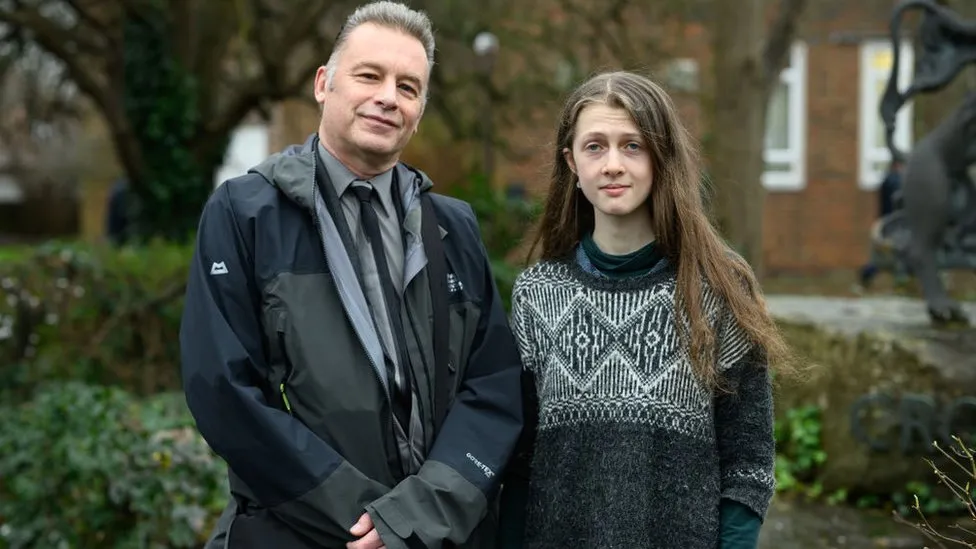
Just Stop Oil activist Cressida Gethin pictured with naturalist Chris Packham.
A Just Stop Oil protester who disrupted thousands of journeys at Heathrow by scaling a gantry above the M25 has said she would repeat the stunt.
Cressida Gethin, 22, climbed the gantry in July 2022 to protest the UK reaching its hottest temperature on record, 40C (104F), the day before.
As a result of the protest by the climate activist group, 3,923 British Airways customers were affected by cancellations and delays, a court heard in February.
The protester faces being sent to prison when she is sentenced next month.
In an interview with environmentalist Chris Packham, Gethin said she would like to speak to some of the people affected by the protest as she said that she would have no hesitation protesting in the same way again.
…
Gethin added that she faced a “very real moral dilemma of knowing that people would be stuck in their cars and missing important events”.
She continued: “I heard one person missed their parent’s funeral, which I would never want. It doesn’t sit easy with me.”
Tory Party members have delivered a scathing verdict on Rishi Sunak and his cabinet, with a record number of ministers given a negative approval rating, according to the Conservative Home website.
It’s a further sign of just how unpopular Sunak and his government are, ahead of the May 2nd local elections, as pressure continues to mount on the Prime Minister.
The latest survey of Tory members conducted in March, shows that 12 ministers have negative ratings, that is up from 11 the month before.
At the bottom of the table is Michael Tomlinson, illegal immigration minister, with a negative rating of 43.1, with Rishi Sunak next at -27.7.
The Prime Minister is then followed by chancellor Jeremy Hunt on minus 22.7, with Michael Gove on -14.3 and Oliver Dowden on -12.0. Lord Cameron is on -7.8.
The plot shows just how out of touch and deranged the Tory party is.
A group of Tory MPs is plotting to bring Boris Johnson back in to a senior role with the Conservative Party and also want to replace Prime Minister Rishi Sunak with Suella Braverman.
The plot, which the Sun is reporting has been hatched by the Conservative Democratic Organisation (CDO) – a powerful Tory members group, comes as Sunak continues to face mounting pressure with the Tories trailing the Labour Party in the polls by around 20 points.
With local elections taking place on May 2nd, it’s expected that there will be another push by Tory rebels to oust Sunak should the party perform badly. Some analysts have predicted that the Tories could be set to lose 500 council seats in the upcoming local elections on May 2nd. That’s half of the party’s councillors facing election.
Campaigners are demanding an end to the ‘toxic influence’ of oil money in UK politics
Activists dropped a massive banner over Westminster Bridge this morning to launch a new campaign vowing to challenge MPs who accept oil money in the run-up to a general election.
As MPs return to parliament after the Easter recess, climate campaigners have issued a warning that they will be holding politicians to account to end the “toxic influence” of fossil fuel lobbyists in Westminster.
Campaigners for the Stop Polluting Politics movement said they will challenge current and prospective MPs to reject donations from high-polluting industries as they argue the influence from Big Oil is leading to the rollback of key climate policies.
It comes as the UK Government came under huge criticism for announcing over 100 new oil and gas licences, while it was revealed the Tory Party received £3.5m from polluters and climate deniers in 2022.
Labour said the prospect of her returning as leader “will send shivers down the spine of working people”.
Shameless Liz Truss who became Britain’s shortest-serving Prime Minister after her disastrous economic policies resulted in her being booted out of office after just 49 days, has refused to rule out running again for leader of the Tory party.
Truss, who has shown no humility after wrecking the economy with her mini-budget, which saw mortgage rates spiralling and resulted in the pound plummeting in value, believes she has ‘unfinished business’.
The former Tory party leader made the comments during an interview with LBC, while promoting her new book, ’10 years to save the West’, which is out today.
Liz Truss was all over the airwaves today while promoting her new book ‘Ten Years To Save the West’ making a whole number of bizarre and eyebrow-raising claims.
The Tories are trying to be ‘fashionable’
When asked about the government’s climate policies (forget the numerous recent climate policy rollbacks) Truss believed the government had a “ruthless Net Zero agenda” which she claimed was “ruining the economy”. She went on to say it was all down to the Conservatives wanting to “appear fashionable, rather than basing what they’re doing on their principles”. Not sure that’s going very well for them.
The ‘Left smear’ against her
The former-PM made the claim that the backlash against her mini-budget wasn’t due to its disastrous impact on the UK economy and millions of UK households, but in fact down to a ‘smear’ campaign by the Left.
The former PM who seems to lack any sense of self-awareness claimed on LBC the Left were “smearing” her by blaming everything wrong with the economy on her mini-budget.
“What they are saying is not born by the facts, It’s a smear,” Truss said. “I’m countering it and a lot of economists are countering it.
“In the same way they say the government was trying to abolish the forests, they are trying to smear me with economic results that I’m clearly not responsible for.”
“The science we need for the ocean we want” – this is the tagline for the UN Ocean Decade (2021-2030), which has just held its first conference in Barcelona, Spain. Marine scientists from around the world, including me, gathered alongside global leaders to chart the progress of this ten-year mission to improve ocean health and marine biodiversity. That includes finding ways to better protect the seabed which we still know relatively little about.
Some areas of sediment on the sea floor hold large stores of carbon. Without greater protection, disturbance from bottom-trawling fishing practices for example, could release some of that stored carbon back into the atmosphere.
I joined discussions in Barcelona that have led to the launch of a new sustainable ocean planning initiative, to be coordinated by Julian Barbière, global coordinator of the Ocean Decade. This aims to encourage commitment to sustainable management of 100% of sea area under a nation’s jurisdiction.
With this in place, there’s scope to reimagine the role of the ocean in our wider climate system and recognise that all marine natural systems sequester and store carbon in their soils and sediments.
I’m here on behalf of the global ocean decade programme for blue carbon – that’s any carbon that is stored in the ocean. This project is one of the UN’s 50 programmes aimed at delivering transformative ocean science solutions for sustainable development, connecting people and our ocean. That’s a big ask.
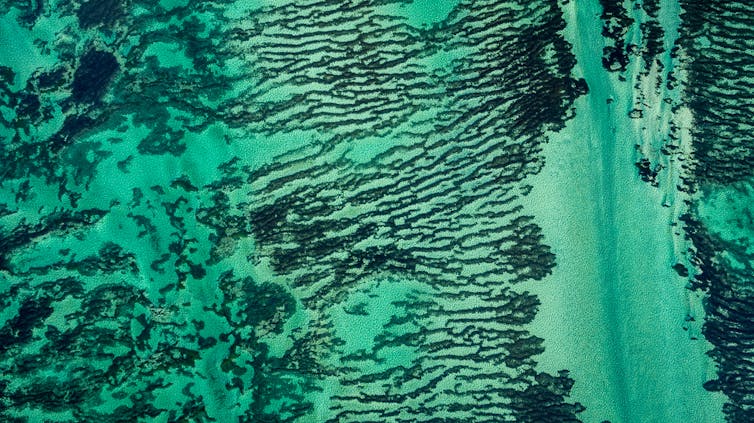
My work focuses on the extraordinary ability of coastal ecosystems – such as mangroves, salt marshes and seagrass – to sequester or store organic carbon in unusually high densities. Our blue carbon team of international research scientists from more than 20 countries is beginning to define emerging blue carbon ecosystems such as kelp forest and sub-tidal sediments as solutions to manage the climate and biodiversity crises.
The 360 million sq kilometres of ocean and sea floor, from coastal seagrass meadows to the sediment that slowly accumulates within the deepest trenches, are massively overlooked as a precious carbon store. Oceans hold vast stores of carbon – the top metre of the ocean holds an estimated 2.3 trillion metric tonnes.
The seafloor is not a resource to be relentlessly exploited, but a vulnerable repository of global biodiversity and carbon that needs protecting. These highly productive, yet vulnerable, ecosystems have been greatly affected by habitat loss and destructive practices such as deforestation of mangroves for shrimp aquaculture in the relentless development of the world’s coastal zones.
Blue carbon has huge potential to provide ocean-based solutions to help mitigate climate change, and thankfully, at the global scale at least, these losses have slowed in recent years.
The potential for blue carbon to reduce greenhouse gas emissions is relatively modest, but healthy, restored ecosystems have the potential to store an extra 2.96 million tonnes of carbon annually. Certain countries, such as Indonesia, offer huge potential as blue carbon hotspots where the protection and restoration of nature are an opportunity, for both the environment and local communities.
Carbon credits, the means by which additional carbon can become a source of investment income in that community, are gaining much interest. Off the coast of Kenya, the community-based Miko Pamojo project enhances direct benefits to local people from mangrove restoration.
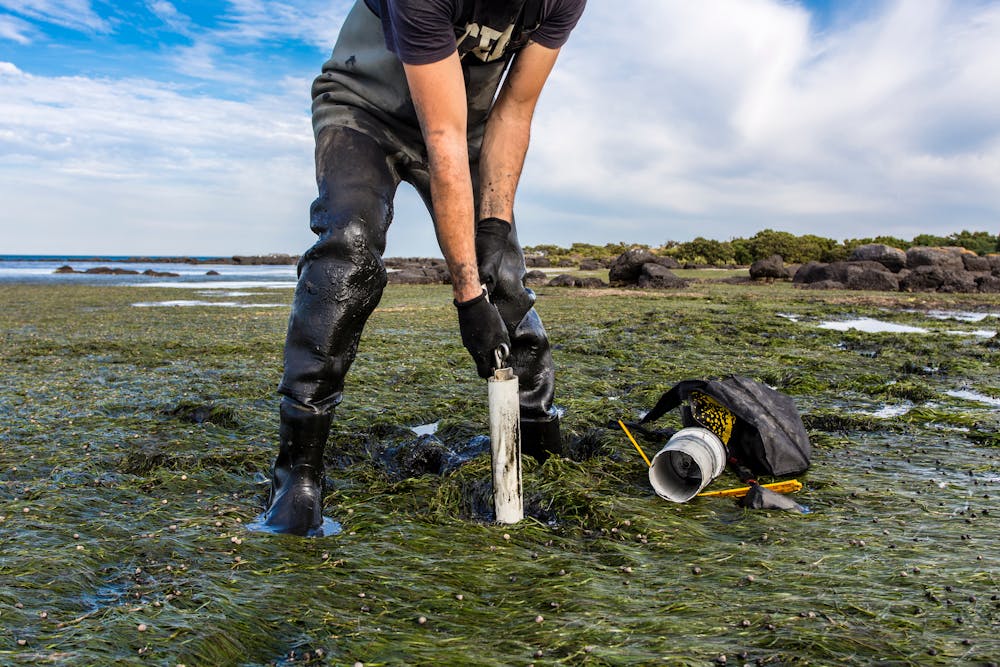
Collecting a sediment core to assess carbon sequestration rates in the sediment of a tidal seagrass bed. I. Noyan Yilmaz/Shutterstock
Blue carbon ecosystems can help countries meet their climate obligations and have been attracting considerable interest. However, if nations want these ecosystems to continue to provide a whole range of services our governments must protect them and, where possible, restore lost habitats.
Most governments have been stubbornly slow to prioritise ocean-based solutions high up on the agenda of global climate negotiations. At this conference, I’ve heard more people, including Unesco’s director general Audrey Azoulay, driving home the need to protect and effectively manage our ocean resources.
Members from the traditional owners of the Great Barrier Reef spoke of “country” from a perspective of a long and sustained human relationship with nature and are intimately connected to the ocean. There is a growing recognition and respect for this indigenous knowledge and our need to integrate that into a sustainable ocean future.
Reimagining the ocean’s role
It makes sense to start by protecting these natural systems that already hold vulnerable stores of carbon – this is sensible risk management.
As nations continue to exploit the marine environment for fishing, fossil fuels and even precious metals which are now being mined from the sea floor in certain places, it is time to rethink the value of these vast natural stores of ocean carbon.
Space science gets way more funding than our oceans, yet vast areas of the global deep ocean remain largely unmapped. “Life below water” is by far the least funded of the UN’s 17 Sustainable Development Goals. That needs to change through a sustained and increased investment in ocean science and greater recognition for the value of our blue economy – defined by the UN as the sustainable use of the ocean’s resources for economic growth, improved livelihoods and jobs.
Stepping back to pause and preserve what already exists in the ocean can help the planet, and us, build resilience and create a healthier and more sustainable marine environment. The seabed forms the foundation for an interconnected ocean ecosystem and acts as an important long-term global sink for carbon that involves the whole ocean and its exchanges with the atmosphere and wider Earth system.
While plans are finally moving in the right direction, there are huge challenges ahead. To paraphrase Cynthia Barzuna, director of ocean action 2030 at the World Resources Institute, “there is no wealthy ocean without a healthy ocean”. The biggest takeaway from the Barcelona conference is that a sustainable ocean future depends on a shared vision that works for all of us and marine life too.