Category: Climate Crisis

  • Rich Nations Have Delivered Mere ‘Pittance’ to Help East Africa Tackle Climate Crisis: Oxfam

    Spread the love

    Original article by JAKE JOHNSON republished from Common Dreams under Creative Commons (CC BY-NC-ND 3.0).
    “We have an abundance of clean, renewable energy,” said one African activist. “But to unlock it, Africa needs funding from countries that have got rich off our suffering.”

    As the first-ever Africa Climate Summit kicked off in Nairobi, Kenya on Monday, an analysis by the humanitarian group Oxfam found that rich nations have delivered just a small fraction of the aid that East African nations say they need each year to meet their climate goals.

    Unlike rich countries that account for a disproportionate share of planet-warming greenhouse gas pollution, East Africa has contributed “almost nothing” to global carbon emissions that are driving record-shattering heat worldwide, Oxfam’s new report notes. In 2021, according to one recent estimate, the average North American emitted 11 times more carbon dioxide than the average African.

    The World Meteorological Organization pointed out Monday that Africa is responsible for less than 10% of global carbon emissions.

    Yet “East Africa is one of the world’s worst-hit regions by climate change and is now experiencing its worst climate-induced extreme weather, fueling an alarming hunger crisis,” Oxfam’s report states. “Over 31.5 million people are currently facing acute hunger across Ethiopia, Kenya, Somalia, and South Sudan.”

    Those countries, which suffer billions of dollars worth of climate-related damage each year, have said they will need at least $53.3 billion annually to meet critical targets under the Paris Climate Agreement. According to Oxfam, wealthy countries provided just $2.4 billion in aid to East African nations in 2021.

    More broadly, Oxfam noted, high-income countries pledged that they would provide $100 billion a year by 2020 to help lower-income countries fight climate chaos.

    “Oxfam estimates that in 2020 the real value of financial support specifically aimed at climate action was only around $21 billion to $24.5 billion—much less than officially reported figures suggest,” the group’s report states.

    Fati N’Zi-Hassane, Oxfam’s Africa director, said Monday that “even by their own generous accounts, polluting nations have delivered only pittance to help East Africa scale up their mitigation and adaptation efforts.”

    “Nearly half the funds (45%) they did give were loans, plunging the region further into more debt,” N’Zi-Hassane added.

    Climate finance is expected to be a major topic of discussion at the Nairobi summit, which comes after months of scorching heat on the continent.

    “Africa is seen as a sunny and hot continent,” Amadou Thierno Gaye, a research scientist and professor at Cheikh Anta Diop University in Dakar, toldBloomberg in July. “People think we are used to heat, but we are having high temperatures for a longer duration. Nobody is used to this.”

    The Associated Press reported Monday that “there is some frustration on the continent about being asked to develop in cleaner ways than the world’s richest countries—which have long produced most of the emissions that endanger climate—and to do it while much of the support that has been pledged hasn’t appeared.”

    Mohamed Adow of Power Shift Africa told AP that “we have an abundance of clean, renewable energy and it’s vital that we use this to power our future prosperity. But to unlock it, Africa needs funding from countries that have got rich off our suffering.”

    In addition to calling on rich nations to contribute the aid they’ve promised to support Africa’s renewable energy transition, African civil society groups are urging their leaders to reject fossil fuel expansion, specifically warning against the completion of TotalEnergies’ East African Crude Oil Pipeline (EACOP).

    A recent Human Rights Watch report warned that more than 100,000 people in Uganda and Tanzania are set to “permanently lose land to make way for the pipeline and Tilenga oilfield development.” One analysis indicates the pipeline could result in 379 million tonnes of planet-warming emissions over its lifespan—more than 25 times the combined annual emissions of Uganda and Tanzania.

    Zaki Mamdoo, coordinator of the Stop EACOP Coalition, said Monday that “the African Climate Summit could provide the platform needed for the continent to dramatically shift its trajectory and future—from one that is set to bear the brunt of climate collapse, to one of energy security and prosperity driven by decentralized and people-centered renewables.”

    “For this to happen,” said Mamdoo, “African leaders will need to rise to the occasion and make firm commitments to significantly upscale renewable energy developments while resisting and withdrawing any and all support for exploitative and destructive projects like the East African Crude Oil Pipeline.”

    Original article by JAKE JOHNSON republished from Common Dreams under Creative Commons (CC BY-NC-ND 3.0).
  • Dutch gov’t spends €37.5 billion per year on fossil fuel subsidies

    Spread the love
    image reads STOP FOSSIELE SUBSIDIES
    image reads STOP FOSSIELE SUBSIDIES

    https://nltimes.nl/2023/09/04/dutch-govt-spends-eu375-billion-per-year-fossil-fuel-subsidies

    The Dutch government misses out on 37.5 billion euros in income every year due to schemes that favor using fossil fuels. Researchers from SOMO, Oil Change International, and Milieudefensie arrived at this amount in a study into how the government “subsidizes” the fossil fuel industry.

    Researcher Boris Schellekens of the Foundation for Research on Multinational Enterprises (SOMO) called the estimate conservative. He and his colleagues ignored all costs of environmental damage. “We purely looked at missed state revenues.” The researchers are convinced that their overview is the most complete to date.

    The report published on Monday describes 31 regulations that, in one way or another, make the use of fossil fuels more economical. That usually does not concern money that the government transfers to companies’ accounts but mainly tax discounts and exemptions. For example, major natural gas consumers do not have to pay energy tax on most of their consumption, and aviation and shipping are exempt from excise duty on kerosene and fuel oil. Oil refineries, coal-fired power stations, and the steel industry also enjoy such tax benefits.

    The biggest hit, 13.5 billion euros per year, is in the energy tax, which is degressive in the Netherlands. That means that companies that use more energy have to pay relatively less tax on their consumption. The researchers call this “a perverse incentive.”

    …

    https://nltimes.nl/2023/09/04/dutch-govt-spends-eu375-billion-per-year-fossil-fuel-subsidies

  • XR climate activists start march from three cities to block A12 in The Hague next week

    Spread the love
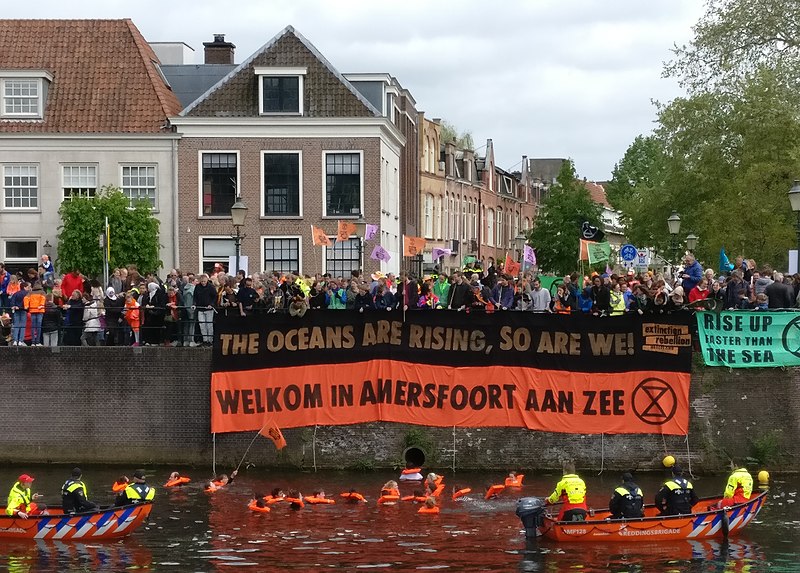
    Nederlands: Spandoek van Extinction Rebellion bij het bezoek van de koning in Amersfoort.Image by Daandelft, Creative Commons Attribution-Share Alike 4.0 International license.
    Nederlands: Spandoek van Extinction Rebellion bij het bezoek van de koning in Amersfoort. Image by Daandelft, Creative Commons Attribution-Share Alike 4.0 International license.

    https://nltimes.nl/2023/09/03/xr-climate-activists-start-march-three-cities-block-a12-hague-next-week

    Participants in a climate march set off from Arnhem, Alkmaar, and Almere on Sunday morning, ending six days later in The Hague. The march is an initiative of Extinction Rebellion (XR), in advance of the next blockade of the A12 highway, which the climate activist group has announced for next Saturday. According to XR, the march will be “public-friendly and fully within the law.”

    For each day, the activists have set a route of about 20 kilometers. The routes will go from station to station, so people who want to join the day’s march can do so easily. A similar march already took place in May, but then only from Arnhem.

    Starting Saturday, September 9, XR plans to block the A12 in The Hague every day. This part of the road passes the temporary Tweede Kamer and the Ministry of Economic Affairs and Climate Policy. According to XR, this is exactly the right place for a protest against the financial benefits that the government grants for the use of fossil fuels. These fuels cause by far the most CO2 emissions and thus contribute significantly to global warming.

    …

    https://nltimes.nl/2023/09/03/xr-climate-activists-start-march-three-cities-block-a12-hague-next-week

  • Coalmine approvals in Australia this year could add 150m tonnes of CO2 to atmosphere

    Spread the love
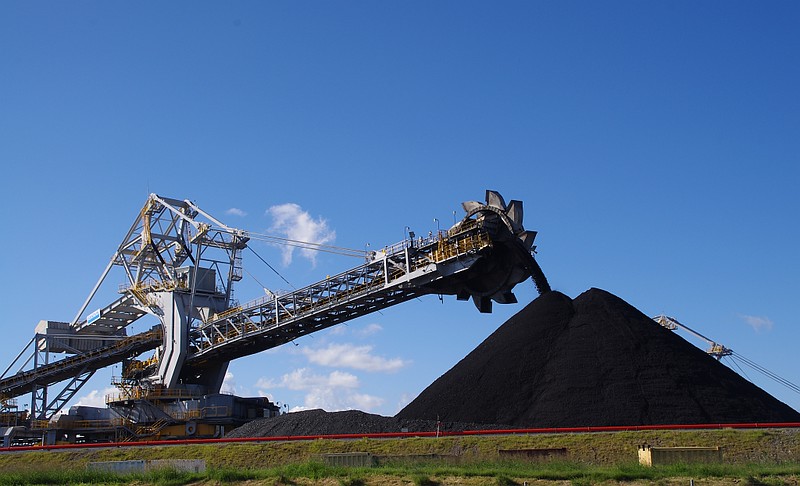
    Coal loader P4393. Part of the coal loading facility at Kooragang Island, NSW Australia. Image by eyeweed, Attribution-NonCommercial-NoDerivs 2.0 Generic (CC BY-NC-ND 2.0).
    Emissions added by coalmine expansions this year are equivalent to one-third of the country’s annual climate pollution. Image by eyeweed, Attribution-NonCommercial-NoDerivs 2.0 Generic (CC BY-NC-ND 2.0).

    https://www.theguardian.com/environment/2023/sep/02/coalmine-approvals-in-australia-this-year-could-add-150m-tonnes-of-co2-to-atmosphere

    Expansion of metallurgical coalmine in Queensland will add 31m tonnes alone with activists accusing Albanese government of being reckless

    Coalmine expansions and developments approved in Australia so far this year are expected to add nearly 150m tonnes of carbon dioxide to the atmosphere over their lifetimes – equivalent to nearly a third of the country’s annual climate pollution.

    The Albanese government this week gave the greenlight to an expansion of the Gregory Crinum coalmine in central Queensland. It produces metallurgical coal, used in steelmaking.

    According to an analysis by the Australia Institute, it is likely to extend the development’s life by 11 years – until the mid-2030s – and add about 31m tonnes of carbon dioxide to the atmosphere once it is burned. That equates to 6% of Australia’s annual emissions. The owner, Sojitz Blue, will have until 2073 to decommission the mine.

    …

    Climate and conservation groups accused the government of recklessness and hypocrisy given its promise to act decisively on the climate crisis, pointing out it had the power to change the environment law to give it the power to block new fossil fuel developments if it chose.

    The Climate Council’s chief executive, Amanda McKenzie, said the mine expansion approval showed Australia’s environment laws were “absolutely broken”.

    “The Albanese government has a once-in-a-generation opportunity to arrest this decline,” she said. “Strengthening our national environment law, with climate at the heart of it, will safeguard our health, grow the economy, and protect our treasured natural places.”

    …

    https://www.theguardian.com/environment/2023/sep/02/coalmine-approvals-in-australia-this-year-could-add-150m-tonnes-of-co2-to-atmosphere

    Albanese Government’s stunning hypocrisy: coal mine extension gets the go-ahead

    THE CLIMATE COUNCIL has labelled the decision to approve an extension to the Gregory Crinum coal mine in Queensland’s Bowen Basin until 2073 as ‘stunning hypocrisy’.  

    Just one week after Climate Minister Chris Bowen toured the Pacific to promote Australia’s climate credentials, and with all warning sirens blaring about a climate change-fuelled summer of extreme heat and fires ahead, it beggars belief the Albanese Government has thrown a lifeline to a fourth highly-polluting fossil fuel project. 

    The approval was granted under the Environment Protection and Biodiversity Conservation Act (EPBC), Australia’s key national environmental law, which ironically fails to deal directly with the main threat Australia’s environment now faces: climate change. 

    …