Category: Climate Crisis
Rugby World Cup threatens legal action over Greenpeace protest video
The climate campaigners’ video flooded the Stade de France with oil in protest of TotalEnergies’ sponsorship of the Rugby World Cup – now it’s facing backlash.
In a letter seen by The Drum, a representative from Rugby World Cup Limited (RWCL) contacted Greenpeace regarding the video ‘Total Pollution: A Dirty Game,’ which utilizes a number of RWCL’s registered trademarks, including the Rugby World Cup and Rugby World Cup France 2023 logos, as well as the trademarks and logos of its member unions and commercial partners of the tournament.
“Your use of the RWCL IP has not been authorized by RWCL and/or the relevant commercial partner or member unions and therefore infringes RWCL’s and their intellectual property rights,” it reads.
It goes on to order that “in order to avoid the need for formal legal proceedings,” Greenpeace should “immediately cease and desist” on the grounds that the intellectual property of RWCL has been used without authorization and that, if Greenpeace wishes to avoid legal proceedings, it should remove the video and “refrain from any such use again in the future.”
A spokesperson from RWCL told The Drum it is not currently pursuing legal action but said: “There is guidance around the use of Rugby World Cup IP, which Greenpeace could have sought. This can be rectified.”
They added: “The France 2023 organizing committee reached out to engage with leading campaign groups and NGOs on shaping the tournament’s sustainability program. Greenpeace was the only one to decline.”
But Greenpeace maintains that its use of RWCL trademarks in the video is perfectly lawful, writing in its response to RWCL: “You state no legal basis for the demands issued to us and we fail to see that such a basis exists.”
…
Too hot to handle: climate crisis report so secret Albanese government won’t even reveal date it was completed

Image of a kangaroo. Anthony Albanese continues to reject calls to make even a sanitised version of the assessment public
The Australian government is refusing to release its secret report on how the climate crisis will fuel national security threats and is also refusing to say when it was completed.
The government insists the date, too, is classified. The approach has sparked claims of a “cult of secrecy in Canberra”.
Anthony Albanese ordered the Office of National Intelligence (ONI) last year to investigate national security threats posed by global heating, in line with an election promise.
When it notified the United Nations of Australia’s stronger 2030 emissions reduction target, the government trumpeted its commitment to “an urgent climate risk assessment of the implications of climate change for national security”.
So far, however, the government has rebuffed calls to release the assessment – or even a sanitised public version, as it did with the defence strategic review.
In a new response to Senate questions on notice, the prime minister confirmed the ONI’s climate assessment was finalised “within the last 12 months”. But Albanese added: “The specific timing of the assessment board is classified.”
Five other questions from the Greens’ defence spokesperson, David Shoebridge, were answered with an identical response: “The content and judgments of the assessment are classified.”
…
Das ist verboten
Don’t look there: how politicians divert our attention from climate protesters’ claims

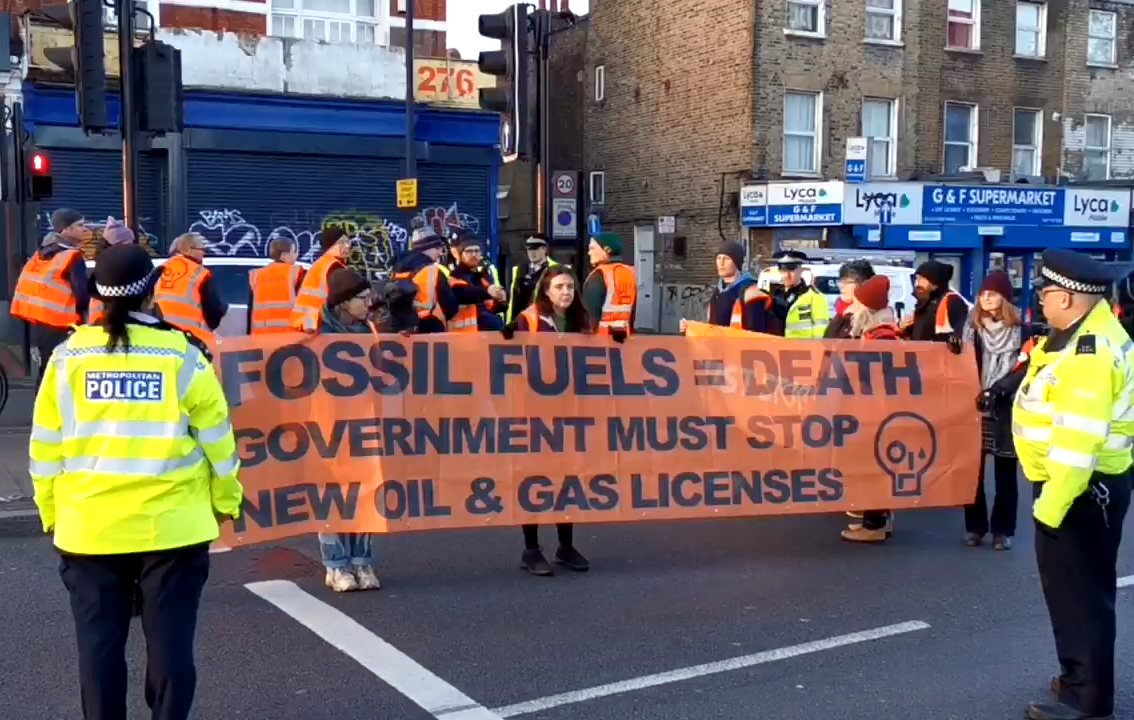
Just Stop Oil protesting in London 6 December 2022. Daniel Garcia-Jaramillo, Sheffield Hallam University
The right to protest is a distinctive feature of democratic, liberal societies. Yet the way in which many leading British politicians are currently talking about Just Stop Oil might make you think otherwise. Far from engaging with the issues at stake in these protests, politicians appear to be encouraging the wider public to ignore them or even oppose them.
Having seen their initial protests largely ignored, Just Stop Oil members have been making more disruptive (but non-violent) protests lately. They’ve been present at high-profile sports events like Wimbledon and the World Snooker Championships.
Policing minister Chris Philp dismissed the temporary delays caused to such events as “completely unacceptable”“. He argued that “the vast majority of the public are appalled by this very, very small, very selfish minority” and called on those not protesting to intervene.
With the UK government announcing new licences for oil and gas drilling in the North Sea, it’s clear that collective action that allows people to demonstrate their disagreement in peaceful ways is needed. In apparent contradiction to warnings about the climate crisis, Prime Minister Rishi Sunak’s commitment to the green agenda is wavering.
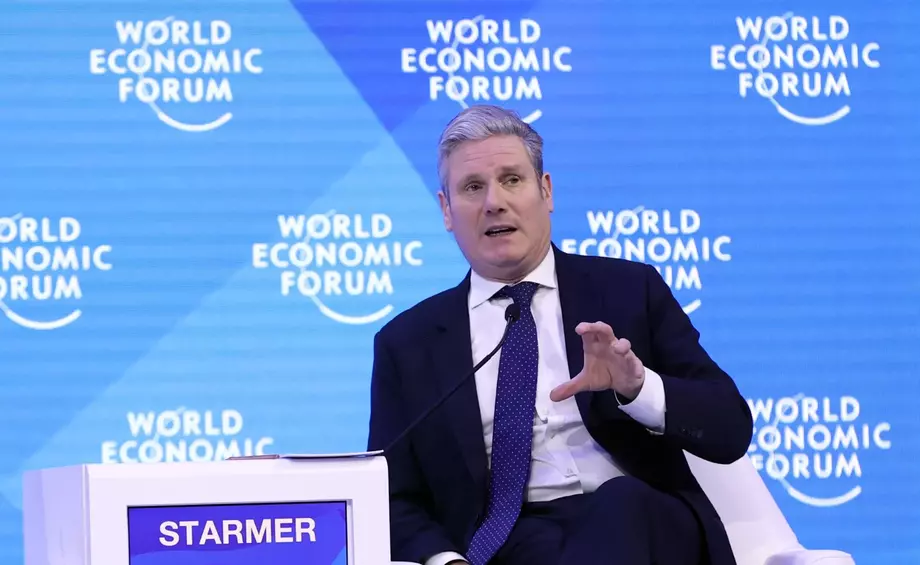
Meanwhile, Keir Starmer, the leader of the Labour party, has cancelled a plan to fund the transition from fossil fuels to green industries from the first day of government, should he win power. His response to criticism on this change was to turn on protesters.
He said: “The likes of Just Stop Oil want us to simply turn off the taps in the North Sea, creating the same chaos for working people that they do on our roads. It’s contemptible.”

Keir Starmer has deployed some divisive language about climate protestors of late. Diverting the conversation
Referring to people defending the environment as a “minority” that acts against other citizens polarises society and marginalises protesters’ claims. It depicts people’s demands as somehow niche rather than amounting to a highly pressing threat to the majority.
One of the features of language is that when we talk, we only focus on one or, at most, a few aspects of a particular object or event. A lot will inevitably remain unsaid.
Still, when what remains unsaid is one of the most obvious elements of any given topic, what is missing becomes as informative as what was said. In this case, the focus on tactics instead of the substance of the protest betrays an unwillingness to engage with the climate crisis.
The government has put forward the home secretary Suella Braverman rather than the environment secretary to respond to the Just Stop Oil protests (itself a signal that they are seen as a public order issue more than anything else).
Braverman has referred to people protesting for environmental reasons as causing “havoc and misery”. Environment secretary Thérèse Coffey, meanwhile, doesn’t appear to have made any public statements regarding the matter.
To say that people are protesting and not mentioning the reason for the protest leaves the story incomplete. That’s something that rarely happens when UK politicians talk about protests in other countries.
Last year, Sunak referred to women protesting in Iran as displaying “the most humbling and breathtaking courage” in sending “a very clear message that the Iranian people aren’t satisfied with the path that the government has taken”. Here the focus of the conversation is placed on protesters’ claims.
But when talking about protests held in the UK, the debate looms over the disruption caused, as if the core message were secondary or even dispensable. It is only when the core message is ignored that politicians can refer to those acting in defence of human and nonhuman lives as “selfish”.
In the absence of meaningful political engagement, conversations about Just Stop Oil protests in the UK have strayed mainly into tactics and disruption at expense of their core message. However, politicians in democratic nations have a responsibility towards the electorate to engage properly with what citizens demand, not just with the way they make their claims heard.

Daniel Garcia-Jaramillo, PhD researcher, Centre for Behavioural Science and Applied Psychology, Sheffield Hallam University
This article is republished from The Conversation under a Creative Commons license. Read the original article.
US climate deniers pump millions into Tory-linked think tanks
Original article by Adam Bychawski republished from Open Democracy under under a Creative Commons Attribution-NonCommercial 4.0 International licence. This article was published 16 June 2022 while Boris Johnson was UK Prime Minister. Boris Johnson was followed by Liz Truss and Rishi Sunak as prime ministers.

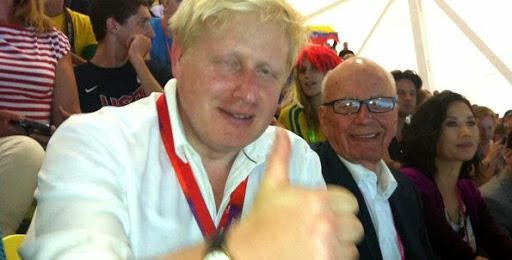
Boris Johnson confirms his thumbs up from Rupert Murdoch Our investigation reveals secretive funding sources for think tanks that boast of influencing the government
Influential right-wing UK think tanks with close access to ministers have received millions in ‘dark money’ donations from the US, openDemocracy can reveal.
The TaxPayers’ Alliance, the Institute of Economic Affairs (IEA), Policy Exchange, the Adam Smith Institute and the Legatum Institute have raised $9m from American donors since 2012. Of this, at least $6m has been channelled to the UK, according to tax returns filed with US authorities – representing 11% of the think tanks’ total UK receipts, with the figure reaching 23% for the Adam Smith Institute.
In that time, all five have steadily increased their connections in the heart of government. Between them, they have secured more than 100 meetings with ministers and more than a dozen of their former staff have joined Boris Johnson’s government as special advisers.
Representatives from right-wing think tanks – many of whom are headquartered at 55 Tufton Street in central London – frequently appear in British media and have been credited with pushing the Tories further to the right on Brexit and the economy.
As openDemocracy revealed yesterday, ExxonMobil gave Policy Exchange $30,000 in 2017. The think tank went on to recommend the creation of a new anti-protest law targeting the likes of Extinction Rebellion, which became the Police, Crime, Sentencing and Courts Act 2022.
None of these think tanks disclose their UK donors. With the exception of the Adam Smith Institute, none provide any information about the identity of donors to their US fundraising arms.
But an investigation by openDemocracy has identified dozens of the groups’ US funders by analysing more than 100 publicly available tax filings.
The Scottish National Party MP Alyn Smith said that the findings showed that the UK’s lobbying laws were not tough enough.
“He who pays the piper calls the tune,” he told openDemocracy. “We urgently need to rewrite the laws governing this sort of sock puppet funding so that we can see who speaks for who.”
Last month, Smith asked an IEA representative who funded the think tank on BBC’s flagship question time show.
Among the US-organisations who have donated to UK think tanks are oil companies and several of the top funders of climate change denial in the US.
The think tanks’ US arms received $5.4m from 18 donors who have also separately donated a combined $584m towards a vast network of organisations promoting climate denial in the US between 2003 to 2018, according to research from climate scientists.
- The John Templeton Foundation, founded by the late billionaire American-British investor, has donated almost $2m to the US arms of the Adam Smith Institute and the IEA. Researchers claim that the John Templeton Foundation has a “history of funding what could be seen as anti-science activities and groups (particularly concerning climate-change and stem-cell research)”.
- The National Philanthropic Trust, a multi-billion-dollar fund that does not disclose its own donors, has given almost $2m to the IEA, Policy Exchange, TaxPayers’ Alliance and the Legatum Institute’s US fundraisers. The trust has donated $22m to climate denial organisations, one of which described it as a “vehicle” for funnelling anonymous donations from the fossil fuel industry.
- The Sarah Scaife Foundation, founded by the billionaire heir to an oil and banking fortune, has given $350,000 to the Adam Smith Institute and the Legatum Institute. The foundation is one of the biggest funders of climate denial in the US, contributing more than $120m to 50 organisations promoting climate denial since 2012. Last month, openDemocracy revealed that the foundation, which has $30m in shares in fossil fuel companies, gave $210,525 to a UK climate sceptic group.
Policy Exchange, the influential conservative think tank, published a report in 2019 – two years after taking money from ExxonMobil – claiming that Extinction Rebellion were “extremists” and calling for the government to introduce new laws to crack down on the climate protest group.
New anti-protest laws passed under the Police, Crime, Sentencing and Courts Act last month appear to have been directly inspired by the report. The Home Office did not deny that it considered the recommendations when approached for comment.
The American Friends of the IEA also received a $50,000 donation from ExxonMobil in 2004, while the main UK branch of the IEA has received donations from BP every year since 1967.
The Legatum Institute has received $154,000 from the Charles Koch Foundation in 2018 and 2019. The foundation was set up by the American billionaire co-owner of Koch Industries, one the biggest fossil fuel companies in the US.
Andy Rowell, co-author of “A Quiet Word: Lobbying, Crony Capitalism and Broken Politics in Britain”, told openDemocracy: “For years, there have been calls for think tanks, who are so often joined at the hip with government, to be transparent and disclose who funds them.
“The fact that so much dark money is behind these groups, and much of it is linked to climate denial groups, is a political scandal that can’t be allowed to continue, especially given our climate emergency.”
In all, US donors account for more than a tenth of the overall income of the IEA, Policy Exchange, Adam Smith Institute and TaxPayers’ Alliance.
Anti-green lobbying
While all the think tanks say they do not dispute the science on climate change, many are campaigning to increase the UK’s dependency on fossil fuels and deregulate energy markets in response to the cost of living crisis.
The TaxPayers’ Alliance, Adam Smith Institute and the IEA have all called for the UK’s ban on fracking to be overturned. In April, the government agreed to review the moratorium it had imposed in 2019, when scientists deemed fracking unsafe. The U-turn came after concerted pressure from anti-net zero Tory MPs and lobby groups.
The IEA has also called for the government to approve the opening of a new coal mine in Cumbria, while the TaxPayers’ Alliance has called for the government to scrap green energy bill levies. Tory MP Ben Bradley has cited the TaxPayers’ Alliance in Parliament while claiming that levies will exacerbate the cost of living crisis.
Environmental groups say cutting the levies, which are used to invest in energy efficiency measures and renewable energy, would be self-defeating and merely delay the UK’s longer-term transition away from fossil fuels.
Johnson’s think tank cabinet
Right-wing think tanks like the IEA have come to play an increasingly influential role in shaping British politics, despite the lack of transparency around their funding.
The IEA has boasted that 14 members of Boris Johnson’s cabinet – including the home secretary Priti Patel, the foreign secretary Liz Truss and the business secretary Kwasi Kwarteng, are “alumni of IEA initiatives”.
Ministers have recorded 26 meetings with the think tank since 2012, but there may be additional, undeclared private meetings. In 2020, Truss, who was then the secretary of state for trade, failed to declare two meetings with the IEA, arguing that they were made in a personal capacity.
Mark Littlewood, the director of the IEA, has boasted of securing access to ministers and MPs for his corporate clients, including BP, telling an undercover reporter in 2018 that he was in “the Brexit influencing game”.
Others like Policy Exchange, which was co-founded by the ‘levelling up’ secretary Michael Gove, can claim to have had some of their policy ideas taken up by the government.
Gove’s recently announced plan to allow residents to vote on whether to allow developments on their street was first proposed by Policy Exchange last year. Campaigners said the plan will not help increase the supply of affordable housing.
Several of the think tanks were accused by a whistleblower of coordinating with one another to advocate for a hard break from the European Union following the referendum vote.
Shamir Sanni, a former pro-Brexit campaigner who worked for TaxPayers’ Alliance before going public with his claims, alleged that the organisation regularly met with the IEA, the Adam Smith Institute to agree on a common line on issues relating to Brexit.
Sanni subsequently won an unfair dismissal case against the TaxPayers’ Alliance. The organisations he identified have all denied they act as lobbyists or coordinate.
The IEA referred openDemocracy to a statement about its funding posted on its website when approached for comment.
The TaxPayers’ Alliance, Adam Smith Institute, Policy Exchange and the Legatum Institute did not respond to requests for comment.
Original article by Adam Bychawski republished from Open Democracy under under a Creative Commons Attribution-NonCommercial 4.0 International licence. This article was published 16 June 2022 while Boris Johnson was UK Prime Minister. Boris Johnson was followed by Liz Truss and Rishi Sunak as prime ministers.