The choice in the new IPCC report is stark: what we do in the next few years will determine our fate for millennia
After a 10,000-year journey, human civilisation has reached a climate crossroads: what we do in the next few years will determine our fate for millennia.
That choice is laid bare in the landmark report published on Monday by the Intergovernmental Panel on Climate Change (IPCC), assembled by the world’s foremost climate experts and approved by all the world’s governments. The next update will be around 2030 – by that time the most critical choices will have been made.
The report is clear what is at stake – everything: “There is a rapidly closing window of opportunity to secure a liveable and sustainable future for all.”
…
“Continued emissions will further affect all major climate system components, and many changes will be irreversible on centennial to millennial time scales,” it says. To follow the path of least suffering – limiting global temperature rise to 1.5C – greenhouse gas emissions must peak “at the latest before 2025”, the report says, followed by “deep global reductions”. Yet in 2022, global emissions rose again to set a new record.
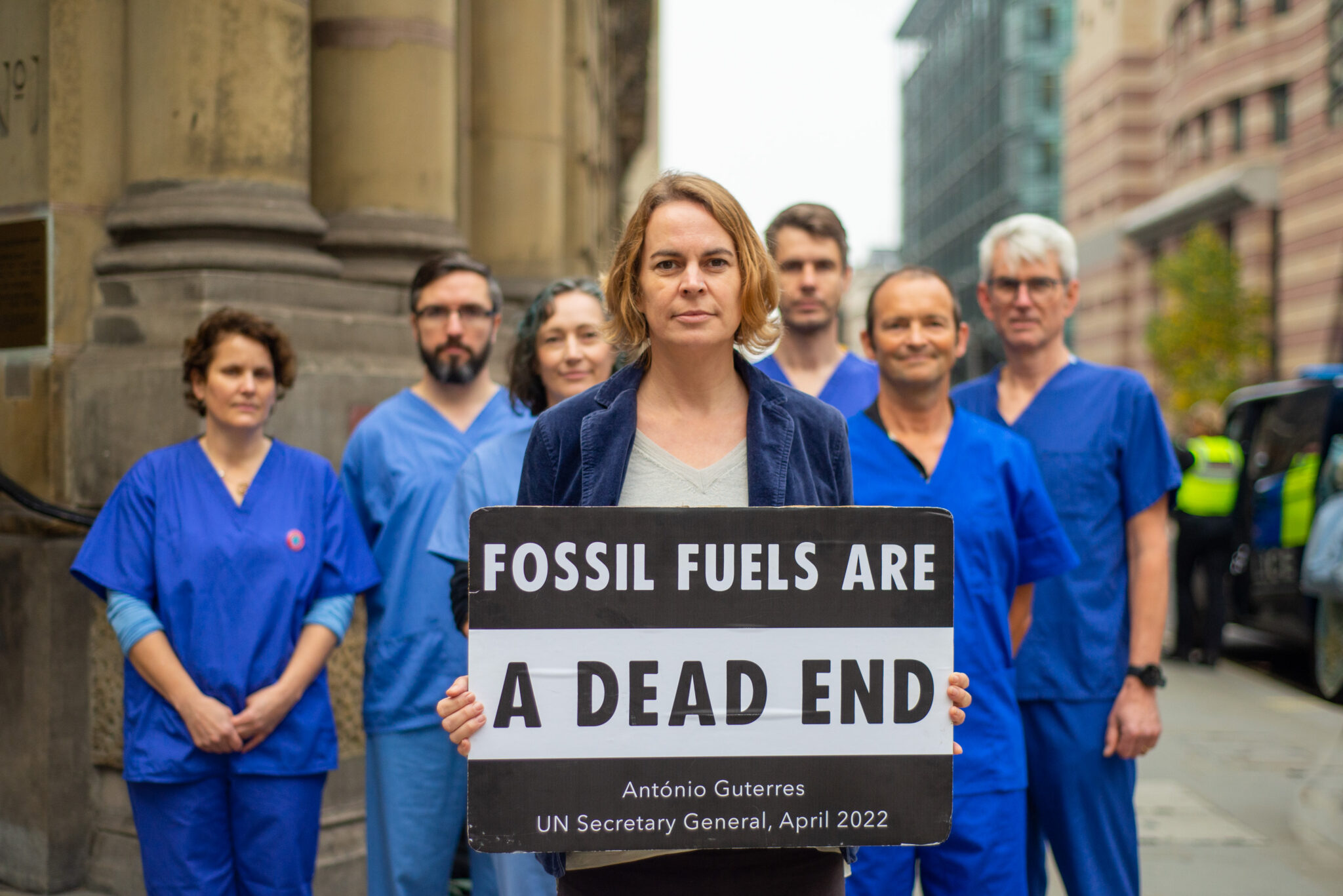
14.11.22_XR Docs_City of London Mags_Helena Smith_7224
NHS Workers Say No and Public and Commercial Services Union, one of the UK’s largest, among dozens of groups forming alliance with climate movement
NHS workers, trade unionists, anti-racism campaigners and climate activists will stand together in their thousands next month to protest the UK government’s apathetic and failed response to tackle interlocking crises, The Independent can reveal today.
On Monday, the event received a major boost after dozens of groups, representing a diverse cross-section of society and interests, confirmed their participation.
…
XR said it would focus on “attendance over arrest and relationships over roadblocks” to call for the UK government to adequately address a multitude of interwoven crises – climate change, the cost of living, attacks on democratic norms, and the shredding of essential public services.
Campaigners say the lobbying tactics used to argue against tougher measures on emissions echo those of the 20th century tobacco industry
Airlines have been accused of using a “typical climate denialist” strategy after downplaying decades of scientific research on aviation emissions to block tougher regulations.
Campaigners said the lobbying tactics echoed those of the 20th century tobacco industry, which fought stricter measures by magnifying minor doubts on the health risks of smoking.
Documents obtained by openDemocracy show airlines and airports privately told the government there was too much uncertainty about the additional warming effects of flights to justify introducing new policies to tackle them.
But senior climate scientists contradicted the industry’s claims, saying the science is well established on what are known as aviation’s “non-CO2 effects”.
These are caused by emissions at high altitude of water, nitrous oxides, sulphur dioxide and particulate matter, with aircraft vapour trails, also known as contrails, a particular problem because they form clouds at high altitude that trap heat radiated from the Earth.
The Intergovernmental Panel on Climate Change estimated in a special report in 1999 that the total historic impact of aviation on the climate was two to four times greater than from its CO2 emissions alone.
Research in 2021 largely confirmed those findings and concluded aviation emissions were warming the climate at “approximately three times the rate of that associated with aviation CO2 emissions alone”. An EU study from 2020 also found non-CO2 emissions warm the planet about twice as much as CO2 emissions, but acknowledged there were “significant uncertainties”.
The Department for Transport considered regulating these non-CO2 impacts and asked for views on the issue in a consultation in 2021 on its proposed “Jet Zero strategy”.
Responses from airlines and airports, obtained under FOI by openDemocracy, reveal several used the same tactic of arguing the science was too uncertain to justify policies to address non-CO2 effects. Several recommended instead that the government should limit its action on the issue to funding further research into it.
‘A bit of a joke’
Airlines UK, a trade body that lobbies for airlines including British Airways (BA), easyJet and Virgin Atlantic, told the DfT that “the science around these [non-CO2 impacts] is not yet robust enough to form reduction targets”.
When asked during the Jet Zero consultation what could be done to tackle non-CO2 impacts, Ryanair said it was “too early to say until impact is better understood”.
Low-cost airline Wizz Air told the DfT: “There is too high a level of uncertainty of non-CO2 emission contribution to climate change for a policy to be formed.”
Airlines UK, Ryanair and Wizz – alongside others across the industry – called on the DfT to instead fund further research into the science of non-CO2 impacts.
The tactic appears to have worked, with the DfT announcing in the Jet Zero strategy last year that more work would be done with scientists and the industry to understand the issue.
The DfT did, however, say the government was “exploring whether and how non-CO2 impacts could be included in the scope of the UK ETS (emissions trading scheme)”.
Professor Piers Forster, an atmospheric physicist and member of the independent Climate Change Committee, told openDemocracy it was “completely wrong” for the aviation industry to claim the science on aviation’s non-CO2 effects was too uncertain to address them.
He said: “It’s a bit of a joke to say the effects are too uncertain to do anything about. We see their contrails and we’ve known for over 20 years that they are warming the planet. The industry should not hide behind uncertainty.”
He added that “the non-CO2 effects absolutely have to be accounted for in some way and action should be taken to reduce them”.
Milan Klöwer, a climate physicist at Massachusetts Institute of Technology, said airlines were adopting a “typical climate denialist strategy” by overstating the level of uncertainty about non-CO2 effects.
“Even in the best case they roughly double the effect of CO2 emissions on the climate,” he said.
He called on airlines to start accounting for their non CO2 effects and invest more in solutions, such as alternative fuels, which reduced those effects.
Rob Bryher, aviation campaigner at climate charity Possible, said: “These documents show that airlines cannot be trusted to decarbonise on their own. Demand management solutions like a frequent flyer levy, introducing fuel duty, carbon pricing, or management of airport capacity are going to be crucial.”
Matt Finch, UK policy manager of campaign group Transport & Environment, said: “Aviation’s non-CO2 impacts are somewhere between huge and absolutely massive. But the industry doesn’t want you to know that. Instead of confronting its environmental problems head-on, the industry copies the tobacco industry of the ’50s and the oil industry of the ’70s in casting doubt and disbelief around the science.”
BA said it was working with academics and experts on non-CO2 impacts of flying while Sustainable Aviation, an industry group that includes airlines, said it was committing to addressing them but reiterated more research was needed. Wizz Air said it was already addressing the impacts through a range of measures.
Some airlines ignore non-CO2 effects in schemes they support to help passengers calculate and offset the emissions of their flights.
BA’s emissions calculator states a one way flight from London Heathrow to New York emits 348kg CO2E (carbon dioxide equivalent) and charges £3.97 for offsetting.
Atmosfair, a German non-profit organisation which supports the decarbonisation of flying, calculates the same journey on a Boeing 777-200 – an aircraft type used by BA – emits 896kg and charges 21 euros (£18.37) for offsetting. Atmosfair’s emissions total comprises 308kg of CO2 emissions and 587 kg equivalent for “climate impact of contrails, ozone formation etc”.
While the DfT has so far failed to act on non-CO2 effects, they are mentioned in official advice to companies from the Department for Business Energy and Industrial Strategy on how to report their emissions.
It says: “Organisations should include the indirect effects of non-CO2 emissions when reporting air travel emissions to capture the full climate impact of their travel.”
A DfT spokesperson said: “Our Jet Zero Strategy confirmed our aim of addressing the non-CO2 impacts of aviation, by developing our understanding of their impact and possible solutions, and the UK is one of the leading countries working to address this issue.”
Sustainable Aviation Fuel
International Airlines Group (IAG), which owns BA, Vueling and Aer Lingus, told DfT’s Jet Zero consultation it could address non-CO2 emissions by supporting “sustainable aviation fuel” (SAF).
SAF is a jet fuel made from sources which the industry claims are sustainable, including cooking oil and animal fat. It performs in a similar way to kerosene but can produce up to 80% less CO2 depending on how it is made. It potentially also reduces contrails.
IAG told the Jet Zero consultation SAF was “the only viable solution for decarbonising medium and long haul flights”, which account for about 70% of global aviation emissions.
But further documents obtained by openDemocracy reveal IAG then lobbied the DfT to water down its SAF mandate.
In response to a separate consultation, IAG argued the SAF mandate should only cover flights within the UK or to the EU, and not the long haul flights on which British Airways makes most of its profits.
IAG also lobbied against a proposal to ban airlines from dodging the mandate by filling their tanks with cheap kerosene at overseas airports – a practice known as “tankering”.
A BBC Panorama investigation in 2019 revealed tankering by BA and other airlines was creating small financial savings but unnecessary carbon emissions.
IAG also argued against a proposal aimed at building demand for “power-to-liquid” jet fuel, which is produced by combining hydrogen made by renewable energy with carbon captured from the atmosphere.
Unlike other so-called sustainable jet fuels, power-to-liquid fuel does not involve a feedstock needed by other industries to decarbonise, such as used cooking oil or animal fat.
IAG called it “a very expensive pathway to directly decarbonise aviation”.
Sustainable Aviation, an industry group that includes airlines, said: “We are committed to addressing [non-CO2] impacts based on the scientific evidence, but further research is key to developing effective mitigation solutions, for example the use of sustainable aviation fuels (which contain lower contrail forming particulates), alongside steps such as optimising flight routes to avoid contrail formation.”
BA, IAG’s principal airline, said: “We are actively engaging with academics, experts within the industry and the government’s Jet Zero Council to take proactive steps to look into non-CO2 impact.”
Wizz Air said it was mitigating non-CO2 effects “through route optimisation and jet fuel improvements” and by using Airbus A321neo aircraft which reduced NOx emissions by 50%.
The government wrote off emissions equivalent to 400,000 passengers flying from London to Sydney and back in one year
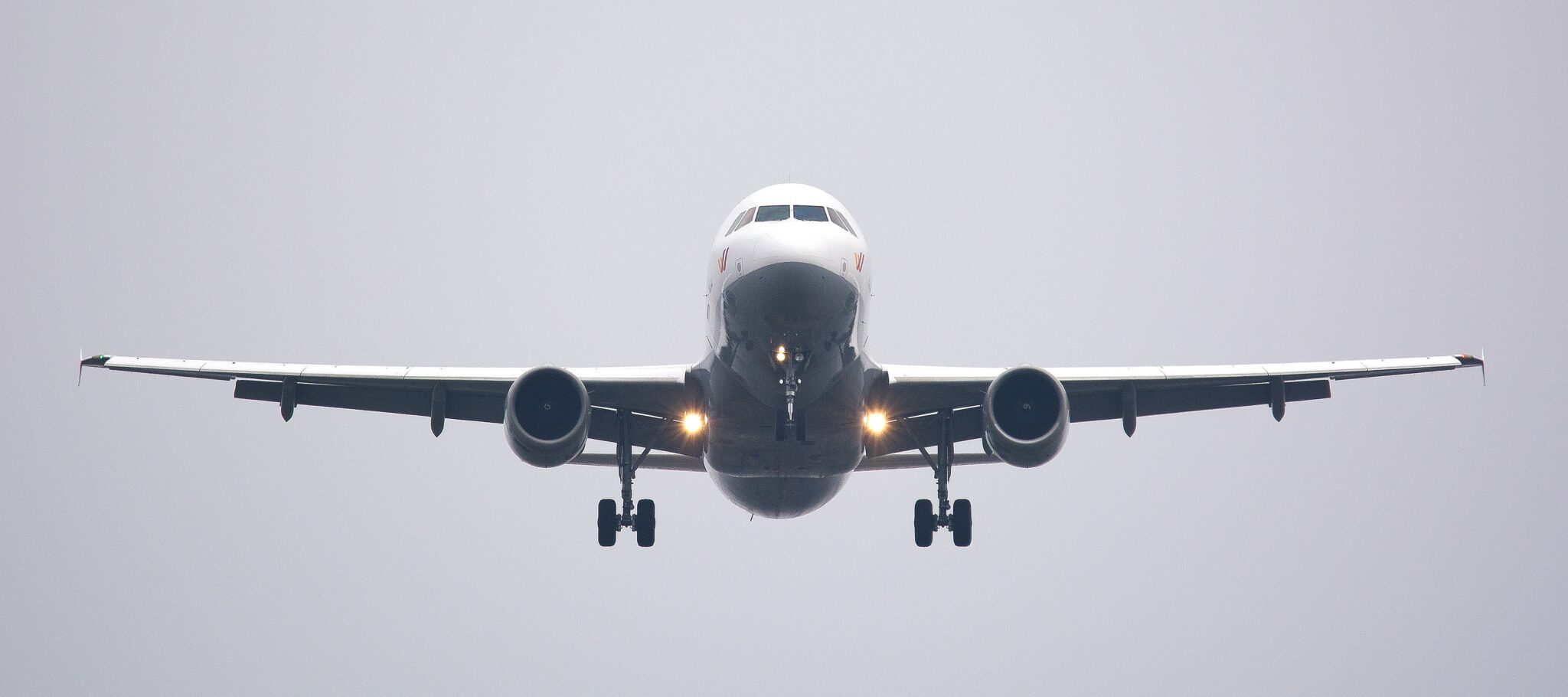
Photo by Pixabay from Pexels: https://www.pexels.com/photo/air-air-travel-airbus-aircraft-358319/
The government gave more than £300m worth of free ‘pollution permits’ to airline companies including British Airways, RyanAir and EasyJet under a scheme designed to tackle climate change.
The UK’s Emissions Trading Scheme is meant to reduce carbon emissions by forcing big polluters to buy a permit for each tonne of carbon they emit, with the money going into the public purse.
But data obtained by openDemocracy reveals the UK’s aviation sector was handed more than four million “pollution permits” last year, free of charge.
The 4.1 million tonnes of CO2 they represent are equivalent to the emissions of more than 400,000 passengers flying economy-class from London to Sydney and back. The free permits saved airlines the equivalent of £336m based on the annual average carbon price – 39% more than the previous year, 2021.
EasyJet, RyanAir and British Airways were the big winners of the handouts, bagging permits worth £84m, £73m and £58m respectively. The companies all made heavy losses during the pandemic but have since become profitable again: British Airways owner International Airlines Group (IAG) announced profits of £1.3bn last month, while RyanAir just enjoyed its “most profitable December quarter on record” and easyJet is reporting “record-breaking sales”.
openDemocracy has previously revealed how oil and gas companies including Shell and BP were similarly handed more than £1bn worth of free pollution permits during 2022.
Caroline Lucas, the Green MP for Brighton Pavilion, told openDemocracy the government was “letting aviation companies get away with it” and “forcing the public to pick up the tab”.
“Ministers must bring an end to these free pollution permits immediately, and make high-carbon companies pay for the climate-wrecking damage they’re causing,” she added.
The Department for Net Zero and Energy Security is now analysing the results of a consultation on phasing out free permits for the aviation sector – but policy changes will not take effect until at least 2026.
The government has already allocated 12.2 million free permits for the next three years, which at last year’s carbon price will be worth a further £965m.
A government spokesperson told openDemocracy the UK was giving away free permits because it was “committed to tackling climate change” but also to “protecting our industry from carbon leakage”.
But the risk of carbon leakage – when companies relocate to countries that do not have carbon pricing – is “minimal”, according to research commissioned by the government itself.
The study by Frontier Economics on behalf of the Department for Business, Energy and Industrial Strategy (BEIS) also found that ending permit giveaways would lead to a decrease in airline profits and improve market competition.
Daniele de Rao, an aviation expert at Carbon Market Watch, told openDemocracy: “Despite several studies showing that the risk of carbon leakage in the aviation sector is insignificant, airlines are still receiving an enormous amount of free allocation.
“The United Kingdom should apply the ‘polluters pay’ principle in its own ETS and, following the European Union’s example, should end the handout of free pollution permits to airlines as soon as possible.”
Matt Finch, UK policy manager of campaign group Transport & Environment, added: “The nation is up in arms about sewage pollution, but at the same time our government is paying airlines millions of pounds a year to pollute. Are these the actions of a climate leader? No. Free allowances should be phased out of the ETS as quickly as possible.”
The remaining £120m in free permits was carved up among the rest of the UK airline industry – with even the owners of private jets getting handouts.
Ineos Aviation, the company owned by oil and gas billionaire Jim Ratcliffe, was given free permits worth around £2,000.
The government has claimed that “our UK ETS is more ambitious than the EU system it replaces”.
But the EU has voted to phase out free permit allocations from 2026. It also redistributes the revenues raised by permit sales to environmental projects – whereas in the UK the proceeds are retained by the Treasury.
A government spokesperson told openDemocracy: “The UK is committed to tackling climate change while protecting our industry from carbon leakage. That is why a proportion of allowances are allocated for free to businesses under the UK Emissions Trading Scheme.”
They claimed handing free permits to airline giants would “support industry in the transition to net zero in the context of high global energy prices while incentivising long term decarbonisation”.
Whatever you’re interested in, there’s a free openDemocracy newsletter for you. HAVE A LOOK
A state-owned electricity generation company could save Britons £21bn ($24.8bn) a year (or £252 per household) while accelerating the transition to green energy, according to new analysis published by the think tank Common Wealth on 6 March.
In the report, Common Wealth analyses a range of proposals recently set out by other stakeholders including government agencies, industry commentators and think tanks to reform the wholesale electricity market, whose fragmented design and over-exposure to natural gas has led to Britain experiencing disproportionately high energy bills since Russia invaded Ukraine, while renewable generators have reaped windfall profits.
Analysing the pros and cons of a publicly owned generator compared with five other proposals recently tabled by various stakeholders – a wholesale price cap for low-carbon generators; a windfall tax on low-carbon generators; a voluntary shift to contracts for difference; splitting the electricity market; and establishing a single buyer of electricity – Common Wealth finds that the option of a state-owned electricity company comes out on top, both in terms of cost-savings potential and also which is most likely to incentivise greater investment in renewables.
The generator would purchase the portfolio of existing UK low-carbon generation assets, including biomass and nuclear but not natural gas, in order to generate and sell electricity to households and businesses through an integrated public company using a power purchase agreement between the public generator and supplier, and would therefore, unlike many of the other options, “provide a long-term solution” to the wholesale pricing system while passing the savings directly back to households and businesses.