If you’ve ever been seasick, “stable” may be the last word you associate with the ocean. But as global temperatures rise, the world’s oceans are technically becoming more stable.
When scientists talk about ocean stability, they refer to how much the different layers of the sea mix with each other. A recent study analysed over a million samples and found that, over the past five decades, the stability of the ocean increased at a rate that was six times faster than scientists were anticipating.
Ocean stability is an important regulator of the global climate and the productivity of marine ecosystems which feed a substantial portion of the world’s people. It controls how heat, carbon, nutrients and dissolved gases are exchanged between the upper and lower layers of the ocean.
So while a more stable ocean might sound idyllic, the reality is less comforting. It could mean the upper layer trapping more heat, and containing less nutrients, with a big impact on ocean life and the climate.
How the oceans circulate heat
Sea surface temperatures get colder the further you travel from the equator towards the poles. It’s a simple point, but it has enormous implications. Because temperature, along with salinity and pressure, controls the density of seawater, this means that the ocean surface also becomes denser as you move away from the tropics.
Seawater density increases with depth too, because the sunlight that warms the ocean is absorbed at the surface, whereas the deep ocean is full of cold water. The change in density with depth is referred to by oceanographers as stability. The faster density increases with depth, the more stable the ocean is said to be.
Our series on the global ocean opened with five in-depth profiles. Look out for new articles on the state of our oceans in the lead up to the UN’s next climate conference, COP26. The series is brought to you by The Conversation’s international network.
It helps to think of the ocean as divided into two layers, each with different levels of stability.
The surface mixed layer occupies the upper (roughly) 100 metres of the ocean and is where heat, freshwater, carbon and dissolved gases are exchanged with the atmosphere. Turbulence whipped up by the wind and waves at the sea surface mixes all the water together.
The lowest layer is called the abyss, which extends from a few hundred metres depth to the seafloor. It’s cold and dark, with weak currents slowly circulating water around the planet that remains isolated from the surface for decades or even centuries.
Dividing the abyss and the surface mixed layer is something called the pycnocline. We can think of it like a layer of cling film (or Saran Wrap). It’s invisible and flexible, but it stops water moving through it. When the film is ripped into shreds, which happens in the ocean when turbulence effectively pulls the pycnocline apart, water can leak through in both directions. But as global temperatures rise and the ocean’s surface layer absorbs more heat, the pycnocline is becoming more stable, making it harder for water at the ocean’s surface and in the abyss to mix.
Why is that a problem? Well, there’s an invisible conveyor belt of seawater which moves warm water from the equator to the poles, where it’s cooled and becomes more dense and so sinks, returning back to the equator at depth. During this journey, the heat absorbed at the ocean’s surface is moved to the abyss, helping redistribute the ocean’s heat burden, accumulated from an atmosphere that’s rapidly warming due to our greenhouse gas emissions.
If a stabler pycnocline traps more heat in the surface of the ocean, it could disrupt how effectively the ocean absorbs excess heat and pile pressure on sensitive shallow-water ecosystems like coral reefs.
Increasing stability causes a nutrient drought
And just as the ocean surface contains heat that must be mixed downwards, the abyss contains an enormous reservoir of nutrients that need to be mixed upwards.
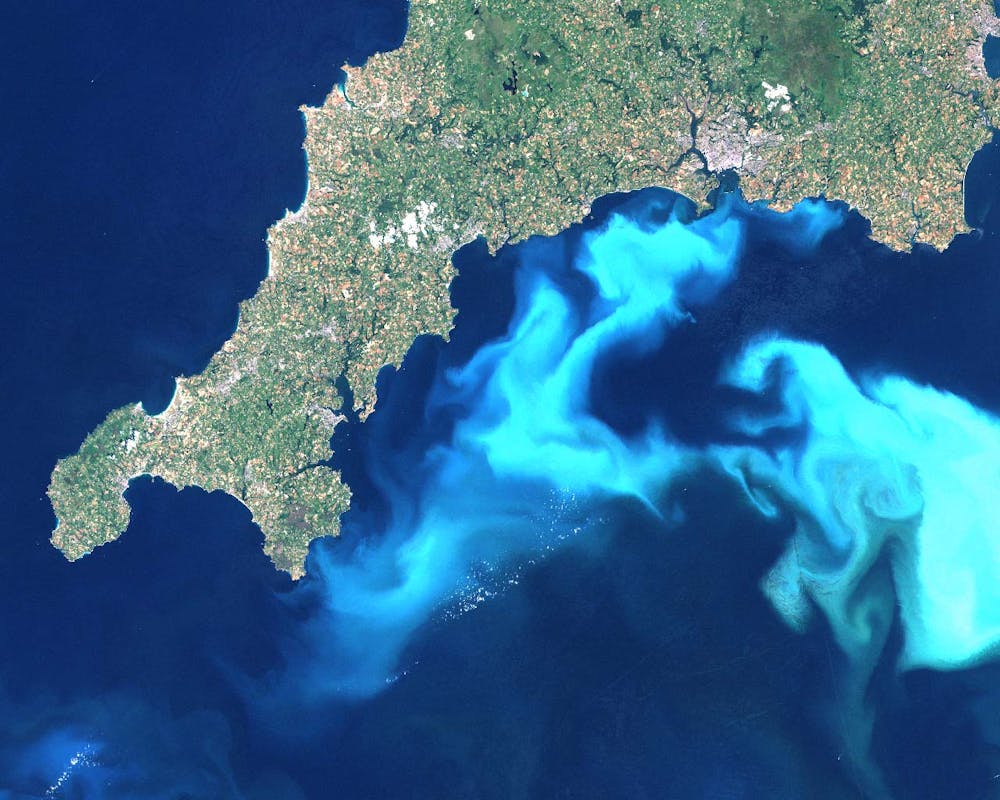
The building blocks of most marine ecosystems are phytoplankton: microscopic algae which use photosynthesis to make their own food and absorb vast quantities of CO₂ from the atmosphere, as well as produce most of the world’s oxygen.
Phytoplankton can only grow when there is enough light and nutrients. During spring, sunshine, longer days and lighter winds allow a seasonal pycnocline to form near the surface. Any available nutrients trapped above this pycnocline are quickly used up by the phytoplankton as they grow in what is called the spring bloom.
For phytoplankton at the surface to keep growing, the nutrients from the abyss must cross the pycnocline. And so another problem emerges. If phytoplankton are starved of nutrients thanks to a strengthened pycnocline then there’s less food for the vast majority of ocean life, starting with the tiny microscopic animals which eat the algae and the small fish which eat them, and moving all the way up the food chain to sharks and whales.
Just as a more stable ocean is less effective at shifting heat into the deep sea and regulating the climate, it’s also worse at sustaining the vibrant food webs at the sunlit surface which society depends on for nourishment.
Should we be worried?
Ocean circulation is constantly evolving with natural variations and human-induced changes. The increasing stability of the pycnocline is just one part of an extremely complex puzzle that oceanographers are striving to solve.
To predict future changes in our climate, we use numerical models of the ocean and atmosphere that must include all of the physical processes responsible for changing them. We simply don’t have computers powerful enough to include the effects of small-scale, turbulent processes within a model that simulates conditions over a global scale.
We do know that human activity is having a greater than expected impact on fundamental aspects of our planet’s systems though. And we may not like the consequences.
Imagine, for a moment, a different kind of Australia. One where bushfires on the catastrophic scale of Black Summer happen almost every year. One where 50℃ days in Sydney and Melbourne are common. Where storms and flooding have violently reshaped our coastlines, and unique ecosystems have been damaged beyond recognition – including the Great Barrier Reef, which no longer exists.
Frighteningly, this is not an imaginary future dystopia. It’s a scientific projection of Australia under 3℃ of global warming – a future we must both strenuously try to avoid, but also prepare for.
The sum of current commitments under the Paris climate accord puts Earth on track for 3℃ of warming this century. Research released today by the Australian Academy of Science explores this scenario in detail.
The report, which we co-authored with colleagues, lays out the potential damage to Australia. Unless the world changes course and dramatically curbs greenhouse gas emissions, this is how bad it could get.
A spotlight on the damage
Nations signed up to the Paris Agreement collectively aim to limit global warming to well below 2℃ this century and to pursue efforts to limit temperature increase to 1.5℃. But on current emissions-reduction pledges, global temperatures are expected to far exceed these goals, reaching 2.9℃ by 2100.
Australia is the driest inhabited continent, and already has a highly variable climate of “droughts and flooding rains”. This is why of all developed nations, Australia has been identified as one of the most vulnerable to climate change.
The damage is already evident. Since records began in 1910, Australia’s average surface temperature has warmed by 1.4℃, and its open ocean areas have warmed by 1℃. Extreme events – such as storms, droughts, bushfires, heatwaves and floods – are becoming more frequent and severe.
Today’s report brings together multiple lines of evidence such as computer modelling, observed changes and historical paleoclimate studies. It gives a picture of the damage that’s already occurred, and what Australia should expect next. It shines a spotlight on four sectors: ecosystems, food production, cities and towns, and health and well-being.
In all these areas, we found the impacts of climate change are profound and accelerating rapidly.
Perth residents at an evacuation centre during a bushfire in February this year. Such events will become more frequent under climate change. Richard Wainwright/AAP
1. Ecosystems
Australia’s natural resources are directly linked to our well-being, culture and economic prosperity. Warming and changes in climate have already eroded the services ecosystems provide, and affected thousands of species.
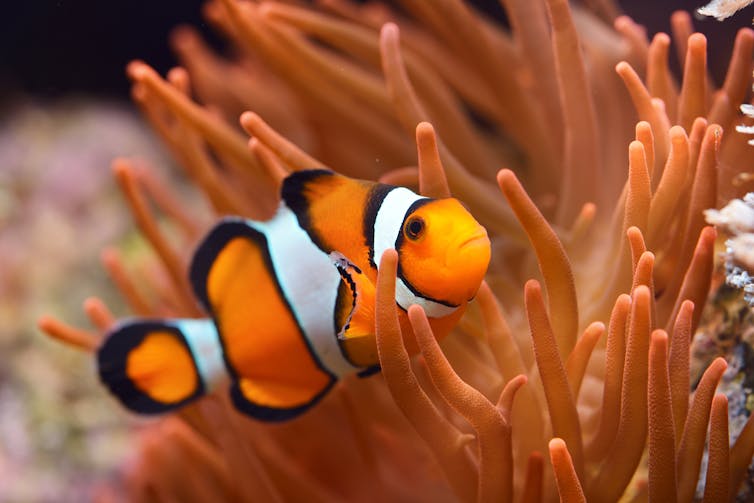
The problems extend to the ocean, which is steadily warming. Heat stress is bleaching and killing corals, and severely damaging crucial habitats such as kelp forests and seagrass meadows. As oceans absorb carbon dioxide (CO₂) from the atmosphere, seawater is reaching record acidity levels, harming marine food webs, fisheries and aquaculture.
At 3℃ of global warming by 2100, oceans are projected to absorb five times more heat than the observed amount accumulated since 1970. Being far more acidic than today, ocean oxygen levels will decline at ever-shallower depths, affecting the distribution and abundance of marine life everywhere. At 1.5-2℃ warming, the complete loss of coral reefs is very likely.
Heat stress is killing corals and marine animal habitat. Shutterstock
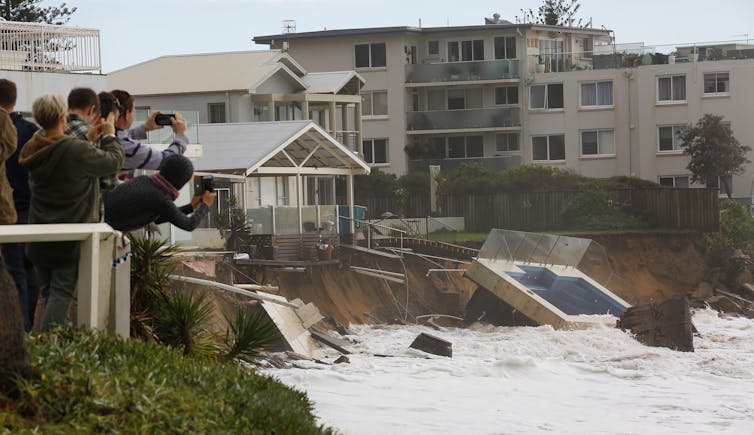
Under 3℃ warming, global sea levels are projected to rise 40-80 centimetres, and by many more metres over coming centuries. Rising sea levels are already inundating low-lying coastal areas, and saltwater is intruding into freshwater wetlands. This leads to coastal erosion that amplifies storm impacts and affects both ecosystems and people.
Land and freshwater environments have been damaged by drought, fire, extreme heatwaves, invasive species and disease. An estimated 3 billion vertebrate animals were killed or displaced in the Black Summer bushfires. Some 24 million hectares burned, including 80% of the Blue Mountains World Heritage Area and 50% of Gondwana rainforests. At 3℃ of warming, the number of extreme fire days could double.
Some species are shifting to cooler latitudes or higher elevations. But most will struggle to keep up with the unprecedented rate of warming. Critical thresholds in many natural systems are likely to be exceeded as global warming reaches 1.5℃. At 2℃ and beyond, we’re likely to see the complete loss of coral reefs, and inundation of iconic ecosystems such as the World Heritage-listed Kakadu National Park.
At 3℃ of global warming, Australia’s present-day ecological systems would be unrecognisable. The first documented climate-related global extinction of a mammal, the Bramble Cay melomys from the Torres Strait, is highly unlikely to be the last. Climate change is predicted to increase extinction rates by several orders of magnitude.
Degradation of Australia’s unique ecosystems will harm the tourism and recreation industries, as well as our food security, health and culture.
There are ways to reduce the climate risk for ecosystems – many of which also benefit humans. For example, preserving and restoring mangroves protects our coasts from storms, increases carbon storage and retains fisheries habitat.
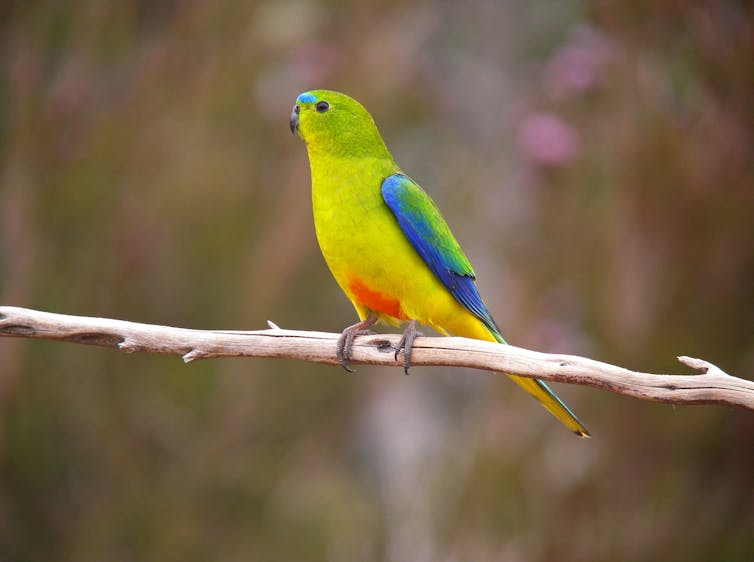
Climate change will accelerate species extinctions. Pictured: the critically endangered orange-bellied parrot. Shutterstock
2. Food production
Australian agriculture and food security already face significant risks from droughts, heatwaves, fires, floods and invasive species. At 2℃ or more of global warming, rainfall will decline and droughts in areas such as southeastern and southwestern Australia will intensify. This will reduce water availability for irrigated agriculture and increase water prices.
Heat stress affects livestock welfare, reproduction and production. Projected temperature and humidity changes suggest livestock will experience many more heat stress days each year. More frequent storms and heavy rainfall are likely to worsen erosion on grazing land and may lead to livestock loss from flooding.
Heat stress and reduced water availability will also make farms less profitable. A 3℃ global temperature increase would reduce yields of key crops by between 5% and 50%. Significant reductions are expected in oil seeds (35%), wheat (18%) and fruits and vegetables (14%).
Climate change also threatensforestry in hotter, drier regions such as southwestern Australia. There, the industry faces increased fire risks, changed rainfall patterns and growing pest populations. In cooler regions such as Tasmania and Gippsland, forestry production may increase as the climate warms. Existing plantations would change substantially under 3℃ warming.
As ocean waters warm, distributions and stock levels of commercial fish species are continuing to change. This will curb profitability. Many aquaculture fisheries may fundamentally change, relocate or cease to exist.
These changes may cause fisheries workers to suffer unemployment, mental health issues (potentially leading to suicides) and other problems. Strategic planning to create new business opportunities in these regions may reduce these risks.
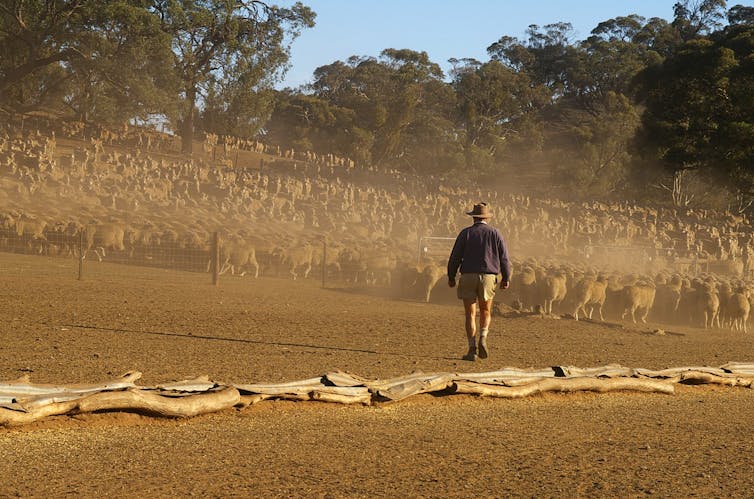
Under climate change, drought will badly hurt farm profitability. Shutterstock
3. Cities and towns
Almost 90% of Australians live in cities and towns and will experience climate change in urban environments.
Under a sea level rise of 1 metre by the end of the century – a level considered plausible by federal officials – between 160,000 and 250,000 Australian properties and infrastructure are at risk of coastal flooding.
Strategies to manage the risk include less construction in high-risk areas, and protecting coastal land with sea walls, sand dunes and mangroves. But some coastal areas may have to be abandoned.
Extreme heat, bushfires and storms put strain on power stations and infrastructure. At the same time, more energy is needed for increased air conditioning use. Much of Australia’s electricity generation relies on ageing and unreliable coal-fired power stations. Extreme weather can also disrupt and damage the oil and gas industries. Diversifying energy sources and improving infrastructure will be important to ensure reliable energy supplies.
The insurance and financial sector is becoming increasingly aware of climate risk and exposure. Insurance firms face increased claims due to climate-related disasters including floods, cyclones and mega-fires. Under some scenarios, one in every 19 property owners face unaffordable insurance premiums by 2030. A 3℃ world would render many more properties and businesses uninsurable.
Cities and towns, however, can be part of the climate solution. High-density urban living leads to a lower per capita greenhouse gas emission “footprint”. Also, innovative solutions are easier to implement in urban environments.
Passive cooling techniques, such as incorporating more plants and street trees during planning, can reduce city temperatures. But these strategies may require changes to stormwater management and can take time to work.
Extreme storms will continue to violently reshape our coastlines. David Moir/ AAP
4. Human health and well-being
A 3℃ world threatens human health, livelihoods and communities. The elderly, young, unwell, and those from disadvantaged socioeconomic backgrounds are at most risk.
Heatwaves on land and sea are becoming longer, more frequent and severe. For example, at 3℃ of global warming, heatwaves in Queensland would happen as often as seven times a year, lasting 16 days on average. These cause physiological heat stress and worsen existing medical conditions.
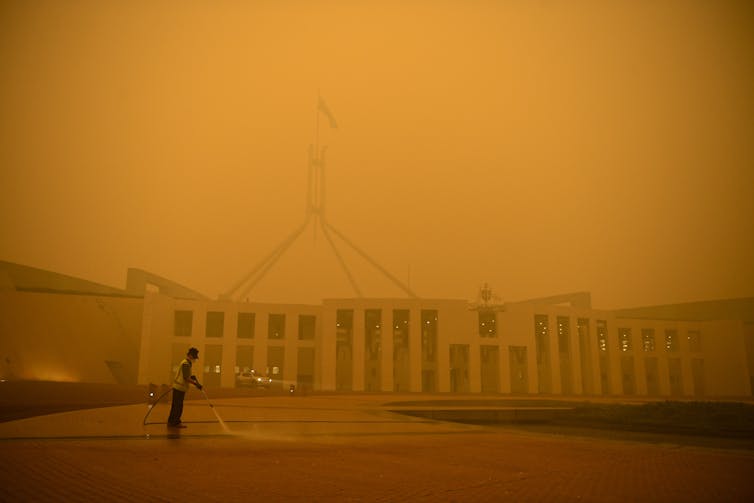
Bushfire-related health impacts are increasing, causing deaths and exacerbating pre-existing conditions such as heart and lung disease. Tragically, we saw this unfold during Black Summer. These extreme conditions will increase at 2℃ and further at 3℃, causing direct and indirect physical and mental health issues.
Under 3℃ warming, climate damage to businesses will likely to lead to increased unemployment and possibly higher suicide rates, mental health issues and health issues relating to heat stress.
At 3°C global warming, many locations in Australia would be very difficult to inhabit due to projected water shortages.
As weather patterns change, transmission of some infectious diseases, such as Ross River virus, will become more intense. “Tropical” diseases may spread to more temperate areas across Australia.
Strategies exist to help mitigate these effects. They include improving early warning systems for extreme weather events and boosting the climate resilience of health services. Nature-based solutions, such as increasing green spaces in urban areas, will also help.
Air quality in Canberra was the worst in the world after the Black Summer fires. Lukas Coch/AAP
How to avoid catastrophe
The report acknowledges that limiting global temperatures to 1.5℃ this century is now extremely difficult. Achieving net-zero global emissions by 2050 is the absolute minimum required to to avoid the worst climate impacts.
Australia is well positioned to contribute to this global challenge. We have a well-developed industrial base, skilled workforce and vast sources of renewable energy.
But Australia must also pursue far more substantial emissions reduction. Under the Paris deal, we’ve pledged to reduce emissions by 26-28% between 2005 and 2030. Given the multiple and accelerating climate threats Australia faces, we must scale up this pledge. We must also display the international leadership and collaboration required to set Earth on a safer climate trajectory.
Our report recommends Australia immediately do the following:
join global leaders in increasing actions to urgently tackle and solve climate change
develop strategies to meet the challenges of extreme events that are increasing in intensity, frequency and scale
improve our understanding of climate impacts, including tipping points and the compounding effects of multiple stressors at global warming of 2℃ or more
systematically explore how food production and supply systems should prepare for climate change
better understand the impacts and risks of climate change for the health of Australians
introduce policies to deliver deep and rapid cuts in emissions across the economy
scale up the development and implementation of low- to zero-emissions technologies
review Australia’s capacity and flexibility to take up innovations and technology breakthroughs for transitioning to a low-emissions future
develop a better understanding of climate solutions through dialogue with Aboriginal and Torres Strait Islander peoples – particularly strategies that helped people manage Australian ecosystems for tens of thousands of years
continue to build adaptation strategies and greater commitment for meeting the challenges of change already in the climate system.
We don’t have much time to avert catastrophe. This decade must be transformational, and one where we choose a safer future.
The report upon which this article is based, The Risks to Australia of a 3°C Warmer World, was authored and reviewed by 21 experts.
By most accounts, 2020 has been a rough year for the planet. It was the warmest year on record, just barely exceeding the record set in 2016 by less than a tenth of a degree according to NASA’s analysis.
Earth’s global average surface temperature in 2020 tied with 2016 as the warmest year on record, according to an analysis by NASA.
Continuing the planet’s long-term warming trend, the year’s globally averaged temperature was 1.84 degrees Fahrenheit (1.02 degrees Celsius) warmer than the baseline 1951-1980 mean, according to scientists at NASA’s Goddard Institute for Space Studies (GISS) in New York. 2020 edged out 2016 by a very small amount, within the margin of error of the analysis, making the years effectively tied for the warmest year on record.
“The last seven years have been the warmest seven years on record, typifying the ongoing and dramatic warming trend,” said GISS Director Gavin Schmidt. “Whether one year is a record or not is not really that important – the important things are long-term trends. With these trends, and as the human impact on the climate increases, we have to expect that records will continue to be broken.”
The melting of ice across the planet is accelerating at a record rate, with the melting of the Greenland and Antarctic ice sheets speeding up the fastest, research has found.
The rate of loss is now in line with the worst-case scenarios of the Intergovernmental Panel on Climate Change, the world’s leading authority on the climate, according to a paper published on Monday in the journal The Cryosphere.
…
About 28tn tonnes of ice was lost between 1994 and 2017, which the authors of the paper calculate would be enough to put an ice sheet 100 metres thick across the UK. About two thirds of the ice loss was caused by the warming of the atmosphere, with about a third caused by the warming of the seas.
Activists with “Fridays for Future” display a prop demanding climate action on December 11, 2020 in Hamburg, Germany. (Photo: Axel Heimken/picture alliance via Getty Images)
Youth activists around the world kicked off the new year Friday with a fresh round of #ClimateStrike actions and demands that 2021 be the year policymakers take sufficiently bold action to address the climate emergency.
Many of the pleas included the hashtag #ClimateStrikeOnline, as the coronavirus crisis has forced many “school strike for climate” events to be virtual.
“2021 must be the year that we finally wake up to the climate crisis,” tweeted Sydney-based activist Patsy Islam-Parsons, noting that it was her 69th week of Fridays for Future actions.
“It must be the year we take real action instead of continuing to repeat meaningless words and empty promises,” she wrote.
Greta Thunberg, who catalyzed the worldwide Fridays for Future movement, shared her signature Skolstrejk för Klimatet placard in a Friday tweet and said, “New year, same crisis.”
The Swedish teen’s message was mirrored in a tweet from Leah Namugerwa of Uganda, who wrote: “This is week 99 #schoolstrike4climate in Uganda. The struggle continues…”
Other climate activists added their hopes for the new year on social media as well.
Dominique Palmer, a climate justice activist and member of the U.K. Student Climate Network, put the sweeping changes needed to address the climate emergency in the context of the global efforts that emerged to contain the spread of Covid-19.
“This year has shown that urgent action in times of a crisis is possible, and now more than ever is the time to push for a green recovery,” Palmer tweeted, pointing to a need for a system that “fundamentally restructures the economy for a habitable future.”
In an op-ed published Thursday at the Guardian, Greenpeace U.K. executive director John Sauven also addressed the simultaneous crises. He wrote, in part:
[W]hile the pandemic was raging, so was the climate emergency, like two horror films overlapping. We saw record-breaking wildfires engulf the West Coast of the U.S., a record number of powerful Atlantic storms, the Arctic ice failing to freeze in late October, and deadly floods hitting countries from Italy to Indonesia. We got a glimpse of a chaotic world battered by multiple crises, each making the other worse, and it was terrifying.
Exceptional as the calamities of 2020 may seem, they could be just a taste of what’s to come unless we change direction.
“It’s clear,” wrote Sauven, “that nothing short of a complete transformation of our economy and society can save us from climate breakdown.” He continued:
This is why sliding back to the old normal is not an option. Unless we stop oil firms drilling for more oil, food giants destroying rainforests, and destructive fishing depleting our seas, the worst isn’t over—it’s just begun. Ending the pandemic is only half the job—we must also start something new and better. We must create new green jobs, invest in communities, and tackle the hardship faced by many at the same time. And 2021 is the year to do it.
That call for change was also captured in a New Year’s Eve tweet from Thunberg.
“May 2021 be the year of awakening and real bold change,” wrote Thunberg. “And let’s all continue the never-ending fight for the living planet.”
Republished under a Creative Commons Attribution-Share Alike 3.0 License.
This is the world we live in. This is the world we cover.
Because of people like you, another world is possible. There are many battles to be won, but we will battle them together—all of us. Common Dreams is not your normal news site. We don’t survive on clicks. We don’t want advertising dollars. We want the world to be a better place. But we can’t do it alone. It doesn’t work that way. We need you. If you can help today—because every gift of every size matters—please do. Without Your Support We Simply Don’t Exist.