Category: Climate Crisis

  • ‘Energy security’ is being used to justify more fossil fuels – but this will only make us less secure

    Spread the love

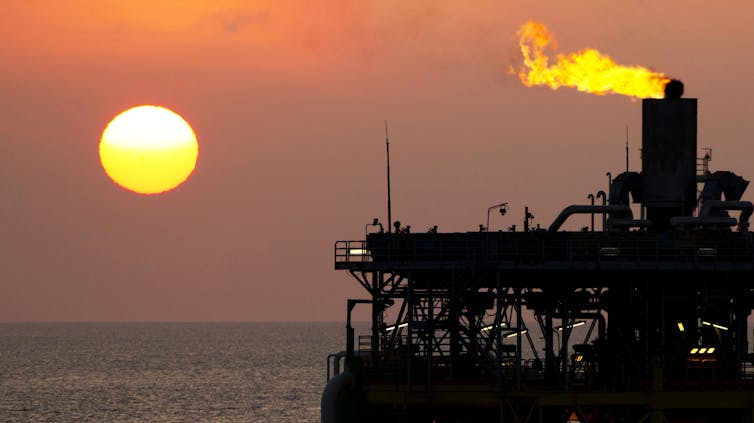
    corlaffra / shutterstock

    Freddie Daley, University of Sussex and Peter Newell, University of Sussex

    The UK government is about to host a summit with the International Energy Agency (IEA) on the future of energy security. It does so as the world grapples with war, geopolitical realignments and trade barriers, against a backdrop of accelerating climate upheavals. One of the expected outcomes of this summit is a new, agreed definition of what constitutes energy security in the 21st century.

    Common understandings of energy security have focused on making supplies reliable and affordable, with less attention paid to ensuring sources of energy are sustainable and less volatile over the medium- and long-term. This neglect compromises our collective security.

    The IEA’s 31 member countries and 13 associates include most of the world’s most powerful states. Its influence means that this new definition of energy security will be used to inform government policies and investment decisions around the world. Given the cost of energy infrastructure, and the lengthy time it takes to build these projects, this definition is set to shape our future, economically and climatically.

    But there is a very real risk that this definition will open the door to further investments into fossil fuel production under the guise of energy security.

    Annotated world map
    International Energy Agency (IEA) member and ‘association member’ countries. IEA, CC BY-SA

    After Russia invaded Ukraine, governments rushed to cut their reliance on Russian fossil fuels. This caused major disruptions as prices spiked and millions were pushed into energy poverty.

    Europe alone spent an extra €517–€831 billion (£444–£713 billion) on energy in 2021 and 2022, even though some imports from Russia continued through so-called “shadow fleets”. Some argued that high fossil fuel prices only embolden leaders like Putin and help fund their conflicts.

    Governments responded with “energy nativism”, as they sought to secure as much energy as possible for their citizens at whatever cost. This typically meant boosting renewables and bulk buying oil and gas. In the UK’s case, it also meant the previous government issuing hundreds of new licenses to drill for oil and gas to “increase energy security” – licenses the current government says it will honour).

    Shipments of liquified natural gas (LNG) were also redirected from poorer countries like Pakistan and Bangladesh towards the highest bidders in Europe and Asia. This raises the question of who exactly is becoming more energy secure and at what cost.

    Meanwhile, large fossil fuel exporters like Qatar, the US and Australia ramped up production. A US official even referred to its gas exports as “molecules of freedom”. Australia has exported so much natural gas it may have to buy its own gas back from Japan at market price.

    The sheer volume of investment in new oil and gas infrastructure like offshore rigs or LNG terminals, combined with long build times, has locked in higher fossil fuel production and pushed emissions to record levels. This poses significant risks for both exporters and importers, especially as future demand is uncertain and energy markets remain volatile.

    Fossil fuels remain dominant

    More fundamentally, continued reliance on fossil fuels is making humanity less secure. The vast majority of emissions still come from burning coal, oil or gas. Preventing climate catastrophe therefore requires us to phase out fossil fuels as fast as possible – with wealthy nations leading the charge. In their place, we’ll have to generate energy from renewable sources that do not replicate the volatility of globally traded fossil fuels.

    Yet despite some progressive policies, fossil fuels remain dominant across the global economy. Investment in oil and gas today is almost double the level it must fall below if the world is to reach net zero by 2050, according to the IEA’s own modelling.

    The pursuit of energy security has boosted renewables, but adding additional clean energy isn’t enough – it must ultimately displace fossil fuels entirely. This will require a whole-economy shift. That means cutting production of fossil fuels while also reducing demand, stabilising prices and building out clean energy fast enough to support the electrification of transport, industry and heating.

    But supply chains for batteries, solar panels and other key technologies are vulnerable. Delays and shortages could mean electricity prices spike, sparking social unrest. This is yet another risk of getting energy security wrong: if inflationary pressures drive the immiseration of the general public, governments and their energy plans will be short lived.

    The definition of energy security that comes out of the IEA summit should reflect the fact we’re now in a world of constant crises. True energy security means charting a path towards a world that is more socially, economically and environmentally secure. This means developing a well-managed global plan to phase out fossil fuels.

    Freddie Daley, Research Associate, Centre for Global Political Economy, University of Sussex and Peter Newell, Professor of International Relations, University of Sussex

    This article is republished from The Conversation under a Creative Commons license. Read the original article.
  • Government must distance itself from Blair’s latest ‘dodgy dossier’ say Greens

    Spread the love
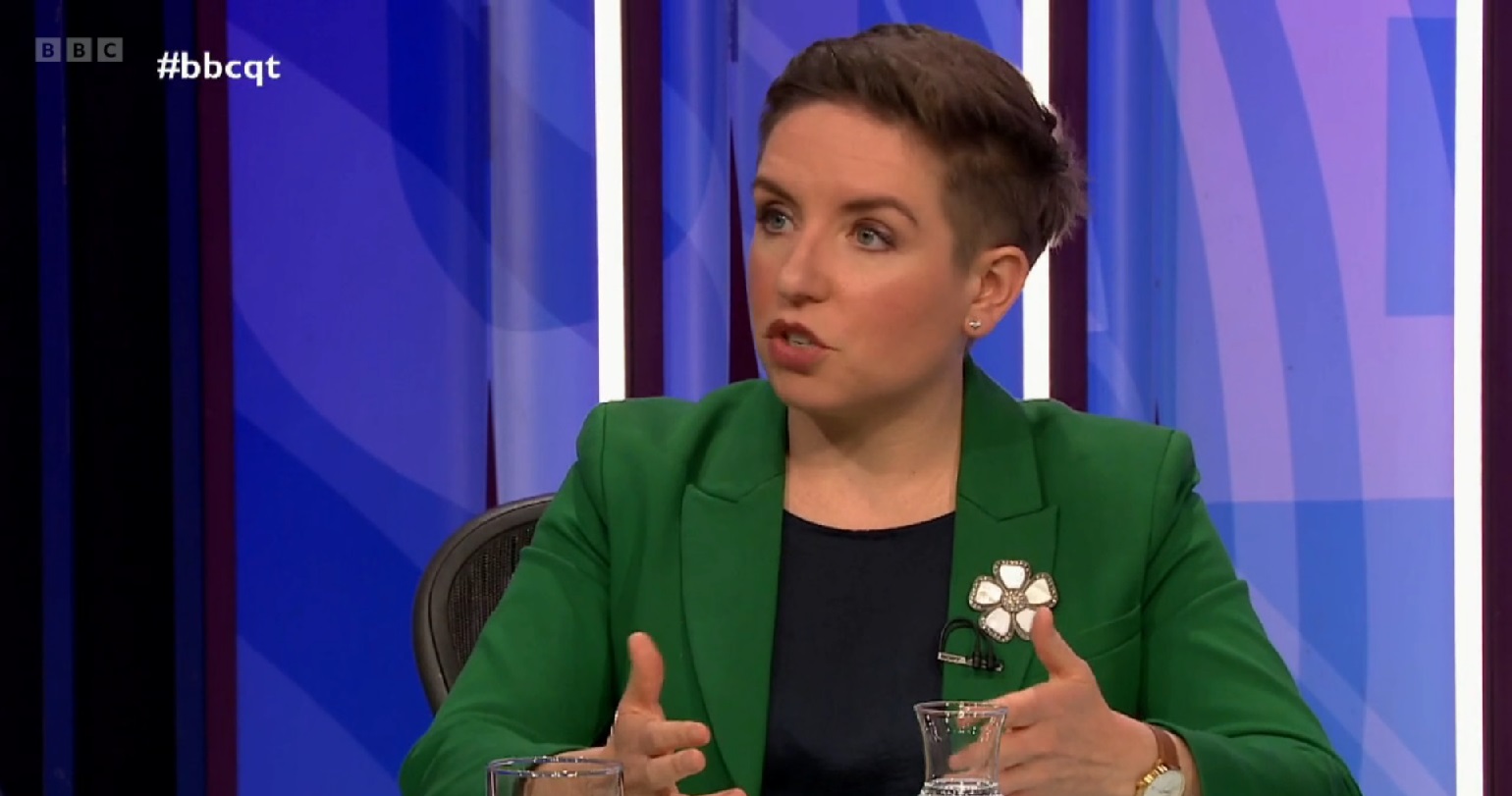
    Image of the Green Party's Carla Denyer on BBC Question Time.
    Image of the Green Party’s Carla Denyer on BBC Question Time.

    Commenting on Tony Blair’s call for a major rethink of net zero policies which comes as the Climate Change Committee warns the UK is critically unprepared for the escalating threats of the climate crisis, co-leader of the Green Party, Carla Denyer, said:

    “Tony Blair has decided to mimic Nigel Farage on net zero and sounds like he is speaking on behalf of petro-states like Saudi Arabia and Kazakhstan for whom he has lobbied for more years than he was prime minister.

    “It is vital that the government distance itself from this latest dodgy dossier from Blair and turn its attention instead to what the Climate Change Committee is saying today. Their report could not be clearer: we are woefully unprepared for the impacts of climate breakdown as a country. Tomorrow is likely to be the hottest local election day on record – a potent reminder that we need a comprehensive plan to prepare for increasingly extreme weather events.

    “Tony Blair and Nigel Farage apparently need reminding that a huge 89% of the world’s people want stronger action to fight the climate crisis, not a reset or watering down of ambition. And the CBI points to the fact that the UK’s net zero sector expanded 10 per cent last year, three times faster than the rest of the economy.

    “The future is green; Labour must not allow yesterday’s man to drag us back into the dark ages. The government must press ahead with the drive towards clean energy and the green economy and all the advantages that will bring in creating good quality jobs, cutting energy bills and creating a healthier society.”

  • Tony Blair opposes phasing out fossil fuels. These academics disagree

    Spread the love

    Jack Marley, The Conversation

    Rapidly phasing out fossil fuels and limiting energy consumption to tackle climate change is “a strategy doomed to fail” according to former UK prime minister Tony Blair.

    In the foreword of a new report, Blair urges governments to rethink their approach to reaching net zero emissions.

    Instead of policies that are seen by people as involving “financial sacrifices”, he says world leaders should deploy carbon capture and storage, including technological and nature-based approaches, to meet the rising demand for fossil fuels.

    But speak to many academic experts on climate change and they will tell a very different story: that there is no strategy for addressing climate change that does not involve ending, or at least massively reducing, fossil fuel combustion.


    This roundup of The Conversation’s climate coverage comes from our award-winning weekly climate action newsletter. Every Wednesday, The Conversation’s environment editor writes Imagine, a short email that goes a little deeper into just one climate issue. Join the 45,000+ readers who’ve subscribed.


    A fossil fuel phase-out is ‘essential’

    “There is a wealth of scientific evidence demonstrating that a fossil fuel phase-out will be essential for reining in the greenhouse gas emissions driving climate change,” says Steve Pye, an associate professor of energy at UCL.

    “I know because I have published some of it.”

    Ed Hawkins, a climate scientist at the University of Reading, agrees.

    “Rapidly reducing our reliance on fossil fuels, and not issuing new licenses to extract oil and gas, is the most effective way of minimising future climate-related disruptions,” he says.

    “The sooner those with the power to shape our future recognise this, the better.”

    Fossil fuels are responsible for 90% of the carbon dioxide heating the climate. The amount burned annually is still rising, and so is the rate at which the world is getting hotter. Scientists now fear we are approaching irreversible tipping points in the climate system, hence their support for an urgent replacement of fossil fuels with renewable energy.

    Blair is confident that an emergency response on this scale can be avoided by absorbing CO₂ immediately after burning fossil fuels, from the smokestacks where the greenhouse gas is concentrated.

    Not all of the emissions responsible for climate change would be prevented. UCL earth system scientist Mark Maslin says that natural gas, which would linger as an energy source thanks to carbon capture, still leaks from pipelines and storage vessels upstream of power plants.

    Commercial applications of the technology also have a poor track record. Just two large-scale coal-fired power plants are operating with CCS worldwide – one in the US and one in Canada.

    “Both have experienced consistent underperformance, recurring technical issues and ballooning costs,” Maslin says.

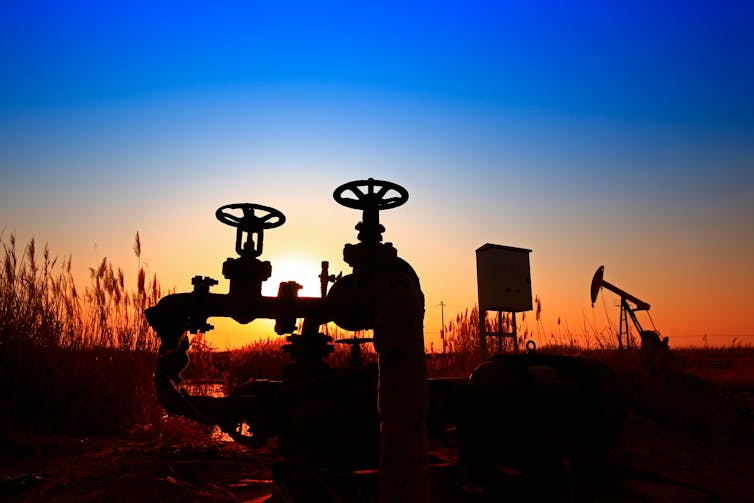
    A valve and an oil derrick at dusk.
    CCS is no alternative to turning off the fossil fuel taps. Pan Demin/Shutterstock

    Blair might baulk at what he perceives to be the expense of ditching fossil fuels. But economic modelling led by Oxford University’s Andrea Bacilieri suggests his concern is misplaced. A rapid phase-out of fossil fuels could save US$30 trillion (US$1 trillion a year) by 2050 she concludes, compared with allowing power plants and factories to keep burning them with CCS.

    Developing CCS will be necessary to help manage an orderly transition from fossil fuels according to Myles Allen, a professor of geosystem science at Oxford University. But it is not a substitute for undergoing that transition, he says.

    “Above all, we need to make sure the availability of CCS does not encourage yet more CO₂ production.”

    Keeping the public on board

    Is Blair right to fret about a public backlash to lower energy use? Academics suggest multiple reasons to think otherwise if the alternative is prolonging the use of fossil fuels.

    Replacing a gas boiler with a heat pump that runs on electricity, for example, can lower a household’s energy consumption without a deliberate effort. That’s because renewable appliances convert power to heat more efficiently (how much depends on how well insulated the home is).

    In fact, it’s dependence on fossil fuel that is preventing many households from making this switch. The high wholesale price of gas determines the cost of electricity for UK consumers.

    And surveys repeatedly show that support for net zero policies is broad and deep in the UK – including those that would involve lifestyle changes say Lorraine Whitmarsh (University of Bath), Caroline Verfuerth and Steve Westlake (both Cardiff University), who research public behaviour and climate change.

    “Crucially, the public wants and needs the government to show clear and consistent leadership on climate change,” they say.

    Meanwhile, what can corrode public acceptance of sacrifices is the high-consuming behaviour of a minority (think pop stars in rockets, as Westlake recently argued). And, arguably, the statements of powerful people like Blair.

    New research even suggests the politics that Blair and many others like him favour might also play a role here. Felix Schulz (Lund University) and Christian Bretter (The University of Queensland) are social scientists who study how ideology affects personal views on climate policy.

    They identified respondents in six countries (the UK, US, Germany, Brazil, South Africa and China) who shared Blair’s neoliberal worldview, which the pair define as a belief that individuals are primarily responsible for their own fortune, and need to take care of themselves – as well as an abiding faith in the free market.

    “We observed a strong link between a neoliberal worldview and lack of support for the climate policies in our study,” they say.

    Schulz and Bretter urge us to consider how someone’s ideology ultimately shapes their understanding of the problem and its solutions as well.

    Jack Marley, Environment + Energy Editor, The Conversation

    This article is republished from The Conversation under a Creative Commons license. Read the original article.

  • Rolling the Dice on Mass Death

    Spread the love

    Original article by Roger Hallam republished from Roger Hallam. I have not asked to republish this article, expect that it will be ok.

    Shymkent, Kazakhstan. Image by Raban Haaijk.

    This month, the world’s elites will throw the first dice on how many millions they will have killed for their greatest of all crimes.

    As of 28 April 2025, Asia is being battered by a brutal, life-threatening heatwave. Millions of people – right now – are facing unbearable temperatures. In many places it’s over 40°C. In some areas it’s approaching 46°C. In the Philippines, the heat index – the ‘feels like’ temperature – is hitting 53°C. That’s deadly.

    People are collapsing in the streets. Children, the elderly, the poor – they’re the first to go. This isn’t just uncomfortable. It’s lethal. Heatstroke. Organ failure. Death in under six hours if you don’t have air conditioning – and most people don’t.

    Crops are failing. Water supplies are drying up. Whole regions are becoming uninhabitable. In China, places like Zhejiang and Jiangsu have already hit record-breaking temperatures. In Bangladesh, Myanmar, Thailand – vast populations are at risk. In West Asia, where conflict and poverty already devastate lives, the heatwave is tipping people over the edge.

    Let’s be absolutely clear: this is just the beginning. And it’s not a natural disaster – it’s a crime scene. A direct result of thirty years of lies, inaction, and wilful destruction by the people at the top – fossil fuel executives, politicians, and the liberal classes who let them get away with it.

    This is the first phase of climate genocide. And it’s happening now.

    So here we are. We’ve finally arrived.

    2025 will be the second year in a row that global temperatures sit above 1.6°C. That’s not a statistic. That’s a death sentence – for millions. From this point on, every month is a roll of the dice. And if it lands on a six? The wet bulb threshold is breached – that deadly combination of heat and humidity where your body can’t cool down. People without air conditioning – the majority of humanity – die in six hours. That’s it. Game over.

    Billions of people – in poor city slums, in rural villages, in places no one in power cares about – are now inside a roulette wheel of death. Waiting for their number to come up. That is what the ruling elites have created. That is what the liberal and professional classes have enabled – through cowardice, distraction, and silence. They could have stood up. They could have resisted. They chose not to. They are complicit.

    The consequences? Beyond catastrophic. And if you sit back now, shrug your shoulders, and go back to your life – you are handing over the final keys. You are helping to lock in human extinction within the next ten years. If it hasn’t already been sealed.

    Let’s stop pretending we don’t know what’s coming.

    Do the numbers. We’re already at 1.6°C. Another 0.4°C rise is expected over the next decade. Add 0.5°C when air pollution clears and no longer cools the atmosphere. Add 0.3°C from the carbon lag – the delay between what we emit and when it shows up. Then add the collapse of forests, the melting permafrost, the methane, the wildfires.

    We’re on track to blow through 3°C before 2050.

    What does that mean? Ask the British insurance industry – they’ve already said it: 4 billion people dead. Half the human race. And that’s just the start. Because 3°C triggers feedbacks in the Earth system that take us past 5°C – the point where the human body, the human brain, life itself, no longer functions. That’s extinction. Everyone. Gone. Forever.

    And even if there was just a 10% chance of this happening – which there isn’t, it’s now the central scenario – then to take that risk, to sit on your hands, is the greatest crime in history.

    And if you still do nothing now, at this moment – then what are you?


    Join the free Revolution in the 21st Century Convention next month!

    Rev21 is hosting an online global convention this May, bringing together leading activists, writers, scientists, and changemakers to confront the realities of social and ecological collapse—and to begin designing the revolution we need. Held via Zoom with multiple talks, workshops, and breakout spaces, it’s a space to learn, connect, and collaborate on what 21st-century revolution can look like: holistic, nonviolent, and rooted in real relationships. For some, it’s a powerful networking moment; for others, it’s a first step into serious action. With solidarity pricing and an open invitation to those ready to shape the future, this isn’t just an event—it’s the beginning of a revolution.

    Join the Convention

    Original article by Roger Hallam republished from Roger Hallam. I have not asked to republish this article, expect that it will be ok.

    Neo-Fascist Climate Science Denier Donald Trump says Burn, Baby, Burn.
    Neo-Fascist Climate Science Denier Donald Trump says Burn, Baby, Burn.
    Elon Musk urges you to be a Fascist like him, says that you can ignore facts and reality then.
    Elon Musk urges you to be a Fascist like him, says that you can ignore facts and reality then.
  • Thoughts of the day 28 April 2025

    Spread the love

    Instead of allowing business as usual it should be disrupted – Neo-Fascist genocide supported by stronger Western nations including our own UK and continuing destruction of our climate and planet so that the uber-rich get uber-richer. In a sense you have to permit these activities without objecting. [7.40pm ed: I mean In a sense you permit these activities unless you object.] This is why I have respect and admiration for activists from groups like Just Stop Oil and Youth Demand!, that they’re not willing to permit the Fascism to continue without obstruction, without saying “I object!”.

    Experiencing issues with this image not appearing. I suspect because it's so critical of Zionist Keir Starmer's support of and complicity in Israel's genocides.
    Genocide denier and Current UK Prime Minister Keir Starmer is quoted that he supports Zionism without qualification. He also confirms that UK air force support has been essential in Israel’s mass-murdering genocide. Includes URLs https://www.declassifieduk.org/keir-starmers-100-spy-flights-over-gaza-in-support-of-israel/ and https://youtu.be/O74hZCKKdpA
    Keir Starmer says that the Labour Party under his leadership all feel a small part of Scunthorpe.
    Keir Starmer says that the Labour Party under his leadership all feel a small part of Scunthorpe.

    Years ago I mused about using traffic to disrupt traffic. One of the worst places for cars to break down on the way to work on Mayday Thursday would be at junctions to and from motorways so don’t do that. Breakdowns are often ignition issues. Owners can often make breakdowns worse trying to fix them e.g. by undoing ignition or electrical connections and not remaking the connection properly after investigation. You could try this outside your home …

    There is huge support for climate action – people have children of course who’s futures will be totally destroyed although it’s now really, not in the future. One of the best groups to oppose climate destruction by the rich may be school students. They have power if they acted collectively and opposed any attacks on any individuals. They’re also the ones most attacked by people destroying our planet and futures of course.

    Neo-Fascist Climate Science Denier Donald Trump says Burn, Baby, Burn.
    Neo-Fascist Climate Science Denier Donald Trump says Burn, Baby, Burn.
    Elon Musk urges you to be a Fascist like him, says that you can ignore facts and reality then.
    Elon Musk urges you to be a Fascist like him, says that you can ignore facts and reality then.