Category: Climate Emergency

  • Q&A: What can – and cannot – be said about global warming’s role in the 2026 Himalayan floods

    Spread the love

    Article by Cecilia KeatingRobert McSweeneyAyesha TandonDr Giuliana ViglioneDaisy Dunne republished from Carbon Brief under a CC license.
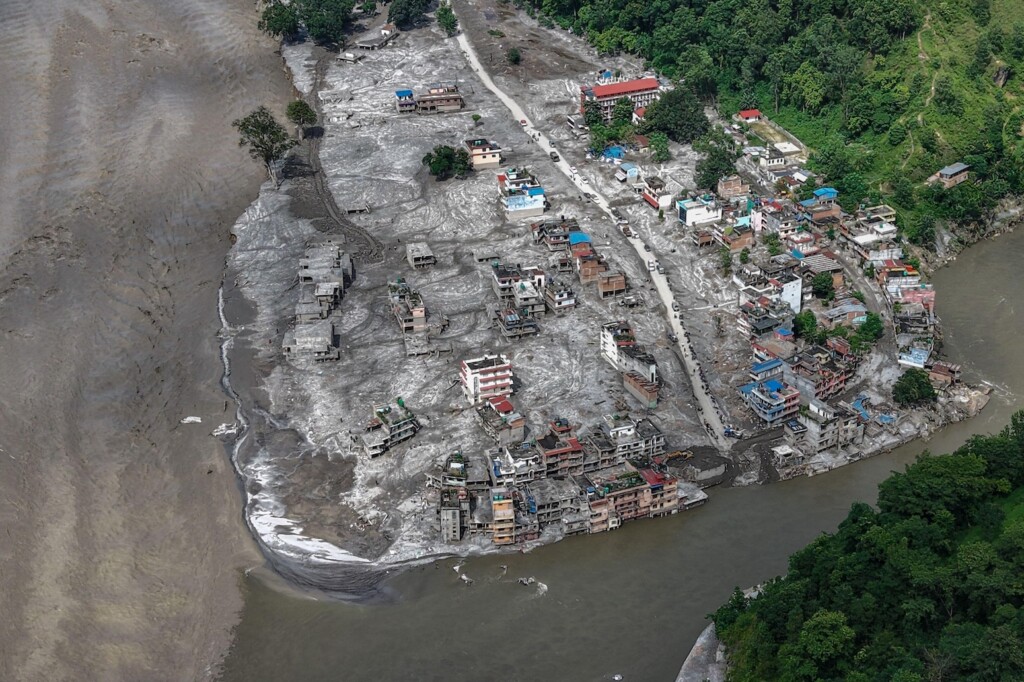
    An aerial view of Devighat Bazaar in Nuwakot, Nepal, following the floods of 26 August 2026. Credit: ZUMA Press / Alamy Stock Photo

    Can the event be attributed to climate change?

    On the morning of 26 August, flash floods surged through a Himalayan border region of Nepal and the Chinese region of Tibet, killing more than 1,300 people, with thousands still missing.

    In the days since the floods, scientists have examined satellite imagery, drone footage and seismic data in order to understand and explain the forces behind the event.

    While initial theories pinned the flood on a glacial collapse, scientists now understand the event as a “multi-hazard cascade”, which began with a bedrock collapse. 

    Some climate sceptics have tried to use this to falsely claim that human-caused climate change had no impact on the event. 

    Yet, scientists have noted that, while no formal attribution study has been carried out thus far, warming is making such ice-rock avalanches in the region more likely.

    Researchers have highlighted how rapid warming is dramatically reshaping Asia’s high-mountain region – and identified rising temperatures, glacier retreat and permafrost thaw as factors that may have all contributed to the disaster. 

    Balendra Shah, Nepal’s prime minister, has called the floods a “serious signal that…the risks we must bear in the Himalayan region are increasing” due to climate change.

    Here, Carbon Brief unpacks what scientists currently know about the causes of the catastrophic event and what they can – and cannot – say about the role of climate change. 

    What happened?

    report published on 28 August by the HiRisk scientific consortium of high mountain experts detailed the events that led to the flash floods.

    It said that events were set in motion on 26 August when a mass of bedrock, as well as the glacier ice on top of it, broke off a slope of Langtang-Lirung mountain in the Nepalese Himalaya, plunging from approximately 5,200 metres above sea level to the valley floor at 3,000 metres. 

    The landslide shook the ground hard enough that, at 8:37am Nepal local time, the US Geological Survey (USGS) initially reported a magnitude 4.4 earthquake. Later that day, it clarified the shaking was caused by glacier collapse and debris flow, equivalent to a magnitude 5.2 earthquake.

    On the valley floor, the melting ice, water and debris slammed into the Lhende Khola river, a high-altitude river that runs along Nepal’s border with China. 

    Known downstream as the Bhote Koshi river in Nepal and the Poiqu or Poqu in China, the Lhende Khole feeds a network of rivers across Nepal and the Chinese region of Tibet, including the Trishuli river. (In China, the Lhende Khola is known as the Donglin Tsangpo.)
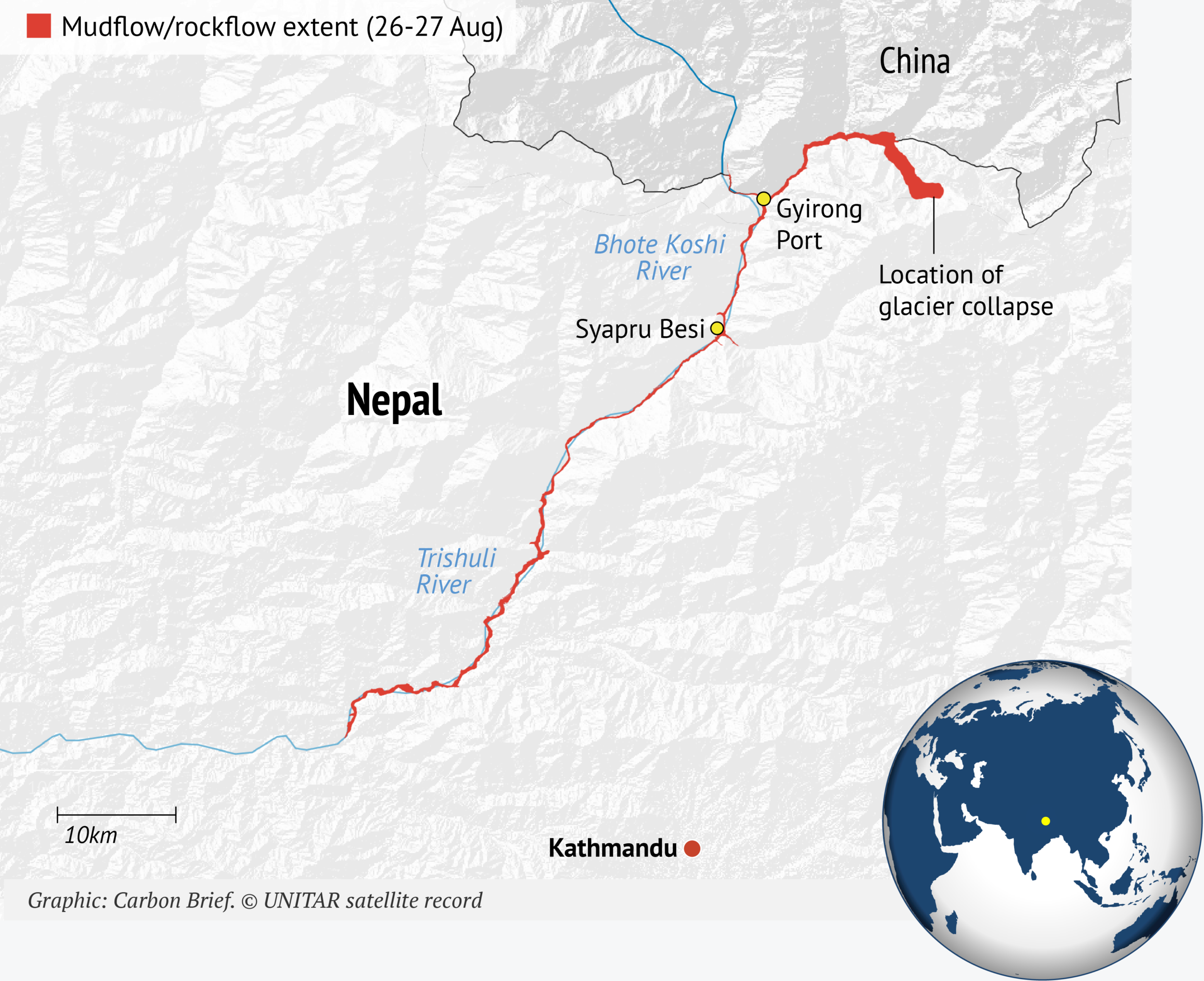
    This image shows a map of Nepal.
    The designations employed and the presentation of the material on this map do not imply the expression of any opinion whatsoever on the part of Carbon Brief concerning the legal status of any country, territory, city or area or of its authorities, or concerning the delimitation of its frontiers or boundaries. Credit: Carbon Brief.

    A large “debris” lake was briefly formed on the valley floor. When this lake burst, a wall of water and rock travelled downstream, killing more than a thousand people and destroying settlementsroadsbridgeshydropower plants and border posts across Nepal and Tibet.

    HiRisk said that the floodwave travelled down rivers as fast as 30km an hour (around 19 miles per hour) and reached Mugling – a Nepalese town more than 130km downstream – at around 1pm local time.

    A separate report from the Center for Land Surface Hazards in the US noted that the flood moved “exceptionally fast, was sediment-laden and extreme in scale”. For example, in the Nepalese municipality of Galchhi, the Trishuli river rose by nine metres in 30 minutes, it said.

    Writing in the ConversationDr Umesh Haritashya, a glaciologist at the University of Dayton in Ohio, explained that the disaster “wasn’t finished when the first wall of water passed [on 26 August]”. 

    He continued that a new “barrier lake” – estimated to hold a few million cubic metres of water – had developed in a location where two rivers meet in Tibet before crossing into Nepal. This lake burst on 28 August and the river rose again, he said. 

    On 4 September, the chief of Nepal’s National Disaster ​Risk Reduction and Management Authority, told Reuters that property and infrastructure worth “at least” $2.5bn (£1.9bn) had been lost. Dharma Raj Upreti estimated the cost to build roads and temporary shelters, provide drinking water and ⁠restore power would be around $53m (£39m). 

    How did bedrock collapse trigger the flash floods?

    In the immediate aftermath of the floods, initial reports suggested that the trigger was a collapsing glacier or earthquake in the high mountains of Nepal.

    After confirming that a seismic tremor was as a result of falling rock and ice, the USGS said the trigger was likely a “glacial collapse and debris flow”. This was widely picked up by the media. 

    Subsequently, satellite imagery revealed that an “enormous chunk of the mountainous bedrock” beneath the glacier had also given way, reported the New York Times

    Dr Kristen Cook, a geomorphologist at the Université Grenoble Alpes in France, told the newspaper:

    “The rock that the glacier was sitting on collapsed…It was a much larger collapse than we were initially able to see in the satellite imagery.”

    The result was a “deluge of rock and ice, which pulverized into mud and water as it surged down the mountainside”, the newspaper said.

    Dr Jakob Steiner a geoscientist at the University of Graz in Austria, tells Carbon Brief:

    “It was not a glacier that collapsed. It was the mountain below the glacier that collapsed and the glacier had no other chance but to go with it because it was sitting on top of it. 

    “The trigger for that is something that we are not 100% certain about, but, in the end, it very much looks like simply a mechanical failure of the rock material because of stressors that have built up over a long period of time.”

    Failures of “bedrock” – the hard, solid rock that sits below looser rocks and soil – are an “increasingly common occurrence”, says Prof Bethan Davies, a professor of glaciology at Newcastle University. She tells Carbon Brief:

    “These massive landslides occur in mountain regions, commonly following rapid deglacierisation [the melting away of a glacier]. Similar events happened in the Chamoli event in 2021 [in the Indian Himalaya] and in the Blatten landslide last year in Switzerland. They’ve also occurred recently in Alaska.”

    With a shift in focus from the failure of a glacier to the bedrock underneath, some climate sceptics seized on the development to falsely claim that climate change had not played any role in the disaster.

    These include Dr Matthew Wielicki, recently appointed by the Trump administration to lead the US Global Change Research Program, on Twitter, as well as former Conservative peer and climate-sceptic commentator Matt Ridley in the Spectator

    However, scientists have highlighted the likely contribution of rapid warming in the region. These factors include the thawing of permafrost and glacier retreat. (For more, see sections below).

    Fundamentally, “this would have been a much less significant tragedy if it had been just a rock-slope failure”, notes Davies.

    The initial landslide took a mixture of rock and ice into a valley that “contains buried ice” as well, she says, providing the water that “resulted in the hyperconcentrated flow, which took so many lives”.

    How have temperatures risen in the affected region? 

    Global temperatures have risen by roughly 1.4C since the pre-industrial period. However, this increase is not uniform across the planet, with some regions warming faster than others. 

    A study published in Global and Planetary Change in June 2026 investigated changes in the Langtang catchment – a river basin in central Nepal, in which the Langtang-Lirung mountain is located, which eventually drains into the Ganges. Around one-quarter of the area is made up of glaciers.

    The paper found that glacial areas of the catchment – found at 4,000 metres above sea level – warmed at 0.31C per decade over 1960-2023. This was “more than three times” the rate observed at a lower elevation weather station, the authors said.

    Looking in more detail at the site of the glacial collapse, Dr Robert Rohde, chief scientist for Berkeley Earth, used ERA5 reanalysis data to show how temperature has changed at the 5,200-metre elevation site where the mass of ice and rock broke loose. 

    Rohde’s analysis found that June-to-August temperatures have been rising at the site of the glacier collapse since the year 1940, with 2026’s summer the fourth warmest on record, behind 2024, 2025 and 2022. This is shown in the graph below.
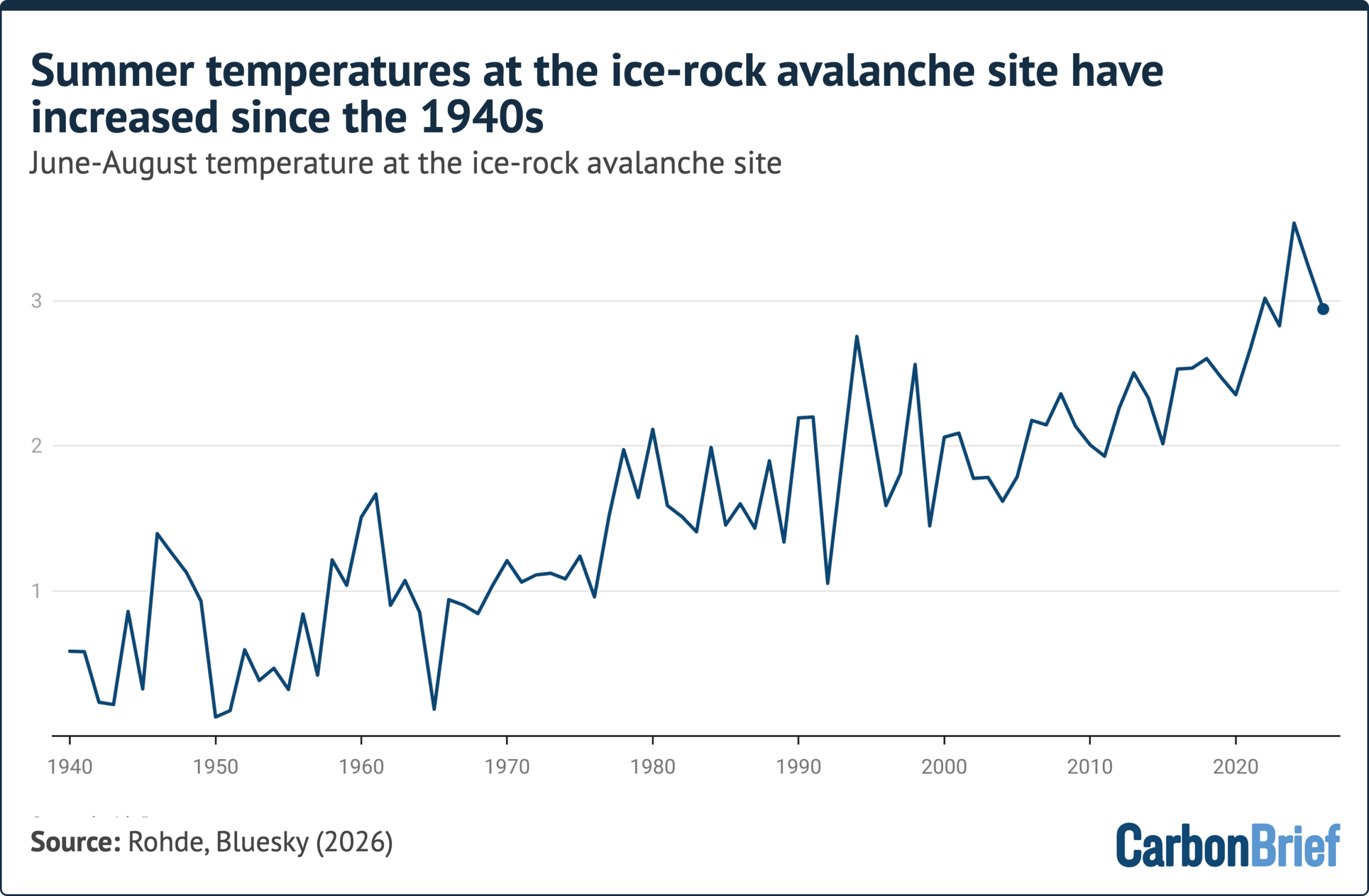
    Average summer (June-August) temperature at the ice-rock avalanche site over 1940-2026.
    Average summer (June-August) temperature at the ice-rock avalanche site over 1940-2026. Data source: Rohde, Bluesky (2026)

    Rohde also found that the days leading up to the disaster recorded the hottest August temperatures ever experienced at the site. This is shown in the graph below.
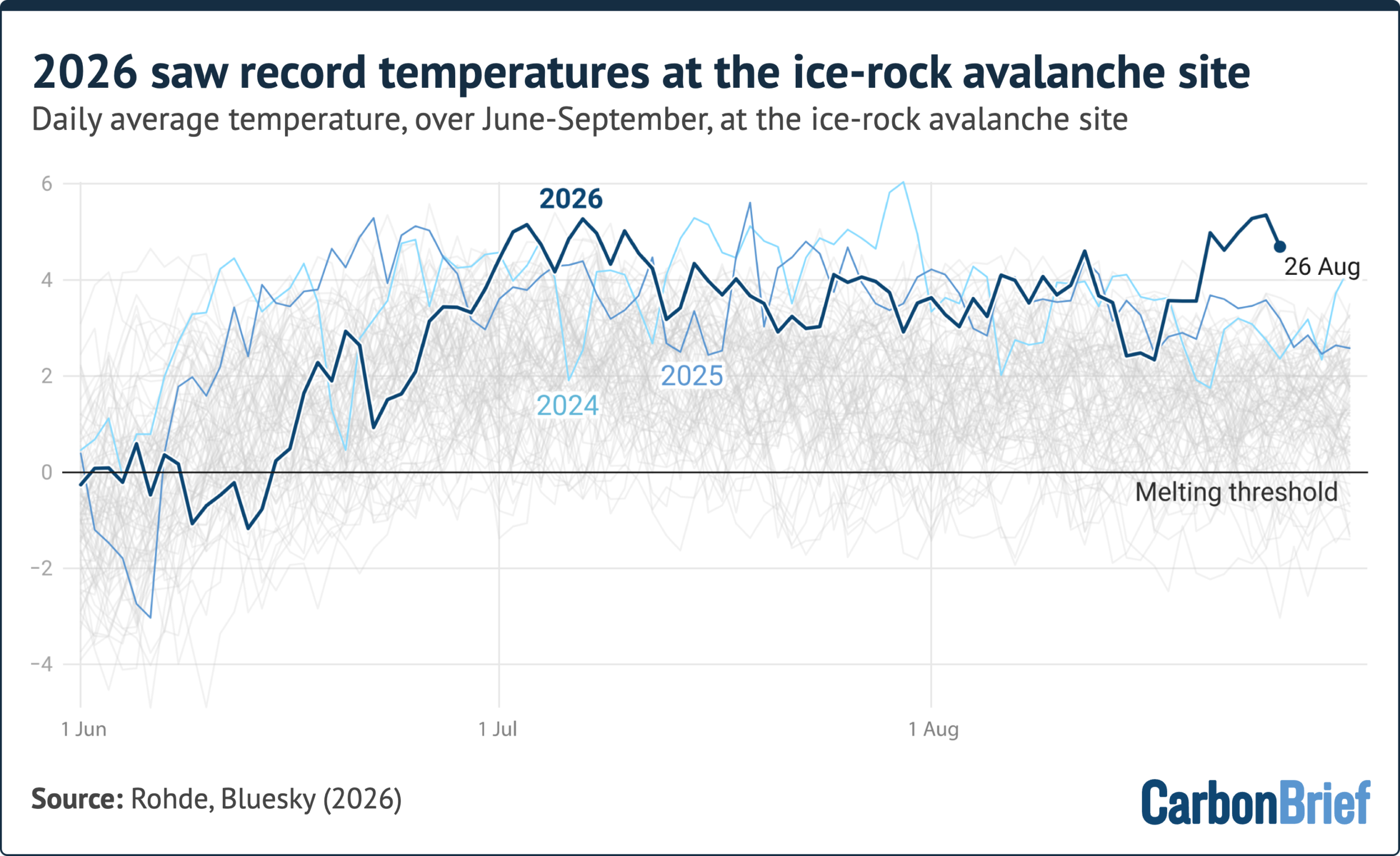
    Daily average temperature, from 1 June-1 September, at the glacier collapse site.
    Daily average temperature, from 1 June-1 September, at the ice-rock avalanche site. 2026, 2025 and 2024 are shown in dark, mid and light blue. All other years from 1940-2023 are shown in grey. Source: Rohde, Bluesky (2026)

    On social media, Rohde stated:

    “Given the warming trend, this Nepali glacier had probably been thinning and weakening for years, or even decades. But it ultimately failed during the warmest week in one of its warmest years on record. It would be a hell of a coincidence if global warming wasn’t at least partially to blame.”

    How have rising temperatures affected mountain stability?

    Many experts have linked warming temperatures in the region to thawing permafrost – ground that has been frozen for at least two consecutive years, whose thickness ranges from less than one metre to more than a kilometre. 

    Steiner is part of a research team that has been using sensors to monitor permafrost in the region since 2014. He tells Carbon Brief that it is “pretty clear” the permafrost has been thawing “very actively” at elevations as high as 5,200 metres above sea level “for many years”. He adds:

    “This means that the ground has, over the last decades, moved from being in a solid state into – at least, periodically during the warm season – patchy ground where some is frozen and some isn’t…

    “If you have frozen ground next to non-frozen ground, you have dynamics happening between that because there are different densities and there’s movement happening, which is conducive to interventional failure – and that we know from many other cases.”

    Davies also points to the “degradation” of perennially frozen ground as a factor in the disaster:

    “This permafrost acts as a glue to hold together the rocks and, as it melts, the rock can become weakened.”

    Permafrost thaw can also result in saturated ground, says Davies, which adds “pressure in the joints” of rock and can “facilitate” failure. She continues:

    “Sources of the water include melting permafrost and meltwater from the overlying glacier. We know that this event happened during a period of warmth, but in the absence of heavy precipitation, pointing to ice melt as the source of water.”

    2025 study of rock and ice avalanches in High Mountain Asia found that more than two-thirds started in areas “where permafrost is probable”.

    How have glaciers retreated in the affected region?

    Glaciers – frozen rivers of ice holding three-quarters of the global freshwater supply – are extremely vulnerable to climate change.

    In the Himalaya, the rate of glacier retreat has doubled since the late 20th century, according to a 2019 study in Science Advances.

    The Global and Planetary Change study found that glacier area loss rates in the Langtang catchment increased more than fourfold from 1964 to 2023 – with melting accelerating after 2000.

    It added that glaciers in the region also experienced “fragmentation” and “widespread thinning” over this period.

    The study noted that this loss “coincided with elevation dependent warming”.

    The figure below provides an overview of glacier loss in the Langtang catchment over 1964-2023, with orange, red and dark red indicating areas of retreat.

    In addition, green dots note points of glacier fragmentation, while blue dots show separation and pink show disconnection.
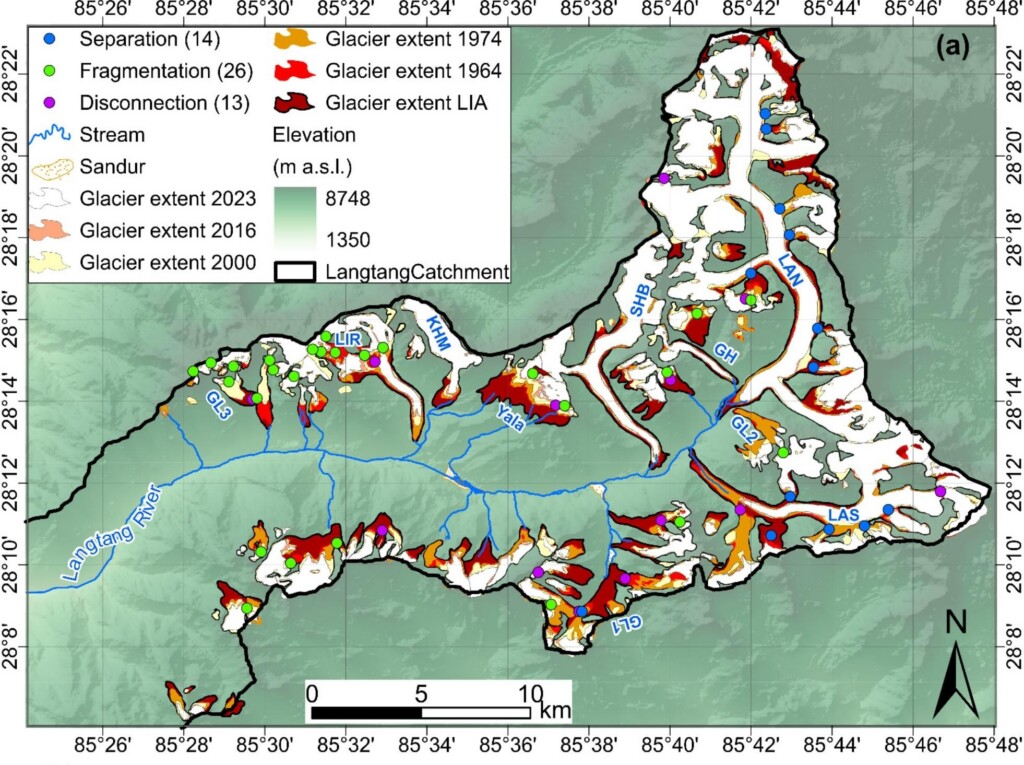
    Glacier loss in the Langtang catchment over 1964-2023.
    Glacier loss in the Langtang catchment over 1964-2023. Orange, red and dark red indicate areas of retreat. Green dots note points of glacier fragmentation, while blue dots show separation and pink show disconnection. Credit: Silwal et al. (2026)

    In comments released by the University of ReadingProf Maria Shahgedanova, a climate scientist researching climate impacts on mountain glaciers, said that the glacier involved in the floods had “retreated by approximately 450 metres between 1990 and 2020”.

    She adds that this “potentially reduce[d] the mechanical support provided by the glacier to the underlying rock slope”.

    Speaking to Carbon Brief, Davies reiterates that the retreat of the glacier is “potentially a contributing factor” to the bedrock collapse and subsequent disaster.

    This is because the removal of the glacier from the lower slopes leaves the “upper rock slopes less stable”, she says.

    The most recent assessment by the International Centre for Integrated Mountain Development said that glaciers in the Hindu Kush Himalaya region are “rapidly shrinking” as a result of climate change. (This region extends 3,500km over Afghanistan, Bangladesh, Bhutan, China, India, Myanmar, Nepal and Pakistan.)

    It said this loss is threatening the safety of the nearly two billion people, including by increasing the risk of “glacial lake outburst floods” (GLOFs). A GLOF is a sudden and catastrophic release of meltwater from a glacial lake. 

    Although this disaster was not caused by a GLOF, it is known that climate change is making such events more likely.

    Can the event be attributed to climate change?

    In the wake of the flash floods, climate campaignersmedia outlets and Nepalese politicians have linked them to human-caused climate change.

    However, many climate scientists have cautioned that it is too early to say precisely how climate change impacted the disaster. 

    Davies tells Carbon Brief:

    “These events happen so quickly that the exact causes and drivers can take a little time to uncover, especially if the event was a surprise and there had been no monitoring system in place.”

    When trying to determine the role human-caused climate change played in the intensity or likelihood of extreme weather, scientists turn to the field of “attribution science”. 

    To date, no formal rapid attribution study has been produced that attempts to quantify whether – and how – climate change contributed to the event.

    Scientists have noted that climate attribution of ice-rock avalanches – which are typically driven by a variety of factors – remains limited, in part because of the lack of a long-term observational record of previous collapses in high mountain areas.

    Meanwhile, the studies that do exist stop short of directly linking such disasters to climate change. For example, the authors of a 2021 study into the Chamoli ice-rock avalanche concluded that “we cannot attribute this individual disaster specifically to climate change”. 

    However, they added, the “possibly increasing frequency of high-mountain slope instabilities can likely be related to observed atmospheric warming and corresponding long-term changes in cryospheric conditions (glaciers and permafrost)”.

    In the aftermath of the disaster, many researchers have similarly highlighted that climate change could not be singled out as the cause of the disaster, even if warming likely increased the probability of its occurrence.

    On the Climate Brink substack, Carbon Brief’s climate science contributor Dr Zeke Hausfather noted that a “definitive single-event attribution” of the more recent disaster “may never be possible” due to the “messy causality of rock-ice avalanches”.

    However, he added that both the existing scientific literature and “essentially every scientist working on these hazards point in the same direction” – namely, that warming is making such events more likely in the Himalaya.

    Steiner tells Carbon Brief it might be possible to attribute different factors that played a role in the disasters to climate change – for instance, the recession of the glacier – but it would be more difficult to do so for the event as a whole.

    Part of the reason for this, he says, is that rock failures in this region of the Himalaya have occurred for millennia, well before humans started altering the climate. 

    However, he continues:

    “The physics of it is not something that has been made possible by climate change. This could have happened without it. But the chance of it happening – and the likelihood of it happening five years after a previous, similar event [in Chamoli] – we, as the scientific community, can be pretty confident about that [being increased because of a changing climate].

    “This is because so many of the changes that we know are related to climate change can potentially drive the build-up to eventual failure.”

    Ultimately, says Davies, a “careful attribution study is needed, but it is hard to argue that the rapidly warming climate is not having an effect in these regions”. She adds:

    “A single event may have multiple drivers, but we are seeing an increase in these events and are likely to see more as the permafrost and glacier melt continues.”

    Article by Cecilia KeatingRobert McSweeneyAyesha TandonDr Giuliana ViglioneDaisy Dunne republished from Carbon Brief under a CC license.

  • Greens warn government: Greenlighting Jackdaw would be act of climate vandalism

    Spread the love

    This morning the Green Party leadership, Green MPs and Green peers co-signed a letter to the Secretary of State for Energy Security and Net Zero, Miatta Fahnbulleh, to urge her not to approve the Jackdaw gas field in the North Sea, citing the fact that it will not reduce energy prices, protect jobs, or give the UK energy sovereignty.

    Orcas comment on killer apes destroying the planet by continuing to burn fossil fuels.
    Orcas comment on killer apes destroying the planet by continuing to burn fossil fuels.

    The full text of the letter is as follows:

    Dear Miatta,

    Do not approve Jackdaw gas field in the North Sea. 

    We are writing in response to alarming reports that you intend to give the go ahead to the Jackdaw gas field as soon as next week. As Green MPs and peers we cannot sit back and watch you proceed unchallenged with this act of climate vandalism.

    Approving new drilling at Jackdaw will not take a penny off energy costs nor protect jobs. As you said last month, “if you care about affordability, North Sea does not solve that problem for you”, with UK bill-payers still facing the highest energy prices in three years this winter, as a result of our continued exposure to volatile global gas markets. Further, jobs in the North Sea have been in decline for two decades. Jackdaw would only create 27 direct full-time jobs, with the platform unstaffed for most of its operating life and much of the construction already having taken place in Norway. It is completely dishonest of your government to use the legitimate concerns of job security and the cost of living to falsely justify more fossil fuel extraction. 

    Approving Jackdaw will not give the UK energy sovereignty. Even under the most optimistic scenarios Jackdaw is projected to contribute just 2% of UK gas demand over its lifetime (Uplift, 2026). We know that the only way to achieve energy sovereignty is to get the UK off fossil fuels as fast as possible, by significantly scaling up renewable energy and electrification.

    Approving new oil and gas will add fuel to the fire of the climate emergency. Last week, the UN Environment Programme warned that “immediate and sustained cuts to greenhouse gas emissions” were crucial to avoid the worst impacts of climate breakdown. Approving more fossil fuels, at a time when the UK has just experienced record-breaking and deathly heatwaves and wildfires, is a complete dereliction of responsibility. 

    Approving Jackdaw will line the pockets of shareholders. The operating company, Adura, a joint venture between Shell and Equinor, has been criticised for potentially allowing Shell to write off £1.3 billion in UK tax (Global Witness, 2025). Shell has also faced criticism that it paid little or no tax in this country over several years despite huge global profits. Instead of new drilling, we need to ensure that the existing tax instruments, like the windfall tax, actually bring in the revenue that was promised, and end the subsidies that multinational oil and gas companies have received at UK taxpayers’ expense.

    We are therefore urging you to be straight with the public – and instead focus on measures that would actually bring down bills and create secure jobs, like scaling up cheaper home-grown renewables, rolling out a fully-funded national home insulation programme, fully decoupling the price of electricity from gas, and ending rampant profiteering by energy companies.

    Your government promised change, not continuity. Approving Jackdaw, after the hottest summer on record, isn’t doing things differently. The new Prime Minister must not repeat Keir Starmer’s mistake of treating climate and nature as second order. Change starts with ruling out all new oil and gas.

    Yours sincerely,

    Carla Denyer MP
    Dr Ellie Chowns MP
    Adrian Ramsay MP
    Hannah Spencer MP
    Siân Berry MP
    Zack Polanski, Leader of the Green Party 
    Mothin Ali, Deputy Leader of the Green Party 
    Rachel Millward, Deputy Leader of the Green Party 
    Anthony Slaughter, Wales Green Party Leader
    Baroness Bennett of Manor Castle
    Baroness Jones of Moulsecoomb

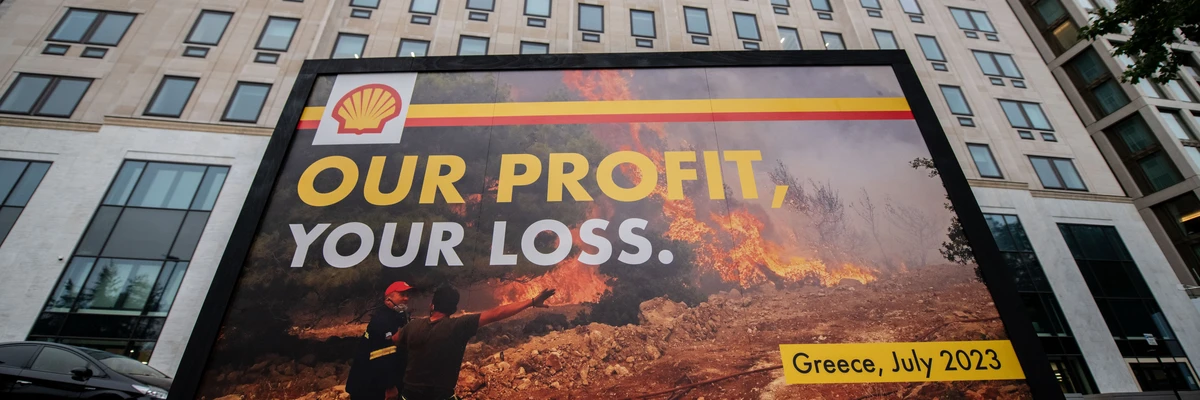
    Greenpeace activists display a billboard during a protest outside Shell headquarters on July 27, 2023 in London.
    Greenpeace activists display a billboard during a protest outside Shell headquarters on July 27, 2023 in London. (Photo: Handout/Chris J. Ratcliffe for Greenpeace via Getty Images)
  • Heatwaves and wildfires are setting back air quality improvements, UN finds

    Spread the love

    https://www.theguardian.com/environment/2026/sep/07/heatwaves-wildfires-setting-back-air-quality-improvements-un-finds

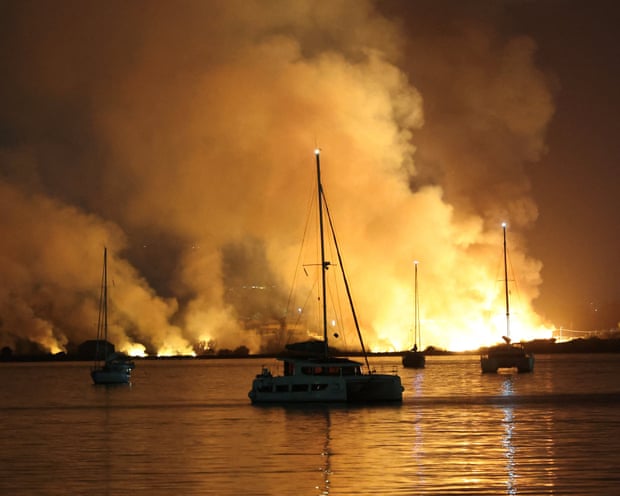
    A wildfire burning near the coast of Syracuse in Sicily, Italy, toward the end of last month. Photograph: Stéphane Mahé/Reuters

    WMO report details extreme weather events causing climatic feedback loop with serious health consequences

    Big increases in wildfires and heatwaves supercharged by the climate crisis are hindering improvements to air quality around the world, UN experts have said.

    Regions that had recorded a fall in pollution emitted by cars and industrial sites are facing new threats to air quality because of exposure to smoke from wildfires, according to a new report, while rising temperatures caused by intense heatwaves are causing a surge in ground-level ozone.

    In turn, the pollution generated by these climate-linked events is itself contributing to climate breakdown, creating a feedback loop that risks dragging the world deeper into environmental catastrophe.

    “Air quality and climate cannot be treated as separate subjects; they are deeply intertwined and have to be treated together,” said Lorenzo Labrador, a scientific officer of the World Meteorological Organization (WMO), which issued the report.

    Article continues at https://www.theguardian.com/environment/2026/sep/07/heatwaves-wildfires-setting-back-air-quality-improvements-un-finds

    Elon Musk urges you to be a Fascist like him, says that you can ignore facts and reality then.
    Elon Musk urges you to be a Fascist like him, says that you can ignore facts and reality then.
    Donald Trump urges you to be a Climate Science denier like him. He says that he makes millions and millions for destroying the planet, Burn, Baby, Burn and Flood, Baby, Flood.
    Donald Trump urges you to be a Climate Science denier like him. He says that he makes millions and millions for destroying the planet, Burn, Baby, Burn and Flood, Baby, Flood.
    Nigel Farage urges you to ignore facts and reality and be a climate science denier like him and his Deputy Richard Tice. He says that Reform UK has received £Millions and £Millions from the fossil fuel industry to promote climate denial and destroy the planet.
    Nigel Farage urges you to ignore facts and reality and be a climate science denier like him and his Deputy Richard Tice. He says that Reform UK has received £Millions and £Millions from the fossil fuel industry to promote climate denial and destroy the planet.
  • French winemakers forecast 30-year low harvest after severe drought and heat

    Spread the love

    https://www.theguardian.com/world/2026/sep/07/french-winemakers-forecast-30-year-low-harvest-after-severe-drought-and-heat

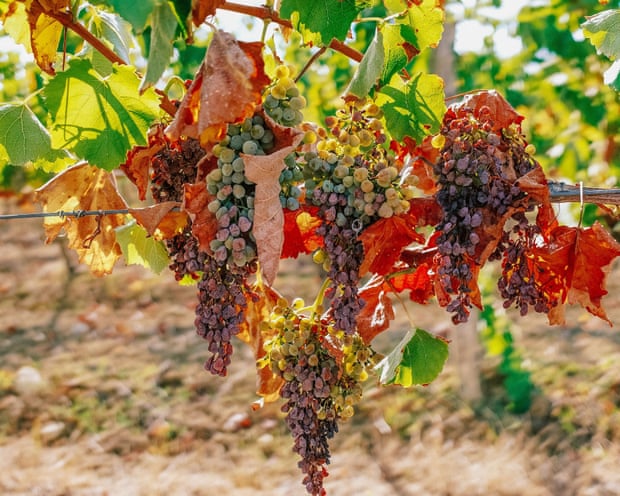
    The extreme heat of the summer weather in France has caused grapes to wilt and be scalded. Photograph: sportpoint/Alamy

    Estimates suggest drop in production with vineyards also concerned ‘smoke taint’ from wildfires may affect quality

    French vineyards hit by severe drought and heatwaves are expected to report a 30-year low in wine production after the country’s hottest ever recorded summer, according to the agriculture ministry.

    Initial estimates suggest winemakers will produce just under 34m hectolitres from this year’s harvest: a drop of 6% on last year, and 17% less than ‌the 2021-2025 average.

    Agreste, the government’s farming food, forestry and fishing statistics body, said the drop was partly caused by a reduction in the number and size of vineyards, but mostly the result of extreme weather conditions.

    “The summer was particularly hot and dry: soil drought has intensified throughout the country and heatwaves have caused localised sun scald, scorching, defoliation, and wilting of the grapes, reducing harvest volumes,” it reported.

    https://www.theguardian.com/world/2026/sep/07/french-winemakers-forecast-30-year-low-harvest-after-severe-drought-and-heat

    Donald Trump urges you to be a Climate Science denier like him. He says that he makes millions and millions for destroying the planet, Burn, Baby, Burn and Flood, Baby, Flood.
    Donald Trump urges you to be a Climate Science denier like him. He says that he makes millions and millions for destroying the planet, Burn, Baby, Burn and Flood, Baby, Flood.
    Nigel Farage urges you to ignore facts and reality and be a climate science denier like him and his Deputy Richard Tice. He says that Reform UK has received £Millions and £Millions from the fossil fuel industry to promote climate denial and destroy the planet.
    Nigel Farage urges you to ignore facts and reality and be a climate science denier like him and his Deputy Richard Tice. He says that Reform UK has received £Millions and £Millions from the fossil fuel industry to promote climate denial and destroy the planet.
  • Tech bros will tell you that geoengineering will save us, it won’t

    Spread the love

    Article by Ella Gilbert republished from OpenDemocracy under a Creative Commons Attribution-NonCommercial 4.0 International licence.

    Credit: antechdesigns

    As the latest UNEP reports we will blow past 1.5°C, we must prioritise solutions that work, rather than focusing on complex, unproven technologies

    For anyone who’s been paying attention, it’s no surprise that the United Nations Environment Program (UNEP) reports that  we will now inevitably blow past the global average temperature threshold of 1.5°C above pre-industrial levels.

    Climate scientists like myself have been warning for years that we are about to cross this invisible red line, while quietly worrying that global average temperatures will end up being double that. Personally, I said goodbye to 1.5°C several years ago, but it still feels momentous to see it written in print, and that too by the UN.

    The target to keep warming to 1.5°C above pre-industrial temperatures isn’t some hard red line in the sand, because all warming carries some risk, but it’s relevant because limiting warming to 1.5°C gives us a good chance of avoiding some of the worst impacts of climate heating. We’ve already had a glimpse of what this looks like in the myriad heatwaves, wildfires, floods, droughts and storms that have made headlines this year.

    Every tenth of a degree of heating means real-terms impacts for peoples’ lives, livelihoods and property, and increases the risk of the extreme events that we’ve already seen tragically claim so many lives. It also increases the likelihood of exceeding critical tipping points such as the collapse of the West Antarctic Ice Sheet, beyond which there’s no return.

    We’ve already had single years that have exceeded the 1.5°C limit, but the widely discussed Paris Agreement target is a multi-year average. That means we won’t know we’ve reached it until it’s in the rearview mirror, but it’s also possible to “overshoot” 1.5°C, temporarily peak at higher temperatures, and then bring them back down – and that’s now the best-case scenario outlined by UNEP. 

    This would mean we would have to take drastic action to bring temperatures back down again rather than continuing to drive them ever upwards. Which, in the current political climate, feels like a bit of a stretch.

    Temperatures won’t stabilise until we reach net zero emissions, where we remove as much carbon from the atmosphere as we add to it. Until then, we will still be increasing greenhouse gas concentrations in the atmosphere and turning up the dial on the thermostat. Net zero isn’t a nice to have, despite what certain parts of the political spectrum would have you believe, it’s an essential if we want to have a liveable planet. 

    In fact, UNEP’s latest report points to the need to take action beyond net zero: 

    Once we have limited heating to 2°C or below — which currently feels optimistic — we will have to roll out carbon dioxide removal (CDR) to reduce temperatures on an enormous scale.

    CDR often connotes high-tech solutions to suck carbon dioxide out of the atmosphere, but it can also mean one of the oldest technologies in the world: trees. That’s why restoring nature and preventing deforestation is so important for climate action.

    But UNEP reports that CDR only works if we limit heating to 2C or below. As the stakes of climate heating continue to rise, another idea is moving from the sidelines to centre-stage: geoengineering, or deliberate technological interventions to alter the Earth’s climate. 

    Geoengineering is a spectrum, ranging from the comparatively reasonable and well-researched (injecting particles into the stratosphere to reflect incoming sunlight and cool the surface, much like major volcanic eruptions have done) to downright barmy (launching mirrors into space – you can imagine which silicon valley billionaires love that idea). And while there are sensible (if heated) scientific discussions about how to actually do it, there are also some very serious ethical and governance hurdles to overcome. 

    The tech bros will tell you that geoengineering will save us and allow us to keep doing what we’re doing while still ‘fixing’ climate change. But beware any arguments that downplay the importance of emissions cuts. We can’t simply geoengineer our way out of this crisis.

    For example: who decides when to deploy? What happens if an intervention makes things better for some and worse for others? How do we safeguard against bad actors acting unilaterally? These questions are largely unanswered, and that’s before we get to the scientific questions around unintended consequences, like disrupting the Arctic food chain while trying to refreeze ice, or what happens if we stop the intervention, resulting in a so-called termination shock, where temperatures would shoot back up with devastating effect.

    In some senses the climate crisis is relatively simple: we’re pumping planet-heating carbon dioxide into the atmosphere, and it’s heating the planet. To reverse it, we need first to stop adding planet-heating carbon dioxide to the atmosphere, and then to start removing it.

    The good news is that we do know what we need to do to achieve that. Climate action is less a knowledge problem, and more an implementation one. 

    Proponents of geoengineering argue that it’s not an either/or between emissions cuts and major interventions. But in a world with finite resources, expensive and unproven geoengineering solutions should not be a priority, rather, we should prioritise the simple stuff we know works: decarbonising energy production, improving public transport, retrofitting and building greener housing, reducing meat and dairy consumption, restoring natural ecosystems.

    That said, we are now committed to some level of change, and we need to behave as such. That means we need to prepare for the sea level rise that’s to come, and adapt societies, behaviours and infrastructure to a less predictable and more extreme climate. 

    If the summer of 2026 has taught us anything in the UK, it’s that our houses, schools, offices, railways, emergency services, power networks and public transport are simply not fit for purpose in the heat. Nor are they built to withstand the wet, stormy, flood-prone autumn and winter that is on its way. We’re not equipped to deal with the rapidly extremifying climate or the weather whiplash it brings. Simply put: our infrastructure was built for a climate that no longer exists.

    If we are to survive the coming decades, we need to build preparedness and climate resilience into our society. Extreme events are already exposing our vulnerabilities, and if we thought 2026 was bad, count my words: we ain’t seen nothing yet.

    In the wake of our hottest summer on record, it’s abundantly clear that we need to slash emissions to save lives, and at the same time prepare for the changes that are now committed. 

    The geoengineers are right about one thing: It’s not an either/or. We have to reduce emissions to net zero and remove carbon from the atmosphere and adapt to what’s in store. There’s no other safe option.

    Dr. Ella Gilbert  is a climate scientist and multi-award-winning presenter with a PhD in Antarctic climate change.

    Article by Ella Gilbert republished from OpenDemocracy under a Creative Commons Attribution-NonCommercial 4.0 International licence.

    Donald Trump urges you to be a Climate Science denier like him. He says that he makes millions and millions for destroying the planet, Burn, Baby, Burn and Flood, Baby, Flood.
    Donald Trump urges you to be a Climate Science denier like him. He says that he makes millions and millions for destroying the planet, Burn, Baby, Burn and Flood, Baby, Flood.
    Nigel Farage urges you to ignore facts and reality and be a climate science denier like him and his Deputy Richard Tice. He says that Reform UK has received £Millions and £Millions from the fossil fuel industry to promote climate denial and destroy the planet.
    Nigel Farage urges you to ignore facts and reality and be a climate science denier like him and his Deputy Richard Tice. He says that Reform UK has received £Millions and £Millions from the fossil fuel industry to promote climate denial and destroy the planet.
    Elon Musk urges you to be a Fascist like him, says that you can ignore facts and reality then.
    Elon Musk urges you to be a Fascist like him, says that you can ignore facts and reality then.