Fossil fuel giant BP is profiteering at the expense of people and planet, say the Scottish Greens. The comments from the party’s climate spokesperson, Patrick Harvie, come as BP has published its profits for Q3 2025.
Earlier this year BP announced that it would cut its renewable energy investments and instead focus on increasing oil and gas production.
Patrick said:
“It has been yet another year of climate chaos around the world, with wildfires and flooding taking a deadly toll.
“Yet times have rarely been better for the polluters and fossil fuel giants who are raking in eye-watering profits while our planet burns and households and families are hammered with escalating bills.
“What makes BP’s profiteering particularly obscene is that they know the damage they are doing and are doubling down on it by rolling back on the few climate commitments that they had made.
“Our energy market will never be fit for purpose as long as it is run by and for multibillion pound corporations like BP and those who are determined to exploit every last drop of oil at the expense of people and planet.”
Patrick added:
“The UK government has a major decision on its hands when it comes to Rosebank. Will they keep the ban in place, or will they cave-in to pressure from the polluter lobby?
“Scotland has a huge renewables potential, but we need our governments to step up, do the work and make the investment that is needed in workers and green jobs.”
Nigel Farage urges you to ignore facts and reality and be a climate science denier like him and his Deputy Richard Tice. He says that Reform UK has received £Millions and £Millions from the fossil fuel industry to promote climate denial and destroy the planet.Neo-Fascist Climate Science Denier Donald Trump says Burn, Baby, Burn.Orcas comment on killer apes destroying the planet by continuing to burn fossil fuels.
Imagine waking up to find your living room underwater for the second time in five years. You try to claim insurance, only to be told your property is now uninsurable. Premiums have tripled. Your mortgage lender is concerned. And your biggest asset, your home, is rapidly losing value.
This isn’t just a personal disaster. It’s a warning sign of a much broader crisis.
The risks associated with climate change are breaking the insurance industry. In the past decade alone, flood frequency has increased fourfold in the tropics and 2.5 times in mid-latitude regions). In the UK, at least one in six people already live with flood risk, heavy-rainfall extremes are increasing, and expected annual damages could rise by 27% by the 2050s.
Insurance claims from extreme weather are surging. The Association of British Insurers (the UK insurance and long-term savings trade body) reports a record £585 million in home weather-damage payouts for 2024.
Climate change is driving more frequent and severe events, pushing traditional insurance models to their limits. Insurers are left with little choice but to raise premiums sharply or withdraw coverage entirely. When insurance becomes unaffordable or unavailable, households are exposed, property values fall, mortgages become harder to secure, and the risk of a wider financial crisis grows.
Ever wondered how to spend or invest your money in ways that actually benefit people and planet? Or are you curious about the connection between insurance and the climate crisis?
Green Your Money is a new series from the business and environment teams at The Conversation exploring how to make money really matter. Practical and accessible insights from financial experts in the know.
Our research into the insurance industry shows that UK resilience is falling behind. Policymakers in the UK tried to avert an insurance crisis by launching Flood Re in 2016, a joint scheme between government and insurers designed to keep insurance affordable for households in high-risk areas. It was meant as a temporary bridge, due to close in 2039 once stronger flood defences and better land-use planning are in place.
But progress has been painfully slow. In January 2024, the House of Commons public accounts committee reported that the government’s £5.2 billion flood defence programme is 40% behind schedule and expected to protect just 200,000 properties by 2027 — far short of its original 336,000 target.
By 2025, Flood Re has been under mounting strain. Reinsurance costs had have risen by £100 million in just three years, and policy uptakes have jumped by 20% in a single year – both signs that private insurers were retreating from high-risk markets.
In July 2025, Flood Re’s CEO, Perry Thomas, warned that the UK’s overall flood resilience have worsened since the scheme’s launch, as mortgage lenders, housebuilders, and successive governments have “failed to pull their weight”.
When insurance becomes unaffordable or unavailable, households are left exposed and property values decline, making mortgages harder to obtain. This erosion of coverage threatens the wider financial system: banks rely on insured property as collateral, but without cover, that collateral rapidly loses value.
If the government fails to meet its climate adaptation targets, as many as 3 million UK homes could become effectively worthless within 30 years.
For the banking sector, this creates the risk of homes becoming stranded assets — uninsurable, unmortgageable and falling in value — leading to rising defaults and mounting losses. Unless lenders adopt climate-adjusted risk models that integrate physical hazards such as flooding, storms and heatwaves, they risk underestimating the true exposure of their mortgage portfolios.
If these climate-risk-exposed mortgages are mispriced and then bundled into mortgage-backed securities and sold to investors, the resulting shock could cascade through credit markets – like the 2008 subprime mortgage crisis, when large volumes of high-risk home loans to borrowers with poor or limited credit histories were repackaged and sold as safe investments. The difference is that this time the crash would be driven by physical climate damage rather than purely financial mismanagement.
A one-way street
Traditional financial crises follow cycles of growth, downturn and recovery, but climate risk moves in only one direction. Rising global temperatures are driving more frequent and severe floods and storms. Without timely adaptation, the damage compounds, eroding property values, undermining insurance and threatening financial stability.
Historical insurance models treated extreme weather as rare “tail risks,” but these events are now more frequent, severe, and interconnected. The tail is becoming “fat,” and shocks ripple across sectors and regions. In short, risk is evolving and insurance frameworks must evolve with it.
Flooding is no longer just an environmental issue. It is a systemic financial threat. Insurers, regulators and lenders must adopt forward-looking models that translate physical climate risks into financial metrics. These models influence market behaviour by shaping how capital is allocated, assets are valued, and risks are priced.
This, in turn, guides investment, planning and adaptation — the process of adjusting systems, infrastructure and practices to withstand and recover from climate impacts.
Effective adaptation measures, such as upgraded flood defences, reduce the future risk of climate-related damage. It’s a feedback loop: better modelling enables smarter adaptation, which in turn strengthens financial stability.
Donald Trump urges you to be a Climate Science denier like him. He says that he makes millions and millions for destroying the planet, Burn, Baby, Burn and Flood, Baby, Flood.Nigel Farage urges you to ignore facts and reality and be a climate science denier like him and his Deputy Richard Tice. He says that Reform UK has received £Millions and £Millions from the fossil fuel industry to promote climate denial and destroy the planet.
Nigel Farage’s party was recognised for “widespread embrace of climate change denialism and antivaccine misinformation”
Skeptic magazine editor Michael Marshall presents the Rusty Razor Award to an absent Reform party. Photo: Dave Hughes. / The Skeptic
Reform UK has received an award for being the organisation that engaged in the “most prolific promotion of pseudoscience” during 2025.
Each year the UK’s long-running publication for analysis of pseudoscience, conspiracy theory and claims of the paranormal, The Skeptic magazine, names their pseudoscientist of the year, and awards them the Rusty Razor prize.
The Rusty Razor this year went to Reform UK in recognition of “their widespread embrace of climate change denialism and antivaccine misinformation.”
The award was announced in front of an audience of around 700 people at the QED science and skepticism conference in Manchester on Saturday night.
In the Rusty Razor Award category, Nigel Farage’s party was recognised for ‘promoting pseudoscientific claims’.
…
Michael Marshall, Editor of The Sceptic, said: “Whilst the political positions Reform UK put forward are outside of the scope and remit of The Skeptic and our awards, their positions on science are not.
“On current polling, Reform UK is the party with the most support in the country, yet they have shown that they have no problem with spreading pseudoscientific misinformation that aligns with the interests of their donors, no interest in vetting their members and candidates for holding dangerously misguided views about science and health, and no issue with fostering and indulging all manner of conspiracy theories if they think there’s a vote in it.”
Marshall branded Reform “a threat to science and reason, and deserving of being singled out as winners of our 2025 Rusty Razor award.”
Nigel Farage reminds you that he’s the man that brought you Brexit and asks what could possibly go wrong.Nigel Farage urges you to ignore facts and reality and be a climate science denier like him and his Deputy Richard Tice. He says that Reform UK has received £Millions and £Millions from the fossil fuel industry to promote climate denial and destroy the planet.Nigel Farage explains the politics of Reform UK: Racism, Fake anti-establishmentism, Deregulation, Corporatism, Climate Change Denial, Mysogyny and Transphobia.
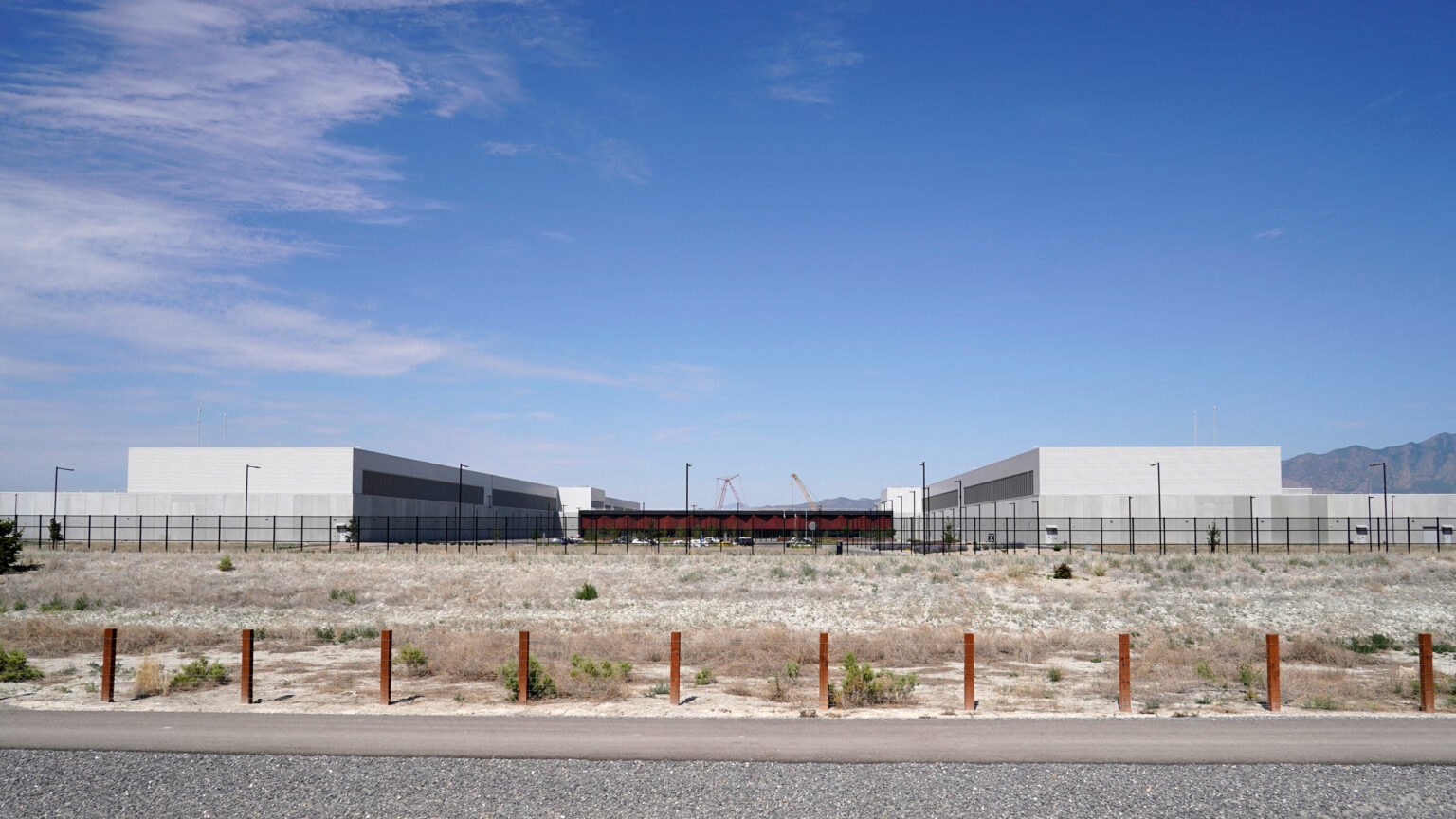
A view of Meta’s newly constructed data center on July 18, 2024, in Eagle Mountain, Utah. Credit: George Frey/AFP via Getty Images
Without a big increase in investment in renewable energy globally, humanity will not limit global temperature rise to 2 degrees Celsius, but much of the data center boom is powered by fossil fuels.
By Jake Bolster
October 29, 2025
This article originally appeared on Inside Climate News, a nonprofit, non-partisan news organization that covers climate, energy and the environment. Sign up for their newsletter here.
Surging electricity demand driven by artificial intelligence is putting humanity’s climate goals out of reach, extending the life of fossil fuels and driving up emissions in the U.S. power sector while contributing to deadly extreme weather, according to two new reports published Wednesday.
With power- and water-hungry data centers forecasted to come online at staggering speeds to serve big tech companies’ seemingly bottomless appetite for AI infrastructure, utility companies have turned to fossil fuels to help meet the explosion in demand for power.
It’s a sharp departure from earlier forecasts of only modest, gradual growth in electricity demand, potentially threatening large countries’ commitments to transition away from fossil fuels. President Donald Trump and his administration have spoken glowingly about how AI will reinvigorate U.S. coal and other fossil fuel markets.
“Accelerating from deployment to a deeply decarbonized, resilient energy system is proving far more complex than simply adding megawatts,” said Prakash Sharma, vice president for scenarios and technologies at Wood Mackenzie, an energy consulting firm, in a press release accompanying his company’s new report.
Wood Mackenzie’s analysis concluded that almost no countries—including Canada, France, Germany, Italy, Japan, the United Kingdom and the United States—were on track to meet their 2030 emissions goals. But if countries across the globe show “extraordinary ambition,” according to the report, and make significant, rapid investments in renewable energy, humanity could limit warming to within 1.5 degrees Celsius (2.7 degrees Fahrenheit) by around 2060.
The 2015 Paris Agreement called for holding Earth’s temperature rise below 2 degrees C (3.6 degrees F) above pre-industrial levels, and ideally to just 1.5 degrees C in order to preserve a livable planet. To do that, scientists estimated the global economy would need by 2050 to achieve “net-zero” carbon emissions, in which human activity produces a negligible amount of greenhouse gases that could be absorbed by natural ecosystems rather than persisting in the atmosphere.
Among the world’s largest economies, the U.S. has the biggest gap between current climate transition investments and the spending necessary to reach net-zero emissions. The country would need to increase its spending on reducing emissions by 76 percent to meet the net-zero goal, more than double the increase the European Union would need to make and more than two-and-a-half times the increased spending necessary in China.
“A new climate leadership is emerging,” Sharma said. “As the U.S. doubles down on fossil fuels, pushing allies to buy its LNG, China is seizing the low-carbon mantle through EV and solar dominance, plus aggressive renewables deployment.”
The United States has signaled a willingness to offer tax breaks and open public lands to data centers—warehouses of servers whose computing power drives AI services and much of the internet, many of which will be powered by fossil fuels, according to International Energy Agency estimates.
Data center energy demand “is threatening to sabotage the country’s already faltering climate goals,” wrote John Fleming and Jean Su, with the Center for Biological Diversity, in a report published Wednesday. Fleming and Su found that, if AI data centers powered by fossil fuels grow as forecasted, all other sectors of the U.S. economy would need to cut emissions by 60 percent in order for the U.S. to meet its emissions targets.
“A gas-fed AI boom is going to hurdle us past any chance of keeping to our climate goal or maintaining a safe and healthy future for our planet,” said Fleming, a senior scientist with the Center for Biological Diversity, in a statement. “To the extent that data center buildout is needed at all, it should be powered only by clean, renewable energy.”
McKenna Beck, the Ralph Cavanagh climate solutions fellow at the Natural Resources Defense Council, who was not involved in either report, agreed with that conclusion, and warned that the current demand for AI runs the risk of spoiling climate pledges at the local level, too.
“The reports confirm what we’ve been seeing in states on the ground for the past year—that there’s a real risk of states with stated climate goals backsliding on those,” she said. As an example, Beck brought up North Carolina, which erased its 2030 climate goals this summer in the face of rising electricity demand.
Beck believes that, if given the right guardrails, AI electricity demand is not destined to add a ton of emissions to the U.S. economy. “With the right incentives and requirements, data centers could actually supercharge clean energy,” she said.
But with the Trump administration actively working to stifle renewable energy growth, Beck acknowledged that any good-governance AI policies would need to be implemented on a smaller scale.
“States are on the front lines right now,” she said.
Donald Trump urges you to be a Climate Science denier like him. He says that he makes millions and millions for destroying the planet, Burn, Baby, Burn and Flood, Baby, Flood.Nigel Farage urges you to ignore facts and reality and be a climate science denier like him and his Deputy Richard Tice. He says that Reform UK has received £Millions and £Millions from the fossil fuel industry to promote climate denial and destroy the planet.Elon Musk urges you to be a Fascist like him, says that you can ignore facts and reality then.
A family salvages belongings from their home after it collapsed during Hurricane Melissa’s passage through Santiago de Cuba, Cuba on October 29, 2025. (Photo by Yamil Lage/AFP via Getty Images)
“The very richest individuals in the world are funding and profiting from climate destruction, leaving the global majority to bear the fatal consequences of their unchecked power.”
A report released Tuesday showed that the wealthiest people on the planet are disproportionately fueling the climate emergency that is intensifying weather catastrophes like Hurricane Melissa, which slammed Cuba on Wednesday after leaving a trail of devastation in Jamaica.
The Oxfam International report, titled Climate Plunder: How a Powerful Few Are Locking the World Into Disaster, features updated figures showing that the consumption-based carbon emissions of the richest 0.1% of the global population grew by 92 tonnes between 1990 and 2023, while the emissions of the poorest half of humanity grew by just 0.1 tonnes.
“A person from the world’s richest 0.1% emits over 800kg of CO2 every day. Even the strongest person on earth could not lift this much,” the report notes. “In contrast, someone from the poorest 50% of the world emits an average of just 2kg of CO2 per day, which even a small child could lift.”
“A person in the top 0.1% emits more in a day than a person in the poorest 50% emits all year,” the report adds.
The destruction caused by Hurricane Melissa—the most powerful storm on Earth this year and the strongest to ever hit Jamaica—underscored the extent to which vulnerable nations are bearing the brunt of a crisis they did little to cause as wealthy countries and individuals continue to spew planet-warming emissions with abandon.
Jamaica, where the true extent of the damage from Melissa is only just beginning to emerge, is responsible for an estimated 0.02% of global greenhouse gas emissions, according to the latest available data.
“The climate crisis is an inequality crisis,” said Oxfam executive director Amitabh Behar. “The very richest individuals in the world are funding and profiting from climate destruction, leaving the global majority to bear the fatal consequences of their unchecked power.”
“We must break the chokehold of the super-rich over climate policy by taxing their extreme wealth.”
Oxfam’s report was published less than two weeks before the start of COP30 in Belém, Brazil, where world leaders will gather once again to weigh climate solutions after years of failing to reach an agreement to curb fossil fuel production and use.
In its new report, Oxfam implores governments to target the emissions of the ultra-wealthy, including through “climate-specific taxes” such as “frequent flyer levies and taxes on luxury travel.”
“It is a travesty that power and wealth have been allowed to accumulate in the hands of a few, who are only using it to further entrench their influence and lock us all into a path to planetary destruction,” said Behar. “We must break the chokehold of the super-rich over climate policy by taxing their extreme wealth, banning their lobbying, and instead put those most affected by the climate crisis in the front seat of climate decision-making.”
Donald Trump urges you to be a Climate Science denier like him. He says that he makes millions and millions for destroying the planet, Burn, Baby, Burn and Flood, Baby, Flood.Nigel Farage urges you to ignore facts and reality and be a climate science denier like him and his Deputy Richard Tice. He says that Reform UK has received £Millions and £Millions from the fossil fuel industry to promote climate denial and destroy the planet.Elon Musk urges you to be a Fascist like him, says that you can ignore facts and reality then.