NHS hospitals told to share patient data with US ‘spy-tech’ firm

Spread the love

Original exclusive article by Lucas Amin and openDemocracy republished under a Creative Commons Attribution-NonCommercial 4.0 International licence

Palantir, whose owner claimed the NHS ‘makes people sick’, will ‘collect and process confidential patient information’

Hundreds of NHS hospitals have been ordered to share people’s confidential medical records with an American spy-tech company owned by a billionaire Trump donor, openDemocracy can reveal.

Palantir Technologies – the secretive Silicon Valley firm first funded by the CIA – will collect patient information from all hospitals in England, according to internal NHS documents.

In a letter sent last month, the health service finance chief Julian Kelly gave NHS trusts until the end of March to begin uploading patient information to a new central database that uses Palantir’s Foundry software.

The instruction came despite a government pledge, made after openDemocracy sued the Department of Health and Social Care in 2021, to consult the public before agreeing to work with Palantir again.

The new database, called ‘Faster Data Flows’, collects daily information about hospital patients – including their dates of birth, postcodes and detailed medical histories – that was previously held by individual trusts and shared less frequently.

NHS England told openDemocracy it would alter or remove identifiable personal information before it was passed to Palantir – a process referred to by the health service as “pseudonymisation”. Palantir also insisted that it does not have access to any “identifiable medical records”.

But an NHS document obtained by openDemocracy admits that the company will “collect and process confidential patient information”. It is not clear what, precisely, this processing entails.

Lawyers for three patient advocacy groups said that NHS England had not addressed vital legal and privacy concerns. “Slapping a sticker over your NHS number doesn’t suddenly mean your health record needs no protection,” said Cori Crider, a lawyer at Foxglove Legal. “People are very easy to re-identify from pseudonymised data.”

The news also raises fresh concerns that Palantir is being lined up to win a contentious £480m contract to process unprecedented amounts of NHS data without patient consent.

Palantir was originally funded by the CIA and has been heavily criticised for producing surveillance tech for police forces that allegedly creates “racist feedback loops” and has helped the US government to track and deport undocumented migrants.

The company’s founder, Peter Thiel, donated $1.25m to Donald Trump’s election campaign. Earlier this year he said the NHS “makes people sick” and claimed British affection for the health service was akin to “Stockholm syndrome”.

Tory MP David Davis told openDemocracy he was concerned “by the NHS appearing to be favouring an organisation with the provenance of Palantir”.

“NHS England should not be attempting to do this without explicit approval from Parliament,” he said, calling on the health secretary Steve Barclay to “explain himself” to MPs “before further action is taken”.

‘Faster data’

The pilot to trial Faster Data Flows to “support decision making” by doctors was launched in June 2022, with 21 “early adopters” joining.

The information it captured – including “admission, inpatient, discharge and outpatient activity” as well as personal details – was uploaded daily to a central portal built by Palantir. Palantir itself was described in pilot documents as a “sub-processor” of the data, which is a legal term given to a third party that has permission to process information gathered by others.

NHS execs knew their work with Palantir carried a “reputational risk”. The pilot documents state: “The use of Palantir to collect and process data… is likely to be perceived by some privacy campaigners as contentious and therefore there is a relatively high risk of media coverage and adverse comment about this”.

In November, lawyers working for Foxglove wrote to NHS England on behalf of the National Pensioners’ Convention, Just Treatment and the Doctors Association UK, to raise concerns about the sharing of pseudonymised data.

The lawyers questioned whether consent requirements – which are needed to process pseudonymised data – had been violated, and what safeguards, if any, had been put in place to protect patient privacy.

NHS England has still not sent a substantive reply after more than three months but has now instructed all trusts to implement Faster Data Flows.

‘Rigged’

Palantir is considered a “strong frontrunner” for a controversial new IT contract worth £480m to build a database that is expected to include all health information currently held by the NHS, including GP and social care records.

There are concerns that the rollout of Palantir’s Foundry to hospitals now – during the tendering process – may provide the tech firm with an incumbent advantage.

“Every trust in England will be forced to integrate Foundry into their workflows,” said GP IT consultant and clinical informatics expert Marcus Baw. “This means there has already been significant taxpayer investment in using Foundry.

“Trusts are busy, with limited IT team capacity, so they cannot afford to redo work. To me this means that the system will already have significant momentum towards Palantir and Foundry.”

A Department for Health and Social Care minister stated last month that whoever wins the contract will need to migrate data from Foundry into the new FDP system.

Labour MP Clive Lewis told openDemocracy that “the bid looks rigged… politicians of all parties should be screaming to the rafters about this”.

Revolving door

Palantir was first given an NHS contract in 2020 – without tender – to help manage the Covid-19 vaccine rollout while Matt Hancock was health secretary. Hancock used special ministerial powers to bypass patient confidentiality rules and allow the company to process patient data.

It won a further contract that was neither published nor tendered for – leading openDemocracy to sue the DHSC. After this legal action, the government released its contracts with Palantir and promised to consult the public before making further deals.

But our leaked documents reveal that NHS bosses have now ordered a rollout of Palantir software to hospitals across England, in a seeming breach of that promise.

The firm has also exploited a weakly regulated ‘revolving door’ in the NHS – poaching at least three former NHS data experts – as it chases the “must-win” contract. One of its recent hires, Indra Joshi, served as head of artificial intelligence for the NHS and helped launch the Covid-19 datastore – the first NHS project to use Foundry – before quitting the health service and joining Palantir in April 2022.

Harjeet Dhaliwal, who was previously deputy director of data services at NHS England, joined the firm later that same year.

The two ex-NHS staffers joined Paul Howells at Palantir, the company’s “health and care director”, who previously led a national data programme for NHS Wales.

Palantir did not respond to questions about whether the trio now work on NHS-related projects.

Palantir has lobbied the government extensively, famously entertaining the NHS executive Lord Prior with watermelon cocktails. The company also considered a contentious strategy described as ‘Buying Our Way In’. Emails sent by Louis Mosley, Palantir’s UK chief, said the company would try “hoovering up” smaller businesses with NHS contracts to “take a lot of ground and take down a lot of political resistance”, according to Bloomberg News.

NHS England did not respond to openDemocracy’s questions about whether the processing of patient data on Palantir’s Foundry platform was lawful.

A spokesperson said: “By collecting data in a more streamlined way, the NHS is better able to plan and allocate resources to maximise outcomes for patients, while ensuring that their personal data remains protected and within the NHS at all times.

“Ultimately, it will help all NHS organisations to better understand their waiting lists and pressures in near real time, work as systems, and significantly reduce the burden of manual reporting on staff.”

A Palantir Spokesperson said: “Any claim that Palantir has access to identifiable medical records through the Faster Data Flow programme is false – not a single Palantir employee does.

“We have simply built software that is being used to make a programme that already existed work faster – much like our software has been used during Covid to deliver the vaccine rollout and, subsequently, to cut waiting lists and speed up cancer diagnosis.”

Original exclusive article by Lucas Amin and openDemocracy republished under a Creative Commons Attribution-NonCommercial 4.0 International licence

Whatever you’re interested in, there’s a free openDemocracy newsletter for you. HAVE A LOOK

Continue ReadingNHS hospitals told to share patient data with US ‘spy-tech’ firm

UK government lets airlines off the hook for £300m air pollution bill

Spread the love

Original article by Lucas Amin and Ben Webster at openDemocracy republished under a Creative Commons Attribution-NonCommercial 4.0 International licence.

The government wrote off emissions equivalent to 400,000 passengers flying from London to Sydney and back in one year

Photo by Pixabay from Pexels: https://www.pexels.com/photo/air-air-travel-airbus-aircraft-358319/

The government gave more than £300m worth of free ‘pollution permits’ to airline companies including British Airways, RyanAir and EasyJet under a scheme designed to tackle climate change.

The UK’s Emissions Trading Scheme is meant to reduce carbon emissions by forcing big polluters to buy a permit for each tonne of carbon they emit, with the money going into the public purse.

But data obtained by openDemocracy reveals the UK’s aviation sector was handed more than four million “pollution permits” last year, free of charge.

The 4.1 million tonnes of CO2 they represent are equivalent to the emissions of more than 400,000 passengers flying economy-class from London to Sydney and back. The free permits saved airlines the equivalent of £336m based on the annual average carbon price – 39% more than the previous year, 2021.

EasyJet, RyanAir and British Airways were the big winners of the handouts, bagging permits worth £84m, £73m and £58m respectively. The companies all made heavy losses during the pandemic but have since become profitable again: British Airways owner International Airlines Group (IAG) announced profits of £1.3bn last month, while RyanAir just enjoyed its “most profitable December quarter on record” and easyJet is reporting “record-breaking sales”.

openDemocracy has previously revealed how oil and gas companies including Shell and BP were similarly handed more than £1bn worth of free pollution permits during 2022.

Caroline Lucas, the Green MP for Brighton Pavilion, told openDemocracy the government was “letting aviation companies get away with it” and “forcing the public to pick up the tab”.

“Ministers must bring an end to these free pollution permits immediately, and make high-carbon companies pay for the climate-wrecking damage they’re causing,” she added.

The Department for Net Zero and Energy Security is now analysing the results of a consultation on phasing out free permits for the aviation sector – but policy changes will not take effect until at least 2026.

The government has already allocated 12.2 million free permits for the next three years, which at last year’s carbon price will be worth a further £965m.

A government spokesperson told openDemocracy the UK was giving away free permits because it was “committed to tackling climate change” but also to “protecting our industry from carbon leakage”.

But the risk of carbon leakage – when companies relocate to countries that do not have carbon pricing – is “minimal”, according to research commissioned by the government itself.

The study by Frontier Economics on behalf of the Department for Business, Energy and Industrial Strategy (BEIS) also found that ending permit giveaways would lead to a decrease in airline profits and improve market competition.

Daniele de Rao, an aviation expert at Carbon Market Watch, told openDemocracy: “Despite several studies showing that the risk of carbon leakage in the aviation sector is insignificant, airlines are still receiving an enormous amount of free allocation.

“The United Kingdom should apply the ‘polluters pay’ principle in its own ETS and, following the European Union’s example, should end the handout of free pollution permits to airlines as soon as possible.”

Matt Finch, UK policy manager of campaign group Transport & Environment, added: “The nation is up in arms about sewage pollution, but at the same time our government is paying airlines millions of pounds a year to pollute. Are these the actions of a climate leader? No. Free allowances should be phased out of the ETS as quickly as possible.”

The remaining £120m in free permits was carved up among the rest of the UK airline industry – with even the owners of private jets getting handouts.

Ineos Aviation, the company owned by oil and gas billionaire Jim Ratcliffe, was given free permits worth around £2,000.

The government has claimed that “our UK ETS is more ambitious than the EU system it replaces”.

But the EU has voted to phase out free permit allocations from 2026. It also redistributes the revenues raised by permit sales to environmental projects – whereas in the UK the proceeds are retained by the Treasury.

A government spokesperson told openDemocracy: “The UK is committed to tackling climate change while protecting our industry from carbon leakage. That is why a proportion of allowances are allocated for free to businesses under the UK Emissions Trading Scheme.”

They claimed handing free permits to airline giants would “support industry in the transition to net zero in the context of high global energy prices while incentivising long term decarbonisation”.

Whatever you’re interested in, there’s a free openDemocracy newsletter for you. HAVE A LOOK
Original article by Lucas Amin and Ben Webster at openDemocracy republished under a Creative Commons Attribution-NonCommercial 4.0 International licence.

Continue ReadingUK government lets airlines off the hook for £300m air pollution bill

Corbyn: We need to stand up for the future of our NHS

Spread the love

https://morningstaronline.co.uk/article/b/corbyn-we-need-to-stand-up-for-the-future-of-our-nhs

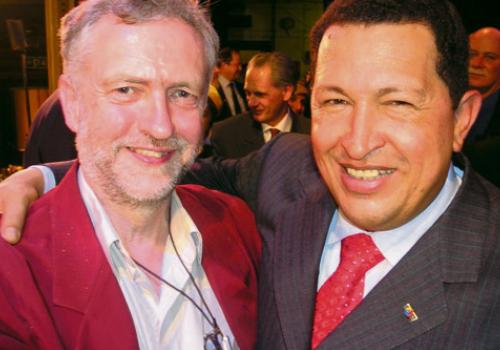
Image of Jeremy Corbyn and Hugo Chavez

Labour’s former leader spoke to the Morning Star’s CEREN SAGIR this weekend on the party’s current trajectory on the NHS, during a huge demonstration against further privatisation of the health service

WHEN Peace and Justice Project founder and Islington North MP Jeremy Corbyn warned the public by revealing evidence of the Tory government’s secret dealings with US companies selling off the NHS, the media labelled it “a Russian conspiracy.”

But it seems that Labour’s current leadership is determined to follow in the Tories’ footsteps, with Keir Starmer declaring that nothing is “off limits” when it comes to the NHS.

When asked if the NHS would be safe in the hands of the opposition if it were to win the next general election, Corbyn said: “I’d like to think so, but I’m very worried — because our NHS is a very precious institution: healthcare, universal and free at the point of need.

“If we go into an election pledged to continue the private operation within the NHS and farming services out to the private sector, then that is a form of privatisation.

https://morningstaronline.co.uk/article/b/corbyn-we-need-to-stand-up-for-the-future-of-our-nhs

Continue ReadingCorbyn: We need to stand up for the future of our NHS

Hundreds of experts sign letter against government’s anti-asylum seeker Bill

Spread the love
Demonstrators protesting against the Illegal Migration Bill in Parliament Square, London, during the second reading of the the bill in the House of Commons this evening. Picture date: Monday March 13, 2023.

https://morningstaronline.co.uk/article/b/hundreds-experts-sign-letter-against-governments-asylum-seeker-bill

HUNDREDS of academic experts signed a joint letter today, condemning the Tory government’s anti-asylum seeker Bill as “not evidence based, workable or legal under human rights law.”

More than 300 scholars from mostly British universities warned that the Illegal Migration Bill will not stop small boats crossing the Channel but would increase “the chance of death” as people are funnelled into more dangerous journeys.

The letter – published online and in The Times newspaper – called the legislation, which cleared its first Commons hurdle on Monday, a “deterrence approach” by ministers in response to increasing numbers fleeing war and persecution.

But the experts warned that there is “no evidence that we are aware of to suggest that deterrence-based approaches are effective.”

https://morningstaronline.co.uk/article/b/hundreds-experts-sign-letter-against-governments-asylum-seeker-bill

Continue ReadingHundreds of experts sign letter against government’s anti-asylum seeker Bill

Unions accuse multimillionaire Chancellor of ‘waging war on working people’

Spread the love
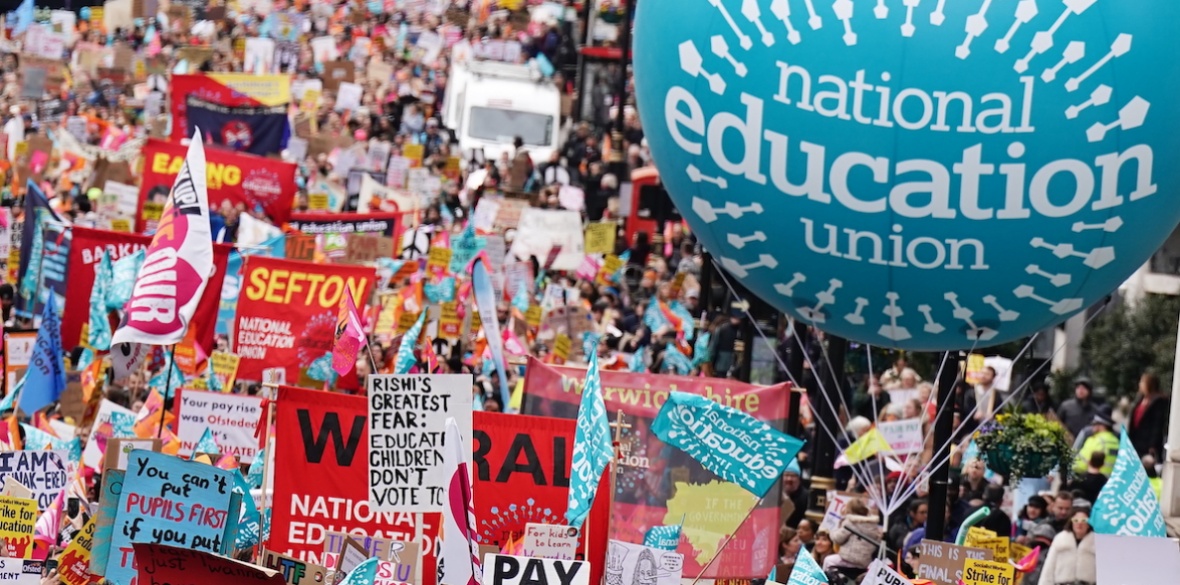
Striking members of the National Education Union (NEU) on Piccadilly march to a rally in Trafalgar Square, central London, in a long-running dispute over pay. Picture date: Wednesday March 15, 2023.

https://morningstaronline.co.uk/article/b/unions-accuse-multimillionaire-chancellor-of-waging-war-on-working-people

THE Tories are “waging war on working people,” unions warned today as Chancellor Jeremy Hunt’s Budget coincided with a massive day of strikes by hundreds of thousands of workers nationwide.

Unions slammed the ex-Tory leadership candidate’s “fiscal event” for failing to tackle pay disputes across the country, with teachers, university lecturers, civil servants, junior doctors, London Tube drivers and BBC journalists all downing tools today.

As Mr Hunt delivered his speech, thousands of workers rallied outside.

They gathered as the Office for Budget Responsibility, which the former health secretary praised for predicting Britain would now avoid a technical recession this year, warned that people still face the biggest fall in living standards on record.

https://morningstaronline.co.uk/article/b/unions-accuse-multimillionaire-chancellor-of-waging-war-on-working-people

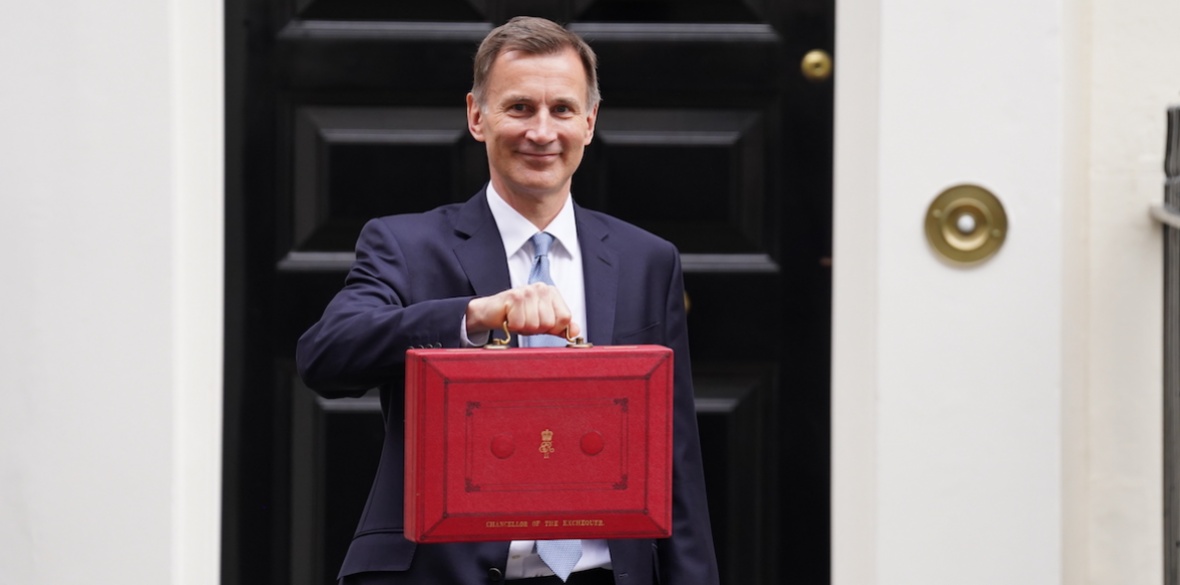
Chancellor of the Exchequer Jeremy Hunt leaves 11 Downing Street, London, with his ministerial box, before delivering his Budget at the Houses of Parliament. Picture date: Wednesday March 15, 2023.

Hunt’s Budget ignored pay and public services – it’s high time the Westminster bubble was burst

BRITAIN’S biggest strike surge in decades was the elephant in the room, almost ignored in the Chancellor’s Budget speech.

The huge strike march winding through Whitehall wasn’t referenced by either front bench. Yet the demands for proper pay rises and investment in public services it championed speak more directly to people’s concerns than any of Jeremy Hunt’s headline announcements.

Hunt referred vaguely to inflation as the cause of industrial disputes — before dishonestly citing it as the reason the government is denying workers the pay rises they need and deserve.

His dishonesty didn’t end there. The government is doing everything it can to resolve the disputes, the Chancellor claimed.

Hunt’s Budget ignored pay and public services – it’s high time the Westminster bubble was burst

Continue ReadingUnions accuse multimillionaire Chancellor of ‘waging war on working people’