Category: crap pretend Labour

  • Jeremy Corbyn wins Islington North as independent; Labour secures victory in general election

    Spread the love

    Original article republished from peoples dispatch under a Creative Commons Attribution-ShareAlike 4.0 (CC BY-SA) license.
    Labour secures landslide victory in UK general election, but triumph marred by centrist program and stance on Gaza

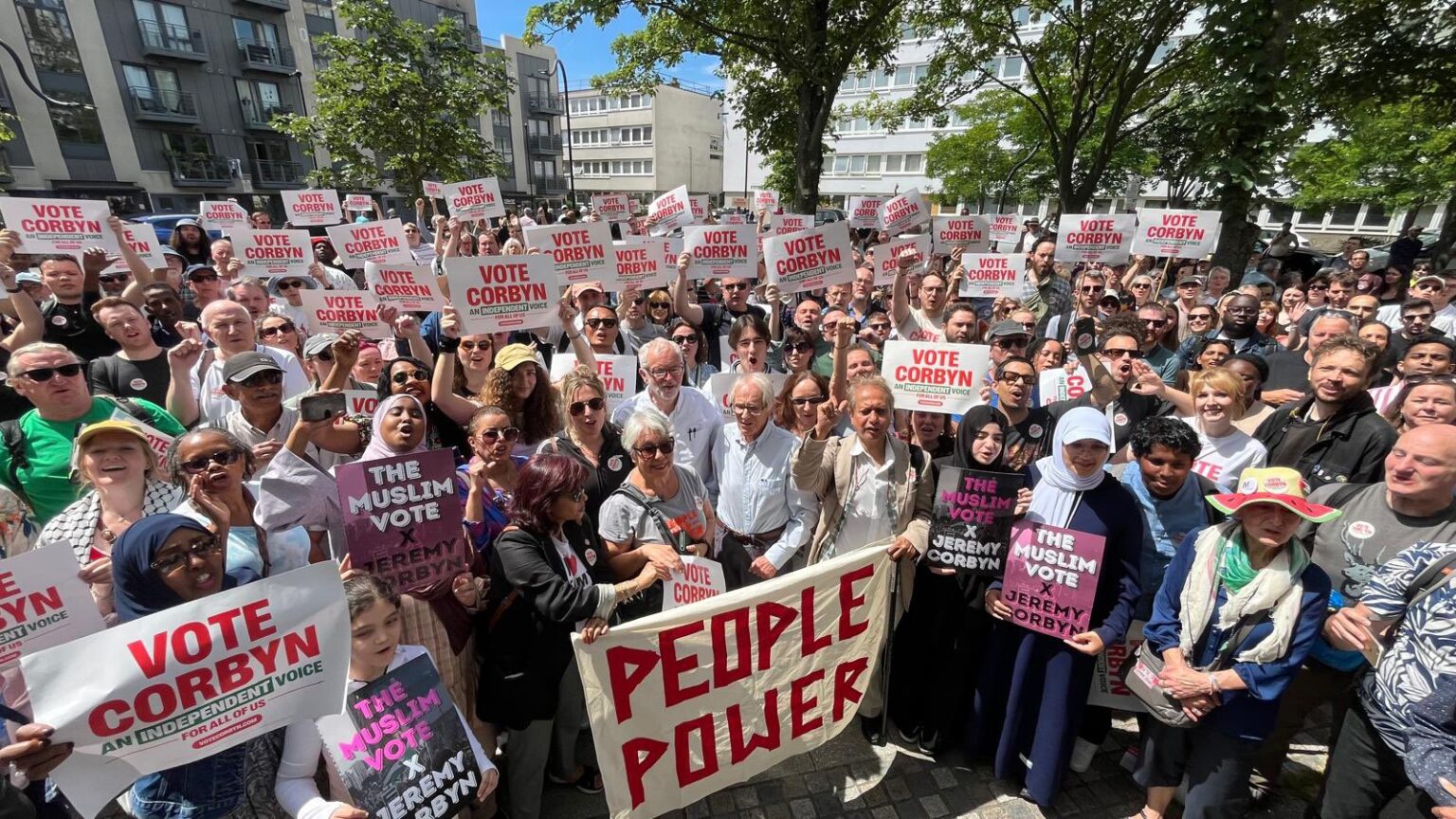
    Jeremy Corbyn has been re-elected to the British Parliament, this time as an independent candidate. Corbyn won in his long-standing constituency of Islington North with a margin of over 7,000 votes over Labour candidate Praful Nargund. According to Corbyn, the result in Islington North is “a warning to the incoming government that dissent cannot be crushed without consequences. That ideas of equality, justice, and peace are eternal.”

    Labour leadership blocked Corbyn from standing as a party candidate in this election following years of a campaign against him within party structures and in corporate media. Like other Labour members leaning explicitly towards the left, Corbyn faced extreme pressure and attacks against his policies, even during his tenure as Labour leader, despite receiving widespread support among the public.

    The incoming government Corbyn referred to will be a Labour one. Keir Starmer is set to become the next prime minister after the party secured one of its biggest electoral victories in history, winning 412 seats. In comparison, the Conservatives, who held power for almost 15 years, struggled to reach 121 seats. These results align with pre-election polls, which predicted that former prime minister Rishi Sunak and his party would be punished for failing to address crucial issues such as the cost of living crisis, struggling public services, including the National Health Service (NHS), and more.

    Election night brought some surprises, even for the triumphant Labour. The party lost to independent candidates running on an explicitly pro-Palestine platform in several constituencies in addition to Islington North. Starmer’s stance on Israel’s attacks on the Gaza Strip since October last year, as well as Labour’s unwillingness to adopt a decisive call for a ceasefire early in the war on Gaza, alienated a significant part of the Labour voting base. Despite their eagerness to oust the Tories, thousands of voters made clear that the next government would be held accountable for its international alliances, including support for Israel.

    Gains were recorded by the Green Party, which secured four seats in Parliament, and Nigel Farage’s right-wing Reform UK, which obtained the same number of representatives despite joining the campaign at the last minute. The Liberal Democrats increased their representation to over 70 seats, while the Scottish National Party (SNP) suffered a major blow, keeping only 9 seats, down by 37 from the last election.

    Despite widespread relief being reported at the Tories being ousted from power, many voters remain uncertain about what to expect from Starmer’s new cabinet. Labour’s campaign manifesto was described by many on the left as insufficient to represent a decisive break from the path set by the Tories, including the continued commodification of essential services such as healthcare. Speaking after the announcement of election results, Corbyn described the Labour manifesto as “thin, to put it mildly,” and emphasized that public demands for improvements will be huge.

    Although the measures currently proposed by Labour are far from enough to get the UK on the right track, the presence of Corbyn and other progressive voices like Diane Abbott, who is likely to be re-elected as a Labour MP, will ensure the new administration is held accountable for its decisions.

    “Tonight’s results in Islington North give us a glimpse of a different future, which puts the interests of the many ahead of those of the few,” Corbyn said in his post-election statement. “Tonight, we celebrate. Tomorrow, we organize. The energy we have unleashed will not go to waste.”

    Original article republished from peoples dispatch under a Creative Commons Attribution-ShareAlike 4.0 (CC BY-SA) license.

    Additional comments by dizzy dissident: I regard Keir Starmer as a thoroughly dishonest politician of the Tony Blair and Boris Johnson tradition. He has claimed to be a Socialist while intending to pursue a thoroughly conventional NeoLiberal and Zionist agenda. Despite campaigning on the inane slogan of “change” the reality is no change. Diss ent cannot be crushed without consequences.
  • Israel Is Using Starvation as a Weapon of War in Gaza and the World Has Failed to Stop It

    Spread the love

    Original article by RAMZY BAROUD republished from Common Dreams under Creative Commons (CC BY-NC-ND 3.0). 

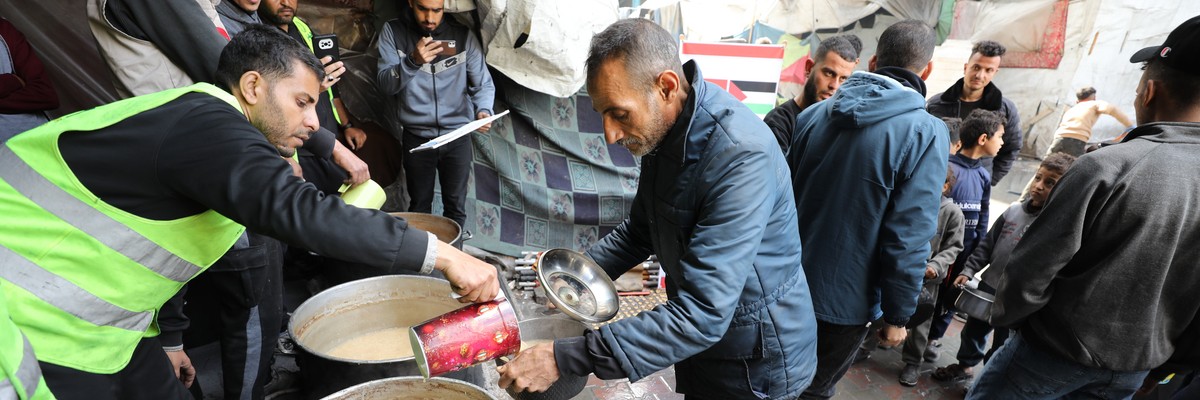
    Relief workers distribute food in Gaza City, Gaza on March 14, 2024. (Photo: Dawoud Abo Alkas/Anadolu via Getty Images)

    Providing aid to Gaza and ensuring the reconstruction of the strip must not be a political item for negotiations. It is a basic human right that must be honored under any circumstance.

    Humanitarian aid should never be politicized though, quite often, the very survival of nations is used as political bargaining chips.

    Sadly, Gaza remains a prime example. Even before the current war, the Gaza Strip suffered under a 17-year hermetic blockade, which has rendered the impoverished area virtually “unlivable.”

    That very term, “unlivable” was used by the then-United Nations Special Rapporteur for the Situation of Palestine, Michael Lynk, in 2018.

    Scenes and images of thousands of starving Palestinians chasing after boxes of aid parachuted into Gaza will remain etched in the collective memory of humanity as an example of our failed morality.

    As of mid-December of last year, “nearly 70% of Gaza’s 439,000 homes and about half of its buildings have been damaged or destroyed,” The Wall Street Journal reported, citing experts who conducted a thorough analysis of satellite data.

    As tragic as the situation was in December, now it is far worse.

    Sixty-seven percent of Gaza’s water, sanitation facilities, and infrastructure have been destroyed or damaged, according to a statement by the United Nations Agency for Palestinian Refugees, UNRWA, on June 19, leading to the spreading of infectious diseases, which has ravaged the beleaguered population for months.

    The spread of disease is also linked to the accumulation of garbage everywhere in Gaza. Earlier, the refugees agency reported that “as of June 9, over 330,000 tons of waste have accumulated in or near populated areas across Gaza, posing catastrophic environmental (and) health risks.”

    The situation was already disastrous. Indeed, three years before the war, the Global Institute for Water, Environment, and Health (GIWEH) said, in a joint statement with the Euro-Mediterranean Human Rights Monitor, that 97% of Gaza water was undrinkable and unfit for human consumption.

    Yet, so far, any conversation on allowing aid to Gaza, or the rebuilding of Gaza after the war, has been placed largely within political contexts.

    By shutting down all border crossings, including the Egypt-Gaza Rafah Crossing—which, on June 17, was set ablaze—Israel has politicized food, fuel, and medicine as tools in its war in the strip.

    This is not a mere inference, but the actual statement made by Israeli Minister of Defense Yoav Gallant, who on October 9 declared that he had ordered a “complete siege” and that “there will be no electricity, no food, no fuel, no water” entering Gaza.

    The timing of the statement, which has indeed been put into action from the first day of the war, suggests that Israel did not apply the strategy as a last resort. It was one of the most important pieces in the war stratagem, which remains in effect to this day.

    Instead of pressuring Israel, Washington tried to obtain its own political leverage, also by politicizing aid. On March 2, the U.S. Air Force started airdropping aid into northern Gaza. A far more conducive and less humiliating option for Palestinians, however, would have been direct U.S. pressure on Israel to allow access to aid trucks arriving through Rafah, Karem Abu Salem Crossing, or any other.

    Scenes and images of thousands of starving Palestinians chasing after boxes of aid parachuted into Gaza will remain etched in the collective memory of humanity as an example of our failed morality.

    News reports spoke of people who were killed under the weight of the dropped “aid,” much of which had fallen in the Mediterranean, never to be retrieved.

    Even the Gaza pier, constructed by the U.S. military on the Gaza shore in May, did little to alleviate the situation. It merely transported 137 aid trucks, according to the U.S.’ own estimation, enough to cover Gaza’s need for food for a few hours only.

    During the years of siege, an average of 500 trucks arriving daily in Gaza has kept the 2.3 million population of the strip alive, though malnourished.

    To deal with the outcome of the war, and to stave off current starvation, especially in the north, the number of aid trucks would have to be much higher. Yet, whole days would pass without a single truck making its way to the suffering population. This is unacceptable.

    Not only did the international community fail at ending the war, it has also failed in delinking humanitarian aid from political and military objectives.

    The problem with politicizing aid is that innocent civilians become a bargaining chip for politicians and military men. This goes against the very foundation of international humanitarian law.

    According to the International Committee of the Red Cross, citing the Hague Regulations, “international humanitarian law is the branch of international law that seeks to impose limits on the destruction and suffering caused by armed conflict.” In Gaza, no such “limits” have been “imposed” by anyone.

    Providing aid to Gaza and ensuring the reconstruction of the strip must not be a political item for negotiations. It is a basic human right that must be honored under any circumstance.

    Meaningful pressure must be placed on Israel to end the Gaza siege, and urgent plans must be drafted, starting today, by representatives of U.N. humanitarian institutions, the Arab League, and Palestinian and Gaza authorities to be the entities responsible for delivering aid to Gaza.

    Humanitarian aid to Gaza must not be used as political leverage, or a tool in a cruel war, whose primary victims are millions of Palestinian civilians.

    Original article by RAMZY BAROUD republished from Common Dreams under Creative Commons (CC BY-NC-ND 3.0). 

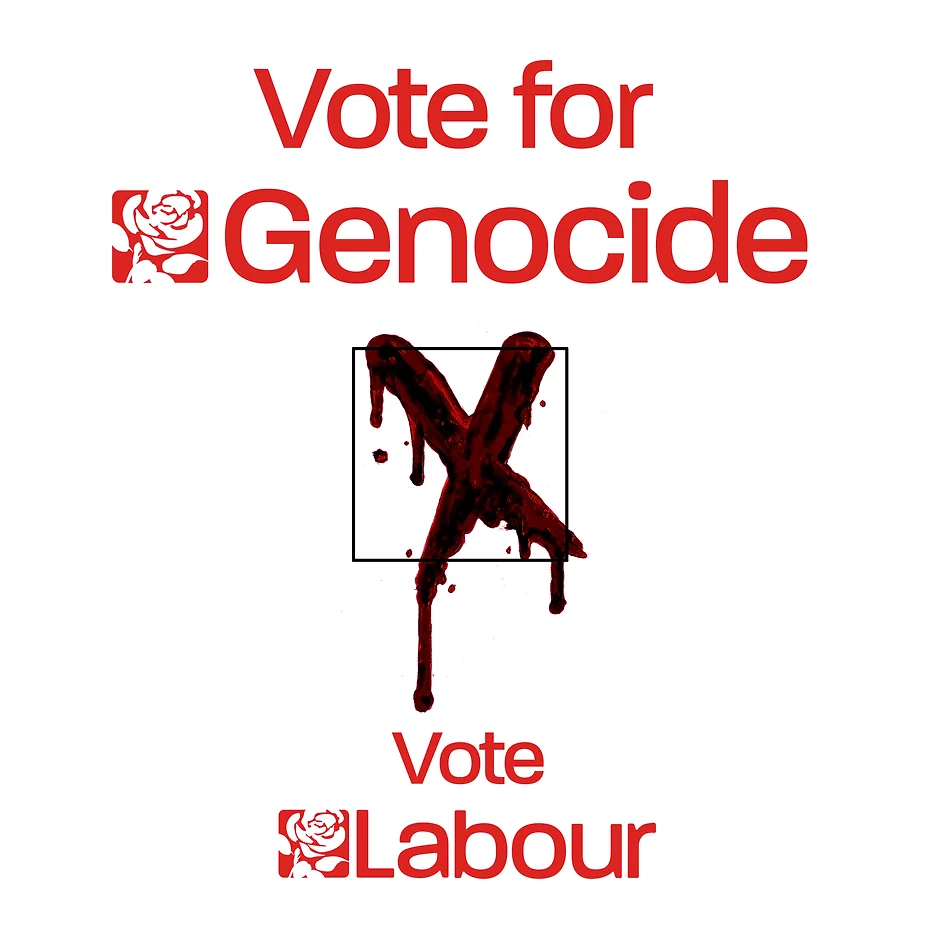
    Vote For Genocide Vote Labour.
    Vote For Genocide Vote Labour.
    Zionist Keir Starmes is quoted "I support Zionism without qualification." He's asked whether that means that he supports Zionism under all circumstances, whatever Zionists do.
    Zionist Keir Starmes is quoted “I support Zionism without qualification.” He’s asked whether that means that he supports Zionism under all circumstances, whatever Zionists do.
  • PRO-ISRAEL TYCOON GIVES LABOUR HALF A MILLION POUNDS

    Spread the love

    https://www.declassifieduk.org/pro-israel-tycoon-gives-labour-half-a-million-pounds/

    Stuart Roden (glasses) celebrates behind Frankie Dettori after they win at Ascot. (Photo: John Walton / Alamy)

    Stuart Roden started a company with an Israeli special forces veteran and a senior Conservative. He’s now among Labour’s top election donors.

    Stuart Roden, the chairman of Israeli venture capital firm Hetz Ventures, has given the Labour party over half a million pounds ahead of the UK’s general election, Declassified has found.

    His donations worth £570,000 were registered with the Electoral Commission after Rishi Sunak called the snap poll.

    He is among a number of pro-Israel businessmen in Britain to have contributed to Labour’s election warchest, with figures such as Gary Lubner also donating £900,000 to the party in recent weeks.

    Roden is joined at Hetz Ventures by an array of former Israeli soldiers, many of whom have served in elite intelligence units.

    He is also the prime funder of a Zionist educational programme in Britain which teaches children that the Israel Defence Forces (IDF) are acting proportionately in Gaza.

    Roden was filmed shouting at peaceful pro-Palestine protesters outside the Labour party conference in October. “You murdered children” he screamed at the crowd, which included elderly women, telling journalists the demonstration should be banned.

    …

    Roden has now donated over £1m in total to Labour since 2023. He has funded the party directly as well as shadow ministers Bridget Phillipson and Lisa Nandy.

    Declassified approached his company for comment on why he is giving this amount of money to Labour. No response was received at the time of publication.

    His donations are dwarfed by those of another pro-Israel funder, Gary Lubner, who has given Labour around £6m since Keir Starmer became party leader. 

    Lubner was a policeman in Apartheid South Africa whose family donated to the ruling white supremacist National party. Lubner claims he opposed Apartheid. 

    The scale of Labour’s funding from pro-Israel businessmen is significant and exceeds the £5.9m it received from trade unions last year.

    …

    Andrew Feinstein, an independent candidate standing against the Labour leader in Holborn and St Pancras, told Declassified: “It’s absolutely appalling and indefensible that Keir Starmer is taking millions of pounds from pro-Israel lobbyists.

    “Between Gary Lubner and Stuart Roden we’re talking about over £1.5m to fight this election, from two people whose primary interest would appear to be protecting Israel from criticism”.

    Feinstein, the son of a Holocaust survivor, fears these donations could deter Starmer from speaking out over Gaza, where Labour has not demanded an arms embargo or unqualified ceasefire.

    He added: “It is because of massive donations like this from incredibly wealthy individuals that today Britain has the best democracy money can buy. 

    …

    https://www.declassifieduk.org/pro-israel-tycoon-gives-labour-half-a-million-pounds/

    Zionist Keir Starmes is quoted "I support Zionism without qualification." He's asked whether that means that he supports Zionism under all circumstances, whatever Zionists do.
    Zionist Keir Starmes is quoted “I support Zionism without qualification.” He’s asked whether that means that he supports Zionism under all circumstances, whatever Zionists do.
    Vote For Genocide Vote Labour.
    Vote For Genocide Vote Labour.

  • Renationalising water could fix sewage crisis – but no major party will do it

    Spread the love
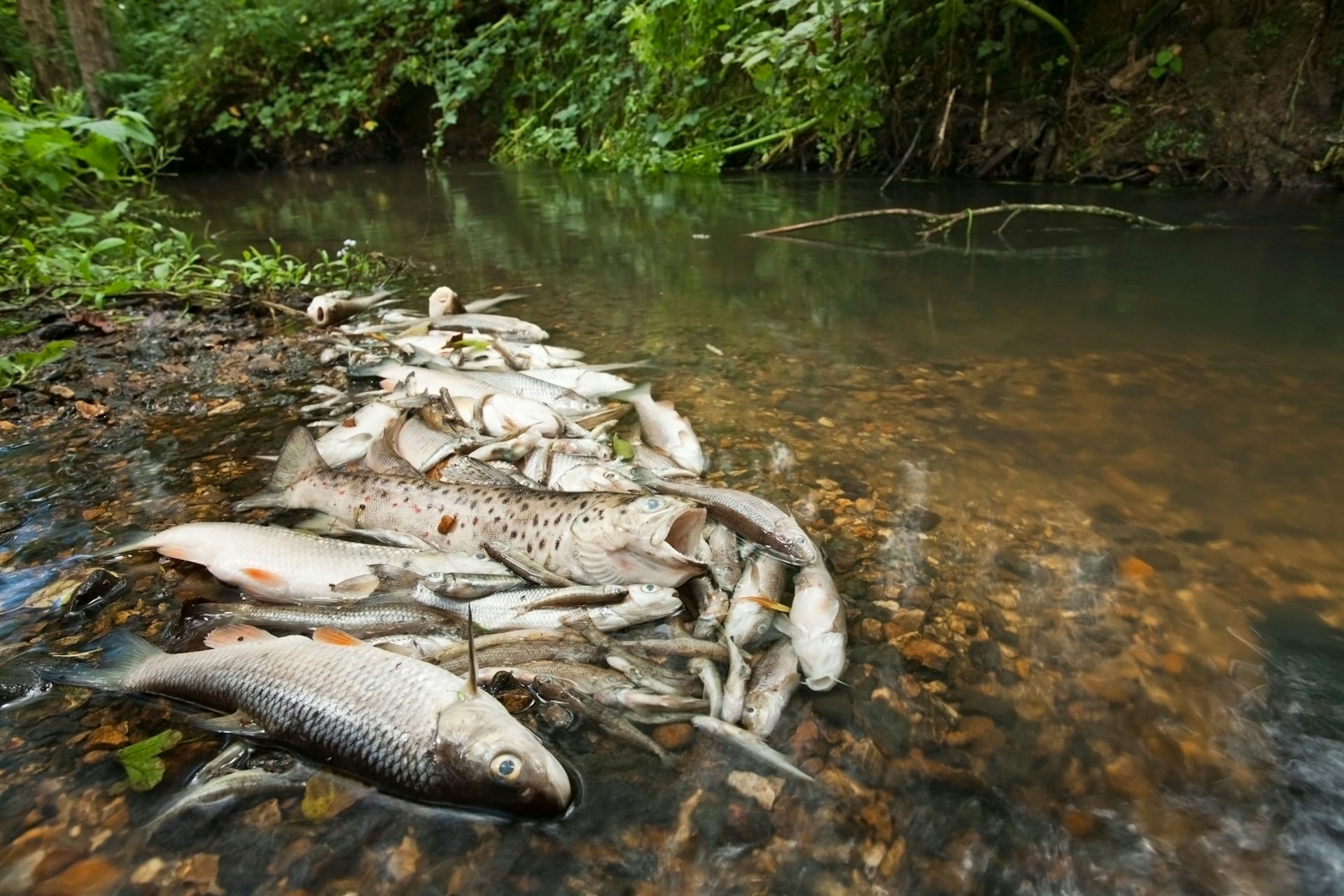
    Dead fish on the Silchester Brook in Hampshire, England following the release of sewage by a water treatment works. Rob Read/Alamy Stock Photo

    Kevin Grecksch, University of Oxford

    Privatised water companies discharged raw sewage into rivers and the sea around England and Wales for 3.6 million hours in 2023 – double the previous year’s total. For a sense of how bad the problem is today, check this map of the south-east of the UK which shows how much sewage water companies are dumping right now and for how long.

    As a water researcher, I am happy to see water quality high on the political agenda but aggrieved that it is because of the sewage scandal that has engulfed the UK, and especially England and Wales, in the past couple of years.

    Companies have discharged more raw sewage than they are legally allowed to and the Environment Agency, as responsible regulator in England, has been unable to monitor and control offenders as its environmental protection budget was halved between 2010 and 2020. Water firms have neglected to invest in new and enlarged wastewater treatment works for decades and so the ageing system is struggling to meet demand.

    An angry public demands cleaner water and changes to how water companies are regulated and run. All major political parties have at least something to say about it in their pitch to voters ahead of July 4 general election.

    No clear blue water between Tories and Labour

    The Conservative party doesn’t mention the word “sewage” in its manifesto. The party instead highlights what it sees as the government’s achievements in reducing leaks from water pipes, preventing supply interruptions and raising the proportion of designated bathing water sites classified as “good” or “excellent” from 76% in 2010 to 90% in 2023.

    These “achievements” are misleading, however. Most of the 451 designated bathing water sites are around the coast, not rivers. Bathing sites only occupy a small stretch of a river (of which many are rated poorly) and most sewage dumpings take place elsewhere along the river, which is not accounted for in the statistics the Tories present.

    The party would ban executive bonuses if companies commit a serious criminal breach (dumping sewage, for example) and use fines to invest in river restoration. The Tories evidently expect pollution to keep increasing. Forget working on the cause of the problem and preventing “serious criminal breaches” from happening in the first place.

    A river with a murky surface.
    Surface pollution on the Leeds and Liverpool canal. AlanMorris/Shutterstock

    The Labour party has said it will force water companies to “clean up our rivers” by putting them under “special measures” but does not explain what this means. Like the Conservatives, Labour wants to impose fines on water companies, block the bonuses of executives and improve independent monitoring. Again, Labour offers no further detail on what that would entail.

    This is in stark contrast to election campaigns fought under Jeremy Corbyn, when Labour argued for renationalising the water industry.

    Both Labour and the Tories propose fines which have proven to be no deterrent. The Environment Agency fined Southern Water – the company that provides water and wastewater services to more than four million people across Hampshire, Sussex and Kent – a record £90 million in 2021, yet illegal sewage discharges by water companies have only increased since then.

    Ultimately, fines are a capitulation before the real problem of preventing illegal sewage discharges.

    Lib Dems a bit bolder

    Banning water companies from dumping raw sewage into rivers and giving them a duty to protect the environment is the goal of the Liberal Democrats.

    The Lib Dems want to transform water companies into public benefit companies (but there’s no explanation of how these would differ from their present privatised form) and would ban bonuses for water company executives until rivers are clean (but there’s no definition of “clean”).

    Ofwat, the economic regulator for the water industry, would be replaced with a new regulator with powers to prevent sewage dumping. The party also wants a sewage tax on water company profits to enforce existing regulations more effectively, set legally binding targets on the reduction of sewage dumping, create wetlands to stymie flooding and strengthen local authorities monitoring water quality – it’s unclear how this would meld with a “tough new regulator”, though.

    Greens are pro-nationalisation

    The Green party wants to bring water services back into public ownership along with Britain’s big five energy companies.

    The Greens are the only ones putting numbers to the problem. The party estimates renationalisation would cost £5 billion and investment into water and sewage infrastructure a further £12 billion.

    The experiment of privatisation has failed, they argue, and water should be treated as a public good.

    Reform’s 50% offer

    Reform UK does not mention the sewage scandal directly, but its manifesto proposes bringing 50% of each utility back into public hands. According to the party, this would save £5 billion across all utilities over five years.

    Welsh water for Wales

    Plaid Cymru wants more public control of Welsh resources, including water.

    Lots of water stored in Welsh reservoirs goes to England, especially Birmingham and Liverpool. Plaid Cymru would align legislative competence over water with the geographical boundaries of Wales. In other words, Wales wants to fully take care of its water and improve its quality.

    Drought in 2022 made the case for more reservoirs. EPA-EFE/Tolga Akmen

    What about Scotland and Northern Ireland?

    The SNP does not mention freshwater in its manifesto. Sewage dumping appears to be less common in Scotland, where the water industry is publicly owned. However, reports suggest official estimates are too low.

    Northern Ireland’s Sinn Féin does not discuss water in its manifesto. The DUP acknowledges pollution in the UK’s largest inland lake, Lough Neagh, and asks for a concerted effort to preserve its water quality.

    Watered down

    The smaller parties have my sympathies for bringing forward bolder plans for water management in the UK. Unfortunately, both the Conservatives and Labour are very uninspiring in their hesitance to prevent pollution.

    If better regulation, monitoring and enforcement is the most a new UK government will do then this will require a bigger budget for the Environment Agency, at least. Measuring the volume and composition of sewage outflows, not just the duration of pollution events, would also provide more accurate information.

    Ofwat, the economic regulator for the water industry, needs reform too. The UK water industry is slow to innovate and misses opportunities to do so. As I have written before, the UK water industry is a small sector with a revolving door that leads former regulators to join the regulated, and vice versa. This creates obvious conflicts of interest and stymies change.

    The experience of England and Wales implies that privatised water utilities are a bad idea. Margaret Thatcher believed this model would find admirers globally, but since the late 1980s, no other country has followed suit. In fact, the opposite has tended to happen: after a failed privatisation, Paris returned its water supply services to public hands.

    Privatisation has excluded the public from discussing water management in the past 35 years. It is time to reconnect people with the very resource we all need to survive. Capping a CEO’s bonus does not go far enough.


    Imagine weekly climate newsletter

    Don’t have time to read about climate change as much as you’d like?
    Get a weekly roundup in your inbox instead. Every Wednesday, The Conversation’s environment editor writes Imagine, a short email that goes a little deeper into just one climate issue. Join the 30,000+ readers who’ve subscribed so far.


    Kevin Grecksch, Departmental Lecturer and Course Director MSc in Water Science, Policy and Management, University of Oxford

    This article is republished from The Conversation under a Creative Commons license. Read the original article.