Former senior Israeli officials say Netanyahu government ‘hijacked’ country, failed in Iran war

Spread the love

This work by Middle East Monitor is licensed under a Creative Commons Attribution-NonCommercial-ShareAlike 4.0 International License

Israeli Prime Minister Benjamin Netanyahu chairs meeting as the Israeli Security Cabinet gather to approve a cease-fire agreement and a prisoner swap deal with Hamas, in West Jerusalem on January 17, 2025. [Photo by Koby Gideon (GPO)/Handout/Anadolu via Getty Images]

Three former Israeli senior officials sharply criticized the government of Prime Minister Benjamin Netanyahu on Tuesday, saying it has “hijacked” the country and failed in its war against Iran, Anadolu reports.

“On the eve of the 78th anniversary of Israel’s independence (according to the Hebrew calendar), we are forced to say with bitterness: Israel has been hijacked by a regime that views the state’s resources as its own private property,” former army chiefs of staff Dan Halutz and Moshe Yaalon wrote in an article in the Haaretz newspaper.

They described the government as “completely detached from the reality of its citizens, acting as if the country were the personal property of Netanyahu, his wife (Sara), and Miri Regev (transport minister).”

Referring to expected general elections in October, they added, “We call on the public to take back control of the country.”

Yaalon, in addition to serving as chief of staff, previously held the post of defense minister.

Former Prime Minister Ehud Barak wrote in a separate article in Haaretz that “the enemies suffered painful blows, which weakened them all.”

READ: Netanyahu trial hearing postponed over “security reasons,” says Israeli court

He added, however, that “none of the war’s objectives were achieved. Hamas is still in Gaza, and Hezbollah remains in Lebanon.”

“The regime in Tehran survived the joint Israeli-U.S. attack, and the nuclear and ballistic missile threats were not eliminated,” he said.

Barak described it as “a severe strategic and political failure when looking at the balance of power, as Israel and the United States were supposed to win.”

He also said Israel has become “a state subordinate to the United States, which imposed decisive operational and diplomatic decisions on it through harsh — and sometimes humiliating — directives.”

Israel has carried out multiple military campaigns in the region. Since March 2, its attacks on Lebanon have killed 2,294 people, wounded 7,544 and displaced more than 1 million, before US President Donald Trump announced a 10-day ceasefire last Thursday.

Israel also launched a war on Iran, alongside the United States, on Feb. 28 that killed more than 3,000 people, before Washington and Tehran announced a two-week truce on April 8 with mediation by Pakistan, in hopes of reaching a deal to end that war.

READ: Israeli government applying ‘annexation’ in occupied West Bank, energy minister says

This work by Middle East Monitor is licensed under a Creative Commons Attribution-NonCommercial-ShareAlike 4.0 International License

Keir Starmer explains that UK is actively supporting Israel's genocidal expansion and repeats his previous quotation that he supports Zionism "without qualification". Keir Starmer said “I said it loud and clear – and meant it – that I support Zionism without qualification.” here: https://www.jewishnews.co.uk/keir-starmer-interview-i-will-work-to-eradicate-antisemitism-from-day-one/
Keir Starmer explains that UK is actively supporting Israel’s genocidal expansion and repeats his previous quotation that he supports Zionism “without qualification”. Keir Starmer said “I said it loud and clear – and meant it – that I support Zionism without qualification.” here: https://www.jewishnews.co.uk/keir-starmer-interview-i-will-work-to-eradicate-antisemitism-from-day-one/
Climate science denier Donald Trump confirms that he knows nothing about democracy and that more liquid gold is being secured according to his policy of global privateering.
Donald Trump warns against following the https://onaquietday.org blog, says that it's easy atm, she only needs to report war crimes supporting Israel's genocidal expansion.
Donald Trump warns against following the https://onaquietday.org blog, says that it’s easy atm, she only needs to report war crimes supporting Israel’s genocidal expansion.

Continue ReadingFormer senior Israeli officials say Netanyahu government ‘hijacked’ country, failed in Iran war

Study: 45 % of Poles say Israel’s actions resemble Nazi practices

Spread the love

This work by Middle East Monitor is licensed under a Creative Commons Attribution-NonCommercial-ShareAlike 4.0 International License

People hold banners as they protest the government inaction to stop Israel’s war on Gaza in front of the Presidential Palace in Warsaw, Poland on September 20, 2025. [Omar Marques – Anadolu Agency]

A recent European study has found that a significant share of people in Central and Eastern Europe believe Israel’s actions against Palestinians are similar to those of Nazi Germany against Jews, with Poland recording the highest level of agreement.

According to the study, published by the UNESCO Chair for interdisciplinary research on antisemitism at the University of Warsaw, 45 per cent of Polish respondents agreed with the statement that “Israel’s actions against Palestinians are no different from the Nazis’ treatment of Jews”. Only 18.7 per cent disagreed, while 36.2 per cent said they had no clear opinion.

The research, conducted by specialists in Holocaust studies and prejudice from universities across Eastern Europe, also showed similar trends in other countries. In Slovakia, 42.7 per cent agreed with the comparison, compared with 16.2 per cent who disagreed. In Austria, 41.3 per cent supported the view, while 25.6 per cent opposed it.

In Germany, 40.5 per cent of respondents made the comparison, compared with 26.3 per cent who rejected it. The Czech Republic recorded 32.8 per cent in agreement and 29 per cent in opposition. Hungary had the lowest level of support for the comparison at 29.9 per cent, while 27.4 per cent disagreed.

The study comes days after a controversial incident in the Polish parliament, where far-right MP Konrad Berkowicz raised an Israeli flag marked with a swastika, a symbol associated with Nazism.

Troubled Relations: Pope Leo XIV and President Donald Trump

This work by Middle East Monitor is licensed under a Creative Commons Attribution-NonCommercial-ShareAlike 4.0 International License

Keir Starmer objects to criticism of the IDF. He asks how could anyone object to them starving people to death, forced marches like the Nazis did, bombing Gaza's hospitals and universities, mass-murdering journalists, healthworkers and starving people queuing for food, killing and raping prisoners and murdering children. He calls for people to stop obstructing his genocide for Israel.
Keir Starmer objects to criticism of the IDF. He asks how could anyone object to them starving people to death, forced marches like the Nazis did, bombing Gaza’s hospitals and universities, mass-murdering journalists, healthworkers and starving people queuing for food, killing and raping prisoners and murdering children. He calls for people to stop obstructing his genocide for Israel.
Keir Starmer explains that UK is actively supporting Israel's genocidal expansion and repeats his previous quotation that he supports Zionism "without qualification". Keir Starmer said “I said it loud and clear – and meant it – that I support Zionism without qualification.” here: https://www.jewishnews.co.uk/keir-starmer-interview-i-will-work-to-eradicate-antisemitism-from-day-one/
Keir Starmer explains that UK is actively supporting Israel’s genocidal expansion and repeats his previous quotation that he supports Zionism “without qualification”. Keir Starmer said “I said it loud and clear – and meant it – that I support Zionism without qualification.” here: https://www.jewishnews.co.uk/keir-starmer-interview-i-will-work-to-eradicate-antisemitism-from-day-one/
Climate science denier Donald Trump confirms that he knows nothing about democracy and that more liquid gold is being secured according to his policy of global privateering.
Continue ReadingStudy: 45 % of Poles say Israel’s actions resemble Nazi practices

‘I’m not a politician’: why the clash with Pope Leo could prove dangerous for Donald Trump

Spread the love
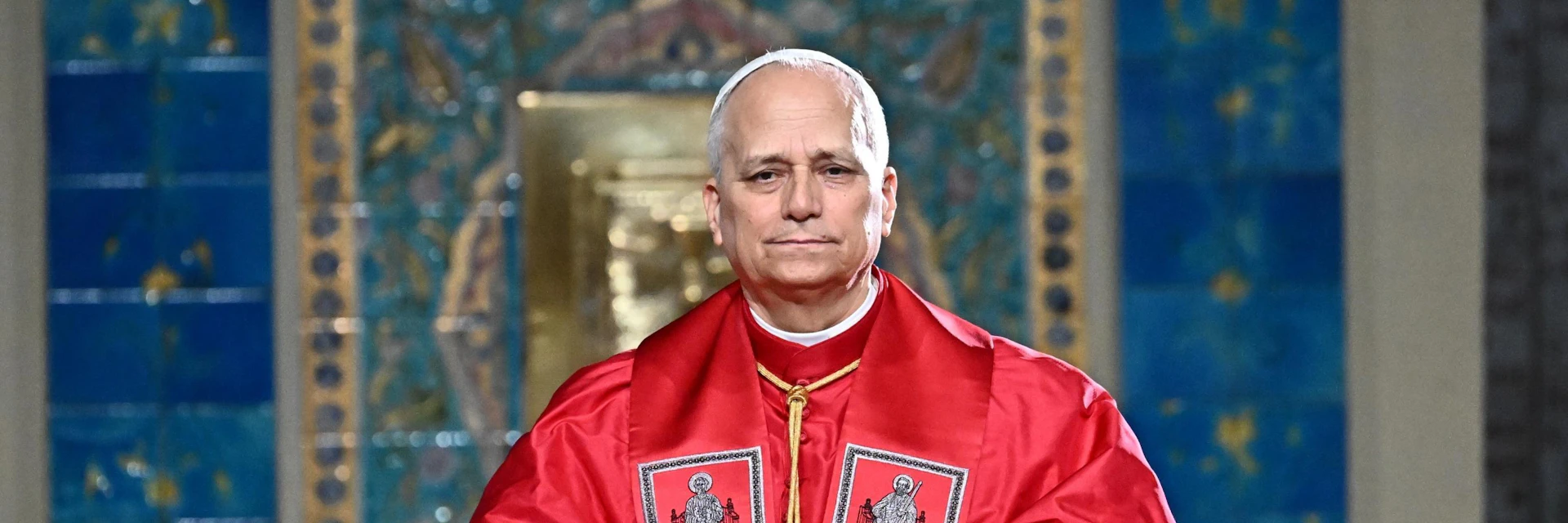
First American pope: Leo XIV on a visit to Algeria, April 2026. EPA/Luca Zennaro

Massimo D’Angelo, Loughborough University

“I am not a politician; I speak of the Gospel.” Pope Leo XIV’s recent remarks, made during his apostolic journey to Africa, immediately suggest that his clash with Donald Trump operates on a different level to the US president’s usual political spats.

This is not the classic kind of confrontation that Trump has often had with foreign heads of state and government in the past, such as in recent months with the UK prime minister, Keir Starmer, whose refusal to fully back the US and Israel in their war against Iran attracted Trump’s ire. Rather, it is a clash rooted in fundamentally different moral and political visions: between a president who treats power in transactional terms and a pope who frames war, migration and human dignity as matters of moral principle.

When Cardinal Robert Prevost was named as Pope Leo in May 2025, Trump and his administration initially appeared to welcome the new pontiff warmly. In fact, in a post to his Truth Social platform the US president appeared to take credit for his election as pope, writing that Prevost “was only put there by the Church because he was an American, and they thought that would be the best way to deal with President Donald J. Trump”.

But the war in the Middle East launched by the US and Israel has made the differences between their positions clearer – further heightening tensions between them. On Palm Sunday, the week before Easter, it became clear that Leo had decided to take a firm line against the war in Iran, saying that Jesus “does not listen to the prayers of those who wage war, but rejects them, saying: ‘Even though you make many prayers, I will not listen: your hands are full of blood’”.

His Easter message was equally clear: “Let those who have weapons lay them down! Let those who have the power to unleash wars choose peace! Not a peace imposed by force, but through dialogue! Not with the desire to dominate others, but to encounter them.”

Day’s later the pope denounced the US president’s apparent threat to destroy the whole of the Iranian civilisation as “truly unacceptable” in comments which roundly criticised the war and called for a “return to dialogue, negotiations”.

Trump responded in harsh terms, describing the pope in a Truth Social post as “weak on crime” and “terrible for foreign policy”. He went on to say that he did not want a pope “who thinks it is OK for Iran to have nuclear weapons”, adding that “Leo should use common sense, stop doing the bidding of the radical left, and focus on being a great pope rather than a politician”.

Returning to Washington from Florida, Trump also told reporters: “I don’t think he’s doing a good job. I’m not a fan of Pope Leo.” The pope replied on Monday by saying that he was not afraid of the Trump administration and would continue to speak out against war.

Trump did not stop there. He went so far as to publish an image portraying himself as Jesus Christ, a move that appeared to go too far even for many of his conservative supporters. The reaction was strong enough to force him to delete the post and backtrack.

This could hurt the US president

Trump has clashed with the Vatican before, but this confrontation unfolds in a very different setting. Pope Francis, the first Argentine pope and the first pontiff from the global south, was often openly critical of Trump, particularly on migration. In 2016, he famously suggested that a leader who thinks only of building walls rather than bridges is “not Christian”, crystallising the tension between them.

Pope Leo XiV calls for an end to war, March 29 2026.

The key difference was that Francis was also a divisive figure within sections of the American Catholic Church. He was frequently targeted by conservative Catholic commentators and church networks in the US, and in 2019 he remarked that “it’s an honour that the Americans attack me”.

Leo, by contrast, is the first US pope – and that changes the political equation. His voice is likely to carry different authority among Catholic voters, who are an important part of Trump’s electoral base.

In the last presidential election, 55% of Catholic voters supported Trump, including 62% of white Catholics. Senior Catholics also occupy prominent positions in his administration, including Vance and Trump’s secretary of state Marco Rubio.

That is why Leo’s criticism may prove more politically consequential. It does not come from an external moral voice alone, as was often the case with Francis, but from an American pontiff speaking into a church and an electorate that Trump cannot afford to ignore.

Early reactions suggest that many Catholic voices in the US have rallied behind Leo, making this not only a diplomatic clash, but a potentially significant domestic one too. (This could also really hurt J.D. Vance. As the likely contender to succeed Trump on the Repulican ticket, he is deeply invested in his Catholic faith and is about to publish a book devoted to his conversion.)

From an international perspective, the break with the pope has also had visible repercussions. Giorgia Meloni, the Italian prime minister, long regarded as Trump’s closest ally in Europe, went publicly in defence of Pope Leo, the bishop of Rome, drawing criticism from Trump himself, who defined the Italian prime minister’s behaviour as “unacceptable”.

To conclude, this is not a political confrontation like the many others the world has become used to with this US president. The stakes are higher at home and on the world stage. At home, it risks alienating many Catholic voters whose support will matter not only in the midterm elections but also in the next presidential race. Internationally, it may complicate Trump’s relationship with European conservative parties, many of which have long sought close association with the Vatican.

The pope, as the leader of a vast global community, cannot be treated as though he were just another political opponent.

Massimo D’Angelo, Research Associate in the Institute for Diplomacy and International Affairs, Loughborough University

This article is republished from The Conversation under a Creative Commons license. Read the original article.

Orcas discuss rotting brain. Front Orca says "Wish someone would lock him up".
Orcas discuss rotting brain. Front Orca says “Wish someone would lock him up”.
Continue Reading‘I’m not a politician’: why the clash with Pope Leo could prove dangerous for Donald Trump

Answering Trump’s war threats, Cuban workers plan mass May Day defense rallies

Spread the love

Article by Cameron Harrison republished from People’s World under creativecommons.org/licenses/by-nc-nd/3.0/us/

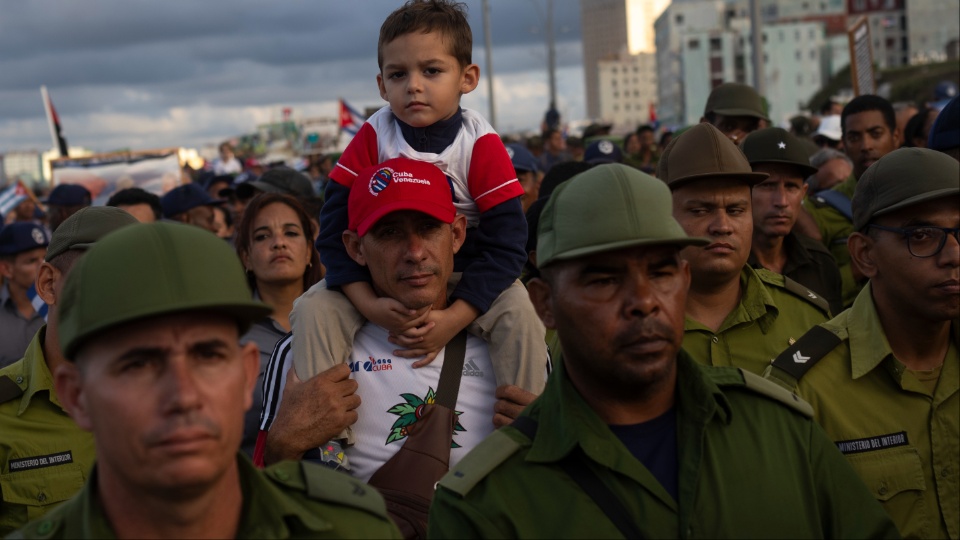
Defense of the homeland will be the central theme of May Day rallies in Cuba this year, in accordance with a call by the country’s main labor federation. | AP

HAVANA—As the Trump administration tightens its energy blockade on Cuba and threatens war and regime change, the Cuban labor movement—along with all of Cuban society—is gearing up for a mass mobilization on May 1. The Workers’ Central Union of Cuba (CTC) and its affiliates have issued a call for this year’s May Day, International Workers’ Day, to “defend the homeland.”

Their labor movement’s call comes at a moment of maximum pressure. On Jan. 29, the White House imposed a total oil blockade on Cuba, cutting off nearly all fuel supplies to the island of 11 million people. Countries that dare to send oil face extreme sanctions. Combined with the intensified economic, commercial, and financial blockade that has suffocated Cuba for more than 65 years, the new measures aim to starve the Revolution into submission.

Now, the U.S.’ economic war is also poised to possibly become a fighting war. On April 15, USA Today reported that the Pentagon is speeding up plans for a potential U.S. military operation against Cuba, awaiting a directive from President Donald Trump as to when they might strike. The threat comes amid recent statements by Trump that “Cuba is next” after Iran and that he will “take” the island.

Cuban workers are not backing down

“Faced with the growing threats from the U.S. government, reinforced by the executive order of Jan. 29, which added an energy blockade to the already intensified embargo that has been imposed on us for more than 65 years simply for wanting to build a dignified, sovereign, and independent nation, there is nothing more important and decisive today than to work together and grow as a country,” the CTC declared in their May Day call.

The labor federation urged workers to celebrate May Day in militant parades and events in every workplace, town, municipality, and province.

“It is a call to defend the country, from the fields, the factories, the classrooms, the scientific centers, thermoelectric plants, hospitals, culture, sports; from every battle trench.”

‘We have not collapsed’

Cuba is facing its worst energy crisis in decades. Before the energy blockade, the country consumed about 110,000 barrels of oil per day, with 40,000 produced domestically and the rest imported from partners like Venezuela, Mexico, and Russia. Since January, that supply has virtually dried up. Only one Russian tanker has reached Cuban ports in three months, covering barely a third of monthly fuel demand.

The result is devastating, with major cities at a standstill, industry paralyzed, food becoming scarce, and hospitals struggling. Power blackouts have now become routine. Yet the Cuban people, their government, and the Communist Party refuse to break.

President Miguel Díaz-Canel and former President Raúl Castro lead a march in Havana on Dec. 20, 2025. | Marcelino Vázquez / Cubadebate

In an extensive interview with NBC’s Kristen Welker, President Miguel Díaz-Canel rejected the narrative of collapse.

“What country in the world would be capable, as Cuba has done, of enduring 67 years of sustained aggression from the most powerful nation in the world, with more than 60 years of blockade, with the last six or seven years of an intensified blockade, and now with an energy blockade, and not collapse? We have not collapsed.”

Díaz-Canel pointed to Cuba’s universal healthcare, free education from primary school to university, advances in biotechnology, and a safe society free of drug trafficking and organized crime.

“They are trying to impose a narrative of collapse on us when, through an aggressive, genocidal policy of blockade, they are leading us to live through a complex situation.”

Prepared to defend the revolution

When asked if Cuba is actively preparing for a possible U.S. attack, Díaz-Canel was direct: “Yes, we are preparing for defense.”

He recalled the words of 19th-century independence hero Antonio Maceo: “He will only gather the dust of his blood-soaked soil if he does not perish in the struggle.” Díaz-Canel added, “If you go out on the street now and say the first part of that phrase to a child, an elderly person, a young Cuban, they will immediately complete it. That is how we have been raised.”

Díaz-Canel also dismissed any notion that removing him, which the Trump administration and particularly Secretary of State Marco Rubio demand, would break the revolution.

“We have a collective leadership characterized by unity, cohesion, ideological unity, and revolutionary discipline. Removing one person solves nothing. There are hundreds of people capable of assuming that responsibility.

“The United States cannot impose change on us, nor can they demand it. The U.S. government has no moral authority to demand anything from Cuba.”

The Trump administration’s objectives remain murky. While Rubio — himself the son of Cuban migrants — has signaled a desire for regime change, the White House may be pursuing a more “pragmatic” goal: forced economic “liberalization” that benefits U.S. monopolies and billionaires.

According to reports, Washington seeks access to Cuba’s energy, ports, tourism, and telecom sectors, along with larger private enterprise, banking opening, and dismantling of state-owned enterprises.

‘Hands off Cuba!’

International solidarity with Cuba, a principle of working-class internationalism, continues to grow. The World Federation of Trade Unions’ (WFTU) week of action in solidarity with Cuba just concluded, and the international labor federation will continue to organize and mobilize its affiliates and members to stand in solidarity with Cuban workers.

Countries such as Mexico, Russia, China, Vietnam, and Spain have also expressed support for Cuba. More than 100 activists, trade unionists, and even European Parliament members recently arrived in Havana with half-a-million euros in humanitarian aid.

The Communist Party USA has also weighed in, demanding an immediate end to the criminal blockade and Cuba’s removal from the “State Sponsors of Terrorism” list. In the party’s May Day call, it declared: “Hands off Cuba! No war on Iran! Cut the military budget! End the forever wars! U.S. imperialism must be defeated!

“The same monopolies that drive down our wages and bust our unions operate internationally,” the party said. “They consciously pit workers of different countries against each other, including in wars, to maximize profits. Our resistance must reflect international solidarity.”

May Day as resistance

For this May Day, the CTC is invoking the legacy of independence hero José Martí, revolutionary leader Fidel Castro in his centennial year, and Army General Raúl Castro.

“We invite Cuba’s friends around the world to join us, as they do every year, in celebrating International Workers’ Day,” the CTC said.

“We thank them in advance for their solidarity and for having the courage to share our fate amidst a real military threat, which, far from intimidating us, makes us repeat, with optimism and confidence in victory, the glorious verse of our national anthem: ‘To die for the Fatherland is to live.’”

Díaz-Canel echoed that: “If the time comes, there will be a fight, there will be a battle. We will defend ourselves, and if we must die, we will die.”

But he also held out hope for dialogue. “What both the American and Cuban people deserve is peace—a peace that allows us to have an atmosphere of trust, cooperation, collaboration, solidarity, and understanding. Lift the embargo, and see what we can do.”

As May Day approaches, Cuban workers are preparing to march—not in desperation, but in determination. The homeland, they insist, will be defended.

People’s World is in the midst of its annual fund drive, trying to raise $140,000 by May Day. To support working-class journalism, please consider make a donation or become a monthly sustainer. Thank you.

Article by Cameron Harrison republished from People’s World under creativecommons.org/licenses/by-nc-nd/3.0/us/

Donald Fuhrump says that Amerikkka doesn't bother with crimes or charges anymore, not being 100% Amerikkkan and opposing his real estate intentions is enough.
Donald Fuhrump says that Amerikkka doesn’t bother with crimes or charges anymore, not being 100% Amerikkkan and opposing his real estate intentions is enough.
Donald Trump sings and dances, says that it's fun to kill everyone ...
Donald Trump sings and dances, says that it’s fun to kill everyone …
Continue ReadingAnswering Trump’s war threats, Cuban workers plan mass May Day defense rallies