Category: human rights violations

  • How police in England can now stop basically any protest

    Spread the love

    Original article republished from openDemocracy under a Creative Commons Attribution-NonCommercial 4.0 International licence.
    New anti-protest legislation forced through by Suella Braverman has been labelled “unlawful”

    Adam Ramsay

    15 June 2023, 3.55pm

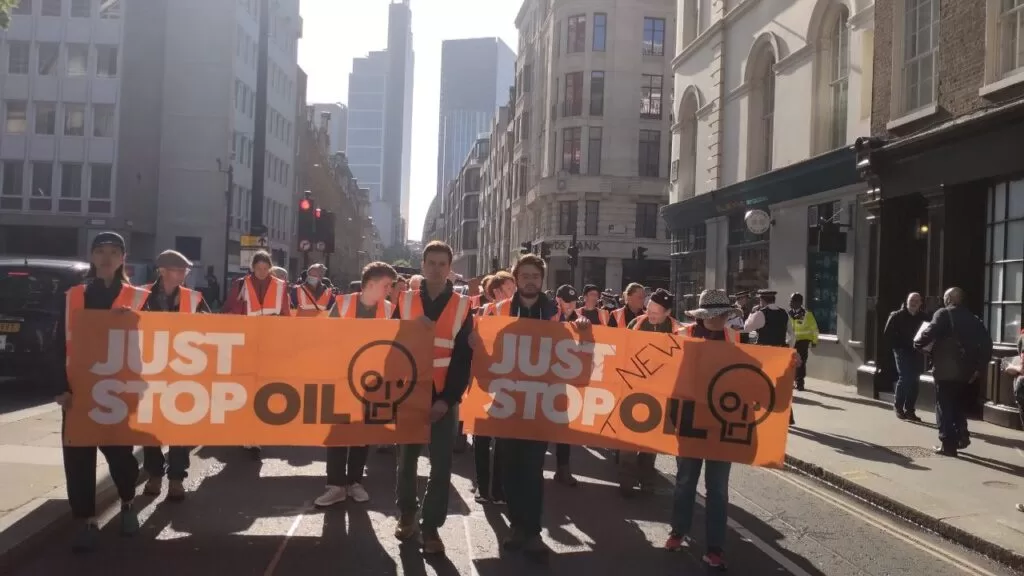
    A Just Stop Oil protest in central London
    Suella Braverman forced through new anti-protest laws after slow-marching demonstrations from Just Stop Oil activists in London

    At midnight last night, the right to protest in England and Wales became a matter of police discretion.

    Yesterday, the police could restrict or stop a protest to prevent it causing either “serious public disorder, serious damage to property, or significant and prolonged disruption to the life of the community”.

    Those powers already allowed plenty of room for interpretation, but from today the threshold is even lower. This week, home secretary Suella Braverman forced through new laws in a way never seen before in the UK. Here’s what you need to know.

    What are the new police powers targeting protests?

    Changes to the Public Order Act mean police can now restrict or stop a protest if they believe it could cause “more than minor disruption to the life of the community”. They have the power to arrest anyone taking part in a protest, or even anyone encouraging others to take part.

    Officers are also now required to consider “cumulative disruption” from protest, even if the protests in question are organised by different people and about different issues. And the definition of “community” has been changed to include anyone affected by a protest, not just people who live or work in the area it’s happening in.

    “The regulations also say the police will be required to take into account all relevant disruption. For example, if there are regular traffic jams in the area, that would have to be taken into account [when the police decide whether to ban a protest], even if it had nothing to do with the protest”, Jodie Beck, policy and campaigns officer at Liberty told openDemocracy.

    Braverman argued the new laws were needed to target slow-marching protests from climate activists Just Stop Oil and Extinction Rebellion.

    What do they mean?

    In reality, the police could find a way to argue that any protest meets the threshold for imposing restrictions, if they wanted to. The new law, says Beck, is a “huge expansion of police powers” that could also lead to police allowing some protests to go ahead while imposing restrictions on others, simply based on how the officers felt about the message behind them.

    While the government has focused on one particular type of protest – slow-marching – all protests are potentially impacted.

    Beck gives the example of striking railway workers and their supporters holding a rally outside a train station. The police “could decide that means a more than minor disruption to people’s travel,” and so ban the gathering, and arrest anyone taking part.

    It could even be that police officers rule that a picket line causes “more than minor” disruption to the workplace it is picketing – after all, that’s the point.

    But it’s not just the new laws which have shocked experts. It’s also how they came about this week.

    How did the new laws restricting protests get passed?

    Originally, Suella Braverman tried to sneak the new legislation into the Public Order Act, which passed earlier this year and came into effect just before the coronation. Rather than allowing these changes to face the usual scrutiny in the House of Commons, the home secretary had them added as last minute amendments to the bill in the House of Lords, after MPs had already voted on it. Her attempt failed – the Lords thought these measures were too draconian and voted them down, though they approved the broader new bill.

    Undeterred, Braverman turned to a constitutional trick that’s never been used before. Because while new bills – known as ‘primary legislation’ – require line-by-line scrutiny in both houses, various laws already on the statute book give ministers powers to make small changes via something called ‘secondary legislation’. And secondary legislation doesn’t get nearly as much scrutiny, with both the Commons and Lords simply voting for or against.

    The home secretary argued that another act passed last year by then-home secretary Priti Patel – the Police, Crime, Sentencing and Courts Act – already gave her the power to make these changes via secondary legislation. So that’s what she did this week, making it the first time ever that a government has used secondary legislation to push through a measure that had already been voted down by parliament.

    The secondary legislation passed through the Commons on Monday, with the Tories taking full advantage of their majority. In the Lords, Green peer Jenny Jones filed a highly unusual fatal motion, a rare procedure used to try and kill off the passage of a bill. Normally, because it’s an unelected house, the Lords tweaks legislation passed by the Commons, but doesn’t ultimately vote it down. Jones argued that, because the government was bringing back a law which had already been voted down by parliament through a route which requires almost no scrutiny, this should be an exception.

    Labour, although they complained about Braverman’s shenanigans, refused to back Jones, and abstained on the motion, meaning it passed. Police, Crime and Fire minister Chris Philp then enacted the new measures from midnight last night (secondary legislation doesn’t need royal assent). And so now, the police can shut down any protest they like.

    The story doesn’t end there. Liberty is taking the government to court, calling the move “unlawful” and arguing that it broke many of the basic principles of the British constitution.

    What do human rights campaigners say?

    Katy Watts, a lawyer at Liberty, accused the government of “putting itself above the law” and said the move gives police “almost unlimited powers to stop any protest the government doesn’t agree with”.

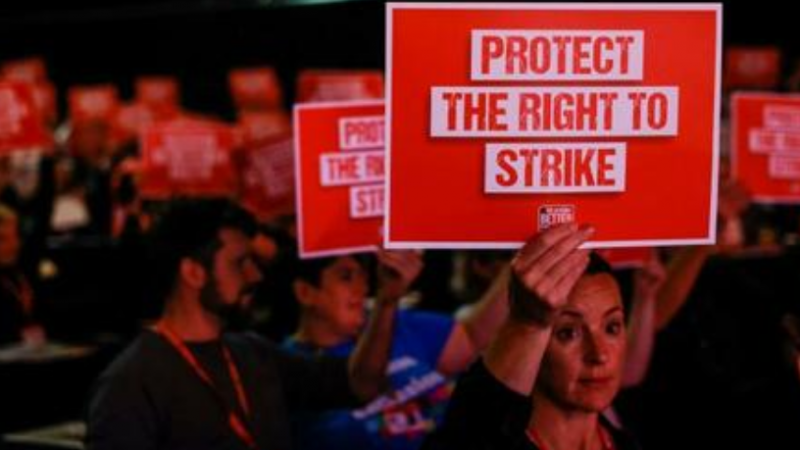
    And Beck believes we need to see this in the context of a much broader attack on our democratic rights. Noisy protests have been banned. The government is already attacking the right to strike, making it easier for bosses to sack people who vote to withdraw their labour. They’ve made it harder to vote, and harder to challenge them in the courts.

    “Even if you’ve never been to a protest, you never know when you might need to,” she said.

    With the new laws, there is a growing chance you’ll be arrested if you do.

    Original article republished from openDemocracy under a Creative Commons Attribution-NonCommercial 4.0 International licence.
  • Mick Lynch: ‘Democracy in this country is in a lot of trouble’

    Spread the love

    https://leftfootforward.org/2023/05/mick-lynch-interview-democracy-in-this-country-is-in-a-lot-of-trouble/

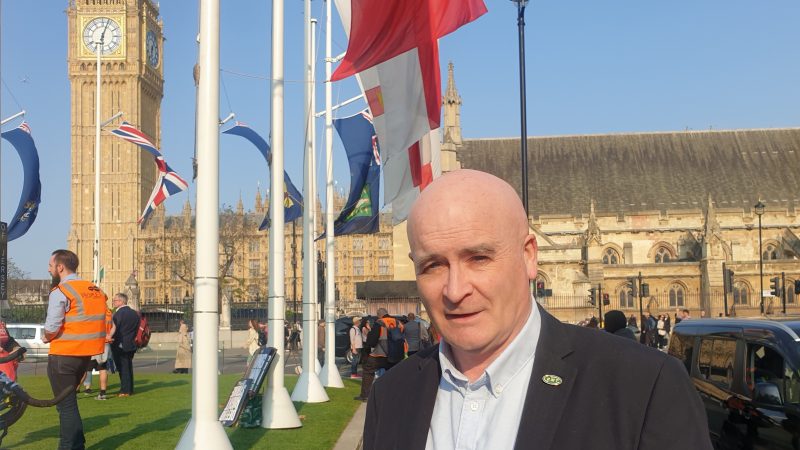
    Standing in a sunny Parliament Square surrounded by a colourful mix of trade union flags, Mick Lynch spoke to LFF about the troubling state of democracy in Britain.

    The RMT general secretary was a speaker at the emergency protest organised ahead of the final Parliament vote on the anti-strike legislation, Strikes (Minimum Service Levels) Bill.

    …

    For Lynch, the anti-strike legislation comes under a broader attempt by the Tory government to clamp down on any kind of opposition, warning that a threat to trade union power is a threat to democracy.

    “The government has got an attitude towards anything they don’t agree with, any kind of dissent. It could be politically or more broadly socially, where if they don’t agree with people, they try to ban them,” said Lynch.

    “We got these police bills and these counter-demonstration bills where people will be stopped from demonstrating or protesting.

    “We saw that during the coronation, one of the most passive pieces of civil disobedience if you like, was banned in effect and people were put in jail for the day.

    “They’re trying to clamp down on any dissent, and I think that’s a very troubling state, and it’s time for the British people to wake up to that and see that if trade unions, which are an organic part of life and grow in every society, if they’re not allowed to function properly, democracy in this country is in a lot of trouble.

    “We’ve got to make sure that people are out opposing that and we’ve got to make sure that people understand the issues.

    …

    https://leftfootforward.org/2023/05/mick-lynch-interview-democracy-in-this-country-is-in-a-lot-of-trouble/

  • Anti-strike law: Paul Nowak perfectly dismantles bill ahead of Parliament vote

    Spread the love

    https://leftfootforward.org/2023/05/anti-strike-law-paul-nowak-perfectly-dismantles-bill-ahead-of-parliament-vote/

    The legislation is an attempt to ‘drive a wedge between working people’

    General Secretary of the Trades Union Congress (TUC) Paul Nowak took to the airwaves this morning to speak out about the anti-strikes bill which will be voted on by MPs this evening.

    He slammed media accusations of union ‘scare tactics’ by laying out the reality of the Strikes (Minimum Service Levels) Bill which could see workers lose their job for taking strike action.

    As media presenters sought to play down the implications of the bill, Nowak said threatening workers with the sack was ‘untenable’ and that the real reason it was being put through was to ‘demonise trade unions’ and ‘drive a wedge between working people’.

    “There is no public appetite at all to see nurses, paramedics, teachers, railway [ workers …] sacked for exercising what most people will think as a fundamental British liberty, the right to strike,” Nowak said on Sky News.

    “To remove it would put the UK as a real international outlier.”

    …

    https://leftfootforward.org/2023/05/anti-strike-law-paul-nowak-perfectly-dismantles-bill-ahead-of-parliament-vote/

  • Left Foot Forward

    Spread the love

    Left Foot Forward is recommended, a few recent articles

    Anti-strike law: Major protest planned by unions to defend the right to strike

    The Trades Union Congress (TUC) has organised an emergency protest on Monday 22nd May for 6.00pm outside Parliament Square, as it fights to protect the right to strike which is under attack from the Tory government.

    Mick Lynch from the RMT, Matt Wrack from the FBU and Kevin Courtney will be speaking at the rally, with Unison, USDAW and the PCS union all showing their support.

    The government’s strikes bill, which will empower employers to sue unions and sack staff in crucial sectors if minimum service levels aren’t maintained, has been slammed as an attack on the fundamental right to strike and as a draconian piece of legislation. The Bill essentially means that when workers lawfully vote to strike in health, education, fire, transport, border security and nuclear decommissioning, they could be forced to attend work – and sacked if they don’t comply.  

    The TUC said in a press statement: “We can’t afford to lose the right to strike. But multi-millionaire Tory politicians are attacking our right to strike for better pay and fair treatment at work.

    …

    Kwasi Kwarteng once more refuses to apologise for economic turmoil he caused

    Former Chancellor Kwasi Kwarteng has once more refused to apologise for his disastrous mini-budget which caused financial turmoil and which eventually led to him being sacked and Liz Truss being forced out of office.

    Kwarteng, whose mini-budget resulted in chaos on the financial markets, the pound hitting an all-time low against the dollar and mortgage rates soaring, said he was ‘not in the business of forgiveness’.

    “I’m not going to apologise,” he told Channel 4 News.

    …

    Ann Widdecombe’s appalling advice to hungry families struggling with cost of living crisis is condemned

    Former Tory MP and now Reform UK party member Ann Widdecombe has been widely condemned for her ‘out of touch’ and appalling comments on families struggling to make ends meet during the cost of living crisis.

    Widdecombe was asked on BBC 2’s Politics Live programme about the cost of living crisis and what advice she would give to viewers who could not even afford the basics.

    Jo Coburn asked the former Tory MP: “What do you say to those viewers who literally can’t afford to pay even for some of the basics – if they’ve gone up the way that cheese sandwich has, with all its ingredients?”

    “Well, then you don’t do the cheese sandwich,” Widdecombe replied.

    Her comments were immediately condemned by fellow panellist Rachel Cunliffe who said: “We’re talking about absolute basics and staples. We’re talking about own-brand pasta, we’re talking about bread, we’re talking about families who can’t afford to feed their children.

    …

    Andy Burnham explains why Labour should back proportional representation

    ‘The First Past the Post system hands more power to the establishment than MPs or people.’

    The Mayor of Greater Manchester, Andy Burnham, has set out the reasons for why the Labour Party should back a change to the voting system in favour of proportional representation (PR), despite party leader Keir Starmer saying that voting reform will not be a priority should Labour win power.

    Although the Labour Party conference last year overwhelmingly backed a motion calling on the party to embrace a proportional electoral system, the leadership has made clear that it would not do as the motion says.

    Since then, at the Progressive Britain conference last week, Starmer made clear that voting reform would not be among the priorities should Labour win power.

    Burnham however has urged the party to adopt PR, saying that the current first-past-the-post voting system hands more power to the establishment than MPs or people and changing the system to proportional representation would mean “every vote would matter”.

    …

    Green Party sets out 5 ways in which the Tories have undermined our democracy

    Carla Denyer claims Greens are the strongest party on democratic reform

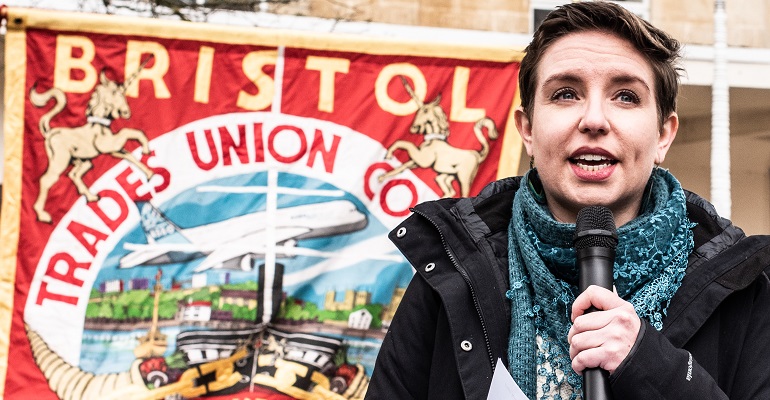
    Carla Denyer, Cost of Living Crisis, Bristol, 2 April 2022

    The Green Party has slammed the Tories for dragging democracy in the UK in a dangerous direction.

    Speaking at an event last night, co-leader of the Green Party of England and Wales, Carla Denyer, laid out how the Tory’s have assaulted our democracy – and how the Greens would solve it.

    Denyer discussed how to restore public faith in politics and argued that the Greens were the strongest party on democratic reform.

    …

    The Greens have said they would apply proportional representation for all elections to all levels of government, along with bringing the voting age down to 16.

    They would introduce devolution, mirroring systems in Europe by giving more power to local and regional government and Scottish, Welsh and Northern Irish Parliament. They would also introduce an elected upper house to replace hereditary power in the House of Lord and set up a Citizen’s Convention.

    Introducing a fairer system of state funding for political parties, which would hope to eliminate the dependence of large private donations and strengthen transparency on political lobbying and donations. One in four people believe that party donors have the most influence on government decisions, according to Unlock Democracy.

    Denyer also accused the media of preventing democratic conversations through its bias towards certain political parties.

    …

  • Falmouth locals up in arms over migrant ‘prison barge’

    Spread the love

    https://morningstaronline.co.uk/article/f/anti-racist-activists-gather-falmouth-protest-prison-barge

    …

    The current accommodation capacity of the barge is just over 200. The refit commissioned by the government will see that capacity more than doubled to 500.

    Which of course inevitably means cramped overcrowding and unhygienic conditions.

    Regardless of how the government tries to portray it or dress it up in benign rhetoric, this barge is intended to be used as a prison ship in which to incarcerate refugees, many of whom have fled for their lives from harrowing and torturous conditions in the hope of finding safety from war or persecution in what they believe to be a civilised country.

    The barge will, after its refit in Falmouth, be tugged to Portland in Dorset where it will be permanently moored — ironically not so far from where the Tolpuddle Martyrs were unjustly deported for trying to form a union of farm labourers almost 200 years ago.

    On Wednesday May 10, within a day of the arrival of the prison barge in Falmouth, over a hundred protesters gathered at a point overlooking the harbour where the Bibby Stockholm is moored, chanted and displayed No To Floating Prisons banners. Speakers called for an end to the racist violence that the Bibby Stockholm represents.

    …

    https://morningstaronline.co.uk/article/f/anti-racist-activists-gather-falmouth-protest-prison-barge