Category: Labour Party

  • Major Polluters In ‘Ludicrous’ Push For Carbon Capture at Party Conferences

    Spread the love

    Original article by Adam Barnett and Rachel Sherrington republished from DeSmog.

    The technology could provide cover for fossil fuel companies to explore more oil and gas drilling, campaigners say.

    By Adam Barnett and Rachel Sherrington on Sep 29, 2023 @ 05:14 PDT

    Prime Minister Rishi Sunak and Labour leader Keir Starmer. Credit: DeSmog via UK Parliament (CC BY 3.0)
    Prime Minister Rishi Sunak and Labour leader Keir Starmer. Credit: DeSmog via UK Parliament (CC BY 3.0)

    A trade group for contested carbon capture with close ties to major oil and gas companies is sponsoring over a dozen events at the Conservative and Labour conferences over the next fortnight. 

    Fossil fuel companies are using the technology as “a fig leaf” to pursue oil and gas drilling, campaigners have warned, as industry lobbyists across the energy sector seek to win over policymakers.

    The Carbon Capture and Storage Association (CCSA), a trade body promoting carbon capture utilisation and storage (CCUS), is due to host 15 events across the Conservative and Labour gatherings, which begin on Sunday in Manchester.

    The London-based CCSA describes itself as the “lead” European organisation for CCUS, promoting the “rapid” and “commercial” deployment of the technology. The process involves capturing CO2 emissions from industrial production and storing it underground. Some technologies allow the captured CO2 to be re-used by converting it into plastics, concrete or biofuel. 

    The group says that its members are “companies across the CCUS industry” including “support services in the energy sector” such as law, banking and consultancy.  

    Nearly a fifth of the CCSA’s 100 members are oil and gas companies, including BP, Exxon, Shell and Equinor. Fossil fuels are the largest contributor to climate change, producing 75 percent of global greenhouse gas emissions and nearly 90 percent of all carbon dioxide emissions.

    The CCSA board is also dominated by key figures at oil and gas companies, including BP, Equinor, TotalEnergies and Shell. 

    Lorne Stockman, research co-director at the campaign group Oil Change International, told DeSmog: “It’s very clear what carbon capture serves and who it’s a solution for, and that’s the fossil fuel industry. 

    “This isn’t about the best way of addressing the climate crisis, it’s about keeping the industry in business.”

    He said the companies were trying to hedge their bets by winning over both the Conservatives and Labour, in the hope of continued government funding to support the high infrastructure costs.

    “They pay both parties as much as they can,” said Stockman. “They’ve got the resources, they’ve got the money, they’ve got the influence, and of course they’re showing up to ensure that the fossil fuel industry continues to get public support even while we try to confront the climate emergency.”

    Carbon capture and storage, and the extension of the technology, CCUS, has been touted by major polluters as a way to cut their production emissions to meet climate targets. 

    But the role of carbon capture in the energy transition is hotly contested. Climate scientists point to the failure of CCS to remove significant amounts of CO2 emissions while campaigners warn of the high costs compared to renewable energy. The vast majority of companies use the captured CO2 to extract more oil through a process called “enhanced oil recovery”.

    A DeSmog analysis published this week found the majority of large-scale global CCS projects have spectacularly failed to deliver what they promised, overran budgets and targets, and resulted in a net increase in emissions.

    A CCSA spokesperson told DeSmog: “We are proud to bring a wide variety of our members to party conferences this year to engage with politicians, delegates and the media on the vital role carbon capture and storage technology will play in the net zero transition. 

    “This technology will ensure industry can continue to support jobs making critical products such as steel and cement in the UK, rather than importing them from abroad, as well as creating 70,000 new jobs in green industries. 

    “Carbon capture technology will be an important part of the solution, alongside reducing energy use and rolling out renewable electricity as we all work together to reach net zero.”

    Fossil Fuel Presence

    The UK government has committed £20 billion of investment for carbon capture and storage over the next 20 years, and aims to capture and store 20-30 million tonnes of CO2 per year by 2030 and over 50 million by 2035. 

    The “CCUS Investor Roadmap”, updated this year, sets out plans to deliver four CCUS “low-carbon” industrial clusters by 2030, and capture and store nine million tonnes of CO2 from industrial CCS by 2035.

    Despite well-documented concerns over carbon capture, industry executives will look to increase the government’s commitments further and showcase its “key role in decarbonising industry”, when they join the Conservatives in Manchester next week, and Labour in Liverpool later in the month. 

    Experts and MPs – yet to be named – have been invited to the group’s ticketed drinks receptions, while a number of talks are dedicated to promoting the technology as a crucial part of the UK’s “green industrial revolution”.

    “Our politics are shot through with oil and gas lobbyists, it’s just at party conferences they come into the light a little bit more,” Tessa Khan, executive director of fossil fuel campaign group Uplift, told DeSmog.

    “This is a ludicrous amount of special pleading for a technology, carbon capture and storage, that, on the current trajectory, will play a marginal role in reducing industrial emissions and at worst is a fig leaf for more oil and gas drilling.”

    The CCSA reception in Liverpool at the Labour Party conference will feature food, drinks and speeches from industry leaders, with members of the shadow cabinet expected to attend.

    Doug Parr, chief scientist and policy director at Greenpeace, told DeSmog that CCS “has been used and continues to be used as a cover for fossil fuel exploitation”. 

    “If the CCS crew are out and about at party conferences, one has to have a suspicion, given the number of fossil fuel industries that continue to be involved with them, that that’s what’s being attempted in the UK”, he said. 

    Board Members and Political Influence

    Individuals from the fossil fuel industries are well represented on the CCSA board, as well as the group’s membership. 

    Oil and gas companies TotalEnergies, Wintershall Dea, Uniper, Phillips 66 UK, Neptune Energy and Eni are also members of the CCSA, alongside Drax, the UK’s single largest emitter of CO2. Drax is seeking an estimated £31.7 billion in subsidies for its proposed biomass energy carbon capture and storage (BECCS) plant, which is being trialled in its CCUS “incubation area” in North Yorkshire.

    The CCSA board is also dominated by career oil and gas executives who have spent decades working in the industry.

    Chair of the CCSA, Jonathan Briggs, is director of a CCS project run by Vitol, a Dutch multinational energy and commodity company which trades oil, gas and coal. Briggs works on the “Humber Zero” project to decarbonise VPI Power’s Combined Cycle Gas Turbine in Immingham, North Lincolnshire.

    The board includes Rowaa Ahmar, group head of public affairs, policy and bioenergy with carbon capture and storage (BECCS) at biomass company Drax, the UK’s largest single emitter of CO2. 

    Other board members include Graeme Davies, a project director at Harbour Energy; Shirley Oliveira, vice president for hydrogen and CCUS advisory services at BP; Dan Sadler, UK vice president for low carbon solutions at Equinor; Gaël Le Parc, UK CCS director for TotalEnergies; and Steve Schofield, head of climate and carbon policy and advocacy at the corporate relations department of Shell. 

    The CCSA also has political connections. CCSA president, Baroness Liddell, was a Labour minister under former prime ministers Tony Blair and Gordon Brown. Joe Butler-Trewin, CCSA’s Public Affairs and Communications Officer in London, worked on Keir Starmer’s 2020 campaign for the Labour leadership. 

    The Conservative and Labour parties did not respond when contacted for comment. 

    Original article by Adam Barnett and Rachel Sherrington republished from DeSmog.
  • ‘Morally Obscene’: UK Approves Massive Undeveloped Oil and Gas Field in North Sea

    Spread the love
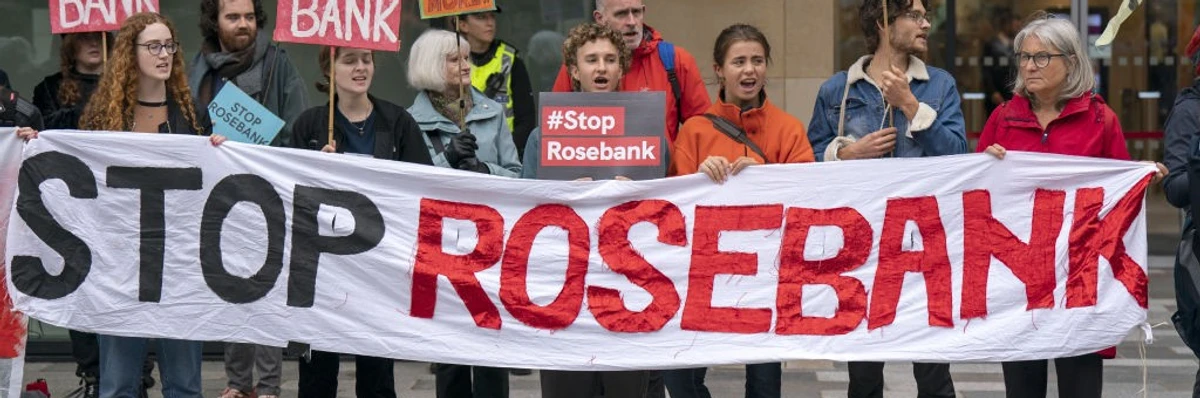
    Campaigners take part in a Stop Rosebank emergency protest outside the U.K. Government building in Edinburgh, after the controversial Equinor Rosebank North Sea oil field was given the go-ahead Wednesday, September 27, 2023. (Photo: Jane Barlow/PA Images via Getty Images)
    Campaigners take part in a Stop Rosebank emergency protest outside the U.K. Government building in Edinburgh, after the controversial Equinor Rosebank North Sea oil field was given the go-ahead Wednesday, September 27, 2023. (Photo: Jane Barlow/PA Images via Getty Images)

    Original article by OLIVIA ROSANE republished from Common Dreams under Creative Commons (CC BY-NC-ND 3.0).

    “The disgraceful decision to give Rosebank the green light shows the extent of the U.K. government’s climate denial,” one activist said.

    Regulators in the United Kingdom on Wednesday greenlit the Rosebank oilfield in the North Sea, which campaigners warn contains enough oil and gas to match the yearly emissions of 28 low-income countries.

    The U.K. government said it welcomed the approval, in a statement that comes one week after Prime Minister Rishi Sunak announced he was delaying some elements of the country’s net-zero plan.

    “By approving Rosebank, Rishi Sunak has confirmed he couldn’t care less about climate change,” climate lawyer and executive director of the advocacy group Uplift Tessa Khan said in a statement. “As we’ve heard repeatedly, our world can no longer sustain new oil and gas drilling. And when we’re witnessing scorching temperatures, wildfires, devastating flooding, and heatwaves in our seas, it could not be clearer that this is a decision by the prime minister to add more fuel to the fire.”

    Rosebank, which is located off the northwest coast of the Shetland Islands, is the largest currently undeveloped oil field in the U.K., CNBCreported. Equinor, Norway’s state-owned oil company, has an 80% share in the project, with British company Ithaca Energy holding the remaining 20%.

    Equinor said it expected development to begin in 2026-2027 and for the field to produce more than 300 million barrels of oil overall, while Friends of the Earth Scotland said it contained 500 million barrels.

    The approval comes despite the fact that the International Energy Agency concluded in 2021 that no new fossil fuel projects should be launched if world leaders wanted to limit global heating to 1.5°C. It also comes on the heels of a government report finding that a record number of people in England died of heat-related causes in 2022.

    “This decision is nothing but carte blanche to fossil fuel companies to ruin the climate, punish bill payers, and siphon off obscene profits.”

    Green Member of Parliament Caroline Lucas called the approval “the greatest act of environmental vandalism in my lifetime” in a statement posted on X, formerly known as Twitter.

    “This is morally obscene,” she added in a second post. “It won’t improve energy security or lower bills—but it will shatter our climate commitments and demolish global leadership. Govt is complicit in this climate crime—as is Labour unless they pledge to do all possible to revoke it.”

    Sunak, a conservative, promised to approve hundreds of oil and gas drilling licenses in the North Sea in July, arguing it was necessary for energy security. The opposition Labour Party says it will prioritize renewable energy if it takes power, but will respect any licenses or approvals already in place, according to Reuters.

    “The disgraceful decision to give Rosebank the green light shows the extent of the U.K. government’s climate denial,” Friends of the Earth Scotland’s oil and gas campaigner Freya Aitchison said in a statement. “Fossil fuels are driving both climate breakdown and the cost of living crisis yet the U.K. Government is slamming its foot down on the accelerator.”

    Aitchison also called on the Scottish government specifically to oppose the project.

    “Delivering a fair and fast transition away from fossil fuels is one of the defining challenges of Humza Yousaf’s term as First Minister,” Aitchison said. “This must start with unequivocally condemning Rosebank and opposing the U.K. government’s decision to go ahead with a project that deliberately prioritizes the interests of Equinor while bringing little or no benefit to Scottish people.”

    Campaigners also questioned who would benefit from the project. While the government argued that it would inject cash into the economy and create almost 1,600 jobs, activists pointed out that Equinor made £62 billion in pre-tax profits last year and would get more than £3.75 billion in tax breaks for its work on Rosebank, meaning the U.K. would ultimately lose £750 million in tax money from the field’s development.

    “The ugly truth is that Sunak is pandering to vested interests, demonstrating the stranglehold the fossil fuel lobby has on government decision-making. And it’s bill payers and the climate that will suffer because of it,” Greenpeace U.K. climate campaigner Philip Evans said in a statement. “Why else would he make such a reckless decision?

    “This decision is nothing but carte blanche to fossil fuel companies to ruin the climate, punish bill payers, and siphon off obscene profits,” Evans added.

    Opponents of the project have promised to take legal action to stop it.

    “There are strong grounds to believe that the way this government has come to this decision is unlawful,” Khan said in a statement. “We shouldn’t have to fight this government for cheap, clean energy, and a liveable climate, but we will.”

    Original article by OLIVIA ROSANE republished from Common Dreams under Creative Commons (CC BY-NC-ND 3.0).

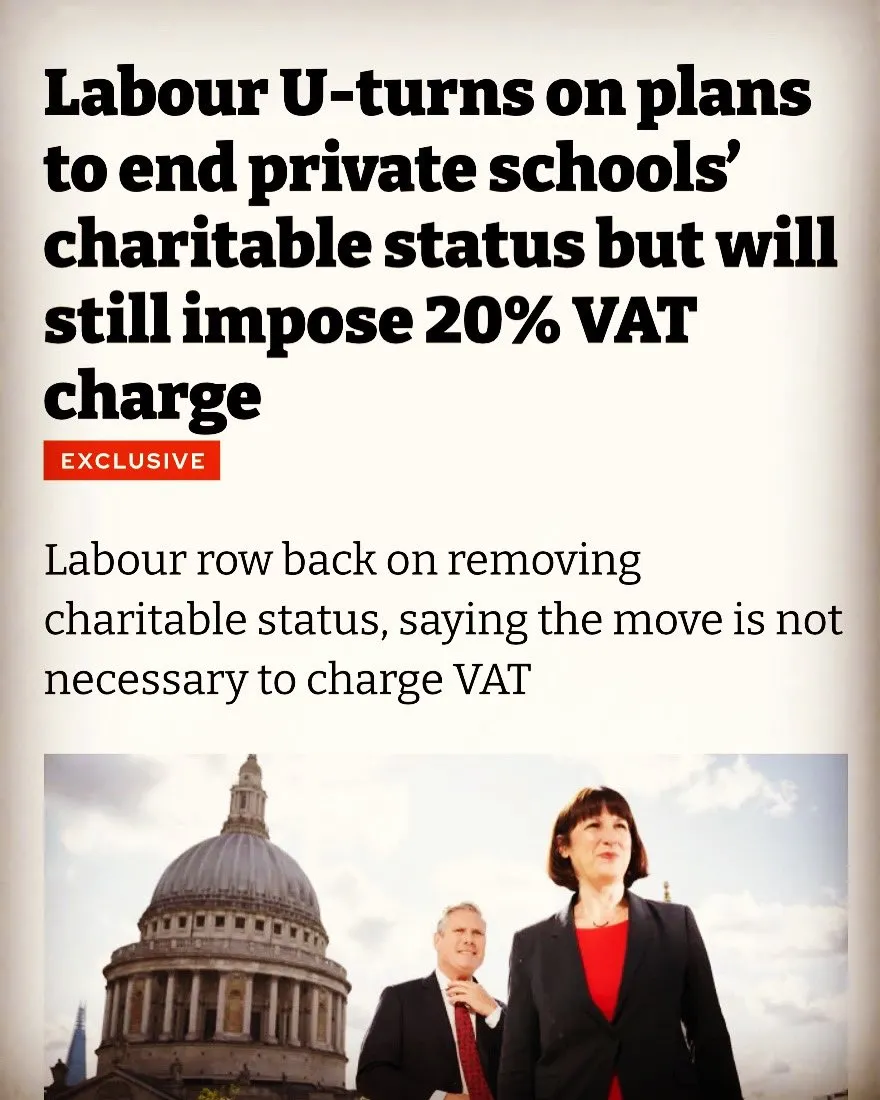
  • Starmer breaks another promise: elite schools to retain ‘charity’ status and tax breaks

    Spread the love

    Original article republished from the Skwawkbox

    One more for the endless list of betrayals to please the obscenely rich

    Yet another of Keith Starmer's pledges discarded. Image thanks to the Skwawkbox
    Yet another of Keith Starmer’s pledges discarded. Image thanks to the Skwawkbox

    It’s hard to imagine there were any promises left that Keir Starmer hadn’t already broken, but today he has added another to the list: the pledge to end the tax-perk ‘charitable’ status of elite private schools.

    Starmer and his Shadow Chancellor Rachel Reeves have announced that the schools will now keep their charity status – allowing them and their donors/fee-payers more tax breaks – though as a sop Starmer says he will still charge them VAT if he becomes PM. As if anyone can believe that either.

    Every day, Starmer and his toxic cronies show themselves more and more the creatures of the rich – and to be unhesitating in betraying and lying to ordinary people to please billionaires and corporations..

    Original article republished from the Skwawkbox

  • Direction

    Spread the love

    I will be suggesting that the appropriate response to UK government’s progressing with the Rosebank oil field is to refuse, block and frustrate it using all means and to campaign against any and all political parties – clearly including the Labour party – that support it. I suggest that it is correct to regard Rishi Sunak’s Conservative party to be indistinguishable to the fossil fuel industry. The Labour party should be regarded similarly. We have to make progress to net zero, that’s clearly not done by pursuing more fossil fuels.

  • ‘The worst kind of culture war’: Tories attack Rishi Sunak’s reversal on net zero

    Spread the love

    https://www.theguardian.com/environment/2023/sep/23/the-worst-kind-of-culture-war-tories-attack-rishi-sunaks-reversal-on-net-zero

    UK Prime Minister Rishi Sunak and former Energy Security and Net Zero Secretary Grant Shapps.
    Prime Minister Rishi Sunak and former Energy Security and Net Zero Secretary Grant Shapps. Credit: Simon Dawson / 10 Downing Street, CC BY-NC-ND 2.0

    The prime minister’s attempts to turn the climate emergency into a US-style wedge issue have dismayed veteran MPs who champion green policies

    Rishi Sunak’s decision to drive a “green wedge” between the Conservatives and Labour will take the UK into dangerous new political territory and “the worst kind of culture wars”, not seen for more than 30 years, senior Tory figures and political observers have warned.

    Reversals and delays to net zero policy announced last week will be just the start of a general election campaign in which the UK’s longstanding cross-party political consensus on climate will be increasingly at stake. Emails sent to journalists from the Conservative campaign headquarters revealed lines of attack on targets including the independent Climate Change Committee and Labour’s proposed £28bn investment in a low-carbon economy.

    …

    Lord Goldsmith, a former Tory minister, told the Observer: “It’s not so much the individual measures he’s announced. It’s more about the language and politics. This is a clear attempt to turn the environment into a wedge issue, as it is in the US. We have managed to avoid that until now, with disagreements mostly being about means, not ends. Sacrificing the environment to culture wars is cynical, devastating and wildly irresponsible.”

    Sunak repeated many times that he was still committed to the UK’s legally binding target of reaching net zero by 2050, though experts said the policy changes were more likely to hamper than help. But Chris Skidmore, the Conservative ex-minister and author of the government’s net zero review, accused the prime minister of misleading voters. “It’s especially worrying that false claims and disinformation are being made about meat taxes that have never existed, or compulsory car sharing, or having seven bins. This is completely untrue, and is the worst kind of culture war politics, attempting to deliberately mislead,” he told the Observer.

    …

    https://www.theguardian.com/environment/2023/sep/23/the-worst-kind-of-culture-war-tories-attack-rishi-sunaks-reversal-on-net-zero