Two months after elections, Macron refuses to nominate progressive prime minister

Spread the love

Original article by Ana Vračar republished from peoples dispatch under a Creative Commons Attribution-ShareAlike 4.0 (CC BY-SA) license.
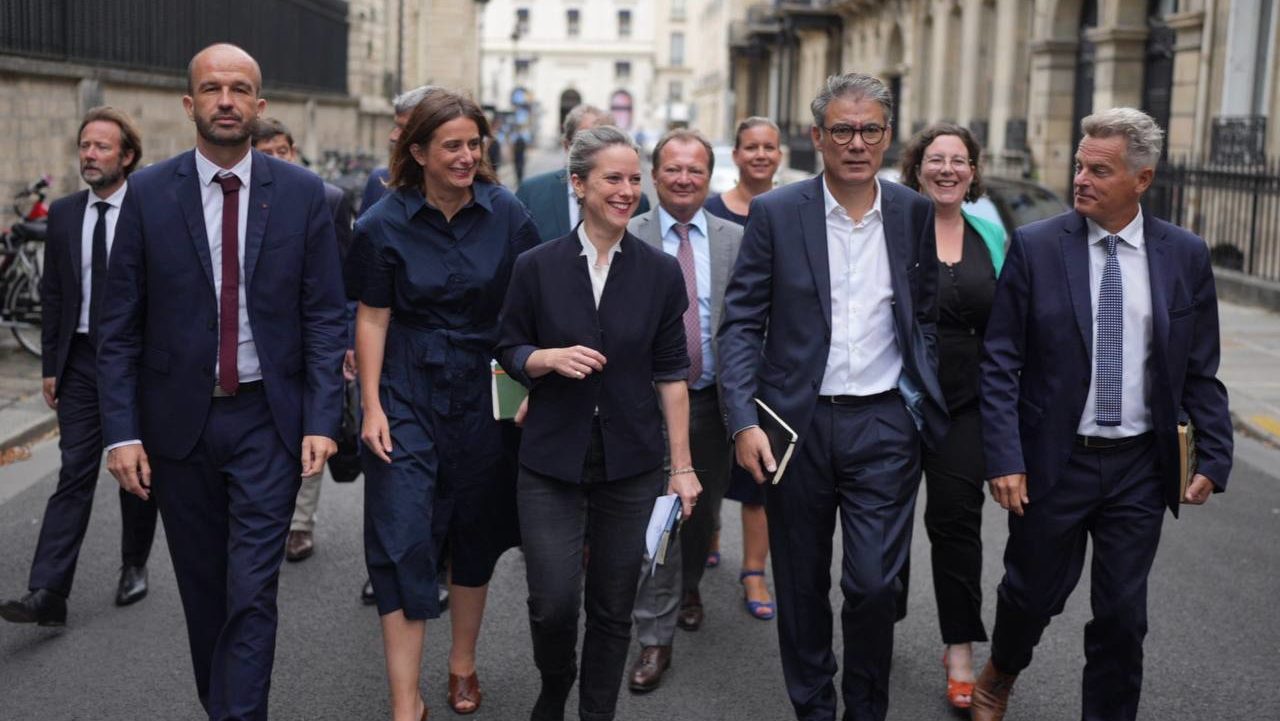
NFP representatives ahead of talks with President Macron, August 2024. Source: Lucie Castets/X

Emmanuel Macron continues to block the formation of a New Popular Front-led government, sparking outrage over his disregard for democratic processes

Almost two months have passed since the snap election in France, and President Emmanuel Macron is still avoiding to nominate a new prime minister. His behavior has sparked outrage, particularly in left and progressive circles, who accuse him of usurping power and showing a gross lack of respect for democratic processes.

Following consultations with representatives of all parliamentary parties between August 23 and 26, Macron refused to nominate Lucie Castets, the candidate put forward by the New Popular Front (NFP), claiming he is acting to preserve “institutional stability.”

The NFP emerged as the group with the largest number of parliamentary seats in the election, despite not securing an absolute majority. This lack of an absolute majority has been exploited by political opponents, ranging from Macron’s liberals to the far-right led by Marine Le Pen and Jordan Bardella, who argue that there was no clear election winner and seek to block a progressive government from taking office.

Read: Macron calls for ‘political pause’ amid post-election transition

Both liberals and right-wing factions have vowed to block an NFP-led government, especially if it includes ministers from the left-wing party France Unbowed (LFI). However, these threats have been denounced by NFP representatives as attempts to prevent the coalition from implementing its program, which aims to break with the neoliberal policies championed by the liberals and supported by the right.

“Emmanuel Macron understands that our priority, as the French people expect, will be to reverse his unfair pension reform and restore public services,” said Lucie Castets. “He is looking for excuses to prevent us from doing so.”

The President’s latest statements have been described as “a disgrace” and “lunatic” by leaders of the parties united in the NFP. “The President of the Republic has just created a situation of exceptional gravity,” summarized Jean-Luc Mélenchon, announcing that LFI will be calling for Macron’s impeachment.

“Anger. That is what millions of us are feeling this morning. Emmanuel Macron is telling us that elections are worthless. So, does democracy mean nothing to the President? That’s extremely dangerous,” Castets pointed out in an interview.

Meanwhile, Macron continues to insist that the only way forward is to find a candidate for prime minister who enjoys cross-party support, raising questions about the purpose of elections in the first place. According to the President, an NFP government would face an immediate vote of no confidence from the liberals and the right wing, leaving it completely ineffectual. Instead, he announced another round of conversations with parliamentary groups to define a way forward—talks that the NFP has already declared they will not attend, deeming them illegitimate.

“The gravity of the moment calls for a firm response from French society against the incredible abuse of power to which it is being subjected,” LFI said in a press statement. As a first step, the left party, along with student organizations and unions, has called for protests on September 7.

Original article by Ana Vračar republished from peoples dispatch under a Creative Commons Attribution-ShareAlike 4.0 (CC BY-SA) license.

Continue ReadingTwo months after elections, Macron refuses to nominate progressive prime minister

‘A bleak vision of Britain’

Spread the love
Keir Starmer says pensioners can freeze to death and poor children can starve and be condemned to failure and misery all their lives.

https://morningstaronline.co.uk/article/a-bleak-vision-of-britain

Left MPs and trade unionists accuse Sir Keir of choosing austerity, pain and poverty instead of taxing the super-rich

LEFT MPs warned today that pain and poverty are on the way after Prime Minister Sir Keir Starmer told the country that “things will get worse.”

Responding to a keynote speech by the PM warning of a “tough” Budget coming in October, the group of five independent left MPs warned that “politics is about choices — and the government is choosing to inflict pain and poverty across the country.”

And Unite general secretary Sharon Graham said “a bleak vision of Britain is not what we need now. It is time to see the change that Labour promised.”

The left MPs, including former Labour leader Jeremy Corbyn, ridiculed this stance, pointing out that when “the government said it would lower energy bills, it cut winter fuel allowances for pensioners instead.

“The government said it wanted to reboot our economy, it wants to cut public investment instead.

“The government said it would put an end to 14 years of Tory failure, it voted to keep the two child benefits cap instead.”

Perfecting the State

Returning to the racist riots, Starmer said that these were unmistakably inspired by the far right (but no words on those who fanned the flames), but there was an element of opportunism at work – an opportunism born of the Tories’ dereliction of duty. Those who rioted knew the criminal justice system was teetering on the brink and prison places were at a premium, and acted as though there wouldn’t be any arrests, let alone jail terms. Thanks to Tory recklessness. And, to a degree, Starmer corrected his reluctant earlier response by condemning efforts at trying to burn down hotels full of human beings (a rare moment of humanising asylum seekers in British politics) and praising communities who came together in the riots’ aftermath to rebuild. Note he didn’t go as far as the King, but again thanked the police and first responders for their service. Starmer therefore condemns the riots as a failure of Tory statecraft, passes over the role of communities and anti-fascists in defending themselves, praises the spirit of resilience, and then returns to the agents of the state as the legitimate saviours of the situation.

The second part was focused on the state itself. Starmer talked a lot about the £22bn “black hole” in state finances which, in reality, only exists because of how the Chancellor has chosen to frame public spending. Hence the tough decision of scrapping the Winter Fuel Allowance for all pensioners not in receipt of pension credits. This is being taken away so the NHS can be fixed. Likewise, when challenged on above inflation pay rises for public sector workers and railway workers, Starmer’s defence owed nothing to the injustices these deals partly correct and everything to economic efficiency, getting the health service working, and so on. It was the right decision not by the workers, but by the state.

Continue Reading‘A bleak vision of Britain’

Amid Soaring Temps, Heat-Related Deaths Have More Than Doubled Since 1999

Spread the love

Original article by Jessica Corbett republished from Common Dreams under a CC licence.

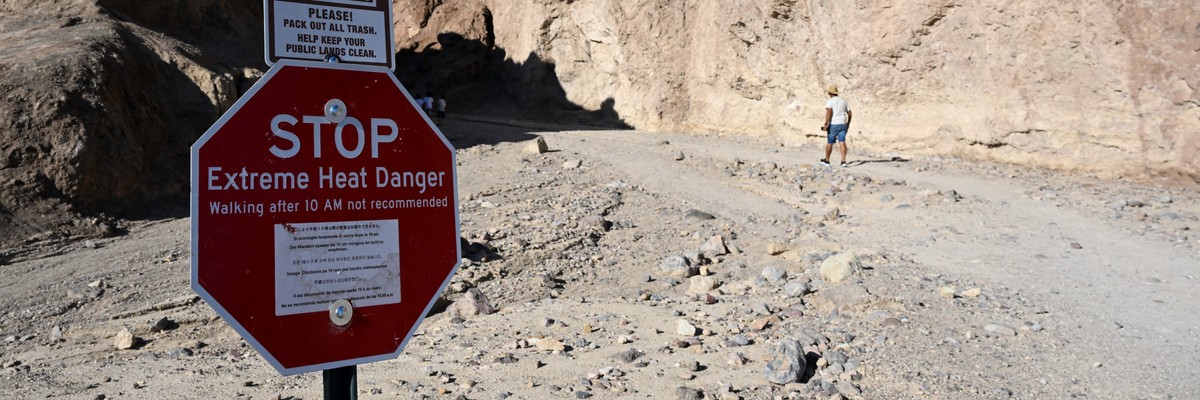
A sign says, “Stop: Extreme Heat Danger,” at the Golden Canyon Trailhead in Death Valley, California on July 9, 2023.
 (Photo: Tayfun Coskun/Anadolu Agency via Getty Images)

“It is likely that continued increases in average temperatures, the number of ‘hot days,’ and the frequency and intensity of heatwaves could be playing a role,” said one researcher.

As 55 million people in the U.S. Midwest faced heat alerts on Monday, research published in the peer-reviewed Journal of the American Medical Association showed that heat-related deaths in the country rose 117% between 1999 and 2023.

“The current trajectory that we’re on, in terms of warming and the change in the climate, is starting to actually show up in increased deaths,” lead author Jeffrey Howard, an associate professor of public health at the University of Texas at San Antonio, told USA Today. “That’s something that we hadn’t had measured before.”

Using a U.S. Centers for Disease Control and Prevention platform, Howard and co-authors from Pennsylvania State University and the Uniformed Services University of the Health Sciences analyzed all deaths from those 25 years coded for “hyperthermia of newborn,” “effects of heat and light,” or “exposure to excessive natural heat” as either a contributing or underlying cause of death.

They found 21,518 deaths for the full period, with 1,069 in 1999. The lowest annual figure was in 2004 (311) and the highest was in 2023 (2,325). Last year was the hottest on record globally and scientists are already warning that this year is expected to continue that trend.

“As temperatures continue to rise because of climate change, the recent increasing trend is likely to continue.”

Last year broke the record that was set in 2016—a year that’s also significant in the new study: “The number of heat-related deaths… showed year-to-year variability, with spikes in 2006 and 2011, before showing steady increases after 2016.”

Howard told CBS News that “it is likely that continued increases in average temperatures, the number of ‘hot days,’ and the frequency and intensity of heatwaves could be playing a role” in the rise since 2016.

“There is also a social and behavioral component as well,” he added, “including differences in access to air conditioning, outdoor work, the number of unhoused individuals, and things like that.”

The researcher noted that Arizona, California, Nevada, and Texas had the highest heat-related deaths—which he said is “not terribly surprising because we know that these are some of the hottest regions in the country, but it does reinforce that the risk varies regionally.”

The paper warns that “as temperatures continue to rise because of climate change, the recent increasing trend is likely to continue. Local authorities in high-risk areas should consider investing in the expansion of access to hydration centers and public cooling centers or other buildings with air conditioning.”

The authors also acknowledged limitations of their research—including “the potential for misclassification of causes of death, leading to possible underestimation of heat-related mortality rates; potential bias from increasing awareness over time; and lack of data for vulnerable subgroups”—meaning the true death toll could be higher.

A legal memo published in June by the watchdog Public Citizen detailed how local or state prosecutors could bring criminal charges against oil and gas companies for deaths from extreme heat made more likely by the fossil fuel-driven climate emergency.

“These victims deserve justice no less than the victims of street-level homicides,” said Aaron Regunberg, senior policy counsel for the group. “And this memo shows that prosecutors have a path to secure that justice, if they choose to pursue it.”

Original article by Jessica Corbett republished from Common Dreams under a CC licence.

Continue ReadingAmid Soaring Temps, Heat-Related Deaths Have More Than Doubled Since 1999

Unite calls for 1% wealth tax on super-rich to fund UK public sector pay rises

Spread the love

https://www.theguardian.com/uk-news/article/2024/aug/24/unite-calls-for-1-wealth-tax-on-super-rich-to-fund-uk-public-sector-pay-rises

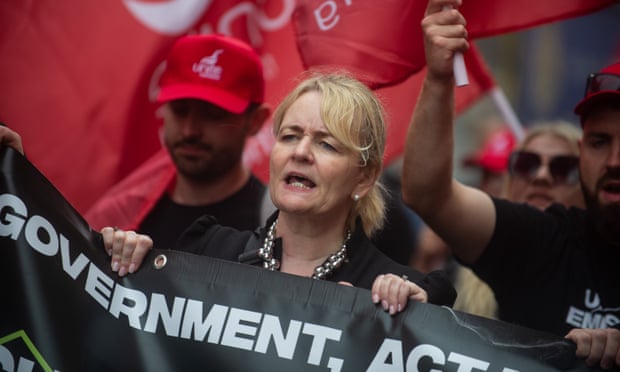
Sharon Graham, general secretary of the Unite trade union, leads steel workers down Whitehall last year to demand more support for the industry. She says the British economy is broken. Photograph: Guy Smallman/Getty Images

The demand from Britain’s second biggest union will test truce with Labour at next month’s TUC conference

Britain’s second biggest trade union is calling on the new Labour government to introduce an emergency 1% wealth tax on the assets of the super-rich to pay for 10% pay rises for public sector workers and fill more than 100,000 NHS vacancies.

The demand from Unite is in one of several motions to the Trades Union Congress, which meets in Brighton next month, that will expose tensions between Keir Starmer’s government and sections of the union movement. It comes as Rachel Reeves is preparing for her first budget as chancellor, on 30 October.

Other key trade unions are preparing to press for further policy changes from Labour, including abandoning the two-child benefit cap, which Starmer has so far resisted, and the reversal of the recent decision to end winter fuel payments for millions of pensioners, which has been causing a serious backlash among Labour backbenchers.

Unite’s plan is for a tax of 1% to be applied on the assets of those worth more than £4m, which it says would raise £25bn a year to fund investment in public services and avoid a return to austerity. Under the plan, someone with assets worth £6m would face a 1% tax on the £2m above the £4m threshold. These assets would include property, shares and bank accounts but would not include mortgaged property.

Unite points to research showing that the richest 50 families in the UK now have assets worth nearly £500bn.

Sharon Graham, the general secretary of Unite, said: “Unite’s resolution to the TUC on the economy calls things by their real name. The British economy is broken.

https://www.theguardian.com/uk-news/article/2024/aug/24/unite-calls-for-1-wealth-tax-on-super-rich-to-fund-uk-public-sector-pay-rises

Continue ReadingUnite calls for 1% wealth tax on super-rich to fund UK public sector pay rises

Dagenham fire exposes lack of progress on building and fire safety ahead of Grenfell Report

Spread the love

Original article by Ana Vračar republished from peoples dispatch under a Creative Commons Attribution-ShareAlike 4.0 (CC BY-SA) license.
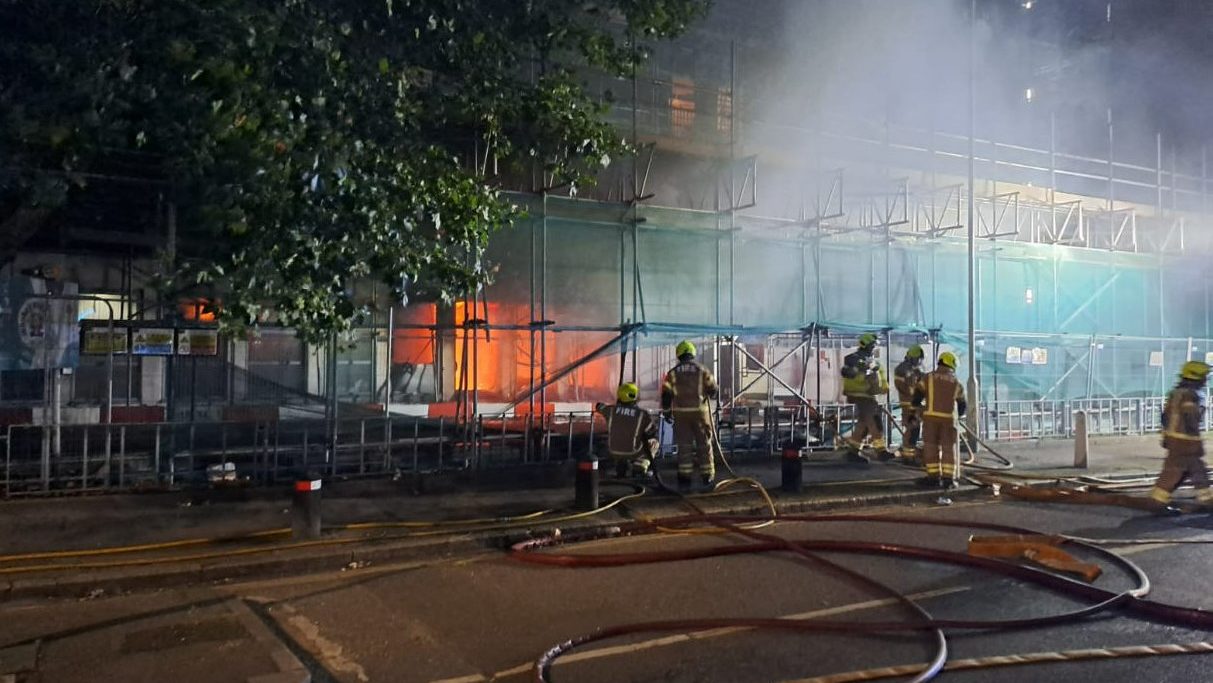
Source: London Fire Brigade/X

A recent fire in London serves as a stark reminder of the UK’s ongoing failures in building and fire safety, just days before the final report on the 2017 Grenfell Tower tragedy is set to be published

More than 200 firefighters were deployed overnight on Monday, August 26, to combat a fire that broke out in an apartment block in Dagenham, London. The building had previously been identified as a high-risk location by fire brigades, yet it had not seen sufficient safety improvements, similar to other localities across the country that represent housing hazards due to slow progress on necessary fire and building security measures.

London Fire Brigade Commissioner Andy Roe confirmed that the tower block had “a number of fire safety issues” known to the service. Matt Wrack, General Secretary of the Fire Brigades Union (FBU), condemned the situation as a “national scandal.”

“Time and time again, these warnings have been ignored by public authorities and by central government. This must change immediately,” Wrack insisted.

The Dagenham fire comes just days before the final report of the Grenfell Tower Inquiry is set to be published. The similarities between the recent fire in Dagenham and the Grenfell Tower fire in June 2017, which killed 72 people, are difficult to ignore. Both incidents involve buildings with inadequate cladding, a factor believed to have exacerbated the fires.

“Once again, a fire has erupted in a residential building wrapped in inflammable cladding. There needs to be an urgent and swift investigation into how this has been allowed to happen,” Wrack said.

Read more: Four years after Grenfell tragedy, justice for victims remains elusive

Fortunately, the Dagenham fire resulted in no casualties, but the incident has reignited calls for improved building safety. Grenfell United, a group formed by survivors and families of the Grenfell fire, criticized the lack of progress since the 2017 disaster. The fact that the best outcome in a fire is a near miss “speaks volumes about the progress made since June 14, 2017,” the group said in a statement.

Recent data from the FBU adds to an already worrying picture. Since 2010, cuts to public service have led to the loss of 12,000 firefighter positions across the UK, with London alone losing over 1,300. The union also highlighted that some firefighters might be counted twice in official statistics because they—some 4,000 of them—hold more than one type of contract, suggesting the actual shortfall may be even worse.

These staffing reductions have contributed to slower emergency response times, increasing risks to public safety. “With flooding, wildfires, and storms on the rise due to the climate emergency, firefighters are being asked to do more with less,” Wrack said.

In light of these issues, trade unions and community activists are calling for immediate and decisive action from the Labour government. They are demanding urgent and substantial investment in fire and rescue services, along with the implementation of building safety measures to prevent future tragedies.

Original article by Ana Vračar republished from peoples dispatch under a Creative Commons Attribution-ShareAlike 4.0 (CC BY-SA) license.
Continue ReadingDagenham fire exposes lack of progress on building and fire safety ahead of Grenfell Report