Elon Musk attends a Cabinet meeting at the White House on February 26, 2025 in Washington, D.C. (Photo: Andrew Harnik/Getty Images)
“No matter how many billions he gets in tax cuts and government contracts, it will never be enough for him,” said Rep. Alexandria Ocasio-Cortez. “Now he’s going after the elderly, the disabled, and orphaned children.”
Progressive lawmakers and advocates hit back on Sunday after Elon Musk parroted the long-debunked right-wing claim that Social Security is a Ponzi scheme, the billionaire’s latest false attack on the nation’s most effective anti-poverty program.
Musk made the comments during an appearance on the “Joe Rogan Experience” podcast over the weekend, and the episode has already racked up nearly 8 million views as of this writing.
“Social Security is the biggest Ponzi scheme of all time,” Musk said. “If you look at the future obligations of Social Security, it far exceeds the tax revenue.”
The advocacy group Social Security Works noted in response that Social Security—which is 90% funded for the next quarter-century—”hasn’t missed a payment in 89 years” and accused Musk of “defaming” the program as part of an effort to “cut benefits and otherwise destroy Social Security.”
BREAKING: Elon Musk called Social Security "the biggest Ponzi scheme of all time" in an interview with Joe Rogan. pic.twitter.com/gCrDPLM15u
Musk’s comments came as the Trump administration, with the assistance of the billionaire Tesla CEO’s lieutenants, is working to gut the already-understaffed Social Security Administration, an effort that could result in benefit delays and disruptions.
“This guy is a leech on the public,” Rep. Alexandria Ocasio-Cortez (D-N.Y.) wrote on social media after a clip of Musk’s remarks on Rogan’s podcast circulated. “No matter how many billions he gets in tax cuts and government contracts, it will never be enough for him.”
“Now he’s going after the elderly, the disabled, and orphaned children so he can pocket it in tax cuts for himself,” Ocasio-Cortez added. “It’s disgusting.”
Rep. Greg Casar (D-Texas), chair of the Congressional Progressive Caucus, wrote that “a guy who makes $8 million a day off the government thinks seniors getting $65 a day they worked their whole lives to earn is a ‘Ponzi scheme.’”
“Protect Social Security,” Casar wrote. “Fire Elon Musk.”
Sen. Bernie Sanders (I-Vt.) also weighed in on Musk’s comments during an appearance on NBC‘s “Meet the Press” Sunday morning, calling the billionaire’s attack on Social Security “totally outrageous.”
“That’s a hell of a Ponzi scheme when for the last 80 years, Social Security has paid out every nickel owed to every eligible American. Quite a Ponzi scheme,” said Sanders, who called on lawmakers to support his proposal to expand Social Security benefits by lifting the cap on income subject to payroll taxes.
“You lift that cap, we can extend the solvency of Social Security for 75 years,” the Vermont senator said. “And you can raise benefits.”
Last week, as Common Dreams reported, Sanders attempted to pass his Social Security expansion bill through the Senate via unanimous consent, but Sen. Mike Crapo (R-Idaho) objected, blocking the legislation.
A previous version of this story improperly identified “Meet the Press” as an MSNBC show.
Elon Musk urges you to be a Fascist like him, says that you can ignore facts and reality then.Neo-Fascist Climate Science Denier Donald Trump says Burn, Baby, Burn.
A climate activist interrupts Chancellor Rachel Reeves’s keynote speech at the Yorkshire Labour Party Conference in protest against new subsidies for Drax Power Station, March 1, 2025
CLIMATE activists disrupted Rachel Reeves’s speech to the Yorkshire Labour Party Conference on Saturday, condemning new subsidies for the tree-burning Drax power station.
As the Chancellor spoke, the two protesters stood up and condemned the environmental damage caused by Drax, which claims to be sustainable, allowing it to receive billions of pounds in green subsidies, but remains Britain’s biggest carbon emitter.
A BBC investigation previously exposed Drax for sourcing wood from rare forests, yet Labour has extended its subsidies until at least 2031 — costing taxpayers an estimated £2 billion.
Rosie, of campaigner group Axe Drax, said: “Labour has once again shown that they are on the side of the lobbyists, choosing to hand billions … to Drax, which has just announced over £1bn in earnings, while slashing winter fuel payments and presiding over yet another energy bill price hike.
“Rather than funding Drax’s shareholders profits, we desperately need investment in real green energy and climate action that will bring down emissions and bills — like home insulation.”
The disruption led to Ms Reeves pausing her speech while the protesters were ejected by security staff.
Keir Starmer says pensioners can freeze to death and poor children can starve and be condemned to failure and misery all their lives.Orcas comment on killer apes destroying the planet by continuing to burn fossil fuels.
Prime Minister Keir Starmer (centre) hosts the European leaders’ summit to discuss Ukraine, at Lancaster House, London, March 2, 2025
PEACE campaigners slammed the continued rise in British military spending today as Sir Keir Starmer said Britain was ready to send troops to police a Ukrainian peace.
The Prime Minister hosted a summit at London’s Lancaster House today with European leaders, Canadian Prime Minister Justin Trudeau, Turkish Foreign Minister Hakan Fidan, Nato secretary-general Mark Rutte and the presidents of the European Commission and European Council, all showing their support for Ukrainian President Volodymyr Zelensky, who also attended.
The summit followed an extraordinary row between Mr Zelensky, US President Donald Trump and Vice-President JD Vance last week at the White House.
The US was not represented at the summit — underlining the deepening rift between European leaders and Washington.
Sir Keir told leaders it was time for them to step up and continue to support Kiev and meet a “once in a generation moment” for the security of Europe.
After the meeting he said a “coalition of the willing” could be sent to Ukraine to police a ceasefire, with British “troops on the ground and planes in the air,” but acknowledged that not all countries present had been willing to commit. He did not say which had and which hadn’t.
‘Public funding of CCS is a costly gamble,’ said IEEFA energy finance analyst Mark Kalegha. Credit: IEEFA
New report says CCS proposal is a subsidy-dependent ‘financial risk’ with ‘limited revenue potential.’
Pathways Alliance’s flagship carbon capture and storage project is not financially feasible without massive and consistent subsidies.
This is according to the most recent analysis of the venture, conducted by the Institute for Energy Economics and Financial Analysis (IEEFA), which identified multiple financial challenges.
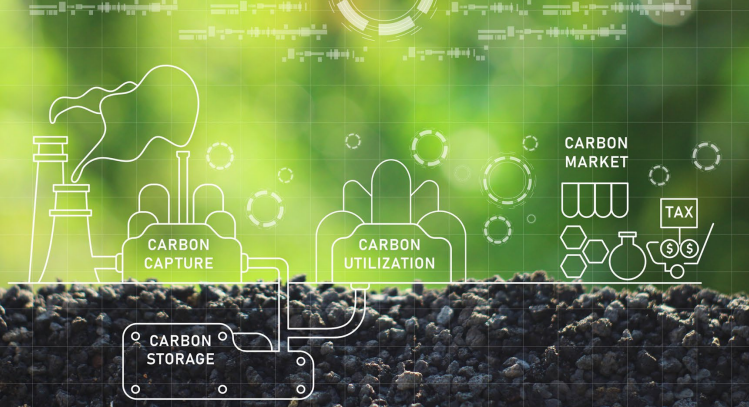
The Pathways Alliance, a lobby group representing Canada’s six largest tar sands oil producers, proposed a massive carbon capture and storage (CCS) hub based near Cold Lake, Alberta, in 2022. The build-out includes a 400-kilometer pipeline network connecting the CCS hub with 13 tar sands facilities. The group’s members are responsible for approximately 95 percent of the tar sands’ annual output.
“The growing realization that carbon capture and storage projects are likely to require permanent government subsidies resets the discussion about the viability of CCS as a tool to effectively reduce carbon emissions,” Mark Kalegha, the IEEFA’s energy finance analyst for Canada and author of the report, said in a statement.
“Public funding of CCS is a costly gamble that may not yield tangible returns on Canada’s journey towards achieving net-zero emissions,” Kalegha stated.
“This is a financial risk the government should reconsider taking on.”
Among the study’s key findings, the IEEFA determined that the total costs — such as interest, insurance, depreciation, and taxes — for existing commercial-scale carbon capture plants in Alberta are approaching thresholds that threaten profitability. In addition, operating costs are increasing at roughly twice the rate of the amount of carbon dioxide that’s captured.
Critics argue that Pathways will actually use the project for enhanced oil recovery (EOR), which is what carbon capture technology was initially developed to do in the 1970s. Companies have used other notable CCS projects explicitly in this way. In fact, Pathways Alliance has publicly stated on several occasions that it hopes its decarbonization efforts could result in increased oil production. Critics argue the oil industry proposes using carbon capture for EOR as a means to prolong fossil fuel production while appearing to work towards emissions reduction. Canadian federal and provincial governments have enthusiastically supported carbon capture initiatives by the oil and gas sector, despite the concerns and objections of environmentalists.
But Kalegha is not convinced the Pathways project would be used for EOR. Instead, he believes the alliance’s business case is based on the use of Emission Performance Credit (EPCs) under Alberta’s TIER (Technology Innovation and Emissions Reduction) carbon pricing system. That said, the IEEFA isn’t certain the necessary operating revenue will manifest.
“An effective cap on emission performance credit (EPC) pricing of $170 (CAD) per tonne limits project revenue potential, while a looming oversupply of carbon EPCs is an example of risks to project cash flows,” the IEEFA report states.
The report further notes that the option to combine Clean Fuel Regulation credits with EPCs is available to the ACTL (Alberta Carbon Trunk Line—one of the two operational carbon capture projects the IEEFA study investigated), but that this significant financial benefit is not currently available to the Pathways project.
The report warns that “without substantial efficiency improvements, the cost per tonne of CO2 captured is likely to exceed the revenue that the project can generate for each tonne captured.”
Kalegha noted that there is no guarantee carbon credits will trade for $170 and their value could face a limitless fall. “There is a severe oversupply risk, and over time, operating costs will likely increase while potential revenue will be stagnant,” he said.
The report indicates that an underperforming and unprofitable carbon capture project would invariably “struggle to bring lasting positive economic benefits to host communities and become dependent on external financial subsidies to maintain operations.”
Even under optimal conditions, “the Pathways project may struggle to break even,” the IEEFA noted. It further stated that real-world carbon capture operations are rarely optimal, echoing analysis by the International Institute for Sustainable Development (IISD), which also concluded carbon capture’s costs are persistently high in Canada, and unlikely to come down.
Though details about Pathways’ project are scant — which the IEEFA noted in its report — the institute determined that Pathways could have an estimated annual carbon dioxide storage capacity of 10 to 12 million tonnes. If completed, it would be among the largest carbon capture facilities in the world.
Safety Risks
Whether storing such a large amount of CO2 is safe is a vitally important but unanswered question. The release of an estimated 100,000 to 300,000 tons of CO2 at Lake Nyos, Cameroon, in 1986 killed about 1,700 people and 3,500 livestock animals. The rupture of a CO2 pipeline near Satartia, Mississippi, in 2020, resulted in dozens of hospitalizations, the town’s evacuation, and a chaotic emergency response that underlined the public’s unfamiliarity with large-scale carbon dioxide poisoning.
A May 2024 article in The Narwhal revealed that Pathways Alliance made it clear to the federal government that it fully expects to depend on federal government subsidies in the tens of billions of dollars.
In a letter to several federal ministers — including then-Finance Minister Chrystia Freeland and Environment Minister Steven Guilbeault — Pathways requested the government cover 50 percent of its estimated operating costs. The same letter also asked if the project would be eligible to generate Clean Fuel Regulation (CFR) for bitumen and crude oil exported using carbon capture technology. Pathways also demanded the federal government forgo an environmental impact assessment. At the provincial level, Pathways broke its project into 126 parts to avoid triggering an automatic environmental assessment.
Despite the growing body of evidence against the plan, it nonetheless maintains considerable political support in Canada. In October 2024, the Globe and Mail reported that the Canada Growth Fund (CGF) proposed funding support for the project. The CGF is a public fund of $15 billion (CAD) that supports implementing new technologies to reduce emissions, managed by the Public Sector Pension Investment Board.
“The Pathways Alliance has been in negotiations with the CGF for over a year, and wants the CGF to provide carbon contracts to mitigate financial risks and guarantee revenues,” Julia Levin, associate director of national climate with Environmental Defence, wrote in a statement to DeSmog. Levin noted that those negotiations ramped up last fall, and a decision is expected soon.
Despite Pathways’ request to abandon the environmental impact assessment, Levin also noted that the federal government is reviewing the project.
“In late November, following the Government of Alberta’s denial to conduct an impact assessment of the project, eight First Nations submitted a request that the federal government exercise its discretion to designate the Pathways Project for a federal impact assessment, given their concerns about the project impacts and the lack of a robust regulatory framework,” said Levin. “Minister Guilbeault has until the beginning of March to decide whether or not to designate the project.”
Little evidence exists showing carbon capture is effective at reducing emissions among Canada’s few extant commercial CCS projects and CCS projects worldwide.
Video rendering of Shell’s Quest carbon capture project. Credit: Shell / YouTube
“Neither Quest nor the Alberta Carbon Trunk Line (ACTL) have managed to keep up with projected capture rates,” said Kalegha during a recent IEEFA webinar, referring to Shell’s massive Quest CCS facility in Alberta. “Boundary Dam is struggling as well,” he added, referring to the Saskatchewan coal plant that received a $1 billion retrofit to capture carbon. The IEEFA estimates that the Boundary Dam CCS effort has never exceeded a 60 percent capture rate, despite claims by CCS advocates that it captures carbon at a rate exceeding 90 percent.
“There’s a global trend of underperformance when it comes to carbon capture,” he noted.
Kalegha’s analysis also points to considerable risk factors. He said that operating costs at ACTL and Quest appear to have doubled, while capture rates at both facilities have remained relatively flat. In addition, Pathways Alliance’s project will have to grapple with the combined performance of 13 separate carbon capture facilities.
While the oil and gas industry claims carbon capture technology is improving, Kalegha doesn’t see any data to support this.
“Current CCS projects in Canada are heavily subsidized by the public, anywhere between 50 to 85 percent,” he said during an IEEA online seminar. “This is a very expensive, subsidy-dependent technology experiencing severe technological challenges. The question is who should bear this risk?”
Julia Levin is doubtful the Pathways Alliance partners are sincerely interested in committing any of their own funds to the project. She noted in a statement to DeSmog that Canadian Natural Resources Limited (CNRL) only committed $90 million to carbon capture in its 2025 budget, compared with $45 million to move offices.
“CNRL’s 2025 budget reveals that the Pathways Alliance has no plans to invest their own funds into carbon capture and storage, instead insisting the public cover over $12 billion of their costs,” Levin noted.
“Ninety-million dollars is an insignificant amount of money, compared with the cost of carbon capture projects, as well as CNRL’s operating budget and yearly profits,” she added
“If these companies seriously believed in carbon capture as a waste management solution for their operations and were intent on moving these projects forward, they would be willing to invest more of their own funds,” Levin pointed out. “Instead they’re using the promise of capturing emissions one day as a rationale to delay the energy transition and weaken climate policy.”
“The Labour government is trashing its climate credentials one absurd decision at a time. Only one day after receiving critical advice from its own climate advisors on the need to lower flying demand, ministers continue to support yet more unnecessary expansion for the benefit of wealthy investors.
“Pushing through these damaging plans shows such poor economic judgement. Over 100,000 extra flights a year won’t deliver for our communities. Labour should listen to the public who think airport expansion is the wrong priority. Most of us fly once a year if at all and would rather see cheaper train tickets and more bus routes instead to help with our daily journeys and create jobs where we live, in contrast with frequent flyers leaching money out of the economy.
“The green economy grew by ten per cent last year, and this is where Labour should be investing to deliver high-wage, long-term jobs across the entire country.”