Category: Neo-liberalism

  • New Liz Truss Faction ‘Pops’ With Climate Science Denial and Fossil Fuel Ties

    Spread the love

    Original article by Adam Barnett republished from DeSmog.

    Jacob Rees-Mogg, Lee Anderson and Liz Truss at the launch of ‘Popular Conservatism’. Credit: PA Images / Alamy

    The launch of Popular Conservatism saw attacks on “net zero zealots” and the Climate Change Committee.

    Liz Truss’s new ‘Popular Conservatism’ faction of the Conservative Party launched today with attacks on net zero targets and environmental bodies, using the playbook established by libertarian lobby groups.

    The self-styled PopCons included politicians critical of climate policies and science, including Lord Frost, who is a director of the climate science denial Global Warming Policy Foundation, as well as Conservative MP Lee Anderson and Reform party president Nigel Farage

    PopCon director Mark Littlewood is the outgoing managing director of the Institute of Economic Affairs (IEA), an influential free market think tank that has talked up its access to government. 

    The IEA received funding from oil company BP every year from 1967 to 2018, according to an Unearthed investigation confirmed by the IEA. Both IEA and BP have declined to say if this funding continues, when asked by DeSmog. 

    A branded leaflet handed out at the event, under the heading “what we stand for”, stated: “End net zero zealotry and promote energy pragmatism to provide both security of supply and low prices”. 

    The leaflet also named the Climate Change Committee (CCC), the government’s independent advisory body on hitting its climate targets, as one of the institutions which “stand in the way of meaningful reform”.  

    Littlewood’s speech criticised the UK’s net zero target, complaining about “the Climate Change Committee, pronouncing on our progress to the eye-wateringly [sic] expensive and almost certainly unachievable aim of being carbon net zero”. 

    Lee Anderson, former deputy chair of the Conservative Party, repeatedly attacked net zero in his speech, which he claimed “never comes up on the doorstep” aside from when it is brought up by “the odd weirdo”.

    Anderson said: “if we became net zero tomorrow, this country… it wouldn’t make a blind bit of difference to the earth’s atmosphere”, pointing to the higher emissions produced by other countries. 

    Anderson argued that net zero would cost voters money, calling for an “opt-in, opt-out” approach to what he called “green levies” on energy bills, adding: “Not one politician can put their hand on their hearts and tell you how much it’s [net zero] going to cost.”

    The CCC has estimated the cost of net zero at less than one percent of GDP, while the Office for Budget Responsibility has said that “the costs of failing to get climate change under control would be much larger than those of bringing emissions down to net zero”.

    Liz Truss used her speech to say: “If we look at the net zero zealots that Lee has just been talking about, the need for cheaper energy is being drowned out by some very active campaigners.” She claimed voters “don’t like the net zero policies which are making energy more expensive”. 

    The International Monetary Fund found in September 2022 that the energy crisis was hitting UK households harder than any country in western Europe, due to the UK’s reliance on gas for heating homes.

    Politicians fronting the PopCon group have a history of working with anti-green think tanks and supporting more fossil fuel extraction. 

    Truss (who went to the University of Oxford with Littlewood) has extensive ties to the IEA, which is part of the Tufton Street network – a cluster of libertarian pressure groups and think tanks that oppose state-led climate action.

    In 2022, Truss’s campaign for Tory leader was run by Ruth Porter, a former communications director at the IEA. Once in 10 Downing Street, Truss hired Porter as her senior special advisor, and has since appointed her to the House of Lords. A number of former Tufton Street figures were appointed to government advisory roles during Truss’s short-lived tenure in Downing Street.

    The IEA publicly supported Truss’s ‘mini-budget’, which caused economic chaos by promising large tax cuts without explaining how they would be funded. While in office, Truss lifted the UK’s ban on fracking for shale gas, a policy advocated by the IEA. (The policy was ditched by her successor Rishi Sunak.) 

    The IEA has consistently opposed UK government climate policies, preferring “market solutions”. In October 2022, IEA executive Andy Mayer said the government should “get rid of” its net zero target, which he called a “very hard left, socialist, central-planning model”.

    During her 2022 leadership campaign, Truss received £5,000 from Lord Vinson, one of the few known funders of the Tufton Street-based Global Warming Policy Foundation (GWPF), the UK’s main climate science denial group. 

    Rees-Mogg also has a long record of opposing climate policies. Earlier this month he said: “the current headlong rush to net zero risks impoverishing the nation to no global benefit on emissions”.

    The UK government’s legally-binding target to cut carbon dioxide emissions to net zero by 2050 is part of international efforts to keep global warming below 1.5C. 

    As Business and Energy Secretary in 2022, Rees-Mogg supported overturning the UK’s ban on fracking, and said “we have to stop demonising oil and gas” in a meeting with the UAE’s state investment company. 

    He also receives around £29,000 per month to host a show on right-wing broadcaster GB News. A DeSmog investigation last year found one in three GB News hosts spread climate science denial on air in 2022, while more than half attacked net zero policies. The channel‘s co-owner, Paul Marshall, has £1.8 billion invested in fossil fuels via his investment fund Marshall Wace.

    Science Denial

    Several figures with ties to climate science denial turned out for the PopCon launch. They included Lord Frost, a trustee of the GWPF who last year said global warming could be “beneficial”, along with Dame Andrea Jenkyns, who sits on the board of the GWPF’s campaign arm, Net Zero Watch

    The IEA and GWPF have both received funding from Neil Record, a Conservative donor who was IEA chairman until July 2023 and remains chair of Net Zero Watch. Record has donated thousands to Tory MP Steve Baker, an IEA ally and former GWPF trustee who has claimed much climate science is “contestable” and “propagandised”. 

    The PopCon launch was also attended by GB News host Nigel Farage, honorary president of right-wing party Reform UK, which campaigns to “scrap net zero”. Last year the party received £135,000 from donors who spread climate denial or had fossil fuel interests. Reform leader Richard Tice has claimed that “CO2 isn’t poison; it’s plant food”.

    Farage posed for a photo at the PopCon event with Lois Perry, director of climate denial group CAR26, who is running for leader of UKIP and last month said she does not believe in human-caused climate change. 

    Original article by Adam Barnett republished from DeSmog.

    Lettuce complains about being compared to Liz Truss.
    Lettuce complains about being compared to Liz Truss.

    Liz Truss attacks ‘left-wing extremists’ at Tory PopCon launch 

    Addressing the audience Truss made a series of bizarre attacks on the Left, taking aim at “wokeism” and said the Tories had failed to “take on the left-wing extremists”. 

    “Wokeism seems to be on the curriculum,” said Truss. “There is confusion about basic biological facts, like what is a woman. 

    “Look at the net zero zealots, if you listen to the Today programme, I don’t recommend it, you’ll hear demands for more public spending.”

    Truss went on to warn that the left were “on the march and actively organising”. 

    “These people have repurposed themselves, they don’t believe they are socialist or communists anymore. They say they’re environmentalists, they say they’re in favour of helping people across all communities, they are in favour of supporting LGBT people or groups of ethnic minorities. 

    “So they no longer admit that they are collectivists but that is what their ideology is about.” 

    She went on to claim that anti-capitalists were being “pandered to” by the Government and that Conservative values were being eroded and said it was “only through Conservative values that we can give the British people what they want”, however fell short on saying what this was exactly. 

    Liz Truss attacks ‘left-wing extremists’ at Tory PopCon launch 

    Lettuce complains about being compared to Liz Truss.
    Lettuce complains about being compared to Liz Truss.

    Truss summons ‘Secret Tories’ to fight Davos and Left

    Former prime minister Liz Truss during the launch of the Popular Conservatism movement at the Emmanuel Centre in central London, in a bid to rally right-wing Tory MPs ahead of a general election this year, February 6, 2024

    Running through a list of enemies almost longer than her catastrophic time in Downing Street, Ms Truss nevertheless claimed that Britain was “full of secret Conservatives — people who agree with us but don’t want to admit it,” while the Tory party had been appeasing “left-wing extremists.”

    Painting a picture of a world on the edge of socialism, the former prime minister, best known for crashing the economy in a matter of days, asserted that “the left have been on the march.”

    “They have been on the march in our institutions, they have been on the march in our corporate world, they are on the march globally,” she claimed.

    Taking on this menace and “changing the system itself” will require “resilience and bravery,” Ms Truss added.

    Unfortunately, rather than resilience and bravery, she had to hand only Lee Anderson and Jacob Rees-Mogg, former frontbenchers taking a break from their present gigs on GB News.

    Truss summons ‘Secret Tories’ to fight Davos and Left
    Lettuce complains about being compared to Liz Truss.
    Lettuce complains about being compared to Liz Truss.
  • Not one step back: National general strike in Argentina against Milei’s attacks on workers

    Spread the love

    Original article by Zoe Alexandra republished from peoples dispatch under a Creative Commons Attribution-ShareAlike 4.0 (CC BY-SA) license.

    Across Argentina millions are participating in a national general strike to protest the Milei government’s widespread attacks on people’s rights

    Mobilization against Milei on December 27, 2023. Photo: CELS

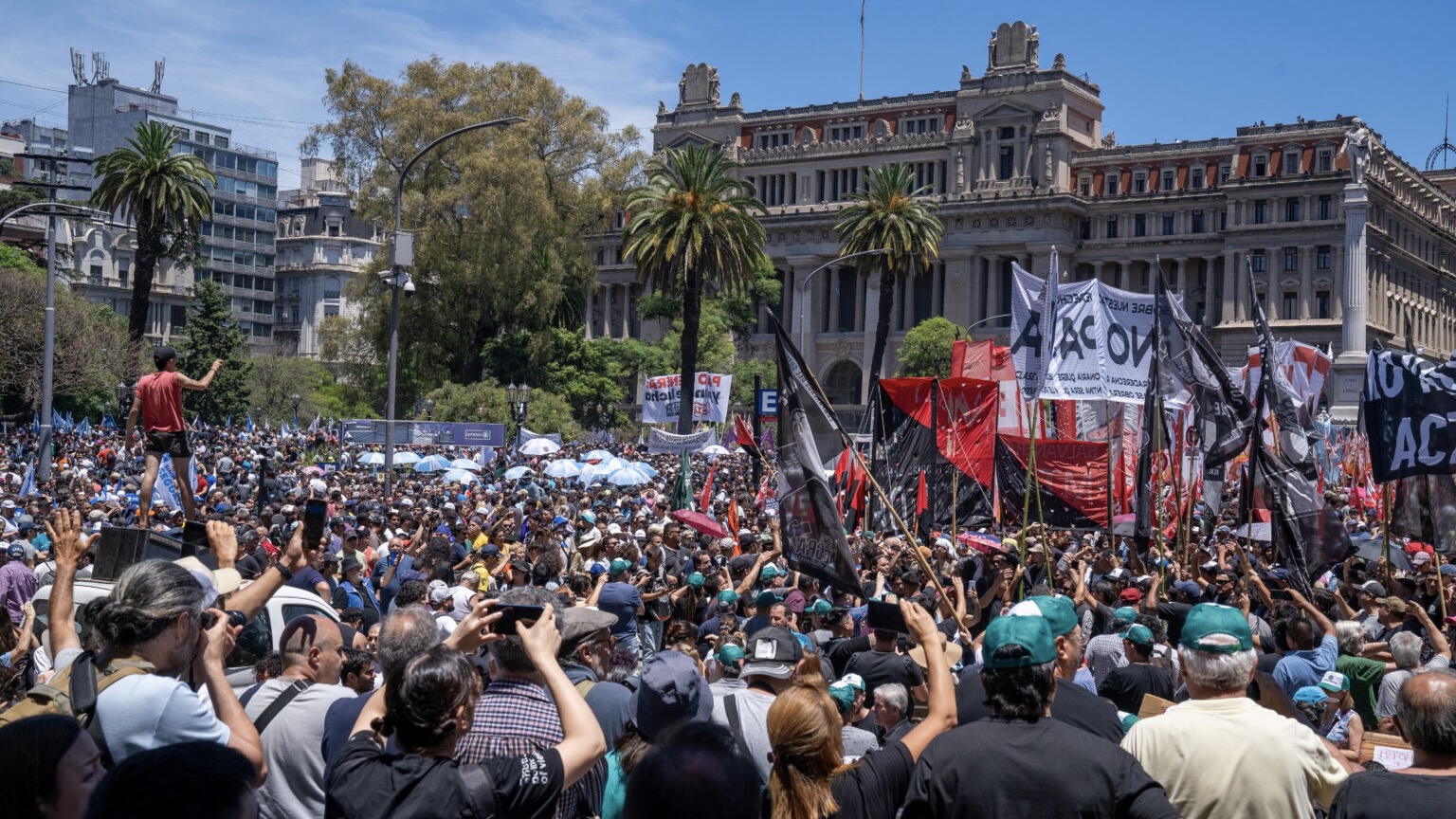
    On January 24, across Argentina, millions of workers are participating in a national general strike against the anti-workers laws pushed forward by far-right libertarian president, Javier Milei.

    Since he was inaugurated on December 10, 2023, Milei has worked quickly to draft legislation which threatens the hard-fought for rights of the Argentine people.

    In response, Argentina’s trade unions, social movements, and human rights organizations have been on the streets to reject these measures, and called for a national general strike for January 24. For the last several weeks, hundreds of trade unions, neighborhood associations, cultural groups, left groups, community kitchens, and social movements have been organizing local and neighborhood assemblies and meetings to mobilize for the strike.

    The largest concentration will be in Buenos Aires, Argentina’s capital, where hundreds of thousands are expected to congregate in the center of the city outside Congress. Mobilizations are also scheduled in dozens of other cities across the country like Córdoba, Rosario, San Miguel de Tucumán, Mendoza, Mar del Plata, Bahía Blanca, and others. While basic essential services will not be disrupted by the strike, the majority of the economy and daily life is set to be paralyzed due to the massive industrial action.

    Who is participating?

    The January 24 national strike is historic, as it is the first time in recent history that the country’s three major labor confederations are uniting for a joint industrial action. The General Confederation of Labor (CGT), the Argentine Workers’ Central Union, and the Argentine Workers’ Central Union (Autonomous) together represent millions of workers and have all called on their affiliated unions to participate in the day of mobilization.

    The confederations are made up of dozens of unions representing workers in education, construction, civil service, food processing, healthcare, mining and metalwork, restaurants, commercial transportation (truck drivers, shipping, etc.), public transportation (buses, subway, and provincial trains), state workers, auto industry, textile, real estate, commercial, acting, national companies, the courts, music industry, communications and technology, among others. In other words, nearly the totality of the Argentine working class.

    Mobilization against Milei in Córdoba in December 2023. Photo: CTA-A

    Other unions such as the Union of Workers of the Popular Economy (UTEP) which represents street vendors, cooperatives, recyclers, agricultural workers, childcare workers, community kitchen workers, and others from the informal sector or “popular economy” have also pledged their participation in the mass mobilization.

    Human rights organizations are also heeding the call for mobilizations such as the Grandmothers of the Plaza de Mayo, the Center of Legal and Social Studies (CELS), HIJOS (Sons and Daughters for Identity and Justice Against Forgetting and Silence), and others.

    Several social and political forces that were part of the Union for the Homeland coalition which was defeated by Javier Milei in the presidential race in November, have also declared they will join the mobilization, such as Frente Patria Grande, La Campora, and Movimiento Evita.

    Why are they mobilizing?

    The strike has been called to reject Milei’s DNU and Omnibus Law, both pieces of legislation which trade unions say directly attack workers rights, impose brutal economic neoliberal austerity measures, and threaten the national sovereignty of the country. Organizations have called on the judiciary and the legislature to intervene to rule the DNU unconstitutional and revoke it in Congress, and to stop his Omnibus law from being passed. Both pieces of legislation have already met major legal roadblocks and have already undergone modifications from their first versions.

    The Decree of Necessity and Urgency (DNU) 70/2023 was announced by Milei on December 20, 2023 (10 days after he took office). DNUs can be used by the executive to circumvent Congress and implement change immediately. Milei’s DNU titled “Bases to Rebuild the Argentine Economy” contains over 350 articles which would affect over 70 pieces of legislation, some completely overturned and others modified.

    Milei and his cabinet announcing the DNU.

    The DNU calls for the deregulation of major sectors of the Argentine economy such as energy, export, the credit card industry, transportation – including the aeronautic sector, healthcare, communications, tourism, and more. It also opens the door for the privatization of key state companies and the national bank and promotes foreign investment. It also impacts labor rights and rights of trade unions, such as the right to strike, the right to overtime pay, and other hard fought for rights of workers.

    Read more: Milei declares war on Argentine working class with presidential decree

    The Omnibus Law, officially called the Bases and Starting Points for the Liberty of Argentines, was sent to Congress by Milei on December 27, 2023. The 351-page bill contains more than 664 articles which will be debated in Congress. The Omnibus law attempts to take Milei’s “deregulation” approach a step further and expands it to all major areas of life in Argentina.

    It includes a proposed reform to the Penal Code focused on “control of the streets” and calls for increasing sentences against protesters and in some cases eliminating the possibility of bail. It also initially stated that any meeting of three or more people in a public space must have the permission of the Minister of Security – this was later withdrawn.

    It calls for the privatization of major state enterprises such as Argentine Airlines, ARSAT – a state telecommunications company, Argentine Trains, Public TV, the Water and Sewage Company (AySA), and the National Bank. Milei also included a list of another several dozen companies that have majority state participation such as Argentina Energy, military factories, the General Port Administration, Corredores Viales or the highway company, Argentine Mail, and Telam, the National News Agency.

    The Omnibus law also calls for major reforms of the country’s public education system, notably taking away free higher education for foreigners. It also calls for major modifications of the entrance requirements and huge cuts to the overall budget. The country’s robust culture sector would also see major budget cuts under the law with a call to close historic artistic institutions of the country.

    Environmental protections such as the Glacier Law, the Forest Law, and the Environmental Protection Law for the Control of Burning Activities would also undergo massive modifications.

    The Omnibus also threatens retirees, emboldens police to use their full force, including gunfire, with little consequences, and transforms the electoral system.

    The broad and expansive nature of the Omnibus and its outright attacks on so many sectors of society also helps explain why so many will be mobilizing in the strike.

    The Secretary of Gender and Diversity of the Association of State Workers (ATE), Clarisa Gambera said, “This January 24, all of the union centers and social organizations of this country will be on the streets, to stop the ferocious advance of the right. Those who say that particular interests were generated over time, what they call particular interests are the rights that we won with struggle over more than 100 years and we are not willing to lose them. We continue to build unity, debates are taking place at the federal level. Comrades from all over the country participate in multi-sectoral meetings, assemblies, plenary sessions that are different ways to activate and add numbers of comrades on the streets this 24th.”

    The CGT wrote in a statement rejecting Milei’s austerity measures and his claim that they only affect the “political caste”, not the people. CGT argues that, “The fiscal and exchange adjustment plan announced by the Government will generate a rapid acceleration of the inflationary process, which will destroy the purchasing power of the salaries of formal and informal workers, workers in the social and solidarity economy, self-employed workers, as well as of retirees and pensioners. This means that the announced adjustment does not adjust to the ‘so-called’ caste as promised in the campaign. Milei’s adjustment, once again, falls on the people.”

    Repression

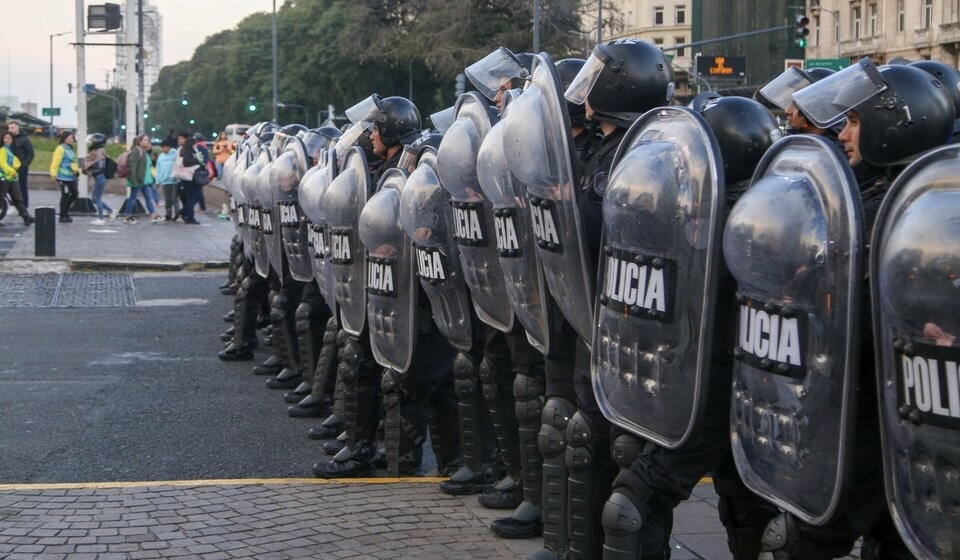
    Another major point of contention for the Argentine people is the repressive policy imposed by the Minister of Security Patricia Bullrich, to dissuade mass participation in the inevitable mass mobilizations against Milei’s economic measures. Following the first protests against Javier Milei’s administration, Bullrich warned that it would use all “deterrent measures” to stop protests and on December 14 announced the “Public Order Protocol”.

    Among other things, the protocol authorizes the police and security forces to intervene in response to any attempt to partially or totally block any national roads, transportation, or “free movement.” It has been dubbed the “anti-picket” protocol as it targets the historic picket and roadblock tactic of Argentine movements.

    Another government “deterrence measure” is the threat from Bullrich that those who participate in protest actions and road blockades that are recipients of social programs will not receive this support: “he who blocks the street does not get paid,” she declared.

    On January 10, 2024, Bullrich made good on her threats and, under the auspices of her protocol, sent letters to the major trade union centers of Argentina, unions, social, political and human rights organizations that had participated in protests on December 20, 22, and 27 of 2023 against Milei’s austerity measures and demanded they pay millions in fines for their participation in the allegedly “illegal activity”.

    CELS wrote that in issuing these economic sanctions for participation in protests, the Ministry of National Security is “assuming powers that it does not have” and that it is also “trying to condition future action”. For the human rights research center, “This policy constitutes an infringement of the right to protest and demonstration and an act of state interference against freedom of association.”

    International solidarity

    The national general strike has gained widespread international support. Trade unions across Latin America and the Caribbean, as well as from Pakistan, Italy, Switzerland, Canada, the Netherlands, South Korea, Spain, and more, have pledged to mobilize on January 24 in solidarity with their Argentine comrades, with many calling for protests in front of their Argentine embassies or consulates.

    The International Trade Union Confederation (ITUC), which brings together 191 million workers in 163 countries from all continents, released a statement expressing its support for its affiliated organizations in their call for the national general strike against “Milei’s shock therapy”. “Three major union federations, the CGT, the CTA-T, and the CTA-A, have united to stand against the serious threat to fundamental workers’ rights and civil liberties posed by Milei’s move to resurrect out-dated and debunked neo-liberal policies,” reads the statement.

    ITUC General Secretary Luc Triangle said, “The actions of the Milei government aim to recreate the darkest days of dictatorship, and they require a strong, united response from the global union movement. We stand in full solidarity with the working people of Argentina in their defense of justice and democracy.”

    The World Federation of Trade Unions (WFTU), which represents 105 million workers in 133 countries, expressed its support for its affiliate unions participation in the January 24 strike to “express their opposition to the measures of the ultra-liberal and neo-fascist government of Javier Milei”. It has called on its affiliates in other countries to mobilize in solidarity with the Argentine workers.

    Trade Union Confederation of the Americas (TUCA-CSA) joined the other international confederation in standing with the struggle of Argentine workers, and calling on its affiliate organizations to mobilize in solidarity on January 24.

    The PIT-CNT of Uruguay, Argentina’s northern neighbor, stated that “it is necessary to join forces and have as a horizon to advance Latin America on the path of struggle and hope towards a more just, free and equal society.”

    Original article by Zoe Alexandra republished from peoples dispatch under a Creative Commons Attribution-ShareAlike 4.0 (CC BY-SA) license.

  • Argentina’s far-right libertarian president warns in Davos, “the West is in danger”

    Spread the love

    [While a serious issue, there are some amusing parts to this article.]

    Original article by ARG Medios at peoples dispatch republished under a Creative Commons Attribution-ShareAlike 4.0 (CC BY-SA) license.

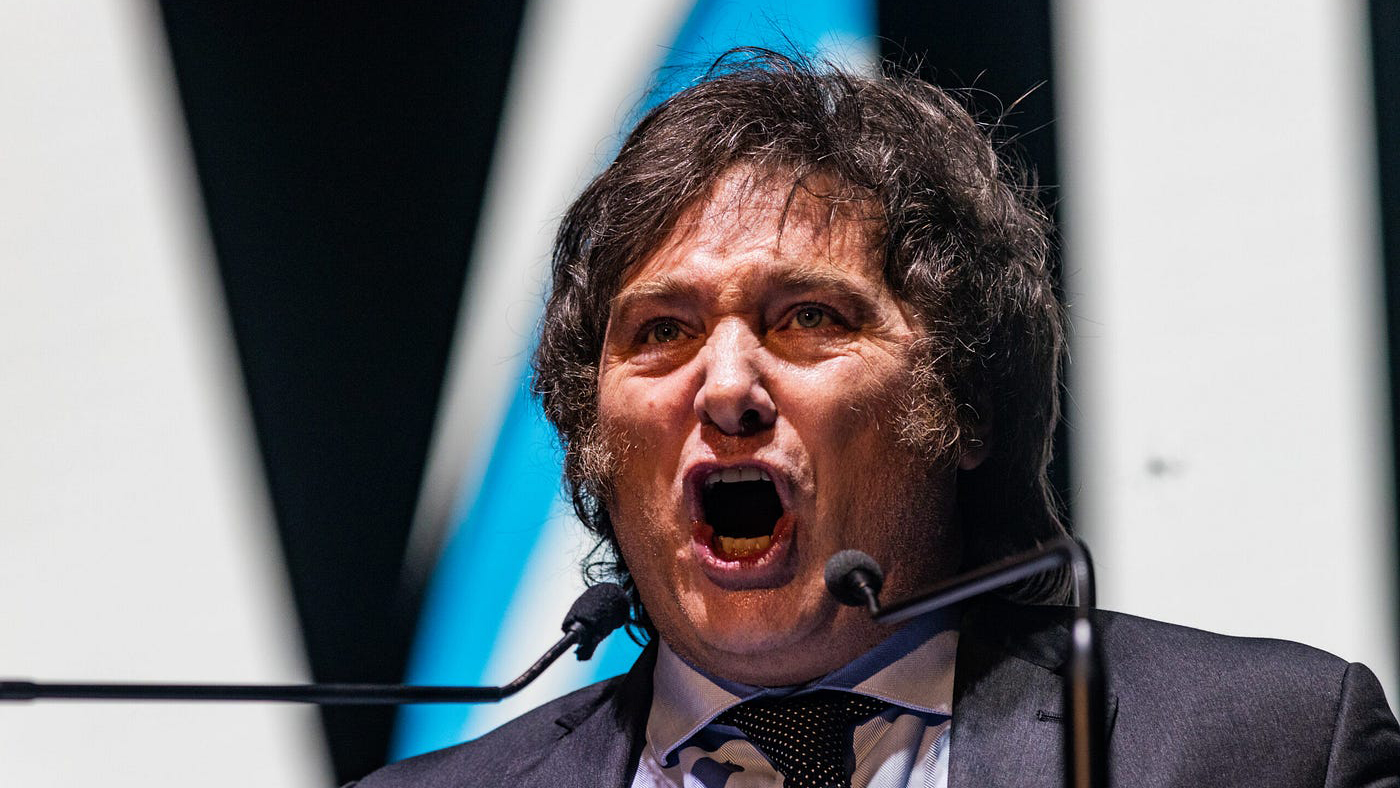
    On the morning of January 17, Argentine President Javier Milei gave his first speech at the World Economic Forum in Davos, Switzerland. The far-right libertarian was sworn in on December 10, 2023 and since then has launched all-out attacks on the working class through presidential decrees and omnibus laws, all of which have been vehemently opposed on the streets.

    Milei began his speech at Davos by telling those present: “I am here to tell you that the West is in danger. All over the world, leaders who must defend the values of capitalism assume a vision that leads to socialism and poverty. “The main leaders of the world have abandoned freedom for so-called collectivism, which is the cause of the problems.”

    The strongest argument of his speech was going to be that capitalism is the only tool to end hunger and poverty in the world, although he added: “the leftist thinking attacks capitalism for being, according to them, unjust. They say it is bad because it is individualistic and they fight for social justice. This concept has become fashionable around the world, but social justice is an unfair, violent idea, because taxes are coercively collected. Nobody pays taxes voluntarily. The State is financed through coercion. If a company generates a good product it will do well, if the State punishes the capitalist for being successful it destroys their incentives, and the cake will be smaller. Collectivism ties the entrepreneur’s hands.”

    He also spoke of enemies, who for him are those who use the State as a tool: “everyone. There are no substantive differences. Socialists, conservatives, communists, fascists, Nazis, social democrats, centrists. They are all the same.”

    In this same sense, Milei attacked two of the most important agendas at the Davos Forum, gender inequality and climate change: “The first of these new battles was the ridiculous and unnatural fight between men and women. Libertarianism already establishes equality between the sexes. The founding stone of our creed says that all men are created equal, that we all have the same inalienable rights granted by the creator, among which are life, liberty and property,” he maintained.

    He went further and said: “the only thing that became of this agenda of radical feminism is greater intervention by the state to hinder the economic process, giving work to bureaucrats who do not contribute anything to society, be it in the format of women’s ministries or international organizations dedicated to promoting this agenda.”

    In the same sense, he denied human responsibility for climate change: “another one of the conflicts that socialists raise is that of man against nature. They maintain that human beings damage the planet and that it must be protected at all costs, even going so far as to advocate for population control mechanisms or the bloody agenda of abortion.”

    Finally, the only praise in Javier Milei’s speech was for the businessmen, whom he treated as heroes and also told them: “do not let yourself be intimidated by the political caste that wants to remain in power. You are heroes, you are benefactors, let no one tell you that your ambition is immoral, do not give in to the advance of the State, The state is the problem itself, you are the protagonists of history. Long live fucking freedom!

    The president returned to Argentina on Wednesday on a commercial flight, after a couple of meetings and a bold speech that was not very widely accepted in Davos. He will face a massive national strike on January 24, called for by all the major trade unions and confederations in Argentina in opposition to his pro-capitalist, pro-businessman policies.

    This article was first published in Spanish on ARG Medios.

    Original article by ARG Medios at peoples dispatch republished under a Creative Commons Attribution-ShareAlike 4.0 (CC BY-SA) license.

  • Argentine courts grant union’s request and suspend Milei’s labor reform

    Spread the love

    Original article by Brasil de Fato republished from peoples dispatch under a Creative Commons Attribution-ShareAlike 4.0 (CC BY-SA) license.

    The measures are part of a “decree” announced by the far-right president in December

    Labor reform is one of the points of Milei’s decree (Photo: Mídia NINJA)

    The Argentine judiciary has granted a request from the National Confederation of Labor (CGT), the country’s main trade union center, and suspended the effects of the labor reform provided for in the “decree” launched by the government of ultra-right Javier Milei last December. The court decision published on January 3 is a precautionary one, i.e. it suspends the measure.

    The decision was taken by the National Chamber of Labor Appeals, the first instance in the Argentine judiciary for appeals on labor issues. The court argued that there was no proven need or urgency to make the decision without consulting the Argentine Congress, which is responsible for legislation.

    The “decretazo” is formally called the Decree of Necessity and Urgency (DNU), and is provided for in the Argentine Constitution. However, the executive branch can only issue this type of decree when there are exceptional circumstances and it is not possible to wait for Congress to meet.

    Among other measures, the Milei government’s labor reform extends the probationary period for new employees from three to eight months (thus increasing the period in which employers can fire new workers without paying severance pay).

    It also authorized the dismissal of workers who take part in picket lines or occupy workplaces during stoppages or strikes, as well as changes to overtime compensation systems.

    According to Argentine newspaper La Nación, Wednesday’s court decision came as a surprise to the government. Clarín, another daily in the country, said that the government will appeal to higher courts to overturn the injunction issued by the Labor Appeals Chamber.

    This article was translated from an article originally published in Portuguese on Brasil De Fato.

    Original article by Brasil de Fato republished from peoples dispatch under a Creative Commons Attribution-ShareAlike 4.0 (CC BY-SA) license.

  • Skwawkbox exclusive: smeared ex-Lab member Siddiqi ‘planning to stand vs Streeting’

    Spread the love

    Original article republished from the Skwawkbox for non-commercial use.

    Victim of repeated smears and even a discredited prosecution is planning a bid at the next Ilford North parliamentary election, say locals

    Syed Siddiqi, the former Labour member repeatedly abused, harassed and smeared by right-wing Labour figures in Ilford in north London, is planning to stand against right-winger Wes Streeting in the next Ilford North parliamentary election, according to local sources.

    Siddiqi has faced constant harassment by the party right, including a failed attempt to prosecute him that ended in all charges being dropped – reminiscent of the disgraced hatchet job against neighbouring left-wing Muslim MP Apsana Begum.

    The party’s hounding of Siddiqi even went as low as suspending him for more than three years after he was the victim of a foul, late-night Islamophobic tirade by a local right-winger, despite the whole incident being recorded. His abuser was quickly reinstated so that he could stand for Labour in local elections.

    Siddiqi was revealed to have been targeted by Streeting’s office and others, by the leaked party report into abuse by the party right:

    Labour has a long and appalling record of Islamophobia and of protecting abusive right-wingers. Local council leader Jas Athwal was selected as the party’s candidate in Ilford South, after complaints of ‘serious sexual assault’ were dismissed by a committee of Labour national executive members – against the advice of the party’s barrister. He won the selection vote when six hundred postal votes ‘turned up’ late in proceedings, while supporters of his opponent, incumbent MP Sam Tarry, were denied entry to the selection meeting. Labour general secretary David Evans dismissed the evidence as ‘irrelevant to the result.

    The party has reason to fear the challenge. Last year, Lutfur Rahman ousted Labour to win the executive mayor’s position in nearby Tower Hamlets last year and voters there kicked out Labour at the last local elections in a landslide for Rahman’s new Aspire party. In neighbouring East End borough Newham, Newham Independents leader Mehmood Mirza hammered an imposed Labour candidate in May – and his colleague Sophia Naqvi then trounced Labour in November’s by-election in Newham Plaistow North.

    With discontent spreading in the area and Black councillor Shanell Johnson quitting Labour in Redbridge, which covers both Ilford seats, in disgust at the local and national party’s conduct, few would be surprised to see similar developments threatening Labour’s complacency there too; particularly with an incumbent MP as dislikeable as Streeting, Starmer’s pro-privatisation health spokesman who has accepted donations from private health interests and who triggered protests outside his office – and a boycott by students – for his part in Starmer’s support for Israeli war crimes.

    In 2018, Streeting also launched a ‘disgraceful’ and ‘disgusting’ tirade in the face of Diane Abbott, Britain’s first Black woman MP, leaving Abbott ‘shell-shocked’. If he stands, Syed Siddiqi can expect considerable support from outraged former Labour supporters around the country who would be delighted to see Streeting ejected.

    Original article republished from the Skwawkbox for non-commercial use.