Iran has been attacked by US and Israel when peace was within reach
Spread the love
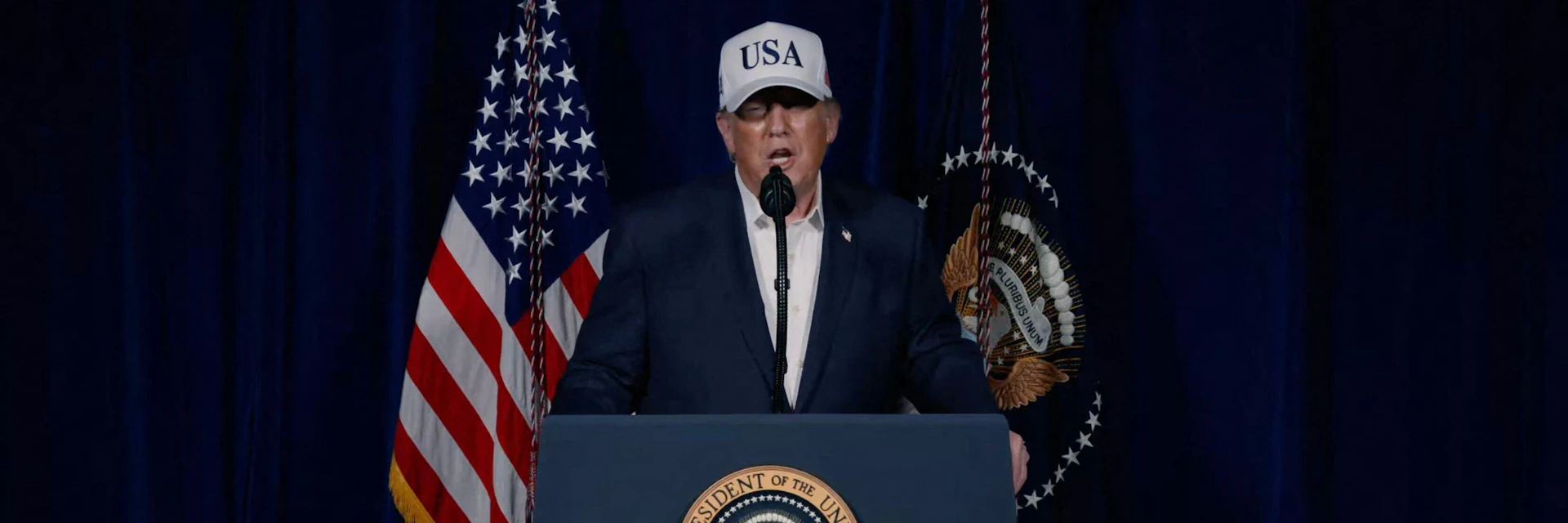
@realDonaldTrump via CNP

Bamo Nouri, City St George’s, University of London

US and Iranian negotiators met in Geneva earlier this week in what mediators described as the most serious and constructive talks in years. Oman’s foreign minister, Badr Albusaidi, spoke publicly of “unprecedented openness,” signalling that both sides were exploring creative formulations rather than repeating entrenched positions. Discussions showed flexibility on nuclear limits and sanctions relief, and mediators indicated that a principles agreement could have been reached within days, with detailed verification mechanisms to follow within months.

These were not hollow gestures. Real diplomatic capital was being spent. Iranian officials floated proposals designed to meet US political realities – including potential access to energy sectors and economic cooperation. These were gestures calibrated to allow Donald Trump to present any deal as tougher and more advantageous than the 2015 agreement he withdrew the US from in May 2018. Tehran appeared to understand the optics Washington required, even if contentious issues such as ballistic missiles and regional proxy networks remained outside the immediate framework. Then, in the middle of these talks, the bridge was shattered.

Sensing how close the negotiations were — and how imminent military escalation had become — Oman’s foreign minister, Badr Albusaidi, made an emergency dash to Washington in a last-ditch effort to preserve the diplomatic track.

In an unusually public move for a mediator, he appeared on CBS to outline just how far the talks had progressed. He described a deal that would eliminate Iranian stockpiles of highly enriched uranium, down-blend existing material inside Iran, and allow full verification by the International Atomic Energy Agency (IAEA) — with the possibility of US inspectors participating alongside them. Iran, he suggested, would enrich only for civilian purposes. A principles agreement, he indicated, could be signed within days. It was a remarkable disclosure — effectively revealing the contours of a near-breakthrough in an attempt to prevent imminent war.

But rather than allowing diplomacy to conclude, the US and Israel have launched coordinated strikes across Iran. Explosions were reported in Tehran and other cities. Trump announced “major combat operations,”, framing them as necessary to eliminate nuclear and missile threats while urging Iranians to seize the moment and overthrow their leadership. Iran responded with missile and drone attacks targeting US bases and allied states across the region.

What is most striking is not merely that diplomacy failed, but that it failed amid visible progress. Mediators were openly discussing a viable framework; both sides had demonstrated flexibility – a pathway to constrain nuclear escalation appeared tangible. Choosing military escalation at that moment undermines the premise that negotiation is a genuine alternative to war. It signals that even active diplomacy offers no guarantee of restraint. Peace was not naïve. It was plausible.

Iran’s approach in Geneva was strategic, not submissive. Proposals involving economic incentives – including energy cooperation – were not unilateral concessions but calculated compromises designed to structure a politically survivable agreement in Washington. The core objective was clear: constrain Iran’s nuclear programme through enforceable limits and intrusive verification, thereby addressing the very proliferation risks that sanctions and threats of force were meant to prevent.

Talks had moved beyond rhetorical posturing toward concrete proposals. For the first time in years, there was credible movement toward stabilising the nuclear issue. By attacking during that negotiation window, Washington and its allies have not only derailed a diplomatic opening but have cast doubt on the durability of American commitments to negotiated solutions. The message to Tehran – and to other adversaries weighing diplomacy – is stark: even when talks appear to work, they can be overtaken by force.

Iran is not Iraq or Libya

Advocates of escalation often invoke Iraq in 2003 or Libya in 2011 as precedents for rapid regime collapse under pressure. Those analogies are misleading. Iraq and Libya were highly personalised systems, overly dependent on narrow patronage networks and individual rulers. Remove the centre, and the structure imploded.

Iran is structurally different. It is not a dynastic dictatorship but an ideologically entrenched state with layered institutions, doctrinal legitimacy and a deeply embedded security apparatus, including the Islamic Revolutionary Guard Corps. Its authority is intertwined with religious, political and strategic narratives cultivated over decades. It has endured sanctions, regional isolation and sustained external pressure without fracturing.

Even a previous US-Israeli campaign in 2025 that lasted 12 days failed to eliminate Tehran’s retaliatory capacity. Far from collapsing, the state absorbed pressure and responded. Hitting such a system with maximum force does not guarantee implosion; it may instead consolidate internal cohesion and reinforce narratives of external aggression that the leadership has long leveraged.

The mirage of regime change

Rhetoric surrounding the strikes has already shifted from tactical objectives to the language of regime change. US and Israeli leaders framed military action not solely as neutralising missile or nuclear capabilities, but as an opportunity for Iranians to overthrow their government. That calculus – regime change by force – is historically fraught with risk.
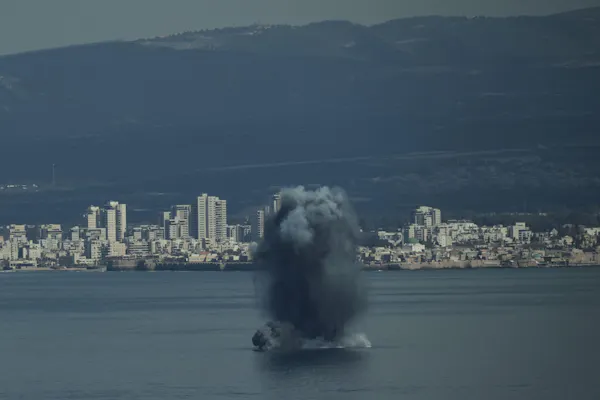
An incoming missile crashes into the sea off the port of Haifa in Israel as Iran retaliates. AP Photo/Leo Correa

The Iraq invasion should be a cautionary tale. The US spent more than a decade cultivating multiple Iraqi opposition groups – yet dismantling the centralised state apparatus still produced chaos, insurgency and fragmentation. The vacuum gave rise to extremist organisations such as IS, drawing the US into years of renewed conflict.

Approaching Iran with similar assumptions ignores both its institutional resilience and the complexity of regional geopolitics. Sectarian divisions, entrenched alliances and proxy networks mean that destabilisation in Tehran would not remain contained. It could rapidly spill across borders and harden into prolonged confrontation.

A region wired for escalation

Iran has invested heavily in asymmetric capabilities precisely to deter and complicate external intervention. Its missile, drone and naval systems are embedded along the strait of Hormuz — a chokepoint for global energy — and linked into a network of regional allies and militias.

In the current escalation, Tehran has already launched retaliatory missile and drone strikes against US military bases and allied territories in the Gulf, hitting locations in Iraq, Bahrain, the United Arab Emirates (including Abu Dhabi), Kuwait and Qatar in direct response to US and Israeli strikes on Iran’s cities, including Tehran, Qom and Isfahan. Explosions have been reported in Bahrain and the UAE, with at least one confirmed fatality in Abu Dhabi, and several bases housing US personnel have been struck or targeted, underscoring how the conflict has already spread beyond Iran’s borders

A full-scale regional war is now more likely than it was a week ago. Miscalculation could draw multiple states into conflict, inflame sectarian fault lines and disrupt global energy markets. What might have remained a contained nuclear dispute now risks expanding into a wider geopolitical confrontation.

What about Trump’s promise of no more forever wars?

Trump built his political brand opposing “endless wars” and criticising the Iraq invasion. “America First” promised strategic restraint, hard bargaining and an aversion to open-ended intervention. Escalating militarily at the very moment diplomacy was advancing sits uneasily with that doctrine and revives questions about the true objectives of US strategy in the Middle East.
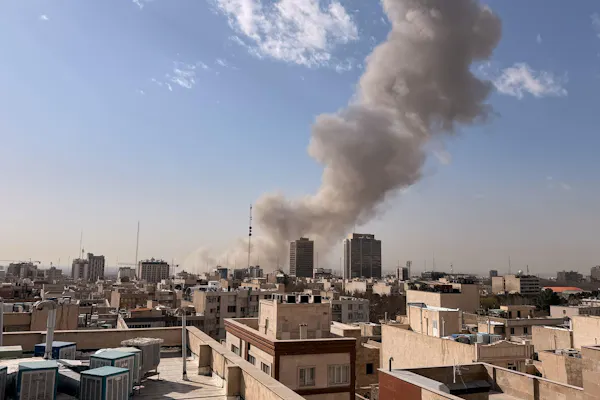
Tehran and other Iranian cities have come under heavy bombardment from Israel and the US. AP Photo

If a workable nuclear framework was genuinely emerging, abandoning it in favour of escalation invites a deeper question: does sustained tension serve certain strategic preferences more comfortably than durable peace?

Trump’s Mar-a-Lago address announcing the strikes carried unmistakable echoes of George W. Bush before the 2003 invasion of Iraq. Military action was framed as reluctant yet necessary – a pre-emptive move to eliminate gathering threats and secure peace through strength. The rhetoric of patience exhausted and danger confronted before it fully materialises closely mirrors the language Bush used to justify the march into Baghdad.

The parallel extends beyond tone. Bush cast the Iraq war as liberation as well as disarmament, promising Iraqis freedom from dictatorship. Trump similarly urged Iranians to reclaim their country, implicitly linking force to regime change. In Iraq, that fusion of shock and salvation produced not swift democratic renewal but prolonged instability. The assumption that military force can reorder political systems from the outside has already been tested – and its costs remain visible.

The central challenge now facing the US is not simply Iran’s military capability. It is credibility. Abandoning negotiations mid-course signals that diplomacy can be overridden by force even when progress is visible. That perception will resonate far beyond Tehran.

Peace was never guaranteed. It was limited and imperfect, focused primarily on nuclear constraints rather than human rights or regional proxy networks. But it was plausible – and closer than many assumed. Breaking the bridge while building it does more than halt a single agreement – it risks convincing both sides that negotiation itself is futile.

In that world, trust erodes, deterrence hardens and aggression – not agreement – becomes the default language of international power. What we are witnessing is yet another clear indication that the rules-based order has been consigned to the history books.

Bamo Nouri, Honorary Research Fellow, Department of International Politics, City St George’s, University of London

This article is republished from The Conversation under a Creative Commons license. Read the original article.

Continue ReadingIran has been attacked by US and Israel when peace was within reach

Iraqi Shia faction claims drone attack on US base at Baghdad airport

Spread the love

This work by Middle East Monitor is licensed under a Creative Commons Attribution-NonCommercial-ShareAlike 4.0 International License.

Fire breaks out at Erbil Airport in northern Iraq following explosions as air defense systems carried out intensive interception operations on March 1, 2026. [Ahsan Mohammed Ahmed Ahmed – Anadolu Agency]

An Iraqi Shia faction has said it carried out a drone attack on a US military base at Baghdad International Airport.

Saraya Awliya’a al-Dam, which operates under the umbrella of the Islamic Resistance in Iraq, announced early on Monday that it had launched a swarm of drones targeting the Victoria military base at the airport.

In a statement issued before dawn, the group said: “In fulfilment of our religious duty and in retaliation for the leader Ali Khamenei, and in support of the Islamic Republic of Iran, our fighters carried out an attack today, using a fleet of drones targeting the Victoria military base at Baghdad Airport.”   

On Sunday night, Saraya Awliya al-Dam also claimed responsibility for shelling US positions in the city of Erbil in the Kurdistan Region of Iraq. 

READ: Hezbollah formally enters conflict, fires rockets at Mishmar military site near Haifa

Orcas discuss Donald Trump and the killer apes' concept of democracy. Front Orca warns that Trump is crashing his country's economy and that everything he does he does for the fantastically wealthy.
Orcas discuss Donald Trump and the killer apes’ concept of democracy. Front Orca warns that Trump is crashing his country’s economy and that everything he does he does for the fantastically wealthy.
Donald Fuhrump says that Amerikkka doesn't bother with crimes or charges anymore, not being 100% Amerikkkan and opposing his real estate intentions is enough.
Donald Fuhrump says that Amerikkka doesn’t bother with crimes or charges anymore, not being 100% Amerikkkan and opposing his real estate intentions is enough.
Orcas discuss rotting brain. Front Orca says "Wish someone would lock him up".
Orcas discuss rotting brain. Front Orca says “Wish someone would lock him up”.
Continue ReadingIraqi Shia faction claims drone attack on US base at Baghdad airport

Hezbollah formally enters conflict, fires rockets at Mishmar military site near Haifa

Spread the love

This work by Middle East Monitor is licensed under a Creative Commons Attribution-NonCommercial-ShareAlike 4.0 International License.

Hezbollah supporters gather holding Iranian flags and posters of Ayatollah Ali Khamenei while chanting anti-U.S. and anti-Israel slogans following the announcement that the Iranian leader was killed in U.S.-Israeli attacks, in the Dahieh district south of Lebanon’s capital Beirut on March 01, 2026. [Houssam Shbaro – Anadolu Agency]

Lebanon’s Hezbollah has claimed responsibility for shelling an Israeli military site in the north of the occupied territories.

In a statement, the group said it had targeted the Mishmar HaCarmel site, south of the occupied city of Haifa, with a salvo of rockets and drones.

In response, Israeli forces carried out heavy air strikes on several locations in Beirut’s southern suburbs and villages in the Bekaa Valley.

The Israeli army issued evacuation orders for dozens of towns in southern and eastern Lebanon.

In a statement, it said residents of 53 villages in southern Lebanon and the Bekaa must leave their homes and move at least one kilometre away.

READ: Iranian state TV says Supreme Leader Ali Khamenei killed in US-Israeli attacks

The developments came amid large-scale displacement from Beirut’s southern suburbs and southern Lebanon, with some schools opened to accommodate those fleeing.

Earlier, the Israeli army said it had intercepted one rocket fired from Lebanon, while other rockets landed without causing damage or casualties.

Israel’s Home Front Command confirmed that sirens sounded in the northern town of Margaliot over fears of a drone infiltration.

Israel’s public broadcaster reported that Hezbollah had launched rockets towards northern Israel for the first time since the ceasefire agreement in November 2024. There has been no official comment from Hezbollah on this specific claim.

The broadcaster quoted senior security officials as saying that rocket fire from Lebanon would be met with a strong response.

Meanwhile, the mayor of Haifa said the rocket fire from Lebanon was a development that required immediate action and a firm response.

READ: Iran’s Larijani declares no talks with US, accuses Trump of regional chaos

Orcas discuss Donald Trump and the killer apes' concept of democracy. Front Orca warns that Trump is crashing his country's economy and that everything he does he does for the fantastically wealthy.
Orcas discuss Donald Trump and the killer apes’ concept of democracy. Front Orca warns that Trump is crashing his country’s economy and that everything he does he does for the fantastically wealthy.
Donald Fuhrump says that Amerikkka doesn't bother with crimes or charges anymore, not being 100% Amerikkkan and opposing his real estate intentions is enough.
Donald Fuhrump says that Amerikkka doesn’t bother with crimes or charges anymore, not being 100% Amerikkkan and opposing his real estate intentions is enough.
Orcas discuss rotting brain. Front Orca says "Wish someone would lock him up".
Orcas discuss rotting brain. Front Orca says “Wish someone would lock him up”.

Continue ReadingHezbollah formally enters conflict, fires rockets at Mishmar military site near Haifa

Iran launches retaliatory strikes across Middle East, dozens dead

Spread the love

This work by Middle East Monitor is licensed under a Creative Commons Attribution-NonCommercial-ShareAlike 4.0 International License.

Smoke rises after Iran carried out a missile strike on the main headquarters of the U.S. Navy’s 5th Fleet in Manama in retaliation against US-Israeli attacks, in Bahrain February 28, 2026. [Stringer – Anadolu Agency]

Iran launched retaliatory missile and drone strikes over the weekend against eight countries across the Middle East, killing dozens and wounding hundreds, as a second day of explosions shook the region following joint US-Israeli military operations against Tehran, Anadolu reports.

So far, Iranian strikes have hit Bahrain, Iraq, Jordan, Kuwait, Oman, Qatar, Saudi Arabia, and the United Arab Emirates. Inside Iran, the Iranian Red Crescent reported at least 201 people killed and 747 injured from US-Israeli attacks that began Saturday.

In Israel, nine Israelis were killed in an Iranian missile strike that directly hit a building in Beit Shemesh in west Jerusalem on Sunday.

The US also reported casualties, with US Central Command confirming three service members killed and five “seriously wounded” since the start of attacks against Iran.

The strikes took a toll across the Gulf. The United Arab Emirates reported that three people from Pakistan, Nepal and Bangladesh were killed, while 58 people of different nationalities were injured in Iranian missile and drone strikes following a US-Israeli attack on Iran.

Kuwait’s Health Ministry also said that one person was killed and 32 others were injured amid the current regional escalation.

READ: Gulf bloc set to hold emergency meeting on Sunday amid US-Iran conflict

In Qatar, the number of injuries rose to 16 following retaliatory strikes by Iran, officials announced.

Iraq reported two dead and three wounded in a strike on the Jurf al-Nasr area of Babil province.

In Bahrain, an Iranian drone struck Bahrain International Airport, causing material damage but no casualties, the Bahraini Ministry of Interior reported.

In the capital, Manama, a separate kamikaze drone hit a building on Al-Ma’arid Street. Images circulating on social media showed smoke rising from the site, though authorities have not yet released information on potential injuries or fatalities.

In Oman, five people were injured in two separate incidents — four aboard a Palau-flagged oil tanker struck north of Khasab Port, and one foreign worker hurt in a drone attack on Duqm Port.

No casualties were reported in Jordan or Saudi Arabia.

The US and Israel launched an attack on Iran on Saturday, killing several top Iranian leaders, including Supreme Leader Ayatollah Ali Khamenei. Tehran retaliated with a series of drone and missile attacks that targeted Israel, US assets and several Gulf countries.

This came after an earlier wave of attacks by Tel Aviv and Washington in June last year, triggering a 12-day war before a ceasefire was announced.

READ: Qatar, Saudi Arabia condemn Iranian attacks on Oman as ‘unacceptable escalation’

Orcas discuss Donald Trump and the killer apes' concept of democracy. Front Orca warns that Trump is crashing his country's economy and that everything he does he does for the fantastically wealthy.
Orcas discuss Donald Trump and the killer apes’ concept of democracy. Front Orca warns that Trump is crashing his country’s economy and that everything he does he does for the fantastically wealthy.
Donald Fuhrump says that Amerikkka doesn't bother with crimes or charges anymore, not being 100% Amerikkkan and opposing his real estate intentions is enough.
Donald Fuhrump says that Amerikkka doesn’t bother with crimes or charges anymore, not being 100% Amerikkkan and opposing his real estate intentions is enough.
Orcas discuss rotting brain. Front Orca says "Wish someone would lock him up".
Orcas discuss rotting brain. Front Orca says “Wish someone would lock him up”.

Continue ReadingIran launches retaliatory strikes across Middle East, dozens dead

Trump says US destroyed, sank 9 Iranian naval ships, vows to sink ‘the rest’

Spread the love

This work by Middle East Monitor is licensed under a Creative Commons Attribution-NonCommercial-ShareAlike 4.0 International License.

U.S. Central Command (CENTCOM) commences Operation Epic Fury, at the direction of the President of the United States in Tampa, Florida, United States on February 28, 2026. [US CENTCOM/Handout – Anadolu Agency]

US President Donald Trump said Sunday that US forces had destroyed and sunk nine Iranian naval vessels, including some he described as “relatively large and important”, Anadolu reports.

“We are going after the rest — they will soon be floating at the bottom of the sea, also!” Trump wrote on his social media platform Truth Social.

In a separate attack, Trump said Iranian naval headquarters had been “largely destroyed,” adding with sarcasm: “Other than that, their Navy is doing very well!”

Earlier on Sunday, US Central Command (CENTCOM) said US forces struck an Iranian Jamaran-class corvette in the Gulf of Oman.

READ: US forces hit Iranian warship in Gulf of Oman: Central Command

“The ship is currently sinking to the bottom of the Gulf of Oman at a Chah Bahar pier,” the agency said on US social media company X.

“Abandon ship,” it said, relaying US President Donald Trump’s call for Iranian armed forces, the Revolutionary Guards and police to “lay down your weapons.”

Iran has not yet confirmed any of the strikes.

The announcement came as US-Israeli strikes on Iran entered a second day. The joint operation, launched Saturday, killed several senior Iranian officials, including Supreme Leader Ayatollah Ali Khamenei.

Tehran retaliated with drone and missile strikes targeting several Gulf countries.

Iranian Foreign Minister Abbas Araghchi said Sunday that state institutions remained intact and that a new supreme leader could be chosen shortly.

READ: US, Israeli strikes hit parts of Iran’s state television headquarters in Tehran

Orcas discuss Donald Trump and the killer apes' concept of democracy. Front Orca warns that Trump is crashing his country's economy and that everything he does he does for the fantastically wealthy.
Orcas discuss Donald Trump and the killer apes’ concept of democracy. Front Orca warns that Trump is crashing his country’s economy and that everything he does he does for the fantastically wealthy.
Donald Fuhrump says that Amerikkka doesn't bother with crimes or charges anymore, not being 100% Amerikkkan and opposing his real estate intentions is enough.
Donald Fuhrump says that Amerikkka doesn’t bother with crimes or charges anymore, not being 100% Amerikkkan and opposing his real estate intentions is enough.
Orcas discuss rotting brain. Front Orca says "Wish someone would lock him up".
Orcas discuss rotting brain. Front Orca says “Wish someone would lock him up”.

Continue ReadingTrump says US destroyed, sank 9 Iranian naval ships, vows to sink ‘the rest’