“We will assemble at the advertised point, and, in exercising our right to peaceful protest, we will march to the Israeli Embassy.”
We are deeply concerned by the Metropolitan Police’s decision to impose severe and unjustified restrictions on Saturday’s demonstration against the ongoing genocide in Gaza. These new conditions, including a delayed start time of two and a half hours after the advertised assembly, effectively hinder our fundamental right to peaceful assembly and protest. For 18 consecutive marches since October, we have gathered at 12 PM and commenced shortly thereafter—an arrangement that accommodates those travelling long distances, including thousands who have pre-booked coach travel. The last-minute disruption of these plans, without any clear rationale, raises serious questions about the police’s respect for our democratic rights.
Since notifying the police of our intentions on 8 August, we have faced a series of delays, obstacles, and uncooperative behaviour. Meetings have been cancelled without notice, and our reasonable proposal for an alternative route to the Israeli Embassy was dismissed outright. Now, with just four days’ notice, the police have imposed these new conditions without explanation, creating unnecessary obstacles for a demonstration expected to draw over one hundred thousand people.
The treatment of the Palestine movement by the police is unprecedented and deeply troubling. The consistent refusal to consider our proposed routes and the imposition of unreasonable conditions appear to be based on unfounded assumptions that our protests will lead to disruption or disorder, despite our long history of peaceful demonstrations. Such actions risk undermining the right to protest, a cornerstone of democracy.
It is crucial that the police reconsider these actions in light of their responsibility to uphold democratic freedoms. We will assemble at the advertised point, and, in exercising our right to peaceful protest, we will march to the Israeli Embassy. It is essential that the police recognise the importance of respecting the rights of citizens to gather and express their views peacefully.
Introducing a wealth tax would indicate this is a progressive government. But that seems unlikely
Taking as his theme the need to “fix the foundations” after “14 years of rot” under Tory rule, new Labour prime minister Keir Starmer this week delivered a message that should bring discomfort to everyone in the months and perhaps years to come.
Those “14 years of rot” are of no surprise to voters; indeed, they helped ensure a landslide Labour victory in the election in July. But Starmer’s plans to resolve them appear likely to be far harsher than many voters expected.
The chancellor of the Exchequer, Rachel Reeve, has made numerous hints that hard times are ahead. Her October budget will be uncompromising in its commitment to raising revenue to help fill a fiscal hole reckoned to be around £20bn – but much of this money seems likely to be taken from the poorer sections of society, not the rich.
Labour will retain unpopular policies introduced by the Conservatives – the ‘bedroom tax’ and limiting child benefit allowances to the first two children, for example – while introducing its own cost-cutting measures, such as reducing the winter fuel allowances for many pensioners.
These actions contribute to a growing sense that the Starmer government will prove to be decidedly right-of-centre in a country beset with deep divisions of wealth and poverty. Some areas may see an improvement, such as labour rights, but even there, it is a matter of the devil in the detail.
One area where the government does apparently have cash to spash, though, is military spending, which is set to be substantially increased despite the manifest failures in Afghanistan, Iraq and Libya, and the deeply unpopular Israeli wars on Gaza and the West Bank.
Labour’s attitude to Israel is certainly unlikely to change, with the Department for Business and Trade reporting on efforts to strike a new trade deal with the country, saying: “Our teams will be entering negotiating rooms as soon as possible, laser-focused on creating new opportunities for UK firms.” An official from the British Embassy in Israel also recently wrote of the “tremendous opportunity for collaboration between Israeli and British companies”.
A full-scale Strategic Defence Review is also underway, and there are few if any indications that it will start by addressing the grievous failures of the past two decades. If previous experience is anything to go by, it will likely also omit the main challenge to international security: climate breakdown. Without that, the review will not be worth the paper it is written on. Net zero secretary Ed Miliband may be doing his best to maintain the idea of a green transition but the issue would be sidelined by any major increase in government spending.
On the domestic front, less than two months into the new Labour government the contrast between Food Bank Britain and the ludicrous levels of runaway wealth is apparent. It was coincidentally yet powerfully illustrated just four days before Starmer’s pre-budget speech, by a full-page property advertisement from Sotheby’s in the Financial Times.
Of the seven properties on sale, one was a relatively modest three-bedroom apartment in Chelsea, on sale for a mere £5m, while the others included a six-bedroom house in Belgravia offered at £18m and a nine-bedroom/five-bathroom place near Regent’s Park for £20m. Another Regent’s Park number was on sale for £25m million, which at least had 7 bathrooms for the 6 bedrooms. Trumping all was a triplex number in Knightsbridge – £50m with exclusive access to Hans Place Gardens.
While we have to wait for the October budget announcements, we can be reasonably sure that there will be some attempts to raise modest amounts from the wealthier sectors of society, possibly involving changes in capital gains and inheritance taxes. But the best indicator of a changed government would be one willing to bring in wealth taxes, especially those directed at the super-rich.
Onee of Britain’s largest trade unions, Unite, recently proposed a 1% per annum tax on those with net assets of over £4m, which would include property, shares and bank holdings but not mortgaged property. That is estimated to yield £25bn a year but would be bitterly opposed, with the Daily Mail informing us that: “Millionaires are looking to flee the UK in their droves to escape Labour’s tax raids – with a record number of wealthy Britons tipped to leave the country this year.”
As things stand, the budget is expected to include substantial cuts in public spending that could be at least partly avoided by such a wealth tax, and it is worth noting that some European countries such as Switzerland and Spain have already introduced them. At least Britain’s wealthy won’t be fleeing “in their droves” to those countries.
If adopted in October, in even a modest form, a wealth tax would be a reasonable marker for a progressive government. If not, then an opportunity will be missed for placing Labour in a more progressive place in the political spectrum than currently seems at all likely.
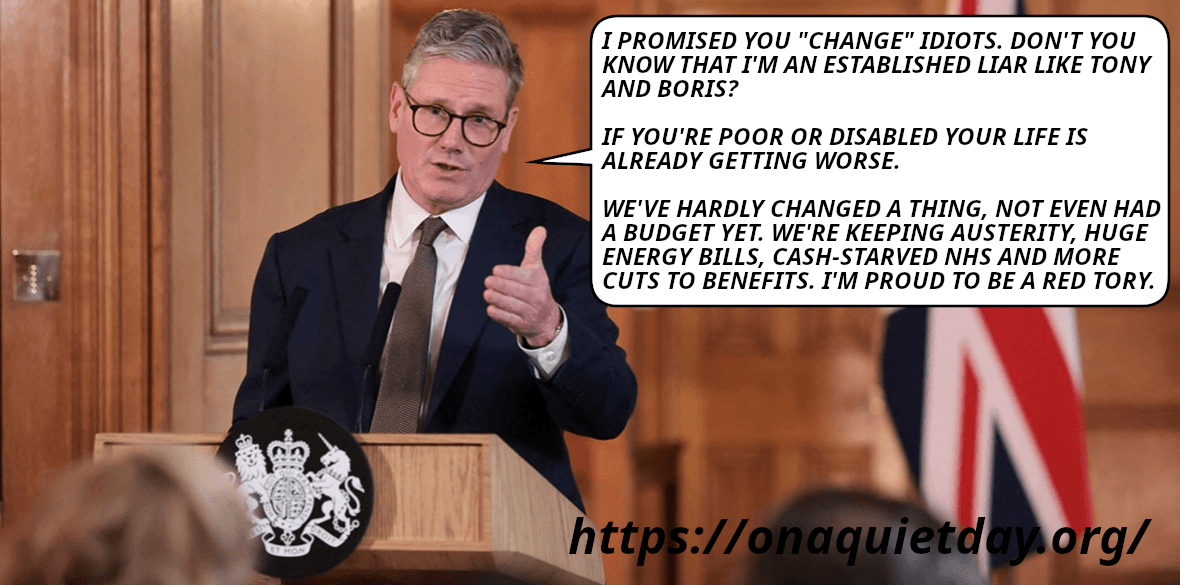
Keir Starmer confirms that he is continuing Tory policies and that he’s proud to be a red Tory.Keir Starmer says pensioners can freeze to death and poor children can starve and be condemned to failure and misery all their lives.
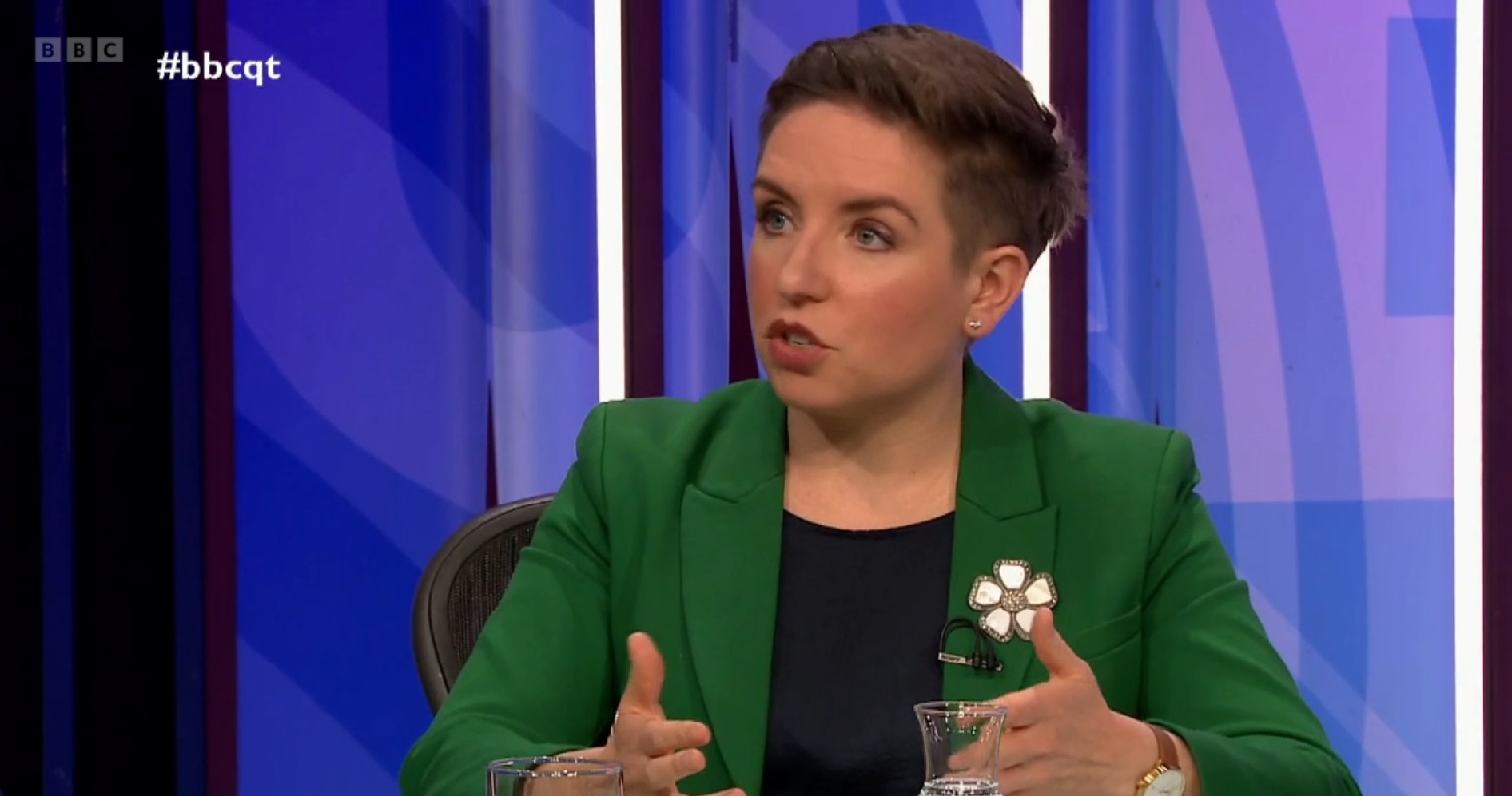
Image of the Green Party’s Carla Denyer on BBC Question Time.
Responding to Keir Starmer’s speech in which he said that the Labour government has inherited a £22bn black hole in the nation’s finances, as well as a “societal black hole”, co-leader of the Green Party Carla Denyer MP said:
“Enduring more economic pain and hardship isn’t what people voted for. They were told they were voting for change. Not voting for things to get worse before they get better. Labour needs to be honest about the fact that they could choose to make things better for everyone if they were bolder and braver.
“What is being framed as tough choices is actually about political choices. People don’t need a constant reminder that the Tories broke Britain. They need a new approach, not misguided fiscal rules that are set to make things worse.
“We must generate the funds needed for investment by shifting the burden away from the poorest onto the wealthiest. Labour’s refusal to tax the super-rich shows that business as usual is very much still in business.
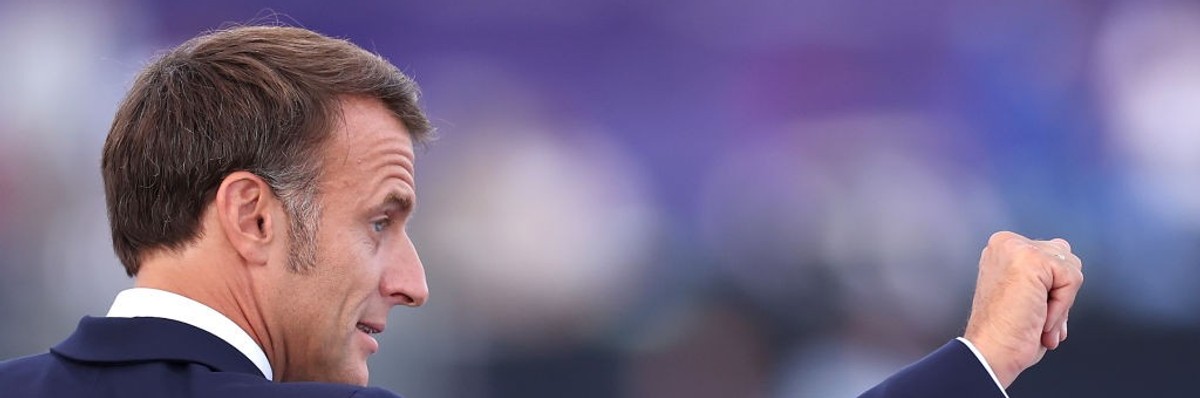
French President Emmanuel Macron gestures to the crowd before the opening ceremony of the 2024 Paralympic Games at Place de la Concorde on August 28, 2024 in Paris, France. (Photo: Alex Davidson/Getty Images)
The president’s rejection of a center-left coalition’s prime minister candidate “is not merely a political maneuver to hold onto power, but a direct attack on French progressive forces.”
Progressive International on Wednesday issued a scathing critique of French President Emmanuel Macron and backed calls for protests next month over his rejection of a leftist alliance’s candidate for prime minister following recent snap elections.
Nouveau Front Populaire (NFP), a coalition of left-of-center parties formed to counter the far-right in this summer’s elections, won the most seats, beating out Macron’s centrist alliance and Marine Le Pen’s right-wing Rassemblement National (RN), but lacks an absolute majority.
Macron has since refused to appoint NFP’s chosen candidate, Lucie Castets, as prime minister, which the Progressive International Observatory blasted as “blatant disregard of the election results and the precedent established throughout the French Fifth Republic.”
Progressive International launched in May 2020 to unite, organize, and mobilize progressive groups and individuals around the world, and since then it has built a global Observatory “with the legal expertise, data science, and parliamentary power to track the attacks on our democratic institutions and provide a real-time defense against them.”
“The attempt to stifle political competition and subvert the democratic process is a direct assault on these core values.”
France’s snap elections—which Macron called after his party performed poorly in European elections—were held on June 30 and July 7. Since then, the Observatory noted, “a caretaker government has led France, with Macron citing the Paris Olympics as a reason to delay the appointment.”
While the Olympic Games have concluded, Macron opened the Paralympic Games in the French capital Wednesday evening. They are set to run through September 8.
Macron—defending his refusal to appoint Castets—has argued that because centrist and right-wing parties would block any actions by NFP, “the institutional stability of our country therefore requires us not to choose this option.” His critics in France are now planning “a large demonstration against Macron’s coup on September 7.”
Echoing the French critics, the Observatory declared Wednesday that “Macron’s move is a direct challenge to the democratic will of the people and an affront to the foundational tenets of political pluralism.”
“This action is not merely a political maneuver to hold onto power, but a direct attack on French progressive forces,” the Observatory said, pointing to pledges by RN and centrist leaders to move a no-confidence motion against any prime minister nominated from the NFP.
The Observatory also highlighted Macron’s “sinister divide-and-rule move” to isolate the far-left La France Insoumise (LFI), led by Jean-Luc Mélenchon, by appealing to other NFP parties “to break the political paralysis.”
The other parties that make up NFP have rebuffed the French president and, according toFrance 24, “Mélenchon even threatened to start impeachment proceedings against Macron.”
Progressive International’s Observatory emphasized that “democracy thrives on the diversity of ideas and the peaceful transition of power. The attempt to stifle political competition and subvert the democratic process is a direct assault on these core values.”
The Observatory concluded with a “call to democratic forces worldwide to oppose Emmanuel Macron’s authoritarian efforts to repress the will of the French people—and join the call for the September 7 mobilization to defend it.”
Home Office continues appeal against Liberty’s successful legal challenge to anti-protest rules, which the High Court had previously found unlawful
Legislation gave police ‘almost-unlimited’ powers to impose conditions on protests that caused ‘more than minor’ disruption.
Liberty said “We will ensure a government is not allowed to wilfully ignore the rules at the expense of our fundamental human rights”
The human rights organisation Liberty has questioned the new Government’s “concerning disregard for the rule of law” as the Home Office has instructed lawyers to proceed with an appeal against a recent High Court ruling that anti-protest legislation had been created unlawfully.
The legislation, which significantly reduced the threshold at which the police could impose almost-unlimited conditions on protests to anything that they deemed caused ‘more than minor disruption’, had been brought in by then Home Secretary Suella Braverman in June 2023. Previously the threshold had been set at anything that caused ‘serious disruption’.
Liberty challenged the legislation in court, arguing that it was unlawful since it had already been democratically rejected by Parliament just a few months earlier, and was subsequently brought in “via the back door” through ‘secondary legislation’, which required less Parliamentary scrutiny and debate.
In May 2024, the High Court agreed with Liberty’s arguments, ruling that “more than minor cannot mean serious”. The Court also found that the Government had failed to undertake a fair consultation period, instead only inviting thoughts from those it knew would be supportive of its proposals, such as the police but not protest groups.
The previous Government had lodged an appeal against the ruling, and despite requesting an adjournment and meeting to discuss the regulations, the new Government has now decided to continue the appeal. The appeal hearing is expected to take place later in the year.