Category: new authoritarianism

  • The **unofficial** Android update didn’t go well

    Spread the love

    Thanks for making my heightened surveillance status so obvious – you couldn’t have made it more obvious really. A dodgy unannounced Android update that refuses to install smoothly, browsers on my lappy refusing to work as before – so that I can’t make purchases from shops that I use regularly. Surely I wouldn’t notice that?

    If anyone is overseeing Sue-Ellen Braverman, please ask her why she is putting a political opponent under intrusive surveillance for me.

    15/3/23: political opponent is probably the wrong term. The point I’m making is that these actions are for political rather than any legitimate purpose.

  • BBC will not broadcast Attenborough episode over fear of ‘rightwing backlash’

    Spread the love

    https://www.theguardian.com/media/2023/mar/10/david-attenborough-bbc-wild-isles-episode-rightwing-backlash-fears

    Exclusive: Decision to make episode about natural destruction available only on iPlayer angers programme-makers

    The BBC has decided not to broadcast an episode of Sir David Attenborough’s flagship new series on British wildlife because of fears its themes of the destruction of nature would risk a backlash from Tory politicians and the rightwing press, the Guardian has been told.

    The decision has angered the programme-makers and some insiders at the BBC, who fear the corporation has bowed to pressure from lobbying groups with “dinosaurian ways”.

    The BBC strongly denied this was the case and insisted the episode in question was never intended for broadcast.

    …

    Caroline Lucas, the Green party MP for Brighton Pavilion, said: “For the BBC to censor of one of the nation’s most informed and trusted voices on the nature and climate emergencies is nothing short of an unforgivable dereliction of its duty to public service broadcasting. This government has taken a wrecking ball to our environment – putting over 1,700 pieces of environmental legislation at risk, setting an air pollution target which is a decade too late, and neglecting the scandal of our sewage-filled waterways – which cannot go unexamined and unchallenged by the public.

    …

    Chris Packham, who presents Springwatch on the BBC, also criticised the decision. He told the Guardian: “At this time, in our fight to save the world’s biodiversity, it is irresponsible not to put that at the forefront of wildlife broadcasting.”

    …

    https://www.theguardian.com/media/2023/mar/10/david-attenborough-bbc-wild-isles-episode-rightwing-backlash-fears

  • The danger ahead

    Spread the love

    There’s danger ahead. The Tories recent attacks on asylum seekers is going to fail since it’s totally ill-founded. Despite being very useless, I’m uncertain that the Tories are totally, absolutely uselss. Surely they know that this attack is doomed to failure? The danger is that the failure is expected, accounted for and part of a wider strategy towards what? With Sunak’s attacks on lefty lawyers i.e. an attack on the judicial process really the obvious guess is a power grab against the independence of the judiciary.

    dizzy

    9/3/23 Apologies, this should have occurred to me yesterday. Starmer is in every way as much a Tory as Winston Churchill, Boris Johnson or Tony Blair. It would be ideal for the Tories to transition to Starmer’s pretend Labour government for ten or fifteen years as a caretaker government looking after the interests of the rich and powerful. It very nearly happened after the total debacle of the short-lived Truss government but I feel that there wasn’t the demands expected for some reason ;) So, is yet another Tory debacle needed to sweep in Starmer’s new Labour (Tory) government?

    There will be a further addition to this post

  • Government’s plans to punish refugees branded ‘desperate and cruel’

    Spread the love

    https://morningstaronline.co.uk/article/b/government-plans-to-punish-refugees-branded-desperate-and-cruel

    Amnesty International says ‘people fleeing persecution and conflict will be irreparably harmed by these proposals’

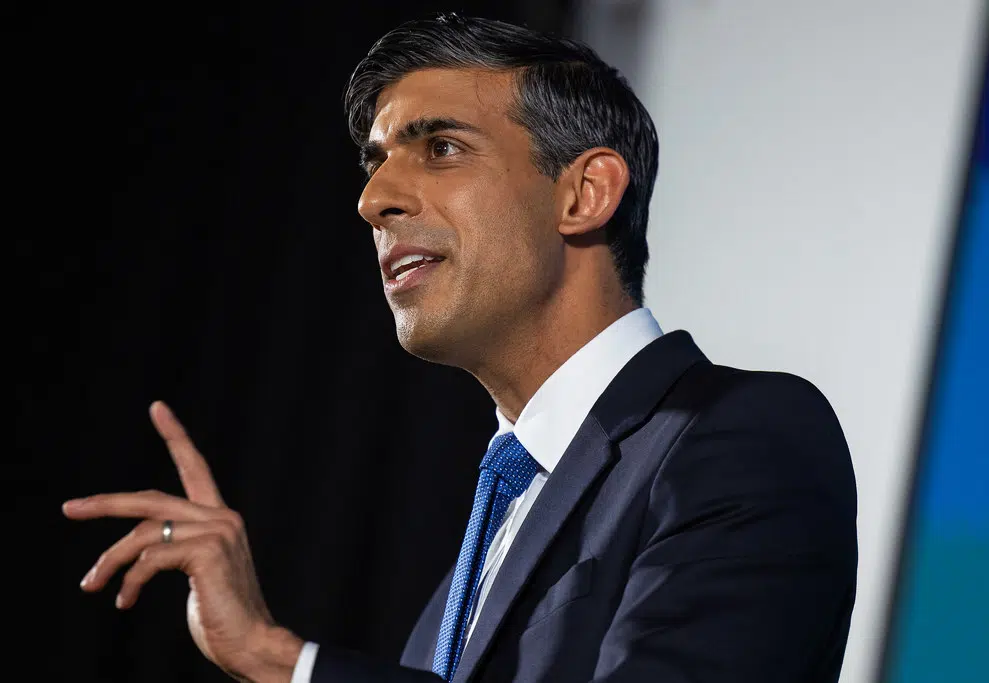
    Image of UK Prime Minister Rishi Sunak
    Rish! Sunak

    NEW government laws to punish refugees who arrive “illegally” in Britain after making perilous journeys across the English Channel in small boats were slammed as “desperate and cruel” today.

    The Illegal Migration Bill, outlined by Home Secretary Suella Braverman in Parliament on Tuesday, will see migrants arriving on small boats “swiftly removed.”

    Under the plans, people crossing the Channel will not be able to claim asylum in Britain and will face a lifetime ban on returning after they are removed.

    They will also never be allowed to settle in the country or gain citizenship.

    Ms Braverman admitted that she “can’t say definitively” if the new Bill complies with human rights laws.

    …

    https://morningstaronline.co.uk/article/b/government-plans-to-punish-refugees-branded-desperate-and-cruel

  • When governments can decide what journalists say, we should all be worried

    Spread the love

    Original article by Peter Geoghegan republished from openDemcracy under a Creative Commons Attribution-NonCommercial 4.0 International licence.
    OPINION: UK National Security Bill is latest in long line of cynical attempts to maintain secrecy and stifle journalism

    Journalism, as George Orwell famously said, is “printing what someone else does not want printed”.

    But what happens if the someone who doesn’t want your story printed also has the power to put you in prison?

    That sounds like the kind of question journalists in places like Iran or North Korea might have to contend with. But it’s a dilemma someone like me, living and working in the UK, could be asking soon, too.

    The National Security Bill currently going through Westminster contains a clause saying that “providing” information that may “materially assist a foreign intelligence service” can be punishable by up to 14 years in prison.

    Here at openDemocracy we pride ourselves on publishing stories that the government and others in power would much rather never see the light of day.

    We’ve revealed how the Treasury helped Putin’s sanctioned warlord to sue a British journalist in London, how Russian oligarchs have bankrolled the Conservatives, how dark money flows into British politics and more.

    Investigative journalists like us at openDemocracy often receive sensitive information. Could our reporting be used by foreign powers to embarrass the British government?

    The honest answer is ‘yes’. But does saving our government’s blushes mean the public shouldn’t know that the British army was aware of the dangers of ‘Snatch Land Rovers’, associated with the deaths of over 34 British troops in Iraq and Afghanistan? Or how the UK’s corporate secrecy vehicles are used to hide oligarchs’ ill-gotten gains?

    Crucially, Sharpe’s promise that journalists won’t get caught in the security bill’s dragnet will not be enshrined in law

    In recent days, Rishi Sunak’s ministers have made some minor amendments to the National Security Bill in the face of organised opposition by openDemocracy and other media outlets. (A huge thank you to the more than 8,000 oD readers who sent emails to their MPs demanding changes to the bill.)

    The government has been at pains to say we shouldn’t be worried. In the Lords this week, one minister, Andrew Sharpe, said that it is “almost inconceivable that genuine journalism will be caught within the threshold for criminal activity”.

    But it’s the “almost” that should worry all of us.

    The National Security Bill replaces older secrecy legislation, and is supposed to counter the activity of hostile foreign powers in the UK. But the bill’s provisions are so wide-ranging that it is not hard to see how journalists – and whistleblowers – could be caught by it.

    Crucially, Sharpe’s promise that journalists won’t get caught in the security bill’s dragnet will not be enshrined in law.

    Why can’t we just trust our leaders when they say that hacks like us have nothing to worry about?

    Well, their track record isn’t good. This is a government that ran an Orwellian ‘Clearing House’ that vetted Freedom of Information requests from journalists and others. When we revealed what was happening, Michael Gove, the minister in charge, smeared us and our journalism.

    The Clearing House has now been closed down, but journalism is still under threat.

    London’s libel courts are still being used by the world’s rich and powerful to silence public criticism. Last year, Dominic Raab pledged to legislate to end so-called “strategic litigation against public participation” cases, or SLAPPs.

    But Raab’s rhetoric has not turned into reality. openDemocracy is currently subject to a SLAPP case, as are many of our journalistic allies.

    Rishi Sunak has allotted no parliamentary time for anti-Slapp legislation – which means it’s very unlikely to happen. Should we be surprised when one of Sunak’s own appointments, former chancellor Nadhim Zahawi, issued legal threats against journalists and campaigners who asked questions about his tax affairs?

    Sunak and his ministers are fond of saying how much they care about free speech and the freedom of the press. But when the government gets to decide what information journalists can – and can’t – report, we should all be worried.

    Original article by Peter Geoghegan republished from openDemcracy under a Creative Commons Attribution-NonCommercial 4.0 International licence.