JO GRADY: “The weapons that are made are used to rain hell on earth in Palestine now”
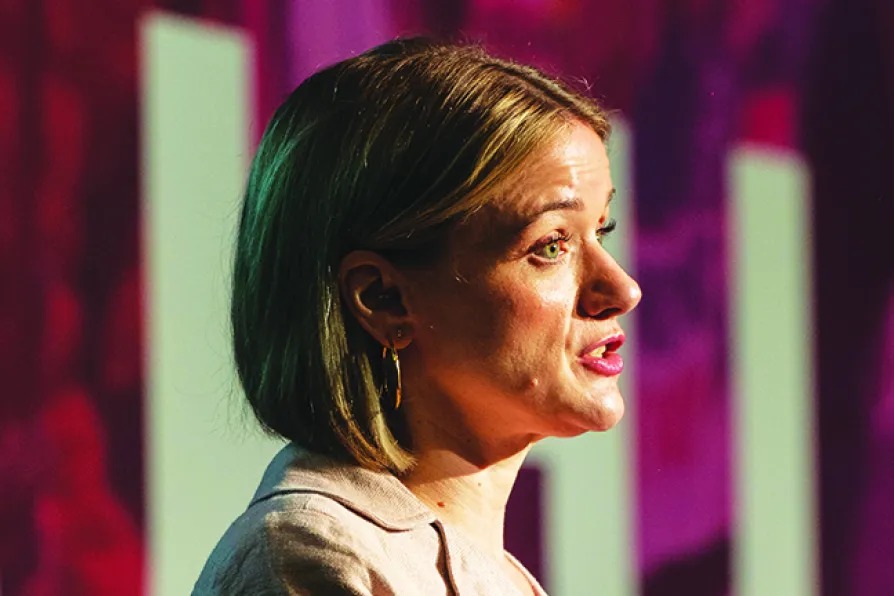
UNION leader Jo Grady said today she “doesn’t need macho men to defend” her as TUC Congress heard that wealth and windfall taxes “won’t touch the sides” of Labour’s £102 billion annual defence spending plans.
Delegates in Brighton backed the University and College Union’s motion which warned that massively increased military spending will weaken national security by leaving less available for public services.
The motion called on the TUC to raise awareness of “the right to conscientious objection and opposition to compulsory military service.”
Artists’ Union England, rail union RMT and the National Education Union (NEU) spoke in favour while Unite, GMB, Prospect and Community opposed, urging unions not to “pit worker against worker.”
Community delegate and former Royal Marine Andrew Gutteridge said: “We want our world to be more peaceful … we instead are living in a world where strong men want to dominate others, and while those men exist it will be our armed forces who defend us.”
Ms Grady replied: “The weapons that are made are used to rain hell on earth in Palestine now.
“I was 17 when we saw the Iraq war … I don’t need macho men defending me — most of the young men I was friends with enlisted in the army and came back traumatised and wounded and have never been the same: for every story you can tell there’s a different story of trauma and misery.”
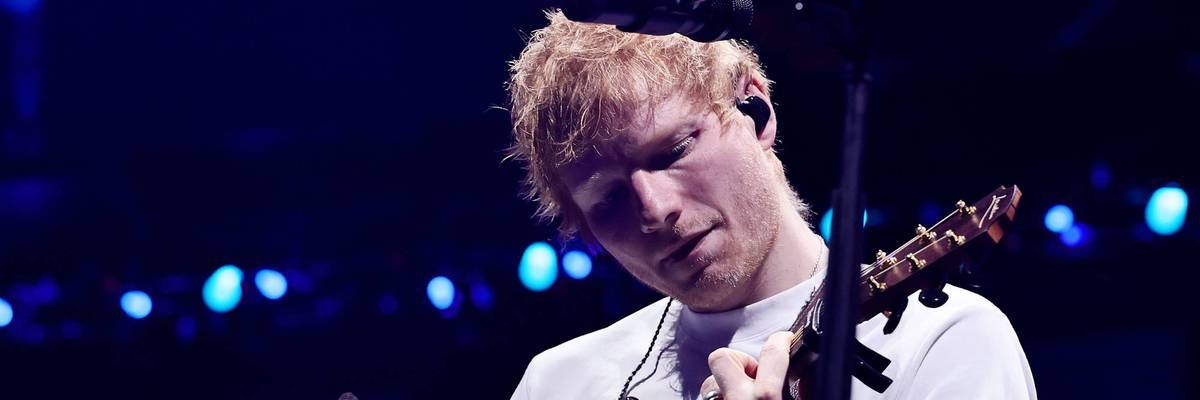
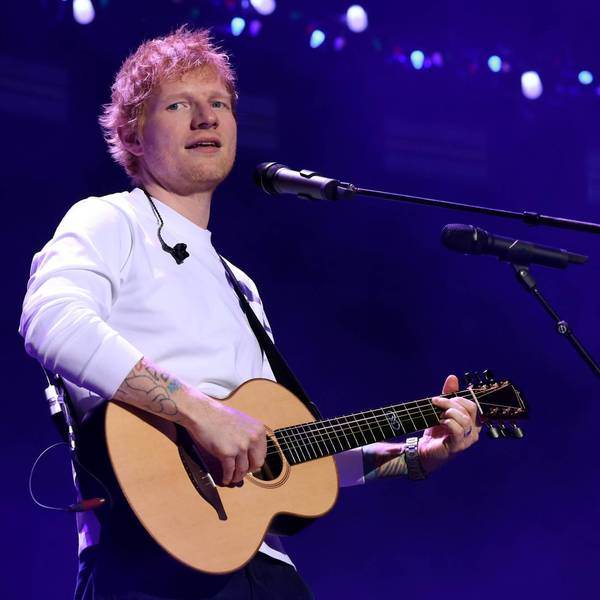
Ed Sheeran performs at Madison Square Garden on December 12, 2025, in New York City. (Photo by Theo Wargo/Getty Images for iHeartRadio)
“The Ed Sheeran debacle will be seen as a turning point in pop culture complicity” with Israel, said one Palestinian-American writer, who described it as “a clear ‘South Africa moment.’”
Singer Ed Sheeran hoped to sidestep controversy by letting rapper Macklemore be removed from his tour over his pro-Palestine remarks. Instead, he’s sparked what one writer said could be a “turning point” for how pop culture engages on the issue of Israel and Palestine.
Sheeran responded to the backlash on Tuesday by claiming he was helpless to stop Macklemore’s ouster, which followed the intervention of the pro-Israel New England Patriots owner Robert Kraft, who rallied other NFL venue owners to bar Sheeran’s Loop Tour if the “Thrift Shop” rapper continued to perform.
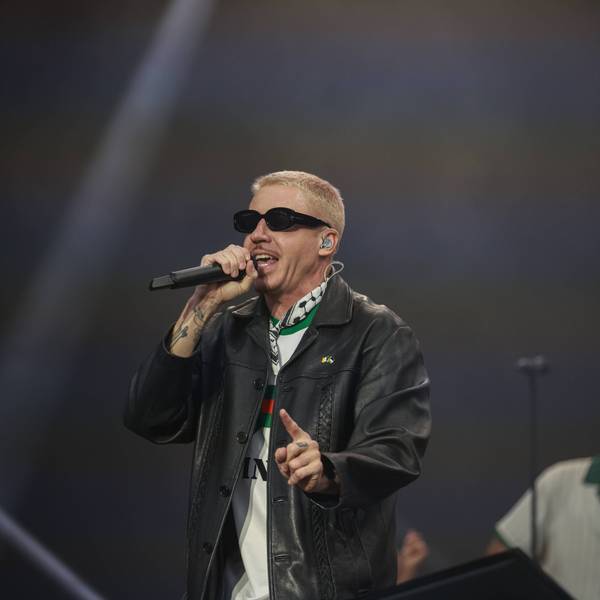
Pro-Israel groups petitioned for Macklemore to be removed from the tour after a performance earlier this month in which he said, “Free Palestine,” and performed his song “Hind’s Hall.” The song refers to anti-Israel protests at Columbia University in 2024 and is dedicated to the 5-year-old Palestinian girl Hind Rajab, who was killed by Israeli forces. She was one of more than 20,000 children who have been killed as part of Israel’s military campaign there, according to a UN commission.
But the other four openers said they would not abide what they viewed as elites’ political censorship of an artist speaking out against what humanrights groups have described as a genocide in Gaza and an occupation of the West Bank that is considered illegal under international law.
Each one of the artists announced on Tuesday that they would no longer tour with Sheeran.
🇵🇸 All of Ed Sheeran’s scheduled supporting acts have quit his Loop tour after Macklemore was removed for declaring “Free Palestine” and condemning Israel’s genocide during two MetLife Stadium shows.
“Artists must not be silenced when they speak up for the oppressed,” said the Grammy-winning singer-songwriter Finneas, who has vocally supported the plight of Palestinians for several years. “I stand with Palestine and its people.”
The Irish singer Aaron Rowe likewise withdrew from his upcoming shows with Sheeran, though he acknowledged he did not “take the decision lightly.”
“Ed has been a friend to me and has changed my life. I could never thank him enough for this,” Rowe wrote on Instagram. “But as Irish people, we know all too well about genocide, forced famine, and violent occupation.”
“I cannot stand by and allow billionaires to use their position of power to silence the rightful voices of those who speak up against Israeli genocide and who highlight the savage murder of children,” he continued. “I would lose all respect for myself to carry on as normal.”
The Danish pop band Lukas Graham also dropped from the tour, with frontman Lukas Forchhammer writing that artists “should be able to speak about war, about civilians being killed, about children who deserve to grow up. Wherever they live. Whatever flag flies over them.”
Forchhammer addressed Kraft, a multibillionaire, who gloated after the fact about having Macklemore blackballed and denounced his expressions of support for Palestinians as “hate speech.”
“Money doesn’t give you the right to own the conversation,” Forchhammer wrote. “Nobody’s bank balance should decide who gets to speak or which suffering we’re allowed to acknowledge.”
The Irish folk group Beoga—which helped to found the Irish Artist for Palestine Movement—was even more direct, calling out Kraft’s extensive history of donating to pro-Israel groups, including the American Israel Public Affairs Committee (AIPAC), which has spent over $100 million attempting to influence the current election cycle, and supporting efforts to punish those who boycott Israeli products.
“It’s important that everyone knows that the real enemy is the Zionist lobby. They have worked tirelessly to silence artists who want to speak freely about a genocide happening before our eyes, for fear of retribution,” Beoga wrote. “Research how much Robert Kraft has done to fight the [Boycott, Divestment, and Sanctions] (BDS) movement. That will give you a sense of what we’ve all been up against.”
“Up the workers. Free Palestine,” the group’s message concluded.
The exodus of Sheeran’s openers came as momentum built behind a “boycott” of his music spearheaded by the Palestinian Campaign for the Academic and Cultural Boycott of Israel, a group based in Ramallah in the West Bank, that helped to cofound the BDS movement.
The group called on Sheeran to “cancel his now compromised US tour” and said until then, artists, audience, and crew members should “boycott it.”
🗣️ Rep. AOC tells @hicharliecotton she is boycotting Ed Sheeran because she says he's complicit in Robert Kraft and other stadium owners' efforts to silence Macklemore. pic.twitter.com/zuISc3zaFs
In response to Sheeran’s explanation that he prefers not to publicly take sides on controversial political issues despite having opinions, the group noted his estimated net worth of more than $500 million and his massive platform as one of the world’s most recognized musicians.
“As South African Archbishop Desmond Tutu famously said, ‘If you are neutral in situations of injustice, you have chosen the side of the oppressor,’” the group said. “Sheeran had an opportunity to take a stand in solidarity with Palestinians, like millions of other British and Irish citizens have done, and refuse to cave to the pressure… He has so far failed to meet this ethical duty. But it is not too late to reverse course.”
Some Western politicians have joined the backlash and amplified calls for a boycott.
US Rep. Alexandria Ocasio-Cortez (D-NY), considered a likely presidential candidate in 2028, told a reporter she’d be changing the radio station if Ed Sheeran’s music were to come on.
“When you see what Robert Kraft did to line up all the stadiums to censor speech in that one specific way, it’s become clear it’s not just about one music artist or two music artists,” AOC said. “This is about how just a handful of stadium owners and the elite can prevent an entire massive issue, in this case, the genocide in Gaza.”
“But it doesn’t stop there,” she continued. “It could be speaking out about AI. It could be speaking out about any issue, that you can now just get a handful of stadium owners to ensure that an entire person’s career can be jeopardized if they speak out about any issue.”
Zarah Sultana, a member of the UK Parliament and co-founder of the left-wing Your Party, added that the artists who left Sheeran’s tour are “on the right side of history.”
“At this rate, Ed Sheeran is going to end up with Boy George opening for him,” she joked on social media, referring to the singer who released a song this summer in support of Israel’s assault on Gaza. “No one deserves to be subjected to that.”
Kehlani commented on Macklemore’s post. She experienced the same form of cancellation for her support of Palestinian rights. Julie Menin and Ritchie Torres pressured Eric Adams to cancel her concert in Central Park. pic.twitter.com/6lnHkTLsP1
Backlash against Sheeran has expanded across the entertainment industry as well, with performers including the children’s entertainer Ms. Rachel and popular musicians Kehlani, Tones and I, Zara Larsson, PinkPantheress, and others rallying in support of Macklemore.
And as the music news site Consequence of Sound reported, even some of Sheeran’s hardcore fans are revolting. Three prominent Sheeran fan accounts on X, which boast nearly 50,000 followers put together, spoke in solidarity with Macklemore and encouraged Sheeran to use his platform to take a stand, with some vowing to stop covering his tour until he does.
“We hope that Ed can… reflect on everything that happened and understand that, in the face of certain injustices, remaining silent or trying not to choose a side is also a stance,” wrote the Brazilian account @EdSheeranBrCom, which has more than 45,000 followers.
Ali Abunimah, the Palestinian-American journalist who co-founded The Electronic Intifada, said in a social media post that he believed that “the Ed Sheeran debacle will be seen as a turning point in pop culture complicity” with Israel, which has seen public support in the US crater since 2023, to the point where Americans, especially younger ones, now say they sympathize more with Palestinians than Israelis.
Likening it to the massive cultural boycott movement against apartheid during the 1980s, Abunimah said the cultural revolt against Sheeran was “a clear ‘South Africa moment.’”
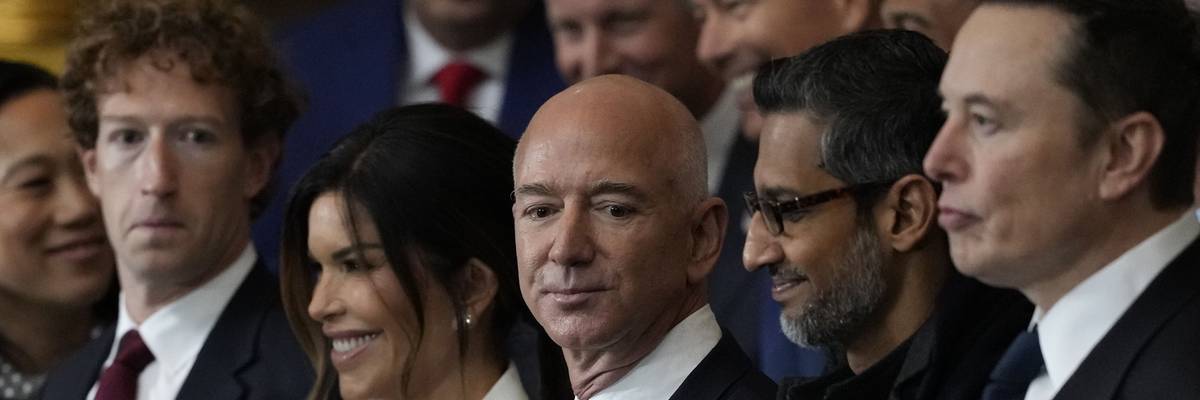
Guests including Mark Zuckerberg, Lauren Sanchez, Jeff Bezos, Sundar Pichai and Elon Musk attend the Inauguration of Donald J. Trump in the US Capitol Rotunda on January 20, 2025 in Washington, DC. (Photo by Julia Demaree Nikhinson – Pool/Getty Images)
“With donor countries facing growing indebtedness and increasingly reallocating resources towards military spending, funding humanitarian assistance via the taxation of large fortunes was one of the most viable strategies.”
With international aid programs facing an unprecedented cash crunch thanks in large part to foreign aid cuts ordered by US President Donald Trump, a recent study published The Lancet suggests that taxing the ultrarich would be the simplest way to plug funding gaps faced by crucial life-saving programs.
Specifically, the peer-reviewed study found that a hitting the world’s billionaires with a 3% wealth tax would raise enough money to save up to 29.5 million lives in the world’s most vulnerable populations over the next four years leading into 2030.
Lucio Exposito, senior economist of the study and researcher at the ICESI School of Economics and University of East Anglia School of Global Development, told Euronews that a global wealth tax was the most plausible way to undo the damage done by international aid cuts, many of which were caused by billionaire SpaceX CEO Elon Musk’s dismantling of the United States Agency for International Development (USAID) in 2025 under the direct orders of Trump.
“With donor countries facing growing indebtedness and increasingly reallocating resources towards military spending,” Exposito explained, “funding humanitarian assistance via the taxation of large fortunes was one of the most viable strategies.”
The study’s introduction notes that wealth inequality has reached unprecedented heights in recent years, growing especially acute in the wake of the Covid-19pandemic.
“Today, the top 10% of the global population owns approximately 75% of global wealth, while the bottom 50% holds only 2%, with absolute income inequality steadily increasing over the past three decades,” the study explains. “Moreover, the wealthiest 0.002% of the global population… controls an estimated $37.1 trillion in global wealth, surpassing the gross domestic product of the world’s largest economy—the USA.”
Even as the world’s richest people have seen their wealth grow by bounds, official development assistance (ODA) to the Global South has been slashed significantly.
According to a study from the Organization for Economic Cooperation and Development (OECD) released earlier this year, ODA spending in 2025 fell by 23% compared to 2024, with the US responsible for 75% of the global decline.
A 2025 study published by The Lancet estimated that the elimination of USAID would lead to 14 million additional deaths worldwide by 2030.
dizzy: Tax the climate-destroying parasites out of existence. Why should anyone be so rich that they can donate £36M to Farage’s Reform Ltd company to destroy the planet?
Orcas discuss Donald Trump and the killer apes’ concept of democracy. Front Orca warns that Trump is crashing his country’s economy and that everything he does he does for the fantastically wealthy.Elon Musk urges you to be a Fascist like him, says that you can ignore facts and reality then.
Heathrow airport wants to build a third runway and new terminals. Photograph: Toby Melville/Reuters
Climate Change Committee says government cannot expand airport without requiring aviation industry to clean up its emissions
Heathrow airport should be allowed to expand only if airlines pay for the removal of carbon dioxide from the atmosphere, the government’s climate advisers have said.
…
Nigel Topping, the chair of the CCC, said: “The government cannot expand Heathrow airport without requiring the aviation industry to clean up its emissions. Therefore, the government should legislate policies that require the aviation industry to fully address all of their emissions by 2050, either directly or by purchasing engineered removals. The polluter-pays principle must apply.”
…
But campaigners rejected the CCC’s plan of relying on nascent technologies to wipe out the impact of an expansion that would commit the UK to much higher emissions for decades, and called on ministers to halt all airport expansion.
Tony Bosworth, campaigner at Friends of the Earth, accused the CCC of “pulling its punches”, pointing to recent research by the Tyndall Centre that found SAF and carbon removals were unproven and unlikely to ramp up in time to the extent needed to justify airport expansion.
“The CCC should have made it crystal clear: there is no plausible way to expand Heathrow without wrecking the UK’s climate targets,” he said.
Frequent flying is overwhelming skewed towards the wealthy. In any year, only about half of people in England take a flight abroad, while about 80% of all flights abroad were taken by people who took two or more flights – about a quarter of the population. Frequent flyers – those who took five or more return flights abroad in 2024 – made up only 5% of the population, but accounted for a third of all flights.
Those in the highest income group took 38% of all flights abroad – four times as many flights as those in the lowest income group, according to the National Travel Survey of England in 2024.
Article republished from TBIJ under a Creative Commons Attribution-NonCommercial-NoDerivs 3.0 Unported License. Charts are visible in the original article.
Home Office’s visa and citizenship fees are up to 10 times the processing cost – and rising every year
In brief
The government’s vast profits from the UK visa system run counter to claim that migrants are a financial burden on the state
Fees charged for visas, citizenship and health surcharge far outstrip the actual cost to the Home Office
Families trying to settle and stay in the UK are giving up basic essentials to cover tens of thousands in costs
When Bethany Sparrow fell in love, she didn’t expect that moving in with her partner would put her on the breadline.
She and Moheb met on holiday in Tunisia and they got married a year and a half later. But to live together in the UK, they discovered, they would have to pay the British government £5,000.
Already working full-time as a teaching assistant for children with autism, Bethany took a second job at JD Sports on weekends and school holidays. That still wasn’t enough, so she started cutting back on essentials – “sacrificing everyday normal things, sacrificing food”.
“[The government’s] not thinking about what it’s doing to families, how emotionally exhausting it is, how much we’re having to save,” she said. “I lost so much weight … [It was] the worst experience I’ve ever dealt with in my whole life. You can’t even put into words how mentally draining it is.”
After almost a year, though, they saved enough for Moheb’s visa and, in March, he moved to the UK. But even with both of them working and saving everything they can, they are unsure if they will be able to afford his visa renewal when it is due in 2028.
Bethany Sparrow at home with her husband Moheb Phil Hitchman
Reunite Families UK, a nonprofit organisation supporting families affected by visa rules, estimates that visa and citizenship applications could end up costing Bethany and her husband more than £13,000.
The couple are not alone. Hundreds of thousands of people are forced to pay these rising fees every year – and many have amassed eye-watering debts to cover the costs. The majority are people who have already been in the UK for years and are looking to renew their visas or settle.
And, contrary to the common claim that migrants are a financial burden on the country, the British state makes billions of pounds in profit from these fees – some of which are more than 10 times the actual administrative cost.
According to our analysis, the government raked in almost £5bn last year in profit from various visa, citizenship and immigration charges. That’s more than it gets in corporation tax from all of the energy, gas, water, sewage and hospitality industries combined.
“I think the government knows how desperate people are to stay in this country, so they’re taking advantage,” said Rumbidzai Bvunzawabaya, a solicitor and CEO of Tulia, a charity that supports migrant workers. “And what makes it worse is that then they always scapegoat migrants and say they’re just coming in to freeload.”
Matteo Besana, head of policy and advocacy at Reunite Families UK, said it was “a national scandal that the Home Office has been allowed to profiteer for as long as it has”.
“The current visa system is a form of double taxation that deliberately keeps people and children in poverty. No government should be able to justify this.”
‘Easy money’
The UK has the most expensive immigration fees in Europe. In part, this is because it makes a profit on most applications. But this wasn’t always the case.
Around 20 years ago, people only had to pay what it cost the government to process the visa. For Bethany and her husband that would have meant a one-off charge of £260. Other visas were even cheaper.
This changed in 2005 under Tony Blair’s government. Since then visa costs have spiralled far above the rate of inflation.
To give one example, the cost of a settlement application, also known as indefinite leave to remain (ILR), has increased by more than 20 times in the space of two decades, from £155 to £3,226. Similar increases have taken place with work visas, citizenship applications for UK-born children of immigrants, and for student visas, among others.
Then, in 2015, the Conservative and Liberal Democrat coalition government added another fee many migrants had to pay on top of their visas: the immigration health surcharge. The charge, which helps fund the health system, can cost someone as much as £1,035 per year.
The Oxford Immigration Observatory calls it a form of “double taxation”. Migrants, who already pay more in tax than they take out of the system, are then charged again via the surcharge.
The research centre estimates that, through the different charges and renewals, someone on the skilled worker visa will pay upwards of £24,000 before they can become a British citizen. A family with one child could pay over £40,000.
Layla Hussain, advocacy officer at the charity Refugee & Migrant Justice said the government is making “obscene profits” from migrants who then face barriers to building their lives in the UK.
She described young people being prevented from going to university because of their immigration status, parents having to choose between feeding their children and paying fees, and families taking on debts that take decades to repay.
A Home Office spokesperson denied that the government profited from these fees, saying the money is put towards the wider migration and borders system. This includes immigration enforcement, border force and detention centres.
The spokesperson said: “It is right that those who benefit from the migration and borders system contribute towards its costs, reducing the burden on taxpayers.” They added that the health surcharge ensures migrants make a “fair contribution” to the NHS.
But the scale of the fees have historically been opposed by politicians who now hold senior positions in government.
In 2018, Yvette Cooper, now the health and social care secretary, said the scale of citizenship fees “has become a real and growing problem”.
Stephen Doughty, a minister in the Commonwealth and Development Office previously called for a review into the fees being charged saying “it is never acceptable … to make a profit on these crucial activities”.
David Lammy, who until recently was deputy prime minister, said while in opposition that people were being “exploited by excessive fees”.
As part of this story we asked them if they stood by these statements. None of them replied.
“Now, when they have the chance to make things better, they have not only gone quiet but are set to massively increase charges for migrants through the Immigration and Asylum Bill,” said Green Party MP Sian Berry.
“The government is treating people who have built their lives here as a source of easy money, regardless of the hardship it causes.”
The bill Berry refers to is proposing to extend the period people have to spend in the UK before they can settle to as long as 30 years. This will mean people will face more visa renewals – and with them, more fees.
The government is treating people who have built their lives here as a source of easy money
Sian Berry, Green Party MP
When proposing immigration changes earlier this year, the home secretary Shabana Mahmood justified them by suggesting immigrants are a burden on the taxpayer.
Such claims have largely been debunked, with even the Office For Budget Responsibility, the government’s independent forecaster, estimating that reducing net migration by 100,000 per year would leave the public purse £7bn worse off a five-year period.
‘A disaster’
People on the lowest incomes can apply for a fee waiver on some visa applications, but as 78-year-old Pat Dore discovered, the decisions are not always fair.
Pat’s son, a former software developer, has been unable to work since developing ME and couldn’t afford to pay for his wife and daughter’s visas. Initially, Pat paid the combined £7,000 visa and surcharge fees, amassing credit card debt in the process. She had already been failed once by the state, as a victim of the Post Office scandal, and she used her compensation from that ordeal to cover the costs.
But when it came time to renew the visas two and a half years later, the family had no savings left. Pat’s son applied for a fee waiver – and it was refused.
As part of the application, he had provided bank statements from his Smile account. In its rejection, the Home Office said that records showed he had a bank account with the Co-op, which he had not disclosed. But Smile is a brand name for the Co-op; the account they were asking for was the one he had told them about.
Pat has now increased her credit card limit to cover this second set of visa and solicitor fees.
A government review from last year found several cases of Home Office officials making mistakes on fee waiver applications, including refusing an application from a homeless 18-year-old because she could not provide copies of bank statements or a tenancy agreement.
“I had high hopes for Labour,” Pat said. “[But] if you’ve got disabled people in your family and immigrants, it’s a disaster because they’re the two people they’ve gone for.”
‘To somebody else I don’t belong’
John Mataruse, 44, and his family were among the lucky ones. Originally a relationship manager at a bank in Zimbabwe, he came to the UK in 2021 after his wife was offered a job as a nurse in the NHS. As a health worker, the family was exempt from paying the health surcharge and their initial visas were cheaper than those of other skilled workers.
When it came to applying for settlement, they had to pay the same as everyone else. The full bill for all four family members, including language tests and biometrics, came to more than £15,000. They couldn’t afford this sum so took out a personal loan which will take them years to pay off.
If the Home Office had charged them what it costs to process the applications, they would have paid £1,240.
ILR applications are among the most profitable for the Home Office: only £310 of the £3,226 charge covers the actual administrative cost of processing the application.
John’s family also paid an extra £2,000 to fast-track the applications and avoid spending up to six months in a state of limbo waiting for the government to make a decision.
He could have waited, but he says he was worried the government could change the rules and leave his family in an uncertain situation for even longer, racking up visa charges for years. It’s a choice many people are facing with the looming immigration bill.
Fatima*, who arrived in the UK from Pakistan when she was five, told us that her family put the cost of her ILR application on a credit card they couldn’t afford.
She estimates that by the time they are able to pay it all back, they would have paid twice as much as the original fee in interest payments.
Fatima says she comes from a country looted by the British Empire. Her family members fought for Britain in two world wars. “I feel this should be free… if anything the Home Office should compensate us.”
For both Fatima and John, permanent residency has brought some peace of mind, albeit at a steep cost. But John says there is another side to it.
Referring to the recent Belfast riots that targeted migrant communities, he says: “I paid all that, but in a moment a demonstration can lead me to running away from my home.
“Yes, I’m settled. But then at the same time, to somebody else, I still don’t belong … There are many good people around, but also when you look at the news you realise that a few bad people can make life hell for you.”
Because of this, on top of the debt repayments, John is also trying to save money in case he needs to return to Zimbabwe.
“At least there no one can tell me to go back to where I came from,” he said.
* Name has been changed
Reporter: Emiliano Mellino Bureau Local editor: Gareth Davies Deputy editor: Katie Mark Editor: Franz Wild Production editor: Alex Hess Fact checker: Josephine Moulds
The Bureau has a number of funders, a full list of which can be found here. None of our funders have any influence over editorial decisions or output.
Article republished from TBIJ under a Creative Commons Attribution-NonCommercial-NoDerivs 3.0 Unported License. Charts are visible in the original article.
 JO GRADY: “The weapons that are made are used to rain hell on earth in Palestine now”