


Article by Brett Wilkins republished from Common Dreams under Creative Commons (CC BY-NC-ND 3.0).
“The federal government cannot build secret dossiers on people because they exercise their First Amendment right to peacefully observe, document, or criticize its actions,” said the head of Democracy Forward.
RECOMMENDED…

The plaintiffs—the Electronic Privacy Information Center (EPIC) and legal observers Nicole Cleland, Jacquelyn Ivey, and Anna Walker—argued that the US Department of Homeland Security (DHS), US Immigration and Customs Enforcement (ICE), and other federal agencies created and maintained databases of people who observed, documented, or protested immigration enforcement activities without providing notification or safeguards, as required under the Privacy Act of 1974.
That law was passed after the exposure of illegal government surveillance, including longtime former Federal Bureau of Investigation Director J. Edgar Hoover’s infamous COINTELPRO program, under which the FBI, in addition to conducting unlawful spying, funded and armed murderous far-right militants to terrorize anti-Vietnam War protesters, anti-nuclear weapons activists, civil rights leaders including Martin Luther King, Jr., and other leftists.
“The federal government cannot build secret dossiers on people because they exercise their First Amendment right to peacefully observe, document, or criticize its actions,” Democracy Forward president and CEO Skye Perryman said in a statement announcing the lawsuit. “That is exactly the kind of government surveillance Congress sought to prevent when it enacted the Privacy Act after some of the darkest chapters in our nation’s history.”
The lawsuit accuses the Trump administration of collecting the names, photographs, vehicle information and license plate numbers, social media accounts, and other identifying information about legal observers, volunteers, journalists, clergy, and community members engaged in First Amendment-protected activities during the government’s deadly anti-immigrant crackdown.
“When the Department of Homeland Security dramatically ratcheted up its immigration enforcement, people across the country—of all ages and backgrounds—did what anyone is supposed to do when they disagree with government action: They exercised their First Amendment rights,” the suit states. “They peacefully protested. And, as matters here, they observed and recorded how law enforcement agents acted in public.”
“In response, DHS decided to record the Americans who were peacefully observing its agents, adopting a secret Protester Surveillance Policy enabling its agents to first collect records on Americans engaging in First Amendment exercise and then maintain them in DHS systems, where they can be used to retaliate against those Americans,” the complaint continues.
“Beginning sometime in 2025, DHS deployed a dragnet of drones, bodycams, face-scanning apps, license plate scanners, and camera phones to, as one memo instructed, ‘capture all images, license plates, identifications, and general information on hotels, agitators, protestors, etc., so we can capture it all in one consolidated form,’” the document notes.
“DHS agents have not been shy about gathering this information or its purpose,” the plaintiffs contended. “In Maine, DHS agents told multiple observers that they were being added to a database of ‘domestic terrorists.’ In Chicago, agents routinely used facial irecognition scans on members of the public.”
“In Minneapolis, observers simply watching agents on public streets have been led by those agents to their own houses, despite never having interacted with an agent—a practice so common that it has been named ‘being driven home by ICE,’” the suit says. “And across the country, DHS agents have approached observers and addressed them by their full names, even though those observers never identified themselves to the agents or showed them any form of identification.”
“As a result of its Protester Surveillance Policy, DHS has recorded and retaliated against each individual plaintiff,” the filing alleges. “It’s bad enough that DHS publicly collected information on Americans engaged in lawful First Amendment exercise. But worse, DHS also decided to maintain the information in one or more of its systems, enabling it to later retaliate against observers and protestors—including by canceling Trusted Traveler status,” which includes Transportation Security Administration Pre-Check and Global Entry.
The plaintiffs are asking the court to declare the DHS surveillance policy unlawful, end it, and ban the agency from continuing to collect and keep records of individuals’ protected First Amendment activities.
“Now more than ever, those of us who have the privilege to speak out have a responsibility to defend the rights of everyone in our communities,” Walker said in a statement. “When people are punished for exercising their First Amendment rights, we begin losing the democratic principles that protect all of us. Every American should be alarmed by retaliatory action against one’s free speech.”
Cleland said: “I believe government accountability starts with transparency. People should be free to peacefully observe and document what their government does in public without worrying they’ll be tracked or retaliated against. This case is about protecting that right for everyone.”
EPIC deputy director John Davisson warned, “When our government compiles secret dossiers on everyday people for exercising their constitutional rights, it sends a chilling message: If you speak up, watch your back.”
“If every protest, every recording, every act of dissent opens us up to surveillance and retribution, privacy and free speech are at risk of collapse,” he added. “But the laws of this nation don’t permit that, and we won’t either.”
Article by Brett Wilkins republished from Common Dreams under Creative Commons (CC BY-NC-ND 3.0).
Article by Julia Conley republished from Common Dreams under Creative Commons (CC BY-NC-ND 3.0).

The recently reported killing of the Ecuadorian prosecutor who had been investigating allegations that three boats from the country had been struck by the US and that dozens of survivors had been abducted and tortured by American forces, was “not a coincidence,” said one congressman Friday as he called for a probe into the bombings.
“For almost a year, the US government has been illegally bombing fishing boats and killing people without evidence of wrongdoing,” said Rep. Jesús “Chuy” García (D-Ill.). “And last month, Alexandra Bravo, the Ecuadorian prosecutor investigating boats that were attacked or disappeared, was murdered… There must be an independent investigation.”
RECOMMENDED…
García’s demand came a day after Drop Site News reported on Bravo’s killing in the city of Manta on June 14.
Police say a hitman on a black motorcycle opened fire on Bravo and her sister at 11:00 am as they were leaving a cafe. Both women were killed and the prosecutor’s driver was injured. There was “no sign of the police detail that had been assigned” to protect Bravo, leading the Police Directorate, which operates under the executive branch of President Daniel Noboa, a close ally of President Donald Trump, to investigate whether there had been an “internal security breach.”
Bravo had been investigating the cases of three fishing boats—the Fiorella, the Negra Francisca, and the Don Maca—which were reportedly struck by drones in January and March.
The 36 surviving crew members of the latter two vessels reported that they were captured by US forces and subjected to torture before eventually being returned to Ecuador.
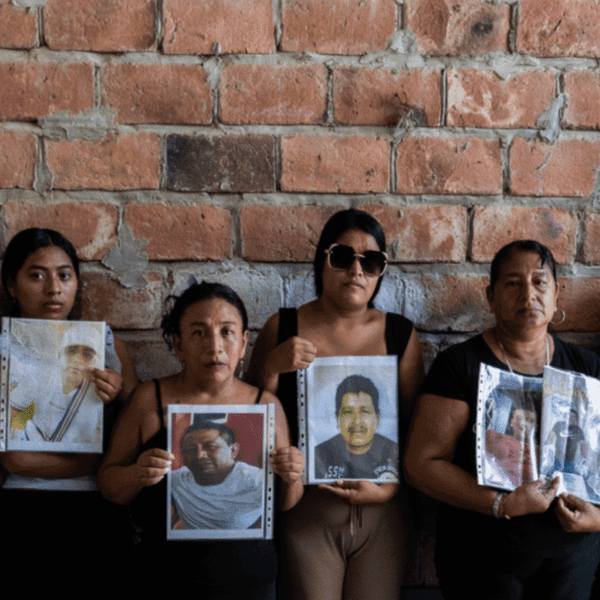
Eight fishermen went missing from the Fiorella, and their family members have reported that Ecuadorian authorities have provided little help to them as they look for answers, with the daughter of one missing fisherman saying an official had suggested the crew was involved in drug trafficking.
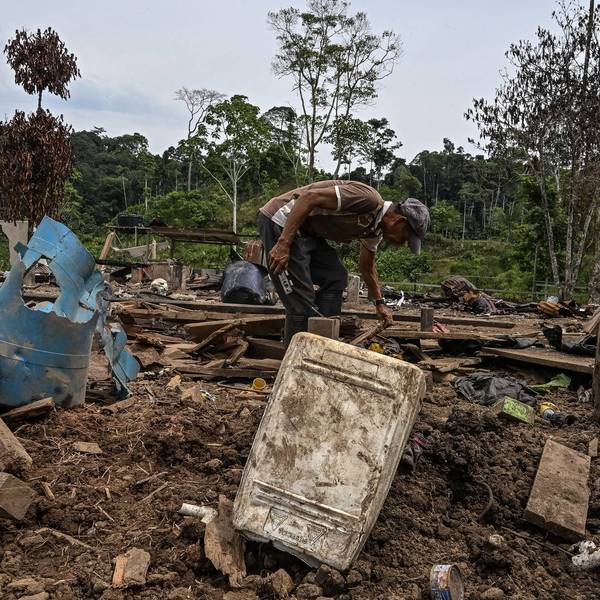
The three boats were hit with explosives as the Trump administration carried out “Operation Southern Spear,” its campaign of boat bombings in the Caribbean and the eastern Pacific. The White House has insisted that the at least 66 strikes that have been carried out by US forces since last September were on boats that were carrying drugs, and the 221 people on board were involved in drug trafficking. Trump has claimed the US is in an armed conflict with Latin American drug cartels, but Congress has not authorized military force in the region.
Legal experts have said that even if the bombed vessels were ferrying illicit substances to the US, military attacks against civilians for their alleged involvement in drug trafficking is against international law.
According to Amnesty International, the Ecuadorian public prosecutor’s office has not submitted a formal request to the US for help with investigating the disappearance of the Fiorella and its crew.
Sources at the police department in Manta and at Human Rights Watch told Drop Site that Bravo had reported facing pressure from the attorney general’s office regarding her investigation, with her superiors telling her to treat the alleged attacks on the boats only as “cases of disappearance” and to “close all lines of inquiry” after the 36 survivors of the Negra Francisca and the Don Maca returned, even though they showed signs of torture.
Meanwhile, as the US maintains it had nothing to do with bombing the three vessels, Drop Site reported that a US Coast Guard boat was detected near the Negra Francisca around the time of the bombing before the Coast Guard boat turned off its signal.
Two survivors of the Fiorella bombing, Christian Flores and Dimas Ignacio Álvarez, “corroborated seeing the Fiorella engulfed in smoke and surrounded by American assets.”
“In their police statements, Flores and Álvarez described two US aircraft flying over the Fiorella on January 18; multiple grey American drones and a US-flagged patrol ship circling the vessel on January 19; and, on January 20—the day their crewmates disappeared—the large US-flagged patrol ship near the smoke,” wrote Camila Lourdes Galarza at Drop Site.
Former Ecuadorian Minister of Foreign Affairs Guillaume Long said Thursday that US military presence in Ecuador as the two countries deepen their military partnership is “a clear violation of our people’s sovereignty and popular will.”
“Meanwhile, the families of Manta and Jaramijó wait for answers,” said Long. “Eight families deserve truth and justice. How far does the ‘war on drugs’ go? Who is held accountable for the lives of Ecuadorian fishermen?”
Article by Julia Conley republished from Common Dreams under Creative Commons (CC BY-NC-ND 3.0).

Article by Jake Johnson republished from Common Dreams under Creative Commons (CC BY-NC-ND 3.0).
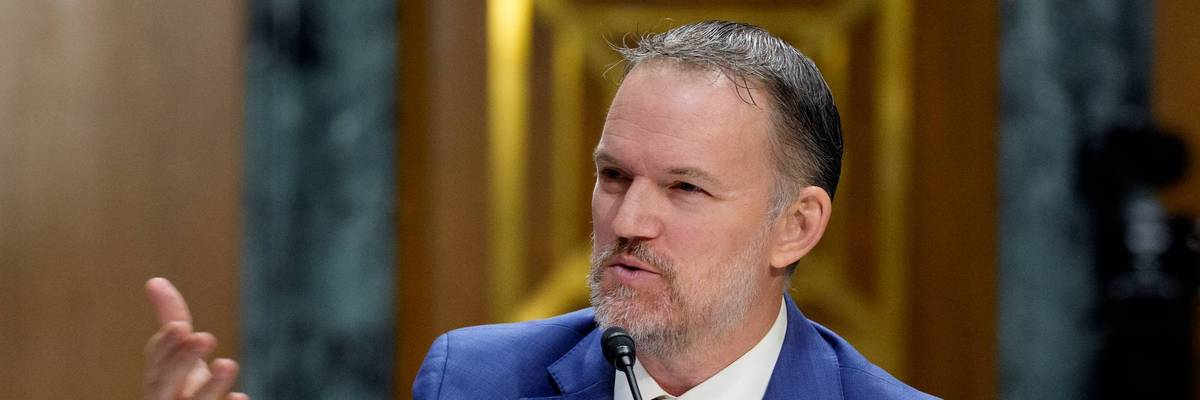
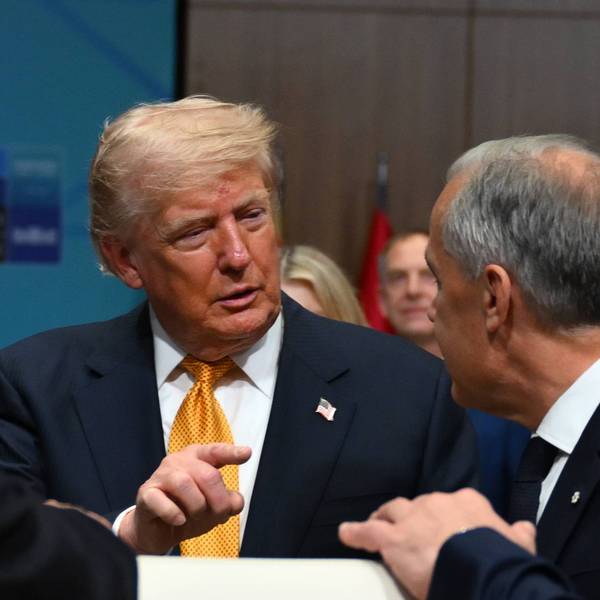
President Donald Trump on Thursday unveiled a new package of tariffs targeting 60 countries that account for over 99% of US imports, a move that—if upheld in court—would cost Americans an estimated $100 billion per year in the form of higher costs.
The duties, ranging from 10% to 12.5%, were announced as part of the president’s effort to maneuver around repeated court rulings against his sweeping tariffs, including by the conservative-dominated US Supreme Court. Jamieson Greer, the Trump administration’s top trade official, pointed to Section 301 of the Trade Act of 1974 to justify the new tariffs, introduced with the purported goal of penalizing countries “for their failure to impose and effectively enforce a prohibition on the importation of goods produced with forced labor.”
RECOMMENDED…
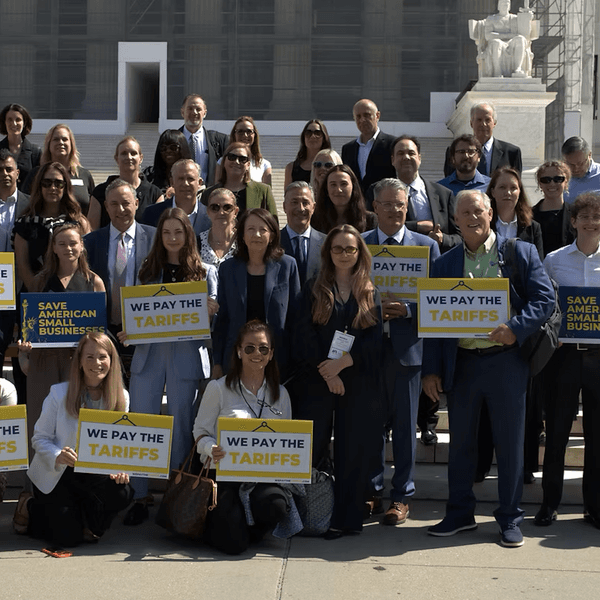
Observers questioned the administration’s pretext. “Magically, the US tariff probe on forced labor practices is done perfectly in time to replace the generalized but expiring Section 122 tariffs,” noted Bloomberg’s Josh Wingrove, referring to the legal authority Trump cited for earlier tariffs.
Rep. Mike Levin (D-Calif.) acknowledged that “Section 301 is a law Congress passed,” but added, “What was passed in 1974 was authority to respond to specific unfair trade practices after investigation.”
“What is being done with it now is a tariff on 99% of American trade, set by Trump, with no expiration, no vote, and no ceiling,” said Levin. “If a delegation that broad is lawful, then the tariff power in Article I means very little. The Supreme Court struck down the last version of this policy in February. The response was to avoid Congress and find a different statute and rebuild substantially the same tariffs, effective the same minute the old ones lapsed.”
The list of countries targeted by the Section 301 tariffs includes Canada, Australia, Brazil, China, Mexico, Russia, Norway, the United Kingdom, and Vietnam.
Between the start of his second administration and January 2026, Trump’s tariffs cost American families $1,700 each on average as importers passed burdens onto consumers in the form of higher prices. The tariffs have also hammered small businesses, increased hardship for farmers, and failed to arrest the decline of American manufacturing jobs.
The Progressive Policy Institute said Thursday that the new tariffs would “likely cost Americans $100 billion a year” collectively—though the group’s trade director, Ed Gresser, said the administration’s order “looks vulnerable to challenge, and courts would have good reason to strike it down.”
“Its vague claims about forced labor abroad do not hold up,” said Gresser. “Constitutionally, it is likely impermissible as an attempt to use a law designed for problem-solving abroad to impose a general tariff increase. And legally, Section 301 requires administrations to demonstrate ‘unreasonable acts, policies, or practices’ which impose a burden on US commerce, which this executive order fails to do. While making emotive claims about forced labor, it neither presents evidence that the listed countries are buying goods made with the use of forced labor, nor demonstrates that if they were, this would impose the statutorily required ‘burden on US commerce.’”
Rep. Brendan Boyle (D-Pa.), the top Democrat on the House Budget Committee, said in a statement that “these new tariffs are more of the same: a nationwide sales tax that will make life even harder for families already struggling under the costs of Trump’s reckless war in Iran.”
Article by Jake Johnson republished from Common Dreams under Creative Commons (CC BY-NC-ND 3.0).


Article by Jessica Corbett republished from Common Dreams under Creative Commons (CC BY-NC-ND 3.0).
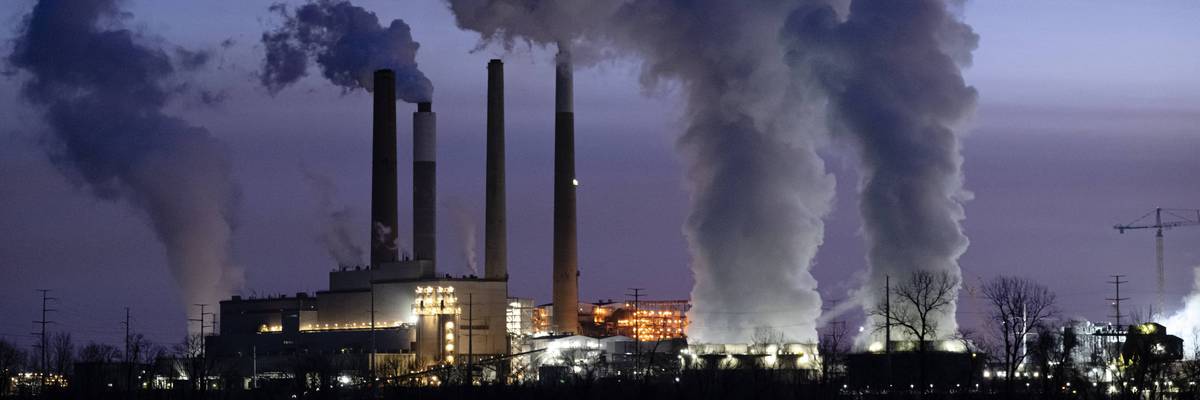
President Donald Trump’s administration has dedicated over $1 billion to boosting the coal industry, and on Thursday announced a report about reserves beneath federally managed public lands, with Interior Secretary Doug Burgum claiming that the polluting fossil fuel “is more important than ever to the production of electricity.”
The US Geological Survey (USGS) publication, titled Coal Beneath Federal Lands in the United States—Mines, Reserves, and Resources, says that “in 2024, the 34 coal mines on Federal lands produced more than 261 million short tons of coal.” A short ton, the standard unit of measurement for coal in the United States, is equal to 2,000 lbs.
RECOMMENDED…
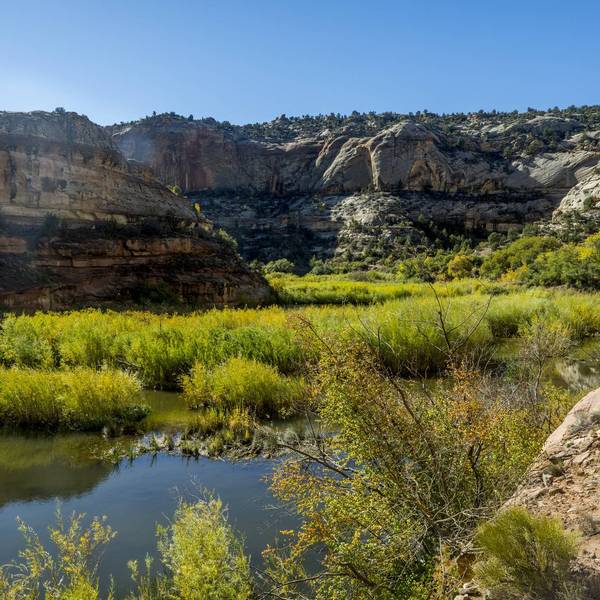
“These 34 coal mines control more than 4.2 billion short tons of reported coal reserves. Most of the coal mines (31) and more than 98% of the reported coal reserves are on federal lands west of the Mississippi River,” according to the report. “Of all the states, Wyoming has the most coal mines on federal lands (14) and produces the most coal from federal lands.”
“The USGS estimates that more than 355 billion short tons of available coal resources remain beneath federal lands in the conterminous United States,” the document details. “Alaska contains substantial quantities of coal resources. The USGS estimates that Alaska has at least 140 billion short tons of identified available coal resources but may ultimately have as much as 5.5 trillion short tons of coal resources.”
A US Department of the Interior statement announcing the report highlights that if the reserves accounted for in the document were produced, “that would be enough coal to supply all the nation’s needs for at least 600 years at the current rate of consumption.”
Scientists have long argued that the international community must stop burning coal—plus oil and gas—to prevent a worst-case scenario future as the planet’s inhabitants already face a fossil fuel-driven climate emergency and its related extreme weather.
However, climate crisis-denying Trump—who returned to the White House backed by Big Oil’s campaign cash—and his Cabinet have spent his second term pushing polluting sources of energy, particularly as his illegal war on Iran drives up global prices, with oil surpassing $100 per barrel on Thursday.
Staying on message, Burgum declared in Interior’s Thursday statement that “American Energy Dominance is more important than ever, and so is beautiful clean coal’s role in the production of electricity needed to fuel our future prosperity.”
“Thanks to the USGS’s rigorous and independent assessment, we’re better equipped to manage America’s vast public lands responsibly while supporting energy security and economic opportunity,” he continued.
Sharing the statement on the social media platform Bluesky Thursday, science journalist Emily Willingham said, “What an abuse of the USGS, the environment, and our intellects.”
An ore deposit geologist named Elizabeth also ripped the statement on Bluesky, writing: “There is a lot messed up with this press release, but the thing that bothers me the most is how poorly it is written. What an embarrassment!”
The USGS report came just two days after the Energy and Labor departments signed a memorandum of understanding (MOU) creating a framework to accelerate the deployment of artificial intelligence, automation, and other emerging technologies in the mining sector.
Acting Secretary of Labor Keith Sonderling said, “It is our commitment to you that this MOU will further President Trump’s promise to restore coal as a key driver of America’s energy supply chain and American coal will again be the envy of the world for generations to come.”
While attacking clean energy initiatives, including offshore wind projects, the administration “has bolstered coal, the dirtiest and most expensive fossil fuel,” The Guardian reported earlier this month.
According to the newspaper:
In September, the Department of Energy announced it would spend $625 million to “expand and extend the life of” coal-fired power plants, allocating $350 million to “modernize” coal plants, $175 million to fund coal projects powering rural communities, and $50 million to upgrade wastewater management systems to extend coal plants’ lifespans.
Last month, the agency also set aside up to $500 million from the Defense Production Act to “expand and reinvigorate” the capacity of 13 coal plants, and to help build a coal export terminal in Oakland, California. A week later, the department announced an additional $3.6 million to “refurbish or retrofit” nine existing coal plants.
Former Democratic Washington Gov. Jay Inslee, a climate advocate and Trump critic, told the paper that the president is “forcing higher power bills” on Americans “by blocking clean energy, then he’s fattening the wallets of his cronies—all with billions of our tax dollars.”
“We pay more,” he said, “Republicans rubber-stamp it, and Trump’s donors walk off with the bag.”
Explainer by dizzy: Coal is regarded as an unnecessary, particularly highly-polluting fossil-fuel