Category: politics

  • The big Blair-era loophole behind Palantir’s tiny tax bill

    Spread the love

    Article by Jade-Ruyu Yan republished from OpenDemocracy under a Creative Commons Attribution-NonCommercial 4.0 International licence. 
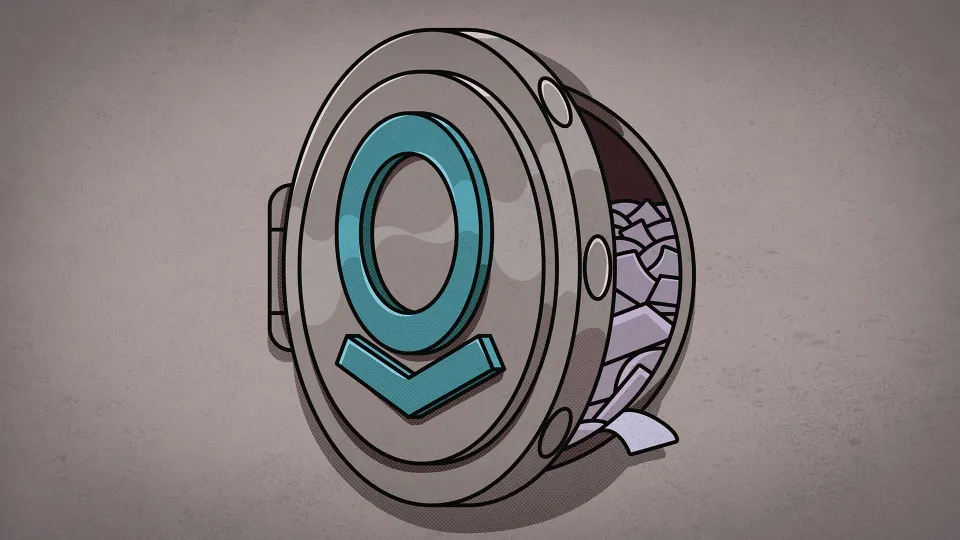
    Illustration: James Battershill

    Palantir’s UK CEO Louis Mosley says the company uses “a standard tax incentive” to minimise corporate tax. But the UK is one of the few countries that allows for this.

    In May 2003, a standing committee of the House of Commons assembled to discuss and debate a mammoth Finance Bill. 

    “I am a tough chairman,” Nicholas Winterton, then a Conservative MP, declared at the first sitting, “and this will be an ordered, constructive and positive committee.” Mobile phones would be switched off, while members were permitted to remove their jackets at their discretion, provided they “are hung tidily on the rear of chairs.”

    Stuffed into MPs’ red boxes that day was a provision that, over the next two decades, would allow Big Tech to reap billions of pounds in corporate tax deductions in the UK. Tony Blair’s government wanted to allow a company issuing stock to its employees as part of a compensation package to claim a tax relief equivalent to the difference between the market value of the stock and the original price an employee paid for it. 

    The committee approved the provision, and it was passed by Parliament. This week, Louis Mosley, the CEO of Palantir’s UK and European operations, referenced this debate to defend the controversial US tech firm’s minimal corporate tax payments in the UK as “a standard tax incentive under UK law”. 

    Mosley’s comments came after a report by the Centre for International Corporate Tax Accountability and Research confirmed openDemocracy’s findings that Palantir has used its share-based compensation scheme for UK employees to minimise its corporate tax obligations by millions of pounds. As we uncovered, the company paid less than £1m in corporation cash taxes in the UK last year – less than it paid in Korea, Japan, France and Germany, despite the UK being its second-largest market after the US.

    The public conversation over Palantir’s tax minimisation cuts to the heart of the ongoing debate about capitalism in the UK: after a decade and a half of austerity, who should pay tax – and how much – to mend our unravelling social services and societal fabric? These questions are particularly acute in the case of Palantir, since much of the company’s profits in the UK are derived from government contracts paid for by ordinary taxpayers. 

    Palantir’s Mosley and former corporate tax lawyer Dan Neidle have argued that, while on paper, it could look like the corporation is avoiding tax, HMRC recoups the money via the income taxes paid by Palantir’s highly remunerated employees.

    “We run a generous share scheme for our UK employees. Those shares have risen sharply in value (because of our profitability). So then has the tax bill on those shares – paid at income tax rates, which are HIGHER than corporation tax rates. UK law then offsets some of that against corporation tax, exactly as Parliament intended,” wrote Mosley on LinkedIn, claiming that the company paid $148 million in UK taxes.

    “The net result of this sneaky wheeze? More tax paid by Palantir to the Treasury, not less.”

    Mosley’s claims cannot be independently verified as the company’s 2025 accounts have not been published on Companies House.

    “I don’t see this as tax avoidance, legally or morally,” Neidle, the founder of tax advisory nonprofit Tax Policy Associates, previously told openDemocracy. “[Palantir’s] employees in the UK will have been subject to income tax and employee/employer national insurance. So overall it likely resulted in additional tax being paid.”

    🔎

    We are continuing to investigate Palantir. If you have any information you feel might be relevant, please send it to info@opendemocracy.net. We protect our sources.

    A look at the 2003 tax amendments by the then Labour government, and interviews with tax experts based in other countries, reveal that the UK and the US are outliers in their generous approach to taxing corporations, despite the UK’s headline 25% corporation tax. 

    The decision to tax employees, while granting corporations deductions, is a clear political and regulatory choice, these experts said, based on the nature of economic activity a given tax regime incentivises — in this case finance capital and Big Tech. Or more bluntly, just because a particular tax provision exists, experts said, it doesn’t mean it is justified.

    “Even though this kind of huge deduction may be technically justifiable in a system of taxation, “it’s more the question of, ‘Is this fair?’” said Christoph Spengel, professor for international taxation at the University of Mannheim in Germany – a country that doesn’t allow this type of wide deduction.

    “What are the observable consequences if wealth is concentrated in the hands of only a few individuals? Because that’s what this means,” he said. 

    Spengel said he couldn’t see the justification for such a provision, “because actually there is no cost” to the corporation: no wealth has left the company and it has not given up any of its assets. An employee’s income tax and other personal tax obligations should have no bearing on whether a company gets a deduction, he added.

    “Corporations are really important players in the economy, and you want to have a tool to incentivise them to do things you like and stop them from doing things you don’t like,” said Reuven Avi-Yonah, Irwin I. Cohn professor of tax law at the University of Michigan whose work focuses on corporate and international taxation. “And the corporation tax is a very versatile instrument with which to do this.”

    “A lot of people are worried about two things: the concentration of wealth in very few hands and AI,” said Kimberly Clausing, Eric M. Zolt Chair in Tax Law and Policy at the UCLA School of Law. Clausing said that while economists and policymakers are considering a wide array of novel solutions to this problem, “the same objectives could be reached much more easily if we had the will to use our corporation tax properly.”

    Neidle, from Tax Policy Associates, disagreed.

    “Whilst it’s true that the UK and US are outliers in a formalistic sense, in reality people achieve the same thing in most of the world. That is both reasonable and hard to stop, given that a share scheme is economically equivalent to a bonus plus a share purchase,” he said.

    In Neidle’s opinion, a company giving its employees a cash bonus to buy shares was “economically identical” to just giving the employees the shares.

    “It’s generally a bad idea to create different tax results from identical economic cases, and if you do (as Germany has) then it’s trivial to get round it,” he said. “The result is the same – it’s just more complicated.”

    Blair-era break

    At the turn of the millennium, companies in the US – particularly in the then-nascent tech sector – were increasingly compensating employees with stock instead of higher salaries. For the firms, the benefits were threefold: they retained cash that could be invested in the business, held onto employees until their shares vested, and saved on tax.

    The UK government responded by taking a leaf out of the US’s playbook to amend its own corporation tax rules. When the change was passed in the early 2000s, the Treasury estimated that by 2007-08, it would lose around £95m in forgone taxes in that year, according to a reply to a Parliamentary question in 2003.

    Two decades later, as openDemocracy reported, Palantir alone was able to legally use this deduction to create a tax deduction worth around £230m in 2022 – a figure the company has not contested.

    “This is the main reason why US mega-corporations don’t pay any tax, because they all issue huge amounts of share-based compensation and deduct it,” Avi-Yonah told openDemocracy. “This has been true forever, it’s not a recent trend. What’s a recent trend is their incredible profitability because of AI.” 

    Blair-era MPs may have been unable to foresee the staggering shares-based wealth that Big Tech’s IPOs would create over the next two decades, but it is worth noting that not all countries treat corporate taxes the way the US and the UK do. 

    “The corporation tax deduction available in the UK is among the more generous. Stock-based compensation is supposed to reduce payroll pressure on cash flow, especially for start-ups,” Mike Lewis, the director of Tax Watch, told openDemocracy previously. “The fact that it is also available to established, profit-making companies means that it can effectively wipe out very profitable companies’ tax bills for years if share values significantly increase.”

    Neidle said he was concerned that the current debate around deductions for share-based compensation was being shaped by opinions about Palantir, rather than concerns about tax policy.

    “People here are starting with the conclusion they want: corporations are bad, Palantir is particularly bad. Then forcing a share scheme argument into it. It is not principled, and it’s not good policy,” he said.

    Tax and Regulation

    While tax laws are usually presented as a pragmatic set of rules and numbers, they are subjective and the result of policy debates, corporate lobbying and political compulsion.

    For instance, corporate income tax in the early 1900s in the US is the outcome of two struggles, writes Marjorie E. Kornhauser, professor of law emerita at Tulane University: “The attempt to enact an income tax and the struggle to regulate corporations.”

    As the nature of corporations has changed over the centuries, so have the arguments around how and why they should be taxed.

    Corporations today are structured very differently compared to previous eras. Research conducted in the US suggests companies are increasingly substituting wages with share-based payments.

    Further, tech firms (including Palantir) increasingly rely on dual-class stock, which allows vast amounts of stock to be issued to employees without their founders worrying about losing control of their companies. Founders are therefore rewarded with unprecedented control of their businesses and greater voting rights than ordinary shareholders. When Google debuted a dual-class structure in its IPO in 2004, only about 1% of US listed companies used such a structure. By 2018, that figure had risen to 30%.

    Another structural shift is the growing trend of tech companies earning a growing share of their revenue from public contracts, as governments around the world look to digitise and modernise. Palantir, for instance, earns a majority of its revenue in the US and UK from government contracts paid from public funds.

    “Ultimately it’s the taxpayers who fund the money that goes to Palantir,” said Avi-Yonah. The current arrangement is a “one-sided thing where they just grab the money and don’t pay any tax, and don’t give anything back,” except its services, he said.

    openDemocracy has reached out to Palantir for comment and will update the piece when they respond.

    This article was updated on 8 August 2026 to include comments from Dan Neidle.

    Article by Jade-Ruyu Yan republished from OpenDemocracy under a Creative Commons Attribution-NonCommercial 4.0 International licence. 

    Orcas discuss Donald Trump and the killer apes' concept of democracy. Front Orca warns that Trump is crashing his country's economy and that everything he does he does for the fantastically wealthy.
    Orcas discuss Donald Trump and the killer apes’ concept of democracy. Front Orca warns that Trump is crashing his country’s economy and that everything he does he does for the fantastically wealthy.
    Elon Musk urges you to be a Fascist like him, says that you can ignore facts and reality then.
    Elon Musk urges you to be a Fascist like him, says that you can ignore facts and reality then.

    Palantir

  • Spread the love

    Donald Trump urges you to be a Climate Science denier like him. He says that he makes millions and millions for destroying the planet, Burn, Baby, Burn and Flood, Baby, Flood.
    Donald Trump urges you to be a Climate Science denier like him. He says that he makes millions and millions for destroying the planet, Burn, Baby, Burn and Flood, Baby, Flood.
    Nigel Farage urges you to ignore facts and reality and be a climate science denier like him and his Deputy Richard Tice. He says that Reform UK has received £Millions and £Millions from the fossil fuel industry to promote climate denial and destroy the planet.
    Nigel Farage urges you to ignore facts and reality and be a climate science denier like him and his Deputy Richard Tice. He says that Reform UK has received £Millions and £Millions from the fossil fuel industry to promote climate denial and destroy the planet.
    Elon Musk urges you to be a Fascist like him, says that you can ignore facts and reality then.
    Elon Musk urges you to be a Fascist like him, says that you can ignore facts and reality then.
  • ‘Recipe for Catastrophe’: Trump Moves to Weaken Arctic Drilling Safeguards

    Spread the love

    Article by Jake Johnson republished from Common Dreams under Creative Commons (CC BY-NC-ND 3.0). 

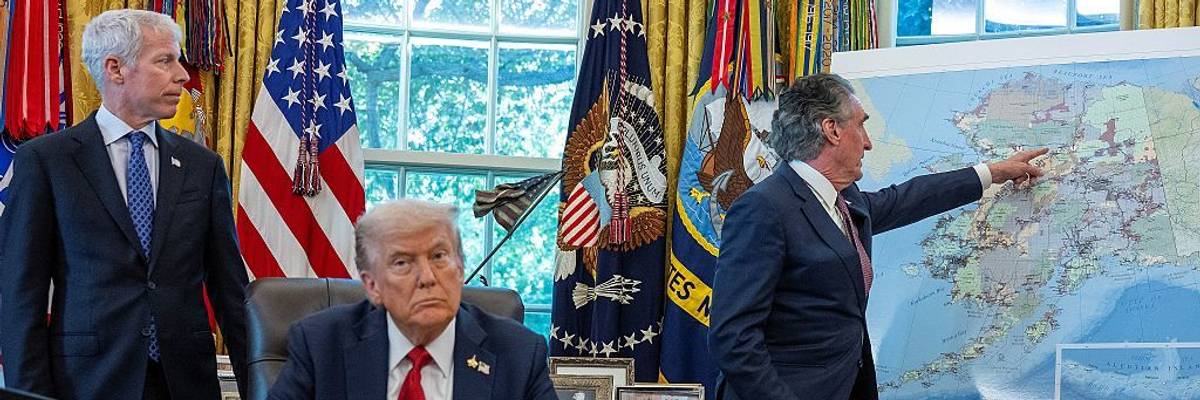
    US President Donald Trump listens as Interior Secretary Doug Burgum points at a map of Alaska during an event in the Oval Office on October 6, 2025. (Photo by Jim Watson/AFP via Getty Images)

    “We should be banning drilling in the Arctic Ocean, not making it easier for industry to exploit and pollute.”

    The Trump administration on Monday proposed weakening Obama-era safeguards for fossil fuel drilling in the Arctic Outer Continental Shelf, a move condemned by environmental groups as another industry handout that would make disastrous oil spills more likely.

    The US Interior Department characterized the proposed changes, which will face a 90-day public comment period, as “targeted revisions” aimed at reducing “unnecessary regulatory burdens” that are limiting resource extraction off Alaska’s coast. The new proposal, according to the agency, “would update requirements related to blowout preventer real-time monitoring, Arctic source control and containment equipment, relief rig capability, subsea isolation devices, mudline cellars, oil spill response plan-holder reviews, crane operations on artificial islands, and suspensions of operations and production.”

    RECOMMENDED…

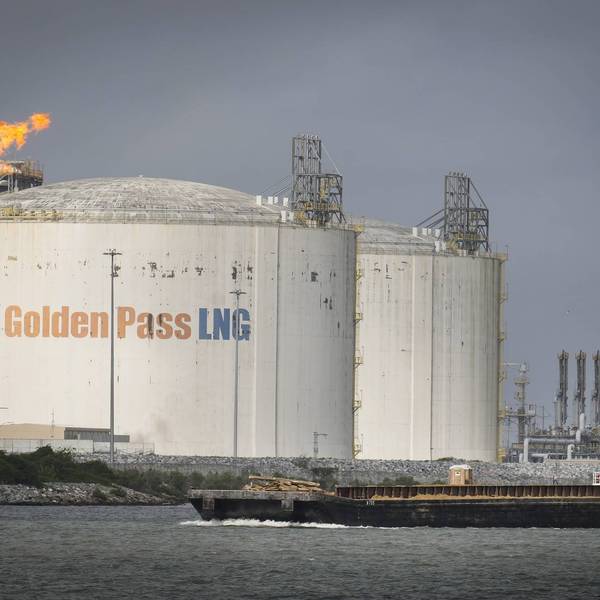
    Golden Pass LNG plant

    Report Shows How Trump’s Fossil Fuel Agenda Is ‘Making Everyone’s Lives More Expensive’

    Vice President Vance Discusses Administration's Fight Against Fraud In Milwaukee

    Trump Admin Argues Even Terminally Ill Patients Shouldn’t Be Exempt From Medicaid Work Requirements

    The Trump administration unveiled the proposal as it pushed for a massive expansion of offshore drilling, even as the climate impacts of fossil fuel extraction continued to intensify across the US and worldwide. Joseph Gordon, campaign manager at Oceana, called the combination of expanded drilling and weakened safety standards “a recipe for catastrophe.”

    “This attempted rollback would make it even harder to prevent oil spills or tackle the horrors that inevitably follow in the remote and fragile Arctic,” said Gordon. “Giving oil companies a pass on safety measures like blowout preventers would set a dangerous precedent that will put Alaska’s waters, wildlife, and people at risk.”

    Cooper Freeman, Alaska director at the Center for Biological Diversity, said that “weakening rules for Arctic Ocean drilling is a truly terrible idea that threatens coastal communities and wildlife like bowhead whales and polar bears.”

    “Arctic oil drilling is one of the most dangerous extractive activities out there, and cleaning up a spill would be nearly impossible,” Freeman added. “Stronger safeguards for Arctic offshore drilling came on the heels of the Deepwater Horizon blowout, where we learned that just one mishap can cause a catastrophe.”

    President Donald Trump, whose 2024 campaign was boosted by fossil fuel industry donations, began targeting Alaska drilling regulations on the first day of his second White House term, signing an executive order attacking “punitive restrictions implemented by the previous administration that specifically target resource development on both state and federal lands in Alaska.”

    In November, the Interior Department—led by Big Oil ally Doug Burgum—released a drilling plan targeting “every available offshore area in Alaska, including the High Arctic, which stretches 200 miles into the Arctic Ocean, with over 20 lease sales through 2031.”

    “We should be banning drilling in the Arctic Ocean, not making it easier for industry to exploit and pollute,” Freeman said Monday.

    Article by Jake Johnson republished from Common Dreams under Creative Commons (CC BY-NC-ND 3.0). 

    Nigel Farage urges you to ignore facts and reality and be a climate science denier like him and his Deputy Richard Tice. He says that Reform UK has received £Millions and £Millions from the fossil fuel industry to promote climate denial and destroy the planet.Nigel Farage urges you to ignore facts and reality and be a climate science denier like him and his Deputy Richard Tice. He says that Reform UK has received £Millions and £Millions from the fossil fuel industry to promote climate denial and destroy the planet.
    Donald Trump urges you to be a Climate Science denier like him. He says that he makes millions and millions for destroying the planet, Burn, Baby, Burn and Flood, Baby, Flood.Donald Trump urges you to be a Climate Science denier like him. He says that he makes millions and millions for destroying the planet, Burn, Baby, Burn and Flood, Baby, Flood.
    Power-mad orange gasbag Donald Trump says Burn, Baby, Burn.Power-mad orange gasbag Donald Trump says Burn, Baby, Burn.

    Human-Caused Climate Emergency Made Canada’s Summer Wildfires Twice as Likely: Study


    Nearly 50 Million More People to Face ‘Massive Threat’ of Acute Hunger Due to El Niño, UN Warns


    ‘Relentless in Its War on Offshore Wind,’ Trump Admin Kills More Project


    War! What is it good for? Absolutely humongous oil company profits


    Zack Polanski calls for Prime Minister to force fossil fuel firms to cover costs of tackling wildfires


    Polanski ‘reality checks’ Burnham over ‘biggest crisis since WWII’ amid ext

  • SEC Urged to End Trump Push to Eliminate Climate Disclosure Rules for Major Companies

    Spread the love

    Article by Brad Reed republished from Common Dreams under Creative Commons (CC BY-NC-ND 3.0). 

    “Rescinding the rule would not eliminate climate risk from the market—it simply blindfolds investors to it, at their own expense,” said one critic.

    Consumer and environmental advocates on Monday called for the Securities and Exchange Commission to end its push to rescind rules requiring companies to disclose risks related to climate change.

    The SEC first adopted the climate disclosure rules in 2024, with the commission describing them as a response to “investors’ demand for more consistent, comparable, and reliable information about the financial effects of climate-related risks on a registrant’s operations.”

    RECOMMENDED…

    Vice President Vance Discusses Administration's Fight Against Fraud In Milwaukee

    Trump Admin Argues Even Terminally Ill Patients Shouldn’t Be Exempt From Medicaid Work Requirements

    Vice President Vance Discusses Administration's Fight Against Fraud In Milwaukee

    ‘Countless Seniors Will Soon Pay More’: Trump Ends Subsidy for Medicare Prescription Drug Plans

    But in June, the SEC—now under the leadership of President Donald Trump-appointed chair Paul Atkins—proposed scrapping the rules, which the commission described as “an overreach of statutory authority and unsound policy.”

    Elyse Schupak, climate policy advocate for Public Citizen, said that ending the disclosure rules would reflect “the desire of Paul Atkins’ SEC to ignore growing financial risks from climate change and to deprive investors of essential information.”

    “For polluting industries that seek to downplay their role driving the climate crisis and their exposure to related risks, finalizing the proposed rule would be a victory,” said Schupak. “The SEC should withdraw this proposal as it contradicts the commission’s responsibility to facilitate transparency for investors and promote well functioning capital markets.”

    Alex Martin, climate finance policy director at Americans for Financial Reform, noted that many investors spoke up in favor of the disclosure rules when they were first proposed because they saw climate risk assessment as a valuable information to have before making major financial decisions.

    If the new proposal is finalized, Martin added, it “will hurt workers saving for retirement by depriving people of information needed to assess companies’ financial risks due to climate change—and by endangering other critical disclosures as well.”

    Benjamin Schiffrin, director of securities policy for Better Markets, similarly argued that scrapping the SEC rules “will deprive investors of material information essential to making informed investment decisions.”

    “There can no longer be any serious dispute that the climate-related risk companies face matters greatly to their future prospects,” Schiffrin emphasized. “An SEC that was serious about protecting investors would be facilitating investors’ access to this information, not preventing them from understanding how climate-related risks are impacting the companies in which they invest their hard-earned money.”

    Janet Ranganathan, managing director at the World Resources Institute, said repealing the rule was particularly nonsensical at a time when the country is dealing with multiple climate-related disasters, including wildfires in the Pacific Northwest.

    “Rescinding the rule would not eliminate climate risk from the market—it simply blindfolds investors to it, at their own expense,” said Ranganathan. “Climate risk should not become the exception to smart financial management simply because it has become politically contentious.”

    Article by Brad Reed republished from Common Dreams under Creative Commons (CC BY-NC-ND 3.0). 

    Nigel Farage urges you to ignore facts and reality and be a climate science denier like him and his Deputy Richard Tice. He says that Reform UK has received £Millions and £Millions from the fossil fuel industry to promote climate denial and destroy the planet.Nigel Farage urges you to ignore facts and reality and be a climate science denier like him and his Deputy Richard Tice. He says that Reform UK has received £Millions and £Millions from the fossil fuel industry to promote climate denial and destroy the planet.
    Donald Trump urges you to be a Climate Science denier like him. He says that he makes millions and millions for destroying the planet, Burn, Baby, Burn and Flood, Baby, Flood.Donald Trump urges you to be a Climate Science denier like him. He says that he makes millions and millions for destroying the planet, Burn, Baby, Burn and Flood, Baby, Flood.
    Power-mad orange gasbag Donald Trump says Burn, Baby, Burn.Power-mad orange gasbag Donald Trump says Burn, Baby, Burn.

    Human-Caused Climate Emergency Made Canada’s Summer Wildfires Twice as Likely: Study


    Nearly 50 Million More People to Face ‘Massive Threat’ of Acute Hunger Due to El Niño, UN Warns


    ‘Relentless in Its War on Offshore Wind,’ Trump Admin Kills More Project


    War! What is it good for? Absolutely humongous oil company profits


    Zack Polanski calls for Prime Minister to force fossil fuel firms to cover costs of tackling wildfires


    Polanski ‘reality checks’ Burnham over ‘biggest crisis since WWII’ amid ext

  • Arron Banks ‘hired private detective’ to look into journalist who investigated Reform UK

    Spread the love

    https://www.theguardian.com/uk-news/2026/aug/08/arron-banks-hired-private-detective-to-look-into-journalist-who-investigated-reform-uk

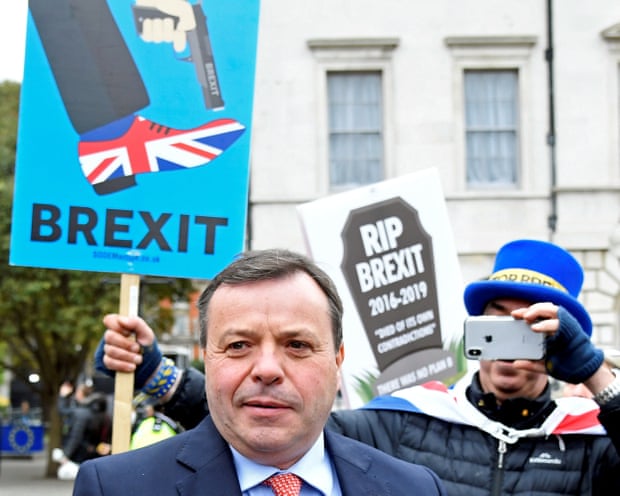
    Arron Banks said he believed the Sunday Times used hacked information, an accusation the newspaper denied. Photograph: Toby Melville/Reuters

    Asked whether he targeted reporter who investigated party finances, Brexit campaigner says: ‘When you live by the sword, you die by the sword’

    The prominent Reform UK member and Brexit campaigner Arron Banks is said to have set private investigators on a Sunday Times journalist after he broke a series of stories about Nigel Farage.

    Banks is alleged to have paid for the services of investigators to examine Gabriel Pogrund, editor of the paper’s Insight investigations team.

    …

    The Sunday Times and the Guardian have broken a series of stories in recent months revealing how cash has poured into Reform and Farage personally from donors and wealthy benefactors.

    Pogrund is believed to have been targeted after a story in the Sunday Times last month revealed that Farage has received financial support from the convicted criminal George Cottrell, known as “Posh George”.

    In response to the New Statesman report, Banks said: “We believe the Sunday Times used hacked information and that was an area of interest. We do have an investigative arm that’s got advanced capabilities.”

    Asked directly whether he had paid investigators to look into Pogrund, he said: “When you live by the sword, you die by the sword.”

    …

    https://www.theguardian.com/uk-news/2026/aug/08/arron-banks-hired-private-detective-to-look-into-journalist-who-investigated-reform-uk

    Nigel Farage reminds you that he's the man that brought you Brexit and asks what could possibly go wrong.
    Nigel Farage urges you to ignore facts and reality and be a climate science denier like him and his Deputy Richard Tice. He says that Reform UK has received £Millions and £Millions from the fossil fuel industry to promote climate denial and destroy the planet.
    Nigel Farage urges you to ignore facts and reality and be a climate science denier like him and his Deputy Richard Tice. He says that Reform UK has received £Millions and £Millions from the fossil fuel industry to promote climate denial and destroy the planet.
    Power-mad orange gasbag Donald Trump says Burn, Baby, Burn.
    Power-mad orange gasbag Donald Trump says Burn, Baby, Burn.