The UK government is facing two separate legal challenges over its approval of the massive Rosebank oil project in the North Sea.
Both Greenpeace UK and climate group Uplift argue the approval of the oil field breaks the Government’s net zero pledges and fails to acknowledge the project’s environmental harm and emissions impact.
Uplift claims the Energy Secretary failed to prove how the oil field was consistent with the UK’s legally binding net zero emissions target and argues, the government did not provide a good enough assessment of the environmental impact of Rosebank on marine life.
In Greenpeace UK’s application, it argues the Environmental Impact Assessment used to approve the oil field did not consider downstream emissions, and is therefore invalid. The campaign group also argues that there is no evidence Scottish Ministers were consulted on the impacts of Rosebank, which it claims breaches Conservation of Offshore Marine Habitats and Species Regulations.
Greenpeace also argue oil contamination could affect whales and wild birds, while the drilling and cable laying under the sea could destroy habitats for species that live on the seabed.
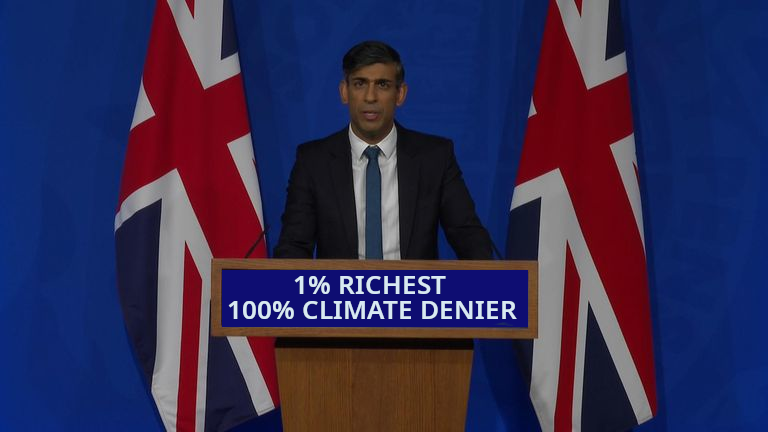
Rishi Sunak gave the go-ahead for the controversial undeveloped oil field in September, set to be the UK’s largest untapped oil field containing an estimated 500 million barrels of oil. With Norwegian owner Equinor set to receive £3 billion in tax breaks.
Israel carries out unprecedented attacks against health workers and infrastructure in the Gaza Strip, bulldozing hospital grounds and detaining doctors
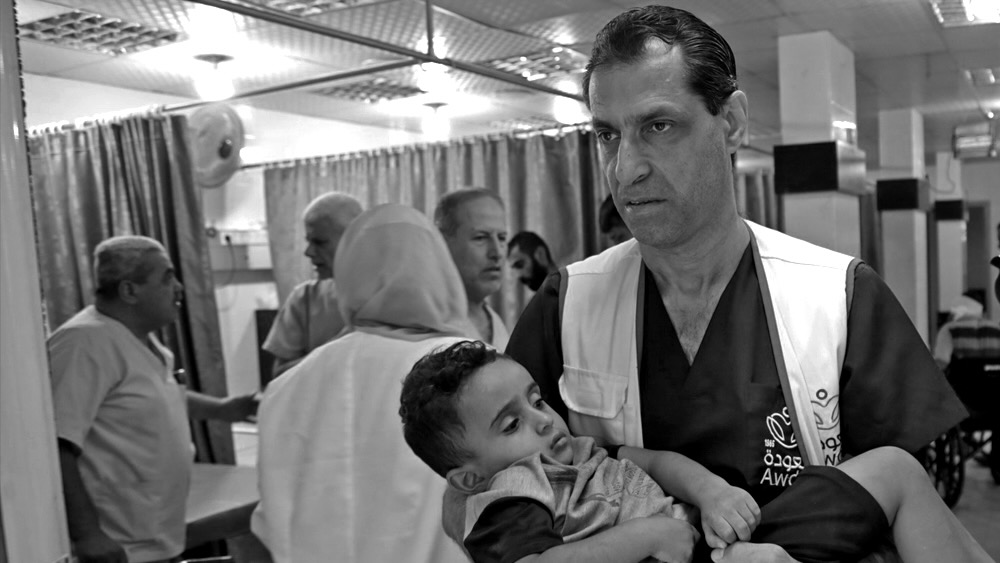
Al-Awda Hospital Manager Dr. Ahmed Muhanna was arrested by Israeli Forces and his whereabouts are currently unknown. Photo: People’s Health Movement
“Moral decay,” as Tedros Adhanom Ghebreyesus, Director-General of the World Health Organization (WHO) put it, is possibly the best way to summarize the past weekend of Israeli Occupying Forces (IOF) attacks on health in the Gaza Strip. Days of unimaginable horrors haunt health workers, patients, and displaced people in Gaza’s hospitals as violent raids and sieges of health centers continue over 70 days into Israel’s war on Gaza.
On Saturday, December 16, reports came in about Israeli bulldozers crushing those staying in tents on the grounds of Kamal Adwan Hospital in northern Gaza. The raid turned the area into a mass grave, leaving many more injured behind. Soon after the event, Mai al-Kaila, Palestinian Health Minister, called for an urgent probe into the event.
Not only did the Israeli occupation bulldoze living people, but they also “released dogs on us in the courtyard of Kamal Adwan Hospital, and they mauled a wounded person before his martyrdom,” said the Ministry of Health’s statement.
Around the time the ministry’s statement was published, there were still 12 babies in the incubators of Kamal Adwan who health staff could not reach, leaving the infants without food.
The Israeli occupation announced it had detained dozens of people during the raid. According to reports, these also include health workers.
Health workers were detained and taken to unknown locations from Al-Awda Hospital in Jabalya, another health center that had been besieged for days. Among the 21 health workers who had been detained was Dr. Ahmed Muhanna, the director of the hospital, who had been one of the health staff to provide regular reports about the health situation in the Gaza Strip. All the health workers except for Dr. Muhanna were released after a three-hour interrogation, but the hospital director’s current location remains unknown.
A week ago, Dr. Muhanna reported that the situation in the hospital was “critical,” with the hospital under complete siege and snipers having shot two staff members. Shortly before he was taken away by the IOF, Dr. Muhanna had reassured media that the hospital staff remained steadfast and in high spirits despite the siege.
Among other hospitals attacked were the Nasser Medical Complex in Khan Younis, southern Gaza, and Gaza’s biggest hospital, Al-Shifa. Bombs damaged the maternity ward at Nasser Medical Complex, killing one and injuring at least ten. A new mission led by the WHO visited Al-Shifa on December 16, delivering much-needed supplies. The team found a “hospital in need of resuscitation.”
According to their report, there are no blood supplies at Al-Shifa, meaning that no surgical interventions can take place, and supplies needed for pain management are also virtually non-existent. The WHO described the “emergency department as a ‘bloodbath’, with hundreds of injured patients inside, and new patients arriving every minute.”
“Patients with trauma injuries were being sutured on the floor,” the WHO reported, and “care must be exercised not to step on patients on the floor.”
On December 17, news came in that Hani Al-Haitham, the head of Al-Shifa’s emergency department, was killed in an Israeli attack, along with his wife, Dr. Sameera Ghifari, and their children.
Together with the increasing risk of the spread of infectious diseases and food deprivation, the escalating attacks against health services and health workers in Palestine are making Gaza completely unlivable, providing further evidence of the genocidal intention behind Israeli attacks.
People’s Health Dispatchis a fortnightly bulletin published by thePeople’s Health Movementand Peoples Dispatch. For more articles and subscription to People’s Health Dispatch, clickhere.
Al Awda Association and the People’s Health Movement launched a campaign for the release of Dr. Ahmed Muhanna, director of Al-Awda Hospital in northern Gaza
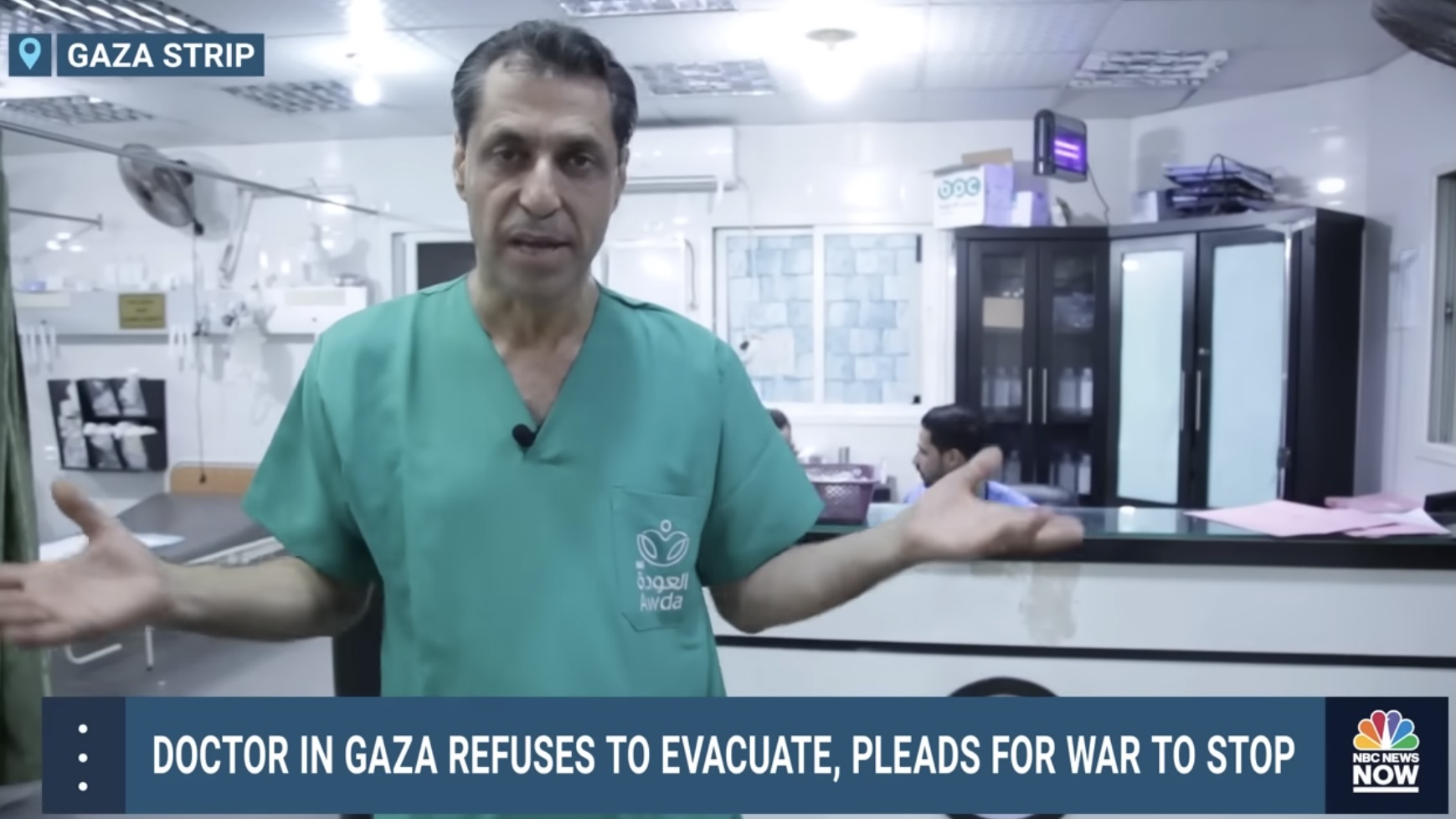
Dr. Ahmed Muhanna appeared on numerous international news stations calling for an end to Israel’s attacks on health workers. Photo: Screenshot
Al Awda Health and Community Association and the People’s Health Movement (PHM) have launched a campaign calling for the release of Dr. Ahmed Muhanna, the director of Al Awda’s hospital in the area of Tal Al-Zaatar in Jabalya, northern Gaza. PHM has also called for an end to Israeli attacks on health workers in Palestine, warning that the “deliberate targeting of the healthcare system by Israel is a blatant war crime.”
Dr. Muhanna was detained by Israeli Occupying Forces (IOF) following a raid on Al-Awda Hospital in Jabalya that began on December 17. While other staff members were detained by Israeli soldiers, they were released after several hours of questioning. On the other hand, Dr. Muhanna was not released, and his current status remains unknown.
The director of Al-Awda Hospital in Jabalya became an unofficial spokesperson for health workers in Palestine since Israel started its latest round of attacks on October 7. From the very beginning of the Israeli war on Gaza, Dr. Muhanna kept contact with regional and international organizations, sharing situation reports to illustrate the dire state of hospitals in the Gaza Strip.
Along with other members of the staff, Dr. Muhanna was also one of the health workers who refused to abandon the hospital after receiving evacuation orders from the Israeli occupation in the earlier phases of the war. At the time, Dr. Muhanna said the evacuation “is not possible,” given the serious conditions of several patients. “The hospital staff is determined to stay and provide health care to patients,” he asserted at the time.
Shortly before his arrest, Dr. Muhanna sent a new message to Al Awda’s network of contacts, saying: “No one can move in the hospital because of the [Israeli] sniper. The situation in the hospital is terrible. We have 38 patients, some of them lacking medicine. We have no oxygen and only very little fuel for a small generator. We have food for 2 to 3 days tops. The situation is critical.”
Al Awda Association and PHM have called on health workers and activists around the world to denounce Dr. Muhanna’s arrest and apply pressure on their governments to push Israeli authorities to free him. The organizations are also inviting health workers to organize actions in support of Dr. Muhanna and his comrades in the Gaza Strip, making their struggle visible in their workplaces.
People’s Health Dispatchis a fortnightly bulletin published by thePeople’s Health Movementand Peoples Dispatch. For more articles and subscription to People’s Health Dispatch, clickhere.
How much did the Government’s failed legal challenge over a Covid Inquiry request come to
The cost of an unsuccessful legal challenge, launched by Rishi Sunak’s Government to stop ministers from having to hand over all WhatsApp messages to the Covid Inquiry, has come to hundreds of thousands of pounds it has been revealed.
Nearly £200,000 was wasted on legal advice to the Government over its failed legal battle at the High Court, a lengthy Freedom of Information Act battle launched by Liberal Democrat spokesperson Ian Rex-Hawkes has exposed.
The Cabinet Office had disputed the inquiry’s demand to provide two years of WhatsApp messages, initiating a legal challenge under the grounds that some messages were personal and “unambiguously irrelevant”.
But its challenge was rejected and the government was forced to concede to the Covid Inquiry requests.
In its response to the FOI request, the Cabinet Office noted that “of November 2023 the total legal costs for the Judicial Review on the production of Government and Ministerial WhatsApp messages to the Inquiry were £192,739.”
However, despite the money spent and legal battle, both Rishi Sunak and Boris Johnson have claimed to have lost large chunks of WhatsApp messages during the pandemic period anyway.
The Scottish moors are considered areas of outstanding beauty, and often assumed to be “wild” and “untamed”. However, these landscapes are the result of management techniques that are now under scrutiny by the Scottish government.
These practices include burning the moorlands (muirburn) and controlling the number of animals on the moors through trapping, snaring and poisoning. All of these measures are pursued to keep the number of red grouse artificially high so they can be shot in grouse season.
Many animals are also killed unintentionally. A report that was commissioned by the League Against Cruel Sports Scotland, a UK-based animal welfare charity, shows that as many as 39% of the trapped animals are not the intended target. These animals include pine martens, hedgehogs, badgers, deer and hares. But there have also been reports of endangered and protected animals, such as raptors and the capercaillie, being killed.
In a recent report, which I co-authored with Dr Katie Javanaud and Professor Andrew Linzey from the Oxford Centre for Animal Ethics, we examined the moral basis for these practices. We found that it is impossible to overstate the severity of the suffering caused to animals caught in traps.
Some endangered and protected animals, like the capercaillie (pictured) are unintentionally killed. Jaroslav Macenauer/Shutterstock
Prolonged suffering
The Agreement on International Humane Trapping Standards, to which the UK is a signatory, is the primary measure against which the welfare of trapped animals is judged. The standards consider traps to be “sufficient” and “efficient” if the animals are killed in anywhere between 45 seconds and five minutes. In fact, the standards still consider traps efficient if 20% of animals do not die within five minutes.
Any system of killing that only causes death after 45 seconds to five minutes is unnecessarily cruel. The animals suffer an appalling range of injuries that would not be acceptable in any other context. Entrapment for free-living animals is at best a distressing experience that obviously involves psychological and emotional harm.
All forms of predator control, whether that be trapping, snaring or poisoning, are predicated on exposing animals to hours or days of prolonged suffering. And all of this supposes that these traps can practically be inspected often. This is a question in and of itself given the vast area over which the methods are used and the limited manpower available, as well as adverse weather conditions.
Stopping the suffering
The suffering caused by these “management techniques” is also made invisible, reduced to being a private matter on private estates. However, cruelty to animals is a public moral issue and should be subject to political accountability.
Effective legislation requires three important components: compliance, inspection and enforcement. However, the illegal trapping of raptors indicates that there is limited compliance with the current legislation.
All raptors are protected under the Wildlife and Countryside Act 1981. But traps and poisons kill animals indiscriminately. So, as long as traps and poisons continue to be in use, legally protected animals like raptors will continue to be caught and killed.
Raptor persecution is one of the main concerns of the Scottish government’s proposed Wildlife Management and Muirburn Bill. The bill aims to change “rules around how people can capture and kill certain wild birds and wild animals” and “rules around the making of muirburn”.
The government plans to address these problems by licensing the use of traps and giving the Scottish Society for Prevention of Cruelty to Animals (SSPCA) powers of inspection, as well as introducing a licensing scheme for grouse hunting and the management of land.
It also intends to bring in an outright ban on glue traps. These traps consist of a small board coated with a sticky adhesive, a practice the RSPCA argue causes “unacceptable cruelty”.
We need to do more
The plan to introduce powers of inspection for the SSPCA should be commended. But licensing the killing of animals on Scotland’s moors serves only to codify and ingrain the suffering and deaths of those animals.
All current methods of “predator control” either cause (often prolonged) suffering or make animals liable to suffering. To license any of the traps currently in use is to institutionalise the suffering and death of thousands of animals a year.
Our report concludes that predator control is uncontrollable. There simply are not the mechanisms in place to control it. Poisons and traps of various kinds are readily available for purchase in shops and on the internet. There is no moral alternative to making all of these practices illegal.
We propose the promulgation of a new charter for free-living animals. Scotland could lead the way in pioneering legislation that protects all animals, domestic and free-living. This legislation should begin with the recognition of sentience and enshrine in law the value and dignity of wild animals such that their right to live unmolested is respected.
Don’t have time to read about climate change as much as you’d like?