Politics news allsorts

Spread the love

Commentary and analysis of recent UK political events
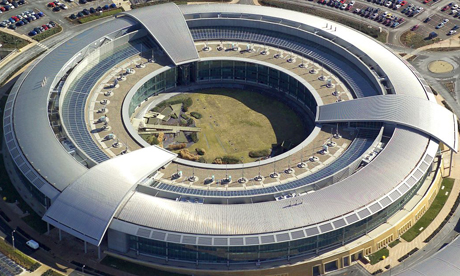
Image of GCHQ donught building

Following Guardian editor Alan Rusbridger appearance yesterday, MI5 boss Andrew Parker is called to the home select affairs committee. Andrew Parker has previously appeared before the Intelligence and Security Committee with advance notice of questions. The committee is expected to ask Parker to justify his severe criticism of the Guardian for publishing articles sourced from the NSA whistleblower Edward Snowden i.e. essentially that publication by the Guardian endangered national security and that terrorists are now able to evade government snooping (spying).

Food poverty in UK has reached level of ‘public health emergency’, warn experts

Young people to be allowed to remain in foster care until age 21

The lies behind this transatlantic trade deal

From the outset, the transatlantic partnership has been driven by corporations and their lobby groups, who boast of being able to “co-write” it. Persistent digging by the Corporate Europe Observatory reveals that the commission has held eight meetings on the issue with civil society groups, and 119 with corporations and their lobbyists. Unlike the civil society meetings, these have taken place behind closed doors and have not been disclosed online.

Though the commission now tells the public that it will protect “the state’s right to regulate”, this isn’t the message the corporations have been hearing. In an interview last week, Stuart Eizenstat, co-chair of the Transatlantic Business Council – instrumental in driving the process – was asked if companies whose products had been banned by regulators would be able to sue. Yes. “If a suit like that was brought and was successful, it would mean that the country banning the product would have to pay compensation to the industry involved or let the product in.” Would that apply to the European ban on chicken carcasses washed with chlorine, a controversial practice permitted in the US? “That’s one example where it might.”

What the commission and its member governments fail to explain is why we need offshore arbitration at all. It insists that domestic courts “might be biased or lack independence”, but which courts is it talking about? It won’t say. Last month, while trying to defend the treaty, the British minister Kenneth Clarke said something revealing: “Investor protection is a standard part of free-trade agreements – it was designed to support businesses investing in countries where the rule of law is unpredictable, to say the least.” So what is it doing in an EU-US deal? Why are we using measures designed to protect corporate interests in failed states in countries with a functioning judicial system? Perhaps it’s because functioning courts are less useful to corporations than opaque and unjust arbitration by corporate lawyers.

Continue ReadingPolitics news allsorts

Politics news allsorts

Spread the love

Commentary and analysis of recent UK (and Australian) UK politics news.

Image of GCHQ donught buildingEdward Snowden has released a document showing that Australia offered to share evidence about ordinary citizens with its ‘5-eyes’ surveillance partners. The document is a record of a 2008 meeting at GCHQ discussing what information can be shared. Different partners offered different categories of surveillance to be shared with their spy partners.

Revealed: Australian spy agency offered to share data about ordinary citizens

Australia’s surveillance agency offered to share information collected about ordinary Australian citizens with its major intelligence partners, according to a secret 2008 document leaked by the US whistleblower Edward Snowden.

The document shows the partners discussing whether or not to share “medical, legal or religious information”, and increases concern that the agency could be operating outside its legal mandate, according to the human rights lawyer Geoffrey Robertson QC.

The Australian intelligence agency, then known as the Defence Signals Directorate (DSD), indicated it could share bulk material without some of the privacy restraints imposed by other countries, such as Canada.

“DSD can share bulk, unselected, unminimised metadata as long as there is no intent to target an Australian national,” notes from an intelligence conference say. “Unintentional collection is not viewed as a significant issue.”

The agency acknowledged that more substantial interrogation of the material would, however, require a warrant.

The editor of the Guardian Alan Rusbridger was called before the home affairs committee to defend the Guardian publishing material leaked by NSA whistleblower Edward Snowden.

David Cameron and British intelligence chiefs have accused The Guardian of damaging national security with its reporting. In November the head of MI6 told MPs Al Qaida and other terrorist groups have been “rubbing their hands with glee” over the information revealed by Snowden.

But Rusbridger insisted The Guardian had behaved responsibly and had acted carefully to protect the identities of intelligence agents. “This is not a rogue newspaper, this is a serious newspaper with long experience,” he said.

Guardian will not be intimidated over NSA leaks, Alan Rusbridger tells MPs

Rusbridger said the Guardian had been put under the kind of pressure to stop publishing stories that would have been inconceivable in other countries.

“They include prior restraint, they include a senior Whitehall official coming to see me to say: ‘There has been enough debate now’. They include asking for the destruction of our disks. They include MPs calling for the police to prosecute the editor. So there are things that are inconceivable in the US.

“I feel that some of this activity has been designed to intimidate the Guardian.”

Continue ReadingPolitics news allsorts

Politics news allsorts

Spread the love

Commentary and analysis of recent UK political events


Charities criticise David Cameron for repeated misleading statements about the bedroom tax.

Charities Turn ‘Bedroom Tax’ Attack On PM

Charities have accused the Prime Minister of giving “inaccurate” statements and raising “false hopes” by suggesting that disabled people who need an extra room are exempt from the so-called “bedroom tax”.

Eighteen chief executives of leading disabled charities have written to David Cameron criticising comments he made during Prime Minister’s Questions last Wednesday.

Mr Cameron was asked about calls to exempt disabled people from the spare room subsidy and responded: “Obviously, what we have done is to exempt disabled people who need an extra room.”

The charities, which include Carers UK, the RNIB and and Sense, say he has made similar remarks twice this year.

The letter states: “None of these situations reflect the reality of the Government’s policy. We are now even more concerned that the effects the policy is having on disabled people and their families are not understood in Government.”

The government redefines fuel poverty to look better

Fuel poverty: Ministers ‘shifting goal posts’

A committee of MPs has accused ministers of “shifting the goal posts” to reduce the number of households in England classed as in fuel poverty.

The definition of fuel poverty would be changed by amendments to the Energy Bill so that 2.4 million were classed as fuel poor rather than 3.2 million.

The Environmental Audit Committee says that is unacceptable.

The government insists the changes help “to get a better understanding of the causes and depth of fuel poverty”.

The cross-party committee’s report said families were currently classed as fuel poor if they spent more than 10% of income on fuel “to maintain an adequate level of warmth”.

Under the new definition, families would only be deemed to be in hardship if they had “above average fuel costs” leaving them with “a residual income below the official poverty line”.

Spy Blog asks which UK politician, if any, authorised NSA snooping on “un-minimized” data of innocent people in UK ?

I would hazzard the guess Tony Blair and Jack Straw although it’s important to remember that the entire cabinet shares legal responsibility. In Blair’s cabinet that would mean that ministers are responsible for actions that they had absolutely no knowledge about.


Home Secretary Theresa May is asked for explanations about the Ifa Muaza 20-hour deportation round-trip. [Ifa Muaza or Isa Muazu?]

Continue ReadingPolitics news allsorts

Politics news allsorts

Spread the love

Commentary and analysis of recent UK politics events

Gloucestershire Badger cull ends (after being extended beyond the original end date)

Badger cull halted as ministers admit defeat

Hundreds of badgers have been granted an unexpected reprieve after the licence for the ongoing cull was revoked ahead of time.

Natural England admitted continuing the killing of badgers in the Gloucestershire pilot cull was pointless because there was no chance of their target being reached.

The cull will officially end at 12:00 GMT on Saturday as a result.

It means a planned mass protest in Bristol tomorrow lunchtime could turn into a celebration, charity Care For The Wild claimed.

Nigerian asylum seeker Isa Muazu who was in very ill health following a hunger strike has been subjected to a ridiculous flight by private plane attempting his deportation to Nigeria. A 20-hour round trip via Malta resulted when the plane was ‘unable’ to access Nigerian airspace. It is reported that he has started eating again.

http://www.politics.co.uk/news/2013/11/30/isa-muazu-back-in-the-uk

The exact reasons for Muazus return are not yet clear, although it is possible Nigeria would not allow the plane to land in the country.


Continue ReadingPolitics news allsorts

Politics news allsorts

Spread the love

Comment and analysis of recent UK politics events

A police helicopter crashed through the roof of a crowded pub in central Glasgow last night. Current reports are of eight people dead and fourteen people seriously injured. Bystanders helped evacuate the injured until emergency services arrived.


The Tories are annoyed that charities are opposing their intended replacement of the Human Rights Act. The HRA is about decisions of the Strasbourg European Court of Human Rights although the UK government can and does make primary legislation that has precedence over it.

http://www.telegraph.co.uk/news/politics/10484963/Charities-criticised-for-launching-campaign-to-frustrate-reform-of-Human-Rights-Act.html

… The campaign’s partners include Age UK, Disability Rights UK and Mind. The campaign is led by the Equality and Diversity Forum, a registered charity which is backed by the state-run Equality and Human Rights Commission.

The timing of the campaign is significant as the Conservatives are expected to be preparing to fight the next election on a policy of replacing the Human Rights Act with a new Bill of Rights.

Charlie Elphicke, a Conservative MP, said: “This campaign is desperately out of touch. It is also an abuse of charitable status. Labour’s Human Rights Act has been a disaster. Human rights urgently require reform and modernisation. We need a British Bill of Rights. …


The Tardis by Disent http://disent.deviantart.com/art/The-Tardis-30529477

Bryan Dyne and Christine Schofelt claim that Doctor Who is getting more militaristic recently.

Doctor Who at the half-century mark: A brief assessment

UNIT, a military organization that combats extraterrestrial threats to the Earth, has been a part of the program from the beginning. In the original, while The Doctor sometimes worked with UNIT as a consultant, it was always on his own terms and with a skeptical eye toward weaponry. Over the course of the new series, UNIT has become something more threatening and nefarious, and The Doctor has become more willing to work with this body.

In Torchwood, the Doctor Who spinoff that first aired in 2006, that militarism has been extended into domestic spying. The ability to tap into any closed circuit television camera, hack computer systems and obtain personal data is presented as something the “good guys” routinely resort to. There is also an instance in Torchwood (“Countrycide,” 2006) in which torture is portrayed as a legitimate way of getting information.

 At a time when US and British authorities have turned to illegal drone assassinations, mass domestic spying and a policy of unending war, it is perhaps not surprising that Doctor Who reflects these trends. However, that is no excuse, especially for a series that has traditionally expressed a general disdain for the military.

 In the 50th anniversary episode (“The Day of the Doctor”), The Doctor does not allow UNIT to detonate a nuclear device in the heart of London to stop an alien incursion. Instead, he forces the humans and aliens to reach a truce with no loss of life. One hopes this marks a conscious and lasting return to the theme of the triumph of intellect over brute force—a notion that has helped the program build a devoted following over the course of decades.

 Through The Doctor, viewers glimpse people at their best and worst. The contradictory nature of modern society—with its beauties and horrors—is examined with a degree of empathy and subtlety. While its approach and execution are sometimes flawed, Doctor Who champions, from the perspective of an outsider, the greatness that humanity can and should aspire to.

Continue ReadingPolitics news allsorts