Category: politics

  • ‘This Is Absurd’: Major Banks Continue to Fund Climate Chaos in Global South

    Spread the love

    Original article by OLIVIA ROSANE republished from Common Dreams under Creative Commons (CC BY-NC-ND 3.0). 
    ActionAid found that since the Paris agreement, banks have funded the largest Big Ag companies doing business in the Global South to the tune of $370 billion and the fossil fuel sector to the tune of $3.2 trillion.

    Since the international community promised to limit global heating to 1.5°C above preindustrial levels, the world’s major banks have funneled 20 times more money to climate-polluting industries in the Global South than Global North governments have given those same countries to address the climate emergency.

    That’s just one of the findings of How the Finance Flows: The Banks Fueling the Climate Crisis, an ActionAid report released Monday.

    “This report names the biggest offenders in the banking world and calls on them to see that they are destroying the planet, while harming the present and future for their children,” Ugandan climate activist Vanessa Nakate wrote in the foreword. “It’s time to hold financial institutions to account, and demand that they end their funding of destructive activity.”

    https://twitter.com/vanessa_vash/status/1698683769710952796?ref_src=twsrc%5Etfw%7Ctwcamp%5Etweetembed%7Ctwterm%5E1698683769710952796%7Ctwgr%5E21ba57345d6aeb813133d6ed52f516caddebf1a7%7Ctwcon%5Es1_c10&ref_url=https%3A%2F%2Fwww.commondreams.org%2Fnews%2Fbanks-fund-climate-chaos

    The report focuses on the financing of two major climate-heating industries in the 134 nations of the Global South: fossil fuels and industrial agriculture.

    “People generally know that fossil fuels are the number one cause of greenhouse gas emissions. But what is less understood is that industrial agriculture is actually the second biggest cause of climate emissions,” Teresa Anderson, the global lead on climate justice at ActionAid International, said during a press briefing ahead of the report’s release.

    This is because of the sector’s link to deforestation, as well as the emissions required to produce industrial fertilizers, she added.

    In total, since the 2015 Paris agreement, banks have funded the largest Big Ag companies doing business in the Global South to the tune of $370 billion and the oil, gas, and coal sectors to the tune of $3.2 trillion.

    “Global banks often make public declarations that they are addressing climate change, but the scale of their continued support of fossil fuels and industrial agriculture is simply staggering.”

    The top three banks that invested the most in these sectors were the Industrial and Commercial Bank of China at $154.3 billion, China CITIC Bank at $134.7 billion, and the Bank of China at $125.9 billion. Citigroup came in fourth at $104.5 billion, followed by HSBC at $80.8 billion.

    While China features prominently in the report as the world’s largest economy, Anderson noted that much of what it produces ends up purchased by consumers in the Global North.

    The top three banks in the Americas funding big agriculture and fossil fuels were Citigroup, JPMorgan Chase, and Bank of America. While Citigroup was the leading regional funder of fossil fuels, JP Morgan Chase gave the most to industrial agriculture.

    In Europe, the top funders after HSBC were BNP Paribas, Société Générale, and Barclays, while Mitsubishi UFJ Financial rounded out the top Asian funders.

    Where is all that money going? When it comes to agriculture, the leading recipient was Bayer, which bought out Monsanto in 2018. Banks have given it $20.6 billion to do business in the Global South since 2016.

    Much of the fossil fuel money went to China’s State Power Investment Corporation and other Chinese companies; commodities trader Trafigura; and the usual fossil fuel suspects like ExxonMobil, BP, Shell, Saudi Aramco, and Petrobras.

    “This is absurd,” Anderson said of the findings. “Global banks often make public declarations that they are addressing climate change, but the scale of their continued support of fossil fuels and industrial agriculture is simply staggering.”

    ActionAid called the report the “flagship” document of its Fund Our Future campaign to redirect global money from climate crisis causes to climate solutions. The report calls on banks to make good on their climate promises and stop funding fossil fuels and deforestation, as well as to put additional safeguards in place to protect the rights of local communities, raise the ambition of their goals to reach “real zero” emissions, and improve transparency and other measures to make sure the projects they fund are behaving ethically.

    “This can be stopped,” Farah Kabir, the country director of ActionAid Bangladesh, said during the press briefing. “The banks cannot continue to fund fossil fuel industries and industrial agriculture.”

    In addition, the report offers recommendations to Global North governments to ensure a just transition to a sustainable future for everyone. These included setting stricter regulations for the banking, fossil fuel, and agricultural industries as well as ending public subsidies for these sectors and channeling the money to positive solutions like renewable energy and agroecology.

    However, the form that funds take when sent to the Global South makes a big difference, said ActionAid USA executive director Niranjali Amerasinghe. Instead of coming in the form of private loans, it needs to be in the form of public money.

    “Providing more loans to countries that are already in significant debt distress is not going to support their transition to a climate-compatible future,” she said.

    One reason that loans are counterproductive is that nations that accept them are forced to provide a return on investment, and currently the main industries that offer this are in fact fossil fuels and industrial agriculture.

    In addition to public funds, debt forgiveness or restructuring and new taxes could also help these countries with their green transition. If companies like Exxon or Bayer doing business in the Global South “were taxed in an equitable way, that would allow those governments to raise public revenue that can then be used to support climate action,” Amerasinghe said.

    In particular, the report emphasizes agroecology as a climate solution that should be funded in Global South countries.

    “Climate change is real in Zambia.”

    Mary Sakala, a frontline smallholder farmer from Zambia, spoke at the press briefing about how the climate crisis and current agricultural policy put a strain on her community.

    “Climate change is real in Zambia,” she said, adding that it had brought flooding, droughts, pests, and diseases that meant that “families currently, as I’m speaking right now, sleep on an empty stomach.”

    Sakala saw hope in agroecology, which would help with food security and resilience, and make farmers less dependent on the government and large companies.

    “We need policies to allow [us] to conserve our environment in a cultural way, to help us eat our food,” Sakala said. “We want… every seed to be utilized and saved and shared in solidarity.”

    And she said that the companies and governments of the Global North have a duty to help them get there.

    “Those people who are continuing to pollute and let the climate change increase, those people need to pay us, because we are suffering from the things that others are doing,” she said.

    Original article by OLIVIA ROSANE republished from Common Dreams under Creative Commons (CC BY-NC-ND 3.0). 
  • Rich Nations Have Delivered Mere ‘Pittance’ to Help East Africa Tackle Climate Crisis: Oxfam

    Spread the love

    Original article by JAKE JOHNSON republished from Common Dreams under Creative Commons (CC BY-NC-ND 3.0).
    “We have an abundance of clean, renewable energy,” said one African activist. “But to unlock it, Africa needs funding from countries that have got rich off our suffering.”

    As the first-ever Africa Climate Summit kicked off in Nairobi, Kenya on Monday, an analysis by the humanitarian group Oxfam found that rich nations have delivered just a small fraction of the aid that East African nations say they need each year to meet their climate goals.

    Unlike rich countries that account for a disproportionate share of planet-warming greenhouse gas pollution, East Africa has contributed “almost nothing” to global carbon emissions that are driving record-shattering heat worldwide, Oxfam’s new report notes. In 2021, according to one recent estimate, the average North American emitted 11 times more carbon dioxide than the average African.

    The World Meteorological Organization pointed out Monday that Africa is responsible for less than 10% of global carbon emissions.

    Yet “East Africa is one of the world’s worst-hit regions by climate change and is now experiencing its worst climate-induced extreme weather, fueling an alarming hunger crisis,” Oxfam’s report states. “Over 31.5 million people are currently facing acute hunger across Ethiopia, Kenya, Somalia, and South Sudan.”

    Those countries, which suffer billions of dollars worth of climate-related damage each year, have said they will need at least $53.3 billion annually to meet critical targets under the Paris Climate Agreement. According to Oxfam, wealthy countries provided just $2.4 billion in aid to East African nations in 2021.

    More broadly, Oxfam noted, high-income countries pledged that they would provide $100 billion a year by 2020 to help lower-income countries fight climate chaos.

    “Oxfam estimates that in 2020 the real value of financial support specifically aimed at climate action was only around $21 billion to $24.5 billion—much less than officially reported figures suggest,” the group’s report states.

    Fati N’Zi-Hassane, Oxfam’s Africa director, said Monday that “even by their own generous accounts, polluting nations have delivered only pittance to help East Africa scale up their mitigation and adaptation efforts.”

    “Nearly half the funds (45%) they did give were loans, plunging the region further into more debt,” N’Zi-Hassane added.

    Climate finance is expected to be a major topic of discussion at the Nairobi summit, which comes after months of scorching heat on the continent.

    “Africa is seen as a sunny and hot continent,” Amadou Thierno Gaye, a research scientist and professor at Cheikh Anta Diop University in Dakar, toldBloomberg in July. “People think we are used to heat, but we are having high temperatures for a longer duration. Nobody is used to this.”

    The Associated Press reported Monday that “there is some frustration on the continent about being asked to develop in cleaner ways than the world’s richest countries—which have long produced most of the emissions that endanger climate—and to do it while much of the support that has been pledged hasn’t appeared.”

    Mohamed Adow of Power Shift Africa told AP that “we have an abundance of clean, renewable energy and it’s vital that we use this to power our future prosperity. But to unlock it, Africa needs funding from countries that have got rich off our suffering.”

    In addition to calling on rich nations to contribute the aid they’ve promised to support Africa’s renewable energy transition, African civil society groups are urging their leaders to reject fossil fuel expansion, specifically warning against the completion of TotalEnergies’ East African Crude Oil Pipeline (EACOP).

    A recent Human Rights Watch report warned that more than 100,000 people in Uganda and Tanzania are set to “permanently lose land to make way for the pipeline and Tilenga oilfield development.” One analysis indicates the pipeline could result in 379 million tonnes of planet-warming emissions over its lifespan—more than 25 times the combined annual emissions of Uganda and Tanzania.

    Zaki Mamdoo, coordinator of the Stop EACOP Coalition, said Monday that “the African Climate Summit could provide the platform needed for the continent to dramatically shift its trajectory and future—from one that is set to bear the brunt of climate collapse, to one of energy security and prosperity driven by decentralized and people-centered renewables.”

    “For this to happen,” said Mamdoo, “African leaders will need to rise to the occasion and make firm commitments to significantly upscale renewable energy developments while resisting and withdrawing any and all support for exploitative and destructive projects like the East African Crude Oil Pipeline.”

    Original article by JAKE JOHNSON republished from Common Dreams under Creative Commons (CC BY-NC-ND 3.0).

  • XR climate activists start march from three cities to block A12 in The Hague next week

    Spread the love
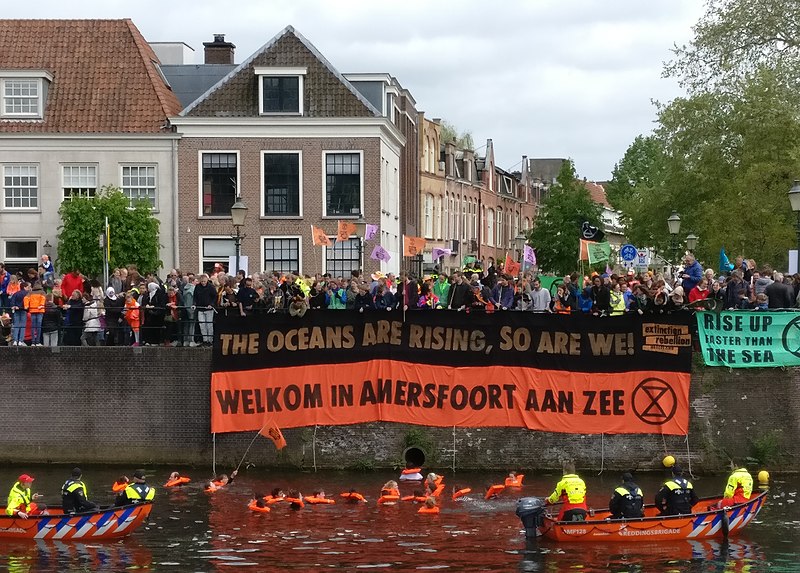
    Nederlands: Spandoek van Extinction Rebellion bij het bezoek van de koning in Amersfoort.Image by Daandelft, Creative Commons Attribution-Share Alike 4.0 International license.
    Nederlands: Spandoek van Extinction Rebellion bij het bezoek van de koning in Amersfoort. Image by Daandelft, Creative Commons Attribution-Share Alike 4.0 International license.

    https://nltimes.nl/2023/09/03/xr-climate-activists-start-march-three-cities-block-a12-hague-next-week

    Participants in a climate march set off from Arnhem, Alkmaar, and Almere on Sunday morning, ending six days later in The Hague. The march is an initiative of Extinction Rebellion (XR), in advance of the next blockade of the A12 highway, which the climate activist group has announced for next Saturday. According to XR, the march will be “public-friendly and fully within the law.”

    For each day, the activists have set a route of about 20 kilometers. The routes will go from station to station, so people who want to join the day’s march can do so easily. A similar march already took place in May, but then only from Arnhem.

    Starting Saturday, September 9, XR plans to block the A12 in The Hague every day. This part of the road passes the temporary Tweede Kamer and the Ministry of Economic Affairs and Climate Policy. According to XR, this is exactly the right place for a protest against the financial benefits that the government grants for the use of fossil fuels. These fuels cause by far the most CO2 emissions and thus contribute significantly to global warming.

    …

    https://nltimes.nl/2023/09/03/xr-climate-activists-start-march-three-cities-block-a12-hague-next-week

  • Sadiq Khan: The bogus war on the motorist is sign of Tory desperation

    Spread the love
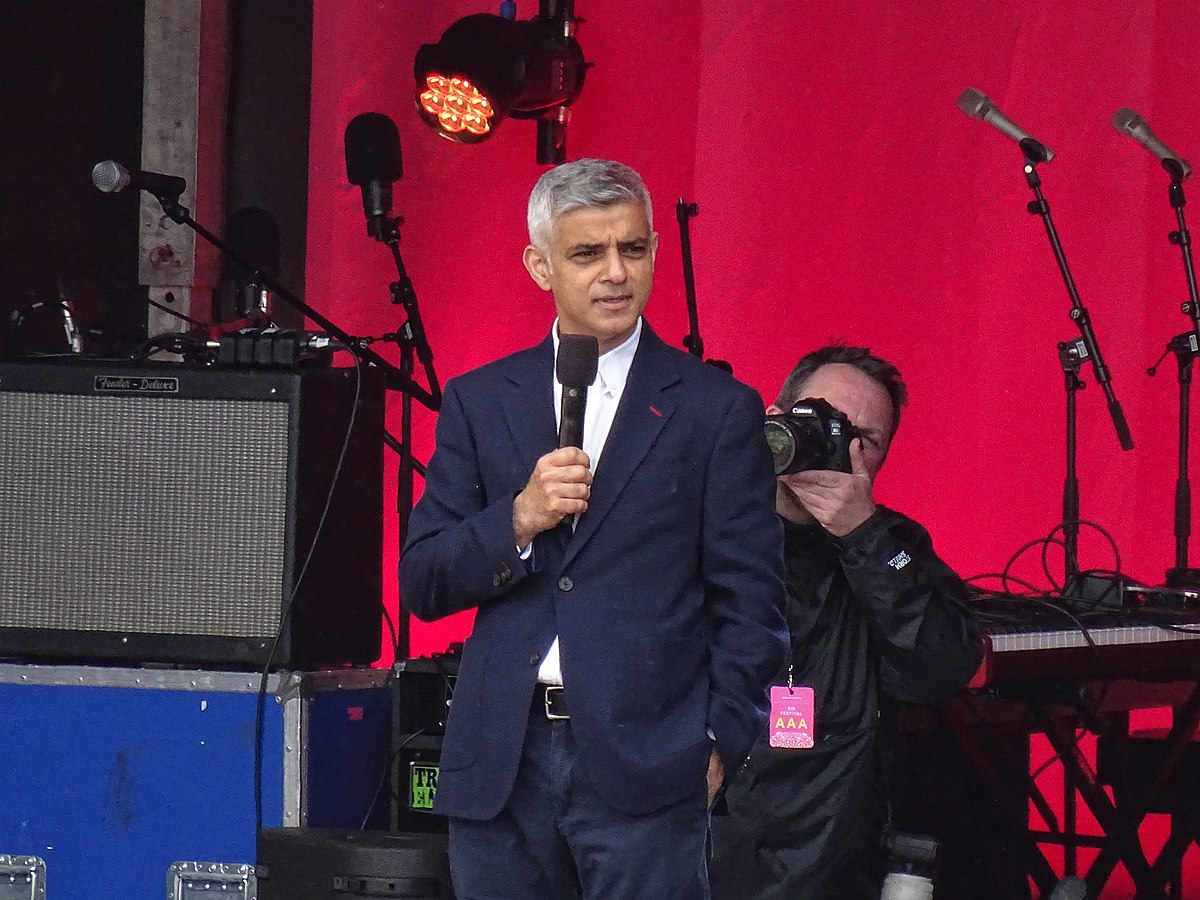
    Mayor of London Sadiq Khan. Image:  	DAVID HOLT from London, England  Creative Commons Attribution 2.0 Generic license.
    Mayor of London Sadiq Khan. Image: DAVID HOLT from London, England Creative Commons Attribution 2.0 Generic license.

    https://www.theguardian.com/environment/2023/sep/03/sadiq-khan-ulez-motorists-conservative-party

    …

    The Conservatives have overseen 13 years of decline – with soaring rents and mortgages, devastated public services, sky-high bills and the highest tax burden on working people in a generation. They have nothing to offer.

    That’s why they are desperate to confect a bogus war on the motorist. Division is both their strategy and overriding priority.

    Regrettably, fostering this type of damaging politics is more important to Rishi Sunak right now than the harm being done to our children’s lungs by air pollution or the decline forced on our economy because of their recklessness and incompetence.

    Serious, robust, reasoned discussion is essential in any democratic society, and something I have always welcomed.

    My objection is not to good-faith debate, but to the Tories sowing discord and division, in a desperate attempt to distract from the mess they’ve made of our country.

    https://www.theguardian.com/environment/2023/sep/03/sadiq-khan-ulez-motorists-conservative-party

  • Labour figures took £10,000 gifts from Google and YouTube ahead of tax U-turn

    Spread the love
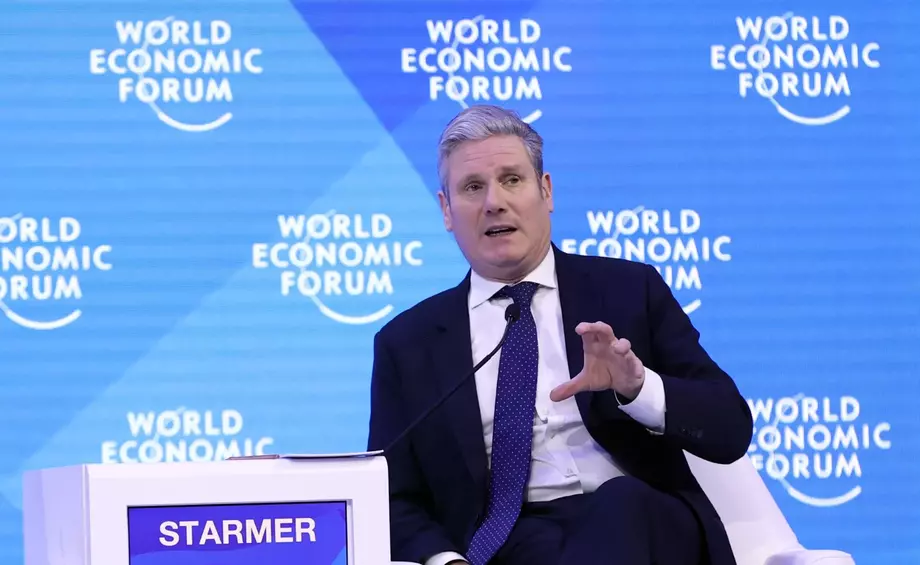
    Keir Starmer sucking up to the rich and powerful at World Economic Forum, Davos.
    Keir Starmer sucking up to the rich and powerful at World Economic Forum, Davos.

    Original article by Adam Ramsay republished from Open Democracy under  Creative Commons Attribution-NonCommercial 4.0 International licence.

    Senior Labour figures accepted valuable gifts from Google in the days before abandoning a plan to tax digital giants more, openDemocracy can reveal.

    Labour’s shadow business secretary Jonathan Reynolds, his senior parliamentary assistant (who is his wife), and Keir Starmer’s political director all attended Glastonbury festival in June as guests of YouTube, which is owned by Google. Including accommodation and ‘hospitality’, Reynolds estimates his Glastonbury package for two was worth £3,377 – significantly more than the cost of two regular tickets, which were £335 each.

    The next day, reports emerged that Labour had ditched its proposal to hike tax on digital businesses like Google.

    The Digital Services Tax, introduced in 2020, is a 2% levy on the UK income of online companies like search engines and social media platforms. In August last year, Reynolds and his shadow chancellor colleague Rachel Reeves had called for an increase in the tax to 10%, saying the income would be used to fund a slash in tax for small businesses.

    As recently as 5 June, Reynolds was still talking about the policy. Yet on 26 June this year, the day after Glastonbury ended, The Times reported that the policy had been ditched, with Labour saying it had “no plans” to raise the digital service tax when in government. Reynolds declined to comment.

    It was not the only time senior figures in Starmer’s team accepted luxury gifts from Google in the months before the party’s U-turn. Shadow culture secretary Lucy Powell’s political adviser, Labour’s executive director of policy, and the party’s head of domestic policy all accepted tickets and transport to, and ‘hospitality’ at, the Brit Awards in February from the digital giant. Powell’s register of interests estimates that the adviser’s ticket was worth £1,170.

    Starmer’s political director also accepted transport to and ‘hospitality’ ahead of the event from Google, though his ticket, along with that of Starmer’s private secretary, was covered by Universal Music.

    YouTube will sponsor an event at Labour’s annual conference next month with the chair of the business and trade select committee, Darren Jones. The talk, hosted by the New Statesman Media Group, will be on “harnessing tech for growth”.

    Last week, openDemocracy revealed that Starmer had accepted a £380 dinner from Google for him and one staff member during the World Economic Forum in January.

    In total, openDemocracy estimates that Labour shadow cabinet members and their staff accepted luxury gifts from Google worth nearly £10,000 over the months before they announced their policy U-turn. By contrast, the value to the British public of the policy Labour appears to have ditched is estimated at around £3bn.

    Nick Dearden, director of Global Justice Now, said: “This is a really very worrying set of events which suggests that big business has far too much access to senior opposition politicians.

    “But this isn’t simply about foolish behaviour on the part of the individuals concerned. In office, Labour needs to radically restructure our economy if it’s to have any hope of creating a more sustainable and equal society, and undoing the damage of recent governments. To do that, they must take on vested interests, like the Big Tech monopolies, which have far too much wealth and power.”

    Staff for other Labour shadow cabinet members have also accepted valuable gifts from controversial companies. A political adviser to the shadow chancellor Rachel Reeves, accepted two ‘box’ tickets to a Harry Styles concert worth £250 each from BT. In the 2019 Labour manifesto, the party committed to nationalising BT, a measure the company opposed. It’s not clear whether the party maintains this policy, but Reeves has distanced herself from other nationalisation plans.

    In April this year, BT announced a 14.4% average increase in its prices, and £1.7bn in profit. An Openreach spokesperson said: “As you’d expect from any major employer investing billions into the UK, we engage regularly with a range of stakeholders to support the interests of our people, our customers and our business. Any hospitality is consistent with the rules, fully declared and transparent.”

    Updated 31 August 2023: The original version of this article incorrectly stated that the value of the Harry Styles box tickets was £700 each. They were in fact £250 each.

    Original article by Adam Ramsay republished from Open Democracy under  Creative Commons Attribution-NonCommercial 4.0 International licence.