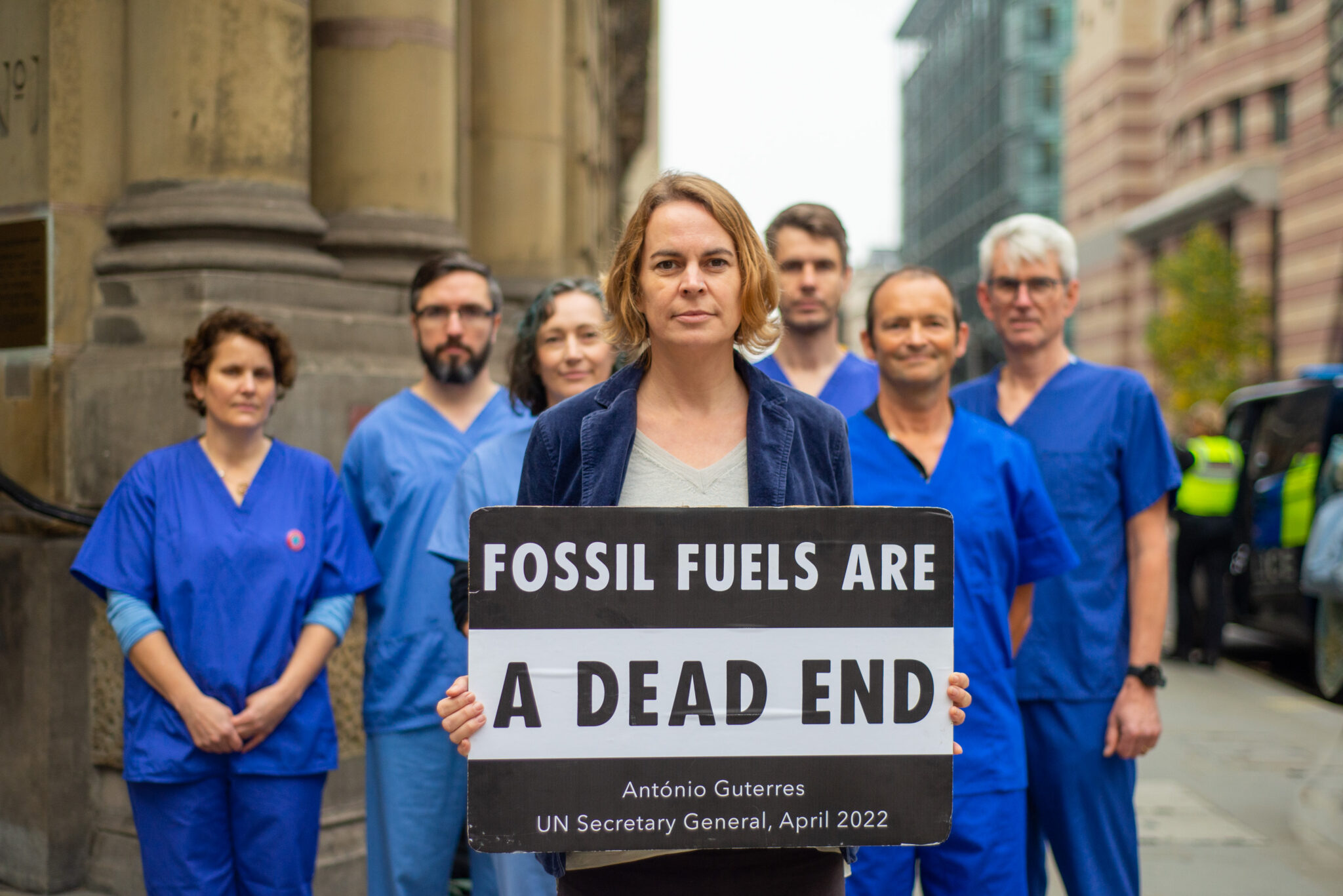
The latest IPCC climate report published yesterday at about 4pm [ed about 12 or 1pm] UK time is banished from the news – there’s not a mention of it this morning. It’s because it says that we have to just stop oil and gas expansion, we have to switch to alternative sources of energy now, that rich countries and energy companies have to dig into their pockets…
Category: politics
Humanity at the climate crossroads: highway to hell or a livable future?
Humanity at the climate crossroads: highway to hell or a livable future?
The choice in the new IPCC report is stark: what we do in the next few years will determine our fate for millennia
After a 10,000-year journey, human civilisation has reached a climate crossroads: what we do in the next few years will determine our fate for millennia.
That choice is laid bare in the landmark report published on Monday by the Intergovernmental Panel on Climate Change (IPCC), assembled by the world’s foremost climate experts and approved by all the world’s governments. The next update will be around 2030 – by that time the most critical choices will have been made.
The report is clear what is at stake – everything: “There is a rapidly closing window of opportunity to secure a liveable and sustainable future for all.”
…
“Continued emissions will further affect all major climate system components, and many changes will be irreversible on centennial to millennial time scales,” it says. To follow the path of least suffering – limiting global temperature rise to 1.5C – greenhouse gas emissions must peak “at the latest before 2025”, the report says, followed by “deep global reductions”. Yet in 2022, global emissions rose again to set a new record.
…
Humanity at the climate crossroads: highway to hell or a livable future?
Dozens of civil society groups to stand with Extinction Rebellion for days of protest at Houses of Parliament

14.11.22_XR Docs_City of London Mags_Helena Smith_7224 NHS Workers Say No and Public and Commercial Services Union, one of the UK’s largest, among dozens of groups forming alliance with climate movement
NHS workers, trade unionists, anti-racism campaigners and climate activists will stand together in their thousands next month to protest the UK government’s apathetic and failed response to tackle interlocking crises, The Independent can reveal today.
Extinction Rebellion (XR) has called on 100,000 people to join days of demonstration dubbed “The Big One” at the Houses of Parliament in London from 21 to 24 April.
On Monday, the event received a major boost after dozens of groups, representing a diverse cross-section of society and interests, confirmed their participation.
…
XR said it would focus on “attendance over arrest and relationships over roadblocks” to call for the UK government to adequately address a multitude of interwoven crises – climate change, the cost of living, attacks on democratic norms, and the shredding of essential public services.
…
Airlines downplayed science on climate impact to block new regulations
Original article by Ben Webster and Lucas Amin republished from openDemocracy under a Creative Commons Attribution-NonCommercial 4.0 International licence.
Campaigners say the lobbying tactics used to argue against tougher measures on emissions echo those of the 20th century tobacco industry

Airlines have been accused of using a “typical climate denialist” strategy after downplaying decades of scientific research on aviation emissions to block tougher regulations.
Campaigners said the lobbying tactics echoed those of the 20th century tobacco industry, which fought stricter measures by magnifying minor doubts on the health risks of smoking.
Documents obtained by openDemocracy show airlines and airports privately told the government there was too much uncertainty about the additional warming effects of flights to justify introducing new policies to tackle them.
But senior climate scientists contradicted the industry’s claims, saying the science is well established on what are known as aviation’s “non-CO2 effects”.
These are caused by emissions at high altitude of water, nitrous oxides, sulphur dioxide and particulate matter, with aircraft vapour trails, also known as contrails, a particular problem because they form clouds at high altitude that trap heat radiated from the Earth.
The Intergovernmental Panel on Climate Change estimated in a special report in 1999 that the total historic impact of aviation on the climate was two to four times greater than from its CO2 emissions alone.
Research in 2021 largely confirmed those findings and concluded aviation emissions were warming the climate at “approximately three times the rate of that associated with aviation CO2 emissions alone”. An EU study from 2020 also found non-CO2 emissions warm the planet about twice as much as CO2 emissions, but acknowledged there were “significant uncertainties”.
The Department for Transport considered regulating these non-CO2 impacts and asked for views on the issue in a consultation in 2021 on its proposed “Jet Zero strategy”.
Responses from airlines and airports, obtained under FOI by openDemocracy, reveal several used the same tactic of arguing the science was too uncertain to justify policies to address non-CO2 effects. Several recommended instead that the government should limit its action on the issue to funding further research into it.
‘A bit of a joke’
Airlines UK, a trade body that lobbies for airlines including British Airways (BA), easyJet and Virgin Atlantic, told the DfT that “the science around these [non-CO2 impacts] is not yet robust enough to form reduction targets”.
When asked during the Jet Zero consultation what could be done to tackle non-CO2 impacts, Ryanair said it was “too early to say until impact is better understood”.
Low-cost airline Wizz Air told the DfT: “There is too high a level of uncertainty of non-CO2 emission contribution to climate change for a policy to be formed.”
Airlines UK, Ryanair and Wizz – alongside others across the industry – called on the DfT to instead fund further research into the science of non-CO2 impacts.
The tactic appears to have worked, with the DfT announcing in the Jet Zero strategy last year that more work would be done with scientists and the industry to understand the issue.
The DfT did, however, say the government was “exploring whether and how non-CO2 impacts could be included in the scope of the UK ETS (emissions trading scheme)”.
Professor Piers Forster, an atmospheric physicist and member of the independent Climate Change Committee, told openDemocracy it was “completely wrong” for the aviation industry to claim the science on aviation’s non-CO2 effects was too uncertain to address them.
He said: “It’s a bit of a joke to say the effects are too uncertain to do anything about. We see their contrails and we’ve known for over 20 years that they are warming the planet. The industry should not hide behind uncertainty.”
He added that “the non-CO2 effects absolutely have to be accounted for in some way and action should be taken to reduce them”.
Milan Klöwer, a climate physicist at Massachusetts Institute of Technology, said airlines were adopting a “typical climate denialist strategy” by overstating the level of uncertainty about non-CO2 effects.
“Even in the best case they roughly double the effect of CO2 emissions on the climate,” he said.
He called on airlines to start accounting for their non CO2 effects and invest more in solutions, such as alternative fuels, which reduced those effects.
Rob Bryher, aviation campaigner at climate charity Possible, said: “These documents show that airlines cannot be trusted to decarbonise on their own. Demand management solutions like a frequent flyer levy, introducing fuel duty, carbon pricing, or management of airport capacity are going to be crucial.”
Matt Finch, UK policy manager of campaign group Transport & Environment, said: “Aviation’s non-CO2 impacts are somewhere between huge and absolutely massive. But the industry doesn’t want you to know that. Instead of confronting its environmental problems head-on, the industry copies the tobacco industry of the ’50s and the oil industry of the ’70s in casting doubt and disbelief around the science.”
BA said it was working with academics and experts on non-CO2 impacts of flying while Sustainable Aviation, an industry group that includes airlines, said it was committing to addressing them but reiterated more research was needed. Wizz Air said it was already addressing the impacts through a range of measures.
Some airlines ignore non-CO2 effects in schemes they support to help passengers calculate and offset the emissions of their flights.
BA’s emissions calculator states a one way flight from London Heathrow to New York emits 348kg CO2E (carbon dioxide equivalent) and charges £3.97 for offsetting.
Atmosfair, a German non-profit organisation which supports the decarbonisation of flying, calculates the same journey on a Boeing 777-200 – an aircraft type used by BA – emits 896kg and charges 21 euros (£18.37) for offsetting. Atmosfair’s emissions total comprises 308kg of CO2 emissions and 587 kg equivalent for “climate impact of contrails, ozone formation etc”.
While the DfT has so far failed to act on non-CO2 effects, they are mentioned in official advice to companies from the Department for Business Energy and Industrial Strategy on how to report their emissions.
It says: “Organisations should include the indirect effects of non-CO2 emissions when reporting air travel emissions to capture the full climate impact of their travel.”
A DfT spokesperson said: “Our Jet Zero Strategy confirmed our aim of addressing the non-CO2 impacts of aviation, by developing our understanding of their impact and possible solutions, and the UK is one of the leading countries working to address this issue.”
Sustainable Aviation Fuel
International Airlines Group (IAG), which owns BA, Vueling and Aer Lingus, told DfT’s Jet Zero consultation it could address non-CO2 emissions by supporting “sustainable aviation fuel” (SAF).
SAF is a jet fuel made from sources which the industry claims are sustainable, including cooking oil and animal fat. It performs in a similar way to kerosene but can produce up to 80% less CO2 depending on how it is made. It potentially also reduces contrails.
IAG told the Jet Zero consultation SAF was “the only viable solution for decarbonising medium and long haul flights”, which account for about 70% of global aviation emissions.
But further documents obtained by openDemocracy reveal IAG then lobbied the DfT to water down its SAF mandate.
In response to a separate consultation, IAG argued the SAF mandate should only cover flights within the UK or to the EU, and not the long haul flights on which British Airways makes most of its profits.
IAG also lobbied against a proposal to ban airlines from dodging the mandate by filling their tanks with cheap kerosene at overseas airports – a practice known as “tankering”.
A BBC Panorama investigation in 2019 revealed tankering by BA and other airlines was creating small financial savings but unnecessary carbon emissions.
IAG also argued against a proposal aimed at building demand for “power-to-liquid” jet fuel, which is produced by combining hydrogen made by renewable energy with carbon captured from the atmosphere.
Unlike other so-called sustainable jet fuels, power-to-liquid fuel does not involve a feedstock needed by other industries to decarbonise, such as used cooking oil or animal fat.
IAG called it “a very expensive pathway to directly decarbonise aviation”.
Sustainable Aviation, an industry group that includes airlines, said: “We are committed to addressing [non-CO2] impacts based on the scientific evidence, but further research is key to developing effective mitigation solutions, for example the use of sustainable aviation fuels (which contain lower contrail forming particulates), alongside steps such as optimising flight routes to avoid contrail formation.”
BA, IAG’s principal airline, said: “We are actively engaging with academics, experts within the industry and the government’s Jet Zero Council to take proactive steps to look into non-CO2 impact.”
Wizz Air said it was mitigating non-CO2 effects “through route optimisation and jet fuel improvements” and by using Airbus A321neo aircraft which reduced NOx emissions by 50%.
Ryanair did not respond to a request for comment.
Original article by Ben Webster and Lucas Amin republished from openDemocracy under a Creative Commons Attribution-NonCommercial 4.0 International licence.
Why Palantir’s latest NHS land-grab is such bad news for patients
Original article by Cori Crider republished from openDemocracy under a Creative Commons Attribution-NonCommercial 4.0 International licence.
OPINION: Once Palantir is inside our health service, it will be hard to get rid of. The NHS should think carefully

This week I debated the future of the NHS with a cardboard cutout. This was, I confess, a bit of a let-down: Louis Mosley, the UK head of Palantir, looked very fine in 2D, watermelon cocktail in hand, but we’d hoped for the man himself. He’d agreed to debate Foxglove about the NHS’s massive new plans for our health data, only to pull out at the last minute, citing ‘commitments in eastern Europe’. I suspect the real reason is that the government leant on him – and the conference organisers – to scuttle the debate. So much for public engagement.
Funny cutouts aside, this is a serious matter. The NHS, as we can see from the strikes this week, is in a historic crisis. As well as 120,000 care vacancies, the NHS has over 3,000 vacant tech roles – which stops the service from evolving to meet future needs. But instead of gripping this crisis with a credible workforce plan, the government proposes to spend nearly half a billion pounds on a database.
This is what I was hoping to debate with Louis. The government wants to give his spy-tech firm, Palantir, the contract to manage a vast new ‘Federated Data Platform’. If it goes ahead as envisaged, the FDP will be the largest single point of access to patient data this country has ever seen. It’s a pity it was left to me and Dr Marcus Baw, a GP and health IT specialist, to debate this system – because there’s so much the government won’t say about it. Like exactly what shape it will take or what purposes it will eventually serve; what it will eventually cost; who will have access; or how patient choice and consent will be honoured.
The proposed system is vast. The aim is for it to sweep in hospital, GP, even social care records – and make all this patient data available to government planners and others.
Now, parts of this are all to the good. The NHS badly needs to make better and more efficient use of patient data for the good of the NHS and of patients; there are inefficiencies in the system that urgently need fixing. But we, and many experts within the NHS we speak to, have serious concerns about the design of this contract: about whether the procurement has been fair; whether the system will work as designed; and whether Palantir, which is mainly known for supporting CIA drone attacks, predictive policing and deportation raids, is a remotely appropriate partner for the NHS.
That’s why Foxglove (with openDemocracy) brought multiple legal cases seeking to shed light on this shadowy spy-tech firm’s beachhead in the NHS since their very first £1 no-bid pandemic contract. It’s also why 50 other groups have signed the ‘No Palantir’ pledge, saying a company whose values are so manifestly opposed to those of the NHS has no place handling so much sensitive patient data.
Having one supplier to join up data and analyse it risks creating a dangerous private monopoly over vital NHS infrastructure
But there are deeper issues with the FDP. It runs the risk of stealing oxygen – and funding – from other critical work already underway to help the NHS join up its patient data for good. For example, openSafely, a flagship national data platform for health research, was developed by Ben Goldacre and a team at Oxford and was used for vital Covid research. It’s completely open source, safe and lights a way forward for trustworthy health research. It also costs a fraction of what Palantir does.
What’s more, pushing so much access and control to the centre may not make sense. For some issues – vaccination, workforce planning – there is a clear case for a national solution. But ultimately, most care is delivered locally and planned regionally. There are already places, such as London, that have pioneered solutions to pool patient data to plan care better – at a fraction of the FDP’s cost. It is far from clear how this will interact with the FDP, or whether it can survive the new system.
Other competitors – like a UK consortium of universities and open-source firms that are apparently bidding for the deal – would have loved a fair crack at the FDP contract. But let’s be honest: they probably haven’t got a snowball’s chance at beating Palantir’s incumbent advantage, won through a mixture of insider influence and watermelon cocktail lobbying.
Once Palantir’s in, it will be hard to get it out. The technical architecture is proprietary – and other government agencies have struggled to get off Palantir when they’ve tried. Having a single supplier to help you join up data and analyse it also risks creating a dangerous private monopoly over vital NHS infrastructure.
Indeed, if you take Palantir chief executive Alex Karp at his word, that’s the plan. “We are working towards a future where all large institutions in the United States and its allies abroad are running significant segments of their operations, if not their operations as a whole, on Palantir,” he wrote. “Most other companies are targeting small segments of the market. We see and intend to capture the whole.” That reads like an express statement of an intention to seek monopoly power.
It’s also clear they’re in it to profit. Their chief technology officer, Shyam Shankar, recently wrote: “The problem with defen[c]e contracting is not the popular narrative that contractors make too much money. It is actually that they make too little money… Innovators will need outsized profits to motivate progress.” Monopoly and profiteering may be good for Palantir’s share price, but they sit uncomfortably with the ethos of a public health service.
Joining up the NHS’s disparate health data systems better will present stiff challenges, and the NHS will face trade-offs – buying in consultants may be easier in the short term, for example, but may prove more expensive in the long run. But at the moment the government is stonewalling legal letters asking even basic questions about the FDP. And they are also creating facts on the ground that could be seen to favour Palantir. The legal basis for all of this, now that the pandemic’s suspension of protections for patient data has lapsed, is unclear.
People care deeply about how their health data is used. We go to the doctor to share our worries, our fears, and our pain – and if we don’t trust that conversation to be private, we may not go at all. People want to feel safe to contribute their health data for the good of the NHS – but when the government runs out ahead of patient trust, overhauling patient data systems without explaining what it wants to do, who will see the data, and what safeguards there are, people baulk. In 2021 more than a million people in a month opted out of sharing their health data because they didn’t trust the government’s last plans to pool their GP records. The history of the NHS is a boneyard of such schemes: massive, expensive white elephants that all failed because the government didn’t take the time to get the governance or consent right.
It is past time for the government to learn from these mistakes. We can build a better future for our patient data – if we take the time to design carefully, honouring patient choice and thinking about what system will serve the NHS for the long haul. Anything less is likely to fail and set the cause of progress back another five years.
Original article by Cori Crider republished from openDemocracy under a Creative Commons Attribution-NonCommercial 4.0 International licence.