Category: politics

  • Fossil Fuel Linked Donors Gift Half a Million to Conservative Party

    Spread the love

    Original article by Sam Bright republished from DeSmog.

    The CEOs of jet fuel suppliers, gas turbine makers, oil and gas companies are among those who made large donations in the last quarter of 2022.
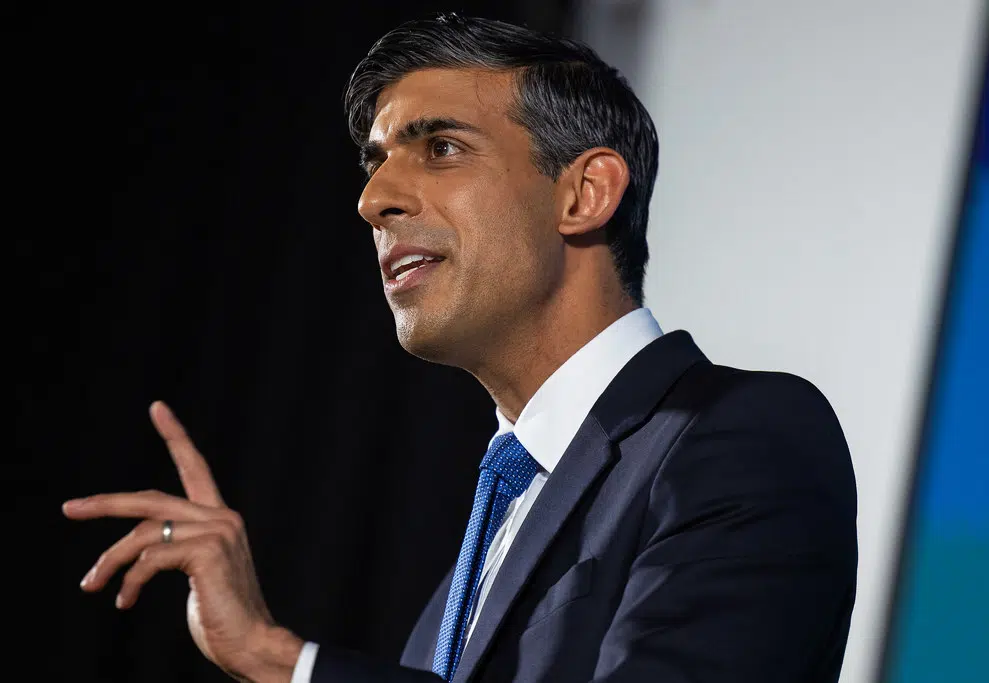
    Prime Minister Rishi Sunak. Credit: Number 10 Downing Street / Simon Walker, CC BY-NC-ND 2.0

    The Conservative Party has received more than £632,000 in new donations from individuals and firms tied to polluting industries, DeSmog can reveal. 

    New Electoral Commission records released today show that the bulk of the fossil-fuel linked funds came from Christopher Harborne, who donated £500,000 in the final quarter of 2022 – the joint-largest donation registered by the party during this period. 

    Further donations were made by a gas turbine manufacturer, a North Sea oil investor, a petrochemical engineering firm, and a peer with shares in major oil and gas companies.

    The revelation comes at an important moment for UK climate policy. Sunak’s government is due to release an update to its net zero strategy next month after a High Court judge ruled it lacked sufficient detail. 

    The government recently opened up a new round of North Sea oil and gas licences for oil and gas exploration, at a time when the UN has warned that only drastic, immediate cuts to carbon emissions can avert a climate catastrophe.

    Caroline Lucas, Green Party MP for Brighton Pavilion, said donations from polluting industries represented a “dangerous conflict of interest”. 

    Fossil Fuel Ties

    Harborne is the owner of AML Global, an aviation fuel supplier operating in 1,200 locations worldwide with a distribution network that includes “main and regional oil companies”, according to its website. Harborne is also the CEO of Sheriff Global Group, which trades in private jets. 

    Before the pandemic, aviation emissions accounted for eight percent of the UK’s annual greenhouse gas emissions, according to the government’s Climate Change Committee, yet the government granted nearly £250 million in “free pollution permits” to the industry in 2021.  

    In the past, Harborne has provided gifts to Conservative MP Steve Baker, who co-founded an anti-green group of back benchers  – the Net Zero Scrutiny Group – and who has said that a considerable amount of climate science is “actually still contestable”.

    Harborne has also donated some £6.5 million to the Brexit Party – now Reform UK – whose co-founder Nigel Farage has called for a referendum on the government’s net zero targets and has labelled the focus on carbon emissions “alarmism”. Harborne has rarely spoken about the climate crisis, so the details of his personal views are unknown. 

    As revealed by DeSmog, Harborne also donated £515,000 to the Conservatives in the second quarter of 2022, when the party accepted a total of £651,000 from the aviation industry.

    These donations landed in the same period as the government’s “Jet Zero Strategy”, published in July. The policy – which aims to cut UK aviation emissions to net-zero by 2050, allow travellers to fly “guilt-free” and supports further aviation sector growth – has been dismissed by environmental groups as “pure greenwash”.

    Harborne and AML Global have been approached for comment. 

    Other Donors

    The new Electoral Commission records show that the Conservatives received a further £15,000 in the final quarter of 2022 from Centrax Industries – a firm that specialises in manufacturing gas turbines. Centrax has now given more than £300,000 to the Conservatives since 2010.

    DeSmog previously revealed that companies and individuals involved in North Sea oil and gas – including Centrax – donated a total of £419,900 to the Conservatives ahead of and during the government’s review into the future of the sector from July 2020 to March 2021.

    Another Conservative donor in the final quarter of 2022 was Nova Venture Holdings, which donated £52,260. The company is wholly owned by Jacques Tohme, who describes himself as an “energy investor” on LinkedIn and lists his current role as co-founder and director of Tailwind Energy, an oil and gas company. 

    According to its website,Tailwind focuses on “maximis[ing] value in UK continental shelf (UKCS) opportunities”, an area which includes the North Sea. Serica Energy reportedly has an agreement in place to buy Tailwind, which is expected to complete in March. The acquisition will make Serica one of the 10 largest North Sea oil and gas producers. 

    A further £10,000 was given to the Conservatives by Alan Lusty – the CEO of Adi Group – adding to the £17,000 that he has given to the party since 2021. According to its website, Adi Group is a “leading supplier of engineering services to the petrochemical industry”. These services “add significant value to petrochemical engineering companies”, Adi says, though the firm claims “to work towards delivering a low-carbon economy” through its products. Adi also provides engineering services to the aerospace and automotive industries. 

    Finally, the Conservative Party received £50,000 from one of its peers – Lord John Nash – who also donated £5,000 to the local Wantage constituency party. According to his register of interests, Lord Nash holds shares in Royal Dutch Shell, the second largest investor-owned oil and gas company in the world by revenue, and BHP, the Australian-based mining, oil and gas firm. 

    Lord Nash, who has run several private equity funds, has donated more than £560,000 to the party since 2018. 

    The £632,260 accumulated by the Tories from fossil fuel interests and high polluters represents more than 13 percent of the party’s £4.8 million income during the final quarter of 2022. 

    Rishi Sunak himself received £141,000 from energy interests during his Conservative leadership campaign in the summer of 2022. 

    Jacques Tohme, Tailwind Energy, Centrax, Adi Group, Lord Nash and the Conservative Party have been approached for comment. 

    Additional research by Clare Carlile.

    Original article by Sam Bright republished from DeSmog.

  • When governments can decide what journalists say, we should all be worried

    Spread the love

    Original article by Peter Geoghegan republished from openDemcracy under a Creative Commons Attribution-NonCommercial 4.0 International licence.

    OPINION: UK National Security Bill is latest in long line of cynical attempts to maintain secrecy and stifle journalism

    Journalism, as George Orwell famously said, is “printing what someone else does not want printed”.

    But what happens if the someone who doesn’t want your story printed also has the power to put you in prison?

    That sounds like the kind of question journalists in places like Iran or North Korea might have to contend with. But it’s a dilemma someone like me, living and working in the UK, could be asking soon, too.

    The National Security Bill currently going through Westminster contains a clause saying that “providing” information that may “materially assist a foreign intelligence service” can be punishable by up to 14 years in prison.

    Here at openDemocracy we pride ourselves on publishing stories that the government and others in power would much rather never see the light of day.

    We’ve revealed how the Treasury helped Putin’s sanctioned warlord to sue a British journalist in London, how Russian oligarchs have bankrolled the Conservatives, how dark money flows into British politics and more.

    Investigative journalists like us at openDemocracy often receive sensitive information. Could our reporting be used by foreign powers to embarrass the British government?

    The honest answer is ‘yes’. But does saving our government’s blushes mean the public shouldn’t know that the British army was aware of the dangers of ‘Snatch Land Rovers’, associated with the deaths of over 34 British troops in Iraq and Afghanistan? Or how the UK’s corporate secrecy vehicles are used to hide oligarchs’ ill-gotten gains?

    Crucially, Sharpe’s promise that journalists won’t get caught in the security bill’s dragnet will not be enshrined in law

    In recent days, Rishi Sunak’s ministers have made some minor amendments to the National Security Bill in the face of organised opposition by openDemocracy and other media outlets. (A huge thank you to the more than 8,000 oD readers who sent emails to their MPs demanding changes to the bill.)

    The government has been at pains to say we shouldn’t be worried. In the Lords this week, one minister, Andrew Sharpe, said that it is “almost inconceivable that genuine journalism will be caught within the threshold for criminal activity”.

    But it’s the “almost” that should worry all of us.

    The National Security Bill replaces older secrecy legislation, and is supposed to counter the activity of hostile foreign powers in the UK. But the bill’s provisions are so wide-ranging that it is not hard to see how journalists – and whistleblowers – could be caught by it.

    Crucially, Sharpe’s promise that journalists won’t get caught in the security bill’s dragnet will not be enshrined in law.

    Why can’t we just trust our leaders when they say that hacks like us have nothing to worry about?

    Well, their track record isn’t good. This is a government that ran an Orwellian ‘Clearing House’ that vetted Freedom of Information requests from journalists and others. When we revealed what was happening, Michael Gove, the minister in charge, smeared us and our journalism.

    The Clearing House has now been closed down, but journalism is still under threat.

    London’s libel courts are still being used by the world’s rich and powerful to silence public criticism. Last year, Dominic Raab pledged to legislate to end so-called “strategic litigation against public participation” cases, or SLAPPs.

    But Raab’s rhetoric has not turned into reality. openDemocracy is currently subject to a SLAPP case, as are many of our journalistic allies.

    Rishi Sunak has allotted no parliamentary time for anti-Slapp legislation – which means it’s very unlikely to happen. Should we be surprised when one of Sunak’s own appointments, former chancellor Nadhim Zahawi, issued legal threats against journalists and campaigners who asked questions about his tax affairs?

    Sunak and his ministers are fond of saying how much they care about free speech and the freedom of the press. But when the government gets to decide what information journalists can – and can’t – report, we should all be worried.

    Original article by Peter Geoghegan republished from openDemcracy under a Creative Commons Attribution-NonCommercial 4.0 International licence.

  • Too late to save environment, says Green Party co-founder

    Spread the love

    https://www.bbc.co.uk/news/uk-politics-64815875

    One of the founders of what would become the Green Party of England and Wales has declared “it’s too late” to save the environment.

    Michael Benfield, who helped set up the new political movement in the 1970s, said he believed the “battle for the world’s environmental survival” was “at this moment, lost”.

    Speaking at an event to mark the party’s 50th anniversary, Mr Benfield told the BBC he had become “somewhat of a doomsayer” about efforts to protect the environment.

    …

    In a speech to the gathering, Green MP Caroline Lucas, warned: “We don’t have another 50 years.”

    She said: “We are living through maybe one of the most consequential decades of human history, which I appreciate is a very big thing to say.

    “The climate and nature crises are more critical than ever, and it feels to me that what falls upon the shoulders of the Green Party is a most extraordinary responsibility but an awesome opportunity as well.”

    …

    https://www.bbc.co.uk/news/uk-politics-64815875

  • Parliament’s £180m expenses bonanza: photoshoots and business class flights

    Spread the love

    Original article by Martin Williams republished from openDemocracy under a Creative Commons Attribution-NonCommercial 4.0 International licence.

    Image of loads of money
    Image of loads of money

    Exclusive: Train enthusiast MP claimed £52,000 on London hotels, instead of catching the train

    MPs and peers have claimed almost £180m on expenses in just three years, charging taxpayers for business class flights, hotels, iPads and professional photoshoots, analysis by openDemocracy has found.

    Our investigation has uncovered a spending splurge by Westminster politicians during a period that spans Covid-19 and the war in Ukraine, when ordinary Brits struggled with the cost of living crisis.

    MPs claimed almost £90m on expenses between August 2019 and July 2022, while members of the House of Lords spent the same. The figures do not include £310m claimed separately for MPs’ staff.

    In one case, the Conservative chair of the Transport Committee claimed £51,896 on hotels in London – despite living in a constituency just 35 minutes’ train ride from the capital.

    Iain Stewart describes himself as a “self-confessed transport wonk” who “derives great pleasure from a comfortable train journey”. Yet instead of catching a train each day, he charged taxpayers thousands of pounds each year to spend at least 307 nights in a hotel.

    Stewart is one of eight politicians who billed the public purse more than £40,000 each for London hotels during the period we examined. Overall, MPs billed more than £2.3m for hotels, including for trips abroad. That’s despite repeated Covid lockdowns in 2020 and 2021, which meant travel and hotel stays were severely restricted.

    The finding comes after openDemocracy previously revealed how MPs had claimed more than £1m over six years to heat their second homes.

    “It’s high time for a review into rules on MPs’ expenses to ensure that they are justified in the public interest,” said Anny Cullum from community union ACORN (The Association of Community Organisations for Reform Now).

    “It’s scandalous that some MPs are squandering huge amounts of public money on unnecessary hotel stays, business class flights and heating their second homes, especially while many of us are struggling with rising rents, energy bills and food costs as the cost of living crisis grinds on.”

    Alongside accommodation fees, some 398 MPs also racked up parking costs of £307,000 in three years – among them claims from scores of government ministers, including transport secretary Mark Harper and health secretary Steven Barclay.

    The government ended free parking for NHS staff in April last year, insisting it was the “right” thing to do. Since then, ministers have continued to charge taxpayers for their parking, including Chris Heaton-Harris, Alister Jack, Johnny Mercer, Nick Gibb, Guy Opperman and Victoria Prentis.

    As a perk of the job, MPs also have access to about 400 free parking spaces in the House of Commons.

    ‘A relaxed regime’

    The Independent Parliamentary Standards Committee (IPSA), which regulates MPs’ expenses, says it ensures “value for money”, transparency and accountability. But although there is no evidence of rule-breaking, critics have urged the watchdog to review the way it upholds these principles.

    The former chair of the Committee on Standards in Public Life, Alistair Graham, told openDemocracy: “I’d be shocked if it’s true that IPSA have run such a relaxed regime.

    “Clearly all these things should be publicised and IPSA should have a major second look at their rules to see if these claims can be justified in the public interest.”

    Labour MP Meg Hillier, who chairs the Public Accounts Committee into wasteful spending, charged taxpayers £1,852 for photographs – including £924 for pictures of her constituency in east London.

    Another Labour MP, Emma Lewell-Buck, spent £400 on a professional photoshoot for herself, while her colleague Apsana Begum also claimed £725 for photos.

    IPSA is also relaxed about politicians using taxpayers’ money to award contracts to companies run by friends and political allies.

    On Monday openDemocracy revealed MPs had claimed more than £1m for private spin doctors and PR firms, with many using taxpayers’ money to pay companies with close personal links to their political parties.

    But the problem is not confined to the PR industry: in another case, former health secretary Matt Hancock claimed £5,720 to pay a consultancy firm run by his former adviser.

    Ben Greenstone served as Hancock’s private secretary when he was minister for digital and creative industries. He went on to set up Taso Advisory Ltd, which describes itself as a “specialist technology public policy consultancy”. Hancock then hired the firm to help his parliamentary office and used his expenses to pay it on at least four occasions.

    IPSA should have a major second look at their rules to see if these claims can be justified in the public interestAlistair Graham, former chair of the Committee on Standards in Public Life

    Other claims approved by IPSA may raise eyebrows despite being relatively small amounts. For instance, records show that Conservative MP Mark Francois – who made headlines in the 2009 expenses scandal after claiming money for chocolates, sweets and snacks – allowed his staff to claim £25.30 to cover train fares for attending the funeral of fellow MP David Amess, who was murdered in 2021.

    The SNP’s Allan Dorans also claimed £37.40 for a Remembrance Day wreath that he laid at an event in South Ayrshire. The MP tweeted that he had been “determined to keep a long standing commitment” to lay the wreath, despite recovering from Covid at the time.

    Meanwhile, claims made by peers in the House of Lords are not dealt by IPSA at all, and are still managed internally. Typically, peers do not receive a salary and their expenses are limited to a few specific categories, including travel and postage. But peers are also entitled to a “daily allowance” which currently stands at £332, which they can claim even if they don’t contribute to proceedings.

    openDemocracy revealed last week how crossbench peer Khalid Hameed, a former private health tycoon, had claimed more than £18,000 in a year without speaking or voting in the chamber once.

    In total, members of the Lords have taken more than £41m of daily allowance over the last three years, together with £3.2m travel costs.

    They include money paid to an earl named Charles Henry John Benedict Crofton Chetwynd Chetwynd-Talbot, who was suspended from the House of Lords in December over a lobbying scandal. He claimed more than any other peer for travel expenses, submitting £51,000 worth of receipts.

    And Ulster Unionist peer Dennis Rogan also billed taxpayers more than £47,000 for travel, including a £398 business class flight to London Heathrow. Such tickets are specifically permitted under the rules, which state that members of the Lords are “entitled to be reimbursed for the cost of a business class [plane] ticket.”

    Original article by Martin Williams republished from openDemocracy under a Creative Commons Attribution-NonCommercial 4.0 International licence.

  • There’s a new expenses scandal, but Westminster is silent

    Spread the love

    OPINION: Taxpayers are still being billed huge sums for controversial expenses, from MPs’ PR to business class flights

    Image of loads of money
    Image of loads of money

    Original article by Martin Williams republished from OpenDemocracy under a Creative Commons Attribution-NonCommercial 4.0 International licence. 

    DARK MONEY INVESTIGATIONS: OPINION

    When Parliament was rocked by the expenses scandal in 2009, politicians pledged to clean up their act. But 14 years on, how much has actually changed?

    This week, an investigation by openDemocracy revealed a £180m spending bonanza, with politicians charging taxpayers for a litany of controversial claims.

    Among them, we found that a peer had claimed £18,000 just for turning up to the House of Lords, despite not speaking or voting in the chamber, and that MPs have been billing us for huge sums to heat their second homes, while ordinary Brits struggle with spiralling energy costs.

    We found that, over the past three years, MPs have splurged £1.1m of taxpayer money on private PR firms offering to boost their “personal brand” and “incumbency”. Politicians also claimed for business class flights and personal photoshoots, while others claimed tens of thousands of pounds on London hotels rather than simply catching the train.

    Incredibly, none of the cases we reported on are against the rules.

    Despite some important reforms to the system after 2009, a culture of omertà prevails in Westminster. Most political leaders choose to avoid talking about MPs’ expenses altogether, for fear that one of their allies will be exposed and embarrassed.

    Last month, for instance, Labour launched an attack on the Tories over “lavish” spending by government departments. But the party has remained silent about openDemocracy’s investigation, which covers MPs and peers from all political parties.

    Our findings come as MPs are set for another pay rise next month, bringing their wages up to £86,584 – while many still rake in extra cash from second jobs.

    MPs have splurged £1.1m of taxpayer money on PR firms offering to boost their ‘personal brand’ and ‘incumbency’

    It would be disingenuous to suggest that nothing has changed since 2009. Back then, MPs were caught claiming expenses for duck houses, porn videos and the cost of cleaning out the moat of a country estate. After the scandal broke, more than half of MPs agreed to pay back the money and a new expenses watchdog was set up, the Independent Parliamentary Standards Authority (IPSA).

    But the truth is that Westminster’s expenses system is still in need of major reforms. Too often the rules are lax, allowing politicians to claim for things that seem excessive, unreasonable, or ethically questionable.

    In some ways, we have actually gone backwards. For instance, before the expenses scandal, there was an explicit ban on using taxpayer money for “advice for individual members on self-promotion, or PR for individuals”. But this line is not included in the current rulebook. Indeed, our investigation suggests that spending on PR services is rife and that IPSA does not even check the content created – using our money – by private contractors.

    And when expenses are used to pay consultants or businesses, there is no obligation for MPs to award this work in a fair or competitive manner. We found dozens of cases where money was being handed to companies run by friends or political allies. The rules only ban payments to family members or businesses that an MP has a direct financial interest in.

    The rulebook is also confused when it comes to geography. How can it be right that the constituency of Windsor – which is more than half an hour’s train ride from central London – is considered by IPSA to be within the capital, yet the commuter town of Harpenden is not, despite the fact that a train from there takes just 26 minutes? This distinction means the MP for Harpenden and Hitchin is entitled to an extra expenses budget that is denied to the Windsor MP.

    Peers can claim £332 a day for simply turning up – or even for attending an online meeting

    Meanwhile, the rules governing the House of Lords are still written internally and don’t even fall under IPSA’s remit. Peers can claim up to £332 a day for simply turning up, regardless of whether they contribute to proceedings. In fact, they can claim this even for attending a ‘virtual meeting’ online.

    There is also little attempt to cut costs, even by those setting the rules. Peers are specifically told that they are “entitled to be reimbursed for the cost of a business class [plane] ticket”.

    Parliamentary expenses may be a thorny issue for many in Westminster, but ignoring the problem won’t make it go away. Defenders of the status quo often say that the vast majority of claims are legitimate – and perhaps they are right. But we need an expenses system that allows no leeway; a system that can assure the public that every claim is in their interest and constitutes value for money.

    Everyone agrees on this, but authorities have actually moved to undermine these principles. IPSA has even made expenses less transparent, in a supposed bid to improve security after the murder of Tory MP David Amess in 2021 (despite there being no evidence that Amess’ attacker used Freedom of Information laws to plot his attack). Last year the watchdog was also forced to U-turn after telling MPs they could claim expenses to cover an office Christmas party.

    It is easy to blame MPs over excessive and controversial expenses claims. And be in no doubt, in many cases the criticism is justified. But if we really want to clean up the system, we need a major review of the rulebook itself.

    Original article by Martin Williams republished from OpenDemocracy under a Creative Commons Attribution-NonCommercial 4.0 International licence.