Category: politics

  • Extent of spies’ mass surveillance to be investigated in ‘public inquiry’

    Spread the love

    http://www.theguardian.com/uk-news/2013/oct/17/uk-gchq-nsa-surveillance-inquiry-snowden
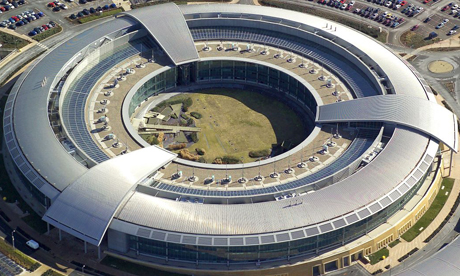
    Image of GCHQ donught buildingIntelligence inquiry begun after Edward Snowden leaks and Guardian revelations on GCHQ and NSA personal data sharing

    The extent and scale of mass surveillance undertaken by Britain’s spy agencies is to be scrutinised in a major inquiry to be formally launched on Thursday.

    Parliament’s intelligence and security committee (ISC), the body tasked with overseeing the work of GCHQ, MI5 and MI6, will say the investigation is a response to concern raised by the leaks from the whistleblower Edward Snowden.

    Sir Malcolm Rifkind, the committee chair, said “an informed and proper debate was needed”. One Whitehall source described the investigation as “a public inquiry in all but name”.

    The announcement comes four months after the Guardian, and leading media groups in other countries, including the New York Times and the Washington Post, began disclosing details of secret surveillance programmes run by Britain’s eavesdropping centre, GCHQ, and its US counterpart, the National Security Agency.

    The Guardian has been urging a debate about programmes such as GCHQ’s Tempora and the NSA‘s Prism, which allow the agencies to harvest vast amounts of personal data from millions of people – intelligence that is routinely shared between the two countries.

    In a change from its usual protocol, the normally secretive committee also announced that part of its inquiry would be held in public.

    It will also take written evidence from interested groups and the public, as well as assessing secret material supplied by the intelligence agencies. The Guardian will also consider submitting evidence.

    Conceding that public concerns had to be addressed, Rifkind, a former foreign secretary, added: “There is a balance to be found between our individual right to privacy and our collective right to security.”

    …
  • Postal workers’ strike: Royal Mail should expect a battle royal

    Spread the love

    http://www.theguardian.com/commentisfree/2013/oct/16/postal-workers-strike-royal-mail-cwu-privatisation

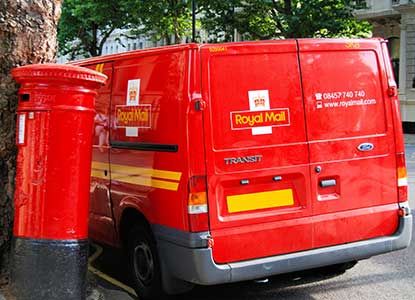
    Image of post office van next to postboxIt’s been a case of third time unlucky for the postal workers’ union (CWU). It defeated the privatisation of Royal Mail in 1994 under the Tories and again in 2009 under Labour. Despite employing similar tactics of political lobbying and industrial action, on Tuesday the company was floated on the stock exchange. The share price has risen by almost 50% since then. And just a tiny handful of postal workers refused to take up the free share offer open to them.

    Some have proclaimed it’s “game over” for the CWU and any planned industrial action – the left-leaning New Statesman pronounced striking now was “a little bit pointless”.

    Yes, the CWU was caught on the hop by a sell-off timetable that was brought forward, a bargain basement initial share price and having to take extra time to fully check the accuracy of its membership records in order to avoid a possible high court injunction to stop any action.

    But exactly the opposite is now true. So while industrial action is extremely unlikely to bring Royal Mail back into public hands any time soon – especially as the Labour leadership reneged on its own party policy within days of it being set , it is still vital. This is because it is necessary to allow the workforce to have the chance to contest what privatisation turns out be. And, that’s why postal workers today voted by 4-1 for action on a high turnout.

    …

  • Teachers strike over pay, pensions and conditions affects thousands of schools

    Spread the love

    http://www.theguardian.com/education/2013/oct/17/teachers-strike-pay-thousands-schools-nasuwt

    National Union of Teachers and NASUWT stage term’s second day of walkouts from schools across England

    Thousands of schools are expected to face disruption this Thursday as teachers stage a fresh wave of strikes amid conflict over pay, pensions and working conditions.

    Pupils in the south-west, south-east and north-east of England, plus in Cumbria and London, will be affected as members of two of England’s biggest teaching unions take part in the second day of walkouts this term.

    The industrial action has been organised by the National Union of Teachers and NASUWT.

    The government condemned the move, saying it was disappointed by the decision to strike.

    Chris Keates, general secretary of NASUWT, said that the overwhelming majority of teachers in affected areas would be on strike.

    She said: “No teacher has any wish to inconvenience parents or disrupt pupils’ education, but this action is not the failure or due to the unreasonableness of teachers. It is the failure and unreasonableness of the secretary of state, who, day in day out, is disrupting the education of children and young people through his attacks on the teaching profession.”

    …

    Related: Michael Gove adviser says genetics are more important than teaching


  • IET: High Speed 2 should be part of integrated transport policy

    Spread the love

    http://www.politics.co.uk/opinion-formers/institution-of-engineering-and-technology/article/iet-high-speed-2-should-be-part-of-integrated-transport-poli

    Europe’s largest body of engineers is calling for the High Speed 2 (HS2) proposals to be reassessed to become part of an integrated transport programme of metro, rail, bus and road projects to revitalise the cities of the Midlands and North.

    The call, from the Institution of Engineering and Technology (IET), comes as the Transport Secretary Patrick McLoughlin reasserted the case for the new rail line.

    Prof Phil Blythe, Chair of the IET Transport Policy Panel, said: “We are supportive in principle of high speed rail, but we believe that much more detail is needed to fully understand the costs and benefits.”

    “The economics of a new high-speed line cannot be considered in isolation. We need to understand the assumptions regarding future growth in passenger numbers, and hence, future capacity needs, if we are to consider transferring passengers from the most profitable services on existing routes to the high speed line, the economics of the other lines will be degraded. In order to properly understand the benefits it is necessary to see what plans exist for other rail routes and their financial implications.”

    “These unanswered questions call into question whether the current HS2 proposal is the vehicle to deliver what is needed.”

    …

  • Why does The Children and Families Bill fall so short on disabled children’s rights?

    Spread the love

    http://www.newstatesman.com/2013/10/why-does-children-and-families-bill-fall-so-short-disabled-childrens-rights

    by Cherie Blair[!]

    ... Four in 10 disabled children live in poverty; children with special educational needs (SEN) are 9 times more likely to be permanently excluded from school; and 3/4 of families with disabled children experience poor mental health as a result of the social, emotional, and financial isolation they face.

    To put it simply, they are at crisis point.

    And at the heart of this issue is the critical lack  of support for disabled children within their own community, support that other families simply take for granted – be it access to the right school or nursery place, or to leisure activities they can enjoy.

    Recent research by the disability charity Scope has found that two thirds of families with disabled children cannot get this most basic state and local authority support in their own area. Instead they have to travel or stay away from home, often creating many more difficulties in terms of increased time and costs for families that are already struggling.

    …

    David Cameron recently said ‘When you’ve had the privilege of bringing up a profoundly disabled child, you suddenly realise there are two different sets of places: those that are disabled-friendly, that are accessible, that are helpful; and those that aren’t… And what this all about really, is greater equality in our country, making sure that all places are more friendly, and accessible to disabled people.’

    But this welcome and undoubtedly genuine sentiment is sadly nowhere to be seen in the reforms in the Children and Families Bill. The Government must rectify this if families with disabled children are to be included in David Cameron’s vision to be most ‘family friendly government ever’.