This work by Middle East Monitor is licensed under a Creative Commons Attribution-NonCommercial-ShareAlike 4.0 International License.
Daily struggle continues for Palestinians who returned to their homes after the ceasefire agreement, trying to build a new life in the city devastated by Israeli attacks, in Jabalia, Gaza on October 25, 2025. [Saeed M. M. T. Jaras – Anadolu Agency]
Senior Hamas official Moussa Abu Marzouk has reiterated that the movement remains morally and humanitarianly committed to returning the bodies of Israeli soldiers recovered in Gaza, while emphasising that no specific timeline has been set for the process.
In remarks released on Sunday, Abu Marzouk said Israel was seeking pretexts; including claims of delayed repatriations, to evade the current agreement and potentially resume military operations.
He accused Israel of continuing to violate the terms of the truce by targeting areas designated as safe zones and further damaging Gaza’s already devastated infrastructure.
Abu Marzouk also criticised US Secretary of State Marco Rubio, describing him as “the foreign minister of Israel” over his recent statements against the UN Relief and Works Agency (UNRWA). He stressed that UNRWA “represents the lifeblood of the Palestinian people in Gaza and is indispensable.”
The Hamas official argued that current US pressure on Israel is motivated not by sympathy for Hamas but by a desire to prevent Israel from deepening its own crisis, amid shifting global opinion and growing dissent among Jewish public figures over Israeli policies.
Abu Marzouk warned against any attempt to disarm Hamas or remove it from security control in Gaza, saying such measures would plunge the enclave into chaos and internal strife.
He also questioned the feasibility of deploying international forces in Gaza without a just and sustainable framework, citing past failures in Bosnia and Iraq.
“True stability will only be achieved through the presence of a dominant force on the ground that believes in agreements and can impose security,” Abu Marzouk concluded.
This work by Middle East Monitor is licensed under a Creative Commons Attribution-NonCommercial-ShareAlike 4.0 International License.
Genocide denier and Current UK Prime Minister Keir Starmer is quoted that he supports Zionism without qualification. He also confirms that UK air force support has been essential in Israel’s mass-murdering genocide. Includes URLs https://www.declassifieduk.org/keir-starmers-100-spy-flights-over-gaza-in-support-of-israel/ and https://youtu.be/O74hZCKKdpAKeir Starmer objects to criticism of the IDF. He asks how could anyone object to them starving people to death, forced marches like the Nazis did, bombing Gaza’s hospitals and universities, mass-murdering journalists, healthworkers and starving people queuing for food, killing and raping prisoners and murdering children. He calls for people to stop obstructing his genocide for Israel.Orcas discuss Genocide-supporting and complicit Zionists. Donald Trump, Keith Starmer, David Lammy, Rachel Reeves, Angela Rayner and Wes Streeting are acknowledged as evil genocide-complicit and supporting cnuts.
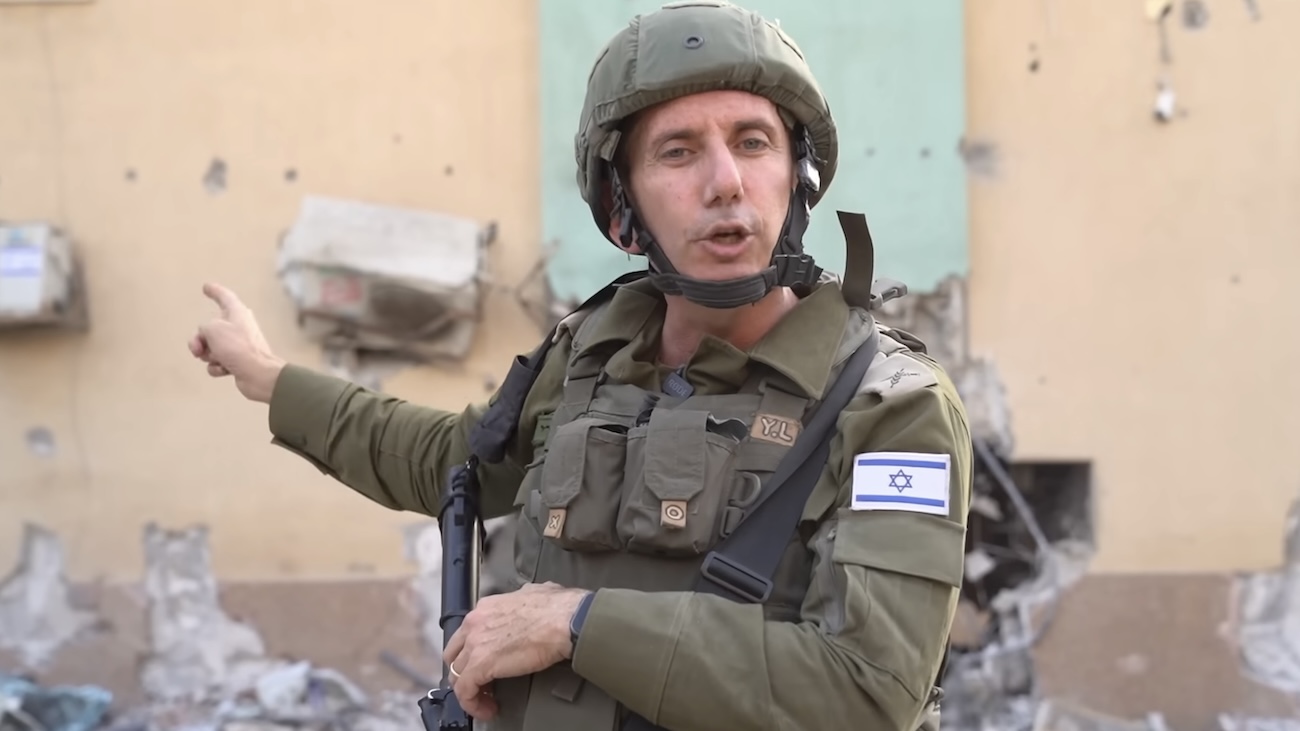
IOF Spokesperson Daniel Hagari in the now infamous video where he attempts to show evidence of a “Hamas tunnel” underneath a hospital, as to justify the airstrikes against hospitals. Photo: Screenshot
For decades, the Zionist movement succeeded in depicting Israel as the victimized side in the Arab-Israeli conflict. However, the rise of alternative media and social media networks has exposed Israel’s crimes more than ever.
Since it emerged in the late 19th century, the Zionist movement has heavily relied on monopolizing the flow of information through its international power relations for promoting its ideology and related narrative, which contributed to making the establishment of its colonial state in Palestine, known as Israel today, a reality.
The term Hasbara, which has no equivalent in English and literally means “explanation”, was first introduced by Zionist journalist and political leader Nahum Sokolow in 1912. Sokolow was known for his endeavors in garnering international support for the Zionist project, particularly within European and Western circles through media influence.
The concept later became the cornerstone of the strategy of public diplomacy and public relations, which has been employed by Israel and its supporters to explain and promote the Israeli government’s actions, policies, and narrative worldwide.
Hasbara aims to shape public opinion by refuting and whitewashing counter-narratives that would expose Israel’s crimes and violations of human rights, providing misleading justifications.
The rise of Hasbara following Israel’s invasion of Lebanon in 1982
It was not until 1982 that the Hasbara turned from being an oral tradition of the Zionist movement into a financed, supported, structured strategy, with a government office solely dedicated to achieving its goals.
This office, which is known as the national Hasbara headquarters within the office of the prime minister, has many arms in other Israeli governmental institutions and entities including the Foreign Ministry, the Ministry of Diplomacy and Diaspora Affairs, the Ministry of Tourism, the Jewish Agency for Israel, and the IDF Spokesperson’s Division.
In 1982, Israel found itself for the first time in a position, where it had to deny its responsibility for one of the most horrendous massacres committed by the Israeli Occupation Forces (IOF) since the establishment of the colonial state.
This does not mean that Israel has not committed other massacres prior to that year. Israel has been responsible for numerous pogroms in occupied Palestine in the pre-estate era, through the creation of the state and beyond, but the difference in what Israel did in Sabra and Shatila, was the fact that the massacre was televised.
Two years after the Sabra and Shatila massacre, the American Jewish Congress sponsored a conference in Jerusalem to form Hasbara as an official public relations strategy.
Those involved in promoting Hasbara are public relations and advertising executives, media professionals, journalists and leaders of major Jewish groups.
The United States has been the main supporter of Israel since its founding in 1948, therefore, US public opinion has been a main target for Hasbara.
Nevertheless, Israel’s real face was unveiled after the Sabra and Shatila massacre, resulting in a shift not only in the narrative but also in the paradigm in terms of the Arab-Israeli conflict.
It was then, when the image of Israel turned from being the victim and the underdog, surrounded by hostile neighbors from all sides at all gates, to the aggressor that bullies neighboring countries.
As a result, Israel was forced to deny any responsibility for the heinous massacre and the aggression on Lebanon. The overused false pretense of “self-defense” was used as a pretext by Israel at that time, claiming that it was obliged to wage the assault to eliminate what it called as terrorists, referring to members of the Palestine Liberation Organization (PLO).
That pretext was, however, untenable by American media outlets, which unprecedentedly portrayed Israel as an imperial state that seeks to solve its problems in someone else’s country.
Ronald Reagan was the US President at the time. Although Reagan was known for his strong support for Israel, he upbraided Israel for jeopardizing US interests in the West Asia region and imperilling regional peace. He even allowed the United Nations to condemn Israel for its behavior.
“I was horrified to learn this morning of the killing of Palestinians which has taken place in Beirut. All people of decency must share our outrage and revulsion over the murders, which included women and children. I express my deepest regrets and condolences to the families of the victims and the broader Palestinian community.” Reagan said in a statement, on September 18, 1982.
Silencing the truth, a primary Hasbara tactic
In the decades that followed the appalling massacre in Lebanon, Israel’s crimes and violations in occupied Palestine continued unrelenting. Whenever its crimes were obvious, Israel did not seek to refute them, but rather to silence those exposing them.
Israel has resorted to banning media outlets, threatening journalists and media workers, arresting them and most horrifically assassinating them.
In its all-out multi-front war in the West Asia region between 2023 and 2025, Israel killed over 292 journalists, including 247 in the Gaza strip, 10 in Lebanon, 32 in Yemen, and three in Iran. It has also blocked foreign media workers from entering Gaza for two years, in order to prevent them from documenting and exposing the genocide.
Using the Holocaust and religious narratives to promote the image of Israel
The Holocaust has been the mainstay for the Zionist movement to justify the establishment of a “Jewish homeland in Palestine”, which reinforced “antisemitism” as a victimization tool to procure solidarity and sympathy with Israel along the way, especially with European and Western audiences.
Israel has always attempted to depict the conflict as a clash between nations affiliated with different religions; Judaism and Islam, which is not the case.
To that end, the Hasbara has mobilized not only the citizens of Israel, but diasporic Jews in public diplomacy, emphasizing the battle against delegitimization.
Israel has long organized “birthright trips” to occupied Palestine for young Jews in diaspora, giving them the opportunity to “discover” their Jewish heritage by connecting it to Israel as the only safe resort for “persecuted” Jewish people.
It has further made a significant effort to distort the image of Palestinian resistance groups, freedom fighters, and their supporters, describing them as antisemitic terrorists, who adhere to extremist Islamist or radical political ideologies.
The development of technology and media tools has led to the decline of Hasbara
Even though Israel has spared no effort to whitewash its crimes through its misleading Hasbara, the last several years, particularly the last two years, marked a regression in its ability to influence public opinion over the globe.
The more technological tools have developed, the greater have Israel’s losses been in media battles. From satellite, to internet, to cellphones, the exposure of the IOF’s crimes and violations of human rights has become stronger day by day.
One recent example is the success of such technological tools in revealing the identity of IOF commanders and soldiers, who are accused of killing Palestinian six-year-old girl Hind Rajab.
Thanks to satellite imagery, and the ability to analyze available audio recordings of victims, the circumstances of the crime were demystified remotely without the need for investigators to be on the ground to collect evidence from the crime scene in war-torn Gaza.
Additionally, satellites and the internet helped in transmitting footage of Israeli crimes to a larger-scale world wide, more than the traditional television did.
Social media networks, alternative media outlets and international solidarity popular movements have considerably contributed to spreading the truth about the nature of the conflict in West Asia, specifically in occupied Palestine, as well.
The International Peoples’ Assembly (IPA), its partners and media platforms represent an effective model for such international socialist and labor movements, whose objective is to unite the struggle of the peoples all over the world against imperialism, capitalism and fascism, with an immense focus on the struggle of the Palestinian people.
Moreover, anti-Zionist Jewish groups, like the Jewish Voice for Peace, have helped in highlighting the invalidity and incredibility of Israel’s religious based mythical narratives.
“Because we’re Jews, it’s being done in our name. We have to stand up and yell. It’s not antisemitism to be against Zionism,” Rabbi Yisroel Dovid Weiss from Neturei Karta, an international ultra-Orthodox Jewish anti-Zionist group said.
The “Al-Aqsa Flood Operation” was a game changer
The two-year genocidal aggression on the besieged Gaza Strip, which followed the October 7 attacks, has played a key role in making the Israeli narrative fall apart.
Despite the arduous and costly efforts of Israeli media and corporate media to delineate the attacks as unprovoked assault against Israel, alternative media was able to clarify the underlying reasons that triggered the operation.
The “Al-Aqsa Flood Operation” drew the attention of the entire world to decades of obfuscated struggle of the Palestinian people, during which the international community has remained unmoved by Israel’s appalling crimes.
Although the attacks were condemned by the United Nations Secretary-General António Guterres, he insisted that “they did not happen in a vacuum”.
Israel’s perpetuation of a brutal genocide as a response to the attacks laid bare the brutality of the IOF, which mercilessly massacred over 68,280 Palestinians for allegedly rescuing dozens of Israeli captives held in Gaza.
This atrocity has not only been inflicted on Palestinians, but also on Israeli captives, whose rescue became the excuse of Israel to wage the aggression. Many of these captives were killed by the IOF based on the controversial “Hannibal directive” on the day of the attacks, or during the non-stop indiscriminate airstrikes across the besieged enclave.
Despite pouring billions of dollars into Hasbara, it is clear that Israel has completely lost control over the narrative. Millions of people have participated in protest actions, mobilizations, and social media campaigns in support of the Palestinian people and their struggle for liberation, and can see clearly, past the manipulation, what the zionist project truly is.
Genocide denier and Current UK Prime Minister Keir Starmer is quoted that he supports Zionism without qualification. He also confirms that UK air force support has been essential in Israel’s mass-murdering genocide. Includes URLs https://www.declassifieduk.org/keir-starmers-100-spy-flights-over-gaza-in-support-of-israel/ and https://youtu.be/O74hZCKKdpAKeir Starmer objects to criticism of the IDF. He asks how could anyone object to them starving people to death, forced marches like the Nazis did, bombing Gaza’s hospitals and universities, mass-murdering journalists, healthworkers and starving people queuing for food, killing and raping prisoners and murdering children. He calls for people to stop obstructing his genocide for Israel.Orcas discuss Genocide-supporting and complicit Zionists. Donald Trump, Keith Starmer, David Lammy, Rachel Reeves, Angela Rayner and Wes Streeting are acknowledged as evil genocide-complicit and supporting cnuts.
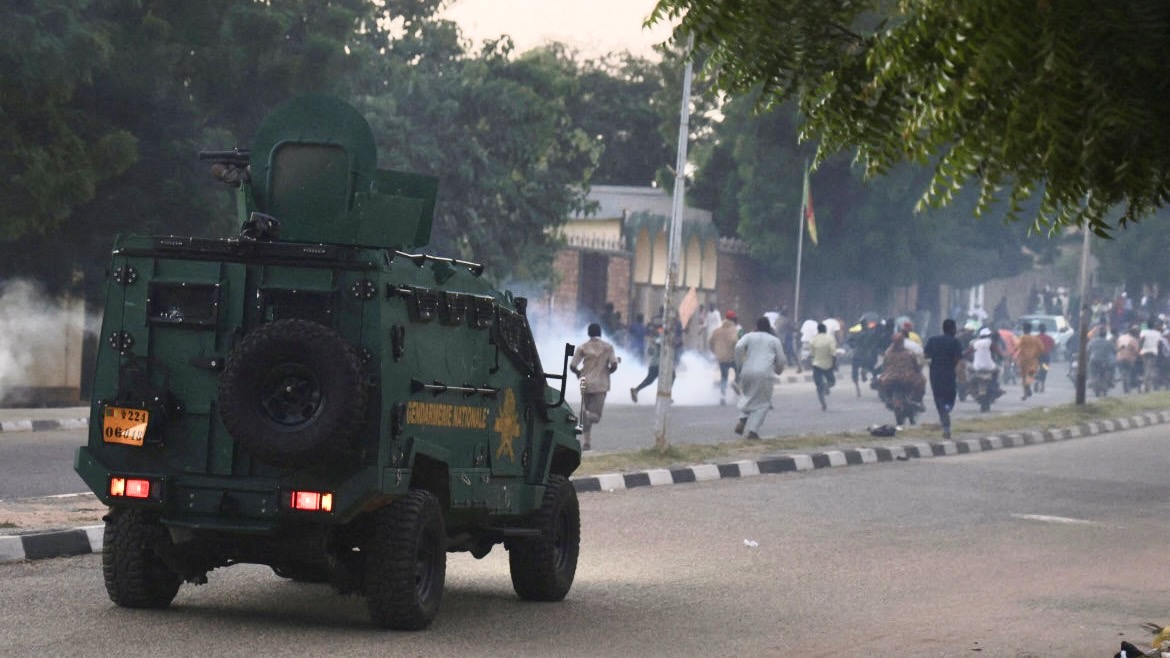
Protests erupt in Cameroon against the re-election of Paul Biya, with many denouncing alleged electoral fraud. Photo: X
Alleging electoral fraud, protesters have taken to the streets insisting on the victory of his opponent, a veteran of the regime who broke ranks, and garnered mass support by flip-flopping over the issues of federalism and the Anglophone crisis.
Protests rock Cameroon as its president since 1982, Paul Biya, the world’s oldest and longest-serving head of state at the age of 92, is set to be sworn-in for another seven-year-long term that will last until he is almost 100 years old.
On Monday, October 27, the Constitutional Council proclaimed him the winner of the election held on October 12, with 53.66% of the votes, ahead of Issa Tchiroma Bakary’s 35.19%.
Ahead of this announcement, on Sunday, Tchiroma’s supporters took to the streets in Cameroon’s commercial capital, Douala, in response to his call for protest, alleging that votes were being manipulated, and demanding that his victory be acknowledged.
As the protests spread to several neighborhoods of the city, the police used force, including live-ammunition, to disperse the crowd, shooting and critically injuring several people. As news of the shooting spread, protests also erupted in several other cities, including Maroua, Meiganga, Kaélé, Bertoua, and the northern city of Garoua.
Garoua is Tchiroma’s hometown, where his supporters had already taken to the streets on October 21, crying fraud after the National Vote Counting Commission announced on October 20 that Biya had won as per the tally it was submitting to the Constitutional Council.
Opening fire, the police killed two, including a young teacher hit by a stray bullet on her way back from work. They also fired tear gas to disperse opposition protesters in the capital Yaoundé that day. Demonstrations were also reported in Bafoussam, Dschang, Kousséri, and Douala.
The 20 people arrested from these protests will be charged with “incitement to rebellion and insurrection”, and tried by a military tribunal, Interior Minister Paul Atanga Nji said in a statement that day.
“With their backs against the wall, the people will have no choice but to take their destiny into their own hands and seek victory wherever they can find it,” Tchiroma retorted, hinting at further escalation.
Opposition parties, civil society groups, and other organizations filed eight separate petitions to the Constitutional Council, which is the body constitutionally authorized to announce the official results after validating the data compiled by the National Vote Counting Commission. Alleging widespread irregularities, including ballot stuffing and voter intimidation, petitioners sought partial or complete annulment of the election.
Dismissing all the petitions on October 22 on grounds of “insufficient evidence of irregularities” or “lack of jurisdiction”, the Council said it will announce the official results on October 27. Tchiroma himself had not petitioned the Council, deeming it a compromised body constituted of members chosen by Biya.
Instead, he took to social media to declare himself the “legal and legitimate president”, claiming to have won with about 55% of the votes. “If the Constitutional Council proclaims falsified and truncated results, it will be complicit in a breach of trust.”
Biya reportedly sought to de-escalate, offering Tchiroma the post of prime minister last week at a secret meeting blessed by foreign diplomats, according to Jeune Afrique.
A veteran of Biya’s regime
Tchiroma, after all, is a veteran of Biya’s regime. Jailed for a failed coup against Biya in 1984, Tchiroma started out after his release as an opposition member of parliament in 1992, before joining the government later that year as the transport minister till 1996.
He was the communications minister from 2009 to 2019, until he was appointed the employment minister – a position he held until resigning only months ahead of the election to contest against Biya.
He was among the most vocal mouthpieces of Biya’s regime in his role as the Communications Minister, denying the military’s atrocities on civilians from the Anglophone minority in the North-West and South-West (NWSW) regions.
Volte face on federalism and Anglophone crisis
Deprived of their autonomy in 1972 when the federal structure was scrapped with a referendum in favor of a unitary state, the Anglophone region has long complained of marginalization and economic disenfranchisement.
Tensions came to a head in late 2016 when mass protests broke out in NWSW against the government’s imposition of French-speaking lawyers and teachers on the courts and schools in English-speaking regions.
Dismissing the reports as “phantasmagorical” and “a clumsy attempt at disinformation”, Tchiroma, as the government spokesperson, had accused human rights organizations documenting the atrocities of being in cahoots with the secessionists.
“I 100% agree that the military committed atrocities,” he said in his election campaign. “But as minister of communication, my duty was to defend our armed forces,” he reasoned. “Today, I speak as a free man.”
He has even offered to hold a referendum to return the country to federalism – a long-standing demand in the Anglophone region. “I say it clearly: centralization has failed,” he said. As the communications minister, however, Tchiroma had reportedly banned the national media from using the word.
“In my capacity as minister, I did something which … hurt your mind … I want you to please forgive me because I apologize,” he pleaded in his campaign for the Anglophone vote. Offering amnesty for political prisoners, he has proposed a national reconciliation process with the separatist leaders.
Insecurity, decaying infrastructure, and an aging president
The Francophone area, which makes up the majority of Cameroon, has also been wracked by insecurity. Civilians in the far north, from where Tchiroma hails, are reeling under Boko Haram attacks.
The eastern region is suffering from a spill-over of the armed groups fighting in the neighboring Central African Republic (CAR). Competition for land and water between settled farmers and nomadic herders of the broader region has been the main driver of this conflict, which has also manifested as communal violence in other agrarian regions of Cameroon. Last year alone, a million people were displaced. Nearly three million people are suffering acute food insecurity in the conflict-affected regions.
Buildings, crumbling due to a lack of maintenance, regularly collapse in Cameroon’s cities. Mirroring its decaying infrastructure are rumors about Biya’s failing health, media discussions about which have been banned.
Undeterred, Biya has sought another seven-year term at 92. In this backdrop, Tchiroma resigned as the Employment Minister this June, only months ahead of the election, and announced his decision to contest against Biya.
With the main opposition candidate barred from the race, Tchiroma takes charge
Biya’s main opponent at the time was opposition leader Maurice Kamto, the runner-up in the previous presidential election of 2018, also marred by allegations of widespread manipulation. In July. Cameroon’s Election Commission (ELECAM) rejected the candidacies of 70 of the 83 applicants, including that of Kamto.
With Biya’s main challenger thus out of the way, Tchiroma was positioned as his main contender. A coalition of opposition parties and civil society organizations, the Union for Change, backed his candidacy in the election on October 12.
On the night of October 13, Tchiroma declared victory in a video address he read out from a tablet with a portrait of himself and the national flag as the backdrop. “In the coming days”, he said, he would prove his victory with a “detailed” compilation of votes from regions from “publicly” displayed results.
It was an open defiance of Interior Minister Paul Atanga Nji, who had reiterated at the close of polls the evening before: “Only the bodies responsible for centralizing and counting votes will take over … No other initiative outside this legal framework must exist.”
He had warned, “Those who contravene the law, regardless of their political status or social rank, will face its full rigor without the slightest leniency.”
A few dozen young men have been standing guard outside Tchiroma’s villa in Garoua, armed with clubs. “We have sentinels. If the police come, all the young people will come,” one of them told Le Monde. The police have not yet attempted to arrest Tchiroma.
While the ruling Cameroon People’s Democratic Movement (CPDM) condemned his self-declaration of victory as a “grotesque hoax … inadmissible act in a state governed by the rule of law,” Biya reportedly made him an offer to share power as the Prime Minister. However, Jeunne Africa reported that Tchiroma has rejected the offer and insisted that his victory be acknowledged.
An ominous letter
In the meantime, political tensions have been rising, especially after his supporters clashed with the police, who opened fire on October 21 in Garoua. Further north, in the city of Maroua, worse affected by Boko Haram, a group of young people reportedly left a letter outside the regional governor’s office, stating: “The young people of Maroua are writing to you today to inform you that we are fed up with this country because the Far North region is the poorest region.”
Insisting that “all the citizens voted” for Tchiroma, it claimed, “but the government wants to rig it.” On an ominous and nihilistic note, it went on to add, “It’s better to go join Boko Haram … than to stay for another seven years. If you let us go, you and the CPDM activists will pay with blood in Maroua.”
Genocide denier and Current UK Prime Minister Keir Starmer is quoted that he supports Zionism without qualification. He also confirms that UK air force support has been essential in Israel’s mass-murdering genocide. Includes URLs https://www.declassifieduk.org/keir-starmers-100-spy-flights-over-gaza-in-support-of-israel/ and https://youtu.be/O74hZCKKdpAKeir Starmer objects to criticism of the IDF. He asks how could anyone object to them starving people to death, forced marches like the Nazis did, bombing Gaza’s hospitals and universities, mass-murdering journalists, healthworkers and starving people queuing for food, killing and raping prisoners and murdering children. He calls for people to stop obstructing his genocide for Israel.Orcas discuss Genocide-supporting and complicit Zionists. Donald Trump, Keith Starmer, David Lammy, Rachel Reeves, Angela Rayner and Wes Streeting are acknowledged as evil genocide-complicit and supporting cnuts.
Ellie Chowns, Green Party MP for North Herefordshire. CC image Wikipedia.
Responding to a warning from the UN Secretary General that the world has failed to limit global heating to 1.5C and his call on global leaders to urgently change course at the forthcoming COP30 climate summit in Brazil, Green Party MP Ellie Chowns said:
“It is vital we pay heed to the warnings by the UN Secretary General on the risks posed to the world of breaking through the 1.5C limit, set by the Paris Agreement ten years ago.
“As the birthplace of the industrial revolution, and its legacy of high carbon emissions, the UK has a special responsibility to be a global leader in the shift towards a green economy – and leading by example at home.
“It’s welcome that the PM is attending COP 30 and Keir Starmer must use his voice to demand action that closes the global emissions gap. He must also stand firm against the reckless and dangerous attempts to undermine climate action by Reform UK and the Conservatives. True climate leadership also means resisting pressure from the fossil fuel lobby.
“COP30 is taking place against a backdrop of continued financial support from governments for the fossil fuel industry. This includes an estimated £17.5 billion every year here in the UK.
“The government must also refuse permission for the giant Rosebank oilfield, which would create more emissions than the combined annual CO2 emissions of all 28 low-income countries in the world – the very countries that are bearing the brunt of climate breakdown.”
Nigel Farage urges you to ignore facts and reality and be a climate science denier like him and his Deputy Richard Tice. He says that Reform UK has received £Millions and £Millions from the fossil fuel industry to promote climate denial and destroy the planet.UK Conservative Party leader Kemi ‘not a genocide’ Badenoch explains her reality that the Earth is flat, the Moon is made of cheese and that she was born from
Unicorn horn dustOrcas discuss Donald Trump and the killer apes’ concept of democracy. Front Orca warns that Trump is crashing his country’s economy and that everything he does he does for the fantastically wealthy.
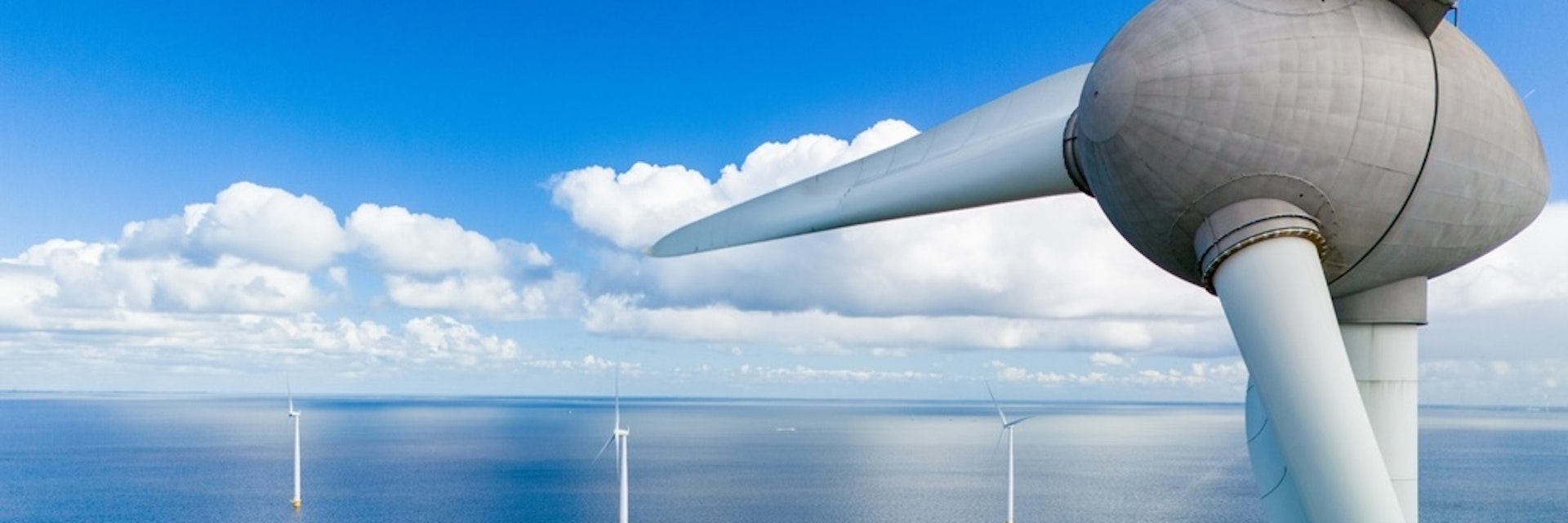
Just 1% of the world’s coastal waters could, in theory, generate enough offshore wind and solar power to provide a third of the world’s electricity by 2050. That’s the promise highlighted in a new study by a team of scientists in Singapore and China, who systematically mapped the global potential of renewables at sea.
But turning that potential into reality is another story. Scaling up offshore renewables fast enough to seriously dent global emissions faces formidable technical, economic and political hurdles.
To reach global climate targets, the world’s electricity systems must be fully decarbonised within a couple of decades if not sooner. Wind and solar power have grown at record-breaking rates, yet further expansion on land is increasingly constrained by a scarcity of good sites and conflicts over land use.
Moving renewables offshore is therefore tempting. The sea is vast, windy and sunny, with few residents around to object. The team behind the new study identified coastal areas with enough wind or sunlight, and water shallower than 200 metres, that are relatively ice-free and within 200 kilometres of population centres.
They estimate that using just 1% of these areas could generate over 6,000 terawatt hours (TWh) of offshore wind power and 14,000TWh of offshore solar power each year. Together that’s roughly one-third of the electricity the world is expected to use in 2050, while avoiding 9 billion tonnes of CO₂ annually.
That sounds impressive as 1% of suitable ocean seems small. Many European countries, such as Denmark, Germany, Belgium and the UK, already allocate between 7% and 16% of their coastal waters for offshore wind farms. Yet what matters for climate mitigation is not only how much low-carbon energy could eventually be produced, but how fast that could happen.
At present, offshore wind generates less than 200TWh per year, less than 1% of global electricity. By 2030, that might rise to around 900TWh. Hitting 6,000TWh by 2050 would require annual installations – each year, for two decades – to be about seven times larger than they were last year.
Offshore solar requires an even steeper climb. The technology is still experimental, producing only negligible amounts of electricity today.
Even if 15TWh a year (an equivalent of some 15GW capacity) can be generated by 2030, to reach the estimated potential of 14,000TWh by 2050 would require sustained annual growth of over 40% for two decades. Such a rate that has never been achieved for any energy technology, not even during the recent record-breaking growth of land solar.
Achieving techno-economic viability
Around 90% of existing offshore wind capacity is located in the shallow, sheltered waters of northwestern Europe and China, where most turbines are directly fixed to the seabed. Yet most of the untapped potential lies in deeper waters, where fixed foundations are impossible.
That means turning to floating turbines, a technology that currently accounts for just 0.3% of global offshore wind capacity. Floating wind power faces serious engineering challenges, from mooring and anchoring, to undersea cabling and maintenance in rougher seas.
It currently costs far more than fixed-bottom systems, and will need substantial subsidies for at least the next decade. Only if early projects prove successful and drive down costs could floating wind become commercially viable.
Floating solar on a reservoir in Indonesia. Algi Febri Sugita / shutterstock
Offshore solar is even further behind. The International Energy Agency rates its technology readiness at only level three to five on an 11-point scale — barely beyond prototype stage. The new study refers to research saying offshore solar could become commercially viable in the Netherlands only around 2040-2050, by which time the world’s power system should already be largely decarbonised.
Overcoming growth barriers
Even when low-carbon technologies become commercially competitive, their growth rarely continues exponentially. Our own research shows manufacturing bottlenecks, logistics and grid integration eventually slow expansion. And these challenges are likely to be even tougher for offshore projects.
Social opposition and the need for permits can also slow progress. Moving wind and solar offshore avoids some land-use conflicts, but it does not eliminate them. Coastal space close to populated areas is already crowded with shipping, fishing, leisure and military activities.
In Europe, approval and construction of offshore wind farms can a decade or more. Permits are not guaranteed: Sweden recently rejected 13 proposed wind farms in the Baltic Sea due to national security concerns.
What is realistic?
Offshore renewables will undoubtedly play an important role in the global energy transition. Offshore wind, in particular, could become a major contributor by mid-century if its growth follows the same trajectory as onshore wind has since the early 2000s.
However, that would require floating turbines to quickly become competitive, and for political commitment to be secured in the Americas, Australia, Russia and other areas with lots of growth potential.
Offshore wind (green) is tracking the growth rate of onshore wind (orange):
Timelines are shifted by 15 years, so that the year 2000 for onshore maps onto year 2015 for offshore. Aleh Cherp (Data: IEA, Wen et al)
Offshore solar, by contrast, would need to achieve viability and then grow at an unprecedented rate to reach the potential outlined in the new study. It may be promising for niche uses, but is unlikely to deliver large-scale climate benefits before 2050.
Its real contribution may come later in the century, when we will still need to expand low-carbon energy for industries, transport and heating once the initial decarbonisation of power generation is complete.
For now, the world’s best bet remains to accelerate onshore wind and solar power as well as proven offshore wind technologies, while preparing offshore solar and floating wind power options for the longer run.