The Conservatives received a hefty sum from oil and gas investors and those with roles at anti-climate campaign groups during the period when the party rolled back a key climate commitment.
In March, Badenoch announced that the Conservatives would no longer be advocating for the UK to achieve net zero emissions by 2050 – the goal currently pursued by the government. In a speech hosted by an advertising group that works for the oil giant Shell, Badenoch suggested that we are “bankrupting ourselves” in the pursuit of the 2050 target.
While the UK’s oil and gas reserves are dwindling, the country’s green economy grew by 10 percent in 2024.
Badenoch said that the country should still seek to reduce its climate impact, but shouldn’t set a date for achieving net zero.
Record – who is also lifetime president of the Institute of Economic Affairs (IEA), a pressure group that received funding from BP every year from 1967 to at least 2018 – has claimed that achieving net zero emissions by 2050 “will restrict our freedom, and is likely to be eye-wateringly expensive”. Record has donated to both the IEA and GWPF.
The GWPF regularly contradicts basic climate science, suggesting that CO2 emissions are “not pollution”.
A month before her net zero announcement, Record paid for Badenoch, her family, and members of her shadow cabinet to have a week-long retreat in Gloucestershire. The Net Zero Watch chair is close to the Tory leader, having provided funding and office space to her 2024 leadership campaign.
Over the past two decades, the Conservative Party has accepted £7.2 million from senior figures at the GWPF, while Badenoch’s campaign also received funding from a director at the fossil fuel major Chevron.
The party accepted a further £117,600 in the first quarter of this year from Alasdair Locke, a longstanding Tory donor who made his fortune in the oil industry. Locke is currently the chair of the UK’s largest independent petrol station operator Motor Fuel Group, and the non-executive chair of Well-Safe solutions, a firm that decommissions oil and gas wells. He is the founder of Abbot Group, a major oil and gas services company in the North Sea.
Badenoch’s party also received £75,000 in March from IPGL, a family investment firm belonging to Tory peer Lord Michael Spencer. A billionaire financier and former Tory treasurer, Spencer has investments worth at least £100,000 in each of the oil and gas companies Deltic Energy and Pantheon Resources.
“Is it any wonder that Kemi Badenoch’s Tories are so vehemently against net zero? No sooner do they get a quarter of a million from fossil fuel companies, do they decide to ditch the net zero commitments that they were so evangelical about just a few years ago,” said Harmit Kambo, campaigns manager at Good Law Project. “Given the existential climate threats we face, the Tories’ capitulation to climate change deniers perhaps sets a new low for their policy-making integrity.”
The Conservatives, Neil Record, Alasdair Locke, and Michael Spencer were approached for comment.
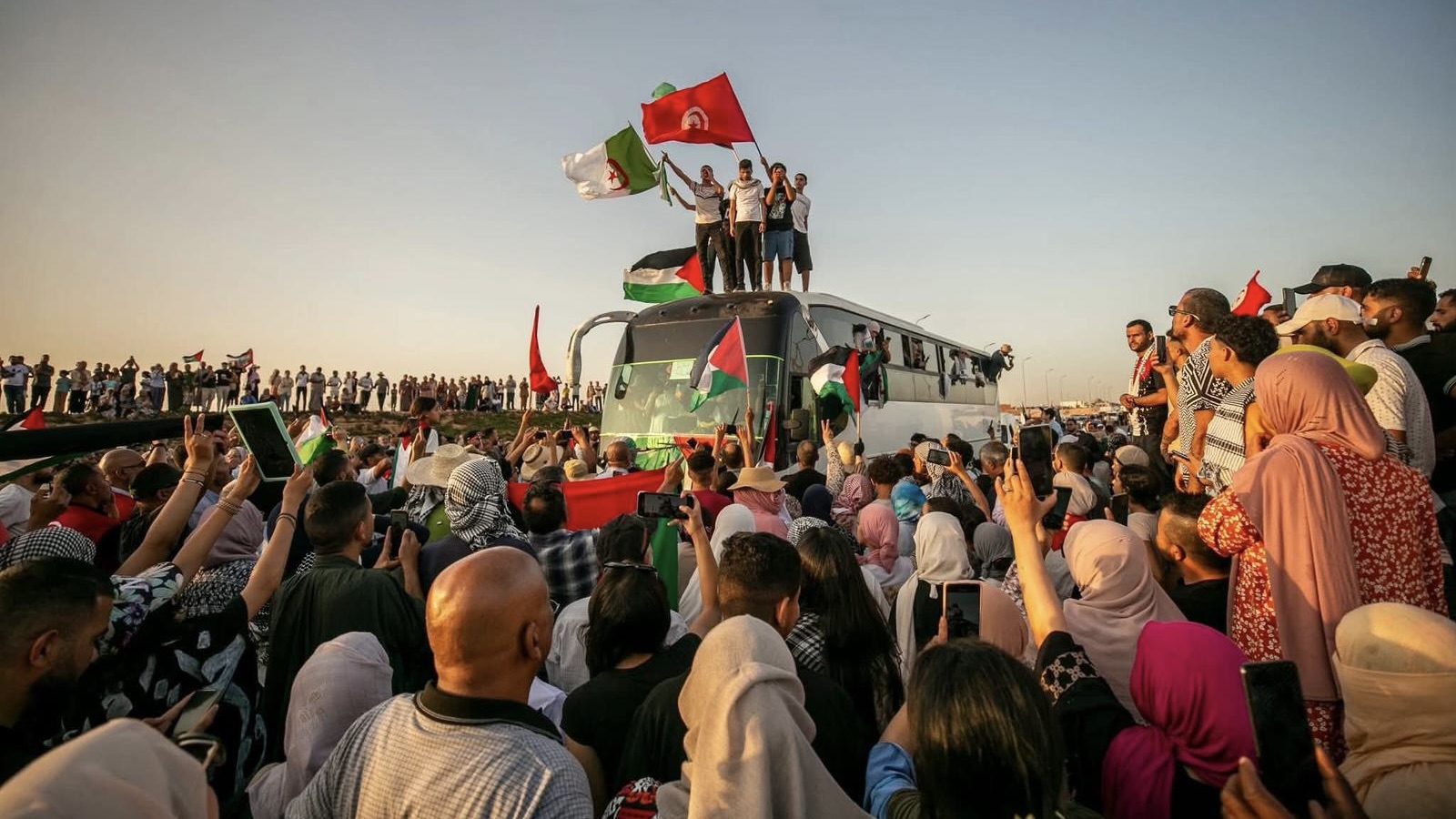
Tunisians depart on Gaza convoy. Photo: Tunisia Land Convoy
Thousands of volunteers from more than 50 countries are partaking in the Global March to Gaza to break the siege and blockade, deliver humanitarian aid, and demand an end to Israel’s genocide.
An international coalition composed of labor unions, solidarity movements, and human rights organizations from over 50 countries has announced the launch of an initiative to enter the Gaza Strip by foot. Thousands of international volunteers will partake in a large-scale mobilization from Cairo to the Rafah crossing in order to demand an end to Israel’s blockade of the Gaza Strip and to shed light on the catastrophic conditions endured by Gaza’s residents amid famine and relentless bombardment.
Called the “Global March to Gaza”, the campaign marks a significant moment in the international solidarity movement with Palestine. The key objectives outlined by the organizers of the global march are to end the famine in Gaza, facilitate the entry of thousands of aid trucks stalled for months at the Rafah crossing, establish a stable and permanent humanitarian corridor, expose Israel’s crimes, and demand accountability for those responsible.
The thousands of participants hailing from trade unions, rights groups, medical sectors, and civil society have united with a clear message: international silence in the face of Israel’s genocide against the people of Gaza is complicity and the people of the world demand action. For the last 20 months, as Israel has carried out its genocide against the people of Gaza, millions of people across the world have mobilized in support of the Palestinian people and to demand an end to Israel’s crimes, marking a historic upsurge in the movement for Palestine across the world.
Seif Abu Keshk, a member of the international committee of Global March to Gaza, said in an interview with BreakThrough News that the march aims to halt the ongoing genocide against the Palestinian people, ensure the unconditional and immediate entry of humanitarian aid, and demand the lifting of the “inhumane” blockade imposed on Gaza. He stressed that the initiative is purely humanitarian, without any political affiliations or official sponsorship, with all participants volunteering and funding their own involvement as part of a broader effort to strengthen global solidarity and exert mass pressure on complicit or silent governments.
From Cairo to Rafah
Volunteers from the different countries will start arriving in Egypt’s capital Cairo on June 12 and then travel to the city of Arish, from where they will begin their on-foot march to Rafah on June 15. Organizers underscore that the objective is not only to reach Rafah but also to stage a sit-in at the crossing to pressure authorities to open it and allow the entry of aid. They have expressed readiness to endure hardship as a modest expression of solidarity with Gaza’s residents, who have been deprived of food, water, and medicine for the last several months and been under constant bombardment over 20 months.
German lawyer Melanie Schweitzer affirmed that the march is entirely peaceful and civilian in nature, conveying a unified humanitarian message that transcends political and cultural boundaries. Irish activist Karen Moynihan noted that organizers have been in contact with Egyptian embassies and their own national diplomatic missions to ensure safe passage. She stressed that the initiative does not seek to hold Egypt accountable, but rather to cooperate with it and apply real international pressure on Israel to lift the blockade. She emphasized that any state failing to act against these crimes is complicit in genocide – and history will not forgive such silence.
This mobilization comes amid growing global criticism of Israel’s continued blockade on the entry of humanitarian aid and its maneuver to delegate the management of humanitarian aid to a private US company, the “Gaza Humanitarian Foundation” (GHF). The GHF was created to replace UNRWA and other aid agencies working in the region, as Israel argued that they were collaborating with Hamas. Yet the GHF’s aid distribution centers set up in Rafah have done little to distribute necessary aid and became the site of Israeli massacres of Palestinians when Israeli soldiers opened fire on Palestinian aid seekers on two occasions.
The GHF aid distribution mechanism sparked widespread outrage. Philippe Lazzarini, the UNRWA head, condemned the incident in Rafah stating that the scenes were “shocking images of hungry people pushing against fences, desperate for food. It was chaotic, undignified and unsafe.” He declared that “the crisis in Gaza cannot be addressed by weaponizing humanitarian assistance.”
As global outrage grows at the imminent famine and humanitarian catastrophe in Gaza due to Israel’s blockade, the Global March to Gaza, as well as the recent Freedom Flotilla voyage to Gaza, seek to take the action that the world’s leaders refuse to and show the people of Gaza that they are not alone.
From Tunis to Rafah
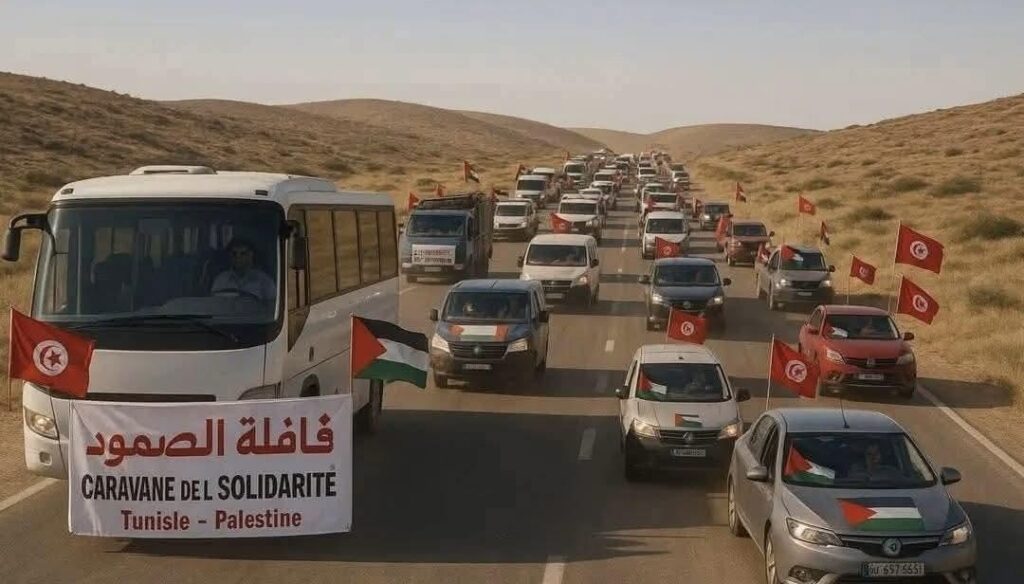
The international initiative to launch the Global March to Gaza coincides with similar grassroots actions at the regional level, most notably in Tunisia. Since mid-May, Tunisian civil associations, major trade unions, student groups, and youth movements have been preparing a convoy that will depart from Tunis, pass through Cairo, and converge with the global march in support of its demands. At the moment, thousands of Tunisians are on buses en route to Egypt. Organizers emphasize that while the convoy carries symbolic humanitarian aid, it primarily bears a clear political message: No to the blockade, No to normalization, Yes to Palestinian freedom.
Coordination between the Tunisian and international sides has been ongoing for weeks, through joint media and logistical committees, especially with participants from the Maghreb and southern European countries such as Italy, Spain, and France. Tunisian organizers describe the convoy as the “Maghreb wing” of the global march – laying the foundation for a comprehensive grassroots movement stretching from North Africa to the gates of Gaza.
The convoy, which departed from Tunis on June 9, includes unionists, doctors, students, journalists, and activists of all ages – some of whom have previously taken part in solidarity missions to Lebanon or Gaza. The Tunisian coordination committees are now focused on collecting donations, finalizing logistics, and securing transit permits from the Egyptian embassy. The convoy received symbolic send-offs in the capital and other cities it passed through, in a display of popular support and mobilization.
Participants from neighboring countries have joined the convoy, including individuals previously involved in the flotilla attacked off Malta. Around 2,000 Tunisians converged along the route from Tunis to Ras Ajdir crossing, from where they crossed into Libyan territory. For the next several days they will continue across Libya, into Egypt and towards Cairo, then proceed to Arish and finally Rafah.
Tunisia Palestine solidarity convoy. Photo: Tunisia Land Convoy
The convergence of the Tunisian convoy and the global march at the Rafah crossing, expected around June 15 or shortly thereafter, will not only be a symbolic media event but will transform into an open international protest camp at the border. Sit-ins will continue, banners and slogans will be raised, and governments will be called upon to assume their moral and political responsibilities. A unified international petition will be delivered to Egyptian authorities and UN representatives in the region, demanding the immediate and unconditional opening of Rafah and the entry of over 3,000 aid trucks carrying food, medicine, and fuel.
Tunisian participants also plan to host cultural and awareness-raising activities at the crossing, including discussion circles, artistic performances, and live media campaigns to broaden international popular support and expose Israel’s crimes to global public opinion – especially with major international media outlets expected to cover the event.
In sum, the convergence of the Global March to Gaza and the Tunisian convoy represents a pivotal moment in the history of international grassroots solidarity with Palestine. This is not merely a march to a border, it is a march toward the conscience of the world, reviving the power of direct action and sending a message to those under siege in Gaza: You are not alone. From Tunis to Dublin, from Cape Town to Krakow, people are rising for Gaza, carving pathways of solidarity and defiance against siege and injustice.
Genocide denier and Current UK Prime Minister Keir Starmer is quoted that he supports Zionism without qualification. He also confirms that UK air force support has been essential in Israel’s mass-murdering genocide. Includes URLs https://www.declassifieduk.org/keir-starmers-100-spy-flights-over-gaza-in-support-of-israel/ and https://youtu.be/O74hZCKKdpAUK Labour Party government ministers Keir Starmer, Angela Rayner and Rachel Reeves explain that they are partners complicit in Israel’s Gaza genocide. The UK has provided Israel with arms, military and air force support. They explain that they don’t do gas chambers but do do forced marches, starvation, destroy hospitals, mass-murders of journalists and healthcare workers.
Article by Chris Hedges republished from MPN under a Creative Commons Attribution-NonCommercial-ShareAlike 3.0 International License.
This is the end. The final blood-soaked chapter of the genocide. It will be over soon. Weeks. At most. Two million people are camped out amongst the rubble or in the open air. Dozens are killed and wounded daily from Israeli shells, missiles, drones, bombs and bullets. They lack clean water, medicine and food. They have reached a point of collapse. Sick. Injured. Terrified. Humiliated. Abandoned. Destitute. Starving. Hopeless.
In the last pages of this horror story, Israel is sadistically baiting starving Palestinians with promises of food, luring them to the narrow and congested nine-mile ribbon of land that borders Egypt. Israel and its cynically named Gaza Humanitarian Foundation (GHF), allegedly funded by Israel’s Ministry of Defense and the Mossad, is weaponizing starvation. It is enticing Palestinians to southern Gaza the way the Nazis enticed starving Jews in the Warsaw Ghetto to board trains to the death camps. The goal is not to feed the Palestinians. No one seriously argues there is enough food or aid hubs. The goal is to cram Palestinians into heavily guarded compounds and deport them.
What comes next? I long ago stopped trying to predict the future. Fate has a way of surprising us. But there will be a final humanitarian explosion in Gaza’s human slaughterhouse. We see it with the surging crowds of Palestinians fighting to get a food parcel, which has resulted in Israeli and U.S. private contractors shooting dead at least 130 and wounding over seven hundred others in the first eight days of aid distribution. We see it with Benjamin Netanyahu’s armingISIS-linked gangs in Gaza that loot food supplies. Israel, which has eliminated hundreds of employees with the United Nations Relief and Works Agency for Palestine Refugees in the Near East (UNRWA), doctors, journalists, civil servants and police in targeted assassinations, has orchestrated the implosion of civil society.
I suspect Israel will facilitate a breach in the fence along the Egyptian border. Desperate Palestinians will stampede into the Egyptian Sinai. Maybe it will end some other way. But it will end soon. There is not much more Palestinians can take.
We — full participants in this genocide — will have achieved our demented goal of emptying Gaza and expanding Greater Israel. We will bring down the curtain on the live-streamed genocide. We will have mocked the ubiquitous university programs of Holocaust studies, designed, it turns out, not to equip us to end genocides, but deify Israel as an eternal victim licensed to carry out mass slaughter. The mantra of never again is a joke. The understanding that when we have the capacity to halt genocide and we do not, we are culpable, does not apply to us. Genocide is public policy. Endorsed and sustained by our two ruling parties.
There is nothing left to say. Maybe that is the point. To render us speechless. Who does not feel paralyzed? And maybe, that too, is the point. To paralyze us. Who is not traumatized? And maybe that too was planned. Nothing we do, it seems, can halt the killing. We feel defenseless. We feel helpless. Genocide as spectacle.
I have stopped looking at the images. The rows of little shrouded bodies. The decapitated men and women. Families burned alive in their tents. The children who have lost limbs or are paralyzed. The chalky death masks of those pulled from under the rubble. The wails of grief. The emaciated faces. I can’t.
This genocide will haunt us. It will echo down history with the force of a tsunami. It will divide us forever. There is no going back.
And how will we remember? By not remembering.
Once it is over, all those who supported it, all those who ignored it, all those who did nothing, will rewrite history, including their personal history. It was hard to find anyone who admitted to being a Nazi in post-war Germany, or a member of the Klu Klux Klan once segregation in the southern United States ended. A nation of innocents. Victims even. It will be the same. We like to think we would have saved Anne Frank. The truth is different. The truth is, crippled by fear, nearly all of us will only save ourselves, even at the expense of others. But that is a truth that is hard to face. That is the real lesson of the Holocaust. Better it be erased.
Should a drone vaporize some nameless soul on the other side of the planet, who among us wants to make a fuss? What if it turns out they were a terrorist? What if the default accusation proves true, and we by implication be labeled terrorist sympathizers, ostracized, yelled at? It is generally the case that people are most zealously motivated by the worst plausible thing that could happen to them. For some, the worst plausible thing might be the ending of their bloodline in a missile strike. Their entire lives turned to rubble and all of it preemptively justified in the name of fighting terrorists who are terrorists by default on account of having been killed. For others, the worst plausible thing is being yelled at.
You cannot decimate a people, carry out saturation bombing over 20 months to obliterate their homes, villages and cities, massacre tens of thousands of innocent people, set up a siege to ensure mass starvation, drive them from land where they have lived for centuries and not expect blowback. The genocide will end. The response to the reign of state terror will begin. If you think it won’t you know nothing about human nature or history. The killing of two Israeli diplomats in Washington and the attack against supporters of Israel at a protest in Boulder, Colorado, are only the start.
Chaim Engel, who took part in the uprising at the Nazis’ Sobibor death camp in Poland, described how, armed with a knife, he attacked a guard in the camp.
“It’s not a decision,” Engel explained years later. “You just react, instinctively you react to that, and I figured, ‘Let us to do, and go and do it.’ And I went. I went with the man in the office and we killed this German. With every jab, I said, ‘That is for my father, for my mother, for all these people, all the Jews you killed.’”
Does anyone expect Palestinians to act differently? How are they to react when Europe and the United States, who hold themselves up as the vanguards of civilization, backed a genocide that butchered their parents, their children, their communities, occupied their land and blasted their cities and homes into rubble? How can they not hate those who did this to them?
What message has this genocide imparted not only to Palestinians, but to all in the Global South?
It is unequivocal. You do not matter. Humanitarian law does not apply to you. We do not care about your suffering, the murder of your children. You are vermin. You are worthless. You deserve to be killed, starved and dispossessed. You should be erased from the face of the earth.
“To preserve the values of the civilized world, it is necessary to set fire to a library,” El Akkad writes:
To blow up a mosque. To incinerate olive trees. To dress up in the lingerie of women who fled and then take pictures. To level universities. To loot jewelry, art, food. Banks. To arrest children for picking vegetables. To shoot children for throwing stones. To parade the captured in their underwear. To break a man’s teeth and shove a toilet brush in his mouth. To let combat dogs loose on a man with Down syndrome and then leave him to die. Otherwise, the uncivilized world might win.
There are people I have known for years who I will never speak to again. They know what is happening. Who does not know? They will not risk alienating their colleagues, being smeared as an antisemite, jeopardizing their status, being reprimanded or losing their jobs. They do not risk death, the way Palestinians do. They risk tarnishing the pathetic monuments of status and wealth they spent their lives constructing. Idols. They bow down before these idols. They worship these idols. They are enslaved by them.
At the feet of these idols lie tens of thousands of murdered Palestinians.
Feature photo | The Last Piece | Artwork by Mr. Fish
Chris Hedges is a Pulitzer Prize–winning journalist who was a foreign correspondent for fifteen years for The New York Times, where he served as the Middle East Bureau Chief and Balkan Bureau Chief for the paper. He previously worked overseas for The Dallas Morning News, The Christian Science Monitor, and NPR. He is the host of show The Chris Hedges Report.
Stories published in our Daily Digests section are chosen based on the interest of our readers. They are republished from a number of sources, and are not produced by MintPress News. The views expressed in these articles are the author’s own and do not necessarily reflect MintPress News editorial policy.
The views expressed in this article are the author’s own and do not necessarily reflect MintPress News editorial policy.
Article by Chris Hedges republished from MPN under a Creative Commons Attribution-NonCommercial-ShareAlike 3.0 International License.
Genocide denier and Current UK Prime Minister Keir Starmer is quoted that he supports Zionism without qualification. He also confirms that UK air force support has been essential in Israel’s mass-murdering genocide. Includes URLs https://www.declassifieduk.org/keir-starmers-100-spy-flights-over-gaza-in-support-of-israel/ and https://youtu.be/O74hZCKKdpAUK Labour Party government ministers Keir Starmer, Angela Rayner and Rachel Reeves explain that they are partners complicit in Israel’s Gaza genocide. The UK has provided Israel with arms, military and air force support. They explain that they don’t do gas chambers but do do forced marches, starvation, destroy hospitals, mass-murders of journalists and healthcare workers.
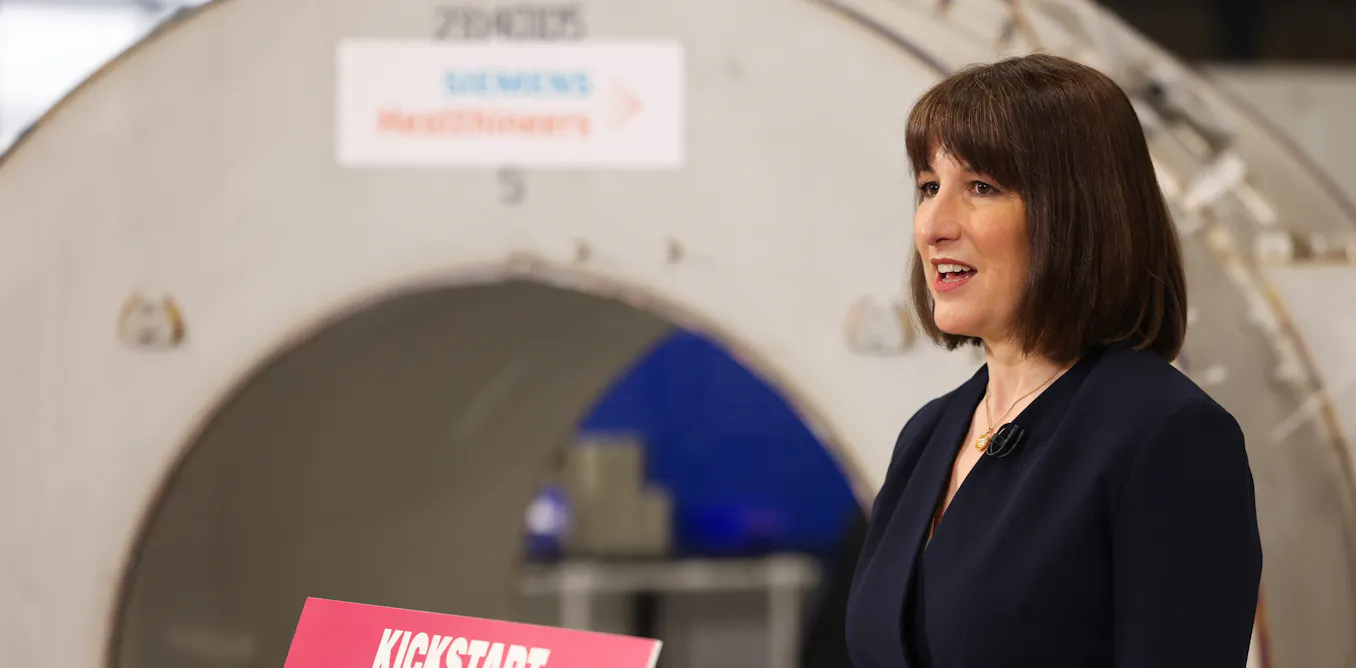
UK chancellor Rachel Reeves faces her biggest test with the government’s departmental spending plans for the three years from next April until the general election. With nearly £600 billion a year to spend, her decisions will impact on every aspect of public life and shape the political weather for years to come.
She believes the key to reviving Labour’s fortunes as its poll ratings tumble lies in boosting economic growth.
So the government has promised that its policies will increase the UK’s anaemic growth rate and enhance productivity. Reeves is looking to capital spending on big projects that will boost the economy, such as the £14.2 billion government investment in a new nuclear power plant at Sizewell in Suffolk.
Last year she revised the government’s fiscal rules to give herself the space to borrow an extra £113 billion over three years to transform Britain’s ageing infrastructure. She has already made it clear that she wants to boost transport investment outside of London, as well as invest in research and development, including green energy.
But there are challenges ahead. In the first place, the effect of infrastructure investment takes a long time to feed through. This is partly because of the lag between planning the projects and when they come on-stream.
It will take time before the full effect will be felt on productivity, which has been growing more slowly than expected. The Office for Budget Responsibility (OBR) suggested in March that the latest government plans for planning reform might increase productivity by just 0.2% in the longer term.
There are also some real trade-offs as to where the increased capital investment will go – and which sectors will benefit most. The chancellor has emphasised her commitment to putting more money into projects outside London and south-east England that have had less public investment in the past.
But London and the south-east is where productivity is highest and where further investment might have a bigger effect on economic growth.
It appears that there may be less funding for social housing, which may threaten the government’s ambitious target of building 1.5 million homes over the parliament. There may also be less available to repair schools and hospitals.
And the plans to boost defence spending on expensive military equipment – such as frigates and fighter planes – will also count as capital spending. As such, it could further reduce the amount available for infrastructure investment.
The departmental trade-offs
Despite the relative abundance of cash for infrastructure, the tighter fiscal rules on day-to-day spending mean that many departments are facing a squeeze on their budgets. The government plans to allow total day-to-day departmental spending on average to rise by just 1.2% per year in real terms during the next three years. This probably spells a real-terms cut for some “unprotected” departments.
This is because the money will not be distributed equally. The Department of Health and Social Care gets 40% of all departmental spending and is likely to be the big winner.
It has already received a big increase in the last spending round, with an 11% increase in capital spending is likely to get even more to realise an ambitious ten-year plan for improving services in the NHS in England.
If health spending were to go up by 2.5% (well under its historic average), this could mean very little increase for many other government departments. And if it is increased by 3.5% this will imply real-terms cuts for other areas.
The situation is made more difficult by the government’s decision to prioritise two other areas: defence and schools. For defence, it is committed to raising spending to 2.5% by 2027 and to 3% in the next parliament.
And for education, Reeves has pledged an extra £4.5 billion per year for more teachers, childcare places and free school meals. The decisions have a strong political dimension, as health and education tend to be the most popular spending priorities among the public.
The spending review, however, only covers half of total government spending. The more unpredictable part is annually managed expenditure, mainly on benefits and interest payments on government debt.
The Treasury sets an overall target (known as the spending envelope) on how much will be spent in these areas. But it now faces a crunch point over the unpopular decisions to cut disability benefits and keep the two-child benefit cap.
Reeves’ partial U-turn on the winter fuel payment, which will now be paid to 9 million pensioners, will cost an additional £1.25 billion a year but may have been a political necessity.
But a full U-turn on the two other issues will be much more expensive. Taken together, such a change might breach the fiscal rules, which give only £10 billion of “headroom” in a total government budget of more than £1.2 trillion. So while there will be some rowing back, the finances suggest any more major U-turns are unlikely.
To make matters worse, these spending plans are based on an economic forecast made by the OBR in March. This did not include the effect of US president Donald Trump’s tariff plans. Since then, both the IMF and the OECD downgraded their UK growth forecasts for both 2025 and 2026, and despite a recent small upgrade by the IMF, growth is still significantly lower than previously expected.
Even though Britain seems to have secured a deal with the US, the effect of tariffs on global growth will still damage the UK’s prospects as a trading nation.
This will make it harder for the government to meet its fiscal targets in the autumn budget while sticking to the departmental spending plans. The chancellor will then have three options. She can look for more cuts in benefits spending.
She could try to find other sources of tax revenue, for example by tweaking the rules on taxing pensions or extending the freeze on upgrading tax bands. Or, more radically, she could modify the fiscal rules to give herself more flexibility – for example by having only one economic forecast a year, as the IMF has suggested.
Ultimately Labour’s electoral prospects will depend on whether it has succeeded in boosting living standards. While the productivity drive could work, the UK economy remains at the mercy of wider global economic forces.
Palestinians go to an aid distribution point in the Netzarim Corridor in the central Gaza Strip on June 8, 2025. (Photo: Moiz Salhi/Anadolu via Getty Images)
“The almost daily massacres of starving Palestinian families desperately seeking food denied to them by the Israeli-imposed campaign of intentional starvation are crimes against humanity,” said one advocate.
As activists who had been headed for Gaza with humanitarian aid remained in Israeli custody Monday, Palestinian rights advocates condemned reports that the death toll at aid distribution points set up by a private Israel-backed company continued to grow.
The Associated Pressreported that “Israeli forces and allied local gunmen” were behind gunfire that killed at least 14 Palestinians who were taken to local hospitals on Monday, and roughly 100 people were injured.
The people killed were the latest among a total of at least 127 Palestinians who have been killed as they’ve approached distribution points set up by the Gaza Humanitarian Foundation, a private group staffed by U.S. defense contractors and supported by the Israeli and U.S. governments—but rejected by the United Nations and groups that have long provided aid in Gaza, who say the GHF is not a neutral party and is endangering Palestinians by forcing them to walk several miles through their war-torn enclave to retrieve food boxes weighing 44 pounds each.
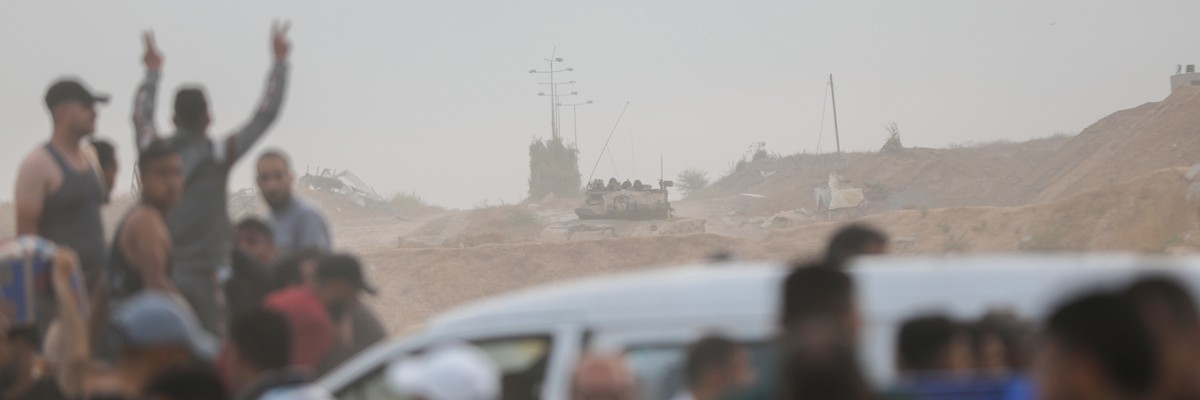
At Al Jazeera, Hind Khoudary reported that as Palestinians have approached the aid points in recent days, “the Israeli army starts opening fire, Israeli quadcopters hover above their heads, and Israeli tanks proceed to bear down on the aid seekers.”
Among the people killed at a distribution point in Rafah near al-Mawasi was “a woman named Hanan who was solely responsible for feeding her kids and family,” reported Khoudary.
“These distribution sites are in the middle of nowhere, where Israeli bulldozers destroyed residential homes,” Khoudary added. “It’s totally chaotic. Israeli forces have been firing live ammunition as well as tear gas canisters to disperse starving Palestinians.”
🚨Israeli forces killed 14 more hungry Palestinians on their way to collect food at Gaza Humanitarian Foundation (GHF) distribution points today.
The Israel Defense Forces (IDF) have previously admitted to opening fire on Palestinians at GHF sites, but have claimed “shots were directed near individual suspects who advanced toward the troops.”
The APreported that men from a local militia called the Popular Forces, led by Yasser Abu Shabab, opened fire at a distribution site in Khan Younis after the men tried to organize the crowd and people “pushed forward.”
Israeli Prime Minister Benjamin Netanyahu said last week that his government has armed Abu Shabab’s militia as part of an effort to undermine Hamas. Abu Shabab denied the claim. Aid workers have said the Popular Forces have long looted trucks carrying humanitarian relief—something Israel has repeatedly accused Hamas of doing as it has entirely cut off aid to Gaza since March.
An eyewitness named Hussein Shamimi told the AP that his 14-year-old cousin was killed in the attack on Monday.
“There was an ambush,” said Shamimi, “the Israelis from one side and Abu Shabab from another.”
At least four people were shot in the neck, another witness told the outlet.
Nihad Awad, national executive director of the Council on American Islamic Relations in the U.S., called for an “immediate end” to the U.S. government’s “complicity” in Israel’s assault on Gaza, which has killed more than 54,000 Palestinians since October 2023, and in the attacks on people at GHF aid points.
“The almost daily massacres of starving Palestinian families desperately seeking food denied to them by the Israeli-imposed campaign of intentional starvation are crimes against humanity carried out with the complicity of our own government,” said Awad. “Food and other humanitarian supplies must enter Gaza unimpeded, without Israel being allowed to use starvation as a weapon of war and a tool for ethnic cleansing.”
Also in Khan Younis on Monday, a Palestinian child became the latest to die of malnutrition at the Children’s and Maternity Hospital.
At least 58 children in Gaza have died of malnutrition since Israel began its total blockade of aid in early March.
Meanwhile, organizers with the Freedom Flotilla Coalition reported Monday they had been unable to contact 12 international activists and volunteers who were aboard the Madleen, bound for Gaza, for 19 hours.
The activists, including Swedish climate leader Greta Thunberg, had been sailing to Gaza to deliver humanitarian aid.
“These citizens were sailing peacefully under international law, in international waters, and Israel went and forcibly abducted them,” Huwaida Arraf toldAl Jazeera. “This was done, as Israel puts it, to ‘maintain a maritime closure of Gaza’—which it has no authority to do.”
Genocide denier and Current UK Prime Minister Keir Starmer is quoted that he supports Zionism without qualification. He also confirms that UK air force support has been essential in Israel’s mass-murdering genocide. Includes URLs https://www.declassifieduk.org/keir-starmers-100-spy-flights-over-gaza-in-support-of-israel/ and https://youtu.be/O74hZCKKdpAUK Labour Party government ministers Keir Starmer, Angela Rayner and Rachel Reeves explain that they are partners complicit in Israel’s Gaza genocide. The UK has provided Israel with arms, military and air force support. They explain that they don’t do gas chambers but do do forced marches, starvation, destroy hospitals, mass-murders of journalists and healthcare workers.