Category: politics

  • Pope’s climate letter is a radical attack on the logic of the market

    Spread the love

    Steffen Böhm, University of Esse

    What makes Pope Francis and his 183-page encyclical so radical isn’t just his call to urgently tackle climate change. It’s the fact he openly and unashamedly goes against the grain of dominant social, economic and environment policies.

    While the Argentina-born pope is a very humble person whose vision is of a “poor church for the poor”, he seems increasingly determined to play a central role on the world stage. Untainted by the realities of government and the greed of big business, he is perhaps the only major figure who can legitimately confront the world’s economic and political elites in the way he has.

    However his radical message potentially puts him on a confrontation course with global powerbrokers and leaders of national governments, international institutions and multinational corporations.

    The backlash has begun even before the encyclical has been officially published. US presidential candidate Jeb Bush, a Catholic, feels the pope should stay out of the climate debate, joining other Republicans, fossil fuel lobbyists and climate denier think-tanks in seeking to discredit Pope Francis’s intervention.

    What makes the pope so radical?

    There are several meanings of the word “radical” that can be applied to the Pope and in particular his forthcoming encyclical.

    First, radical can be understood as going back to the roots (from Latin radix, root). The majority of Catholics live in the Global South; in Latin America and sub-Saharan Africa. Francis is the first pope from the Global South, and naming himself in honour of Saint Francis of Assisi, “a man of poverty and peace who loved nature and animals”, signalled to the world a commitment to going back to the roots of human existence.

    The pope knows the plight of the majority world. Before he became Archbishop of Buenos Aires, he was a priest in the vast, poor neighbourhoods, the villas miserias or slums, of Argentina’s capital.

    Improving the lives of slum dwellers and addressing climate change is, for Pope Francis, one and the same thing. Both require tackling the structural, root causes of inequality, injustice, poverty and environmental degradation.

    For example, his encyclical says:

    Even as the quality of available water is constantly diminishing, in some places there is a growing tendency, despite its scarcity, to privatize this resource, turning it into a commodity subject to the laws of the market. Yet access to safe drink- able water is a basic and universal human right, since it is essential to human survival and, as such, is a condition for the exercise of other human rights. (p. 23)

    This stands in stark contrast to, for example, Peter Brabeck-Letmathe, the chairman of Nestlé, the world’s largest food and bottled water company, who thinks water is a normal commodity with a market value, and not a human right. Nestlé is far from unusual. Its stance is backed up by the official water privatisation policies of the World Bank, IMF and other international institutions.

    In fact, the encyclical is a radical – for a pope and international leader, unprecedented – attack on the logic of the market and consumerism, which has been expanded into all spheres of life.

    The document states:

    Since the market tends to promote extreme consumerism in an effort to sell its products, people can easily get caught up in a whirlwind of needless buying and spending. Compulsive consumerism … leads people to believe that they are free as long as they have the supposed freedom to consume. But those really free are the minority who wield economic and financial power. (p. 149-150)

    The pope rejects market fundamentalism, instead arguing that “the market alone does not ensure human development and social inclusion.”

    In the same way, he warns us of the brave new world of carbon markets such as the EU Emissions Trading System and the UN’s Clean Development Mechanism, which have been created to reduce the world’s carbon emissions.

    The encyclical states:

    The strategy of buying and selling “carbon credits” can lead to a new form of speculation which would not help reduce the emission of polluting gases worldwide. This system seems to provide a quick and easy solution under the guise of a certain commitment to the environment, but in no way does it allow for the radical change which present circumstances require. Rather, it may simply become a ploy which permits maintaining the excessive consumption of some countries and sectors. (p. 126)

    The pope’s right. The same criticisms of carbon markets have been made by myself and others.

    Will he make any difference?

    Pope Francis has already angered conservative Catholics in the US by clearly stating that:

    Climate change is a global problem with grave implications: environmental, social, economic, political and for the distribution of goods. It represents one of the principal challenges facing humanity in our day. (p. 20)

    While the pope is not a politician – or maybe precisely because he is not one – he commands high moral and ethical authority that goes beyond traditional partisan lines. His encyclical speaks truth to power, and he might be the only person with both the clout and the desire to meaningfully deliver a message like this:

    Many of those who possess more resources and economic or political power seem mostly to be concerned with masking the problems or concealing their symptoms, simply making efforts to reduce some of the negative impacts of climate change. However, many of these symptoms indicate that such effects will continue to worsen if we continue with current models of production and consumption. There is an urgent need to develop policies so that, in the next few years, the emission of carbon dioxide and other highly polluting gases can be drastically reduced, for example, substituting for fossil fuels and developing sources of renewable energy. (p. 21)

    The bosses of Shell, ExxonMobil and other fossil fuel companies will not like this message, as it threatens their fundamental business model, and it also stands in contrast to the underwhelming ambitions of the G7 leaders who recently pledged to phase out fossil fuels only by 2100.

    The time for bold, radical action on the environment as well as poverty eradication has come. This seems to be Pope Francis’ message: “The same mindset which stands in the way of making radical decisions to reverse the trend of global warming also stands in the way of achieving the goal of eliminating poverty.” (p. 128)

    We need to think beyond the current, taken-for-granted logic that believes only markets and consumerism can solve the world’s social and environmental problems. The pope himself believes the situation is so grave that only a new, “true world political authority” will be able to address these problems.


    This article was updated on 18 June to include quotes from the final encyclical rather than the earlier draft leaked to L’Espresso magazine.

    Steffen Böhm, Professor in Management and Sustainability, and Director, Essex Sustainability Institute, University of Essex

    This article is republished from The Conversation under a Creative Commons license. Read the original article.
  • Climate Crisis Deniers Explain Why They Like U.S. Energy Secretary Chris Wright

    Spread the love

    Original article by Geoff Dembicki republished from DeSmog

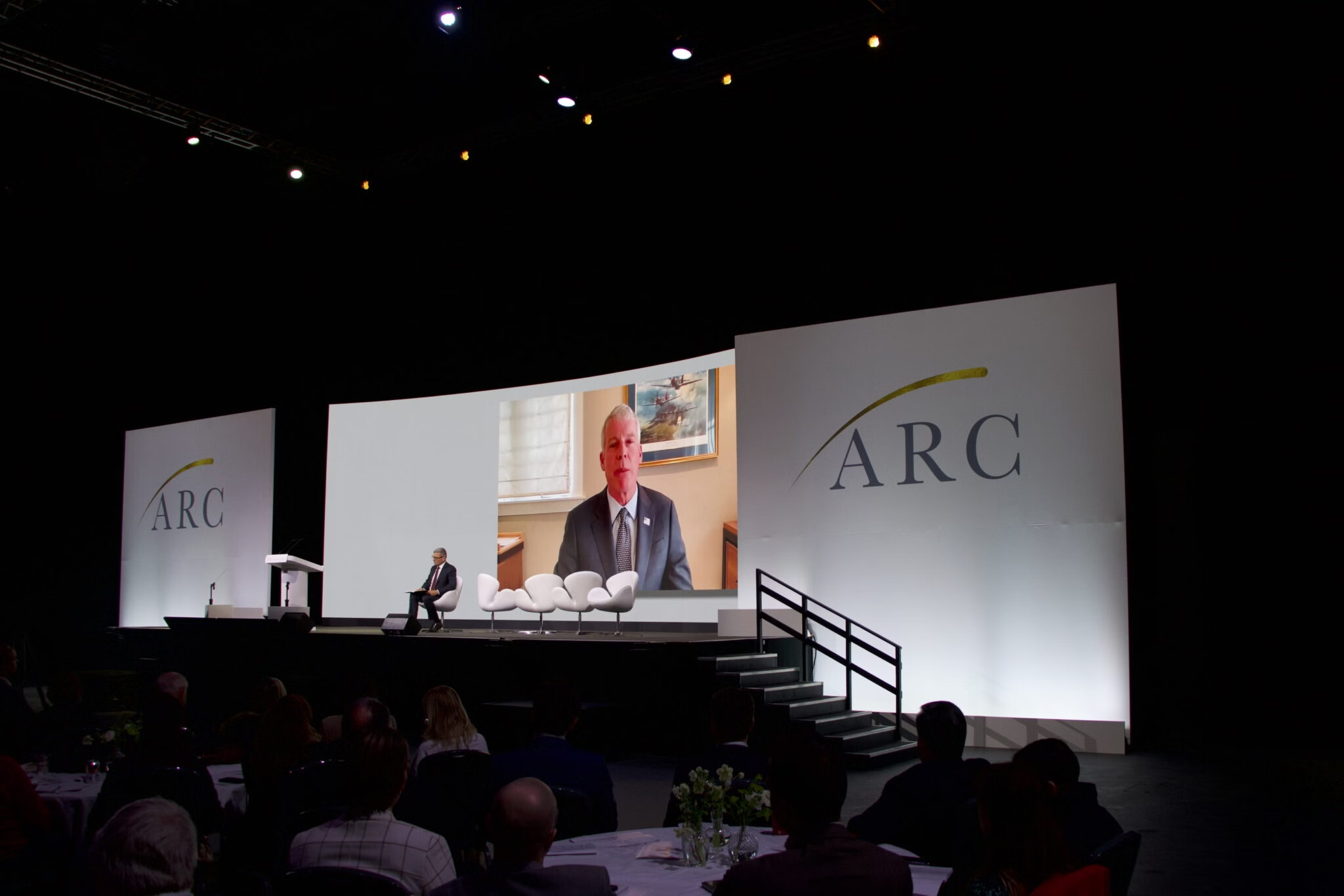
    U.S. Energy Secretary Chris Wright speaks to ARC by video. Credit: Marc Fawcett-Atkinson

    In exclusive interviews, they called the Trump administration official “terrific,” “very smart,” and someone who “gets it.”

    In mid-February, U.S. Energy Secretary Chris Wright described the global effort to stabilize greenhouse gas emissions in dark and conspiratorial terms.

    “Net zero 2050 is a sinister goal,” he told the Alliance for Responsible Citizenship (ARC), an international gathering of conservatives convened by Canadian podcaster, author, and anti-climate powerbroker Jordan Peterson. “It’s certainly been a powerful tool used to grow government power [and], top-down control, and shrink human freedom.”

    Then in March, Wright did a speech at the 43rd annual CERAWeek where he attacked the Biden administration’s climate policies as a “quasi-religious” agenda “that imposed endless sacrifices on our citizens.”

    Those views put Wright, formerly a CEO with the fracking company Liberty Energy, far outside the Paris Agreement consensus among many world leaders and heads of major corporations that climate change is an urgent issue that requires fundamental changes to our global energy system.

    But Wright’s reactionary statements are winning him praise from fossil fuel advocates who acknowledge that human-caused climate change is real but deny that it presents existential threats to civilization – what watchdog nonprofits such as the Center for Countering Digital Hate refers to as “the new denial.” 

    In exclusive interviews with DeSmog and Canada’s National Observer conducted during the ARC conference, three prominent figures who deny there is a climate emergency explained why they’re excited that Wright holds one of the most consequential cabinet posts in the Trump administration, with one referring to the U.S. energy secretary as “a good friend.”

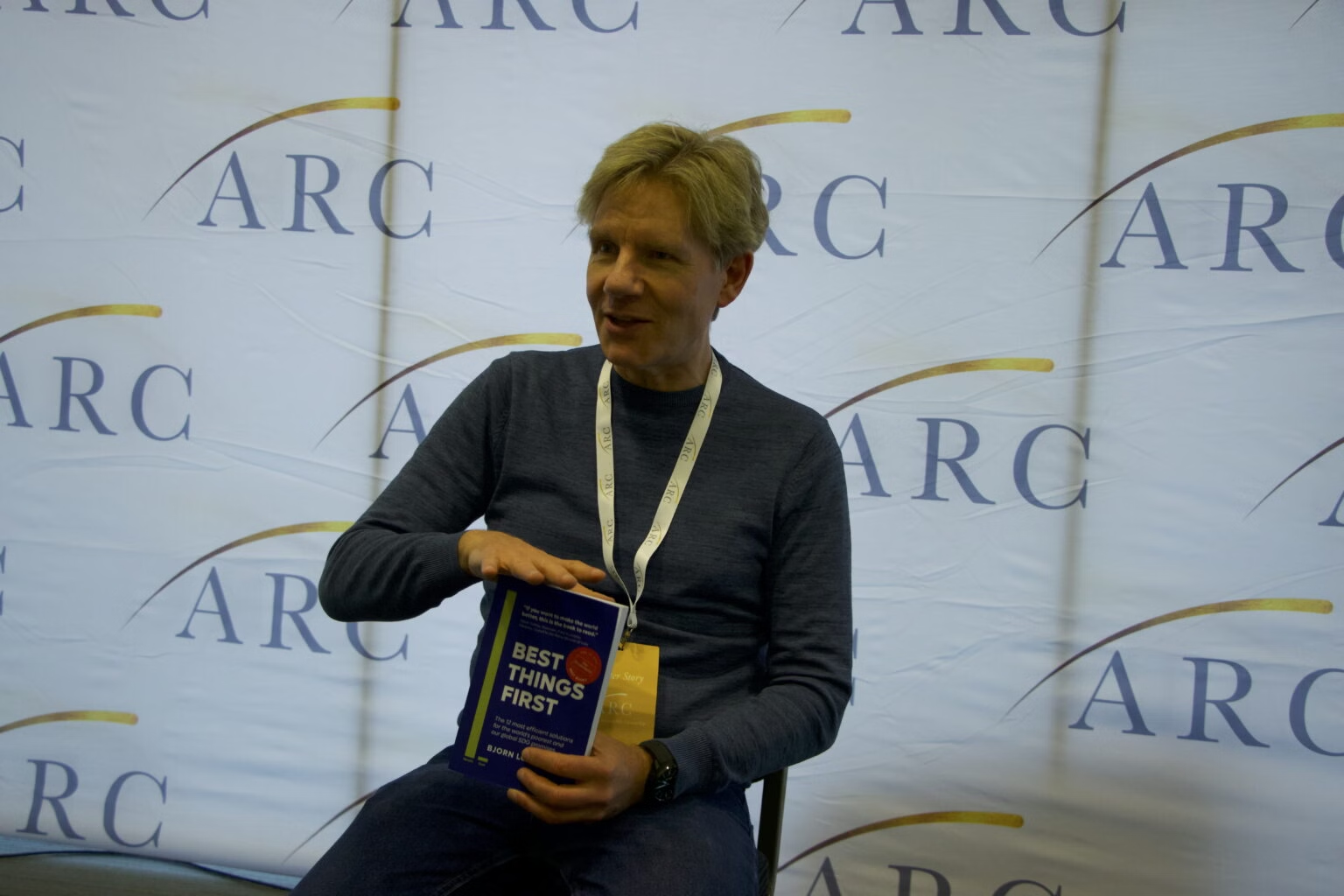
    Bjorn Lomborg speaks about his most recent book during a press briefing at ARC. Credit: Marc Fawcett-Atkinson

    Bjorn Lomborg

    One particularly influential climate crisis denier is Bjorn Lomborg, a Danish political scientist who for decades has been trying to convince policymakers and the public that there are more important global challenges to address than climate change. This is the subject of his most recent book, Best Things First, which Lomborg was promoting at ARC. Last year, Peterson personally presented a copy of the book to Elon Musk.

    “We’ll have to wait and see if he actually reads it,” Lomborg said of Musk in an interview with DeSmog and Canada’s National Observer at the conference.

    Lomborg, who is an advisor to ARC, said during a keynote speech that efforts to transition off fossil fuels are a “green fantasy.” Lomborg acknowledges that climate change is real but claims, contrary to decades of scientific and economic evidence, that it will be relatively easy and painless for humankind to adapt.

    Those arguments have resonated with Wright, who during a 2020 podcast referred to Lomborg’s previous book False Alarm as “fantastic,” and earlier this year described him as a “friend” on LinkedIn.  

    Asked what he thinks about Trump’s pick for energy secretary, Lomborg replied: “Look, Chris Wright is a great guy and he’s very smart. And I’m very happy that we can get a more sense-based approach to how we do energy.”

    Part of that, according to Lomborg, is acknowledging — despite low-carbon investment surpassing $2 trillion in 2024 — that a transformative global shift to green energy isn’t happening anytime soon. “We’re not there yet,” he said. “And that, I think, is what Chris Wright can help us to do, which is to say, ‘let’s be realistic now and let’s find smarter ways to have greener energy sources in the future.’”

    Scott Tinker does a speech at ARC. Credit: Marc Fawcett-Atkinson

    Scott Tinker

    During his 13-minute presentation at ARC, Scott Tinker outlined his view that energy has to be affordable, reliable, and clean, criteria that in his view disadvantages renewable energy. “If you want 100 percent clean you don’t get much of these other things,” he told the conference. “There are trade-offs in the real world.”

    Tinker runs an organization called Switch Energy Alliance that creates videos about energy and climate change for classrooms, museums, and professional training sessions. The organization says that it wants an “energy-educated future that is objective, nonpartisan, and sensible.”

    But Tinker tends to promote the benefits of fossil fuels while downplaying the urgency of addressing global temperature rise. During a podcast interview in March, Tinker said it was “a very strange form of economic colonialism” to argue against developing world countries burning fossil fuels “because we’ll wreck the climate.” We shouldn’t fear a bit of atmospheric warming, Tinker added, urging listeners to instead consider “all the positive things” countries gain from oil, gas, and coal.

    Wright has used similar language, telling a gathering of African leaders in March that it would be “a paternalistic post-colonial attitude” for the U.S. to stand in the way of their fossil fuel resources.

    The similarities between Wright’s and Tinker’s views aren’t a coincidence. Tinker told DeSmog in an interview at ARC that he and the U.S. energy secretary have known each other for years. “Chris is a good friend,” Tinker said. “We’ve bounced a lot back and forth.”

    One other area they seem to agree on is rejecting carbon dioxide’s legal status as a pollutant in the U.S., which helps provide the basis for the Environmental Protection Agency to regulate emissions. That’s been a long-time goal of climate denial organizations such as the CO2 Coalition and Heartland Institute.

    “We shouldn’t confuse [CO2] with being a pollutant,” Tinker said.

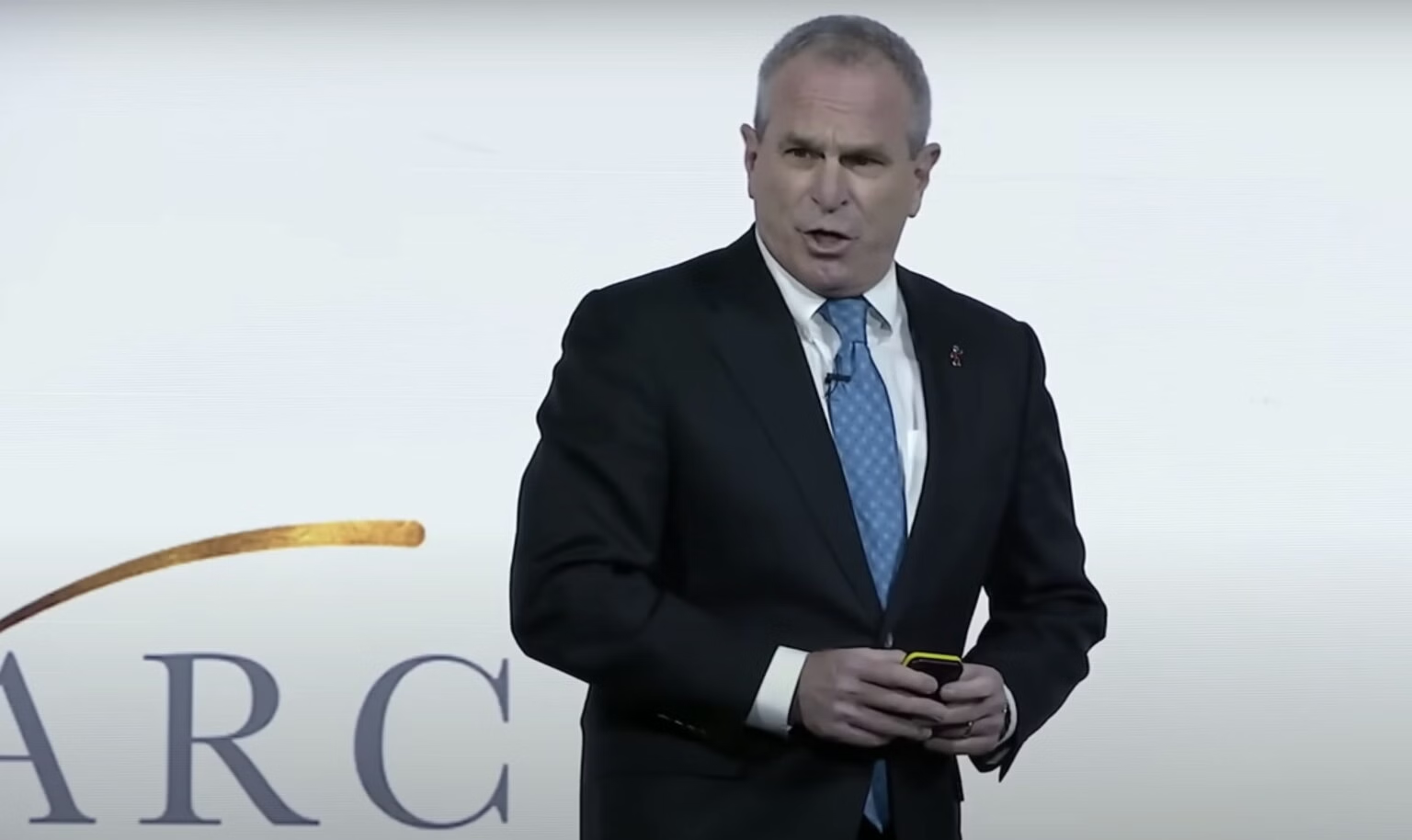
    Robert Bryce speaks at ARC. Credit: ARC / YouTube

    Robert Bryce

    For years Robert Bryce has been on a mission to convince the world that renewable energy can never replace or out-compete coal, gas, and oil. Previously a senior fellow with the Manhattan Institute— a think tank with a long history of accepting fossil fuel money and questioning the scientific consensus on climate change — Bryce now attacks climate solutions as an author, speaker, and filmmaker.

    During his speech at ARC, he claimed that “we are inundated with climate catastrophism,” and argued without evidence that the primary motivation for environmentalists to be opposed to fossil fuels is because their organizations have “enormous” budgets, saying “it’s a big business.”

    Bryce is a long-time proponent of nuclear energy, something he shares in common with Wright, who stepped down as a member of the board of directors at the nuclear company Oklo after he was confirmed as energy secretary in February.

    “Chris gets it,” Bryce said in an interview with DeSmog. “Chris knows what the score is. He’s a natural gas guy, a hydrocarbon guy. He’s promoting nuclear power. Hopefully this administration, now that they’re actually talking about nuclear, can actually move the ball forward, it’s overdue.”

    Bryce and Wright also seem to share opposition to carbon capture and storage, a technology widely favored by oil and gas producers, which tout it as key to reducing emissions from their operations despite it being widely used to pull more oil from the ground. Under Wright, the U.S. Department of Energy is considering cutting billions of dollars’ worth of funding for projects utilizing the technology.

    “There is only one reason why any of these hydrocarbon companies are doing carbon capture,” Bryce said. “Subsidies, that’s it.”

    “It will never work at scale,” he added. “Once you get that CO2 super-compressed and you’re pushing it down underground, there are very few places where you can actually sequester it. So it’s a lot of money wasted.”

    This special investigation between Canada’s National Observer and DeSmog was produced in collaboration with the I-SEA and TRACE Foundation.

    Original article by Geoff Dembicki republished from DeSmog

    Neo-Fascist Climate Science Denier Donald Trump says Burn, Baby, Burn.
    Neo-Fascist Climate Science Denier Donald Trump says Burn, Baby, Burn.
    Elon Musk urges you to be a Fascist like him, says that you can ignore facts and reality then.
    Elon Musk urges you to be a Fascist like him, says that you can ignore facts and reality then.
  • BBC Blocks Evan Davis from Hosting Clean Heating Podcast

    Spread the love

    Original article by Sam Bright republished from DeSmog

    BBC presenter Evan Davis on the Happy Heat Pump podcast. Credit: Happy Heat Pump podcast / YouTube

    The broadcaster has asked one of its leading current affairs hosts to stop presenting a show about heat pumps.

    Original article by Sam Bright republished from DeSmog

    The BBC has stopped Evan Davis, one of its senior presenters, from hosting a personal podcast informing the public about heat pumps, a flagship clean heating solution.

    Speaking on the final episode of the show, launched in January, Davis said that the BBC had become “concerned” that the podcast was “somehow treading on areas of public controversy”.

    He added: “I take their shilling; they dictate the rules. They know they have to try and keep their presenters out of areas of public controversy and they have decided heat pumps can be controversial so they’ve asked me not to be involved.”

    Heat pumps, powered by electricity, are currently set to play a key role in decarbonising heating and replacing gas boilers, which heat around 85 percent of Britain’s homes and account for 15 percent of greenhouse gas emissions nationwide. The government has set a target of 600,000 heat pump installations every year by 2028, up from just 55,000 in 2022.

    The Happy Heat Pump podcast co-hosted by Davis attempted to educate listeners about how to use a heat pump, how much they cost, and which properties are best suited to a heat pump.

    Heat pumps can be more expensive to install than alternatives, though experts have blamed the government for not matching the incentives offered by its European counterparts. Heat pump uptake in the UK is among the lowest in Europe, with more than 500,000 heat pumps sold in France last year, and more than 400,000 in both Italy and Germany.

    However, gas industry lobbyists and sections of the right-wing media have attempted to stoke a “culture war” around the uptake of heat pumps in the UK. DeSmog revealed in July 2023 that a barrage of negative press about heat pumps had been funded by a gas lobby group.

    Davis’s podcast co-host, Bean Beanland, criticised the BBC’s decision. Beanland, the director for growth and external affairs for the Heat Pump Federation, said the corporation’s judgement was “extraordinary”.

    “It does seem to me that somehow the technologies we espouse have fallen victim to some sort of culture war,” he added.

    Davis said that he believes the BBC’s decision was “more about net zero than this particular form of heating”. The legally-binding target of reaching net zero emissions by 2050 has also been weaponised by campaigners and conservative media outlets, despite a broad public consensus for reducing emissions and building new green infrastructure.

    “Cars are controversial, they kill and maim thousands every year, but that hasn’t stopped the BBC glamorising car use in its decades broadcasting hundreds of episodes of Top Gear,” said Andrew Simms, co-director of the New Weather Institute.

    “Heat pumps, on the other hand, don’t kill or maim, they just cheaply and safely warm homes. It’s been estimated that swapping all 23 million gas boilers in the UK to heat pumps could save roughly £11 billion in wholesale gas costs. 

    “The technology is already hugely successful in some of the coldest countries in Europe. In those with the longest, harshest winters like Norway, Finland and Sweden, heat pumps dominate. Already by 2022 around 41 percent of Finnish households had a heat pump installed, with two-thirds in Norway and nearly half in Sweden. Try telling them that their heating systems are controversial.” 

    A number of commentators have expressed their dismay on social media at the BBC’s decision. Financial Times associate editor Stephen Bush accused the BBC of “muzzling one of its best presenters from making an excellent, wholly factual programme”. Bush added that the broadcaster was an “organisation badly in need of new leadership.”

    A BBC spokesperson told DeSmog: “The BBC editorial guidelines are clear that anyone working for the BBC who does an external public speaking or writing engagement should not compromise the impartiality or integrity of the BBC or its content, or suggest that any part of the BBC endorses a third-party organisation, product, service or campaign.”

    As previously revealed by DeSmog, the BBC’s commercial content arm, BBC StoryWorks, has been paid to promote oil and gas companies, agricultural giants, fossil fuel states, and high-emission transport firms.

    Experts have also highlighted that Davis’s podcast was simply reflecting basic facts about heat pumps. 

    Energy policy expert Jan Rosenow said: “Heat pumps are a mature technology that has been around for more than 100 years. All authoritative analyses indicate that we need to deploy millions of them to reach net zero. Public controversy stems from poor reporting – Evan tried to change that.”

    These sentiments were reflected by fellow climate expert Andrew Sissons, who said: “I’ve said this before but… heat pumps are really quite boring, and it says quite a lot about the state of debate in Britain that we’ve managed to make them controversial. Credit to Evan for trying to make them not controversial.”

    Original article by Sam Bright republished from DeSmog

  • Gaza’s unquenchable thirst: The water tragedy amid relentless bombardment and total blockade

    Spread the love

    This work by Middle East Monitor is licensed under a Creative Commons Attribution-NonCommercial-ShareAlike 4.0 International License.

    Palestinians, including children gather around a water tanker to collect clean water amid ongoing Israeli attacks on Gaza and the continued closure of border crossings, which have severely limited access to basic necessities in Khan Yunis, Gaza on March 29, 2025. [Abed Rahim Khatib – Anadolu Agency]

    Under the weight of war and a suffocating blockade, more than two million people in the Gaza Strip are facing an unprecedented water crisis that threatens their daily survival. What was already a dire situation before the escalation has now turned catastrophic due to the ongoing bombardment and the widespread destruction of water infrastructure. The UN report from 2022 unveils a grim reality: over 97 per cent of Gaza’s drinking water is unfit for drinking or human consumption as a result of contaminants infiltrating groundwater reserves, whether it was caused by the excessive pumping of polluted water by the Israeli Occupation into Wadi Gaza, leakage from deteriorating sewage networks into the aquifer or the intrusion of the polluted saltwater into the aquifer by 75 per cent to meet the water deficit of the increased demand caused by the increased population. Compared to that, natural rain that does not exceed 30 per cent of natural replenishment. The situation is further exacerbated by the leakage of residues from Israeli munitions into groundwater sources.

    Gaza’s water crisis: Numbers dripping with pain

    Gaza’s water reality reveals a prolonged and profound deficit. While the Israeli Occupation enjoys a near-universal coverage of clean water (more than 99 per cent), as well as a substantial control over the aquifer, Gaza languishes among the world’s lowest water access rates, with a coverage below 10 per cent, placing it in a state of constant water emergency.

    OPINION: The Zionist enemy will not manage to seize the Resistance’s weapons

    Over the past years, Israel, through its national water company, Mekorot, supplied Gaza with around 18 million cubic meters of water annually through three pipelines, amounting to only 9 per cent of Gaza’s needs. Yet, the water sector in Gaza suffers from a severe deficit exceeding 120 million cubic meters per year (approximately 60 per cent of total demand). With the outbreak of the latest war, these limited supplies have been repeatedly disrupted and, today, they are completely cut off following the destruction of transmission networks. During the war, these pipelines provided up to 70 per cent of Gaza City’s water supply, after most local water sources were destroyed. More than 85 per cent of Gaza’s water and sewage networks have been bombarded, causing destruction and damage to 2,263 kilometres of pipelines and 47 pumping stations, as well as the cessation of all operations of wastewater treatment plants. Currently, only 30 per cent of Gaza’s wells remain operational. The capacity of desalination plants has plummeted to their lowest levels due to continuous bombardment and the shortages of electricity and fuel. Consequently, water supplies available to Gaza’s people have dropped by 95 per cent, with the average daily water consumption per capita reduced to just 3–5 litres, far below the 15-liter minimum emergency threshold set by the United Nations.

    Gaza’s displaced: Long queues and arduous journeys for a few drops of water

    Since the beginning of the escalation, thousands of Gaza’s residents have endured the tragedy of displacement, which has only deepened their daily suffering. Hundreds of families, forced to flee their homes under heavy bombardment, now face the exhausting challenge of searching for water in distant areas or in overcrowded shelters lacking even the most basic necessities of life. Long queues at water distribution points and wells have become a daily reality, fraught with the constant risks of air strikes, fear and loss of life.

    “We wait for long hours just to access unsafe and contaminated water, and sometimes we only manage to get our share after complete exhaustion,” says Fatima, a 35-year-old mother of four, who was displaced with her children to a shelter in western Gaza. “The distance we have to walk every day just to collect water can stretch for several kilometres and, with each passing day, the journey becomes even more difficult.”

    Contaminated water: An immediate and long-term health threatThe health situation in Gaza has become catastrophic due to the acute shortage of clean water and the forced reliance on contaminated sources for drinking and hygiene, if available, which has led tothe widespread outbreak of acute diseases such as diarrhoea, kidney infections, urinary tract infections and waterborne diseases, as well as skin infections due to poor hygiene conditions or the use of polluted water for personal care.

    OPINION: Euphemistic practices: The IDF, killing aid workers and self-investigation

    These health risks are even more severe for children under the age of five, who are particularly vulnerable to malnutrition, intestinal infections, and severe diarrhoea, which can lead to dehydration or death. Pregnant women also face higher risks of early miscarriage, premature delivery and reduced breast milk production due to dehydration and exposure to contaminated water. The elderly are not spared, either, as they face an increased risk of kidney diseases, kidney failure and challenges in managing chronic conditions in the absence of safe and sufficient water supplies.

    Impact of the water crisis on food security and forced displacement

    The water crisis in Gaza is not only a health emergency but also a growing threat to food security. The destruction of agricultural irrigation networks has further worsened the already fragile economic situation, increasing poverty and hunger across the Gaza Strip due to a sharp decline in agricultural and livestock production. Agricultural productivity in the limited available farmland has dropped by 60 per cent as a result of using contaminated water, not to mention that farmlands have become either unsuitable for cultivation or located in unsafe areas due to the ongoing conflict. Moreover, the scarcity of clean and safe water has intensified forced displacement, with many residents compelled to leave their homes in search of areas where drinking water is available.

    A grave breach of International Law:  Denying people their right to life

    The targeting and destruction of water sources and infrastructure in Gaza constitute a grave breach of international humanitarian law.

    According to the 1977 Additional Protocol I to the Geneva Conventions, it is prohibited to attack resources indispensable to the survival of civilians, such as water supplies. Denying water to civilians amounts to a war crime under the Fourth Geneva Convention and represents a blatant violation of Article 25 of the Universal Declaration of Human Rights.Such acts may also qualify as crimes against humanity under the Rome Statute of the International Criminal Court.

     In the face of tragedy: An urgent call for action

    In light of this tragic reality, there is an urgent need for immediate and coordinated action. Internationally, the United Nations must activate emergency protection mechanisms, while international organisations, including the Organisation of Islamic Cooperation and the Arab League, should play a key role in intensifying political pressure on the United States to compel Israel to stop the war, halt the supply of weapons to the Occupying forces and ensure the immediate entry of humanitarian aid into Gaza. The Human Rights Council is also expected to issue investigative reports on these violations, and the International Criminal Court should open immediate investigations into the crimes committed.

    OPINION: Deporting dissent: The dangerous precedent set by the persecution of pro-Palestine activists

    On the humanitarian level, aid organisations must intensify efforts to find emergency solutions for providing clean water to the population in Gaza by repairing damaged water networks, maintaining wells and desalination plants using locally available resources, operating mobile desalination units powered by solar energy, expanding water distribution through water trucks to shelters and displacement camps and providing households with simple tools for water purification and desalination.

    On the relief level, it is essential to pre-position water-related equipment, including well supplies, fixed and mobile desalination units, generators, solar energy systems, spare parts for water networks and fuel in both Egypt and Jordan. These should be ready for immediate delivery as soon as border crossings are opened for humanitarian aid. It would be a grave mistake to wait until Crossings re-open before starting to procure these critical supplies, given the time required for sourcing and delivery.

    For the recovery and development of Gaza’s water system, it is equally critical not to wait until the war ends to begin planning and preparation. Delaying the restoration and development of the water sector will only prolong the suffering of a population that has already endured unimaginable hardship for over 17 months. Efforts must begin now by developing a comprehensive recovery plan, securing supply chains, mobilising funding and preparing technical teams to respond without delay, ensuring the most vital resource for life, water, is restored for Gaza’s population.

    Between a suffocating siege and relentless bombardment, the people of Gaza struggle for every drop of water, much like a drowning person gasping for their final breath. They call for water but receive none; they cry out for help but are left unheard. Has humanity truly turned its back on them? Is water not a right for every living soul, including those trapped and besieged in Gaza?

    OPINION: The Israeli genocide in Gaza targets foetuses, newborns and pregnant women

    The views expressed in this article belong to the author and do not necessarily reflect the editorial policy of Middle East Monitor.

    This work by Middle East Monitor is licensed under a Creative Commons Attribution-NonCommercial-ShareAlike 4.0 International License.

    Experiencing issues with this image not appearing. I suspect because it's so critical of Zionist Keir Starmer's support of and complicity in Israel's genocides.
    Genocide denier and Current UK Prime Minister Keir Starmer is quoted that he supports Zionism without qualification. He also confirms that UK air force support has been essential in Israel’s mass-murdering genocide. Includes URLs https://www.declassifieduk.org/keir-starmers-100-spy-flights-over-gaza-in-support-of-israel/ and https://youtu.be/O74hZCKKdpA
  • Israeli broadcaster: Army fabricated Gaza tunnel discovery to stall ceasefire deal

    Spread the love

    This work by Middle East Monitor is licensed under a Creative Commons Attribution-NonCommercial-ShareAlike 4.0 International License.

    Israeli occupation soldiers move through agricultural lands during an Israeli raid in the rural areas of Tulkarm Refugee Camp in Tulkarm, West Bank on February 05, 2025 [Nedal Eshtayah/Anadolu Agency]

    An investigation by Israel’s public broadcaster, KAN, has revealed that the Israeli military fabricated the discovery of a tunnel in the Philadelphi Corridor along the Gaza-Egypt border, claiming the structure was, in fact, a shallow canal, Anadolu Agency reports.

    Last August, the army published photos of an alleged tunnel in the demilitarised area along the border.

    “There was never a tunnel, but a canal covered in dirt,” KAN said.

    The purpose of this lie “was to exaggerate the importance of the Philadelphi Corridor and delay a hostage deal,” it added.

    According to KAN, former Israeli Defence Minister, Yoav Gallant, backed the findings, saying, “It was not a tunnel, but rather an attempt to prevent a ceasefire agreement.”

    Gallant clarified that the structure was only about one meter deep and was misleadingly presented to the public as a deep tunnel. “It was promoted to the public as a deep tunnel to prevent reaching a deal with Hamas,” he added.

    The Palestinian Resistance group, Hamas, demands a full ceasefire and the withdrawal of Israeli forces from Gaza in return for any hostage swap deal.

    There was no immediate comment from the army on the report.

    The Israeli army resumed its assault on Gaza on 18 March, shattering a 19 January ceasefire and prisoner exchange agreement.

    Israel has killed more than 51,200 Palestinians in the enclave since October 2023, most of them women and children.

    The International Criminal Court issued arrest warrants in November for Netanyahu and his former Defence Minister, Yoav Gallant, for war crimes and crimes against humanity in Gaza.

    Israel also faces a genocide case at the International Court of Justice for its war on the enclave.

    READ: Under US pressure, Hamas and Israel to meet in Cairo for new round of talks

    This work by Middle East Monitor is licensed under a Creative Commons Attribution-NonCommercial-ShareAlike 4.0 International License.

    Experiencing issues with this image not appearing. I suspect because it's so critical of Zionist Keir Starmer's support of and complicity in Israel's genocides.
    Genocide denier and Current UK Prime Minister Keir Starmer is quoted that he supports Zionism without qualification. He also confirms that UK air force support has been essential in Israel’s mass-murdering genocide. Includes URLs https://www.declassifieduk.org/keir-starmers-100-spy-flights-over-gaza-in-support-of-israel/ and https://youtu.be/O74hZCKKdpA
    UK Foreign Minister David Lammy confirms that UK government and military are active participants in Israel’s genocides and that the F-35 parts that they suspended from supplying to Israel are instead simply diverted via the United States. He says see https://youtu.be/QILgUHrdWRE
    UK Foreign Minister David Lammy confirms that UK government and military are active participants in Israel’s genocides and that the F-35 parts that they suspended from supplying to Israel are instead simply diverted via the United States. He says see https://youtu.be/QILgUHrdWRE