Category: politics

  • Interview: Prof Philippe Sands on UN court’s landmark climate-change hearing

    Spread the love

    This week, the international court of justice (ICJ) opened two weeks of hearings on states’ climate-related legal obligations – and the consequences, if “significant harm” is caused.

    The case stems from a unanimous UN general assembly (UNGA) request for an “advisory opinion” from the ICJ.

    It is taking place against a backdrop of rapidly escalating climate impacts. Emissions continue to rise, rather than falling rapidly, as needed to avoid dangerous levels of global warming.

    It is the ICJ’s largest ever case, with more than 100 countries and international organisations making interventions, deploying a wide variety of legal arguments.

    Ralph Regenvanu, climate envoy for Vanuatu, which led the campaign for the ICJ hearings, said in his opening address: “[T]his may well be the most consequential case in the history of humanity.”

    Below, Carbon Brief interviews leading international law scholar Prof Philippe Sands – who drafted the pleadings for Mauritius, but is speaking here in a personal capacity – to find out more about the legal issues at stake and the wider significance of the ICJ case.

    Carbon Brief: Would you be able to start by just situating this case in its wider legal context and explaining why it could be so consequential?

    Philippe Sands: Well, it’s the first time the international court of justice has been called upon to address legal issues relating to climate change. The ICJ is the principal judicial organ of the United Nations and, although the advisory opinion that it hands down will not be binding on states, it is binding on all UN bodies. The determinations that the court makes will have consequences that go very far and that will have a particular authority, in legal and political terms. Of course, everything turns on what the court actually says.

    CB: Would you be able to summarise the key legal arguments that are being fought over in this case?

    PS: No! I mean, there’s just a huge number of issues that are coming up. But, essentially, the court has been asked two questions by the UN General Assembly – the first time, I believe, that a request from the General Assembly has been consensual, with no objections. The two questions are, firstly, what are the obligations for states under international law to protect the climate system? And, secondly, what are the legal consequences under these obligations, where, by their acts and emissions, [states] cause significant harm to the climate system? So, there are two distinct questions – and about 100 states and international organisations of various kinds have made submissions on the vast range of issues that are raised by these two questions. The questions are very, very broad and that signals to me that the court’s response may be quite general. But, for me, the crucial issues are, firstly, what the court says about the state of the science: is it established, or is there any room for doubt? Secondly, what are the obligations of states having regard to the clarity of the science? Thirdly, are there legal obligations on states in relation to the climate system that exist and arise outside of the treaty regime – the 1992 [UN Framework] convention [on climate change], the Kyoto Protocol, the Paris Agreement and so on and so forth. And, related to that, fourthly – this is the most intense, legally interesting aspect – what are the responsibilities of states for historic emissions under general international law? And, in particular, are the biggest contributors liable under international law to make good any damages that may arise from their historic actions? But, I mean, there’s just such a vast array of questions that are addressed, it’s impossible to summarise briefly.

    … Article continues at https://www.carbonbrief.org/interview-prof-philippe-sands-on-un-courts-landmark-climate-change-hearing/
    On climate change, the international court of justice faces a pivotal choice

  • Oil and Gas Investments of Donald Trump’s New UK Ambassador

    Spread the love

    Original article by Adam Barnett republished from DeSmog

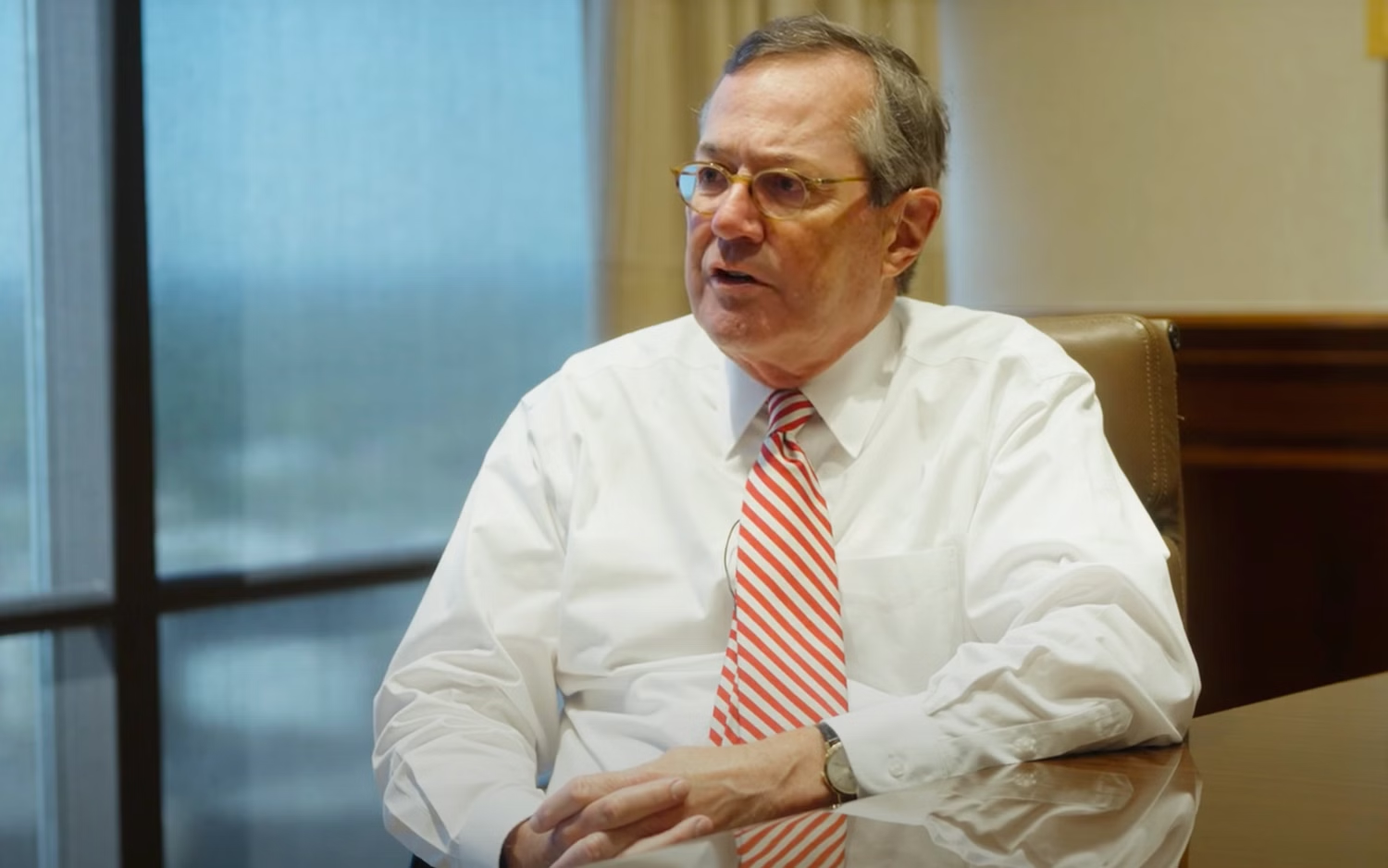
    Warren Stephens. Credit: The Golfer’s Journal / YouTube

    Campaigners warn that the UK will face “pressure from American fossil fuel interests” to slow its energy transition.

    U.S. president-elect Donald Trump’s pick to be UK ambassador runs a firm with investments in several oil and gas companies, DeSmog can reveal.

    Billionaire Warren Stephens, a major Trump donor who was nominated on Monday to be the next UK ambassador, is chairman, president, and CEO of Stephens Inc., one of the largest privately-owned investment banks in the U.S..

    The firm’s portfolio includes at least five companies that make their money from oil and gas exploration and production, including one, Stephens Natural Resources, which is “solely owned” by the Stephens family business. 

    “President-elect Trump’s promise to boost U.S. fossil fuel production is reflected in his choice of UK ambassador, raising concerns about the potential impact on the UK’s own climate leadership”, said Fossil Free Parliament campaigner Carys Boughton. 

    Tessa Khan, executive director of the environmental campaign group Uplift, told DeSmog the appointment was a sign that “the UK is going to be under pressure from American fossil fuel interests to slow its transition away from oil and gas”.

    Trump has vowed to “drill, baby, drill” for oil and gas in the U.S. while his presidential campaign received the backing of major fossil fuel interests. The president-elect has called climate change a “hoax” and is expected to once again pull the U.S. out of the flagship 2015 Paris Agreement, which established a global ambition to limit warming to 1.5C above industrial levels. 

    The Stephens hire comes just weeks after the UK Labour government unveiled an ambitious new climate target to cut emissions by 81 percent by 2035. The move was criticised by Conservative Party leader Kemi Badenoch, who this week flew to Washington DC reportedly to build ties with senior Republicans ahead of a second Trump presidency.  

    As DeSmog revealed last week, Badenoch has hired advisors who have criticised climate action and have links to fossil fuel-funded think tanks. Badenoch, who describes herself a “net zero sceptic” has also received donations from the head of Net Zero Watch, a climate science denial group.

    Oil and Gas Investments

    Stephens Inc.’s investments in oil and gas include Stephens Natural Resources, a company run by Warren’s uncle Witt Stephens. 

    The company, which trades as Stephens Production, “has a rich history of drilling and producing both oil and natural gas”, according to its website, and “continues to expand its production and reserves in the continental U.S. and offshore Gulf of Mexico”. 

    The company is “solely owned” by the Stephens family, whose investment stretches back to 1953, according to the website. 

    Stephens Inc.’s other current investments, which date back to the mid-2010s, include Four Corners Petroleum, an oil exploration and production company based in Colorado. 

    Stephens Inc. lists RK Supply in its portfolio, a “leading distributor of piping, oil and gas valves, fittings, and other oilfield service equipment” based in Texas. It also lists Dakota Midstream, a company that “provides infrastructure support to oil and gas exploration and production”, based in Colorado. 

    Another company in the Stephen Inc. portfolio, Texas-based Basin Oil & Gas, buys “non-operating oil and gas interests”, and is developing carbon capture and sequestration projects. Carbon capture is a favoured climate solution of the oil and gas industry, and is often used simply to extract more fossil fuels. 

    Stephens Inc. lists a firm called Capture Point in its portfolio, which specialises in enhanced oil recovery – a method for extracting hard-to-get oil. Capture Point told DeSmog that Stephens Inc. was not an investor in the company, though did not respond when asked if Stephens Inc. was previously an investor. 

    All the companies cited were approached for comment. 

    Trump Tensions

    Stephens’s appointment comes at a critical time for the UK’s energy transition, and highlights the differences between the new Labour government and the incoming Trump administration. 

    Prime Minister Keir Starmer last month attended the COP29 climate summit in Baku, Azerbaijan, pledging that the UK would restore its role “as a climate leader on the world stage”. In its 2024 election manifesto, Starmer’s Labour Party pledged to ban all new licenses for oil and gas exploration in the North Sea. However, after five months in office, the government has yet to implement that promise. 

    “While the UK government has pledged to turn the UK into a ‘clean energy superpower’, it has not enacted its manifesto commitment to ban new licenses, nor provided a plan for a just transition away from fossil fuels”, Carys Boughton told DeSmog. 

    “Trump’s choice of ambassador will gift the fossil fuel industry yet more influence within UK politics, which is particularly concerning while the government is still wavering on the future of fossil fuels. 

    “It is therefore yet more important that the government take action to restrict fossil fuel industry influence – to protect its developing climate and energy policy from the industry’s polluting interests.”

    As DeSmog has reported, Trump’s would-be energy secretary Chris Wright, chief executive of fracking company Liberty Energy, has praised Danish climate crisis denier Bjorn Lomborg as a friend. Wright’s nomination was welcomed by the CO2 Coalition, a climate science denial group which has received funding from the Koch Industries oil dynasty. 

    Analysis by the climate outlet Heated found that all of Trump’s cabinet picks have made misleading statements about climate change. 

    Science denial and an enthusiasm for fossil fuels are also views shared by Trump’s UK supporters. In September, DeSmog reported that Trump ally Nigel Farage, the Clacton MP and leader of Reform UK, was a keynote speaker at an event in Chicago run by the Heartland Institute, where he called on the U.S. to “drill, baby, drill” for more fossil fuels. 

    “It’s no surprise that this appointment – like the rest of Trump’s administration – is shot through with oil and gas interests”, Uplift’s Tessa Khan, told DeSmog.

    “Fossil fuel companies will prove extremely influential in the incoming U.S. government, and they want nations across the world to remain hooked on oil and gas for years to come just so they can keep profiting.

    “The UK is going to be under pressure from American fossil fuel interests to slow its transition away from oil and gas. To succumb would be against the UK’s national interest”.

    Original article by Adam Barnett republished from DeSmog

  • The World Knows Israel Is Committing Genocide in Gaza

    Spread the love

    This article was originally posted 6/12/24 but was deleted probably by mistake.

    Original article by Ramzy Baroud republished from Common Dreams under Creative Commons (CC BY-NC-ND 3.0). 

    A woman reacts as she checks the body of a two-year-old child who was killed from an Israeli bomb in Gaza City, at Al-Ahli Arab hospital, also known as the Baptist hospital on December 5, 2024.(Photo by Omar Al-Qatttaa/AFP via Getty Images)

    And no amount of Israeli or U.S. government propaganda will change that.

    The ongoing war and genocide in Gaza is unprecedented. Nothing that Israel and its supporters can say or do will avoid the historical accountability of the extermination of the Palestinian people in the Gaza Strip.

    The above assertion is critical, both for ending the Israeli occupation of Palestine and achieving Palestinian freedom. This is why.

    In all past wars and adjoining war crimes, Israel managed to push the reset button in its relationship with occupied Palestinians.

    Following each war, the Israeli hasbara, propaganda machine, would start – utilizing the always-willing western mainstream media – to paint Palestinians in a negative light and to present Israel, a country that is supposedly in a permanent state of self-defense, as the victim, or even the lone defender of western civilization.

    This campaign is always paralleled with the whitewashing of Israel in popular entertainment, from Hollywood movies to TV sit-coms, to magazine covers with such titles as “Gorgeous Photos Capture The Unseen Lives Of Female Soldiers In Israel”.

    Generally, Western politicians of varied ideologies, along with intellectuals, news talking heads and church leaders all praise, in tandem, the miracle that is Israel.

    At the beginning of Israel’s genocidal war in October 2023, for example, British playwright Tom Stoppard said that “before we take up a position on what’s happening now, we should consider whether this is a fight over territory or a struggle between civilization and barbarism.” He, of course, leaned towards the latter.

    This Israeli tactic always includes the demonization of Palestinians as well, where the victim becomes the ‘terrorist’ and those under siege become the besiegers. This last claim, in particular, was expressed in the words of former US Secretary of State Madeline Albright who said, in an interview with NBC in August 2000, that “the Israelis feel under siege from the Palestinian rock throwers and the various gangs that have been roaming around.”

    Why will those same Israeli tactics fail this time? Indeed, they will fail, not due to Israel’s lack of trying. In fact, Israel is already bracing for the fight of a lifetime.

    One new tactic that Israel is already employing in ‘friendly’ countries, like the United States, is the passing of laws to block the mere conversation on the Israeli genocide in Gaza, so that it will have exclusive access to the American public.

    On November 14, the US House of Representatives passed two bills: H.R.6408 and H.R.9495. The latter, in particular, aimed at giving the Treasury Secretary the authorization to revoke an organization’s tax-exempt status and decide when the designation would end.

    Now, there can be no reset buttons. Rather, the global momentum of Palestine’s liberation will accelerate in the coming months and years.

    Once these bills pass the Senate and are approved by the president, the most democratic and peaceful expressions of rejecting the Israeli occupation of Palestine and demanding sensible US foreign policy will be equated to a direct violation of the law and, in some cases, to terrorism – as defined by the Department of Treasury, at the behest of the pro-Israeli lobby.

    But even these desperate attempts will not quell the anger or distract from the conversation, for the following reasons:

    One, not only did Israel commit genocide in the Gaza Strip, but this genocide and extermination are being investigated and are acknowledged by the world’s largest legal institutions, namely the International Court of Justice (ICJ) and the International Criminal Court (ICC).

    Two, unlike previous investigations, for example, the Goldstone Report probing the 2008-09 war on Gaza, the international community has already taken some practical steps to hold Israeli war criminals accountable, including an arrest warrant issued on November 21 against Israeli Prime Minister Benjamin Netanyahu and former Defense Minister Yoav Gallant.

    Three, those who routinely come to Israel’s defense, the US and other Western governments, are now directly clashing with the very international law they helped articulate after World War II, depriving them of any credibility as ‘neutral’ parties in this conflict.

    For example, Biden said that the warrants were “outrageous” while the French Ministry for Europe and Foreign Affairs claimed that Netanyahu and other ministers enjoy immunity since Israel is not a party to the ICC.

    Four, despite the inherent bias of western media, Palestinian journalists, isolated and killed in large numbers, managed to communicate the genocide to the rest of the world, making it impossible for Israel to hide its crimes.

    Five, the impact of the Israeli genocide on Gaza has already penetrated the various layers of public opinion, unprecedented in history.

    Typically, the conversation on Palestine is confined to specific strata of society, reaching academics, social justice activists and other groups interested in politics and global issues.

    Today, ordinary people have been made aware of the conversation, to the extent that it is widely believed that anger over Gaza has contributed in determining the outcome of the latest US elections.

    In Africa, the growing political and public interest in the Palestinian struggle have re-enlivened the spirit of anti-colonial, liberation struggles on the continent, bringing many countries, from South Africa to Algeria, back to the frontlines of global solidarity.

    No amount of Israeli propaganda, unjust laws, unfair categorizations of Palestinians or the hardly-clad models of the IDF, will ever succeed in reversing these realities.

    Now, there can be no reset buttons. Rather, the global momentum of Palestine’s liberation will accelerate in the coming months and years.

    The price exacted from the Palestinian people for this earth-shattering moment has been high and painful, but the history of all national liberation struggles, Palestine included, demonstrates that the price for freedom is always high.

    Original article by Ramzy Baroud republished from Common Dreams under Creative Commons (CC BY-NC-ND 3.0). 

  • Morning Star Editorial:: Another set of meaningless milestones: Starmer’s desperate relaunch falls flat

    Spread the love

    This article was originally posted 6/12/24 but was deleted, probably my mistake.

    https://morningstaronline.co.uk/article/editorial-another-set-of-meaningless-milestones-starmers-desperate-relaunch-falls-flat

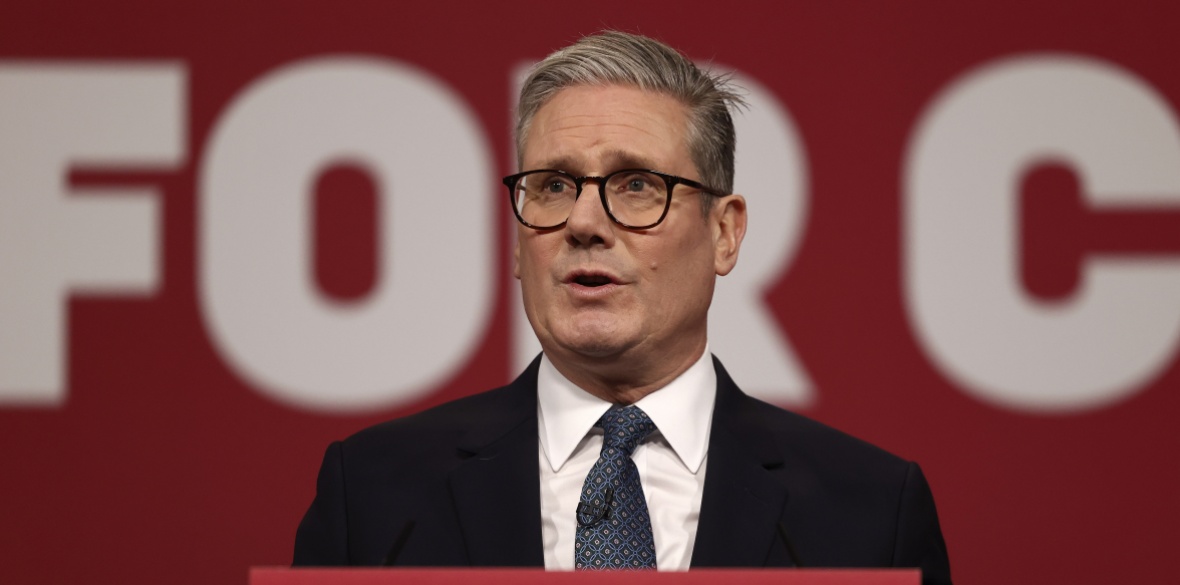
    Prime Minister Sir Keir Starmer gives a speech in Buckinghamshire as he set out his Government’s “plan for change” promising a shift away from Whitehall’s “declinist mentality”, December 5, 2024

    GOVERNMENTS are never officially “relaunched” because the term is a tacit admission that something has misfired or gone badly wrong.

    Nevertheless, relaunches do happen. The last one in British politics was Rishi Sunak’s bizarre and fruitless attempt to present himself as a change agent, challenging the “30-year consensus” at the Tory Party conference in 2023.

    But seldom, if ever, has a government had to relaunch itself just five months after its election. The speech by Keir Starmer in a tent in Buckinghamshire is, therefore, a measure of how far his administration has fallen and how fast.

    Yet a host of evidence points to Labour’s failure. Starting from an anaemic election result of less than 34 per cent, it is now polling in the mid-twenties.

    And the Prime Minister’s personal figures have slumped from a plus 20 positive rating to minus 30 or thereabouts.

    It is a political fiasco for the ages and one that only the Tories and Reform UK, both under hard-right leadership, look set to benefit from.

    Starmer’s response is encapsulated in the six milestones unveiled today.

    These six milestones follow the five missions and the six commitments launched before the general election, which, of course, succeeded the 10 pledges in Starmer’s number-salad of forgettable, or reneged on, policy promises.

    This is leadership in the style of a corporate management seminar as if announcing a plan were equivalent to achieving anything. And the increasing velocity with which each initiative follows its unfulfilled predecessor indicates that we are now at the point at which football fans would strike up the familiar chant of “you don’t know what you’re doing.”

    … |

    Continues at https://morningstaronline.co.uk/article/editorial-another-set-of-meaningless-milestones-starmers-desperate-relaunch-falls-flat

  • Netanyahu asks for shorter and fewer court appearances in corruption trial

    Spread the love

    https://www.middleeastmonitor.com/20241205-netanyahu-asks-for-shorter-and-fewer-court-appearances-in-corruption-trial

    Israeli Prime Minister Benjamin Netanyahu arrives for a speech at his Jerusalem office on March 14, 2020 [GALI TIBBON/AFP via Getty Images]

    Israeli Prime Minister Benjamin Netanyahu asked yesterday to reduce the number of days and the duration of his appearances before Tel Aviv District Court in his trial on corruption charges. He is due to attend in court from next Tuesday to defend himself against several charges including bribery, fraud and breach of trust.

    According to Israel’s Channel 12, the prime minister is asking if he can testify twice a week, instead of three times as decided by the judiciary. “In addition, Netanyahu is requesting that each session be shortened to 5 hours instead of 6 hours, starting at 10:00 and ending at 15:00 local time, instead of the scheduled time between 9:00 and 15:00.”

    Netanyahu’s defence team justified this by arguing, “He works almost every day until late at night, whether due to cabinet meetings, security consultations, or the need to communicate with various entities abroad.”

    The court has yet to decide on Netanyahu’s request.

    Channel 12 reported that court judges had already approved Netanyahu’s request to relocate his trial from Jerusalem to Tel Aviv for security reasons, noting that the sessions will be held in a “secret underground courtroom.”

    He was initially scheduled to appear in court last Sunday, but the court agreed to his request to postpone his appearance until next Tuesday, due to his busy schedule.

    The Israeli Broadcasting Authority said that media outlets had submitted a request to the court to broadcast Netanyahu’s testimony live, but the court rejected the request.

    The corruption cases in which he is indicted are known as Cases 1000, 2000 and 4000, with former Attorney General Avichai Mandelblit filing an indictment against Netanyahu in late November 2019.

    Case 1000 involves Netanyahu and members of his family receiving expensive gifts from wealthy businessmen, in exchange for favours and assistance to these individuals in various fields.

    Case 2000 involves accusations that Netanyahu agreed with Yedioth Ahronoth newspaper publisher, Arnon Mozes, to obtain positive media coverage in exchange for weakening a rival.

    Case 4000 is considered the most serious, in which Netanyahu advanced regulatory decisions that benefited Shaul Elovitch, the controlling shareholder in the Bezeq telecom giant, amounting to hundreds of millions of dollars, in exchange for positive coverage from the company’s Walla news site.

    Netanyahu’s trial in these cases began in 2020 and is ongoing. He denies all the charges against him, calling them a political campaign aimed at ousting him.

    READ: Israel military warns 30 troops against travel abroad amid legal cases over Gaza war crimes

    https://www.middleeastmonitor.com/20241205-netanyahu-asks-for-shorter-and-fewer-court-appearances-in-corruption-trial