Category: politics

  • UNRWA Says There Is ‘Nowhere to Go’ as Israel Orders Evacuation of Gaza Safe Zones

    Spread the love

    Original article by EDWARD CARVER republished from Common Dreams under Creative Commons (CC BY-NC-ND 3.0).
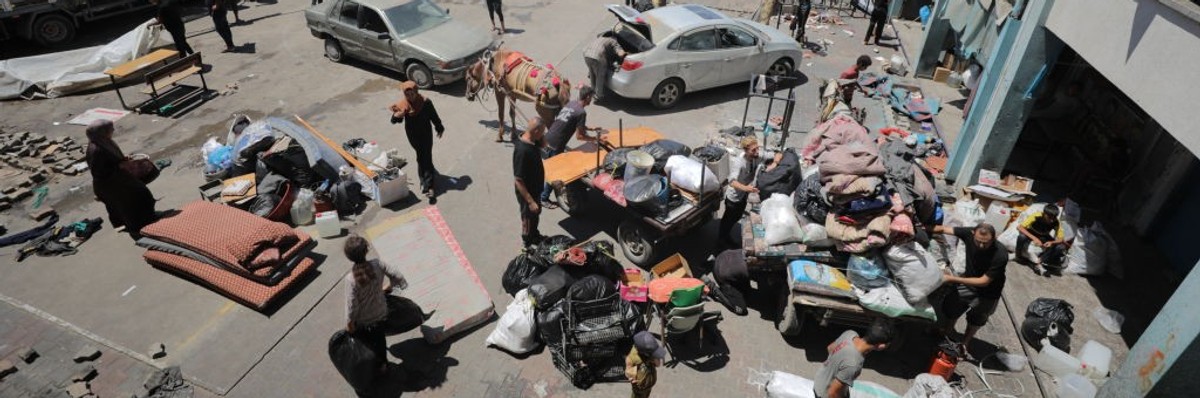
    Palestinians, carrying their belongings, migrate towards areas they believe to be safer after the Israeli military issued an evacuation order for the eastern areas of Deir al-Balah in central Gaza on August 16, 2024. (Photo: Hassan Jedi/Anadolu via Getty Images)

    “People remain trapped in an endless nightmare of death and destruction on a staggering scale,” the U.N. agency wrote on social media.

    Following a series of evacuation orders this week, Israeli forces issued another on Friday for areas in central and southern Gaza, including “safe zones,” leaving Palestinian families gripped with fear and with “nowhere to go,” according to the U.N. Relief and Works Agency for Palestine Refugees in the Near East.

    Israel’s Arabic spokesperson announced on social media that people in six neighborhood blocks in various towns, several of which were part of a proclaimed humanitarian zone, must “immediately move,” leading to a scramble of evacuations in those areas.

    “Once again, fear spreads as families have nowhere to go,” UNRWA wrote on social media. “People remain trapped in an endless nightmare of death and destruction on a staggering scale.”

    Friday’s evacuation orders were for areas in eastern Deir el-Balah, al-Qarara, al-Mawasi, al-Jalaa, Hamad City, and Nasser, Al Jazeerareported.

    An Israeli military strike on al-Mawasi, previously a humanitarian zone though long the target of Israeli strikes, killed four Palestinians including three children, the news outlet reported on Friday.

    The Israeli army said Hamas had used the areas to fire mortar and rocket attacks, and explained that it had issued warning flyers and text message alerts to reduce the impact on the Palestinian civilian population, according toReuters.

    Bombings and evacuations have continued this week—at least 80 Palestinians were killed in a strike on a school-turned-shelter on Sunday—even as peace talks proceeded in Doha, Qatar. A two-day session of talks finished Friday, with the United States, Egypt, and Qatar saying progress was made and they hoped to seal a deal between Israel and Hamas next week. Hamas didn’t directly participate in this week’s talks because the militant Palestinian group said Israel had added new demands to a proposal it had already agreed to in principle.

    The death toll of Palestinians during the 10-month war, based on figures from Gaza’s health ministry, reached 40,000 this week—what the U.N. called a “dark milestone.”

    “Most of the dead are women and children,” U.N. rights chief Volker Türk said in a statement. “This unimaginable situation is overwhelmingly due to recurring failures by the Israeli Defense Forces to comply with the rules of war.”

    “On average, about 130 people have been killed every day in Gaza over the past 10 months,” he added, saying the “scale of the Israeli military’s destruction of homes, hospitals, schools, and places of worship [is] deeply shocking.”

    Türk said that both Israel and armed Palestinian groups including Hamas had committed serious violations of international humanitarian law. The armed Palestinian groups killed more than 1,100 Israelis in a shocking and horrifying massacre in southern Israel on October 7 in which they also took some 250 hostages.

    Israel’s sustained assault on Gaza over the last 10 months has not only killed a disproportionate number of children but also displaced most of those who’ve survived—and separated many from their families.

    A report released Friday by the International Rescue Committee (IRC) documents the scale of the separation crisis and its psychological toll on unaccompanied children. UNICEF estimates that roughly 17,000 Gazan children are unaccompanied, but the IRC warns that the real figure may be much higher.

    Unaccompanied youth are at risk of labor exploitation, starvation, and mental health problems that can plague them for the rest of their lives. Gazan children, shocked by the war, are “clinging to others during loud sounds, wetting the bed, having nightmares, and are wanting to sleep under the bed to feel secure,” the report says.

    The Associated Pressreported Tuesday that Israeli strikes were leaving “children without parents and parents without children,” and has previously reported that the war has wiped out entire Palestinian extended families.

    Israeli violence against Palestinians has not been restricted to Gaza. Israeli settlers attacked the West Bank town of Jit on Thursday night, setting fire to cars and houses, killing one Palestinian man and seriously injuring another. Jack Lew, the U.S. ambassador to Israel, said he was “appalled” by the attack and the perpetrators should be held accountable, but Israeli human rights group B’Tselem responded on social media by saying that the Israeli state and its leadership should be held accountable.

    The U.N. Office for the Coordination of Humanitarian Affairs on Wednesday reported that it had recorded about 1,250 settler attacks on Palestinians since October 7. The settlements are illegal under international law, according to the International Court of Justice.

    The push for a peace deal is aimed not just at ending the carnage in Gaza and defusing West Bank tensions but also preventing a wider war in the Middle East. Israel is bracing for retaliation from Iran and Hezbollah after it conducted assassinations of Hamas and Hezbollah leaders in Tehran and Beirut in late July.

    Original article by EDWARD CARVER republished from Common Dreams under Creative Commons (CC BY-NC-ND 3.0).
  • ‘Insane Torture’: Israeli Soldiers Confirm Horrific Abuse of Palestinians at Sde Teiman

    Spread the love

    Original article by BRETT WILKINS repulished from Common Dreams under Creative Commons (CC BY-NC-ND 3.0).
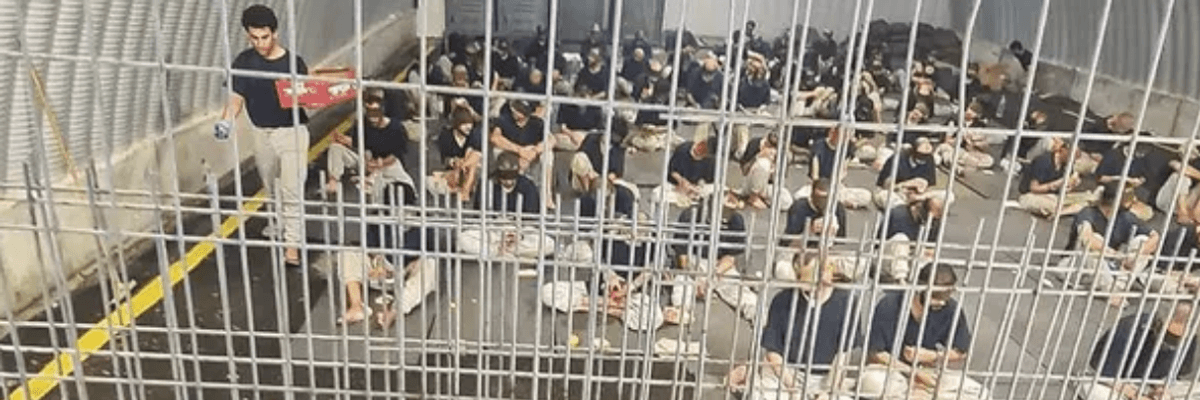
    Palestinians imprisoned at Sde Teiman are shackled and blindfolded 24 hours a day and are forced to sit still and silent in painful positions for hours on end. (Photo: Whistleblower)

    “Teeth were broken, bones were broken,” said one soldier. “You notice how easy it is to lose your humanity,” said another.

    An Israeli newspaper on Friday published interviews with Israel Defense Forces reservists and medical staff who witnessed the “day-to-day torture” of Palestinian prisoners at the notorious Sde Teiman prison in the Negev Desert, where dozens of detainees have died and others were allegedly raped.

    The Israelis described seeing torture and abuse of Palestinians detained in Sde Teiman, who included everyone from Hamas fighters to innocent civilians, and ranged in age from children to octogenarians.

    “We said, ‘It’s torture.’ But you don’t get into it; you change the subject immediately.”

    “What’s happening there is total dehumanization. You don’t really relate to them as if they’re real human beings,” said one public hospital physician who worked at Sde Teiman. “In the end it’s no less than torture. There are ways to administer even poor treatment, or even to torture a person, without crushing cigarettes on them.”

    One female former medical staffer said that “the place was totally unimaginable, I had never considered anything like it.”

    “My first thought was: What have I done?” she said, describing prisoners being forced to relieve themselves in diapers and take their meals through straws.

    “The conditions there were described as torture,” she added. “Maybe. In many senses, yes, I agree with that. Maybe even insane torture.”

    A 37-year-old male reservist said some of the worst abuse was committed by members of Force 100, the unit of the nine Israelis recently arrested for allegedly gang-raping a Sde Teiman prisoner.

    “They took… guys aside and really laid into them,” he said. “I think that each time teeth were broken, bones were broken… And there was also a dog.”

    Former Sde Teiman prisoners have described dogs attacking and performing “vile acts” on them.

    Another IDF reservist said that “when you come to the camp, the first thing that hits you is the smell… of dozens of people who have been sitting in close quarters for more than a month in the same clothes and in insane heat.”

    “They let them shower for a few minutes around twice a week, but I don’t remember ever seeing that they gave them a change of clothes, in any case not on my shifts,” he added.

    The Haaretz interviewees said that much of the abuse occurred in the open.

    “It wasn’t something that was done in the dark,” the 37-year-old reservist said. “Everyone saw what was going on… It’s not something that was done behind the back of the commander of the camp.”

    “Most of the guys were just fine with what was happening,” he continued. “There were some who were a little bothered by it, and there were others who were bothered by it at the start and then they toed the line with the system.”

    “There were people who in conversations suddenly mentioned the word ‘torture,’” he added. “And then we said, ‘It’s torture.’ But you don’t get into it; you change the subject immediately.”

    Some of those interviewed by Haaretz expressed misgivings about what they did or saw at Sde Teiman.

    “When I was there, I wrestled with myself about whether to stay on and try to do the right thing, the best I could as a moral person, or whether I should just get up and declare that I refused to take part in it,” said one male reservist and student. “I came out with a heavy feeling of guilt.”

    Another reservist said, “The more distance I have from the place, the more my eyes have opened up.”

    “What most disturbed me was to see how easily and how quickly ordinary people can disconnect themselves and not see the reality right in front of their eyes when they’re in the midst of a shocking human situation,” he added.

    There were also rare moments of mercy.

    “Sometimes the military police gave the minors candy, like in the evening, before sleep,” the 37-year-old reservist said. “One time a detainee started to cry. He was older, 60 years old. So the duty officer tried to speak to him and cheer him up a little.”

    But more often, guards were “filled with rage,” said one reservist, who added that “there’s a desire for revenge.”

    “What most disturbed me was to see how easily and how quickly ordinary people can disconnect themselves and not see the reality right in front of their eyes.”

    One reservist said that “there was a female officer who gave us a briefing on the day we arrived. She said, ‘It will be hard for you. You’ll want to pity them, but it’s forbidden. Remember that they aren’t people.”

    “You notice how easy it is to lose your humanity in a second, how easy it is to come up with justifications for treating people as if they’re not people,” he added.

    One 27-year-old female reservist said that upon arriving at Sde Teiman—where she was welcomed with popcorn and cotton candy—she was alarmed to find that “good people whom I know talked about being cruel and abusive to people, like they were talking about something routine.”

    “The dehumanization frightened me,” she said. “I couldn’t understand how a group of young people who were around me every day underwent such a dangerous process in such a short time.”

    Another reservist said that some Sde Teiman staff—especially the volunteers—were “sadists” who “really enjoy beating up Arabs.”

    The Haaretz interviews add to a growing body of evidence of torture and other war crimes perpetrated by Israelis against Palestinian prisoners at Sde Teiman and other lockups.

    Former Palestinian detainees and Israeli personnel have described beatings, rape and sexual torture by male and female soldiers, routine amputations due to constant shackling, burnings, electrocutions, attacks by dogs, ice-water dousings, denial of food and water, sleep deprivation, constant loud music, and other abuse.

    The Israeli military is investigating the deaths of at least 36 Sde Teiman detainees, including one who died after allegedly being sodomized with an electric baton.

    On Friday, Alice Jill Edwards, the United Nations special rapporteur on torture, said that “there are no circumstances in which sexual torture or sexualized inhuman and degrading treatment can be justified.”

    “I am troubled by recent attempts by Israeli citizens—including reportedly one member of Parliament—to intervene violently after the arrests of soldiers on these abuse charges,” she said of the recent storming of Sde Teiman and another base by a far-right mob in response to the arrests of the alleged rapists.

    “Criminal proceedings into all allegations must proceed unhindered,” Edwards added. “No one is above the law. No one is immune from prosecution for torture.”

    Original article by BRETT WILKINS repulished from Common Dreams under Creative Commons (CC BY-NC-ND 3.0).

  • Contaminated blood victims confused and angered over changes to compensation plan

    Spread the love

    https://morningstaronline.co.uk/article/contaminated-blood-victims-confused-and-angered-over-changes-to-compensation-plan

    Campaigners, including many who are personally infected and affected by infected blood, gather in Westminster, London, July 26, 2024

    CONTAMINATED blood victims expressed confusion and anger after the government announced changes to a multibillion-pound compensation plan today.

    Paymaster General and Cabinet Office Minister Nick Thomas-Symonds said survivors of the biggest treatment disaster in NHS history will get life-long support with up to £15,000 extra for those subjected to “unethical” research.

    Payouts under the scheme will start by the end of the year for survivors and by next year for affected people such as family members under a second set of regulations.

    Mr Thomas-Symonds said the total estimate of the cost of scandal compensation will be set out in the Budget red book, with more than £1 billion had already been paid out.

    “We know no amount of compensation can fully address the damage to people who suffered as a result of this scandal,” he said.

    The £15,000 payout was, however, branded as “derisory and insulting” and a “kick in the teeth” by a victim who was infected with HIV and other viruses while subjected to unethical medical testing at a specialist school.

    …

    https://morningstaronline.co.uk/article/contaminated-blood-victims-confused-and-angered-over-changes-to-compensation-plan

  • After a streak of record-breaking global temperatures, the climate is on a knife-edge

    Spread the love

    Jack Marley, The Conversation

    For 13 consecutive months, global average air and ocean temperatures were probably the hottest they have been in human history.

    This streak of extraordinary heat ended last month, the EU’s Copernicus Climate Change Service reported, as July 2024 was only the second hottest ever recorded – 0.04°C cooler than a record set the previous July.

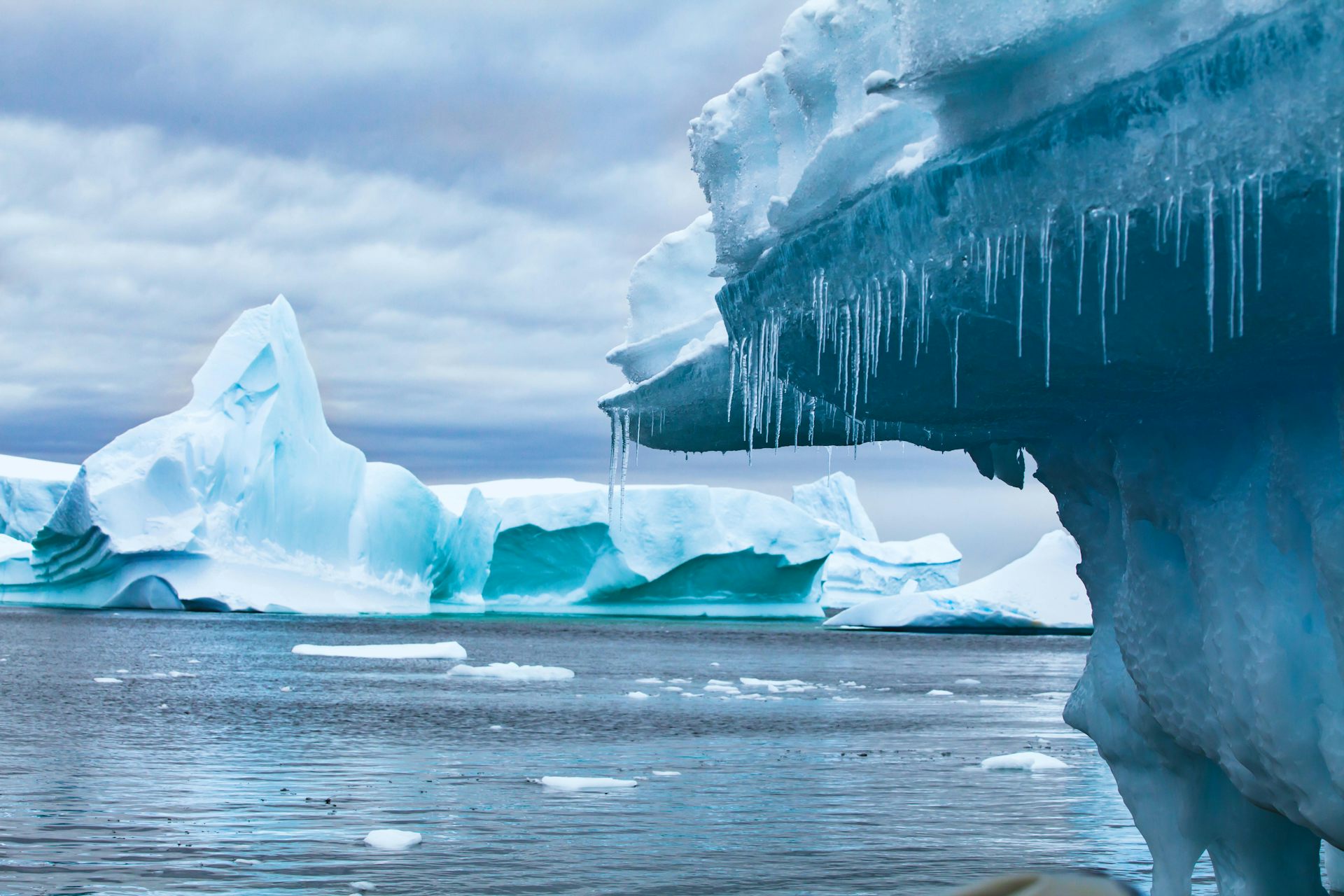
    In its wake are thousands of heat-related deaths, ailing ecosystems and a planet firmly on the precipice of a profoundly altered climate.


    Imagine weekly climate newsletter

    This roundup of The Conversation’s climate coverage comes from our award-winning weekly climate action newsletter. Every Wednesday, The Conversation’s environment editor writes Imagine, a short email that goes a little deeper into just one climate issue. Join the 35,000+ readers who’ve subscribed.


    “Global warming has consistently toppled records for warm global average temperatures in recent decades, but breaking them by as much as a quarter of a degree for several months is not common,” says Christopher Merchant, a professor of ocean and Earth observation at the University of Reading.

    Air temperatures peaked in December 2023, when the Earth was 1.78°C hotter than the pre-industrial average for that time of year. Buoy-based sensors confirmed that the ocean was also record-warm at the time.

    So what caused this stretch of unusually high temperatures on land and at sea?

    “Several factors came together,” Merchant says. “But the biggest and most important is climate change, largely caused by burning fossil fuels.”

    Big Oil and the little boy

    When scientists refer to Earth’s pre-industrial temperature, they typically mean a global average taken between 1850 and 1900. Factories and power plants still existed in the second half of the 19th century, especially in Europe and North America, but the vast majority of greenhouse gas emissions generated by human activity had yet to be emitted. What’s more, meteorologists have a fairly good temperature record for this period with which to compare modern warming.

    What this comparison tells us is that July 2024 was 1.48°C warmer than a typical July before the mass burning of coal, oil and gas, Merchant says. Roughly 1.3°C of that is directly attributable to global heating caused by these fossil emissions and land-use changes (deforestation, livestock farming) over the intervening decades.

    The remainder, which caused the sudden temperature spike beginning in June 2023, was largely the result of a natural cycle in the climate known as El Niño.

    “An El Niño event is a reorganisation of the water across the vast reaches of the Pacific Ocean. El Niño is so important to the workings of worldwide weather as it increases the temperature of the air on average across all of Earth’s surface, not only over the Pacific,” Merchant explains.

    El Niño has ended, and with it, the run of record global average temperatures. Merchant expects temperatures to ease back slightly, but says there is no going back to the pre-2023 norm.

    “A plausible scenario is that global temperatures will fluctuate near the 1.4°C level for several years, until the next big El Niño event pushes the world above 1.5°C of warming, perhaps in the early 2030s,” he says.

    Over? Shoot!

    Since the 2015 Paris agreement, the political consensus on climate change has been to strive to limit warming to 1.5°C. A slew of catastrophic and potentially irreversible changes to the systems that keep Earth habitable are more likely to occur once this long-term average has been crossed.

    It’s possible that this process has already started for one system in particular: tropical coral reefs. Earth’s largest, the Great Barrier Reef off Australia, has suffered five mass bleaching events in the past nine summers and recently endured its worst heat in at least 400 years.

    The new plan, if one exists among the world’s governments (approving new oil and gas production is still a normal feature of governing), would seem to accept the 1.5°C target being breached at least temporarily.

    “The question is, how do we manage this period of ‘overshoot’ and bring temperatures back down?” asks Jonathan Symons, a lecturer in international relations at Macquarie University.

    In autumn last year, a commission mainly composed of former government ministers from several countries published a report on the implications of overshooting 1.5°C. The report argued that high-emitters like Australia should now aim for “net-negative emissions” and begin urgently removing carbon from the air – by restoring habitats and deploying carbon capture and storage technology.

    Symons summed up their reservations with both:

    “The commission worries many carbon removal approaches are phoney, impermanent or have adverse social and environmental impacts.”

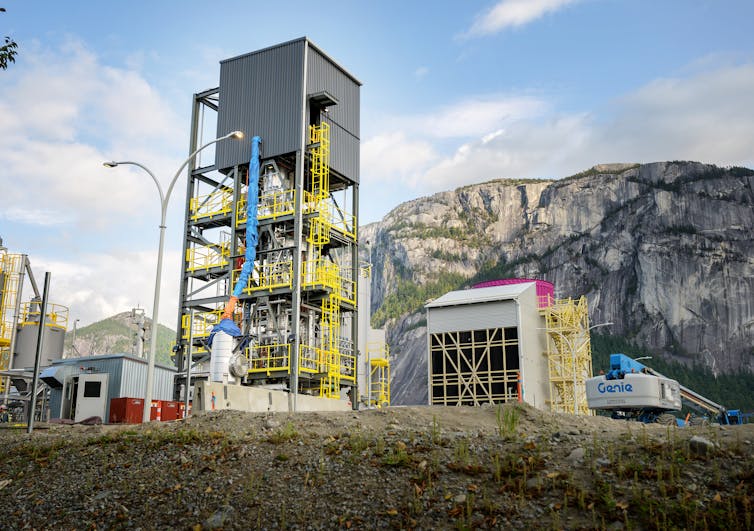
    A tall metal structure within an industrial scene.
    A direct air capture plant in British Columbia, Canada. David Buzzard/Shutterstock

    One drastic option the Climate Overshoot Commission ruled out was “solar radiation management”: reflecting some of the Sun’s heat and light back to space by injecting reflective particles into the atmosphere, among other techniques. Academics continue to debate whether this is now an unpleasant necessity or more reckless vandalism of the atmosphere.

    In lieu of a radical change of course, present global climate policy could breach the 1.5°C target by a degree Celsius or more according to an analysis published in Nature Climate Change on Monday.

    The world seems to be delaying the end of fossil fuels, gambling that nature will hold its breath. Research has so far condemned this wishful thinking: computer models predict “waves of extinctions” and ecological damage spanning centuries from even a brief sojourn at 2°C.

    Jack Marley, Environment + Energy Editor, The Conversation

    This article is republished from The Conversation under a Creative Commons license. Read the original article.

  • The Scotsman newspaper making unfounded claims of copyright infringement

    Spread the love

    I’ve had a couple of emails initiated from the Scotsman claiming copyright infringement. They’re wrong and look to be produced by a simple automated routine without human supervision or intervention i.e. a stupid bot. My website host has taken a few pages down as a result and there are threats of further restrictions.

    Scotsmen poncing about. Sporran, haggis, gear …

    I don’t agree with the Scotsman.

    One of them is this

    …

    Speaking to the Mail on Sunday, Swinney said: “I want the Scottish Government to work closely and carefully with the oil and gas sector to ensure its sustainability.

    “We need the oil and gas sector to contribute to the transition to net zero, so it has to be strong enough and robust enough to do that.

    “In addition to that, I want to make sure that the sector is able to contribute to the objectives of energy security that we’ve set out in our policy programme.

    …

    https://www.heraldscotland.com/news/24360504.swinney-considers-u-turn-new-oil-gas-licences/

    That’s it, a very small section clearly attributed to it’s source. That’s acceptable use under copyright laws. Stick that in your sporran Scotsman.

    Dear Sir/ Madam,
    
    Notice of Copyright Violation (DMCA Takedown Notice) – Formal Notification Pursuant to Section 512(c)(3)(A) of the Digital Millennium Copyright Act
    
    We are writing on behalf of the attached listed publishers (“Publishers”). We understand that you are the host provider for onaquietday.org (“Infringing Website”). A number of articles which belong our Publishers (“Infringing Material”) are being hosted on the Infringing Website. This email is an official notification, pursuant to Section 512(c)(3)(A) of the Digital Millennium Copyright Act (“DMCA”), in which we seek the immediate removal of the Infringing Material your servers.
    
    The Infringing Material is located at the URLs listed below. If there are other URLs that distribute our Publishers’ content, we ask that you apply this notice to those URLs also.
    
    https://onaquietday.org/2024/06/03/swinney-considers-u-turn-on-new-oil-and-gas-licences/
    
    
    Rishi Sunak’s claim that boosting UK oil and gas production will help fight climate change does not stand up to scrutiny – Scotsman comment
    Why Labour’s ban on puberty blockers shows party abandoning progressive principles
    Climate change: Rishi Sunak must reject Rosebank oil field and join the countries calling for fossil fuels to be urgently phased out – cross-party group of politicians
    Details of where the original material was hosted is also set out below. https://www.heraldscotland.com/news/24360504.swinney-considers-u-turn-new-oil-gas-licences/ https://www.scotsman.com/news/opinion/columnists/rishi-sunaks-claim-that-boosting-uk-oil-and-gas-production-will-help-fight-climate-change-does-not-stand-up-to-scrutiny-scotsman-comment-4238637 https://www.scotsman.com/news/opinion/why-labours-ban-on-puberty-blockers-shows-party-abandoning-progressive-principles-4709353 https://www.scotsman.com/news/opinion/columnists/climate-change-rishi-sunak-must-reject-rosebank-oil-field-and-join-the-countries-calling-for-fossil-fuels-to-be-urgently-phased-out-cross-party-group-of-politicians-4231467 NLA Media Access Limited (“NLA”) is a licensing body under section 116(2) of the Copyright Designs and Patents Act 1988, and a Collective Management Organisation (“CMO”) under the Collective Management of Copyright (EU Directive) Regulations 2016.NLA “is authorised by law or by way of assignment, licence or any other contractual arrangement to manage copyright or rights related to copyright on behalf of more than one right holder, for the collective benefit of those right holders, as its sole or main purpose” (see Regulation 2 of Collective Management of Copyright (EU Directive) Regulations 2016/221). For more information about who we are, what we do and who we represent, please visit our website at: https://www.nlamediaaccess.com/. NLA licenses the content of our mandating publishers through copyright licences (which can be found on our website). We are providing this notice in good faith and with reasonable belief that our Publishers’ rights are being infringed and the hosting of the Content is not authorised by the copyright owner, its agent, or by operation of law. Under the penalty of perjury, we hereby confirm that the information contained in this notification is true and accurate, and that NLA is authorised to act on behalf of the Publishers. Please be reminded that the law requires you, as a service provider, to “expeditiously remove or disable access to” the Content upon receiving this notice. We would be grateful if you would confirm by return email that you have actioned this takedown request. Alternatively, you may contact us using the contact information set out below. Our contact information is as follows: Name: NLA Media Access Limited Address: M- section omitted - Contact: - section omitted -, Copyright Infringement Manager Email address: - section omitted - Telephone number: - section omitted - Yours faithfully, - section omitted - Copyright Infringement Manager For and on behalf of NLA Media Access Limited Copyright Infringement Team NLA media access | - section omitted - Registered in England and Wales | Company number 3003569 Switchboard: - section omitted - www.nlamediaaccess.com