Category: politics

  • 7 Green Groups That Didn’t Back Biden Just Endorsed Harris as ‘Our Only Choice’

    Spread the love

    Original article by JESSICA CORBETT republished from Common Dreams under Creative Commons (CC BY-NC-ND 3.0). 
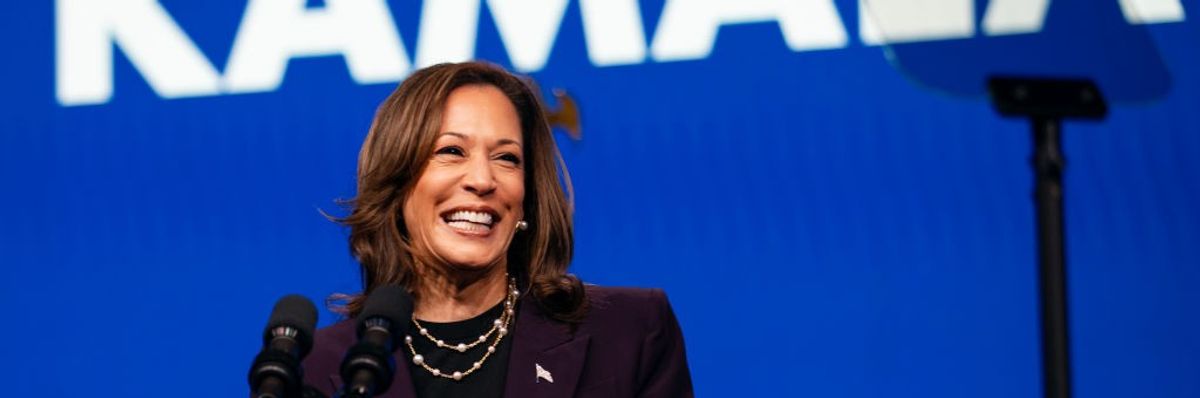
    Vice President Kamala Harris speaks at the American Federation of Teachers’ 88th National Convention on July 25, 2024 in Houston, Texas. (Photo: Montinique Monroe/Getty Images)

    “With a President Harris, we will have a chance to build the political power to move the bold climate initiatives we need.”

    Progressive climate and environmental advocacy groups on Wednesday stressed the threat posed by the Republican presidential ticket and endorsed Vice President Kamala Harris, the presumptive Democratic nominee for the November election.

    One coalition of six groups—350 Action, Center for Biological Diversity Action Fund, Clean Water Action, Climate Hawks Vote, Food and Water Action, and 350 Action, Center for Biological Diversity Action Fund, Clean Water Action, Climate Hawks Vote, Food and Water Action,350 Action, Center for Biological Diversity Action Fund, Clean Water Action, Climate Hawks Vote, Food and Water Action, and Friends of the Earth Action—cited Harris’ record as vice president and a U.S. senator from California.

    Despite his months as the presumptive Democratic nominee, none of the organizations had endorsed President Joe Biden before he dropped out of the race and backed Harris earlier this month.

    “Vice President Harris is a visible leader in the Biden-Harris administration’s successful work to address environmental injustice, tackle the climate crisis, hold polluters accountable, reduce water pollution, and ensure clean drinking water for all,” said Clean Water Action president and CEO Jeff Carter, emphasizing that her actions “have made a real difference in people’s lives.”

    Jeff Ordower of 350 Action highlighted that in addition to being “part of the administration that invested in renewable energy through the historic Inflation Reduction Act,” Harris “has a history of taking on Big Oil and advocating for environmental justice.”

    “As a global climate movement, we know Harris represents not just the ability to make progress in the U.S., but globally as well,” he added. “For those… who care about democracy, climate, and decreased corporate capture of our government, Kamala Harris is our only choice.”

    “For those… who care about democracy, climate, and decreased corporate capture of our government, Kamala Harris is our only choice.”

    Kierán Suckling, president of the Center for Biological Diversity Action Fund, similarly urged “everyone who cares about our planet, environmental justice, women’s rights, civil rights, and our democracy to get out and vote for Kamala Harris to be our next president.”

    Suckling also took aim at former President Donald Trump, the Republican nominee, declaring that “Harris will lead us toward a brighter future for our children and grandchildren, and put the nightmare of Trump behind us.”

    Trump—who earlier this month announced Big Oil-backed Sen. JD Vance (R-Ohio) as his running mate—has vowed to “drill, baby, drill” and roll back the Biden-Harris administration climate policies if fossil fuel executives pour money into his campaign.

    Although the U.S. is among five wealthy countries that have led a global surge in oil and gas development this year, Harris’ campaign has warned that “oil barons are salivating” over Trump’s potential return to the White House.

    A March study found that Trump’s plans for a second term would lead to 4 billion more tons of carbon dioxide being released into the atmosphere by 2030 when compared with the policies of Biden—who has passed the torch to Harris, whose online nomination process is set to start on Thursday.

    “Kamala Harris’ record provides a stark contrast with Donald Trump and the far-right, pro-polluter Project 2025,” said Wenonah Hauter, founder and executive director of Food and Water Action. “Of course, much more needs to be done, and Harris’ positions do not yet go far enough to tackle the existential threats to our food, water, and climate.”

    “But with a President Harris, we will have a chance to build the political power to move the bold climate initiatives we need,” Hauter emphasized. “Four more years of Trump and Project 2025 will further accelerate an already escalating climate crisis and eviscerate important protections for our food and water.”

    The six groups that backed Harris but not Biden were among the campaigners and scientists angered by the president supporting the Willow project and Mountain Valley Pipeline, continuing fossil fuel lease sales, skipping last year’s United Nations summit, and declining to declare a national climate emergency.

    As HEATED, which scooped the endorsement news, reported late Tuesday:

    Harris has already received endorsements from the so-called “Big Green” groups—the political arms of the League of Conservation Voters, the Natural Resources Defense Council, the Sierra Club, and Clean Energy for America. But those weren’t much of a surprise, as each group had already backed Biden’s reelection bid, and are traditionally loyal to Democratic Party politicians.

    The groups endorsing Harris on Wednesday, however, had so far held off on throwing their support behind Biden while he was running for reelection—in part because of the sitting president’s mixed record on climate policy.

    “It was very much a debate” on whether to endorse Biden, said one of the group’s staffers, who spoke on background because the Harris announcement is not yet public. But with Harris, the calculus has changed.

    “Because of her work in California and when she was a senator—a lot of us worked with her on creating the Environmental Justice for All Act—it gives us hope,” the staffer said. “She’s just a different person [than Biden], and has a stronger track record.”

    “Friends of the Earth Action is excited to endorse Kamala Harris for president of the United States,” the group’s president, Erich Pica said Wednesday. “We are not going back to an era dominated by fossil fuel interests, corporate greed, and disenfranchisement. Instead, we’re looking forward to building a healthy and just future with Vice President Harris.”

    For Climate Hawks Vote, this is the organization’s first presidential endorsement since its founding over a decade ago.

    “We’re breaking our usual rule of not endorsing in presidential elections, given our strong history with Kamala Harris (we endorsed her in her 2016 Senate race), her track record in taking on Big Oil and holding polluters accountable, and the extraordinary moment of this election,” explained RL Miller, the group’s president. “We are climate hawks who vote, and we’ll be flocking together for Kamala Harris.”

    The Green New Deal Network—which also never endorsed Biden—separately threw its support behind Harris on Wednesday.

    “What the Green New Deal really is, is understanding that everything’s connected,” the network’s national director, Kaniela Ing, toldInside Climate News. “Making sure our tax dollars aren’t just going to kill children abroad, but to build schools and hospitals here at home… Local control of resources, self-determination of our communities. That’s the vision Kamala Harris, given her background—being bused to schools, really being a product of a lot of our social programs—really understands.”

    One group that has not yet endorsed Harris but has certainly been attentive to both major party tickets is the youth-led Sunrise Movement. The organization warned earlier this month that the Republicans would cause “catastrophic and irreversible damage” to the climate if elected, and some members were arrested for a Monday protest Vance’s Senate office on Capitol Hill.

    That same day, Sunrise rallied outside of the Democratic National Committee headquarters in Washington, D.C. to urge Harris “to put forward a comprehensive plan on the economy and climate.”

    Sunrise is also part of a youth-led coalition—which includes Gen-Z for Change, March for Our Lives, and United We Dream Action—that wrote to Harris last week, “This is your chance to energize young people and our communities to vote, mount one of the greatest political comebacks in decades, and deliver a resounding defeat to the far-right agenda of Trump and Vance.”

    Original article by JESSICA CORBETT republished from Common Dreams under Creative Commons (CC BY-NC-ND 3.0). 

  • The climate is changing so fast that we haven’t seen how bad extreme weather could get

    Spread the love
    Andreas Thaller/Alamy Stock Photo

    Simon H. Lee, University of St Andrews; Hayley J. Fowler, Newcastle University, and Paul Davies, Newcastle University

    Extreme weather is by definition rare on our planet. Ferocious storms, searing heatwaves and biting cold snaps illustrate what the climate is capable of at its worst. However, since Earth’s climate is rapidly warming, predominantly due to fossil fuel burning, the range of possible weather conditions, including extremes, is changing.

    Scientists define “climate” as the distribution of possible weather events observed over a length of time, such as the range of temperatures, rainfall totals or hours of sunshine. From this they construct statistical measures, such as the average (or normal) temperature. Weather varies on several timescales – from seconds to decades – so the longer the period over which the climate is analysed, the more accurately these analyses capture the infinite range of possible configurations of the atmosphere.

    Typically, meteorologists and climate scientists use a 30-year period to represent the climate, which is updated every ten years. The most recent climate period is 1991-2020. The difference between each successive 30-year climate period serves as a very literal record of climate change.

    This way of thinking about the climate falls short when the climate itself is rapidly changing. Global average temperatures have increased at around 0.2°C per decade over the past 30 years, meaning that the global climate of 1991 was around 0.6°C cooler than that in 2020 (when accounting for other year-to-year fluctuations), and even more so than the present day.

    A moving target for climate modellers

    If the climate is a range of possible weather events, then this rapid change has two implications. First, it means that part of the distribution of weather events comprising a 30-year climate period occurred in a very different background global climate: for example, northerly winds in the 1990s were much colder than those in the 2020s in north-west Europe, thanks to the Arctic warming nearly four times faster than the global average. Statistics from three decades ago no longer represent what is possible in the present day.

    Second, the rapidly changing climate means we have not necessarily experienced the extremes that modern-day atmospheric and oceanic warmth can produce. In a stable climate, scientists would have multiple decades for the atmosphere to get into its various configurations and drive extreme events, such as heatwaves, floods or droughts. We could then use these observations to build up an understanding of what the climate is capable of. But in our rapidly changing climate, we effectively have only a few years – not enough to experience everything the climate has to offer.

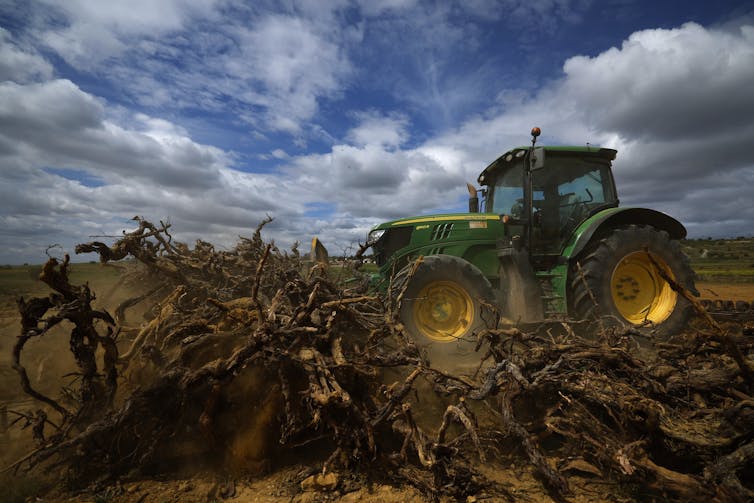
    Extreme weather, such as drought, is a particular problem for farmers. EPA-EFE/Guillaume Horcajuelo

    Extreme weather events require what meteorologists might call a “perfect storm”. For example, extreme heat in the UK typically requires the northward movement of an air mass from Africa combined with clear skies, dry soils and a stable atmosphere to prevent thunderstorms forming which tend to dissipate heat.

    Such “perfect” conditions are intrinsically unlikely, and many years can pass without them occurring – all while the climate continues to change in the background. Based on an understanding of observations alone, this can leave us woefully underprepared for what the climate can now do, should the right weather conditions all come together at once.

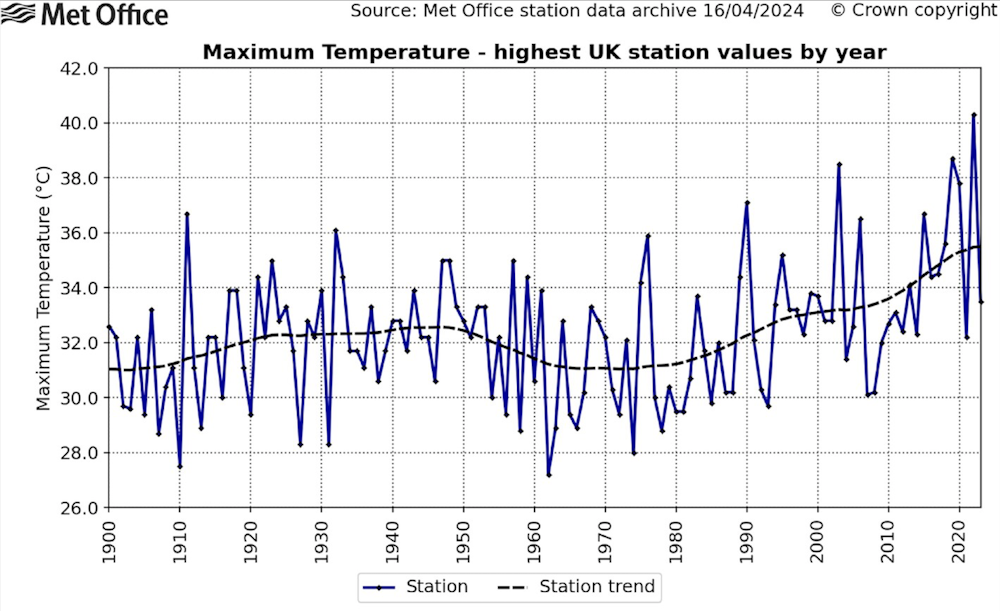
    Startling recent examples include the extreme heatwave in the Pacific north-west of North America in 2021, in which temperatures exceeded the previous Canadian record maximum by 4.6°C. Another is the occurrence of 40°C in the UK in summer 2022, which exceeded the previous UK record maximum set only three years earlier by 1.6°C. This is part of the reason why the true impact of a fixed amount of global warming is only evident after several decades, but of course – since the climate is changing rapidly – we cannot use this method anymore.

    Playing with fire

    To better understand these extremes, scientists can use ensembles: many runs of the same weather or climate model that each slightly differ to show a range of plausible outcomes. Ensembles are routinely used in weather prediction, but can also be used to assess extreme events which could happen even if they do not actually happen at the time.

    When 40°C first appeared in ensemble forecasts for the UK before the July 2022 heatwave, it revealed the kind of extreme weather that is possible in the current climate. Even if it had not come to fruition, its mere appearance in the models showed that the previously unthinkable was now possible. In the event, several naturally occurring atmospheric factors combined with background climate warming to generate the record-shattering heat on July 19 that year.

    The highest observed temperature each year in the UK, from 1900 to 2023

    A graph showing the highest observed temperature in the UK between 1900 and 2023.
    The hottest days are getting hotter in the UK. Met Office/Kendon et al. 2024

    Later in summer 2022, after the first occurrence of 40°C, some ensemble weather forecasts for the UK showed a situation in which 40°C could be reached on multiple consecutive days. This would have posed an unprecedented threat to public health and infrastructure in the UK. Unlike the previous month, this event did not come to pass, and was quickly forgotten – but it shouldn’t have been.

    It is not certain whether these model simulations correctly represent the processes involved in producing extreme heat. Even so, we must heed the warning signs.

    Despite a record-warm planet, summer 2024 in the UK has been relatively cool so far. The past two years have seen global temperatures far above anything previously observed, and so potential extremes have probably shifted even further from what we have so far experienced.

    Just as was the case in August 2022, we’ve got away with it for now – but we might not be so lucky next time.


    Imagine weekly climate newsletter

    Don’t have time to read about climate change as much as you’d like?
    Get our award-winning weekly roundup in your inbox instead. Every Wednesday, The Conversation’s environment editor writes Imagine, a short email that goes a little deeper into just one climate issue. Join the 35,000+ readers who’ve subscribed so far.


    Simon H. Lee, Lecturer in Atmospheric Science, University of St Andrews; Hayley J. Fowler, Professor of Climate Change Impacts, Newcastle University, and Paul Davies, Chief Meteorologist, Met Office and Visiting Professor, Newcastle University

    This article is republished from The Conversation under a Creative Commons license. Read the original article.

  • Hamas leader’s killing in Tehran likely to further escalate violence in Middle East

    Spread the love
    Hassan Ammar/AP

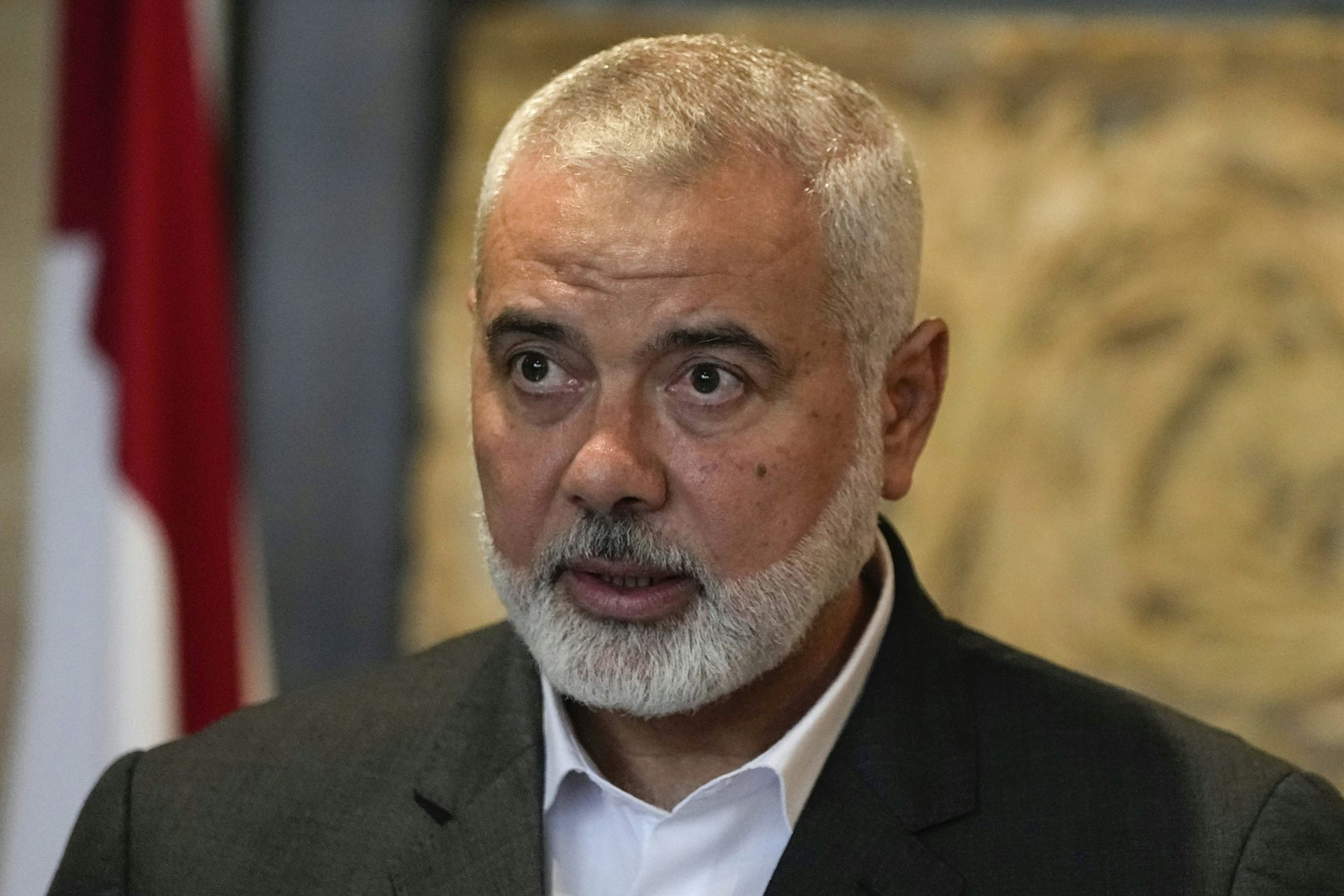
    Palestinian militant group Hamas says its top political leader, Ismail Haniyeh, has been killed in his home in Tehran. It blames Israel for the attack, saying it was “a Zionist airstrike on his residence in Tehran after he participated in the inauguration of Iran’s new president”.

    Iran has not yet given any details on how Haniyeh was killed, but says it is under investigation.

    With the war in Gaza showing no sign of abating and the whole Middle East on a knife’s edge, the killing raises questions about whether it may spark a wider regional war.

    Who is Ismail Haniyeh?

    Haniyeh is the most senior political leader of Hamas, based in Doha, Qatar. He was essentially the Hamas leader for the ceasefire negotiations with Israel in the Gaza War, brokered by the United States, Egypt and Qatar. These negotiations will obviously now be on hold.

    While Israel has not yet claimed responsibility for his death – and this is unlikely, given it does not typically claim responsibility for covert actions – Haniyeh has long been on its list of targets.

    What is surprising, though, is where and how it was done. Haniyeh was in Tehran to attend the swearing-in ceremony of Iran’s new president, Masoud Pezeshkian. Details of exactly what happened are still sketchy, but it appears Haniyeh was killed along with one of his bodyguards by an explosion in his building. We do not yet know if the explosion was from a remotely controlled bomb or a missile attack.

    Iran’s Islamic Revolutionary Guard Corps (IRGC) is investigating the killing.

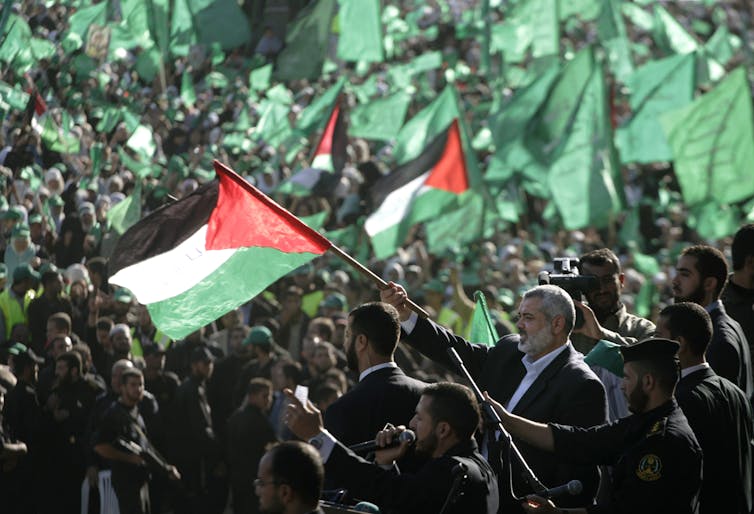
    Haniyeh at a rally in 2007, when he was Palestine’s Prime Minister. EMILIO MORENATTI/AP

    What does this mean for a wider regional war?

    There are two important issues that will be under close scrutiny in the coming hours and days.

    The first is that, assuming it was Israel that was responsible for Haniyeh’s killing, it raises the question of whether Iran will retaliate because Haniyeh was under the country’s protection when he was killed. His death is likely to cause enormous anger in Iran, and may in turn prompt retaliation against Israel on top of that from Hamas.

    Tensions between Iran and Israel have been long been high. In April, Iran launched more than 300 missiles and drones at Israel in retaliation for an attack on the Iranian consulate in Damascus. The attack killed several senior IRGC leaders.

    The attack on Haniyeh is indicative of a remarkable degree of intelligence and operational access that Israel seems to have in Iran at the moment. In recent years there has been a steady stream of Iranian scientists working on the nuclear program who have been killed. This includes the program’s “father”, Mohsen Fakhrizadeh, who was killed by a sophisticated remote-controlled machine gun in 2020.

    However, there remain Hamas leaders on Israel’s list who, as far as can be discerned, are still alive. Gaza political leader Yahya Sinwar is apparently still directing the operations of militants there. In July, Israel carried out a strike that was believed to have killed the elusive military leader Mohammed Deif. However, Hamas has not acknowledged this, and Deif has survived several previous assassination attempts.

    The second major question is whether Lebanon-based Hezbollah will launch an attack on Israel, at Iran’s behest.

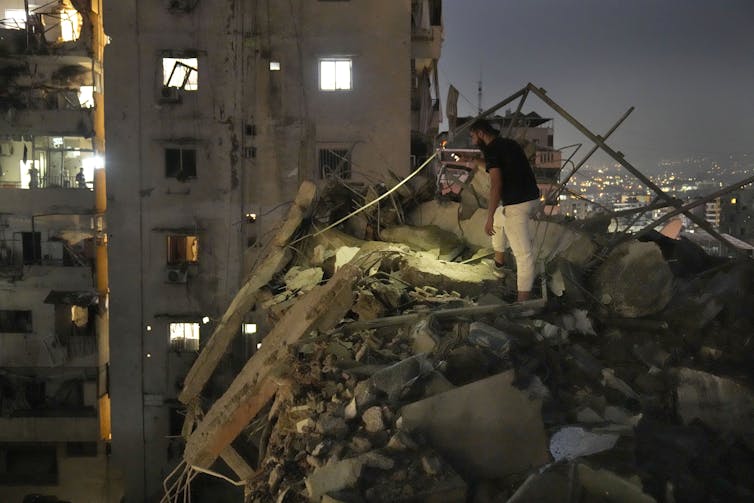
    The Haniyeh killing comes within hours of an Israeli airstrike in southern Beirut, in which Israeli officials believe they have killed senior Hezbollah commander Fuad Shukr.

    An Israeli airstrike on Southern Beirut, Lebanon threatens to further increase tensions in the region. Hussein Malla/AP

    If Iran were to retaliate, it might be through Hezbollah from Lebanon. A major missile barrage from Hezbollah could potentially overwhelm Israel’s Iron Dome missile defence system.

    Iran also has other allies on which it can call, including Shia militant groups in Syria and Iraq, as well as the Houthis in Yemen who have already launched a drone strike on Tel Aviv last week. Israel quickly retaliated.

    What happens now is difficult to say until there is more information. But what is certain is that the killing of Haniyeh is likely to cause a significant escalation in the Gaza War, and possibly in the wider Middle East.

    Ian Parmeter, Research Scholar, Centre for Arab and Islamic Studies, Australian National University

    This article is republished from The Conversation under a Creative Commons license. Read the original article.

  • Replica bomb placed outside of Parliament as government refuses to commit to an arms embargo

    Spread the love

    https://morningstaronline.co.uk/article/replica-bomb-placed-outside-of-parliament-as-government-refuses-to-commit-to-an-arms-embargo

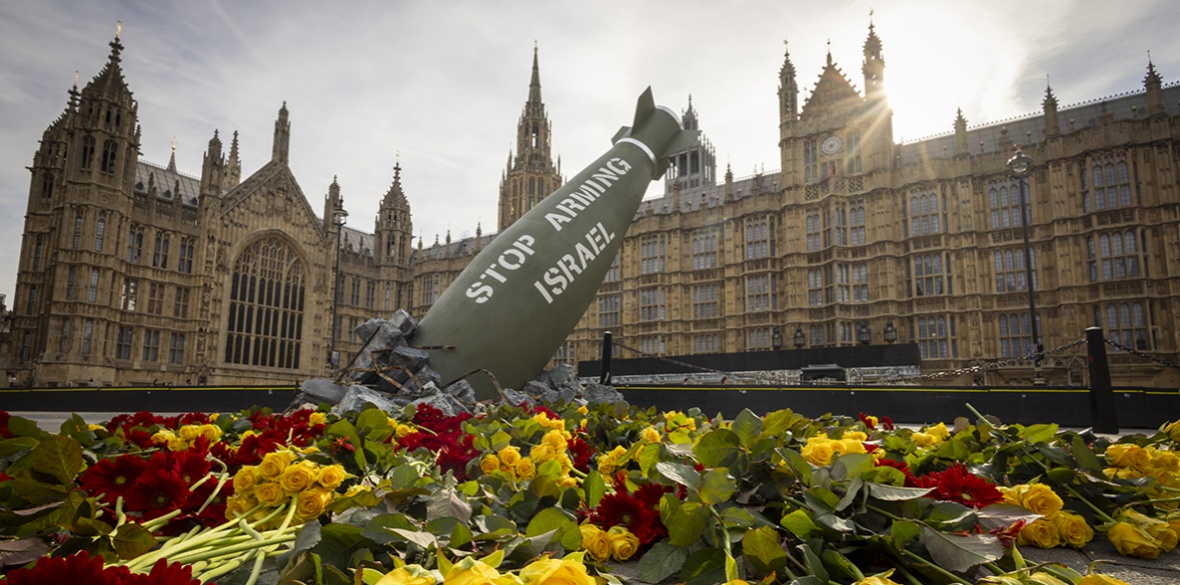
    Oxfam placed a replica Mark 84 2,000-pound bomb, used by the Israeli military in Gaza to devastating effect, opposite Parliament, July 30, 2024 Photo: Andy Aitchison / Oxfam

    Oxfam warns that 7,000 people are estimated to be killed or injured in Gaza by Israeli military during Parliament recess

    AS BRITAIN remains complicit in Israel’s war crimes by refusing an arms embargo, a replica of a 2,000-pound bomb was placed outside of Parliament today, serving as a stark reminder of the innocent lives that will be claimed while the government breaks up for summer.

    The 16-foot replica was placed by Oxfam after it released a new analysis estimating that around 7,000 people in Gaza will be killed or injured over the next 33 days.

    A carpet of flowers around the bomb symbolised those who are likely to be killed by the Israeli military, as well as the Israeli hostages still in captivity.

    Using UN cumulative impact reports, Oxfam estimated that Israel will likely murder more than 1,800 people — a third of them children — if its military offensive continues at its current level.

    The analysis comes as Britain refuses to commit to an arms embargo, despite warnings that exports are likely being used to commit war crimes.

    This includes components for F-35 Israeli fighter jets, which carry out devastating strikes.

    According to Action on Armed Violence, air-strikes were responsible for more than 45 per cent of recent fatalities.

    Oxfam GB chief executive Halima Begum said: “By selling F-35 components to Israel, the UK government is effectively facilitating many of the Israeli air strikes and the decimation of Gaza.

    “The government is fully aware of the risk that arms exported from the UK are likely being used to commit war crimes in Gaza.

    “It is critical that the UK government immediately suspend both existing and new licences for all arms sales, whether direct to Israel or via third parties.”

    Britain is legally obliged to halt arms exports if there is a clear risk they might be used to commit or facilitate a serious violation of international humanitarian law.

    …

    https://morningstaronline.co.uk/article/replica-bomb-placed-outside-of-parliament-as-government-refuses-to-commit-to-an-arms-embargo

    Zionist Keir Starmer is quoted "I support Zionism without qualification." He's asked whether that means that he supports Zionism under all circumstances, whatever Zionists do.
    Zionist Keir Starmer is quoted “I support Zionism without qualification.” He’s asked whether that means that he supports Zionism under all circumstances, whatever Zionists do.
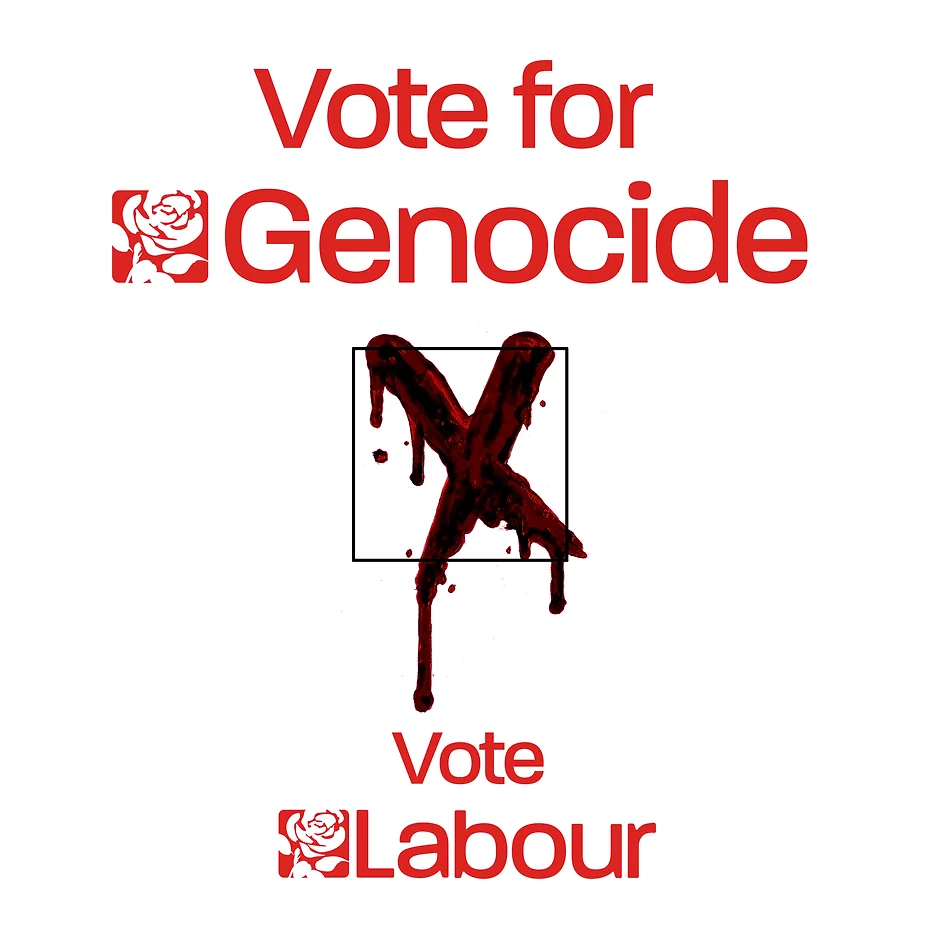
    Vote For Genocide Vote Labour.
    Vote For Genocide Vote Labour.
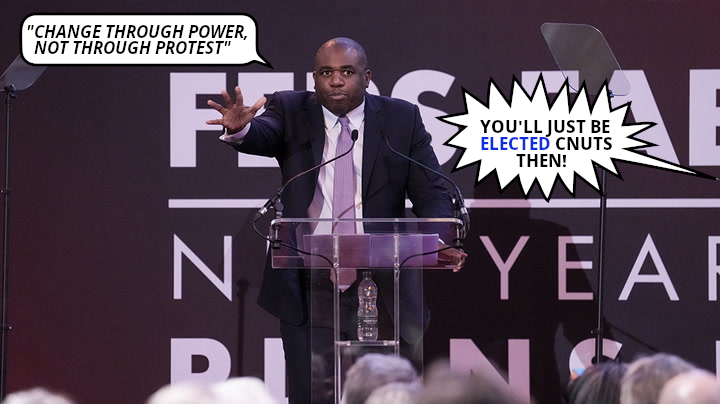
    UK Labour Party Shadow Foreign Secretary repeatedly heckled at a speech to the Fabian Society over his and the Labour Party's support for and complicity in Israel's genocide of Gaza.
    UK Labour Party Shadow Foreign Secretary repeatedly heckled at a speech to the Fabian Society over his and the Labour Party’s support for and complicity in Israel’s genocide of Gaza.
  • Rocket attack kills 12 children in Golan Heights – who are the Druze who live there?

    Spread the love
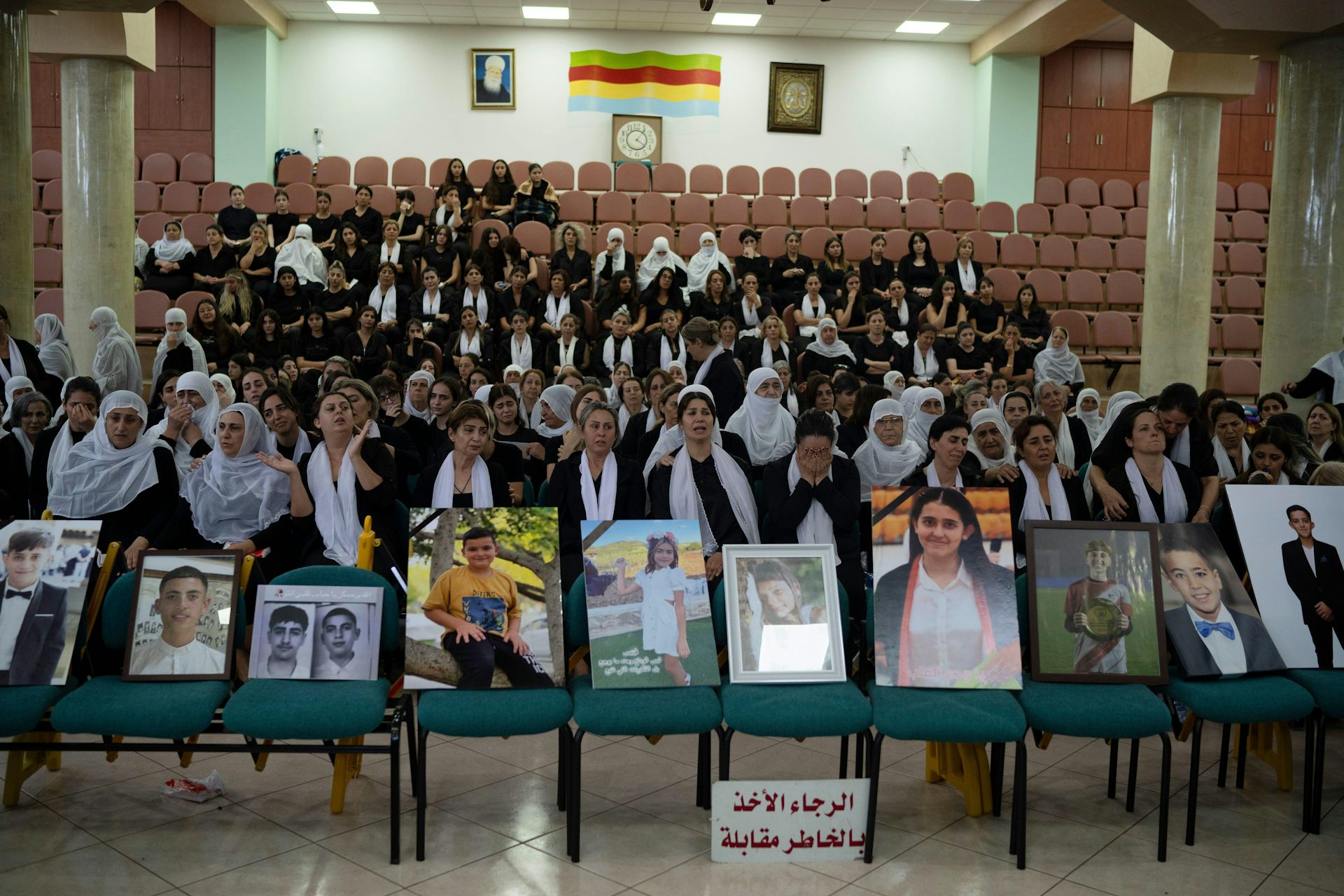
    Killed while playing football: a memorial service for the 12 dead children of Majdal Shams. AP Photo/Leo Correa

    Erika Jiménez, Queen’s University Belfast

    Israel’s prime minister, Benjamin Netanyahu, has threatened a harsh response to a rocket attack that on July 27 struck the Israeli-occupied Syrian Golan Heights, killing 12 children and injuring about 30 more.

    Visiting the small town of Majdal Shams, where the children had been playing football when the strike occurred, Netanyahu blamed Hezbollah for the attack and said it would pay a “hefty price”. He said: “Our response will come, and it will be harsh.”

    While Israel is claiming the attack targeted their citizens, all the victims of the strike were members of the Druze religious minority group located across Israel, Lebanon and Syria. Hezbollah has denied responsibility for the attack, but without an independent investigation, it remains unclear who fired the rocket.

    The Golan Heights, a rocky 1,000 square kilometre region south-west of Damascus, was occupied by Israel after the 1967 Arab-Israeli war in a move that, half a century on, is often referred to as the “forgotten occupation”.

    After defeating Egypt, Jordan, and Syria in the short conflict, Israel occupied the West Bank, Gaza and East Jerusalem as well as the Sinai desert and two-thirds of the Syrian Golan. Around 127,000 indigenous Syrians (95% of the population) – including Christians, Muslims and Druze – fled or were forcibly displaced. Depopulated villages were razed to the ground.

    Later in 1981, Israel illegally annexed the territory, passing the Golan Heights Law. The UN security council immediately condemned this as illegal and passed resolution 497 (1981) calling on Israel to rescind its action, which would have “serious consequences for peace and security in the Middle East”.

    Israel’s annexation of the Golan Heights was not recognised internationally until 2019 when the then US president Donald Trump released a “Proclamation on Recognizing the Golan Heights as Part of the State of Israel”.

    Israel views its control over the Golan Heights as crucial to its security, as the region shares a border with Israel, Jordan and Lebanon. There is a buffer zone between the Israeli-occupied area of the Golan Heights and Syria, which is administered by the United Nations Disengagement Observer Force (Undof). The Golan gives whoever controls the land a vantage point overlooking Syria, which has never given up on its claim over the land.

    Forgotten people

    But what of the indigenous people of the Golan? Roughly 20,000 Druze people now remain, members of an Arab sect which is an offshoot of Islam that allows no intermarriage or joining from outside the religion. There are about 150,000 Druze in Israel and about 1 million across the Middle East. Druze men with Israeli citizenship are subject to military service.

    Historically, Golanis have resisted the occupation via non-violent means, drawing on Druze religious beliefs, secular political ideas and the continuing assertion of their Syrian identity. The main industry in the region is agriculture and the area is known for its production of apples, cherries and olive oil.

    Golanis in Majdal Shams participating in peaceful demonstration in solidarity with Palestinians. Al-Marsad

    Resistance

    In the years before annexation of the Golan, Israel attempted to introduce Israeli identity cards for the population. But this was rejected by Syrian communities in the Golan, who issued a wathiqa wataniya (Syrian national document), which asserted their Syrian-Arab national identity and connection to the land and opposed the annexation of the Golan.

    The annexation also triggered what became known as the aldrab alkabir (great strike) that began in the February of 1982 and lasted almost six months. All segments of Golani society took part in demonstrations, discarded their Israeli ID cards and refused to pay taxes or participate in Israeli land surveys. The aim was to resist the imposition of Israeli citizenship and assert their Syrian identity.

    Israel responded by placing curfews on the Druze villages, setting up blockades and restricting goods from entering, including milk and baby food. Some residents were arrested, including women who played a central role in the strike.

    The Golani community responded to these restrictions by sharing resources and offering free services to one another. Palestinians also mobilised in support of Golanis by taking part in demonstrations and solidarity visits to the Golan.

    This non-violent action was successful in achieving its primary aim and to this day around 80% of Golani Druze have rejected citizenship. They identify as Syrian and, unlike the Druze living in Israel, do not serve in the Israeli military.

    This does mean that they are “stateless” (though not landless like many stateless people) and instead of passports they hold “laissez passer” travel documents that state their nationality is “undefined”. Without Israeli citizenship they are not allowed to vote, though they can attend Israeli educational institutions.

    Meanwhile there are also an estimated 25,000 Jewish-Israelis living in the Golan Heights, across more than 30 settlements, considered illegal under international law. They are supported by the Israeli military and now together control 95% of the Golan, including much of its agriculture and industries.

    Fear of escalation

    There are now fears in the region that an Israeli retaliation against Hezbollah could significantly escalate the conflict. I’ve been working with local partners in the Golan Heights on a research project about Golani youth and human rights.

    I spoke with a colleague in Majdal Shams this week. She told me that the people of the Golan “don’t want any other mother to scream and cry”. She said: “The Golani people are and have always been a peaceful people. Our message would be, ‘Stop the killing.’”

    The 12 children were killed while playing football. Let that sink in. Then remember that it should not take their deaths to bring this forgotten occupation and these people who are forced to live under a foreign power to the world’s attention.

    Erika Jiménez, Leverhulme Early Career Fellow at the School of Law, Queen’s University Belfast

    This article is republished from The Conversation under a Creative Commons license. Read the original article.