Category: politics

  • Right to Asylum Must Be Protected in EU, Says Human Rights Coalition

    Spread the love

    Original article by Jessica Corbett republished from Common Dreams under Creative Commons (CC BY-NC-ND 3.0).

    The Doctors Without Borders vessel Geo Barents intercepted two small boats full of migrants navigating toward Europe
    in the Central Mediterranean on March 16, 2024. (Photo by Simone Boccaccio/SOPA Images/LightRocket via Getty Images)

    “As this legislative cycle starts, the E.U. can and must do better than abandon its commitment to the global refugee protection regime,” said an Amnesty campaigner.

    Nearly 100 human rights organizations came together Tuesday to emphasize that members of the European Union “must guarantee the right to seek and enjoy asylum and uphold their commitments to the international refugee protection system.”

    The joint statement from groups including Amnesty International, Human Rights Watch, and Oxfam came as members of the European Parliament prepare for the July 16 plenary sitting, the first meeting scheduled since the bloc’s June elections, which resulted in the far-right “Patriots for Europe” becoming the third-largest alliance in the legislative body.

    The human rights coalition underscored obligations under Article 18 of the E.U. Charter of Fundamental Rights and expressed concern about “the recent and increasing attempts by the E.U. and its member states to evade their asylum responsibilities by outsourcing asylum processing and refugee protection risk undermining the international protection system.”

    As the groups detailed:

    Italy, for instance, is currently seeking to process asylum applications of certain groups of asylum-seekers outside of its territory, from detention in Albania—which risks leading to prolonged, automatic detention, a denial of access to fair asylum procedures with necessary procedural guarantees, and delayed disembarkation for people rescued or intercepted at sea. Others, such as Denmark and Germany, are assessing the feasibility of this type of arrangement. Fifteen E.U. member states and some political groups have endorsed similar shortsighted measures to shift asylum processing outside E.U. territory and encouraged the European Commission to explore ways to facilitate this through further legislative reform, including through a watered-down ‘safe third country’ concept.

    These attempts must be seen in the context of parallel containment efforts that seek to stem departures and prevent the arrival of asylum-seekers to E.U. territory through partnership agreements with third countries, with little to no attention to the human rights records of those authorities.

    The coalition stressed that “as the extensive track record of human rights violations in partner countries such as Libya demonstrates, the E.U. and Member States have no adequate tools and competencies to effectively monitor or enforce human rights standards outside of E.U. territory.”

    A report published in November by Doctors Without Borders features stories of violence that migrants endured in nations including Libya and Tunisia while trying to get to the E.U. That publication also points out that 2023 was the deadliest year for migration in the Central Mediterranean since 2017, due in part to E.U. countries failing to assist those at risk of drowning.

    In addition to sounding the alarm about current E.U. policies and practices, the coalition on Tuesday cited examples including Australia’s offshore detention scheme, which “demonstrates how these models have created prolonged confinement and restricted freedom of movement, deeply harming both the mental and physical health of people seeking protection.”

    The organizations also pointed to an asylum scheme attempted by the United Kingdom—which left the E.U. in 2020 following the 2016 Brexit vote—and Rwanda, which the statement notes “is not yet in effect following the U.K. Supreme Court declaring it unlawful and in any event is unlikely to be operationalized at any significant scale.”

    The U.K.’s failed attempt to forcibly remove people to the African country was “projected to cost a staggering £1.8 million per asylum-seeker returned,” which is equal to €2.13 million or $2.3 million. The coalition called such schemes “not only an unjustifiable waste of public money, but also a lost opportunity to spend it in ways that would truly aid people seeking asylum by investing in fair and humane asylum systems and the communities that welcome them.”

    Olivia Sundberg Diez, Amnesty’s E.U. advocate on migration and asylum, said in a statement Tuesday that “attempts by states to outsource their asylum responsibilities to other countries are not new—but have long been criticized, condemned, and rejected for good reason.”

    “Just as the U.K.-Rwanda scheme is, rightly, collapsing, the E.U. and its member states should pay attention, stop making false promises, and wasting time and money on expensive, inhumane, and unworkable proposals,” she continued. “As this legislative cycle starts, the E.U. can and must do better than abandon its commitment to the global refugee protection regime.”

    The meeting scheduled for next week will follow the Pact on Migration and Asylum that the European Parliament passed in April and the Council of the E.U. adopted in May. The coalition highlighted that “civil society organizations have been clear about their serious concerns” regarding the reforms while also explaining that “the transfer of asylum-seekers outside of E.U. territory for asylum processing and refugee protection is not provided for in the pact, nor within current E.U. law.”

    “After the E.U. and member states have spent close to a decade attempting to reform the E.U.’s asylum system, they should now focus on implementing it with a human rights-centered approach that prioritizes the right to asylum per E.U. law and fundamental principles of international refugee law to which they remain bound,” the coalition concluded. “They should not, mere weeks after the reform has passed, waste further time and resources on proposals that are incompatible with European and international law.”

    Original article by Jessica Corbett republished from Common Dreams under Creative Commons (CC BY-NC-ND 3.0).
  • Israeli Bombings, Evacuation Order in Gaza City Forces Hospitals to Shut Down

    Spread the love

    Original article by JULIA CONLEY republished from Common Dreams under Creative Commons (CC BY-NC-ND 3.0). 

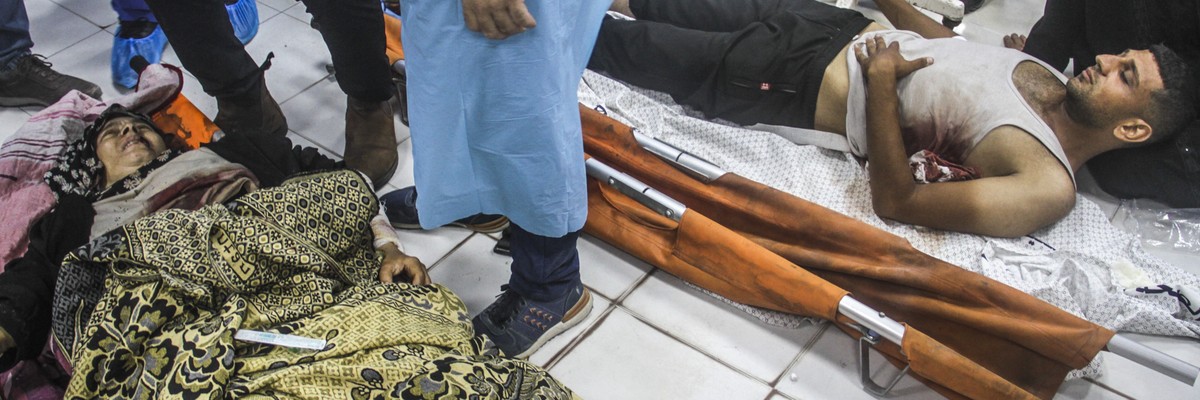
    Injured Palestinians lay on the floor at Indonesian Hospital in northern Gaza on July 8, 2024, following Israeli attacks on Gaza City.  (Photo: Mahmoud Issa/Anadolu via Getty Images)

    Patients were forced to move to other facilities in northern Gaza, where one hospital was at “triple capacity” and providers were struggling to provide care amid fuel and medical supply shortages.

    Healthcare officials were joined by human rights experts on Tuesday in condemning Israel’s latest evacuation orders for Gaza City, which the World Health Organization director said would “further impede delivery of very limited lifesaving care” as hospitals in the area struggled to treat sick and wounded Palestinians.

    The Israel Defense Forces claimed on Tuesday morning that there was “no need to evacuate the hospitals and medical facilities in the area,” after it had issued an evacuation order for 70% of Gaza City on Monday. The IDF has ordered civilians to evacuate parts of the city three times since June 27 as it has intensified its military operations, forcing tens of thousands of people to flee.

    Despite the IDF’s claims, the Episcopal Diocese of Jerusalem, which partially operates al-Ahli Arab Hospital in Gaza City, said it had closed and evacuated all patients and workers after a series of drone strikes in the facility’s “immediate vicinity.”

    “To our great dismay, our hospital is now out of operation at a time when its services are in very significant demand and where injured and sick people have few other options for places to receive urgent medical care,” said the diocese in a statement.

    “Key hospitals and medical facilities could quickly become nonfunctional due to hostilities in their vicinity or obstruction to access.”

    Healthcare authorities have been forced to transport patients to other hospitals that are also struggling to provide care, as Israel’s near-total blockade on humanitarian aid since October has caused dire shortages of fuel and medical supplies.

    Tedros Adhanom Ghebreyesus, director of the World Health Organization, said Patient’s Friends Benevolent Society Hospital in Gaza City was also out of service due to the evacuation order, putting more strain on other facilities in the northern city of Beit Lahia, including Kamal Adwan and Indonesian hospitals.

    Those medical centers are “suffering shortage of fuel, beds, and trauma medical supplies,” said Tedros on social media. “Indonesian Hospital is triple over its capacity. Al-Helou Hospital is within the blocks of the evacuation order but continues to be partially functional. As-Sahaba and al-Shifa hospitals are in close proximity to the areas under evacuation order but remain functional so far. Six medical points and two primary healthcare centers are also within the evacuation zones.”

    “These key hospitals and medical facilities could quickly become nonfunctional due to hostilities in their vicinity or obstruction to access,” he added before repeating a demand: “Cease-fire!”

    Israel’s claim that the hospitals in Gaza City remain safe despite the evacuation orders comes after several Israeli bombings of medical facilities and other so-called “humanitarian areas” since October.

    Hospitals including al-Shifa in Gaza City have become major targets of Israel’s assault on the enclave, prompting outcry from human rights advocates who have demanded that the IDF follow international humanitarian law.

    The United Nations Office of the High Commissioner for Human Rights (OHCHR) on Tuesday said it was “appalled” by the IDF’s latest evacuation order, noting that Palestinians have been killed after fleeing to supposedly “safe” zones since Israel’s bombardment began.

    Many of the people fleeing Gaza City this week “have been forcibly displaced multiple times, to evacuate to areas where IDF military operations are ongoing and where civilians continue to be killed and injured,” said the OHCHR.

    Deir al-Balah, where Gaza City residents have been told to move in the latest order, “is already seriously overcrowded with Palestinians displaced from other areas of the Gaza Strip,” the office added.

    The Gaza Health Ministry reports that 38,243 people have been killed in the enclave since Israel began its attacks in retaliation for a Hamas-led attack on October 7.

    As Israel forced hospitals in Gaza City out of operation and occupied the southern part of the city, including around the headquarters of the U.N. Relief and Works Agency for Palestine Refugees in the Near East, another Israeli attack on the Bureij refugee camp killed nine people on Tuesday, including five children.

    The IDF also said its warplanes had attacked “a school complex” in the Nuseirat refugee camp.

    “There’s really no safe corner in Gaza,” said Tedros.

    Original article by JULIA CONLEY republished from Common Dreams under Creative Commons (CC BY-NC-ND 3.0). 

  • ISRAEL LOBBY FUNDED HALF OF KEIR STARMER’S CABINET

    Spread the love

    Israel lobby funded half of Keir Starmer’s cabinet


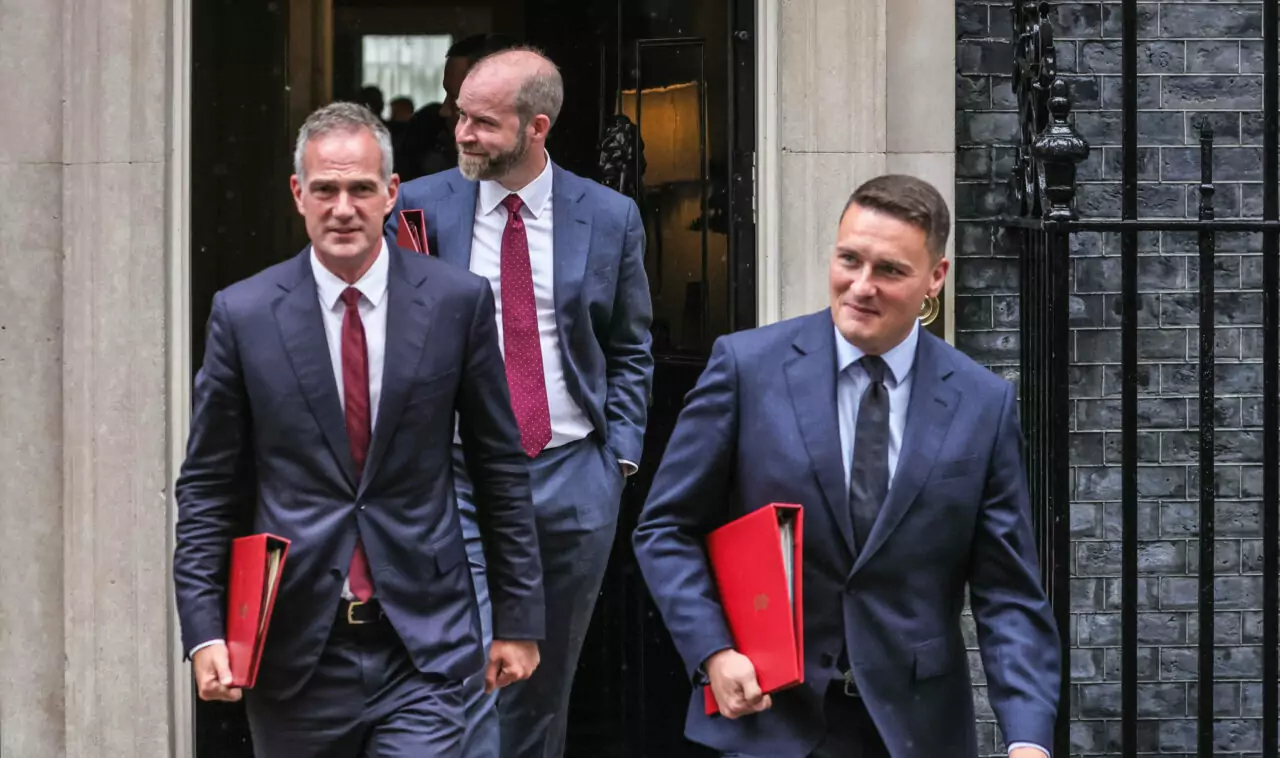
    Wes Streeting, Peter Kyle and Jonathan Reynolds leave Starmer’s first cabinet meeting. (Photo: Alamy)

    Declassified Exclusive: Labour’s top team has accepted over £600,000 from pro-Israel funders.

    Pro-Israel lobbyists have donated to 13 out of Labour’s 25 cabinet members since they were first elected to parliament, Declassified can reveal.

    The list of recipients includes prime minister Keir Starmer, his deputy Angela Rayner,  chancellor Rachel Reeves, foreign secretary David Lammy and home secretary Yvette Cooper.

    Jonathan Reynolds, who will oversee arms exports to Israel as UK trade secretary, is another beneficiary, alongside Labour’s election mastermind Pat McFadden, whose responsibilities now include national security.  

    Some of the donations were provided by Labour Friends of Israel (LFI), a lobby group which takes MPs on “fact-finding” missions to the region.

    Reeves, McFadden, Reynolds and technology secretary Peter Kyle were recently listed as vice-chairs of LFI.

    Other major funders include pro-Israel businessmen Gary Lubner, Trevor Chinn, and Stuart Roden.

    The total value of the donations amounts to over £600,000.

    …

    Vote For Genocide Vote Labour.
    Vote For Genocide Vote Labour.
    Zionist Keir Starmer is quoted "I support Zionism without qualification." He's asked whether that means that he supports Zionism under all circumstances, whatever Zionists do.
    Zionist Keir Starmer is quoted “I support Zionism without qualification.” He’s asked whether that means that he supports Zionism under all circumstances, whatever Zionists do.
  • Flying shame: the scandalous rise of private jets

    Spread the love

    https://www.theguardian.com/environment/2023/jan/26/flying-shame-the-scandalous-rise-of-private-jets published 26 Jan 2023

    Rishi Sunak boards an RAF plane to travel from London to Leeds. Photograph: No 10’s Flickr account

    Last week, Rishi Sunak flew from London to Blackpool – his third private jet trip in 10 days. He’s far from the only one using air travel for short journeys. Just how much damage is this doing?

    It was a Labour spokesperson who said the prime minister was behaving “like an A-list celeb”, after Rishi Sunak made his third trip by private jet in 10 days. Last week, he flew from London to Blackpool in a 14-seat RAF jet – a 230-mile journey that would have taken about three hours by train. The week before, he did the same to Leeds, which he could have done in two and a half hours by train, but which wouldn’t have looked nearly so glamorous – to go by the ludicrous photograph of him looking important and being saluted as he boarded the aircraft.

    Private planes are up to 14 times more polluting, per passenger, than commercial planes and 50 times more polluting than trains, according to a report by Transport & Environment, a European clean transport campaign organisation. “It goes against the fact that the government has committed to net zero by 2050,” says Alice Ridley, a spokesperson for the Campaign for Better Transport. “They have said they want to see more journeys by public transport, walking and cycling. Taking a private jet is extremely damaging for the environment, especially when there are other alternatives that would be far less polluting and would also be cheaper.”

    Private planes carry far fewer passengers, while about 40% of flights are empty, simply getting the aircraft to the right location. Flying short distances also means planes are less fuel-efficient.

    “A private jet is the most polluting form of transport you can take,” says Matt Finch, the UK policy manager for Transport & Environment. “The average private jet emits two tonnes of carbon an hour. The average European is responsible for [emitting] eight tonnes of carbon a year. You fly to the south of France and back, that’s half a year in one trip.”

    …

    https://www.theguardian.com/environment/2023/jan/26/flying-shame-the-scandalous-rise-of-private-jets published 26 Jan 2023