PM suggests curbs on finance or driving licences for 18-year-olds who refuse service during challenging Question Time leaders’ special
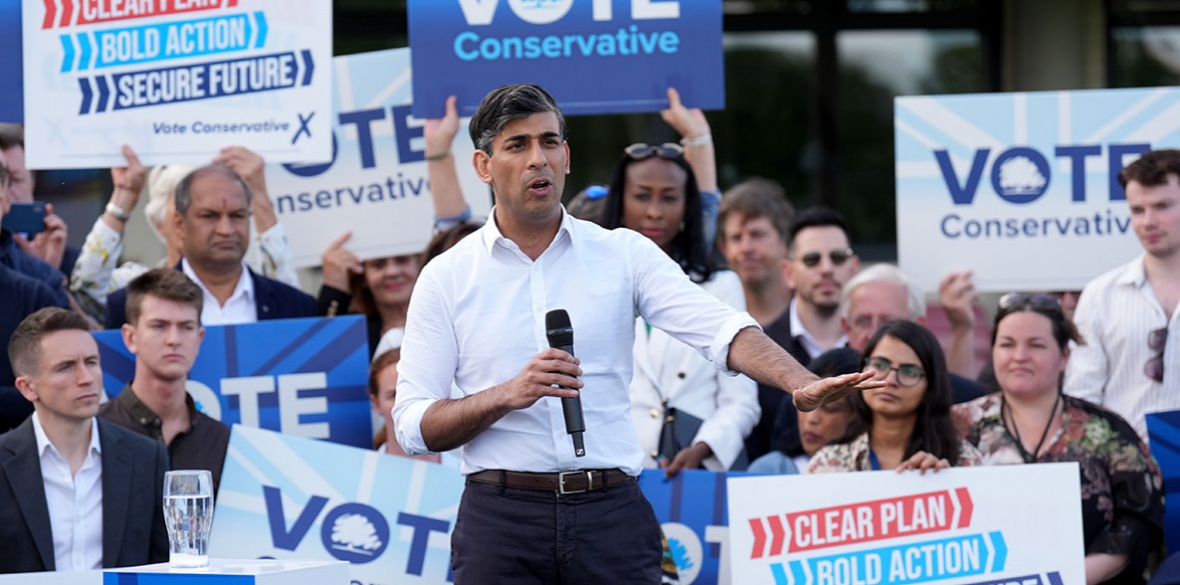
Rishi Sunak has indicated that young people might face restrictions on access to finance or driving licences if they refuse to do national service, as he faced a TV quizzing from voters.
Asked during a BBC Question Time special what sanctions people could face for declining to take part in the Conservative policy of compulsory national service for all 18-year-olds, the prime minister pointed to “driving licences, or the access to finance, all sorts of other things”.
Questioned on whether this could mean denying young people bank cards, he replied: “There’s lot of different models around Europe.”
In his half-hour slot on the show, following Keir Starmer, Ed Davey and John Swinney, the Labour, Liberal Democrat and Scottish National party leaders, Sunak was also repeatedly challenged on why the public should trust the Tories after 14 sometimes chaotic years in office.
He received shouts of “shame” after refusing to say he would keep Britain in the European convention on human rights.
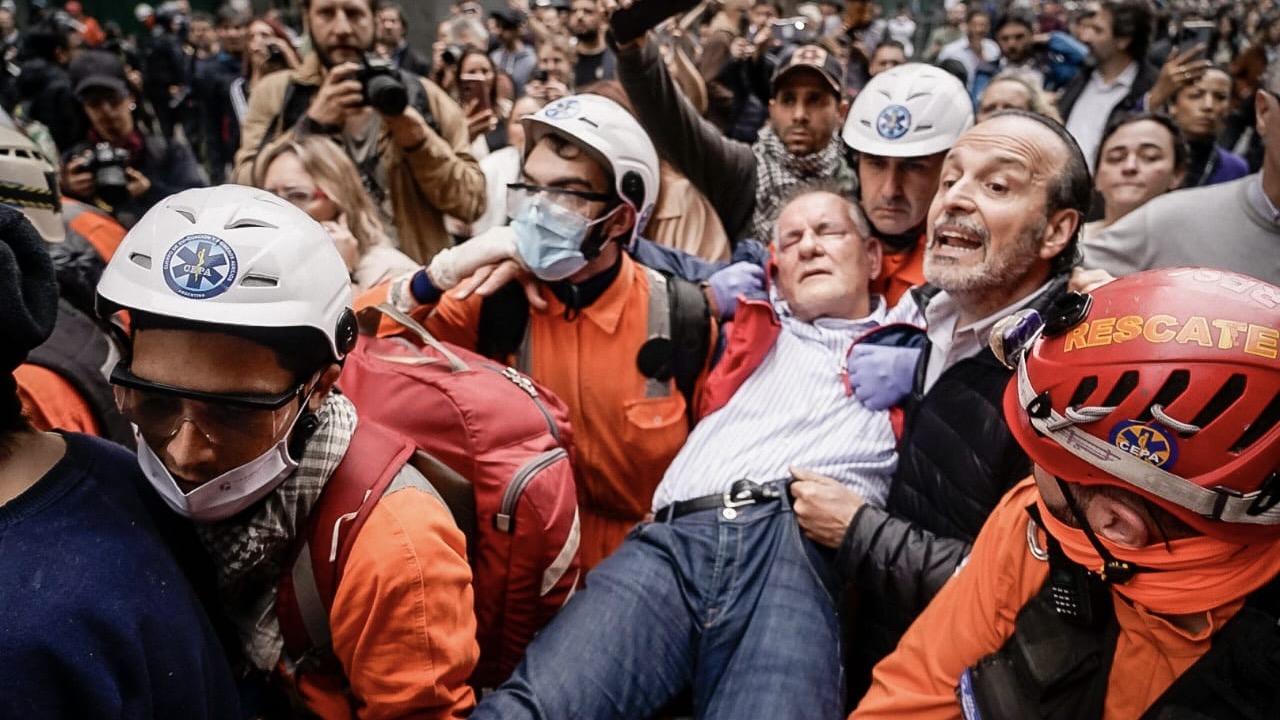
Police in Argentina brutally repressed a mobilization against Milei’s controversial economic reforms. Photo: UP Diputados
Over 30 people were detained in Buenos Aires during the brutal repression of the protests against Milei’s economic reform law
Last week, the Argentine Senate debated the bill called “Law for Bases and Starting Points for the Freedom of Argentines” (Ley Bases), a set of economic and political reforms proposed by the far-right government of Javier Milei. While the Executive sought the necessary votes in the Senate to pass the law, thousands of demonstrators gathered around the legislature to demand that the law be shelved.
The protests were called by several social organizations and trade unions, including the country’s largest trade union confederations, the General Confederation of Labor (CGT), the Argentine Workers’ Central Union, and the Argentine Workers’ Central Union (Autonomous).
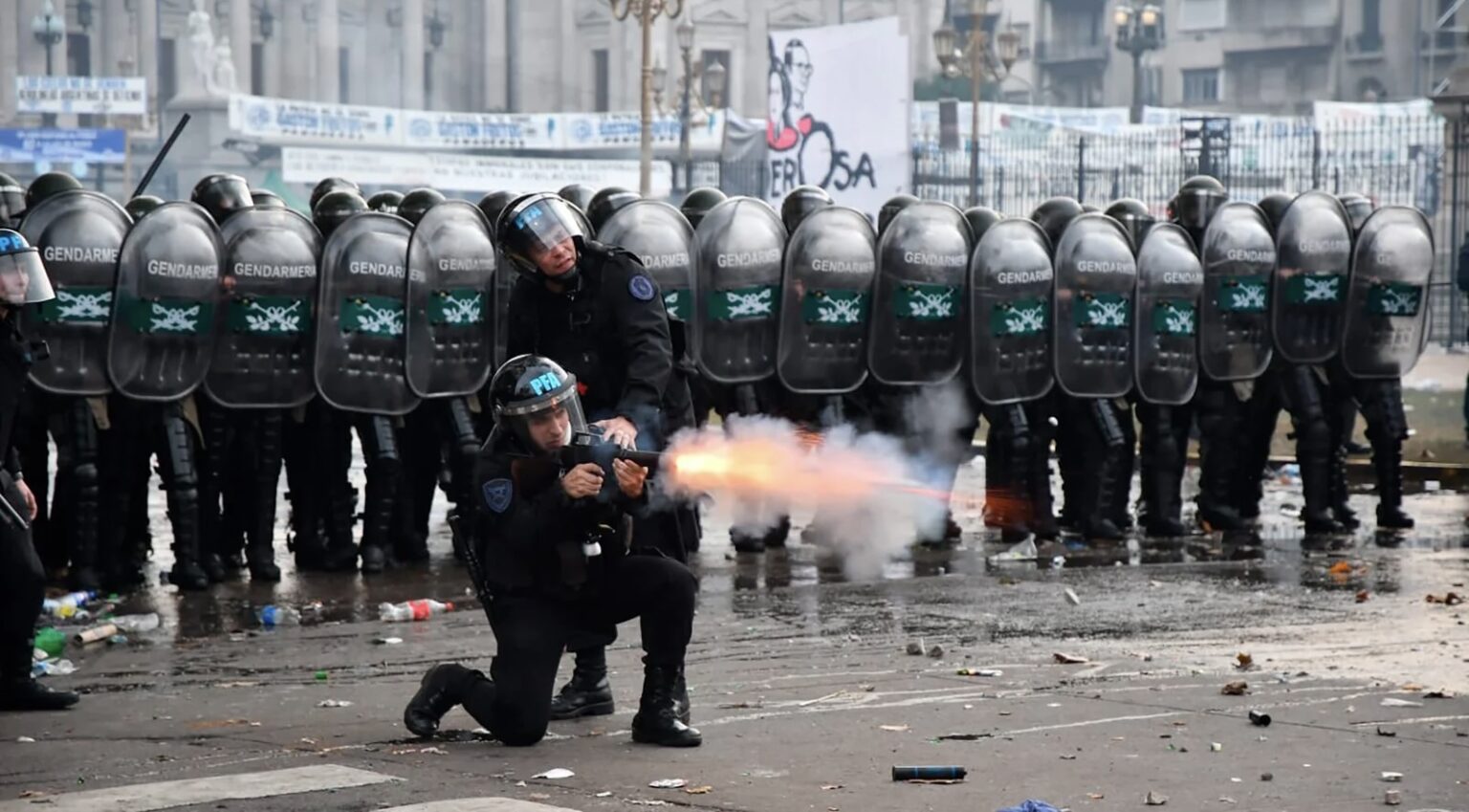
The action of the police, under the orders of the Minister of Security, Patricia Bullrich, was excessive and brutal. Even lawmakers were not spared the violent repression. Peronist legislators, Eduardo Valdés, Carlos Castagnetto, Leopoldo Moreau, Juan Manuel Pedrini, Carolina Yutrovic and Luis Basterra, denounced that they were beaten by the security forces. In addition, several detainees told press that “they were stripped naked and that pepper spray was thrown at them”.
Martin Dirroco, a worker detained during the protests, recounted: “We were in Congress and we began to feel the tear gas, our throats began to burn and we began to leave. We heard more and more shots fired; we could see the repression. […] Suddenly a lot of people started to come, we tried to leave and seven motorcycles appeared. The one on the back of the motorcycle was pointing a gun at us. They got off the motorcycle and told us to stay still. They shooted and shouted ‘everybody against the wall’. They started pushing and shoving, holding me and throwing me to the ground. […] We had to sleep in a courtyard with handcuffs on”.
On Wednesday, June 12, 33 people were arrested, with many held for several days. Carlos Lopez, a left Argentine political leader, told Peoples Dispatch that as of today there are still five people detained on alleged charges of “public intimidation” and “arson”. Lopez comments that some people were even arrested 15 blocks from the Senate, far away from the events for which they are accused. “They are trying to sow terror from the government, the State, so that the population feels fear and shuts its mouth”. In addition, López continues, the detainees did not have adequate access to water and food; some spent more than 15 hours in a police patrol car and many could not speak to their lawyers: “There was intimidation, torture and threats […] We ask for everyone’s solidarity so that this type of action does not happen again,” said López.
Police launching tear gas canisters at protesters on Wednesday June 12 in Buenos Aires. Photo: Somos Telam
The President’s Office celebrated the approval of the law and called the demonstrators “terrorists”: “Starting from 38 deputies and 7 senators, with terrorist groups attacking the Congress, having to deploy the Security Forces in defense of democracy, with the political caste resisting and operating until the last moment, and having to resort to the tie-breaker of the Vice President of the Nation, Victoria Villarruel, tonight’s is a triumph of the Argentine people and the first step towards the recovery of our greatness, having approved the most ambitious legislative reform of the last forty years.”
Several human rights organizations, such as the Grandmothers and Mothers of the Plaza de Mayo, the Permanent Assembly for Human Rights, the Relatives of the Disappeared and Detained for Political Reasons, among others, called for a demonstration on Tuesday June 18 to demand the release of the 16 people that were still detained (including several students and professors) accused of “terrorism”. During a press conference, various relatives of the detainees denounced the injustice of the accusations against the prisoners and affirmed that they are not terrorists and demanded their immediate release.
Milei’s “Ley Bases”
At the end of the debate last Wednesday, the law was approved thanks to the vote of Vice President Victoria Villarruel, who broke the tie. The controversial law must be approved a second time in the Chamber of Deputies.
The reforms of the “Ley Bases” propose a paradoxical transformation of the functioning of the Argentine State. At the same time that they seek to diminish the State’s capacity to control the economy, they strengthen the President’s political power to make economic and political decisions, which will no longer have to be approved by the legislative branch. In other words, the intention is to build a weaker but more agile State to execute President Milei’s neoliberal plan.
One of the most controversial changes is the creation of the “Incentive Regime for Large Investments” (RIGI, for its initials in Spanish). The purpose of this regime is to reduce the State’s control over large companies that invest more than USD 200 million in the country. The government promises these big companies a reduction in taxes, privileges in the project approval process, and protection of capital from state control for 30 years. RIGI seeks, among other things, the exploitation of natural resources by major companies.
According to the “Ley Bases”, the President may have “extraordinary powers” for one year if he declares a public emergency in the economic, financial, and energy fields. In this sense, Milei would have several powers that currently only the Legislative has. To achieve its approval in the Senate, the Executive committed itself not to interfere with 15 public agencies, such as the National Service of Food, Health and Quality (SENASA), the National Bank of Genetic Data (which has information on those who disappeared during the last dictatorship), among other institutions. However, the government will be able to legislate through expeditious decrees, which implies, in general, the first great legislative victory for its political project.
In addition, the “Ley Bases” authorizes the privatization of Intercargo, a state-owned company dedicated to provide services to air travel companies, and Energía Argentina S.A., which is in charge of the extraction and exploration of hydrocarbon deposits, their transportation, and storage. Although Milei wanted to privatize more than 40 public companies, the negotiations forced him to limit his aspirations. Nevertheless, Milei’s major project in this regard seems to be aimed, at first, at the privatization of the mining, energy and fuel sectors.
Finally, the “Ley Bases” seeks to make a discreet, although controversial, labor reform, as it proposes, among other things, to eliminate penalties for companies that use informal workers, which is currently sanctioned by law.
While the Executive celebrates its neoliberal legislative victory, the families of the prisoners continue to pressure the justice system to free the detainees and drop the serious charges that could mean several years in prison.
A Palestinian girl stands at the entrance of her family tent at a makeshift tent camp for those displaced by the Israeli air and ground offensive on the Gaza Strip in Khan Younis, Gaza, June 18, 2024
DOZENS of people were killed in Gaza today, including some sheltering in tents and waiting for aid, as Israeli forces push deeper into Rafah’s western neighbourhoods..
Rafah and the central regions of Deir al-Balah and Nuseirat are the current focus of attacks as Israel claims to target Hamas.
In Rafah, at least three people were killed and dozens of others wounded in air and land strikes at historic refugee camps.
A house in the al-Nurseirat camp was targeted by planes, killing two women, while tanks shelled areas in the al-Maghazi and al-Bureij camps.
Shelling was also reported in most areas of Rafah, Gaza’s southernmost city which was previously declared a safe zone, as well as heavy machine-gun fire.
The bombing of a road south of Gaza City killed one person.
About 37,400 people have been killed in Gaza since Israel launched its assault after the October 7 events.
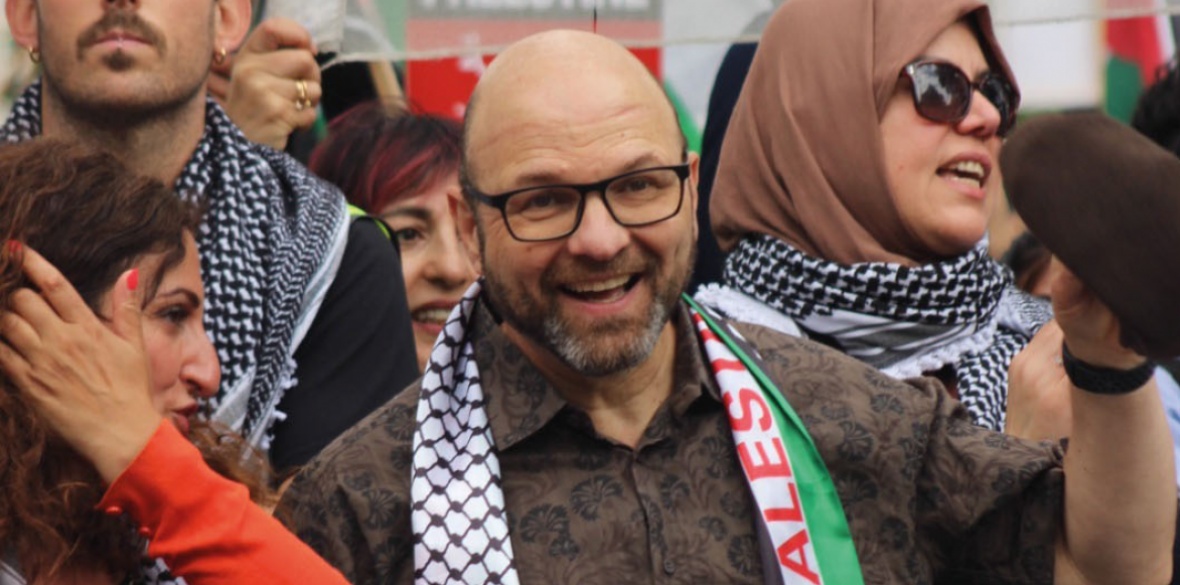
CONFRONTING SIR KEIR: Andrew Feinstein is standing to unseat the Labour leaderPhoto: Marija Carter
THE latest opinion polls are showing that it is possible Rishi Sunak will lose his own parliamentary seat come July 4. The voters in Richmond, Yorkshire, may be as tired of the Tory Premier as the rest of the country.
…
The voters in Holborn and St Pancras also have the chance to speak for the nation by rejecting a bankrupt and duplicitous leader.
Did Starmer represent the people of Camden, the borough his seat sits within, when he endorsed Israel’s genocidal actions in Gaza, refused to call for a ceasefire until given permission to do so by Washington, and backs continued arms sales to the aggressor? Not likely.
Do they endorse his Islamophobic political positioning, his authoritarian indifference to civil liberties, his culling of any remotely progressive Labour candidate? We doubt it.
Now they have a unique opportunity to clip Starmer’s wings. The country may want, as much through weary resignation and anti-Tory sentiment as anything else, a Labour government. There is absolutely no indication that it wants a specifically Starmer-led one.
And Holborn and St Pancras has an outstanding alternative. It is Andrew Feinstein, an independent left candidate who has parliamentary experience from his service as an African National Congress MP in his native South Africa.
Feinstein, the son of a Holocaust survivor, is well-placed to call out Starmer’s cynical abuse of anti-semitism as a political weapon against the left. He is one of many progressive Jewish men and women sanctioned by the Starmer apparatus.
Zionist Keir Starmes is quoted “I support Zionism without qualification.” He’s asked whether that means that he supports Zionism under all circumstances, whatever Zionists do.
Prime Minister Rishi Sunak during a visit to Cambridge Rugby Club in Cambridge, while on the General Election campaign trail, June 17, 2024
COLLAPSING Conservatives lost their campaign director today as the party was rocked by a fresh row over insider betting on the election date.
Tony Lee was forced to take leave of absence from the campaign as the suspension of his wife, Tory candidate Laura Saunders, was called for by Labour leader Sir Keir Starmer.
The Gambling Commission is reported to be looking into bets placed on the timing of the election. Another Tory candidate who worked in Downing Street, Craig Williams, has already apologised for wagering on a July election in the days before PM Rishi Sunak called the snap poll.
Ms Saunders is the Conservative standard-bearer in Bristol North-West and previously worked at Tory headquarters.