‘What’s happening in the West Bank just as in Gaza are war crimes’
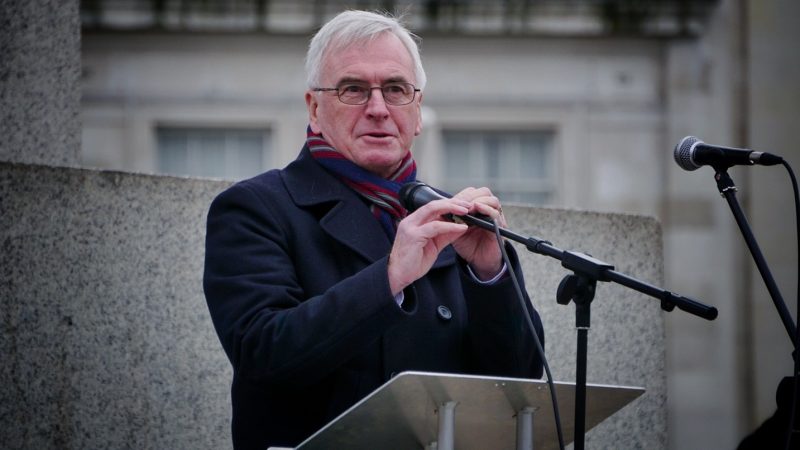
Labour MP John McDonnell has questioned the UK government’s record on sanctioning Israeli settlers in the occupied West Bank, as violence in the region escalates.
Speaking in Parliament on Wednesday, McDonnell called on the UK government to publish a detailed report into the sanctions imposed by the government on Israeli settlers in the West Bank.
It comes after the UN human rights office has demanded that Israeli security forces immediately stop participating in and enabling attacks by Jewish settlers in the region, stating the, “escalating violence over the past few days is also a matter of grave concern”.
This followed the killing of a 14 year-old Israeli from a settler family, which sparked the biggest settler rampage since the war in Gaza began, with seven Palestinians reported murdered and many others wounded.
Speaking on Wednesday in Parliament McDonnell said: “At a meeting with Israeli colleagues this morning we heard that the Israeli government is arresting legal and peaceful observers in the West Bank.
“Could the government now make it very clear to the Israeli government that observers should be allowed to operate within the West Bank, to ensure that peace is maintained, but also could we have a report in detail on the sanctions that the government is applying to Israeli settlements and Israeli settlers.”
Image of Richard Tice, leader of Reform UK. BBC Question Time.
‘What makes you think you understand how climate change works better than all of the world’s scientific experts?’
The leader of Reform UK was dealt a humiliating hand on BBC Question Time after facing a backlash against his arguments on climate change and climate denial.
Richard Tice got owned by leader of the Green Party Carla Denyer during a lively exchange about what action needs to be taken to combat the climate crisis.
The leader of the right-wing populist party, who’s been known to make bizarre and inaccurate statements on climate science denial, instigated some eye rolls when he stated, “the climate has changed for millions and millions of years.. way before man-made CO2 emissions”.
He went on to face ridicule when questioned on his understanding of climate science and his lack of scientific background by Green Party leader and engineer by trade, Carla Denyer.
…
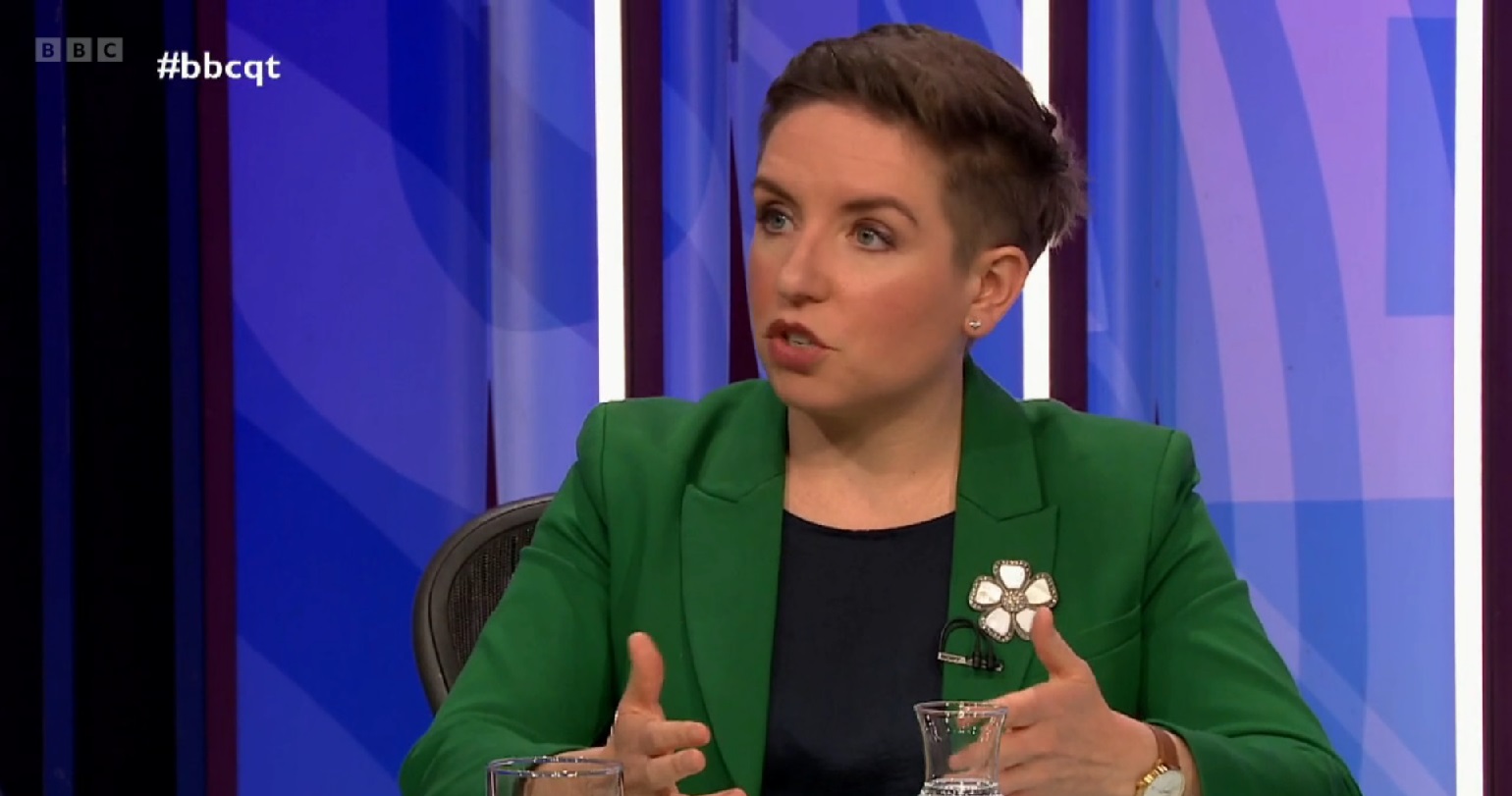
Image of the Green Party’s Carla Denyer on BBC Question Time.
The Green MP said: “The news has been full of pretty alarming evidence that climate change is not a concern that is going to come down the track sometime in the future, it’s here right now.
“And the best time that we could have brought in the policies to tackle this was of course decades ago. We’ve known about climate change my whole life. Successive governments in the UK and internationally largely failed to do that. So the second best time to do it is right now.”
She added: “I’m an engineer by background. I didn’t want to be a politician, I’m in this because I realised the people in power making the decisions were not making the right ones to tackle this crisis.”
Evidence of the crisis is all too visible. At the end of February 2024, some 6.24m individuals were waiting for 7.54m National Health Service (NHS) hospital appointments in England alone. This compares to 2.5m appointments in 2010 when the Conservative government came to office. It increased to around 4.6m in February 2020 just before the pandemic, and hit 6.2m in February 2022 and has increased since then.
The consequences are deadly. Some 300,000 people a year are dying whilst waiting for a hospital appointment. Millions have a long wait for ambulance and treatment in accident and emergency departments. In 2023, 14,000 people died in Accident & Emergency departments at hospitals. The deceased are typically the less well-off and suffering from delays and cancellations of hospital appointments.
The NHS has been weakened by years of underinvestment. It has fewer doctors and nurses per person than most of its peer countries. Due to lack of beds, staff and equipment, Britons die sooner from cancer and heart disease than people in many other rich countries. In 2022, over 39,000 people in England died prematurely of cardiovascular conditions including heart attacks, coronary heart disease and stroke.
It is not only hospitals; people are finding it hard to see a family doctor, often known as general practitioners (GPs). In 2015, the government promised to increase the number of GPs by 5,000 by 2020, but February 2024 there were the equivalent of 1,862 fewer fully qualified full-time GPs than there were in September 2015. Despite the pandemic and an ageing population, government funding for GPs in 2022-23 was 3.3% lower than in 2018-19. One in 20 patients have to wait at least four weeks to see a GP, a necessary precursor for most hospital appointments.
The UK has 49 dentists per 100,000 people, the lowest rate among G7 countries Last year, 23,577 dentists performed NHS work, down 695 on the previous year, and over 1,100 down on pre-pandemic numbers. Low rates of pay are cited as a major reason for dentists’ refusal to accept NHS patients. People are reduced to using pliers to pull their own teeth out and use glue to manage dental problems. Lack of oral health can increase the risk of gum, mouth and heart disease.
Officials were concerned that Truss’ book included details about advice the late Queen had given her.
Former Prime Minister Liz Truss is reported to have broken Whitehall rules, after failing to get the Cabinet Office’s clearance to reveal details of private conversations with the late Queen in her new memoir.
Under the conventions of the ‘Radcliffe rule’, former ministers are required to hand over a pre-publication copy of their memoir for vetting, to ensure that sensitive details pertaining to national security, or which may harm the UK’s relations with other nations or affect the confidential relationship between ministers and officials are not published.
The Times reports that “Truss had sent a copy of her book, Ten Years to Save the West, to the Cabinet Office “in good time” pre-publication.”
“However, she is understood not to have had clearance to publish some specific details.”
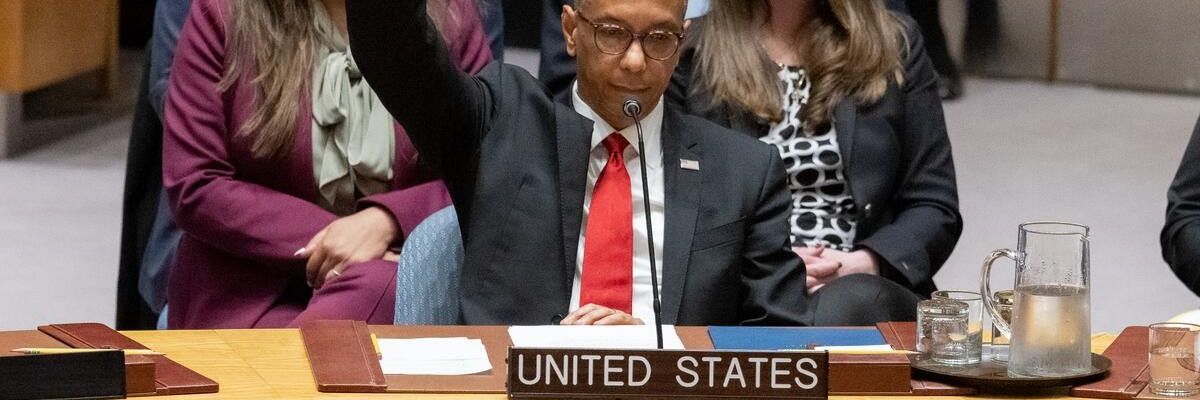
Robert A. Wood, deputy permanent representative of the United States to the United Nations, vetoes Palestine’s U.N. membership during the Security Council meeting on April 18, 2024. (Photo: Manuel Elías/United Nations)
Palestine’s permanent observer at the United Nations said the resolution’s failure “will not break our will, and it will not defeat our determination.”
U.S. President Joe Biden’s administration on Thursday used the country’s veto power at the United Nations Security Council to block Palestine’s bid to become a full member of the U.N.
While 12 nations voted in favor of Palestinian membership and two abstained, the United States is one of five countries—along with China, France, Russia, and the United Kingdom—who have veto authority at the Security Council.
Since Israel launched what the International Court of Justice has said is a “plausibly” genocidal assault of the Gaza Strip in response to a Hamas-led October attack, the Biden administration has blocked three cease-fire resolutions at the Security Council. Under mounting global pressure, the U.S. finally abstained last month, allowing a cease-fire measure to pass.
In the lead-up to Thursday’s vote, the Biden administration was pressuring other countries to oppose the Palestinian Authority’s renewed membership effort so it could possibly avoid a veto, according to leaked cables obtained by The Intercept.
“Take a moment to ponder how isolated Biden has made the U.S.,” said Trita Parsi, executive vice president of the Quincy Institute for Responsible Statecraft, after the veto. “Biden lobbied Japan, South Korea, and Ecuador HARD to oppose the Palestine resolution so that the U.S. wouldn’t have to veto. They refused. So Biden cast his fourth veto in seven months (!!) This is the opposite of leadership.”
In addition to the nations Parsi highlighted, Algeria, China, France, Guyana, Malta, Mozambique, Russia, Sierra Leone, and Slovenia voted for giving Palestine full U.N. membership while Switzerland and the United Kingdom abstained.
After the vote, U.N. News reported on remarks from Riyad Mansour, a U.N. permanent observer for the state of Palestine:
“We came to the Security Council today as an important historic moment, regionally and internationally, so that we could salvage what can be saved. We place you before a historic responsibility to establish the foundations of a just and comprehensive peace in our region.”
Council members were given the opportunity “to revive the hope that has been lost among our people” and to translate their commitment towards a two-state solution into firm action “that cannot be maneuvered or retracted,” and the majority of council members “have risen to the level of this historic moment, and they have stood on the side of justice and freedom and hope, in line with the ethical and humanitarian and legal principles that must govern our world and in line with simple logic.”
“The fact that this resolution did not pass will not break our will, and it will not defeat our determination,” Mansour added. “We will not stop in our effort. The state of Palestine is inevitable. It is real. Perhaps they see it as far away, but we see it as near, and we are the faithful.”
Parsi said that “a Western-friendly senior Global South diplomat” told him of Biden’s veto: “Whatever agonizing claim the U.S. had to lead a self-appointed free world has died a very loud public death on the Security Council horseshoe tonight. YOU CAN’T LEAD IF YOU CAN’T LISTEN.”
Biden, a Democrat seeking reelection in November, has faced fierce criticism in the United States and around the world for U.S. complicity in Israel’s war on Gaza—which Hamas, not the Palestinian Authority, has controlled for nearly two decades. In under seven months, Israeli forces have killed 33,970 Palestinians, injured another 76,770, displaced most of the besieged enclave’s 2.3 million population, devastated civilian infrastructure, and severely limited the flow of lifesaving humanitarian assistance.
Israel—which already got $3.8 billion in annual U.S. military aid before October 7—continues to receive weapons support from the Biden administration, even as a growing chorus of critics, including some Democrats in Congress, argues that the arms transfers violate U.S. and international law.