A budget totally out of step with what people want and need.
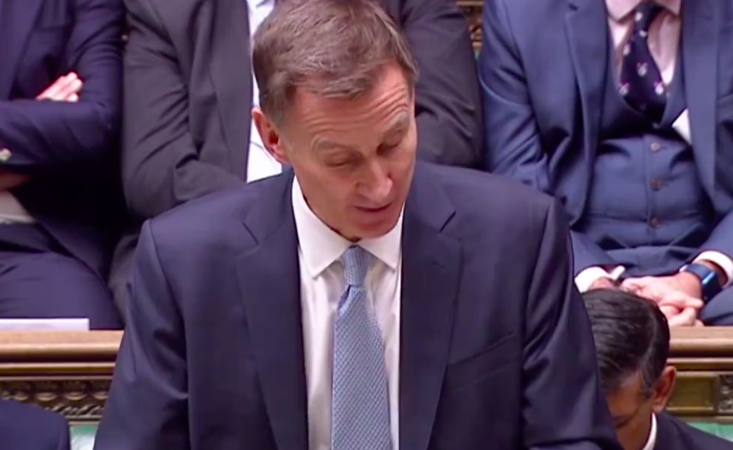
Today [yesterday] saw Chancellor Jeremy Hunt deliver his much-awaited Spring Budget. The stakes couldn’t be higher, with the economy in recession, millions struggling to make ends meet and a forthcoming general election.
In what is likely to be the last budget, and possibly the final fiscal event before the general election later this year, Hunt sought to present a rosy picture of the economy, one which is totally divorced from reality.
A budget totally out of step with what people want and need, opinion polls have repeatedly shown that the British public prefer investment in public services rather than tax cuts. There was no bold and radical plan to get the UK economy out of economic stagnation, to tackle poor productivity or to improve public services.
The government is withholding all information about the nine Israeli military jets that have landed in the UK since the bombing of Gaza began, raising suspicions about further British complicity in war crimes.
The UK government admitted last month that nine Israeli military aircraft had landed and taken off in Britain since 7 October.
The Ministry of Defence (MoD) had initially refused to give any information on the number of flights, but Declassified independently found six Israeli Air Force (IAF) operated planes landing in Britain.
Soon after the Declassified revelations, the MoD reversed course and admitted the nine flights, in response to a parliamentary question from Kenny MacAskill, the Alba MP for East Lothian.
But MacAskill recently requested further information about those flights.
When he asked what the IAF planes were carrying, when they arrived and departed, and which British airports they landed at, the MoD refused to answer.
Defence minister James Heappey told him: “It is standard practice for the Ministry of Defence to routinely authorise requests for limited numbers of allies and partners to overfly the UK and use UK air bases.”
But he added: “For operational security reasons and as a matter of policy, the MoD does not offer comment or information relating to foreign nations’ military aircraft movements or operations.”
‘No comment’
MacAskill also requested information on the next destination of the nine IAF planes that took off from Britain. The MoD again refused to answer.
Heappey said: “It is our longstanding Defence policy to not comment on third country flight information.”
He added: “The Diplomatic Flight Clearance policy is a robust practice and the basis on which a foreign partner may or may not be granted permission to utilise UK air bases is dependent on the nature and purpose of their activity, which is assessed in line with Defence internal policy.”
This position, which has also been applied to US Air Force flights related to Gaza using British territory, means UK bases operate as effective ‘black sites’ for foreign militaries.
The Tory MP has been taken apart after deeming support for a 4-day week ‘socialist madness’
People have found it hard to see the common sense in Esther McVey’s recent attack on the four-day week, as Britain’s unofficially designation ‘common sense tsar’ has been taken apart for blasting support for the scheme as “socialist madness”.
In an opinion piece for the Express, Esther McVey attempted to demonise trade unions which she accused of “calling the shots over Labour” and took aim at the PCS union representing civil servants over its calls for a four-day working week.
She wrote that the “last thing the country needs” is a return to the “bad old days of union dominance with a weak Labour leader appeasing them”. Ironic given the current state of affairs 14 years of a Conservative government has left the country in.
The 4 Day Week Campaign organisation wrote a scathing response to McVey, blasting the MP for Tatton as out of touch with public opinion, whilst also thanking her for showing how many people actually want a four-day week through the responses to the article.
“Sometimes you can judge the success of an idea by the kind of person who rejects it,” the organisation wrote on X.
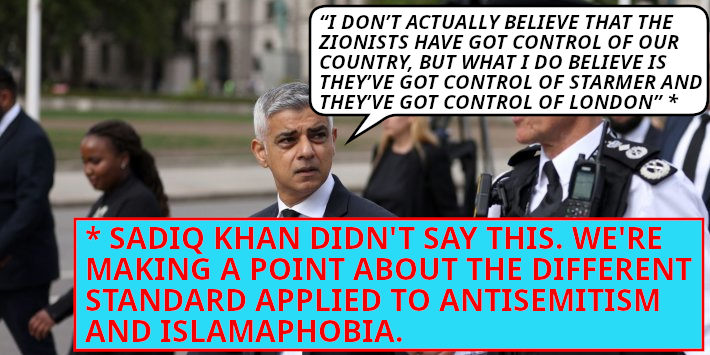
Parody remarks attributed to Sadiq Khan highlights the hypocrisy and double standard applied to Antisemitism and Islamaphobia.
Based on Rishi Sunak’s recent ‘mob rule’ comments, his extremism speech and Lee Anderson’s comments – which are universally not recognised as Islamaphobia or anti-Muslim racism – I expect Rishi Sunak and the UK Conservative Party to engage in a dirty racist general election campaign. They’ve started how they intend to continue. I suggest that the response to it should be to insist that the police prosecute cases of anti-Muslim racism as they should.
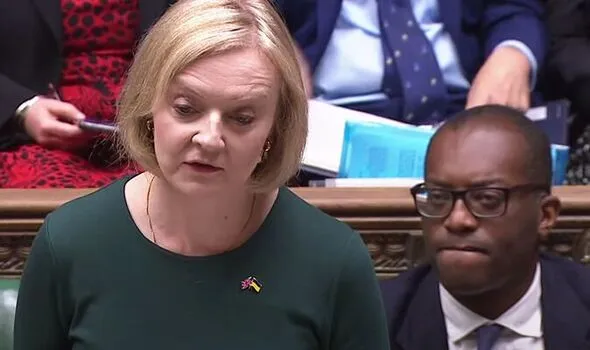
Conservative MPs seem increasingly willing to use the rhetoric of conspiracy. Recently, Liz Truss claimed that her brief tenure as prime minister had been ended by the deep state – shadowy forces within the British establishment and the media.
A few days later, Lee Anderson, the Conservative party’s former deputy chairman, asserted that London’s mayor, Sadiq Khan, is being controlled by Islamists. He was adding his own twist on a similar conspiracy theory put forward by former home secretary Suella Braverman, who claimed in a Telegraph article that Islamists are in charge of the whole country.
Why do politicians make conspiracy claims like these? It seems strange for MPs whose party has been in government for almost 14 years to imply that they aren’t really in control and that power is wielded by hidden actors.
Maybe Truss and Anderson mean what they say, and say what they mean. But even if they do believe that Britain is governed by a deep state or Islamist plotters, knowing a bit about rhetoric can help us to see that there is more going on when politicians use the language of conspiracy.
Context matters
A good politician will adapt what they say to fit the moment and their audience. For example, Truss’s deep state comments were made at CPAC, a conference for American conservatives. She was speaking in part to promote her new book, Ten Years to Save the West, and so had little reason to do anything other than give her audience what it likes. Conspiracy theories have become prominent in American conservatism (think QAnon and the claims that the 2020 presidential election was stolen), so echoing the rhetoric is an obvious way for a CPAC speaker to ingratiate themselves with an audience.
Anderson, though, was speaking in the UK, where conspiracist language is more unusual. His comments were seen by many as deliberately divisive and Islamophobic, and quickly landed him a suspension from his party. That said, government ministers were evasive when asked why his comments were wrong and whether they were Islamophobic.
Part of the brand
Courting controversy carries risks, as Anderson’s suspension shows. But it can also thrust a politician into the limelight, giving them a chance to speak to a broader audience and potentially gain new supporters. Much of the time, politicians make their own character – or ethos, as it is known in classical rhetoric – part of their pitch.
In her comments alleging a deep state conspiracy, Truss took on a populist tone. She portrayed herself as an anti-establishment figure fighting for the British people against the elites. She didn’t mention her party’s long period in government in charge of the civil service that allegedly made her tenure so impossible. Nor did she refer to the economic problems brought about during her fleeting administration.
Speaking to an audience which is likely to be less familiar with her political career, Truss was able to present herself as the protagonist in a David and Goliath narrative – albeit one in which David is defeated.
Similarly, Anderson used the controversy around his comments to present himself as a man of the people. Rather than giving any evidence to back up his claims about Islamists controlling Khan, Anderson instead justified his views by citing the positive reaction he had received from his constituents. When told in an interview with Channel 4 News that people were puzzled by his refusal to back down, Anderson replied: “If you go and speak to people in Ashfield [Anderson’s constituency] and ask them if they’re puzzled about it, no they’re not.”
In the aftermath of the controversy, Anderson told GB News: “When I went into pubs in Ashfield at the weekend, Friday, Saturday, Sunday, I got a round of applause when I went in. And these are normal working-class people.”
Such comments can be seen as part of a broader trend. Politicians have learned to cite the opinions of ordinary people in order to justify spurious claims. Rather than explaining anything about how he came to view Islamists being in charge of London, Anderson’s response to questions has been to use them as an opportunity to present himself as an outsider to the political establishment – a man in tune with what voters really think.
Pitting ‘us’ against ‘them’
This focus on presenting a certain persona and using it to justify baseless comments tells us something important – that identity is a key ingredient in conspiracist rhetoric.
It enables a politician to construct a conflict between an in-group and an out-group – a struggle between “us” and “them” – and asks the audience to pick a side. Rather than focusing on policies or ways of improving life for the British population, this rhetoric wants the audience to identify with the speaker’s character and join them in opposing a threatening enemy.
In this way, conspiracist rhetoric is much like the Conservatives’ attacks on “woke ideology” – it deflects attention away from their record in government, and rallies their supporters against an enemy at a time when the party is down on its luck.
Counteracting this is no easy task. Rhetoric is an art, not an exact science. One strategy could be to focus more on what politicians are trying to achieve when they use conspiracist rhetoric. While it is important to determine whether or not they really believe in a deep state or Islamist conspiracy, we also need to challenge the personas that politicians craft for themselves, as well the us-against-them divisions they construct.