Illegal migration bill to become law: what you need to know

Spread the love

Avery Anapol, The Conversation
The UK government has succeeded in passing its illegal migration bill. After a series of late-night votes and months of controversy, the bill is now set to receive royal assent and become the Illegal Migration Act 2023. The following round-up will give you the key details of the bill and the analysis of the academic experts who have written about it for The Conversation.

The illegal migration bill is the central pillar of Rishi Sunak’s plan to stop small boat crossings, one of his five promises as prime minister. On its journey to becoming law, the bill faced opposition from the House of Lords, Conservative backbenchers in the House of Commons, activists and organisations who support refugees in the UK, and the United Nations.

A key facet of the bill – the Rwanda migration partnership – remains in legal limbo. The Court of Appeal ruled that Rwanda would not be able to fairly and accurately assess refugees’ asylum claims if they were sent there from the UK, and that therefore the plan was unlawful. The government will appeal this decision at the Supreme Court.

But regardless of whether the appeal is successful, the act sets the stage for future migration partnerships, where asylum seekers who enter the UK irregularly (such as by small boat) may be sent to another country the government deems “safe”.

This act is the second major immigration law passed in the last 15 months. The Nationality and Borders Act, enacted in April 2022, was the Boris Johnson government’s plan to fix a “broken” asylum system. But after it failed to have any discernible impact on the number of people making the dangerous journey across the Channel in small boats, the government introduced the illegal migration bill.

Erica Consterdine, an immigration policy expert at Lancaster University, has explained the difference between the two pieces of legislation for us. She describes the new law as “the most extreme piece of immigration legislation to date”. It will effectively ban asylum seeking in the UK, by requiring the home secretary to detain and deport anyone who enters the UK illegally (most asylum seekers), before their cases can be considered.

This would include potential victims of modern slavery. One of the most controversial aspects of the legislation is that it would deny modern slavery protections to anyone who enters the UK illegally. This is, as expert Alex Balch from the University of Liverpool explains, because the government has accused asylum seekers of falsely claiming to be modern slavery victims in order to avoid deportation.

The House of Lords tried to soften these parts of the bill through a series of amendments, but was ultimately defeated by the government.

Legal concerns

From the moment it was announced, critics have said the illegal migration bill would clash with the UK’s human rights obligations. The home secretary, Suella Braverman, said herself that the bill would “push the boundaries” of international law.

Helen O’Nions, an expert in human rights law at Nottingham Trent University writes that the provisions in the bill hinge on a “shaky interpretation” of the UN Refugee Convention of 1951, an international treaty that sets out the rights of refugees. While international refugee law is difficult to enforce, there are a number of issues in the bill that are likely to face prolonged legal battles.

It’s notable that these two migration policies have been passed under two ethnic minority home secretaries, and endorsed by other ministers who are the descendants of immigrants themselves. Politics researchers Neema Begum (University of Nottingham), Michael Bankole (King’s College) and Rima Saini (Middlesex University) have dug into this phenomenon and argue that the appearance of ethnic diversity in government is used to prop up hard right views on immigration and race.

Will it even work?

At the heart of the act is the government’s claim that people won’t come to the UK to seek asylum if they know they will be detained and deported to Rwanda or elsewhere. But there is very little evidence) to show that this approach of “deterrence” would be effective, writes Peter William Walsh, a researcher at Oxford University’s Migration Observatory.

Explaining the logistical problems with the proposals, he says that with the future of the Rwanda partnership uncertain, it’s not clear how the “detain and remove” approach will actually be put into practice.

The trauma of the asylum system

This new legislation comes against the backdrop of an asylum “backlog” – tens of thousands of applications that have not yet been decided, leaving people uncertain about their future in the country.

This longform article by Steve Taylor, senior lecturer in psychology at Leeds Beckett University, details the physical and psychological impacts of being stuck in the UK’s asylum system. Taylor’s interviewees described experiences of trauma, suicidal thoughts, hostility and threats, from years spent in asylum limbo.

And, as he points out, the act “is predicted to lead to more long-term detention”. This will come at high cost to taxpayers, and to the human lives caught up in the policy. The Conversation

Avery Anapol, Commissioning Editor, Politics + Society, The Conversation

This article is republished from The Conversation under a Creative Commons license. Read the original article.

Continue ReadingIllegal migration bill to become law: what you need to know

Campaigners demand stronger tax on private jets as luxury travel in UK soars

Spread the love
Image of a dirty jet passenger aircraft

https://leftfootforward.org/2023/07/campaigners-demand-stronger-tax-on-private-jets-as-luxury-travel-in-uk-soars/

While government refuses to reveal details of Prime Minister’s private jet use at taxpayer expense

Campaigners have announced that private jets ‘are even worse than we thought’ after new research presents their high carbon footprint and low rate of taxation in the UK as post-pandemic luxury travel grows.

One in ten flights from UK airports are now from private jets, research by the climate action campaign group Possible found. Pre-pandemic, 7.5% of flights were private, which peaked at 20% during the pandemic and now sits at 10%.

Emissions from private jets are 30 times higher than normal flights, yet activists have stressed that the taxation is not proportionate. Half of private jet passengers pay the same rate of tax as passengers on standard flights, whilst one in five private jets pay no tax at all.

Possible are calling for a ban on private jets by 2030, with a proper tax system in place until then. The group’s report ‘jetting away with it’ found that, the more polluting an individual’s flight is, the lower the effective rate of tax per tonne of emissions.

https://leftfootforward.org/2023/07/campaigners-demand-stronger-tax-on-private-jets-as-luxury-travel-in-uk-soars/

Continue ReadingCampaigners demand stronger tax on private jets as luxury travel in UK soars

Vanessa Nakate on Rosebank

Spread the love
Continue ReadingVanessa Nakate on Rosebank

The climate credentials of Rishi Sunak’s cabinet :: Labour policy indistinguishable from Grant Shapps ‘bonkers’ policy

Spread the love

Keir Starmer’s Labour Party are positioning themselves as the new red Tories and have committed to continuing whatever the Tories do about energy. Labour have adopted the Tories energy policy exctly, there is no difference between them.

https://labour.org.uk/wp-content/uploads/2023/06/Mission-Climate.pdf [my emphasis in bold].

Labour and the country value the contribution of all those working in energy, including oil and gas, to powering the UK now and into the future. That is why, as part of our approach, Labour will ensure a phased and responsible transition in the North Sea, partnering with business and workers to manage our existing fields for the entirety of their lifespan. As the North Sea Transition Authority (NTSA) itself indicates, oil and gas production in the North Sea will be with us for decades to come. The charts below show that the significant majority of proven gas in the North Sea lies in existing fields. In the case of oil, there are more potential new fields, but 80 per cent of our oil production is exported abroad.

Under Labour’s plans, North Sea oil and gas will continue for decades to come. We will not revoke licences. But we will also build alternative opportunities for workers that transition out of oil and gas, in decommissioning, carbon capture and storage, hydrogen, and renewables like offshore wind. Labour has committed to not handout new licences to explore new oil and gas fields, which we believe would not offer the right answer for the economy or the environment. We will act to ensure continued investment in our offshore infrastructure and workforce as the North Sea becomes home to new forms of energy production. Labour will work with offshore communities and trade unions to avoid a repeat of the mistakes of the past. As oil and gas workers consider the future of their industry, they should be in no doubt about Labour’s commitment to prevent a transition akin to the Tories’ closure of the coal mines of the 1980s. We will not let that happen again.

This is Grant Shapps bonkers policy. Bonkers, insane, mad because there can be no new oil or gas without trashing the planet.

https://www.ipcc.ch/2022/04/04/ipcc-ar6-wgiii-pressrelease/

Limiting global warming will require major transitions in the energy sector. This will involve a substantial reduction in fossil fuel use, widespread electrification, improved energy efficiency, and use of alternative fuels (such as hydrogen).

“Having the right policies, infrastructure and technology in place to enable changes to our lifestyles and behaviour can result in a 40-70% reduction in greenhouse gas emissions by 2050. This offers significant untapped potential,” said IPCC Working Group III Co-Chair Priyadarshi Shukla. “The evidence also shows that these lifestyle changes can improve our health and wellbeing.”

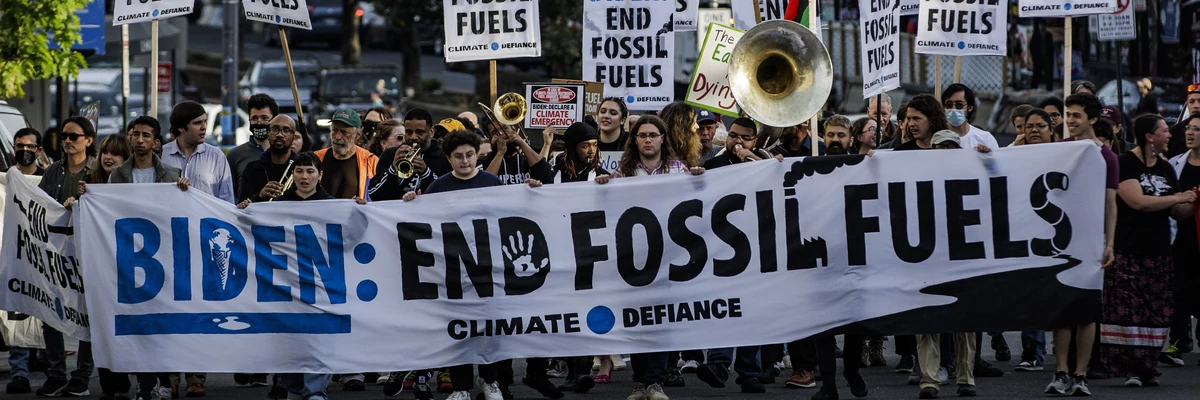
Climate protestors march in Washington DC
Continue ReadingThe climate credentials of Rishi Sunak’s cabinet :: Labour policy indistinguishable from Grant Shapps ‘bonkers’ policy

The climate credentials of Rishi Sunak’s cabinet :: Suella Braverman, Kemi Badenoch, Grant Shapps

Spread the love
Image of InBedWithBigOil by Not Here To Be Liked + Hex Prints from Just Stop Oil's You May Find Yourself... art auction. Rishi Sunak, Fossil Fuels and Rupert Murdoch appear.
Image of InBedWithBigOil by Not Here To Be Liked + Hex Prints from Just Stop Oil’s You May Find Yourself… art auction. Rishi Sunak, Fossil Fuels and Rupert Murdoch appear.

Liz Truss’s short-lived cabinet was very climate sceptic with Jacob Rees-Mogg appointed as as secretary of state for business and energy, Kwasi Kwarteng and Suella Braverman. https://gal-dem.com/conservative-cabinet-members-climate-change-liz-truss/ discussing Liz Truss’s cabinet

After examining the climate voting history of the entire new Tory cabinet (via the website TheyWorkForYou), gal-dem can report that every single person has either generally or consistently voted against climate change measures. Surprisingly, while some of the cabinet members had expressed that climate change is man-made and an urgent issue in press interviews or online, they still voted against any mitigation or adaptation policies, and often looked to unviable solutions such as carbon capture.

The most worrying appointment is Jacob Rees-Mogg as business, energy and industrial strategy secretary. The climate denialist will now oversee the government department responsible for energy and climate change. Climate organisers are deeply worried about what this will mean for the UK. 

“Putting someone who recently suggested that ‘every last drop’ of oil should be extracted from the North Sea in charge of energy policy is deeply worrying for anyone concerned about the deepening climate emergency, solving the cost-of-living crisis and keeping our fuel bills down for good,” says Dave Timms, Friends of the Earth’s head of political affairs. Indeed, Rees-Mogg is likely to push the idea that more fossil fuels are a solution to the energy crisis, when it is really our long-term reliance on gas and oil and inaction on energy efficiency that has sent energy bills shooting through the roof. Contrary to popular belief, and the Tory line on the energy crisis, Russia cutting off the gas supply to Europe is only a part of the problem.

Surviving from Truss’s cabinet into Sunak’s you have the climate action hostile Suella Braverman and Kemi Badenoch.

https://gal-dem.com/conservative-cabinet-members-climate-change-liz-truss/

Suella Braverman – Home Secretary

The new home secretary, who ran for leader this summer, accepted £10,000 from a leading climate sceptic to support her campaign. She also argued that the UK should suspend its legally binding commitment to net zero by 2050 and blamed the energy crisis on our green commitments. This is, of course, false. The current energy crisis is due to the UK’s dependence on fossil fuels, the wholesale prices of which have surged. 

Unsurprisingly, Braverman almost always voted against measures to prevent climate change.

https://socialistworker.co.uk/the-troublemaker/climate-change-denial-lobbyists-access-cabinet/

Trade secretary Kemi Badenoch met secretly with a US think tank that has taken millions of dollars from climate denial groups. She also claimed it would be “irresponsible” for Britain to follow climate science. Badenoch met ­representatives of the American Enterprise Institute (AEI), which campaigners say has a long track record of “distorting” climate science.

Yet Badenoch dined with lobbyists in November while on an official visit to the US. The  AEI has received more than £265 million in donations from climate denial groups since 2008, including almost £4 million from US oil giant ExxonMobil mScant details of the meeting were published by Badenoch’s department last week, as her Indo‑Pacific trade deal faced criticism for “making a ­mockery” of British pledges to tackle deforestation.

The AEI, which also met with Liz Truss in 2018 when she was trade secretary, has sown doubt over climate change science. It described  the landmark 2021 report by the United Nations Intergovernmental Panel on Climate Change as ­“alarmist” and “deeply dubious”.Benjamin Zycher and Peter J Wallison, senior fellows at the AEI, played down its findings by claiming that “we don’t understand all the elements in the complex climate system—the effects of clouds alone are understood poorly”.

The think tank also ­separately criticised Cop 26, the annual UN climate conference hosted by Britain in 2021. One of its authors claimed that delegates spread a “false narrative” that urgent action is required. Badenoch also gave a speech at another US think tank, the Cato Institute, during her official visit.It was founded by ­billionaire industrialist Charles Koch, one of the top funders of climate denial in the US. Cato is “focused on ­disputing the science behind global warming,” according to Greenpeace US. The minister gave a speech promoting free trade at the institute’s headquarters in Washington DC in which she hinted that some climate change policies could “impoverish” Britain.“We can and should solve it by using free trade and investment to accelerate the technological progress that will protect the planet. We must protect the planet in a way that does not impoverish the UK, the US or, let’s be honest, any other country,” she said.

Grant Shapps appointed by Sunak as Secretary of State for the Department for Energy Security and Net Zero is a regrettable move.

Outgoing climate chief ‘disappointed’ by Tory and Labour net zero plan

The outgoing chair of the UK Government’s statutory climate advisers has been left “extremely disappointed and increasingly concerned” that neither the Tories nor Labour are prioritising a move to net zero.

Lord Deben was asked on Times Radio, whether he was “surprised” by the lack of enthusiasm for the climate crisis by both major parties at Westminster, giving the scale of the challenge to tackle it.

In response, Lord Deben said: “Well, I don’t think I’m surprised, I’m just extremely disappointed and increasingly concerned because it seems to me that it is the priority.

“There is nothing more important than securing the world for our children.

“And indeed, I may be quite old now, but it’s securing it for me, because this is changing so fast that we are going to make the world an impossible place for us to live in the way in which we have lived up to now.”

Continue ReadingThe climate credentials of Rishi Sunak’s cabinet :: Suella Braverman, Kemi Badenoch, Grant Shapps