Category: Socialist
John McDonnell: This government has one last chance to take a progressive path. Otherwise, we’re at the point of no return

Keir Starmer explains the moral case for cutting disability benefits. He says work will set you free. If someone read out the following list of policies, which party would you think was in power? Depriving 2 million pensioners of the winter fuel allowance. Refusing to scrap the two-child benefit cap to lift nearly half a million children out of poverty. Raising tuition fees for students by more than the rate of inflation. Cutting overseas aid to the poorest people across the globe by half. Cutting £5bn from benefits for disabled people. Introducing a new round of cuts to government department spending and laying off 50,000 public sector workers.
I very much doubt even 12 months ago you would have thought that this would be the Labour party in government.
It is expected that in the spring statement, the chancellor, Rachel Reeves, will seek to justify this effective return to austerity by the necessity to maintain “iron” economic discipline through a rigid adherence to her fiscal rules. The chancellor’s argument will be that the world has changed, which is true, but this prompts the question: why, then, doesn’t the government’s strategy change to meet the situation it now finds itself in? Even Germany’s iron laws welded into its constitution are being adapted to the new economic realities.
Media briefings suggest that in her spring statement speech on Wednesday Reeves wants to be upbeat about Labour’s achievements so far. She is likely to cite the welcome rise in the minimum wage, but may fail to acknowledge that even working full-time on the minimum wage means a person is nearly £10,000 below the annual income, after tax, calculated by the Joseph Rowntree Foundation as necessary to secure an acceptable standard of living.
In recent interviews Reeves has already claimed this year’s above-inflation rise in wages as a government success, but has failed to mention that even with this long awaited rise, wages remain so low that 37% of people having to claim universal credit are actually in work. At least she will have some big numbers to cite on investment in the NHS and infrastructure. The problem is that much of the new NHS money could be drained away by the strains placed on it as disabled people find they are unable to cope without the support that has been taken away from them. This will include elderly people without adequate physical care and younger people without mental health support.
The problem with the increase in infrastructure investment is also that the memory of the cut in Ed Miliband’s green investment budget lingers in the mind and, as Reeves has repeatedly been warned, infrastructure investment takes a long time to feed into growth on any scale in the economy, and any benefit is likely to land after the next election.
The danger now is that the government’s standing could be irretrievably damaged as the Labour party is branded just another austerity party. This will provide the key that opens the door to the populist Reform UK. Nigel Farage’s party doesn’t need to present a rational, implementable alternative economic policy programme. It will simply go full Trump to distinguish itself from both Conservatives and Labour by portraying itself as anti-establishment, the defender and voice of the working class – while targeting immigrants, wokeism and even some corporations.
The polls and council byelection results are showing that there is a crisis of confidence in the government, reflecting the reactions and worries about recent policies among our supporters and even party members. But it is not too late to turn things around. In the very short term, a relaxing of the fiscal rules would enable the chancellor to raise sufficient taxes from those with the broadest shoulders to prevent a return to ongoing austerity.
It is not rocket science to implement a programme of marginal tax rises that would end cuts and fund the progressive policies any Labour government would aim to pursue. The list is obvious: equalising capital gains tax with income tax rates; a realistic rise in corporation tax; a financial transaction tax; the introduction of a small wealth tax on multimillionaires, called for by the Patriotic Millionaires group.
There are also many non tax measures to help people who are still struggling with the cost of living, such as fair rent controls, service charge caps, stricter controls on energy and water price rises, and reviews of food price rises to prevent price gouging. However, the spring statement and the subsequent public spending review in June should define what the long-term strategy of the government is rather than responding to the short-term political and economic mess it has created for itself. For this I urge the chancellor to look beyond just stabilising our economy and managing the existing system slightly more efficiently than the Conservative chancellors before her.
People want long-term change that provides everyone with a decent quality of life and addresses the grotesque levels of inequality in our society and the environmental crisis. Over the past 25 years, I have followed the work of Richard Wilkinson and subsequently his colleague Kate Pickett at the Equality Trust. Their detailed research has forensically revealed the impact of inequality on our society and economy. To quote the trust’s report timed to coincide with the election of the new government last year: “Biased public policies and flawed economic systems are serving a few wealthy people at the expense of the wellbeing of people and planet.”
The report went on to outline how the duty that was enacted in the Equality Act 2010 to reduce inequalities resulting from socioeconomic disadvantage could be implemented by redistribution power and wealth in our society. This includes new policy-making mechanisms that empower communities to identify and design the services to address their needs, wealth taxes to fund these, universal social security programmes and community wealth-building.
I thought and hoped, maybe naively, that this was the sort of programme that the incoming Labour government would implement. The track record of the government so far is, sadly, remarkably distant from this progressive approach. The spring statement could be the opportunity to change that narrative, not just by bridging the short funding gap with redistribution but more importantly to narrate and launch the longer term progressive path we need to achieve true Labour goals.
My remaining hope is that the chancellor will seize that opportunity, for I fear that if she doesn’t it will be impossible to recover the ground we have lost.
I am quoting the full article assuming that John McDonnell owns the copyright and intends that it is widely published. I will alter this post if asked to by the Guardian.

Orcas discuss how Trump was re-elected and him being an insane, xenophobic Fascist. Taxing the “super rich” pays off for Brazil’s gov’t
https://en.mercopress.com/2025/01/29/taxing-the-super-rich-pays-off-for-brazil-s-gov-t

“We’re just bringing the super-rich into the same tax bracket as the middle class,” said Barreirinhas Brazilian Finance Minister Fernando Haddad’s policy of taxing the “super rich” yielded unprecedented returns of R$ 20.6 billion (US$ 3.32 billion) to the South American country’s coffers in 2024, Federal Revenue Secretary Robinson Barreirinhas confirmed Tuesday. The strategy focuses on exclusive investment funds and offshore assets, it was explained.
Under the new scheme, previously untaxed exclusive funds now contributed R$ 13 billion (US$ 2.10 billion), while offshore investments added R$ 7.67 billion (US$ 1.24 billion), thus closing legal loopholes allowing the wealthy to dodge substantial contributions. “This is about justice,” Barreirinhas argued. According to Brazilian Government figures, the economy grew by around 3.5% last year.
…
https://en.mercopress.com/2025/01/29/taxing-the-super-rich-pays-off-for-brazil-s-gov-t
Ministers warned to stop the rush to ‘political suicide’
https://morningstaronline.co.uk/article/ministers-warned-to-stop-the-rush-to-political-suicide

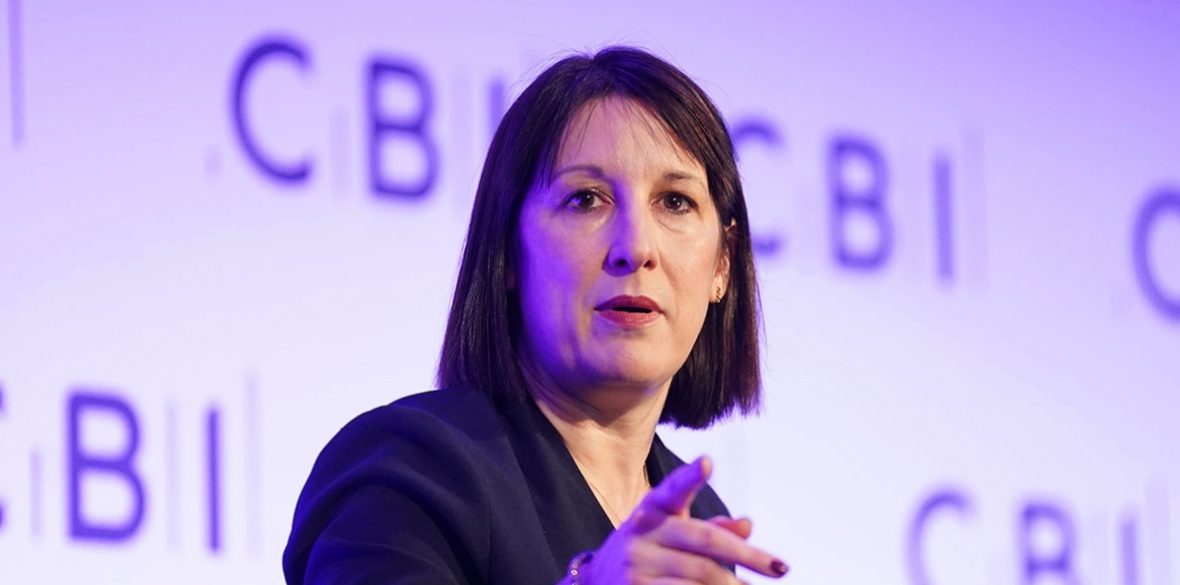
Chancellor of the Exchequer Rachel Reeves at the Confederation of British Industry (CBI) conference at the QEII Centre, London, November 25, 2024 …
Leading left MP and former shadow chancellor John McDonnell issued the warning to Rachel Reeves as the Chancellor returned from her China trip to confront the bond market crisis.
Mr McDonnell, presently suspended from the Labour whip for opposing the cruel two-child benefit cap, told BBC radio: “There is obviously a problem.
“There’s turbulence in the international markets, and we’ve just got to see those through.
“You don’t turn to cuts, certainly, because not only will that be politically suicidal, that would undermine the political support upon which Labour got elected.
“In addition to that, you would be taking demand out of the economy, and you would be looking at turning a crisis into a recession.
“So I think you just have to see through the turbulence in the markets.”
Mr McDonnell also reminded the government that voters matter more than markets.
…
https://morningstaronline.co.uk/article/ministers-warned-to-stop-the-rush-to-political-suicide
‘Monumental Victory for the Ocean’: Norway Halts Plans for Deep-Sea Mining
Original article by Olivia Rosane republished from Common Dreams under Creative Commons (CC BY-NC-ND 3.0).

Kirsti Bergstø, leader of the Socialist Left Party, speaks at a protest against deep-sea mining outside Norwegian Parliament. (Photo: Greenpeace) One campaigner called it “a testament to the power of principled, courageous political action, and… a moment to celebrate for environmental advocates, ocean ecosystems, and future generations alike.”
Environmental organizations cheered as Norway’s controversial plans to move forward with deep-sea mining in the vulnerable Arctic Ocean were iced on Sunday.
The pause was won in Norway’s parliament by the small Socialist Left (SV) Party in exchange for its support in passing the government’s 2025 budget.
“Today marks a monumental victory for the ocean, as the SV Party in Norway has successfully blocked the controversial plan to issue deep-sea mining licenses for the country’s extended continental shelf in the Arctic,” Steve Trent, CEO and founder of the Environmental Justice Foundation, said in a statement. “This decision is a testament to the power of principled, courageous political action, and it is a moment to celebrate for environmental advocates, ocean ecosystems, and future generations alike.”
“Today, thanks to the SV Party and all those around the world who spoke up against this decision, the ocean has won. Now, let’s ensure this victory lasts.”
Norway sparked outrage in January when its parliament voted to allow deep-sea mining exploration in a swath of its Arctic waters larger than the United Kingdom. Scientists have warned that mining the Arctic seabed could disturb unique hydrothermal vent ecosystems and even drive species to extinction before scientists have a chance to study them. It would also put additional pressure on all levels of Arctic Ocean life—from plankton to marine mammals—at a time when they are already feeling the impacts of rising temperatures and ocean acidification due to the burning of fossil fuels.
“The Arctic Ocean is one of the last pristine frontiers on Earth, and its fragile ecosystems are already under significant stress from the climate crisis,” Trent said. “The idea of subjecting these waters to the destructive, needless practice of deep-sea mining was a grave threat, not only to the marine life depending on them but to the global community as a whole.”
“Thankfully, this shortsighted and harmful plan has been halted, marking a clear victory in the ongoing fight to protect our planet’s blue beating heart,” Trent continued.
In June, Norway announced that it would grant the first exploratory mining licenses in early 2025. However, this has been put on hold by the agreement with the SV Party.
“This puts a stop to the plans to start deep-sea mining until the end of the government’s term,” party leader Kirsti Bergstø said, as The Guardian reported.
Norway next holds parliamentary elections in September 2025, so no licenses will be approved before then.
The move comes amid widespread opposition to deep-sea mining in Norway and beyond. A total of 32 countries and 911 marine scientists have called for a global moratorium on the practice. More than 100 E.U. parliamentarians wrote a letter opposing Norway’s plans specifically, and the World Wide Fund for Nature (WWF) has sued to stop them.
“This is a major and important environmental victory!” WWF-Norway CEO Karoline Andaur said in a statement. “SV has stopped the process for deep seabed mining, giving Norway a unique opportunity to save its international ocean reputation and gain the necessary knowledge before we even consider mining the planet’s last untouched wilderness.”
Haldis Tjeldflaat Helle, the deep-sea mining campaigner at Greenpeace Nordic, called the decision “a huge win.”
“After hard work from activists, environmentalists, scientists, and fishermen, we have secured a historic win for ocean protection, as the opening process for deep-sea mining in Norway has been stopped,” Helle said in a statement. “The wave of protests against deep-sea mining is growing. We will not let this industry destroy the unique life in the deep sea, not in the Arctic nor anywhere else.”
Sorry, this content could not be embedded. [X/twitter embed still broken … Is there a work-around?]
XHowever, Norway’s Arctic waters are not entirely safe yet.
Prime Minister Jonas Gahr Stoere, of the Labour Party, toldTV2, on Sunday, “This will be a postponement.”
The government said that other work to begin the process of deep-sea mining, such as drafting regulations and conducting environmental impact surveys, would move forward. Norway is currently governed by the Labour and Center parties. The two parties leading in polls for September’s elections—the Conservatives and Progress Party—also both back deep-sea mining, according toReuters.
“If a new government attempts to reopen the licensing round we will fight relentlessly against it,” Frode Pleym, who leads Greenpeace Norway, told Reuters.
Other environmental groups tempered their celebrations with calls for further action.
Trent of the Environmental Justice Foundation said that “while today is a cause for celebration, this victory must not be seen as the end of the struggle.”
“We urge Norway’s government, and all responsible global actors, to make this a lasting victory by enshrining protections for the Arctic Ocean and its ecosystems into law, and coming out in favor of a moratorium or ban on deep-sea mining,” Trent added. “It is only through a collective commitment to sustainability and long-term stewardship of our oceans that we can ensure the health of the marine environment for generations to come.”
Trent concluded: “Today, thanks to the SV Party and all those around the world who spoke up against this decision, the ocean has won. Now, let’s ensure this victory lasts.”
Andaur of WWF said that this was a “pivotal moment” for Norway to “demonstrate global leadership by prioritizing ocean health over destructive industry.”
As WWF called on Norway to abandon its mining plans, it also urged the nation to reconsider its exploitation of the ocean for oil and gas.
“Unfortunately, we have not seen similar efforts to curtail the Norwegian oil industry, which is still getting new licenses to operate in Norwegian waters, including very vulnerable parts of the Arctic,” Andaur said. “Norway needs to explore new ways to make money without extracting fossil fuels and destroying nature.”
Greenpeace also pointed to the role Norway’s pause could play in bolstering global opposition to deep-sea mining.
“Millions of people across the world are calling on governments to resist the dire threat of deep-sea mining to safeguard oceans worldwide,” Greenpeace International Stop Deep-Sea Mining campaigner Louisa Casson said. “This is a huge step forward to protect the Arctic, and now it is time for Norway to join over 30 nations calling for a moratorium and be a true ocean champion.”
Original article by Olivia Rosane republished from Common Dreams under Creative Commons (CC BY-NC-ND 3.0).
- ‘Shameful’: Norwegian Government Backs Deep-Sea Mining
- Campaigners Demand Global Ban on Deep-Sea Mining
- Global Campaigners Call On Norway to Ditch Deep-Sea Mining Plan
- Greenpeace Says Ban Deep-Sea Mining, Not Our Right to Protest Against It
dizzy: Welcome back BTW, hosting server was down for an hour or so 9.30 – 10.30 a.m. GMT. Seems fast now.