Article by Julia Conley republished from Common Dreams under Creative Commons (CC BY-NC-ND 3.0).
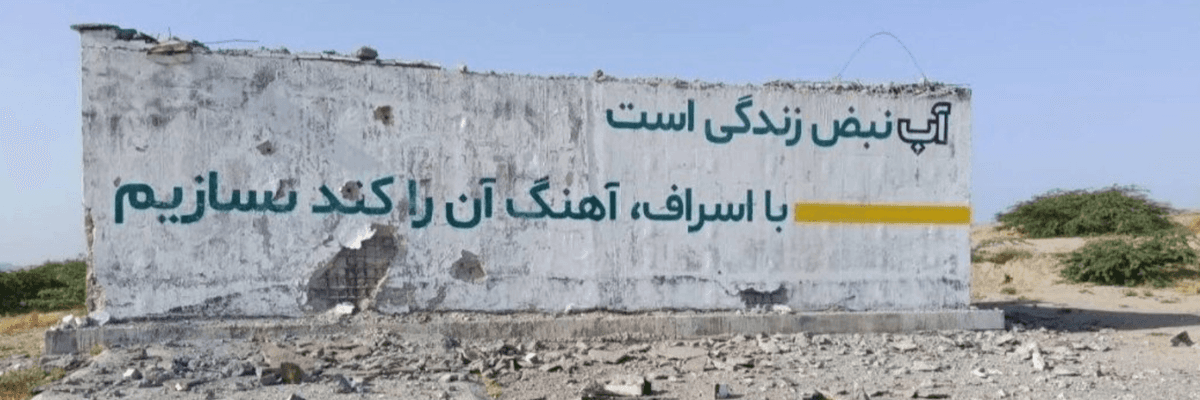
“Destroying a drinking water facility is not an attack on a target of war, but a mafia-style operation designed to harm the Iranian people,” said one academic.
As temperatures in the village of Bemani, Iran, near the Strait of Hormuz, reached above 100°F this week, two water facilities were struck by bombs, cutting off the drinking water supply for 20,000 people in the area.
An analysis by The New York Times late Wednesday indicated that the attack on the drinking-water storage facilities appeared to be a precision strike by the US, raising questions about whether the Trump administration intentionally attacked civilian infrastructure, which would constitute a war crime under international law.
RECOMMENDED…

‘Now More Than 200 Trump Summary Executions’ as US Bombs Another Boat
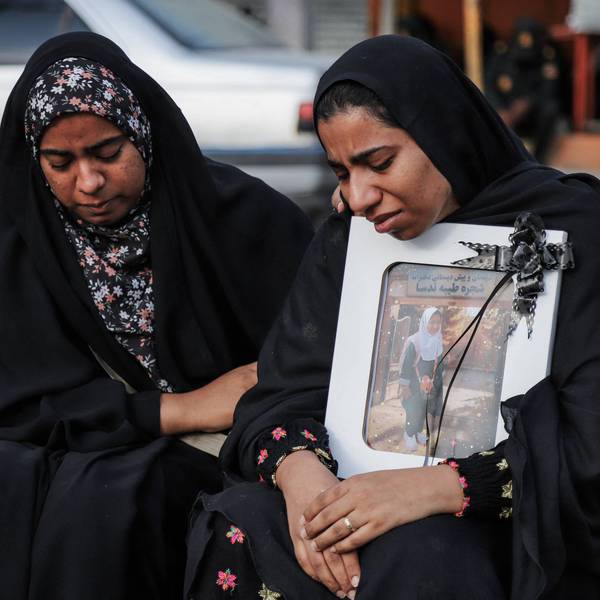
‘Have You Investigated Those Claims’ of Civilians Killed by US in Iran? CENTCOM Chief: ‘We Have Not’
As the provincial water authority in the area reported that two storage tanks had been destroyed in an attack early Wednesday, US Central Command said on social media that the US Air Force and Navy had used “precision munitions” to strike “Iranian air defense, ground control stations, and surveillance radar sites near the Strait of Hormuz.”
Esmaeil Baqaei, a spokesperson for the Iranian Ministry of Foreign Affairs, posted a video of damage to one of the facilities, whose light blue pipes were consistent with water infrastructure.
“As part of its aggression against Iran, the US military has deliberately struck vital civilian water infrastructure in Sirik, Hormozgan, destroying two reservoirs with a combined capacity of 2,500 cubic meters,” said Baqaei. “These facilities supplied drinking water to more than 20,000 residents across ten villages. This is not collateral damage—it is a calculated war crime and a flagrant violation of human rights and international humanitarian law. The US must be held accountable for committing such systematic brutal attacks on civilian life-sustaining infrastructure.”
The analysis of the strikes came as the US waged more attacks Wednesday night and early Thursday, including on an oil tanker in the Gulf of Oman and against Iranian radars and air defenses.
In its analysis, the Times said commercial satellite imagery showed two water facilities in Bemani whose descriptions matched those given by Abdolhamid Hamzehpour, the chief executive of the province’s water authority, on Wednesday, when he reported the structures had been damaged by missiles.
Hamzehpour said in a statement that the high temperatures in the area were “unbearable” for residents without drinking water, and said that mobile water tanks had been deployed to nearby villages.
The roof of one of the facilities collapsed, according to videos released by Iranian state media, and the center of the roof of the other structure appeared to have been struck by a bomb.
The Times noted that both buildings were remotely located, with no other infrastructure located in the immediate vicinity, suggesting a likely precision strike.
Tasnim, a semiofficial news agency in Iran, released photos of bomb fragments that it said were recovered from the site. Researchers with the Open Source Munitions Portal identified the fragments as parts of a GBU-39 bomb, which is used by the US Air Force.
The precision-guided bomb was “consistent with the damage shown in the footage of the damaged building: a clean hole punched through the building’s roof and limited blast damage around it,” reported the Times.
The bombing came as President Donald Trump complained that Tehran was taking too long to finalize a peace deal. The US and Iran have each carried out attacks this week, raising doubts about a ceasefire deal that was reached in April following Trump’s threats to wipe out Iran’s civilization.
“Trump is so angry that Iran will not give him a deal that he is telling the US military to commit war crimes,” said Phillips P. O’Brien, a professor of strategic studies at the University of St. Andrews. “Destroying a drinking water facility is not an attack on a target of war, but a mafia-style operation designed to harm the Iranian people.”
Article by Julia Conley republished from Common Dreams under Creative Commons (CC BY-NC-ND 3.0).

- Nuclear Plants ‘Must Never Be Attacked,’ Says Watchdog as Iran Reports US-Israeli Strike at Bushehr Facility ›
- ‘Maniacal Tyrant’ Trump and Iran Trade Threats to Energy Infrastructure Over Strait of Hormuz ›
- Opinion | Trump Is Playing War Crime Roulette With the Livability of the Persian Gulf | Common Dreams ›
- Drinking Water Facilities Hit by Strikes in Iran, State Media Reports – The New York Times ›
- Analysis of Satellite Image and Videos Suggest Precision U.S. Strikes on Iranian Water Facility – The New York Times ›